By Kieran Falzon
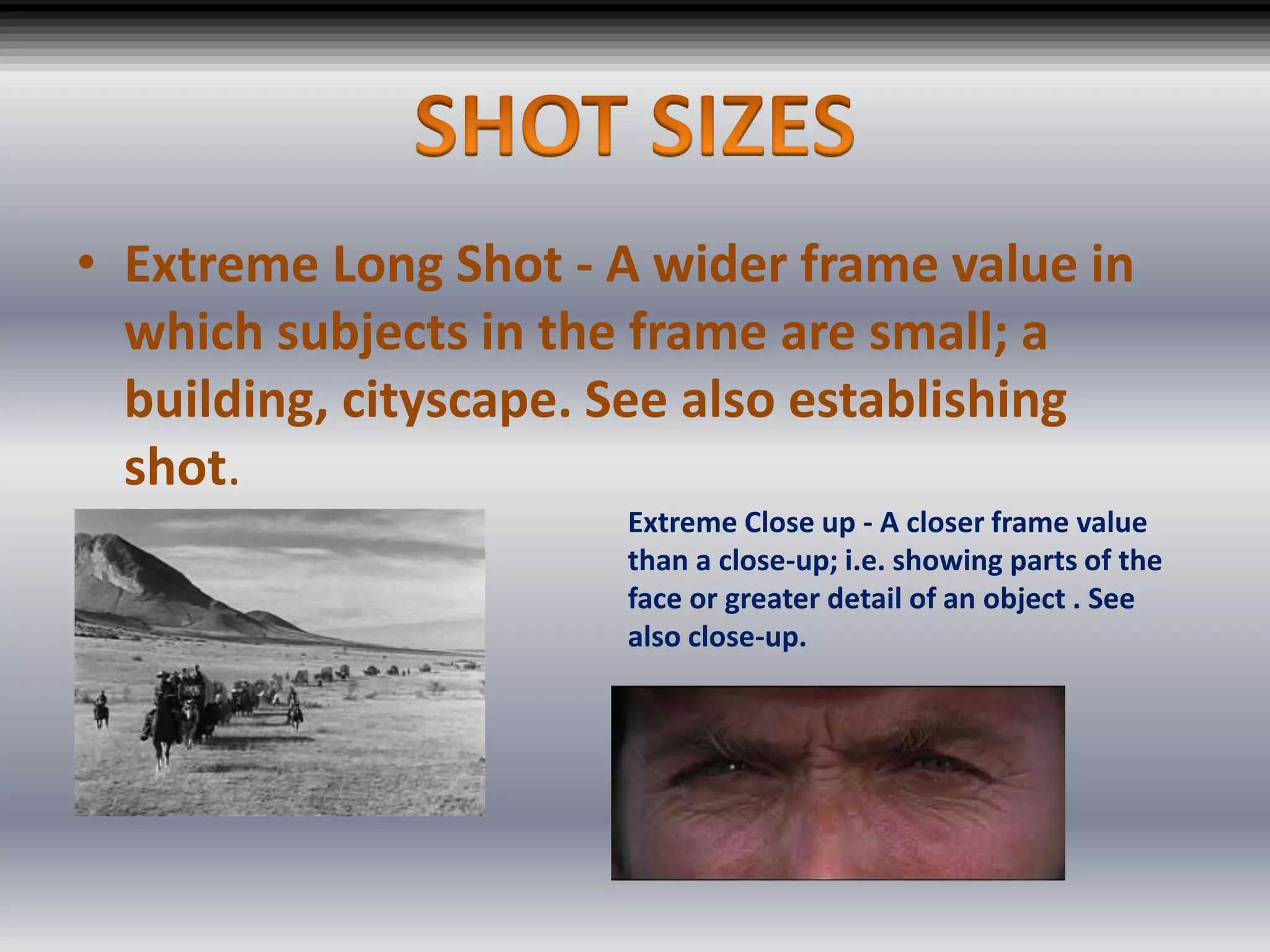
• Extreme Long Shot - A wider frame value in
which subjects in the frame are small; a
building, cityscape. See also establishing
shot.
Extreme Close up - A closer frame value
than a close-up; i.e. showing parts of the
face or greater detail of an object . See
also close-up.
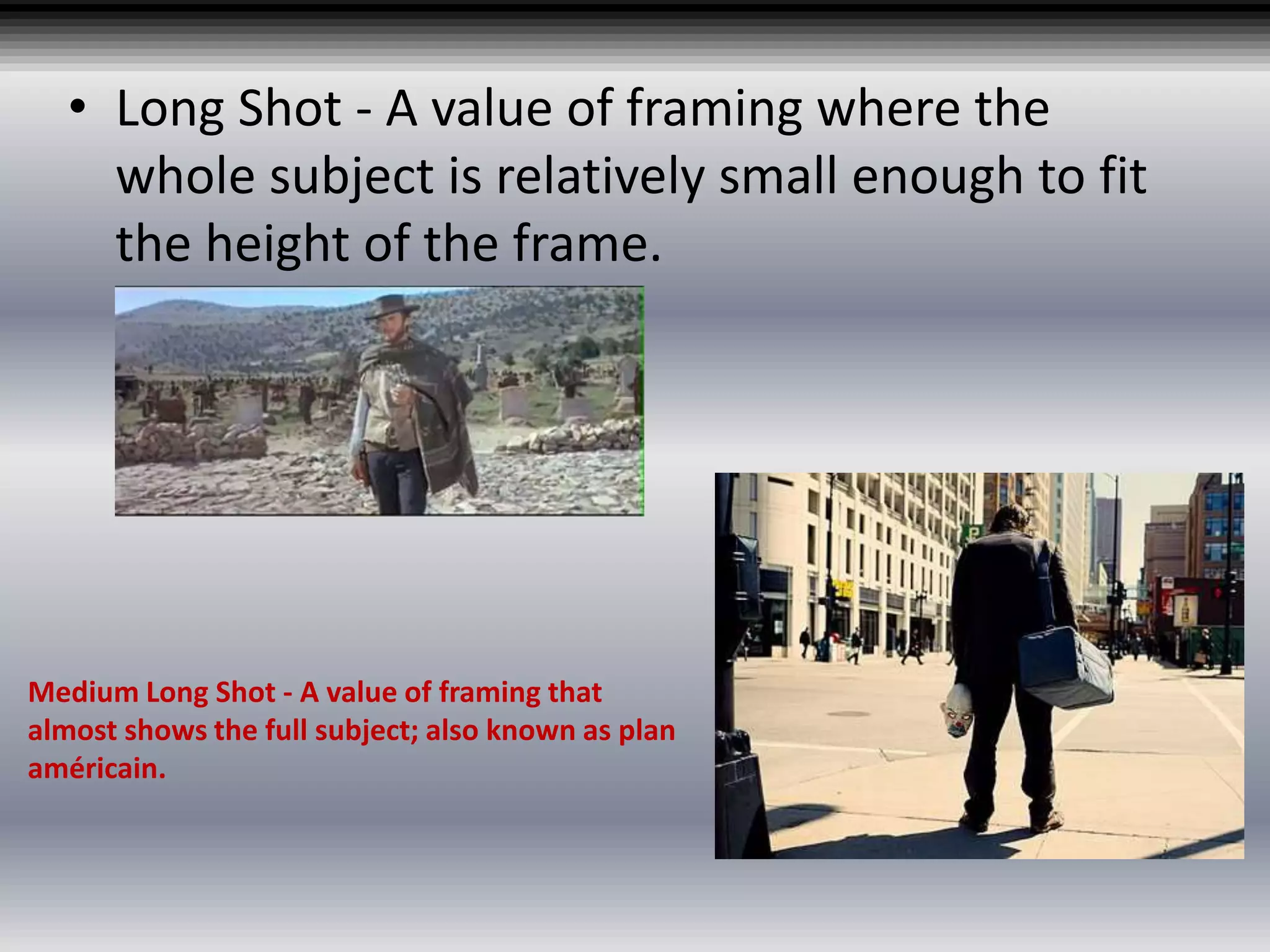
• Long Shot - A value of framing where the
whole subject is relatively small enough to fit
the height of the frame.
Medium Long Shot - A value of framing that
almost shows the full subject; also known as plan
américain.
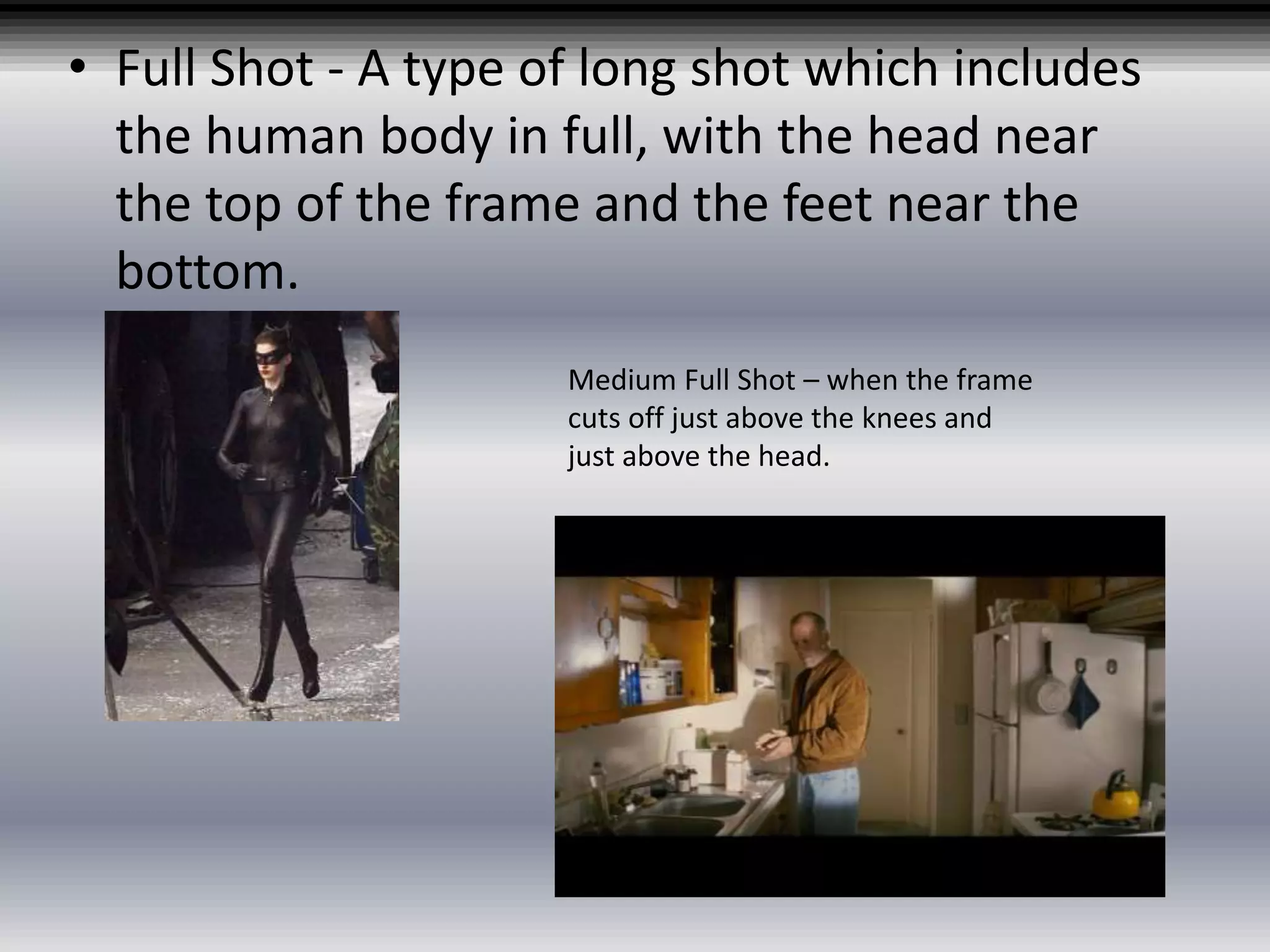
• Full Shot - A type of long shot which includes
the human body in full, with the head near
the top of the frame and the feet near the
bottom.
Medium Full Shot – when the frame
cuts off just above the knees and
just above the head.
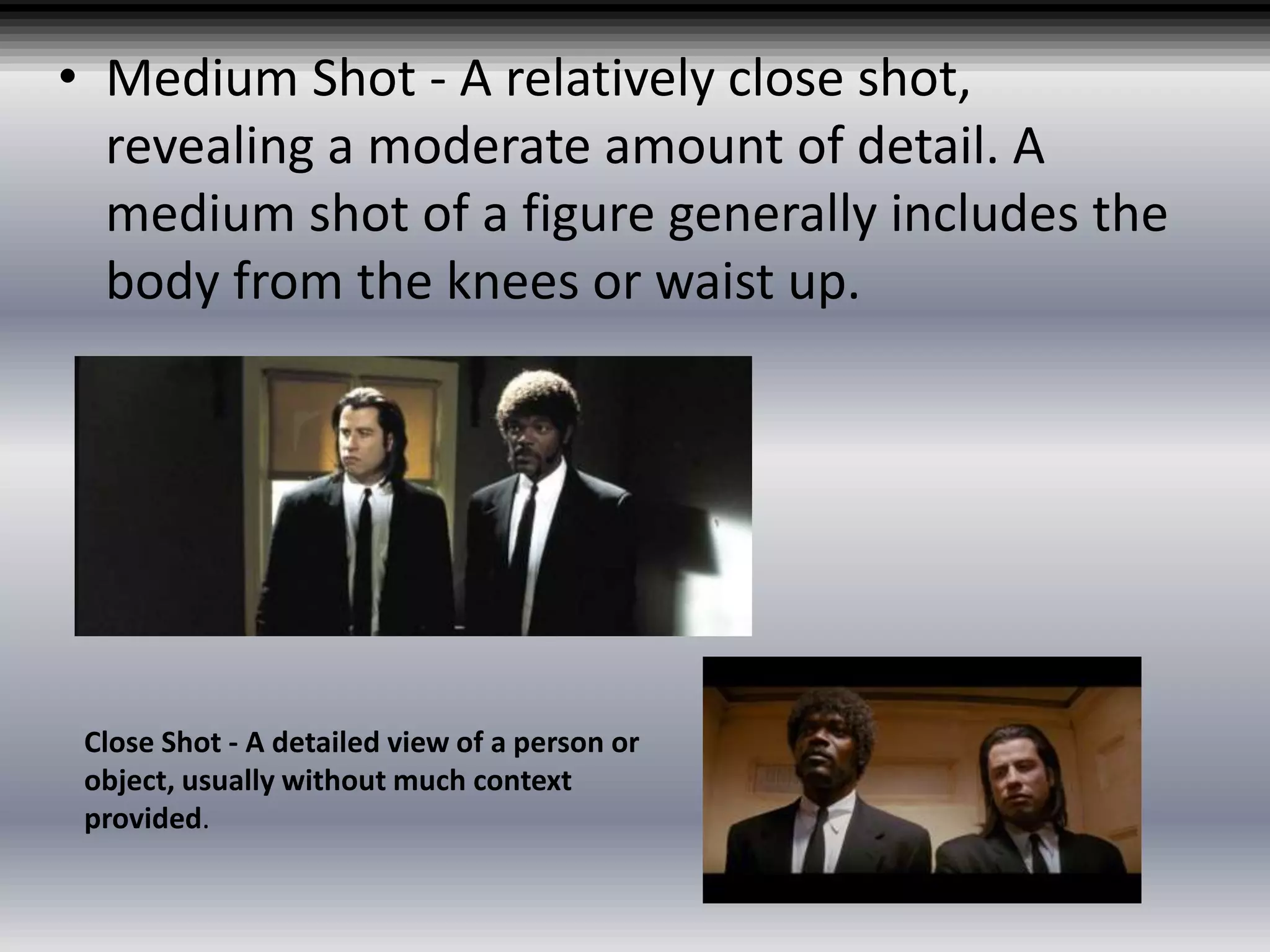
• Medium Shot - A relatively close shot,
revealing a moderate amount of detail. A
medium shot of a figure generally includes the
body from the knees or waist up.
Close Shot - A detailed view of a person or
object, usually without much context
provided.
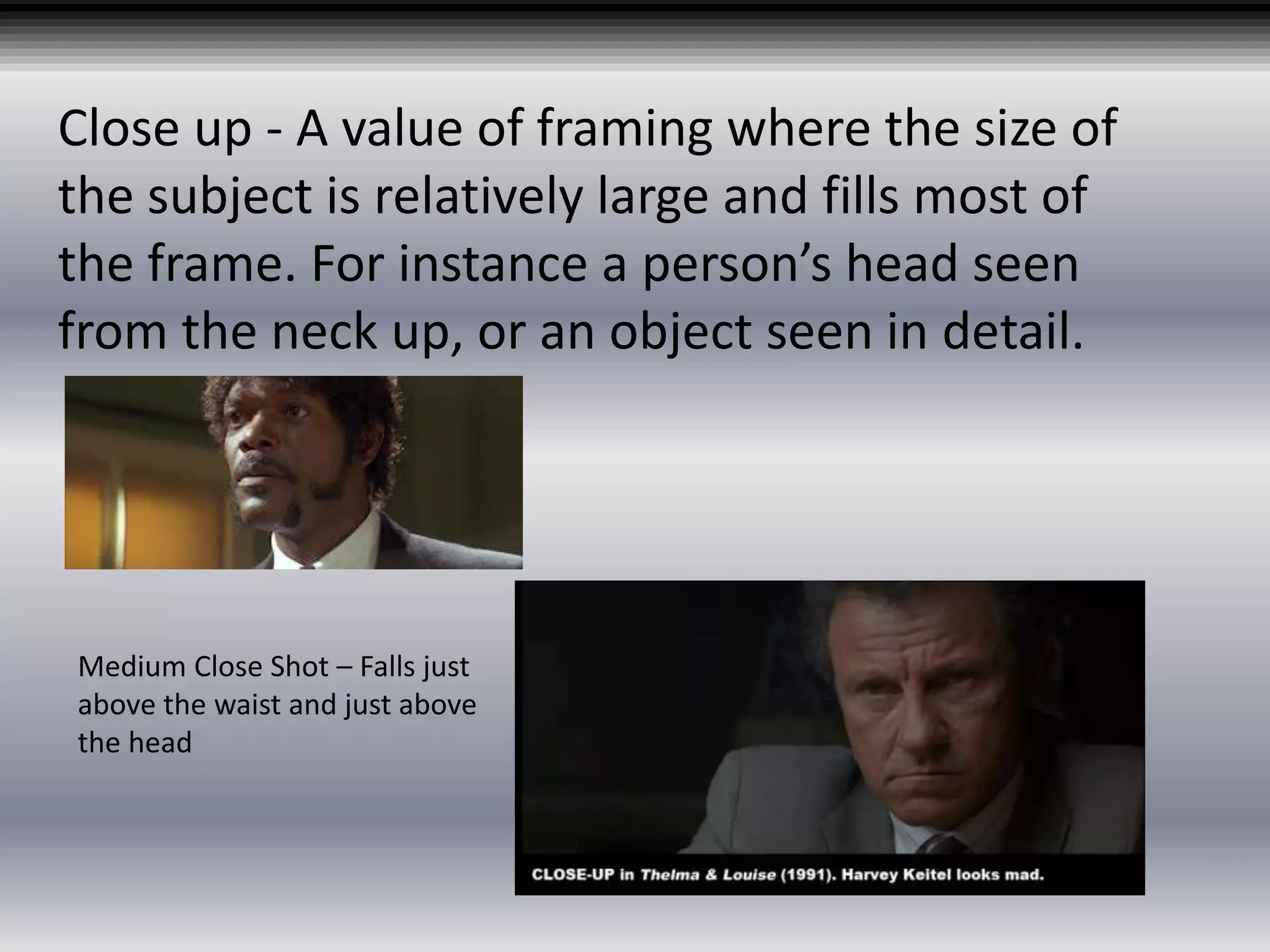
Close up - A value of framing where the size of
the subject is relatively large and fills most of
the frame. For instance a person’s head seen
from the neck up, or an object seen in detail.
Medium Close Shot – Falls just
above the waist and just above
the head
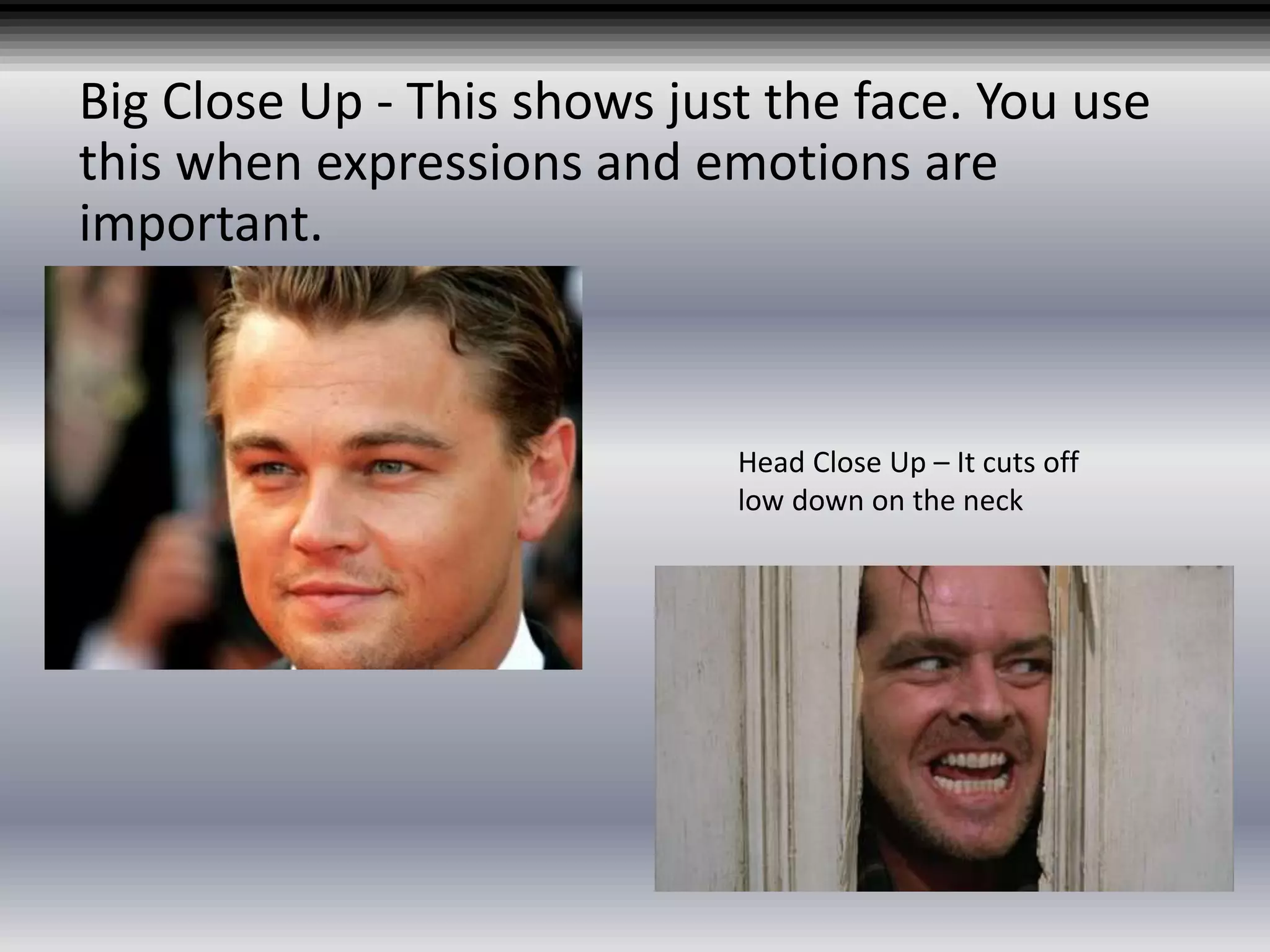
Big Close Up - This shows just the face. You use
this when expressions and emotions are
important.
Head Close Up – It cuts off
low down on the neck
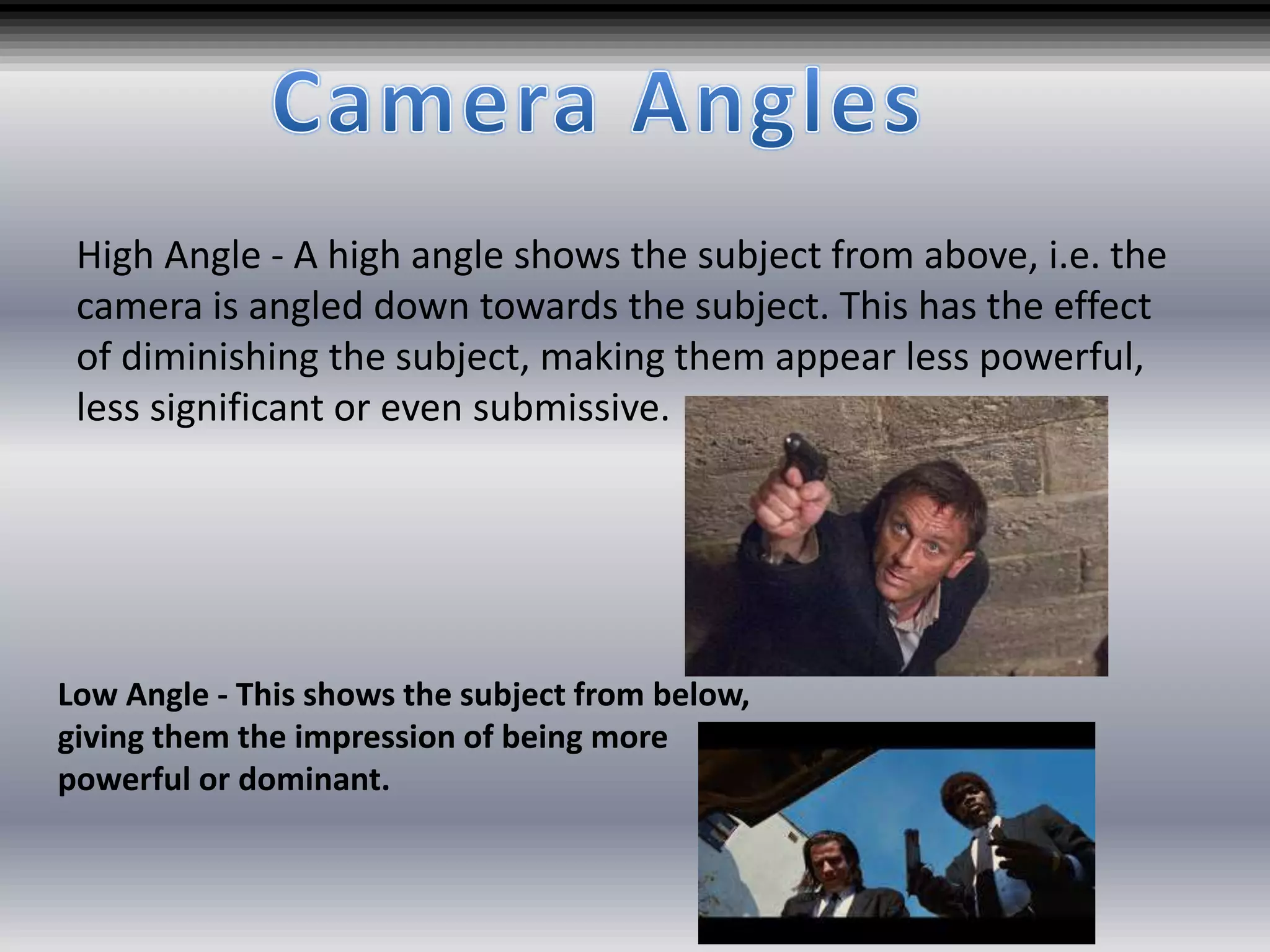
High Angle - A high angle shows the subject from above, i.e. the
camera is angled down towards the subject. This has the effect
of diminishing the subject, making them appear less powerful,
less significant or even submissive.
Low Angle - This shows the subject from below,
giving them the impression of being more
powerful or dominant.
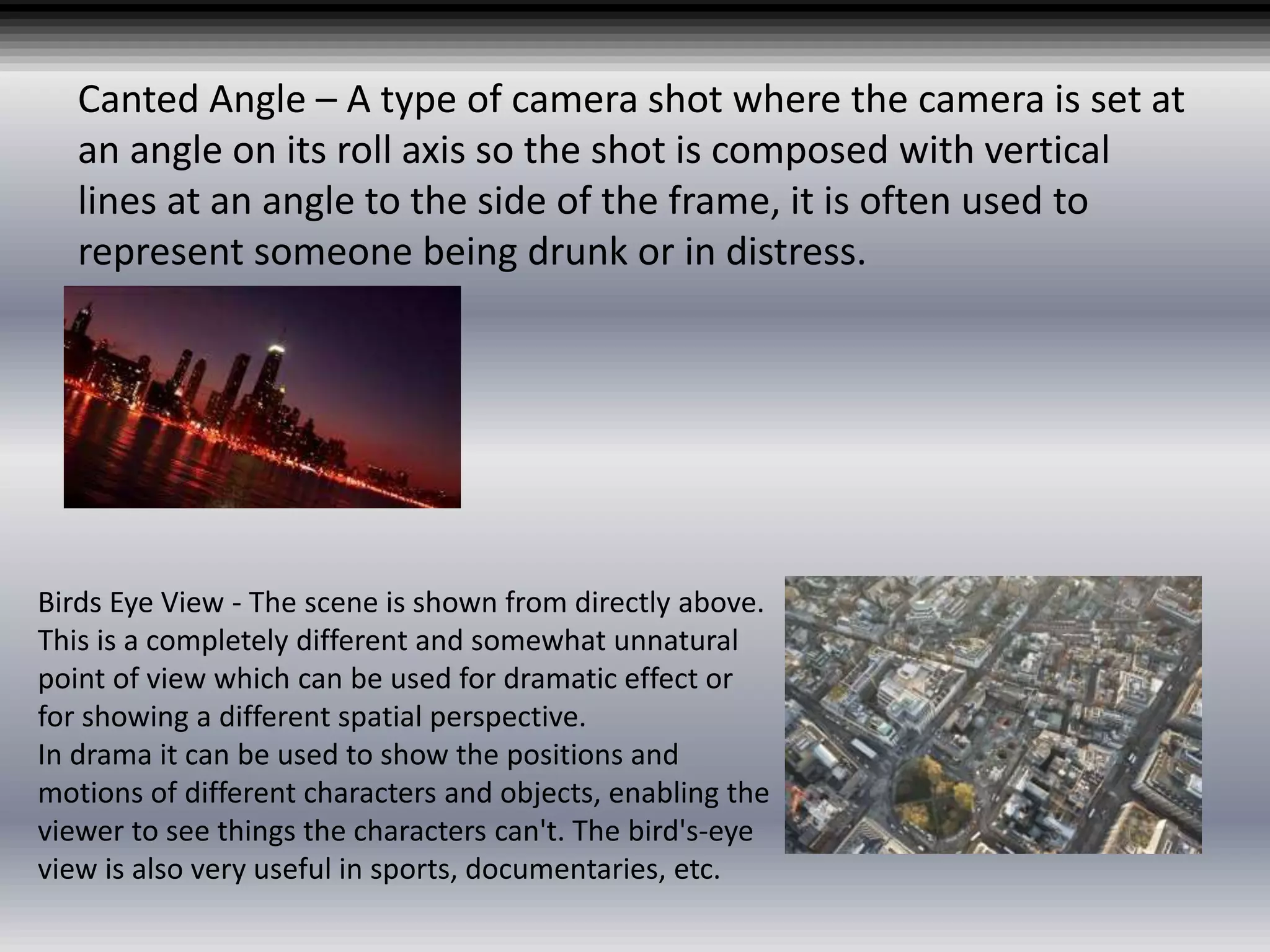
Canted Angle – A type of camera shot where the camera is set at
an angle on its roll axis so the shot is composed with vertical
lines at an angle to the side of the frame, it is often used to
represent someone being drunk or in distress.
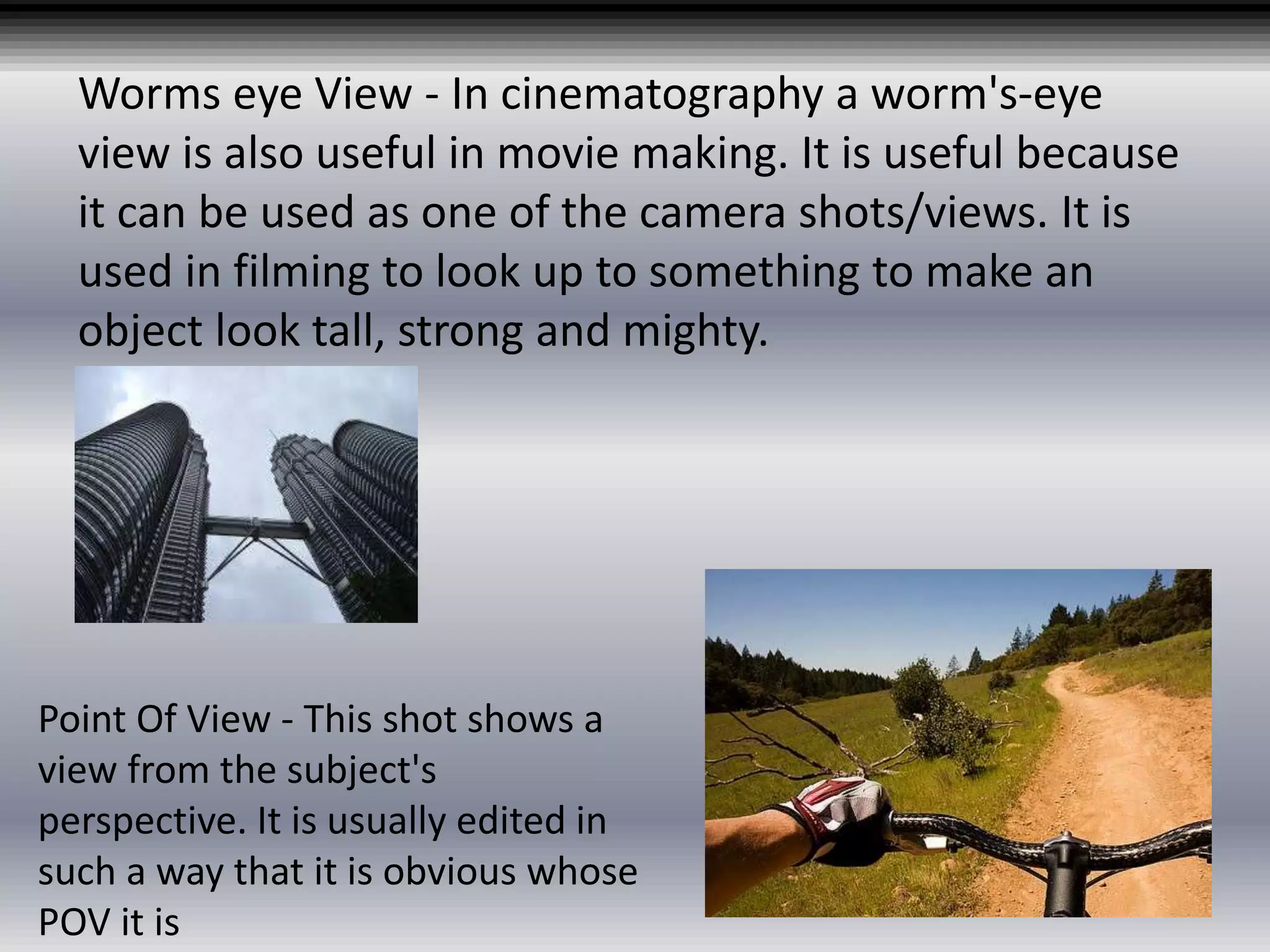
Birds Eye View - The scene is shown from directly above.
This is a completely different and somewhat unnatural
point of view which can be used for dramatic effect or
for showing a different spatial perspective.
In drama it can be used to show the positions and
motions of different characters and objects, enabling the
viewer to see things the characters can't. The bird's-eye
view is also very useful in sports, documentaries, etc.
Worms eye View - In cinematography a worm's-eye
view is also useful in movie making. It is useful because
it can be used as one of the camera shots/views. It is
used in filming to look up to something to make an
object look tall, strong and mighty.
Point Of View - This shot shows a
view from the subject's
perspective. It is usually edited in
such a way that it is obvious whose
POV it is

Camera shots and angles

  • 1.
  • 2.
    • Extreme LongShot - A wider frame value in which subjects in the frame are small; a building, cityscape. See also establishing shot. Extreme Close up - A closer frame value than a close-up; i.e. showing parts of the face or greater detail of an object . See also close-up.
  • 3.
    • Long Shot- A value of framing where the whole subject is relatively small enough to fit the height of the frame. Medium Long Shot - A value of framing that almost shows the full subject; also known as plan américain.
  • 4.
    • Full Shot- A type of long shot which includes the human body in full, with the head near the top of the frame and the feet near the bottom. Medium Full Shot – when the frame cuts off just above the knees and just above the head.
  • 5.
    • Medium Shot- A relatively close shot, revealing a moderate amount of detail. A medium shot of a figure generally includes the body from the knees or waist up. Close Shot - A detailed view of a person or object, usually without much context provided.
  • 6.
    Close up -A value of framing where the size of the subject is relatively large and fills most of the frame. For instance a person’s head seen from the neck up, or an object seen in detail. Medium Close Shot – Falls just above the waist and just above the head
  • 7.
    Big Close Up- This shows just the face. You use this when expressions and emotions are important. Head Close Up – It cuts off low down on the neck
  • 8.
    High Angle -A high angle shows the subject from above, i.e. the camera is angled down towards the subject. This has the effect of diminishing the subject, making them appear less powerful, less significant or even submissive. Low Angle - This shows the subject from below, giving them the impression of being more powerful or dominant.
  • 9.
    Canted Angle –A type of camera shot where the camera is set at an angle on its roll axis so the shot is composed with vertical lines at an angle to the side of the frame, it is often used to represent someone being drunk or in distress. Birds Eye View - The scene is shown from directly above. This is a completely different and somewhat unnatural point of view which can be used for dramatic effect or for showing a different spatial perspective. In drama it can be used to show the positions and motions of different characters and objects, enabling the viewer to see things the characters can't. The bird's-eye view is also very useful in sports, documentaries, etc.
  • 10.
    Worms eye View- In cinematography a worm's-eye view is also useful in movie making. It is useful because it can be used as one of the camera shots/views. It is used in filming to look up to something to make an object look tall, strong and mighty. Point Of View - This shot shows a view from the subject's perspective. It is usually edited in such a way that it is obvious whose POV it is