Restoring Breathing
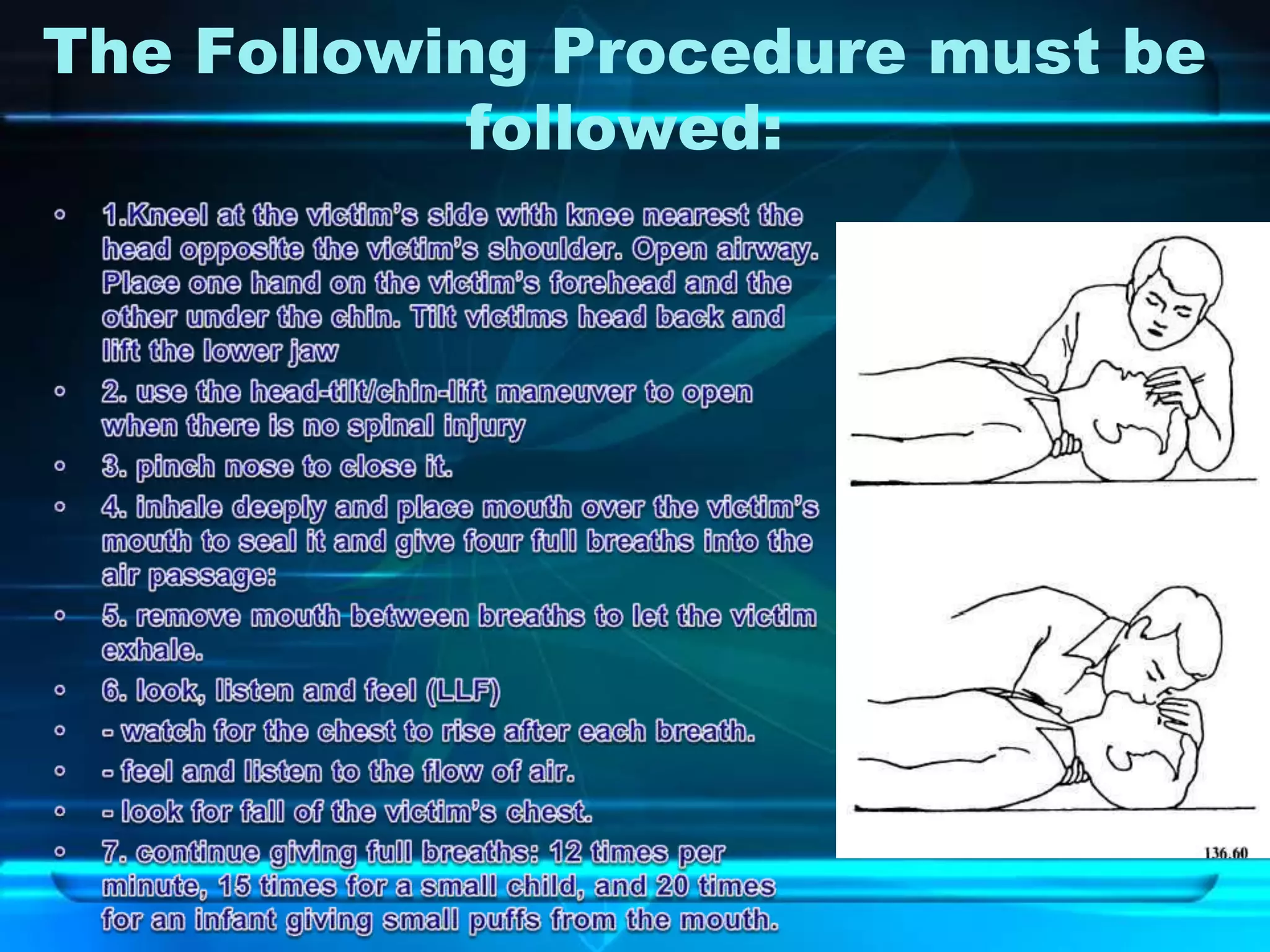
The Following Procedure must be 
followed:
To Perform CPR Do the 
Following
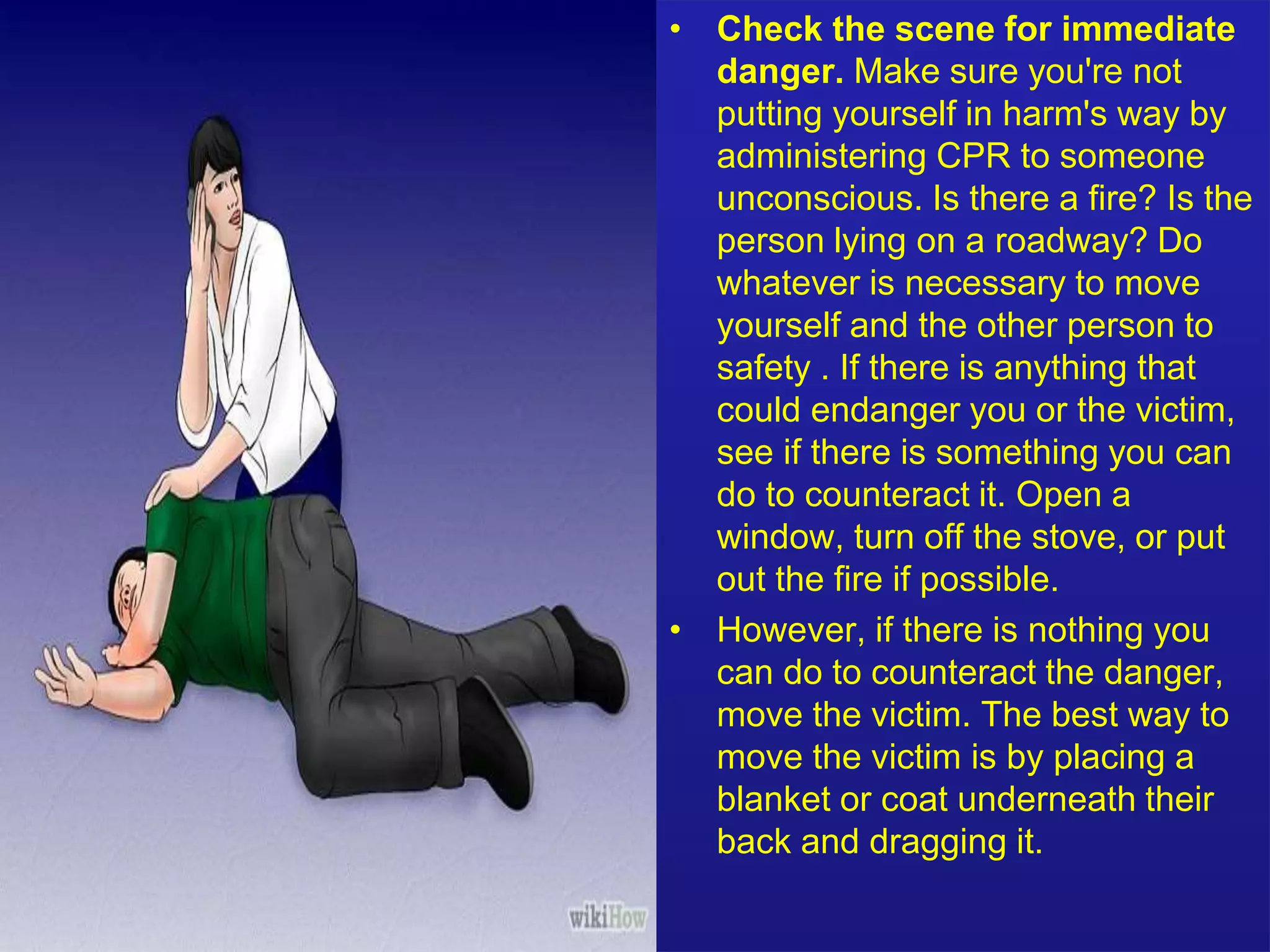
• Check the scene for immediate 
danger. Make sure you're not 
putting yourself in harm's way by 
administering CPR to someone 
unconscious. Is there a fire? Is the 
person lying on a roadway? Do 
whatever is necessary to move 
yourself and the other person to 
safety . If there is anything that 
could endanger you or the victim, 
see if there is something you can 
do to counteract it. Open a 
window, turn off the stove, or put 
out the fire if possible. 
• However, if there is nothing you 
can do to counteract the danger, 
move the victim. The best way to 
move the victim is by placing a 
blanket or coat underneath their 
back and dragging it.
• 
Assess the victim's 
consciousness. Gently tap his 
or her shoulder and ask "Are 
you OK?" in a loud, clear 
voice. If he or she responds, 
CPR is not required. Instead, 
undertake basic first 
aid and take measures to 
prevent or treat shock[1], and 
assess whether you need to 
contact emergency services.If 
the victim does not respond, 
continue with the following 
steps.
• Do not check for 
a pulse. Unless 
you're a trained 
medical 
professional, 
odds are you'll 
spend too much 
valuable time 
looking for a 
pulse when you 
should be doing 
compressions.[2] 
•
• Check for 
breathing. Put your 
ear close to the 
victim's nose and 
mouth, and listen for 
slight breathing. If the 
victim is coughing 
or breathing 
normally, do not 
perform CPR. Doing 
so could cause the 
heart to stop 
beating. [3]
• Place the victim 
on his or her 
back. Make sure 
he or she is lying 
as flat as possible 
- this will prevent 
injury while you're 
doing chest 
compressions
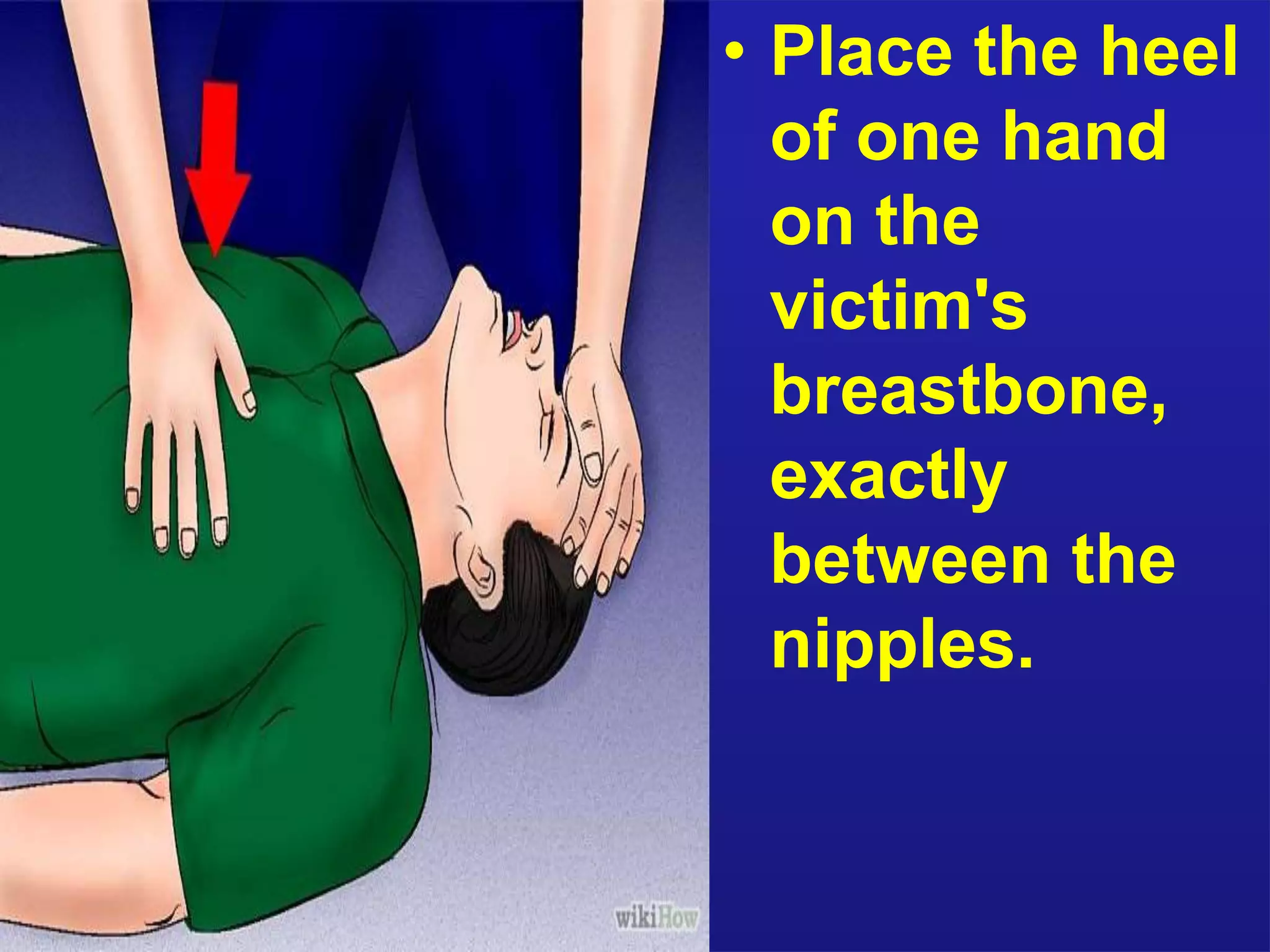
• Place the heel 
of one hand 
on the 
victim's 
breastbone, 
exactly 
between the 
nipples.
• Place 
your 
second 
hand on 
top of the 
first hand, 
palm-down.
• Position 
your body 
directly over 
your hands, 
so that your 
arms are 
straight and 
somewhat 
rigid.
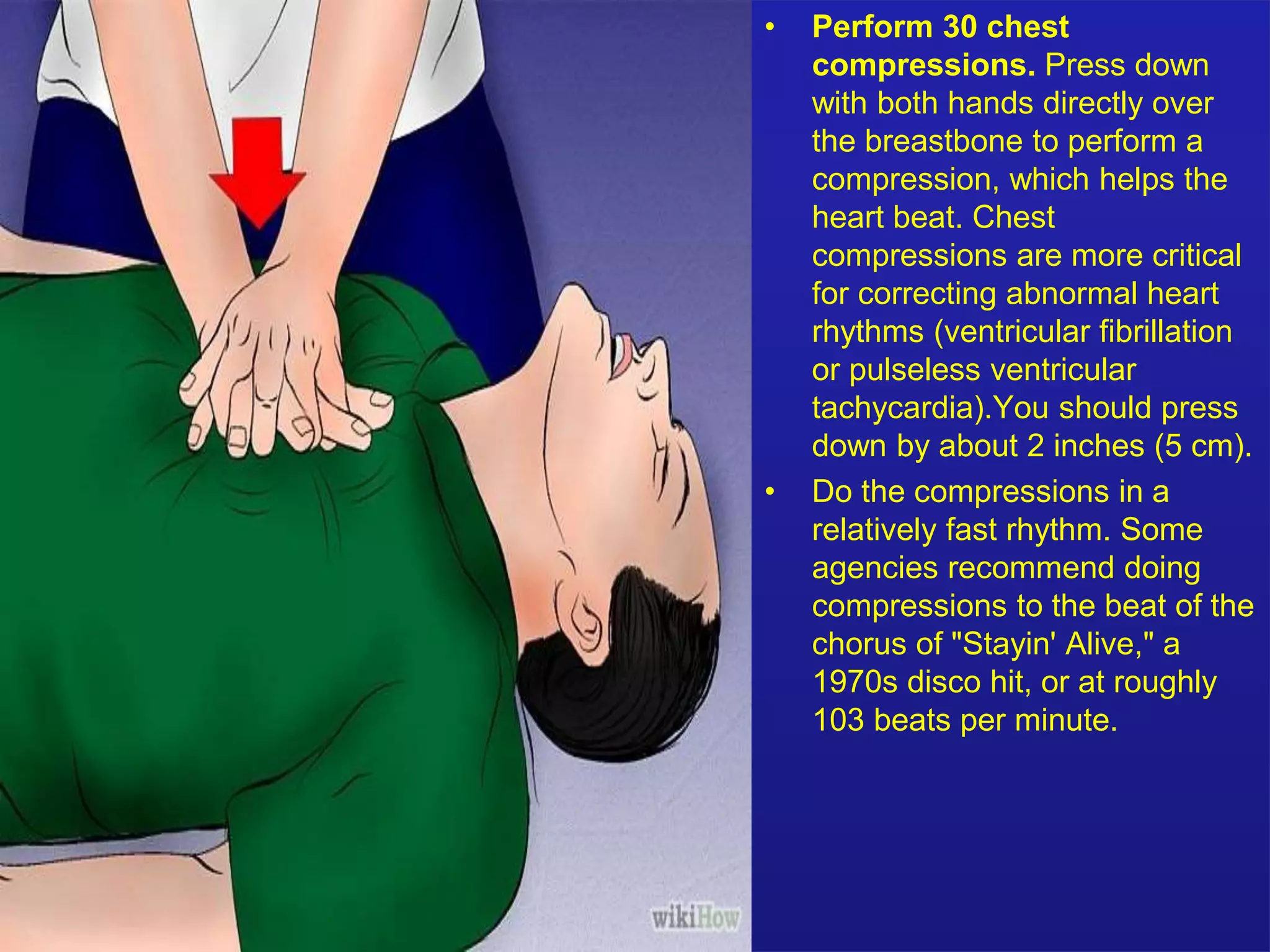
• Perform 30 chest 
compressions. Press down 
with both hands directly over 
the breastbone to perform a 
compression, which helps the 
heart beat. Chest 
compressions are more critical 
for correcting abnormal heart 
rhythms (ventricular fibrillation 
or pulseless ventricular 
tachycardia).You should press 
down by about 2 inches (5 cm). 
• Do the compressions in a 
relatively fast rhythm. Some 
agencies recommend doing 
compressions to the beat of the 
chorus of "Stayin' Alive," a 
1970s disco hit, or at roughly 
103 beats per minute.
• Minimize 
pauses in chest 
compression 
that occur 
when changing 
providers or 
preparing for a 
shock.[1] Attemp 
t to limit 
interruptions to 
less than 10 
seconds.
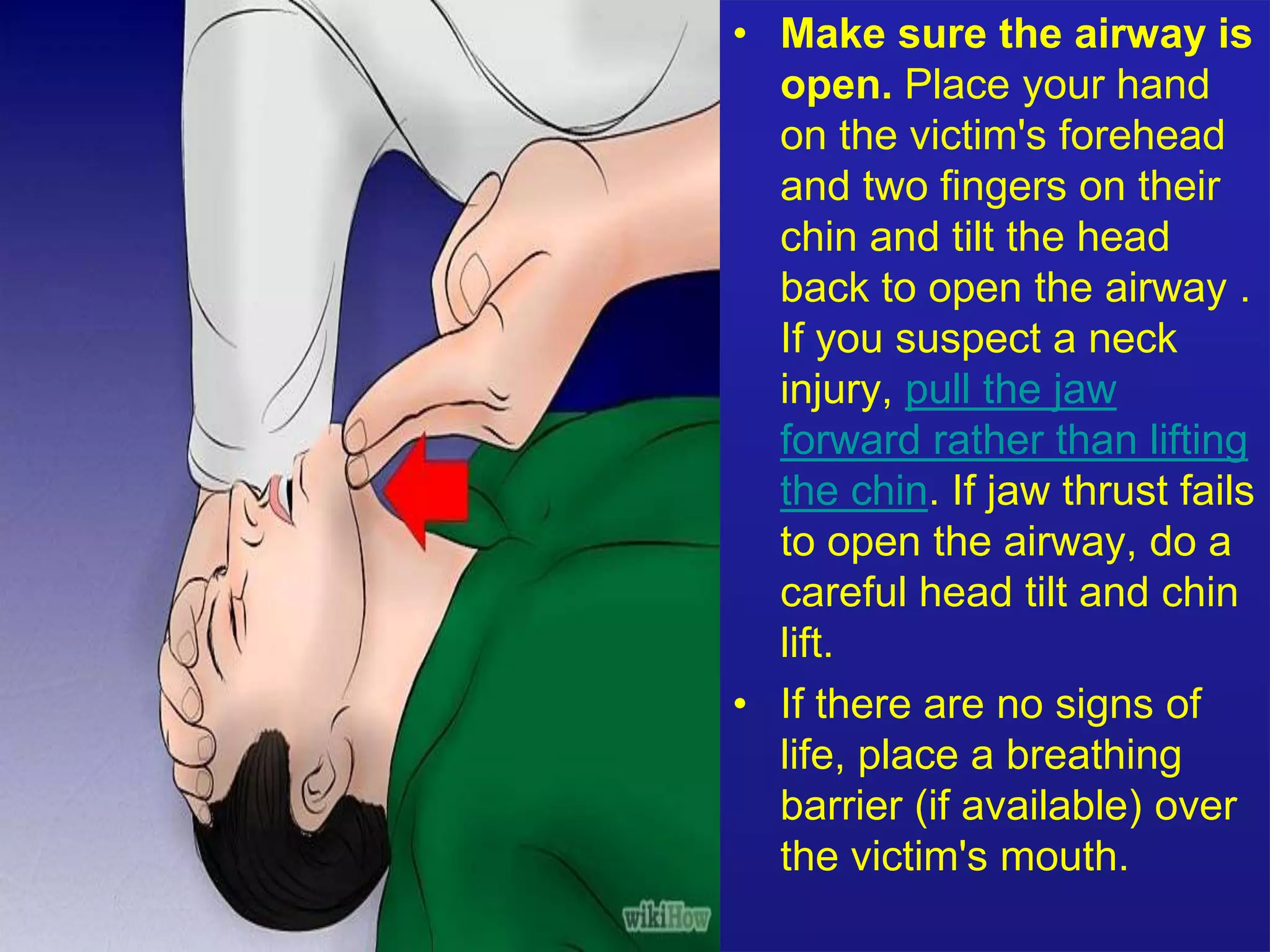
• Make sure the airway is 
open. Place your hand 
on the victim's forehead 
and two fingers on their 
chin and tilt the head 
back to open the airway . 
If you suspect a neck 
injury, pull the jaw 
forward rather than lifting 
the chin. If jaw thrust fails 
to open the airway, do a 
careful head tilt and chin 
lift. 
• If there are no signs of 
life, place a breathing 
barrier (if available) over 
the victim's mouth.
• Give two rescue breaths (optional). The 
American Heart Association no longer 
considers rescue breaths necessary for CPR, 
as the chest compressions are more 
important. If you are trained in CPR and 
totally confident, give two rescue breaths 
after your 30 chest compressions. If you've 
never done CPR before, or you're trained but 
rusty, stick with only chest 
compressions.[4]Keeping the airway open, 
take the fingers that were on the forehead 
and pinch the victim's nose closed. Make a 
seal with your mouth over the victim's mouth 
and breathe out for about one second. Make 
sure you breathe slowly, as this will make 
sure the air goes in the lungs and not the 
stomach. 
• If the breath goes in, you should see the 
chest slightly rise and also feel it go in. Give a 
second rescue breath. 
• If the breath does not go in, re-position the 
head and try again. If it does not go in again, 
the victim may be choking. Do abdominal 
thrusts (the Heimlich manuever) to remove 
the obstruction.
• Repeat the cycle of 
30 chest 
compressions. If 
you're also doing 
rescue breaths, keep 
doing a cycle of 30 
chest compressions 
and 2 rescue 
breaths.You should do 
CPR for 2 minutes (5 
cycles of compressions 
to breaths) before 
checking for signs of 
life.
• Continue CPR 
until someone 
takes over for 
you, emergency 
personnel 
arrive, you are 
too exhausted 
to continue, an 
AED is available 
for immediate 
use, or signs of 
life return.
How to Use AED?
• 
Use an AED 
(automated external 
defibrillator). If an 
AED is available in the 
immediate area, use it 
as soon as possible to 
jump-start the victim's 
heart. [5]Make sure 
there are no puddles 
or standing water in 
the immediate area.
• Turn on the 
AED. It 
should have 
voice 
prompts that 
tell you what 
to do.
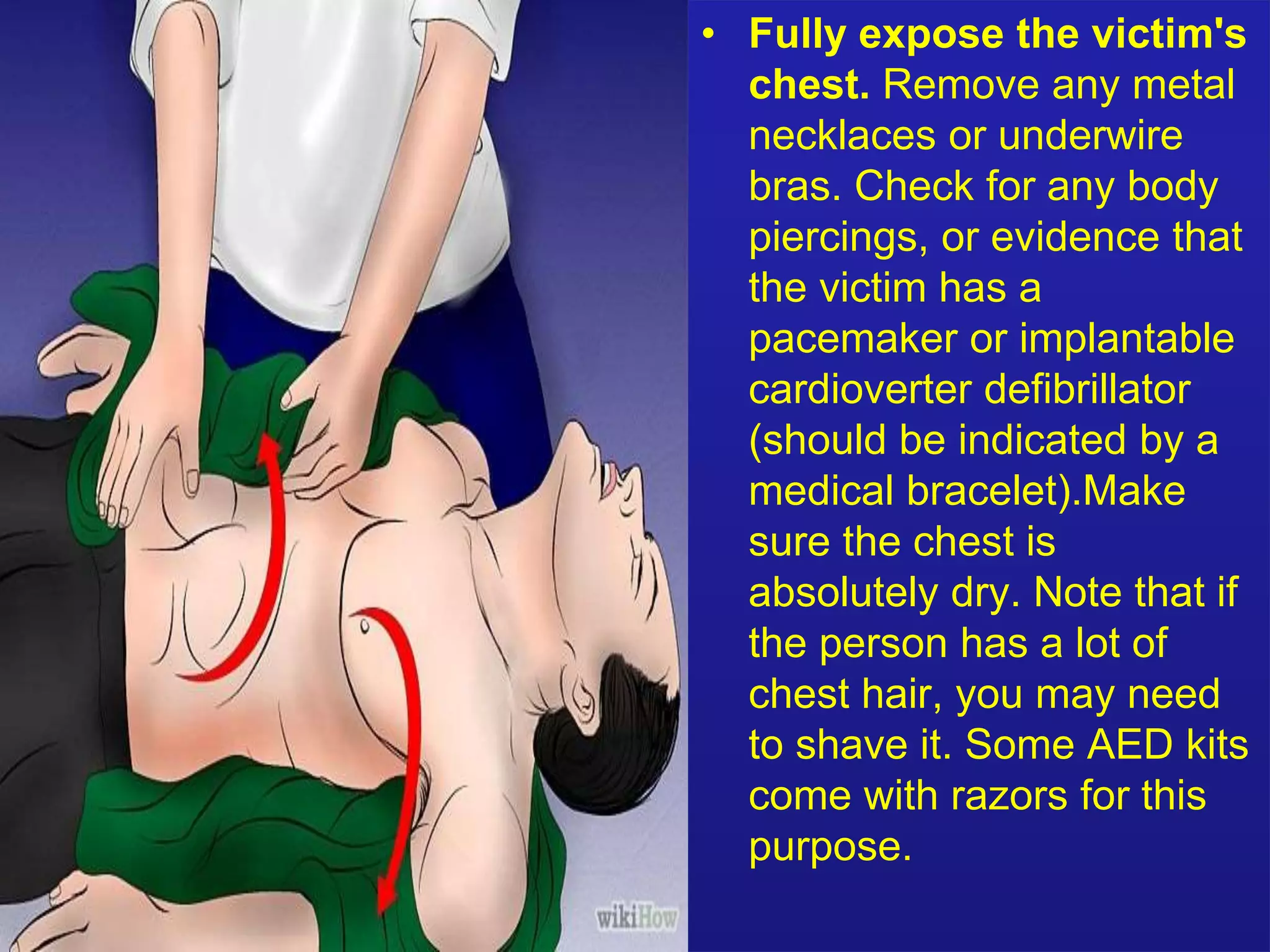
• Fully expose the victim's 
chest. Remove any metal 
necklaces or underwire 
bras. Check for any body 
piercings, or evidence that 
the victim has a 
pacemaker or implantable 
cardioverter defibrillator 
(should be indicated by a 
medical bracelet).Make 
sure the chest is 
absolutely dry. Note that if 
the person has a lot of 
chest hair, you may need 
to shave it. Some AED kits 
come with razors for this 
purpose.
• 
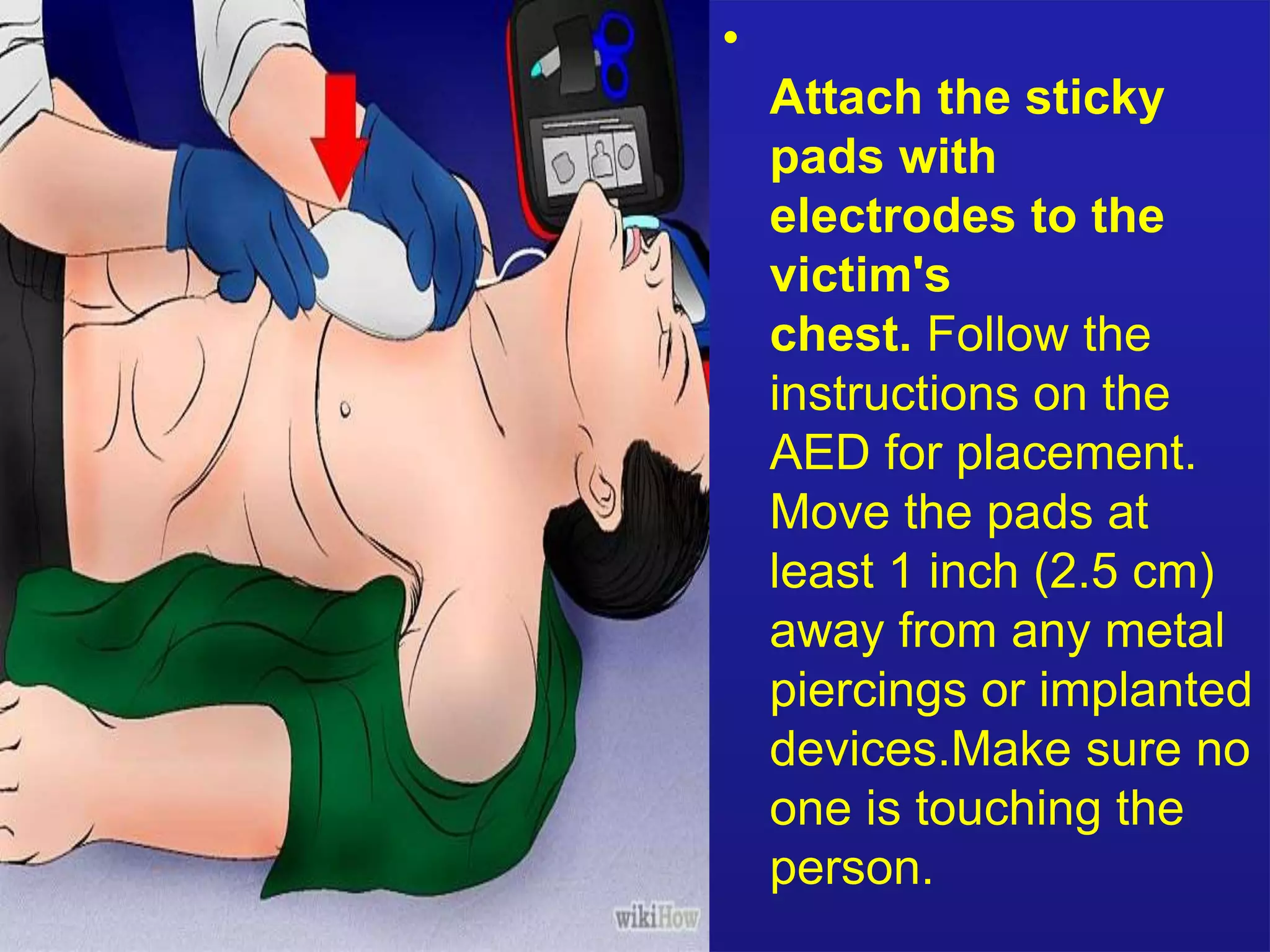
Attach the sticky 
pads with 
electrodes to the 
victim's 
chest. Follow the 
instructions on the 
AED for placement. 
Move the pads at 
least 1 inch (2.5 cm) 
away from any metal 
piercings or implanted 
devices.Make sure no 
one is touching the 
person.
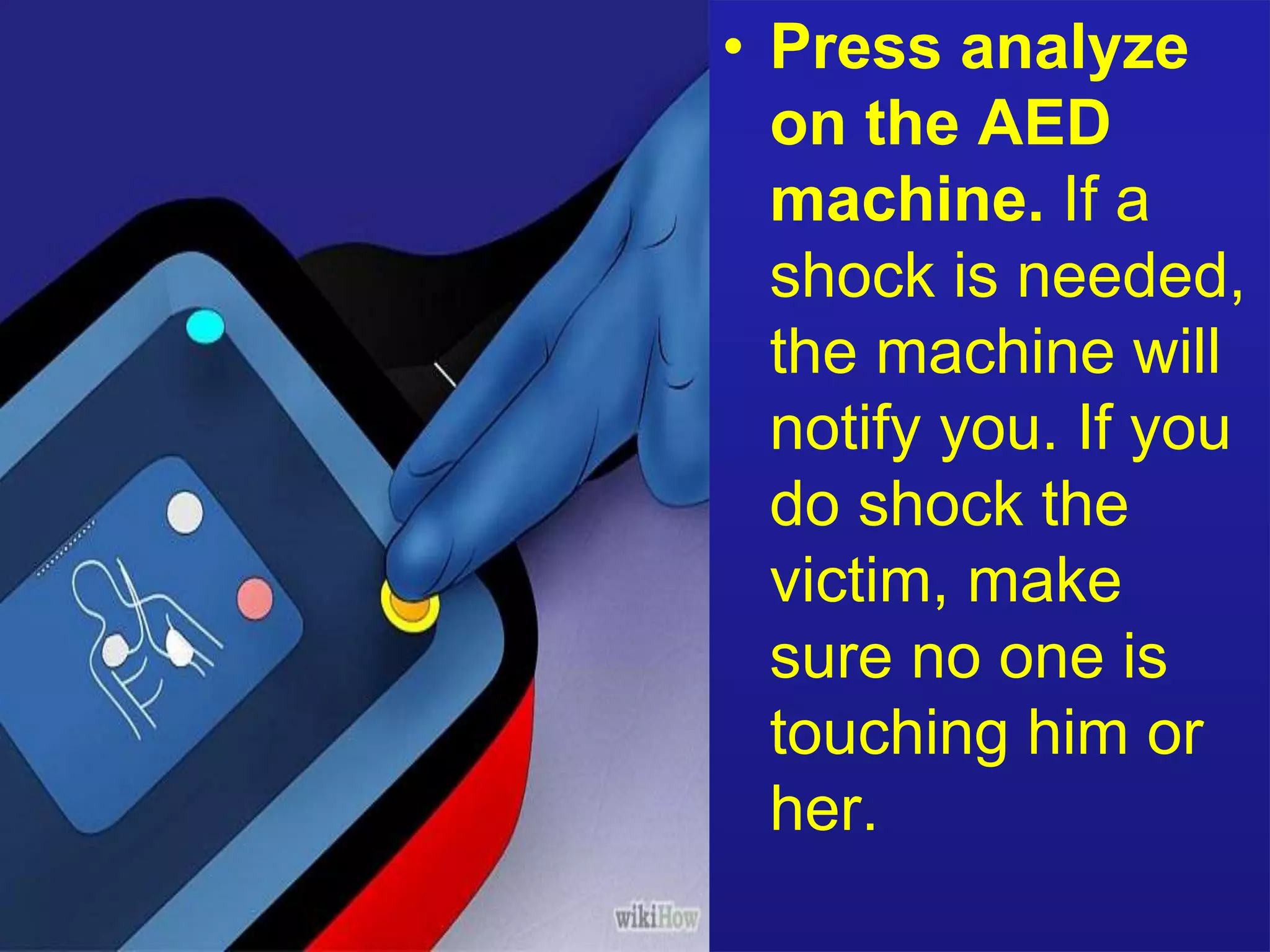
• Press analyze 
on the AED 
machine. If a 
shock is needed, 
the machine will 
notify you. If you 
do shock the 
victim, make 
sure no one is 
touching him or 
her.
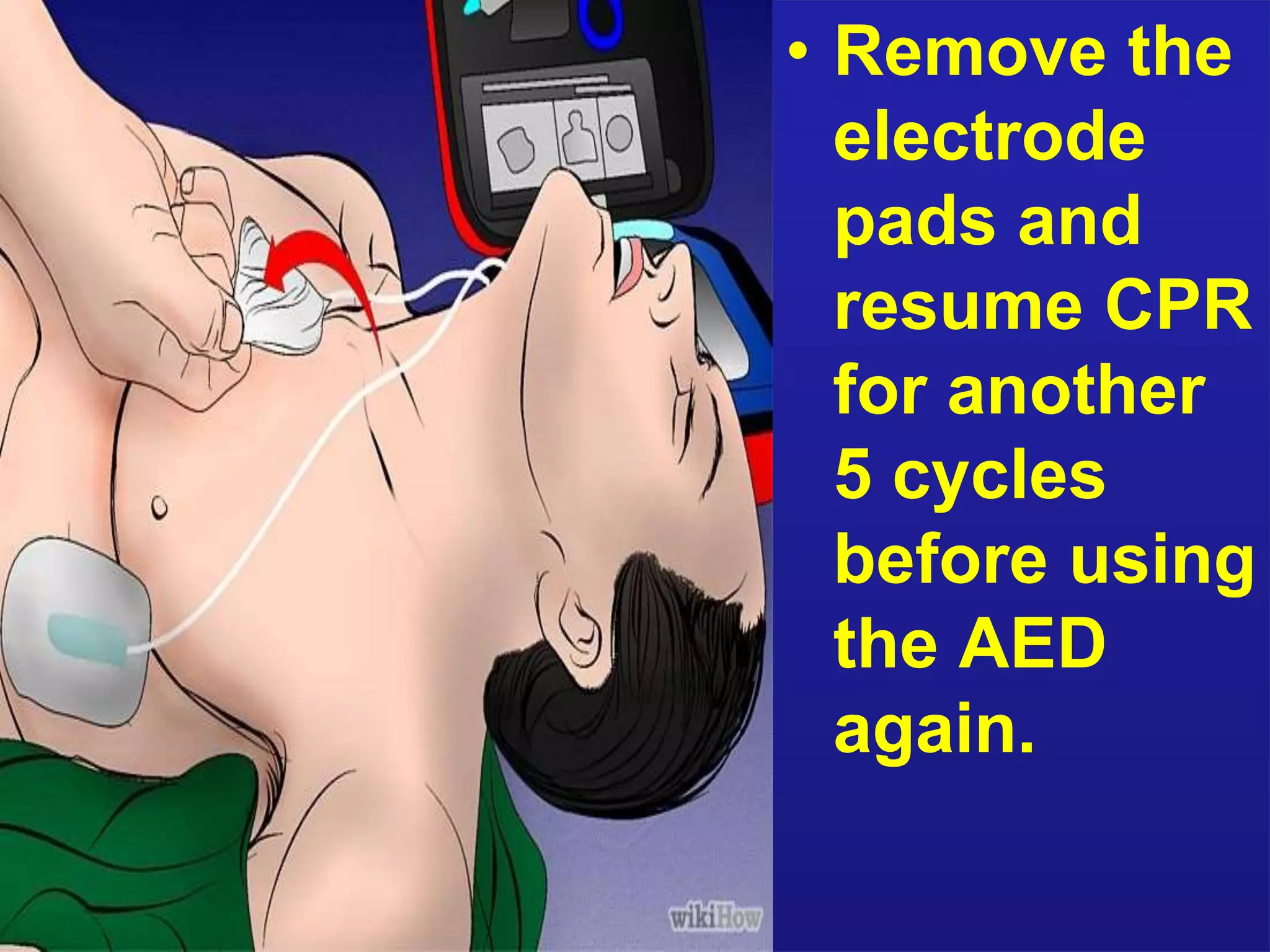
• Remove the 
electrode 
pads and 
resume CPR 
for another 
5 cycles 
before using 
the AED 
again.
Restoring breathing

Restoring breathing

  • 1.
  • 4.
    The Following Proceduremust be followed:
  • 8.
    To Perform CPRDo the Following
  • 9.
    • Check thescene for immediate danger. Make sure you're not putting yourself in harm's way by administering CPR to someone unconscious. Is there a fire? Is the person lying on a roadway? Do whatever is necessary to move yourself and the other person to safety . If there is anything that could endanger you or the victim, see if there is something you can do to counteract it. Open a window, turn off the stove, or put out the fire if possible. • However, if there is nothing you can do to counteract the danger, move the victim. The best way to move the victim is by placing a blanket or coat underneath their back and dragging it.
  • 10.
    • Assess thevictim's consciousness. Gently tap his or her shoulder and ask "Are you OK?" in a loud, clear voice. If he or she responds, CPR is not required. Instead, undertake basic first aid and take measures to prevent or treat shock[1], and assess whether you need to contact emergency services.If the victim does not respond, continue with the following steps.
  • 12.
    • Do notcheck for a pulse. Unless you're a trained medical professional, odds are you'll spend too much valuable time looking for a pulse when you should be doing compressions.[2] •
  • 13.
    • Check for breathing. Put your ear close to the victim's nose and mouth, and listen for slight breathing. If the victim is coughing or breathing normally, do not perform CPR. Doing so could cause the heart to stop beating. [3]
  • 14.
    • Place thevictim on his or her back. Make sure he or she is lying as flat as possible - this will prevent injury while you're doing chest compressions
  • 15.
    • Place theheel of one hand on the victim's breastbone, exactly between the nipples.
  • 16.
    • Place your second hand on top of the first hand, palm-down.
  • 17.
    • Position yourbody directly over your hands, so that your arms are straight and somewhat rigid.
  • 18.
    • Perform 30chest compressions. Press down with both hands directly over the breastbone to perform a compression, which helps the heart beat. Chest compressions are more critical for correcting abnormal heart rhythms (ventricular fibrillation or pulseless ventricular tachycardia).You should press down by about 2 inches (5 cm). • Do the compressions in a relatively fast rhythm. Some agencies recommend doing compressions to the beat of the chorus of "Stayin' Alive," a 1970s disco hit, or at roughly 103 beats per minute.
  • 19.
    • Minimize pausesin chest compression that occur when changing providers or preparing for a shock.[1] Attemp t to limit interruptions to less than 10 seconds.
  • 20.
    • Make surethe airway is open. Place your hand on the victim's forehead and two fingers on their chin and tilt the head back to open the airway . If you suspect a neck injury, pull the jaw forward rather than lifting the chin. If jaw thrust fails to open the airway, do a careful head tilt and chin lift. • If there are no signs of life, place a breathing barrier (if available) over the victim's mouth.
  • 21.
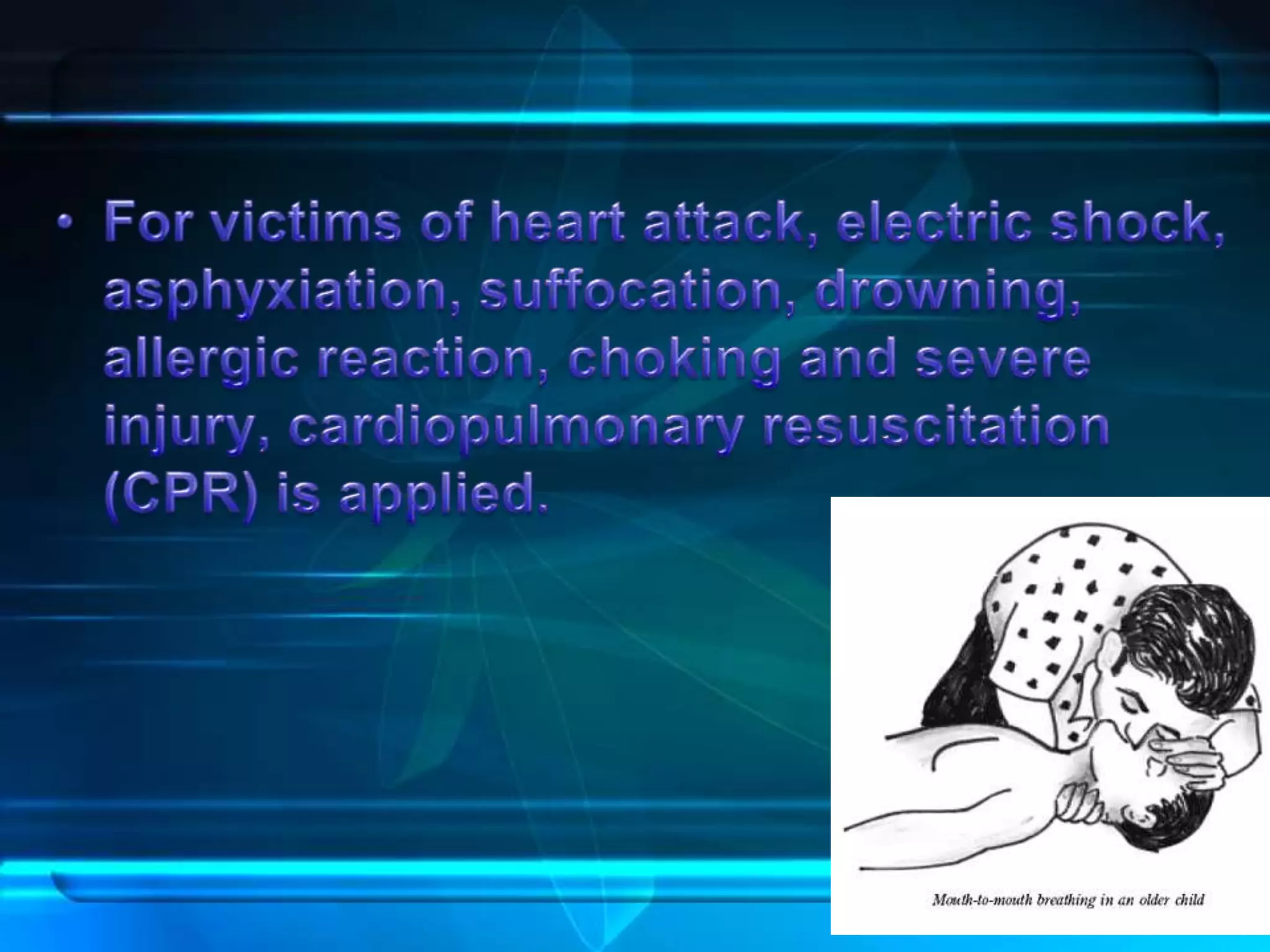
    • Give tworescue breaths (optional). The American Heart Association no longer considers rescue breaths necessary for CPR, as the chest compressions are more important. If you are trained in CPR and totally confident, give two rescue breaths after your 30 chest compressions. If you've never done CPR before, or you're trained but rusty, stick with only chest compressions.[4]Keeping the airway open, take the fingers that were on the forehead and pinch the victim's nose closed. Make a seal with your mouth over the victim's mouth and breathe out for about one second. Make sure you breathe slowly, as this will make sure the air goes in the lungs and not the stomach. • If the breath goes in, you should see the chest slightly rise and also feel it go in. Give a second rescue breath. • If the breath does not go in, re-position the head and try again. If it does not go in again, the victim may be choking. Do abdominal thrusts (the Heimlich manuever) to remove the obstruction.
  • 22.
    • Repeat thecycle of 30 chest compressions. If you're also doing rescue breaths, keep doing a cycle of 30 chest compressions and 2 rescue breaths.You should do CPR for 2 minutes (5 cycles of compressions to breaths) before checking for signs of life.
  • 23.
    • Continue CPR until someone takes over for you, emergency personnel arrive, you are too exhausted to continue, an AED is available for immediate use, or signs of life return.
  • 24.
  • 25.
    • Use anAED (automated external defibrillator). If an AED is available in the immediate area, use it as soon as possible to jump-start the victim's heart. [5]Make sure there are no puddles or standing water in the immediate area.
  • 26.
    • Turn onthe AED. It should have voice prompts that tell you what to do.
  • 27.
    • Fully exposethe victim's chest. Remove any metal necklaces or underwire bras. Check for any body piercings, or evidence that the victim has a pacemaker or implantable cardioverter defibrillator (should be indicated by a medical bracelet).Make sure the chest is absolutely dry. Note that if the person has a lot of chest hair, you may need to shave it. Some AED kits come with razors for this purpose.
  • 28.
    • Attach thesticky pads with electrodes to the victim's chest. Follow the instructions on the AED for placement. Move the pads at least 1 inch (2.5 cm) away from any metal piercings or implanted devices.Make sure no one is touching the person.
  • 29.
    • Press analyze on the AED machine. If a shock is needed, the machine will notify you. If you do shock the victim, make sure no one is touching him or her.
  • 30.
    • Remove the electrode pads and resume CPR for another 5 cycles before using the AED again.