A2GEOGRAPHYREVISION
COASTALENVIRONMENTS
8.3 CORALREEFS
KEYTERMSANDDEFINITIONS
Coral is a living organism (polyp) living in clear, tropical waters.
Corals live in communities known as reefs. They secrete lime and build a
skeleton.
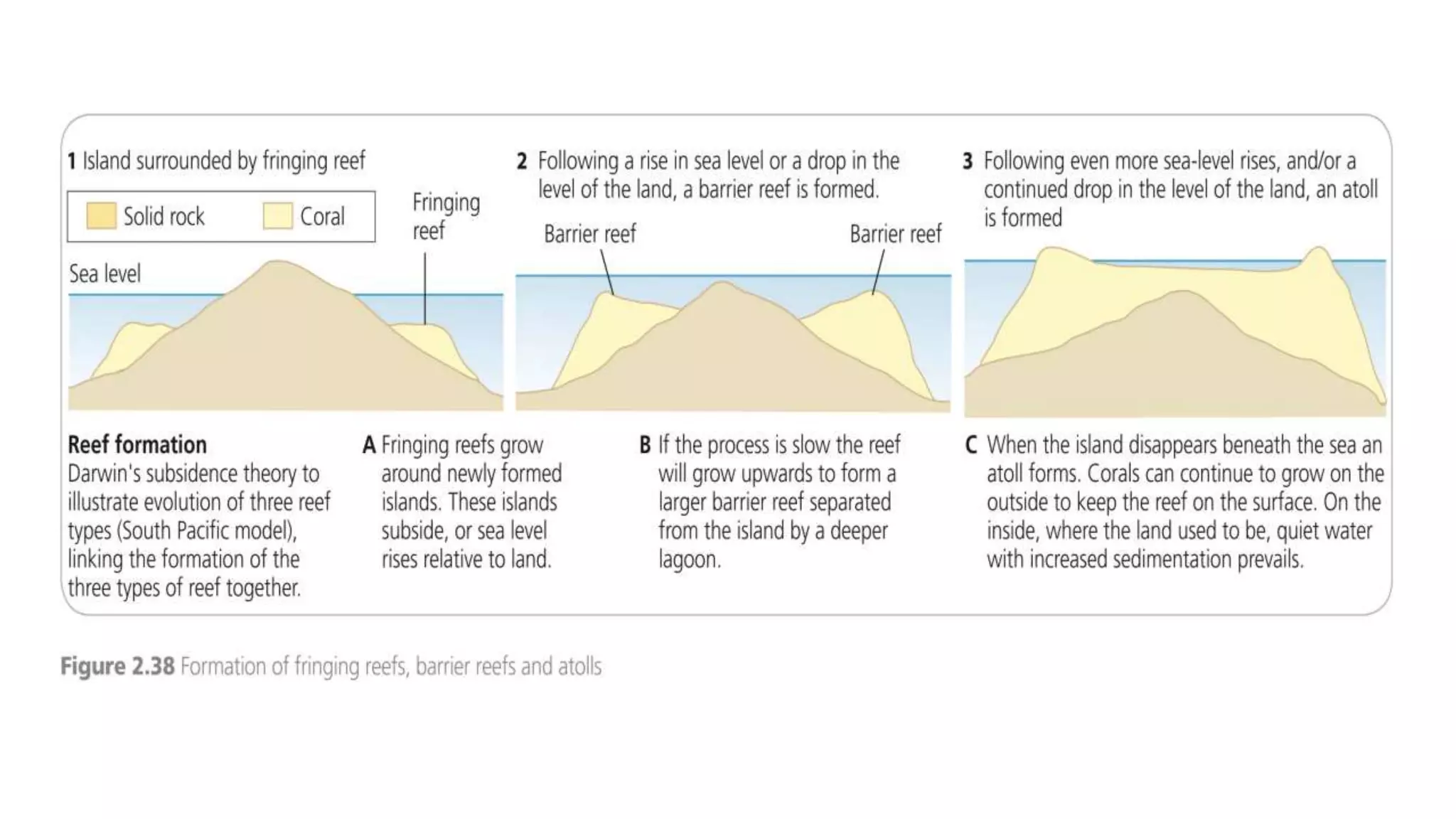
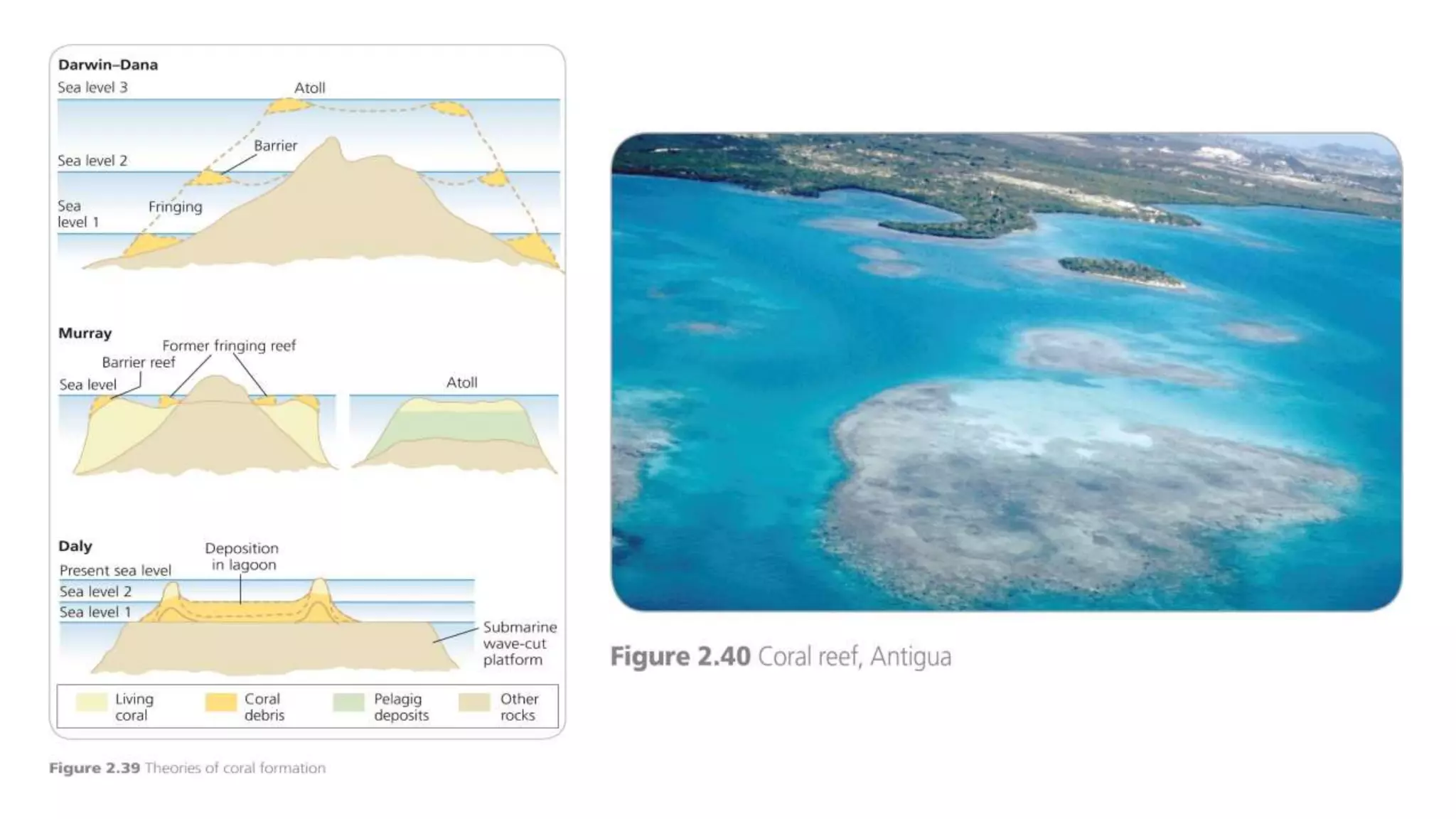
Atoll is a coral reef surrounding a central lagoon, which may have developed
around volcanic islands that have submerged or may have developed
upwards as sea levels have risen.
Barrier reef is a coral reef running parallel to the coastline and separated
from the shoreline by an extensive lagoon system.
KEYTERMSANDDEFINITIONS
Fringing reef is a coral reef attached to the coastline.
Patch reef is a small circular or irregular reef that rises from the sea floor of
lagoons behind barrier reefs or within atolls.
Coral bleaching is the expulsion of the algae from coral causing it to lose
colour.
Zooxanthellae are algae that live in a symbiotic relationship with coral and
provide it with its colour.
TOPICSUMMARY
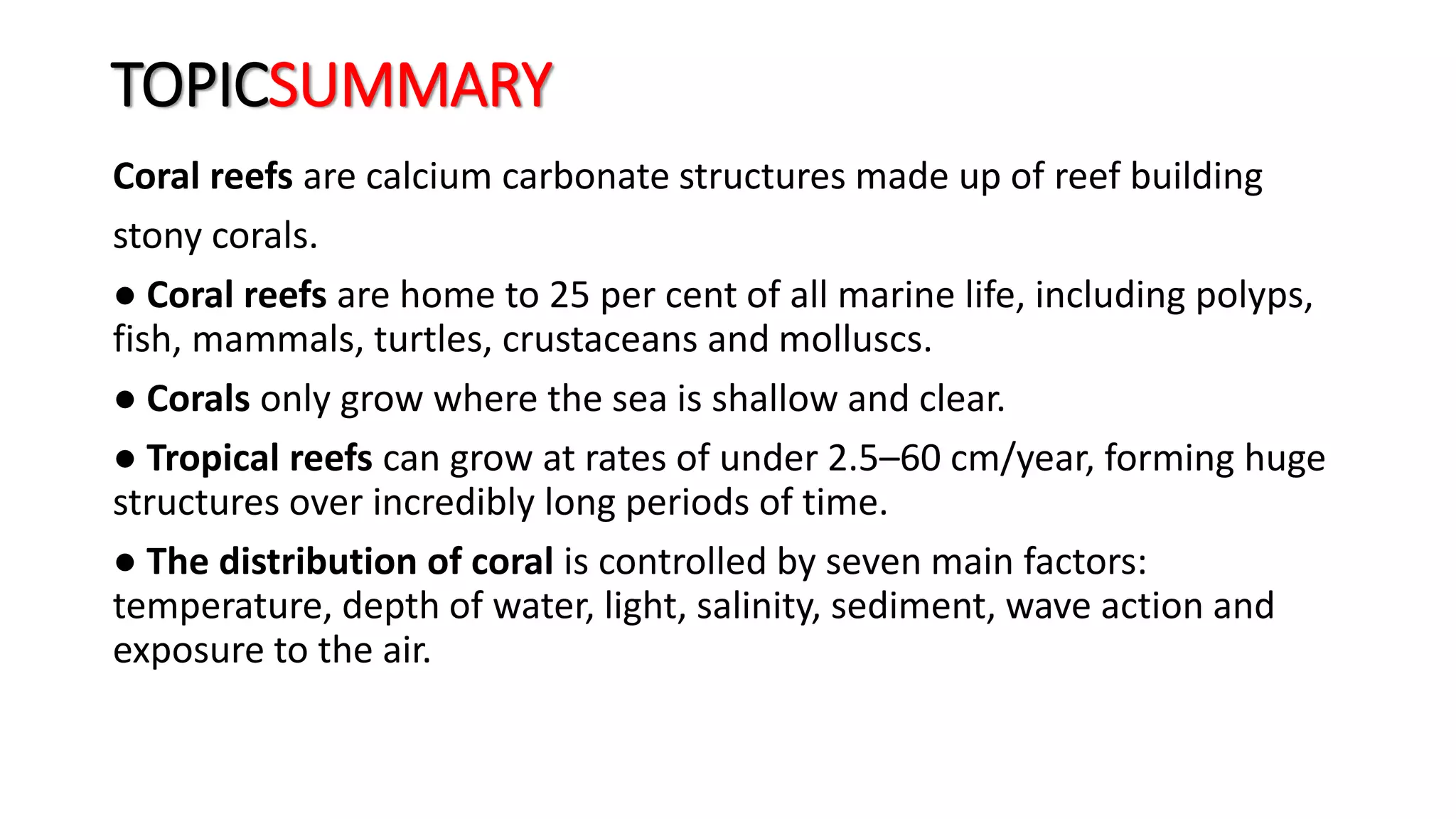
Coral reefs are calcium carbonate structures made up of reef building
stony corals.
● Coral reefs are home to 25 per cent of all marine life, including polyps,
fish, mammals, turtles, crustaceans and molluscs.
● Corals only grow where the sea is shallow and clear.
● Tropical reefs can grow at rates of under 2.5–60 cm/year, forming huge
structures over incredibly long periods of time.
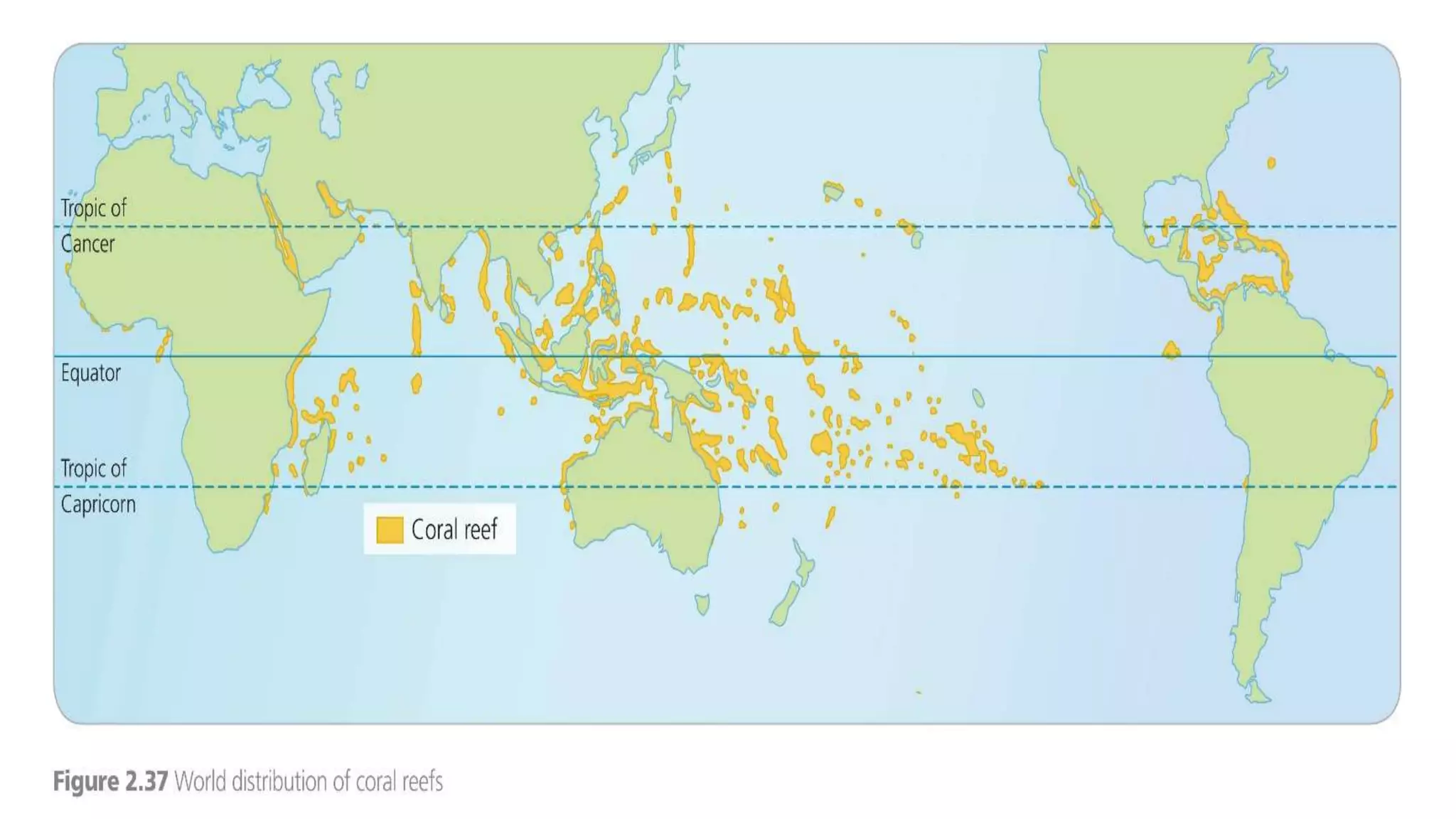
● The distribution of coral is controlled by seven main factors:
temperature, depth of water, light, salinity, sediment, wave action and
exposure to the air.
TOPICSUMMARY
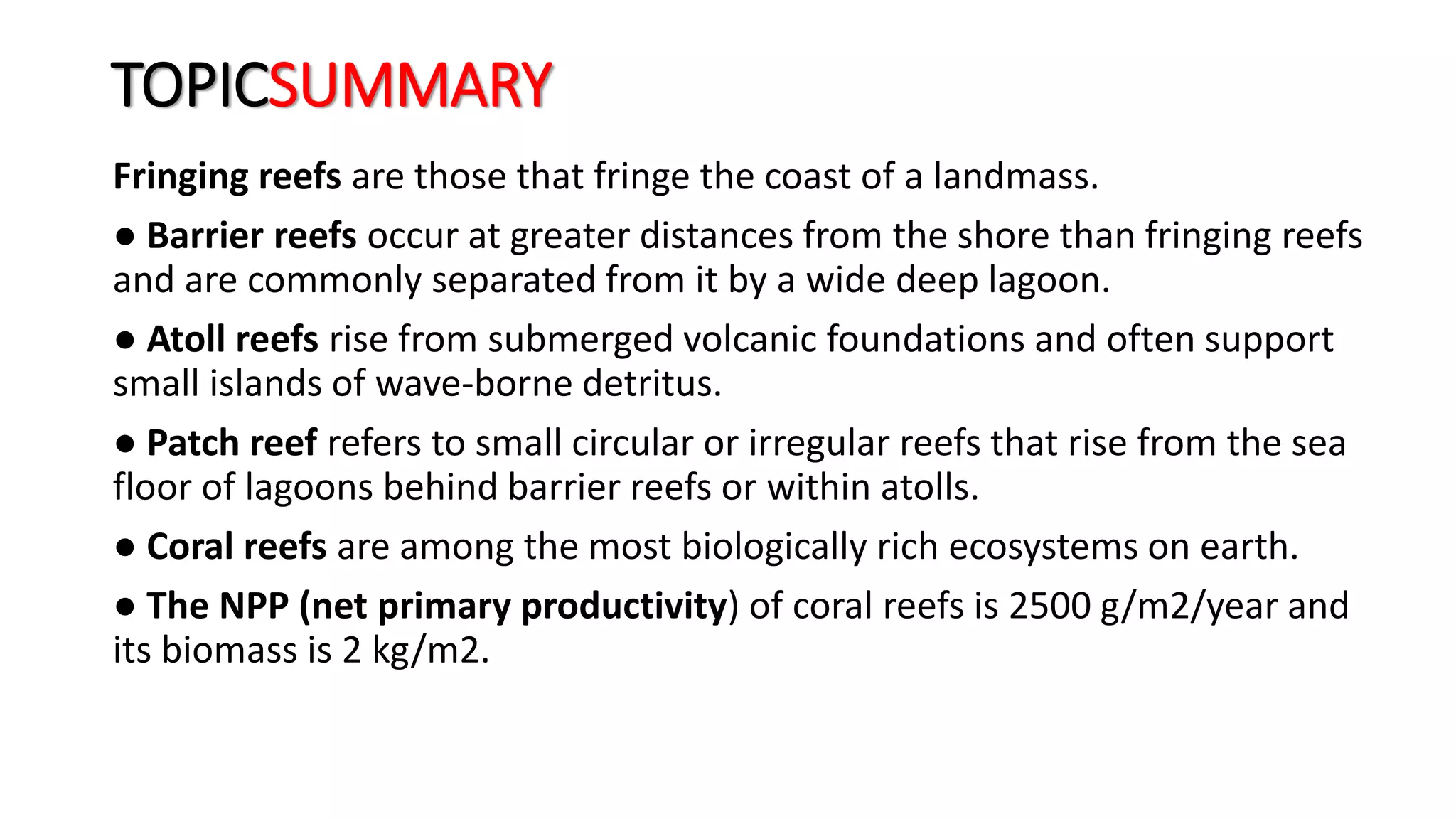
Fringing reefs are those that fringe the coast of a landmass.
● Barrier reefs occur at greater distances from the shore than fringing reefs
and are commonly separated from it by a wide deep lagoon.
● Atoll reefs rise from submerged volcanic foundations and often support
small islands of wave-borne detritus.
● Patch reef refers to small circular or irregular reefs that rise from the sea
floor of lagoons behind barrier reefs or within atolls.
● Coral reefs are among the most biologically rich ecosystems on earth.
● The NPP (net primary productivity) of coral reefs is 2500 g/m2/year and
its biomass is 2 kg/m2.
TOPICSUMMARY
There are many advantages of coral, including seafood, a source of
medicines, recreational value and coastal protection.
According to the World Resources Institute 58 per cent of the world’s coral
reefs are at high or medium risk of degradation.
Increased water temperatures can cause the corals to expel their algal
symbionts, without which the corals cannot survive. This is referred to as
coral bleaching (as the zooxanthellae are responsible for the colour of the
coral reefs).
The Global Assessment of coral says that the main causes of reef decline
are climate change, which causes bleaching; poor land management
practices, which damage the reefs with sediments, nutrients and other
pollutants; overfishing and destructive fishing practices; and coastal
development.
ADDITIONALWORK
1. Describe and explain the formation of different types of coral reef.
2. Outline the factors that affect the distribution of coral reefs.
3. Briefly explain the value of coral reefs.
4. Comment on the pressures that are facing coral reefs.
5. Describe the conditions necessary for the growth of coral reefs.
6. What are the main threats to the continued existence of coral? To what
extent can these threats be overcome?
SUGGESTEDWEBSITES
www.pcrf.org/reeffacts.html and
www.nature.org/joinanddonate/rescuereef/explore/facts.html for coral reef
facts.
www.unesco.org/csi/pub/source/ero10.htm for conservation of coral reefs.
www.reefcheck.org/conservation/coral_reef_management_program.php
for management of coral reefs.
http://earthobservatory.nasa.gov/IOTD/view.php?id=6276 for coral reef
management in Papua New Guinea and for some traditional methods of
preserving coral.
www.starfish.ch/reef/hotspots.html#10 for marine biodiversity hotspots.

CAMBRIDGE GEOGRAPHY A2 REVISION - COASTAL ENVIRONMENTS: 8.3 CORAL REEFS

  • 1.
  • 2.
    KEYTERMSANDDEFINITIONS Coral is aliving organism (polyp) living in clear, tropical waters. Corals live in communities known as reefs. They secrete lime and build a skeleton. Atoll is a coral reef surrounding a central lagoon, which may have developed around volcanic islands that have submerged or may have developed upwards as sea levels have risen. Barrier reef is a coral reef running parallel to the coastline and separated from the shoreline by an extensive lagoon system.
  • 4.
    KEYTERMSANDDEFINITIONS Fringing reef isa coral reef attached to the coastline. Patch reef is a small circular or irregular reef that rises from the sea floor of lagoons behind barrier reefs or within atolls. Coral bleaching is the expulsion of the algae from coral causing it to lose colour. Zooxanthellae are algae that live in a symbiotic relationship with coral and provide it with its colour.
  • 6.
    TOPICSUMMARY Coral reefs arecalcium carbonate structures made up of reef building stony corals. ● Coral reefs are home to 25 per cent of all marine life, including polyps, fish, mammals, turtles, crustaceans and molluscs. ● Corals only grow where the sea is shallow and clear. ● Tropical reefs can grow at rates of under 2.5–60 cm/year, forming huge structures over incredibly long periods of time. ● The distribution of coral is controlled by seven main factors: temperature, depth of water, light, salinity, sediment, wave action and exposure to the air.
  • 8.
    TOPICSUMMARY Fringing reefs arethose that fringe the coast of a landmass. ● Barrier reefs occur at greater distances from the shore than fringing reefs and are commonly separated from it by a wide deep lagoon. ● Atoll reefs rise from submerged volcanic foundations and often support small islands of wave-borne detritus. ● Patch reef refers to small circular or irregular reefs that rise from the sea floor of lagoons behind barrier reefs or within atolls. ● Coral reefs are among the most biologically rich ecosystems on earth. ● The NPP (net primary productivity) of coral reefs is 2500 g/m2/year and its biomass is 2 kg/m2.
  • 9.
    TOPICSUMMARY There are manyadvantages of coral, including seafood, a source of medicines, recreational value and coastal protection. According to the World Resources Institute 58 per cent of the world’s coral reefs are at high or medium risk of degradation. Increased water temperatures can cause the corals to expel their algal symbionts, without which the corals cannot survive. This is referred to as coral bleaching (as the zooxanthellae are responsible for the colour of the coral reefs). The Global Assessment of coral says that the main causes of reef decline are climate change, which causes bleaching; poor land management practices, which damage the reefs with sediments, nutrients and other pollutants; overfishing and destructive fishing practices; and coastal development.
  • 11.
    ADDITIONALWORK 1. Describe andexplain the formation of different types of coral reef. 2. Outline the factors that affect the distribution of coral reefs. 3. Briefly explain the value of coral reefs. 4. Comment on the pressures that are facing coral reefs. 5. Describe the conditions necessary for the growth of coral reefs. 6. What are the main threats to the continued existence of coral? To what extent can these threats be overcome?
  • 12.
    SUGGESTEDWEBSITES www.pcrf.org/reeffacts.html and www.nature.org/joinanddonate/rescuereef/explore/facts.html forcoral reef facts. www.unesco.org/csi/pub/source/ero10.htm for conservation of coral reefs. www.reefcheck.org/conservation/coral_reef_management_program.php for management of coral reefs. http://earthobservatory.nasa.gov/IOTD/view.php?id=6276 for coral reef management in Papua New Guinea and for some traditional methods of preserving coral. www.starfish.ch/reef/hotspots.html#10 for marine biodiversity hotspots.