By
Amr S. Moustafa, M.D., Ph.D.
Ass. Prof. & Consultant
Clinical Biochemistry & Molecular Biology
College of Medicine and Obesity Research Center
King Saud University
Calcium Homeostasis
Objectives:
 Physiological importance of calcium
 Distribution and forms of calcium
 Regulation of blood level of calcium
 Measurement of calcium level
 Clinical problems: Hypo- and hyper-calcemia
Calcium: Physiological importance
 Neuromuscular excitability
 Blood coagulation
 Mineralization of bones
 Release of hormones & neurotransmitters
 Intracellular actions of some hormones
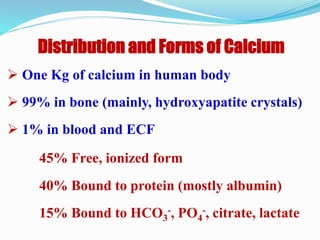
Distribution and Forms of Calcium
 One Kg of calcium in human body
 99% in bone (mainly, hydroxyapatite crystals)
 1% in blood and ECF
45% Free, ionized form
40% Bound to protein (mostly albumin)
15% Bound to HCO3
-, PO4
-, citrate, lactate
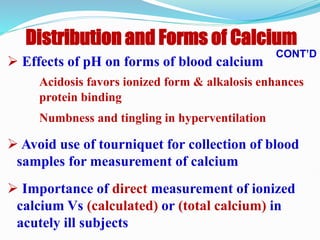
Distribution and Forms of Calcium
 Effects of pH on forms of blood calcium
Acidosis favors ionized form & alkalosis enhances
protein binding
Numbness and tingling in hyperventilation
 Avoid use of tourniquet for collection of blood
samples for measurement of calcium
 Importance of direct measurement of ionized
calcium Vs (calculated) or (total calcium) in
acutely ill subjects
CONT’D
Regulation of Blood Level of Calcium
 Parathyroid hormone (PTH)
 Calcitriol: Active form of vitamin D
 ? Calcitonin
(1) Parathyroid Hormone (PTH)
 Secreted by parathyroid glands
 Molecular mass: 9.5 kDa
 Full biologic activity: NT 1/3 (PTH 1-34)
 Acts via membrane-bound receptor
(G-protein stimulation and increase
intracellular cAMP)
 Target organs: Bone, kidney, intestine
Parathyroid Hormone (PTH)
 Stimulus: Decrease of ionized Ca2+
 Effects:
Bone: Bone resorption
Activated osteoclasts break down bone
and releases calcium into ECF
Kidneys: Tubular reabsorption of calcium
Renal production of active vitamin D
Phosphate excretion (Phosphaturic effect)
Intestine: Intestinal absorption of calcium (Indirect)
(Bone: Largest effect; Kidney: Rapid changes)
CONT’D
Signal Transduction:
G-protein Coupled
Membrane Receptor
Parathyroid Hormone (PTH)
CONT’D
Actions of cAMP
AMP
1Phosphodiesterase
1
(2) Calcitriol
 Intestinal absorption of calcium (& phosphate)
 Enhances the effects of PTH on bone and kidney
to blood calcium level
 Acts via intracellular receptors of steroid/thyroid
superfamily
 Hormone/receptor complex binds to HRE of DNA
& gene expression of important proteins for
calcium homeostasis, e.g., CBP
Steroid/Thyroid Superfamily:
Steroid Hormones
Thyroid Hormones
Calcitriol (Vitamin D)
Retinoic acid (Vitamin A)
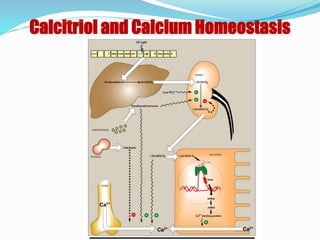
Calcitriol and Calcium Homeostasis
Calcium Homeostasis: PTH & Calcitriol
Response to low blood calcium
(3) Calcitonin
 Secretion: Medullary cells of thyroid gland
Peptide hormone (32 amino acids)
 Stimulus: Increase of blood level of ionized Ca2+
 Effects: Inhibits the actions of both PTH &
calcitriol in hypercalcemic state
 Physiological role in adult humans: Uncertain
Measurement of Calcium
Types:
Total calcium
Ionized Ca2+: direct *(ISE) and ? calculated
Corrected calcium (adjusted to albumin)
Specimen:
Avoid use of tourniquet
Serum or Lithium-heparin plasma
Urine: Acidified with HCl (1 ml/100 ml urine)
*ISE: Ion selective electrode
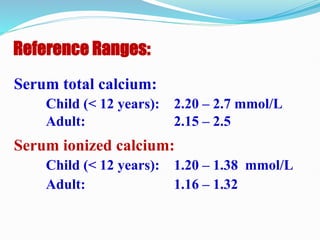
Reference Ranges:
Serum ionized calcium:
Child (< 12 years): 1.20 – 1.38 mmol/L
Adult: 1.16 – 1.32
Serum total calcium:
Child (< 12 years): 2.20 – 2.7 mmol/L
Adult: 2.15 – 2.5
Calcium Homeostasis.ppt

Calcium Homeostasis.ppt

  • 2.
    By Amr S. Moustafa,M.D., Ph.D. Ass. Prof. & Consultant Clinical Biochemistry & Molecular Biology College of Medicine and Obesity Research Center King Saud University Calcium Homeostasis
  • 3.
    Objectives:  Physiological importanceof calcium  Distribution and forms of calcium  Regulation of blood level of calcium  Measurement of calcium level  Clinical problems: Hypo- and hyper-calcemia
  • 4.
    Calcium: Physiological importance Neuromuscular excitability  Blood coagulation  Mineralization of bones  Release of hormones & neurotransmitters  Intracellular actions of some hormones
  • 5.
    Distribution and Formsof Calcium  One Kg of calcium in human body  99% in bone (mainly, hydroxyapatite crystals)  1% in blood and ECF 45% Free, ionized form 40% Bound to protein (mostly albumin) 15% Bound to HCO3 -, PO4 -, citrate, lactate
  • 6.
    Distribution and Formsof Calcium  Effects of pH on forms of blood calcium Acidosis favors ionized form & alkalosis enhances protein binding Numbness and tingling in hyperventilation  Avoid use of tourniquet for collection of blood samples for measurement of calcium  Importance of direct measurement of ionized calcium Vs (calculated) or (total calcium) in acutely ill subjects CONT’D
  • 7.
    Regulation of BloodLevel of Calcium  Parathyroid hormone (PTH)  Calcitriol: Active form of vitamin D  ? Calcitonin
  • 8.
    (1) Parathyroid Hormone(PTH)  Secreted by parathyroid glands  Molecular mass: 9.5 kDa  Full biologic activity: NT 1/3 (PTH 1-34)  Acts via membrane-bound receptor (G-protein stimulation and increase intracellular cAMP)  Target organs: Bone, kidney, intestine
  • 9.
    Parathyroid Hormone (PTH) Stimulus: Decrease of ionized Ca2+  Effects: Bone: Bone resorption Activated osteoclasts break down bone and releases calcium into ECF Kidneys: Tubular reabsorption of calcium Renal production of active vitamin D Phosphate excretion (Phosphaturic effect) Intestine: Intestinal absorption of calcium (Indirect) (Bone: Largest effect; Kidney: Rapid changes) CONT’D
  • 10.
    Signal Transduction: G-protein Coupled MembraneReceptor Parathyroid Hormone (PTH) CONT’D
  • 11.
  • 12.
    (2) Calcitriol  Intestinalabsorption of calcium (& phosphate)  Enhances the effects of PTH on bone and kidney to blood calcium level  Acts via intracellular receptors of steroid/thyroid superfamily  Hormone/receptor complex binds to HRE of DNA & gene expression of important proteins for calcium homeostasis, e.g., CBP
  • 13.
    Steroid/Thyroid Superfamily: Steroid Hormones ThyroidHormones Calcitriol (Vitamin D) Retinoic acid (Vitamin A)
  • 14.
  • 15.
    Calcium Homeostasis: PTH& Calcitriol Response to low blood calcium
  • 16.
    (3) Calcitonin  Secretion:Medullary cells of thyroid gland Peptide hormone (32 amino acids)  Stimulus: Increase of blood level of ionized Ca2+  Effects: Inhibits the actions of both PTH & calcitriol in hypercalcemic state  Physiological role in adult humans: Uncertain
  • 17.
    Measurement of Calcium Types: Totalcalcium Ionized Ca2+: direct *(ISE) and ? calculated Corrected calcium (adjusted to albumin) Specimen: Avoid use of tourniquet Serum or Lithium-heparin plasma Urine: Acidified with HCl (1 ml/100 ml urine) *ISE: Ion selective electrode
  • 18.
    Reference Ranges: Serum ionizedcalcium: Child (< 12 years): 1.20 – 1.38 mmol/L Adult: 1.16 – 1.32 Serum total calcium: Child (< 12 years): 2.20 – 2.7 mmol/L Adult: 2.15 – 2.5