
INTEGRATED MARKETING 
COMMUNICATION (IMC) 
CAMPAIGN
Kuch Meetha Ho 
Jaye 
Harshvardhan 
Jasmeen 
Jay 
Jigar
Company & Introduction 
• 1824 – British confectionery company 
• 1948 – India 
• 2010 – acquired by Kraft Foods 
• 2011 – Market leader in India
Situation Analysis 
• Before this campaign began, the chocolate industry 
had faced some major problems. 
• The price of cocoa had gone up steeply in 1991 
• The price of chocolates went up. 
• Adults refrained from eating chocolates and were 
in a way reluctant to do so because of the kids' 
image associated with it..
Campaign Objectives 
• Change the image 
• Kids -> Everyone 
• Connect to the Indian-ness 
• Alternative to the domestic sweets, ‘mithai’. 
• 'Indianization' of the brand 
• contemporary image to connect with the youth as 
well.
Communication Objectives 
• Localisation 
• Emotional Quotient 
• Competing with a different product category
Communication Strategy 
• Market Share. 
• Position. 
• Trusted Brand. 
• Targeted. 
WHATEVER YOU START, START IT WITH DAIRY MILK 
and it will be successful.
Strategy & Execution 
• The company came up with more innovative 
campaigns to increase the number of occasions on 
which people could eat a Diary Milk. 
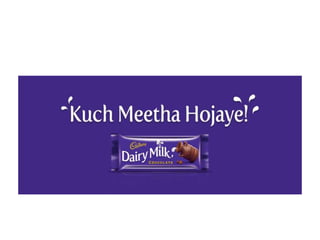
• The 'Kuch meetha ho jaye' campaign was an effort 
to try and replace the traditional Indian sweets 
with Diary Milk. 
• In the Indian tradition, people generally eat and 
distribute sweets on any joyous, festive occasion 
and Cadbury tried to depict all those occasions...
Results / Impact (ROMI) 
• After 2005, Cadbury in India almost doubled the 
business in three years. 
• Sales growth was 22% - the compounded growth 
rate over the past three years from 2005 to 2008. 
• In the years from 2005 to 2009, it also doubled its 
turnover. 
• The impact of the inflation in 2009-2010: STRANGE 
• Chocolates especially had a growth in volumes from 
2% to 21.8%. 
• The reason…
The End. 
06-10-2014 Economic Policy 1991 11
06-10-2014 Economic Policy 1991 12

Cadbury

  • 1.
  • 2.
    Kuch Meetha Ho Jaye Harshvardhan Jasmeen Jay Jigar
  • 3.
    Company & Introduction • 1824 – British confectionery company • 1948 – India • 2010 – acquired by Kraft Foods • 2011 – Market leader in India
  • 4.
    Situation Analysis •Before this campaign began, the chocolate industry had faced some major problems. • The price of cocoa had gone up steeply in 1991 • The price of chocolates went up. • Adults refrained from eating chocolates and were in a way reluctant to do so because of the kids' image associated with it..
  • 5.
    Campaign Objectives •Change the image • Kids -> Everyone • Connect to the Indian-ness • Alternative to the domestic sweets, ‘mithai’. • 'Indianization' of the brand • contemporary image to connect with the youth as well.
  • 6.
    Communication Objectives •Localisation • Emotional Quotient • Competing with a different product category
  • 7.
    Communication Strategy •Market Share. • Position. • Trusted Brand. • Targeted. WHATEVER YOU START, START IT WITH DAIRY MILK and it will be successful.
  • 8.
    Strategy & Execution • The company came up with more innovative campaigns to increase the number of occasions on which people could eat a Diary Milk. • The 'Kuch meetha ho jaye' campaign was an effort to try and replace the traditional Indian sweets with Diary Milk. • In the Indian tradition, people generally eat and distribute sweets on any joyous, festive occasion and Cadbury tried to depict all those occasions...
  • 9.
    Results / Impact(ROMI) • After 2005, Cadbury in India almost doubled the business in three years. • Sales growth was 22% - the compounded growth rate over the past three years from 2005 to 2008. • In the years from 2005 to 2009, it also doubled its turnover. • The impact of the inflation in 2009-2010: STRANGE • Chocolates especially had a growth in volumes from 2% to 21.8%. • The reason…
  • 11.
    The End. 06-10-2014Economic Policy 1991 11
  • 12.