& Digital Collections
A simple, standardized,
legally robust way to grant
© permissions to cultural
works and data
 Enable © holders to grant copy and
reuse permissions to the public
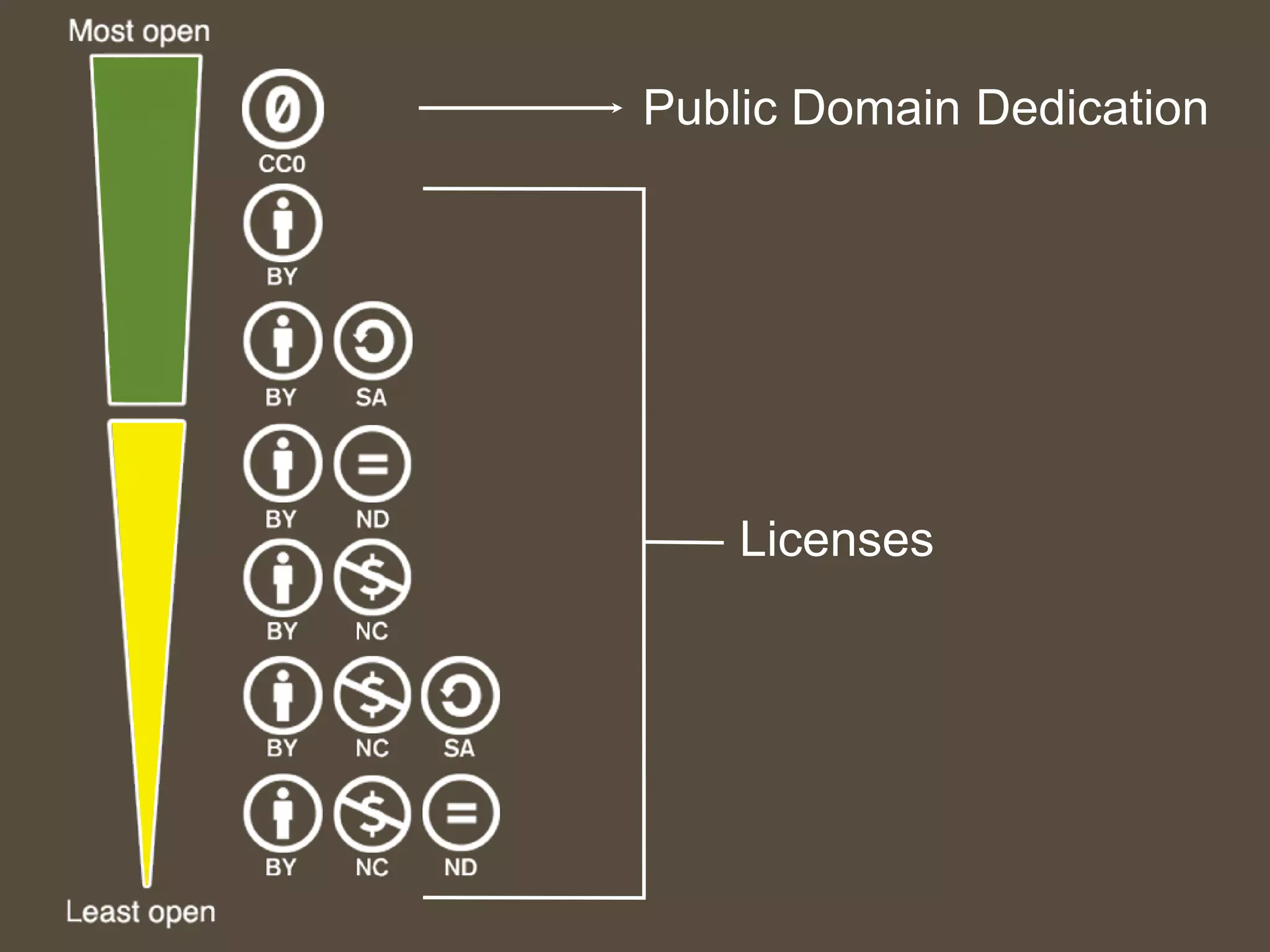
 6 licenses:
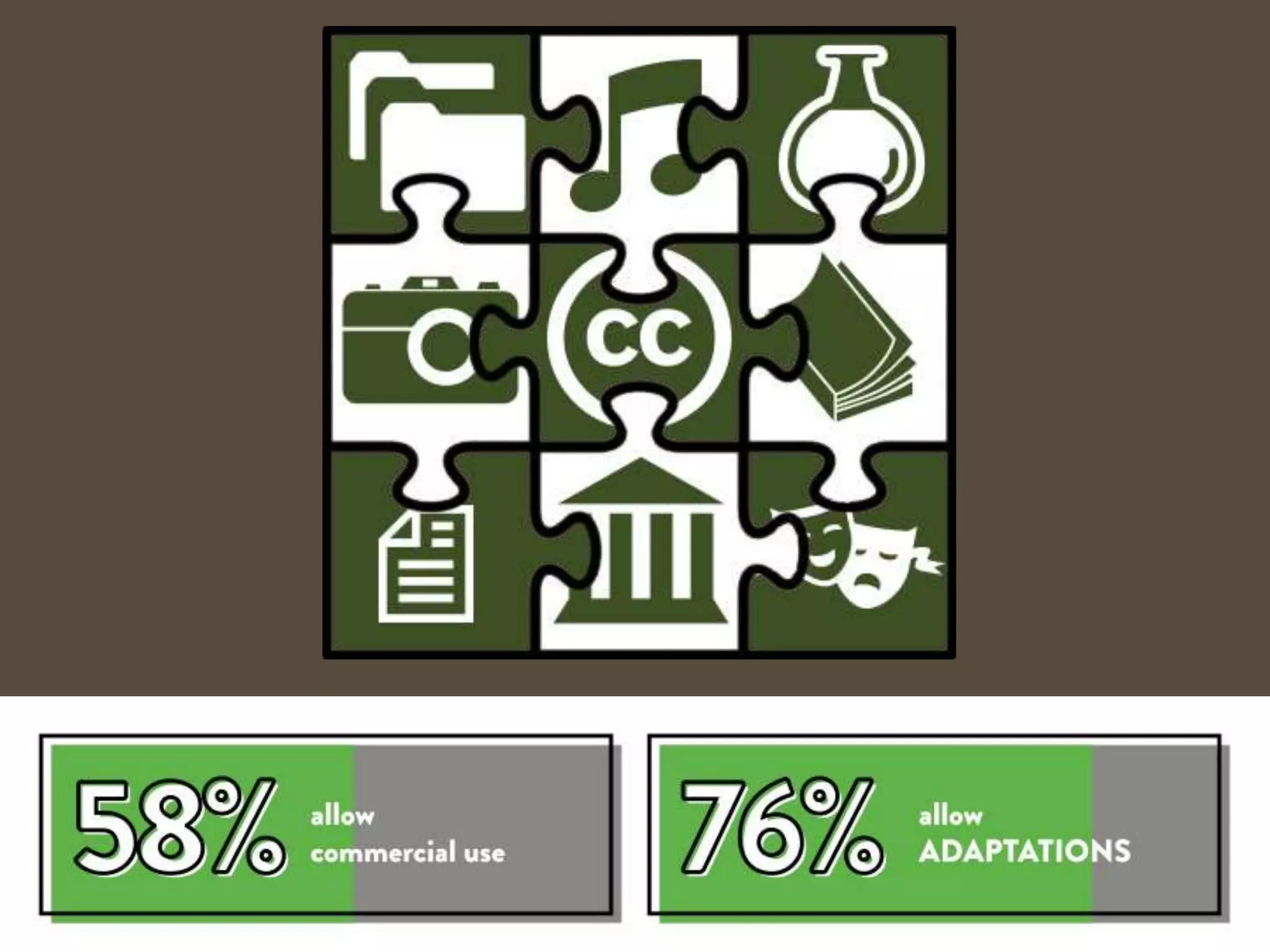
 Some grant commercial uses
 Some grant derivative uses
 All require attribution
CC Licenses
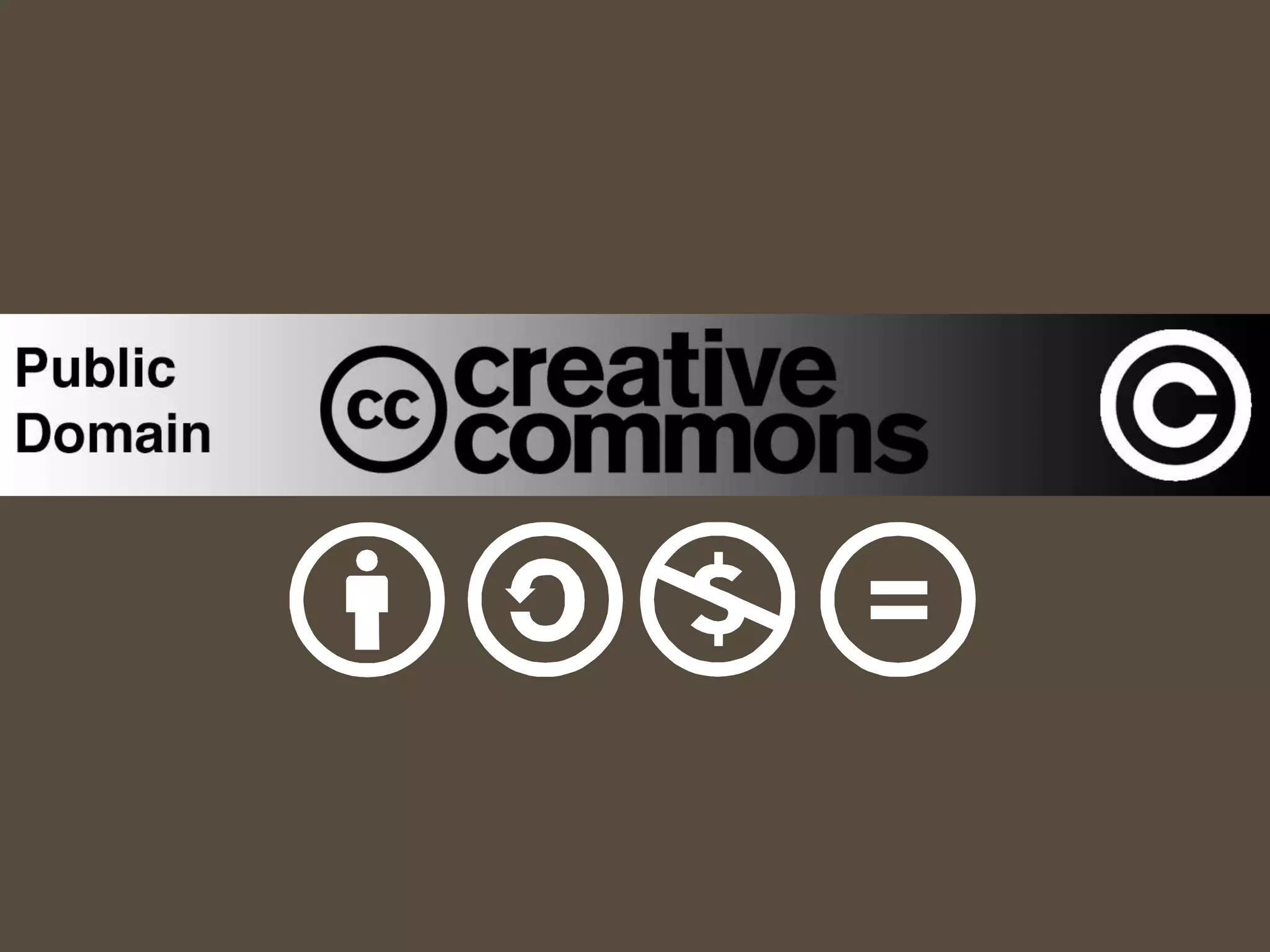
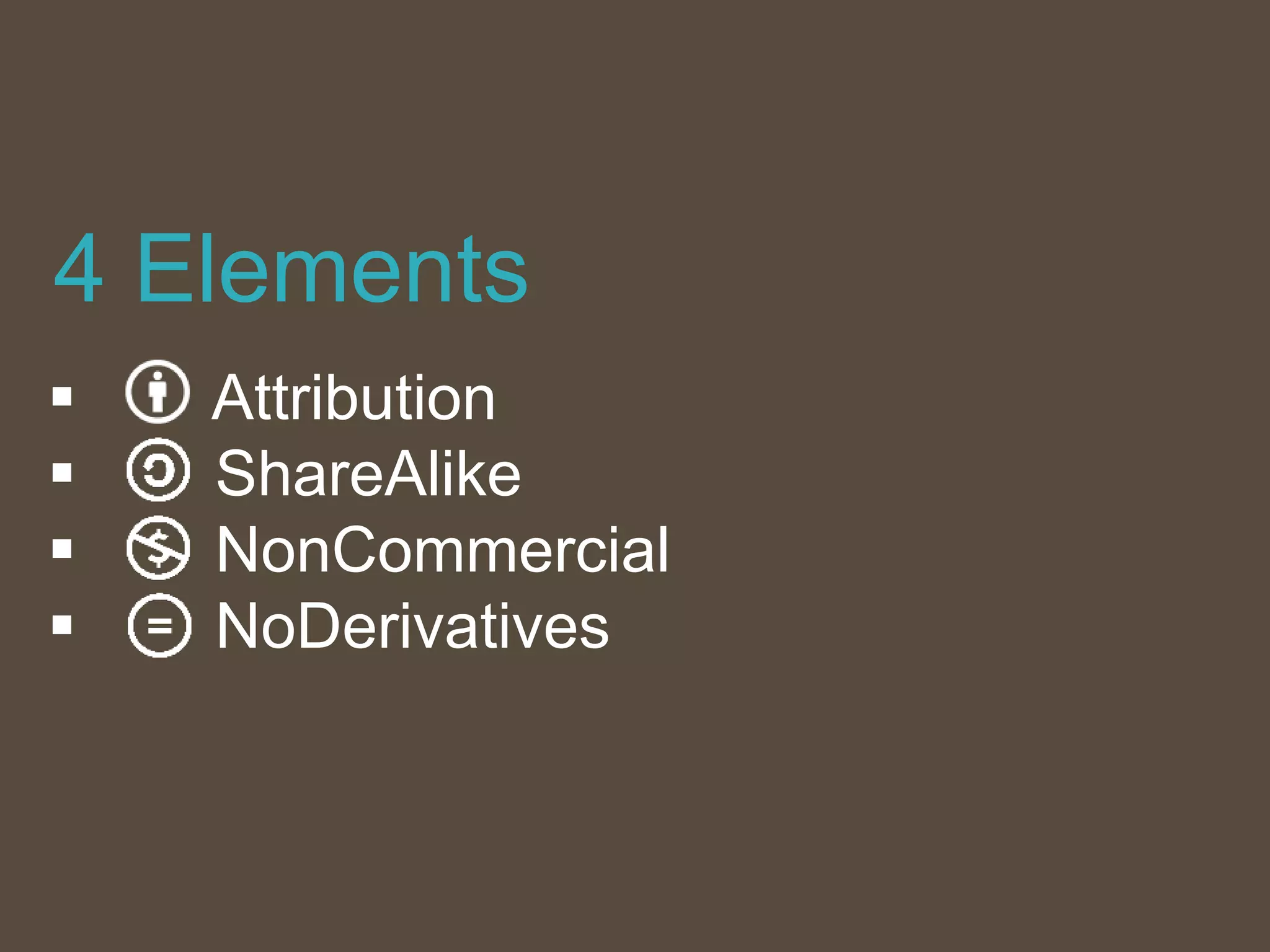
 Attribution
 ShareAlike
 NonCommercial
 NoDerivatives
4 Elements
Public Domain Dedication
Licenses
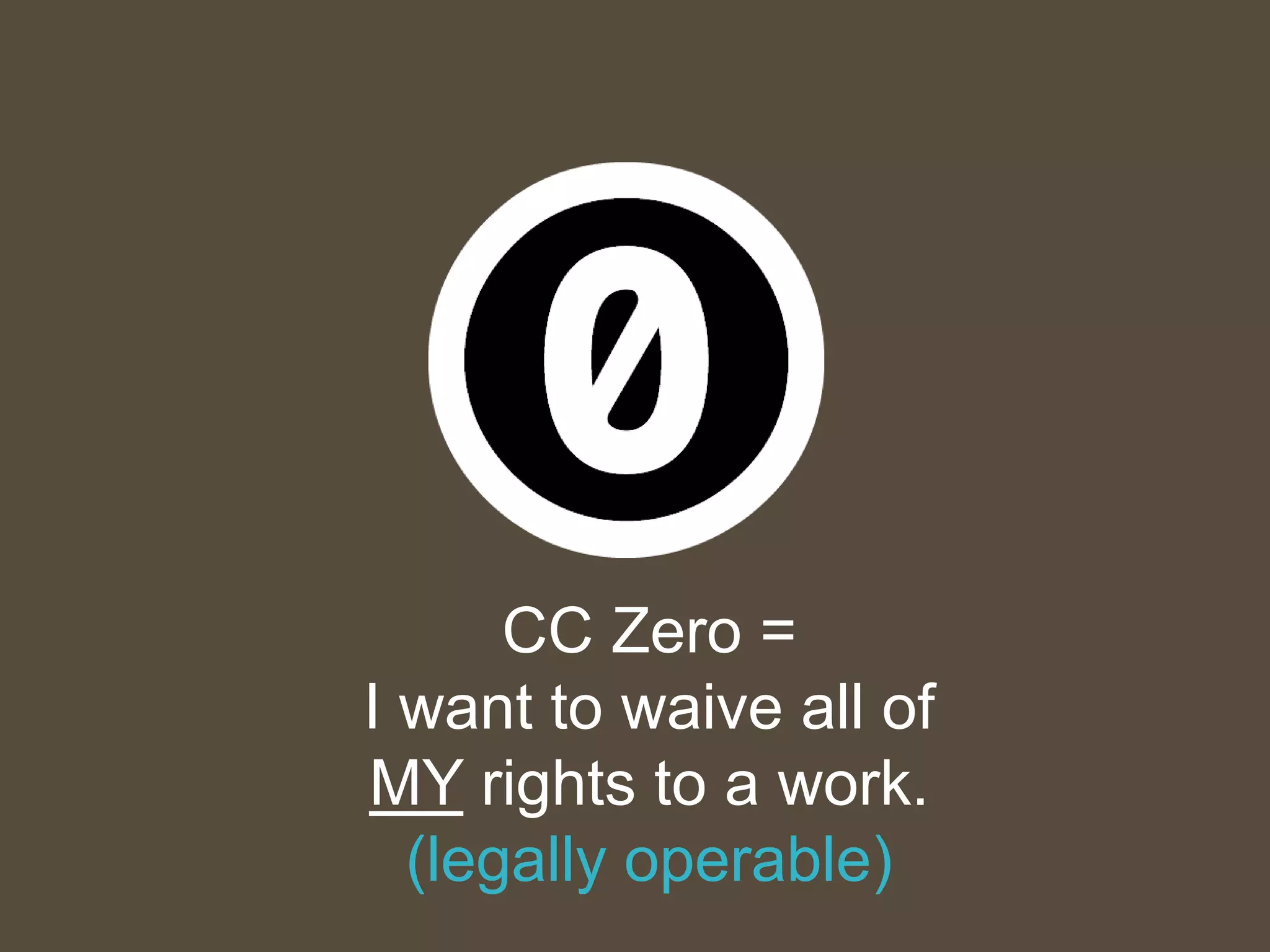
CC Zero =
I want to waive all of
MY rights to a work.
(legally operable)
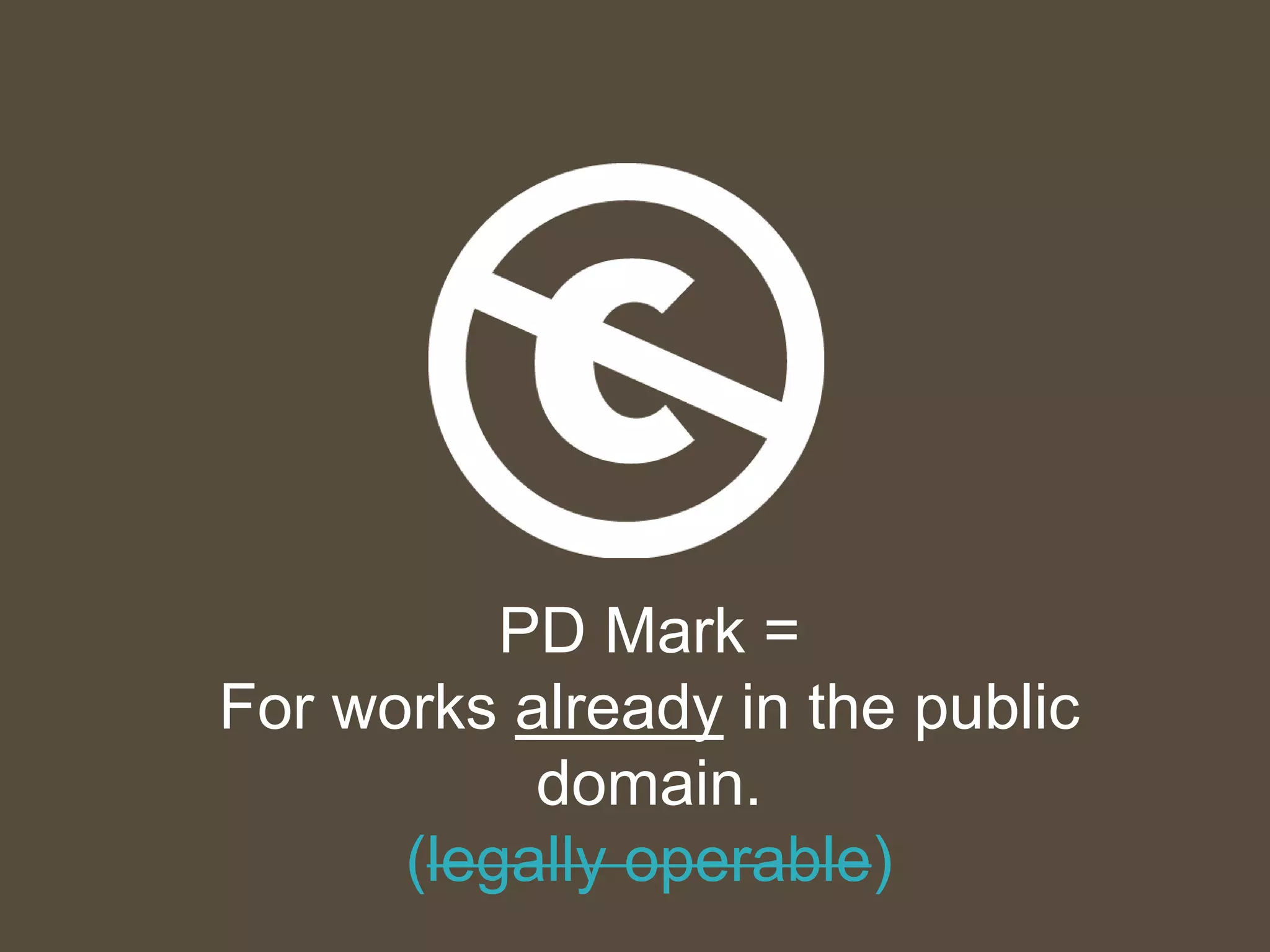
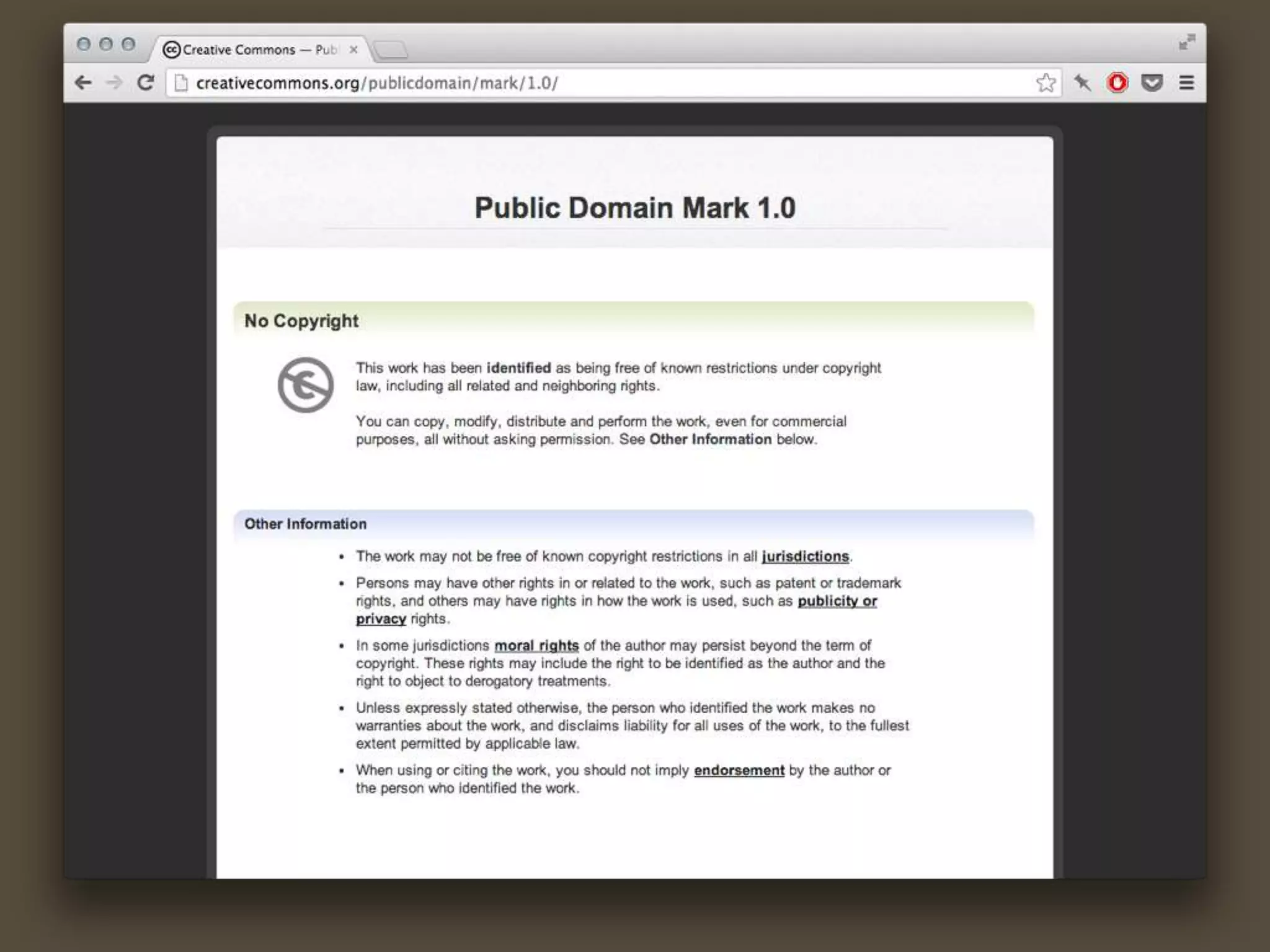
PD Mark =
For works already in the public
domain.
(legally operable)
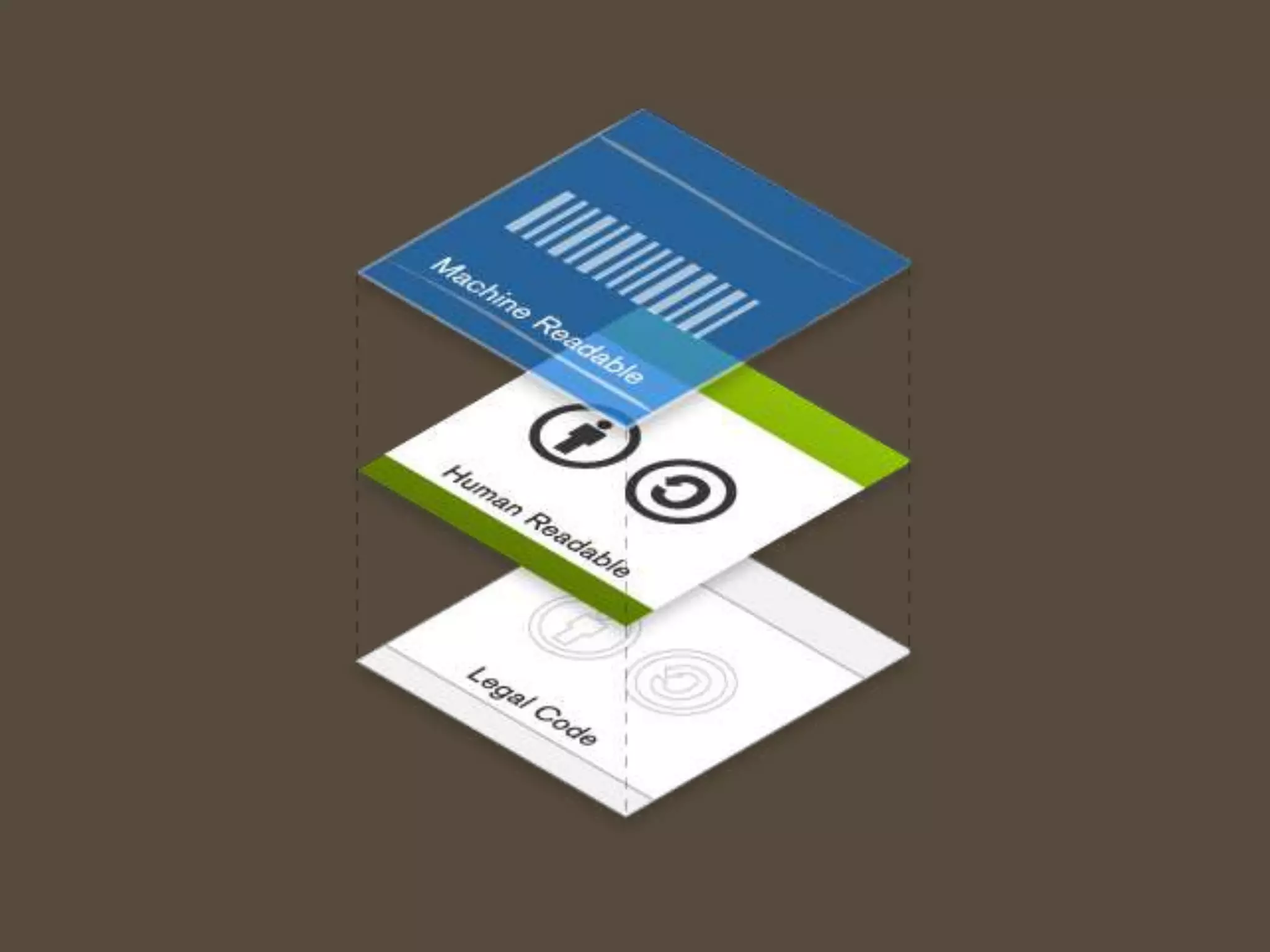
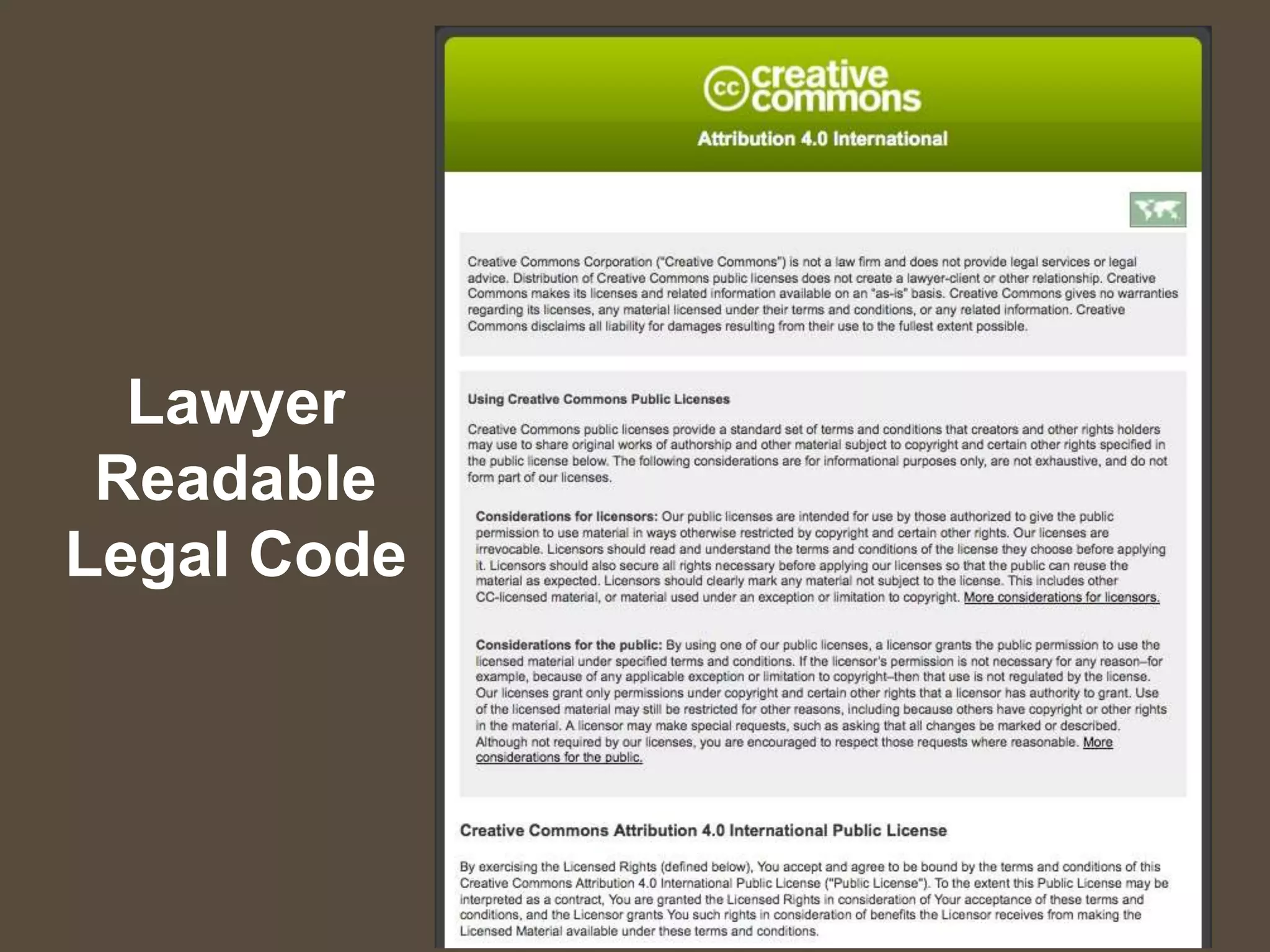
Lawyer
Readable
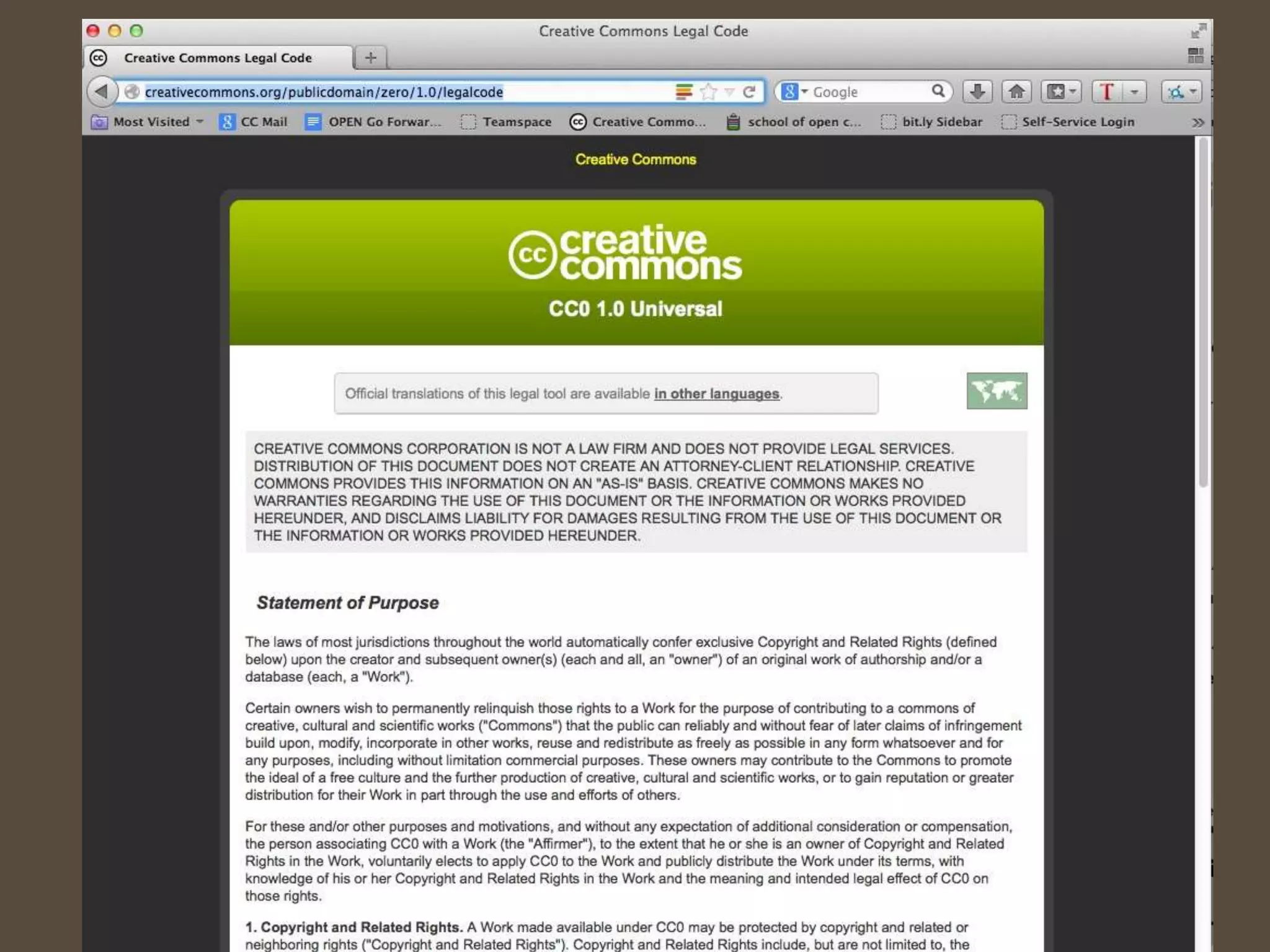
Legal Code
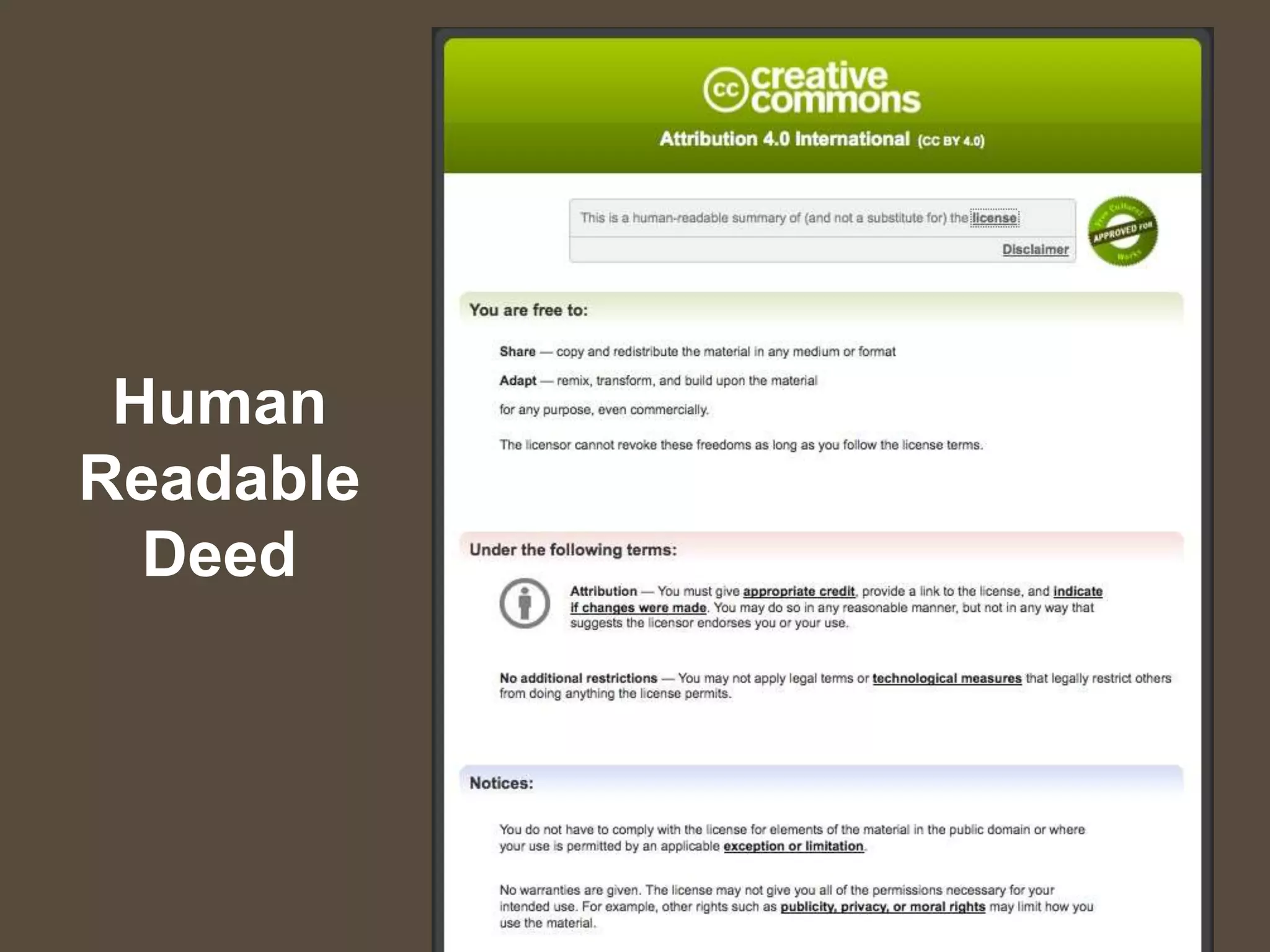
Human
Readable
Deed
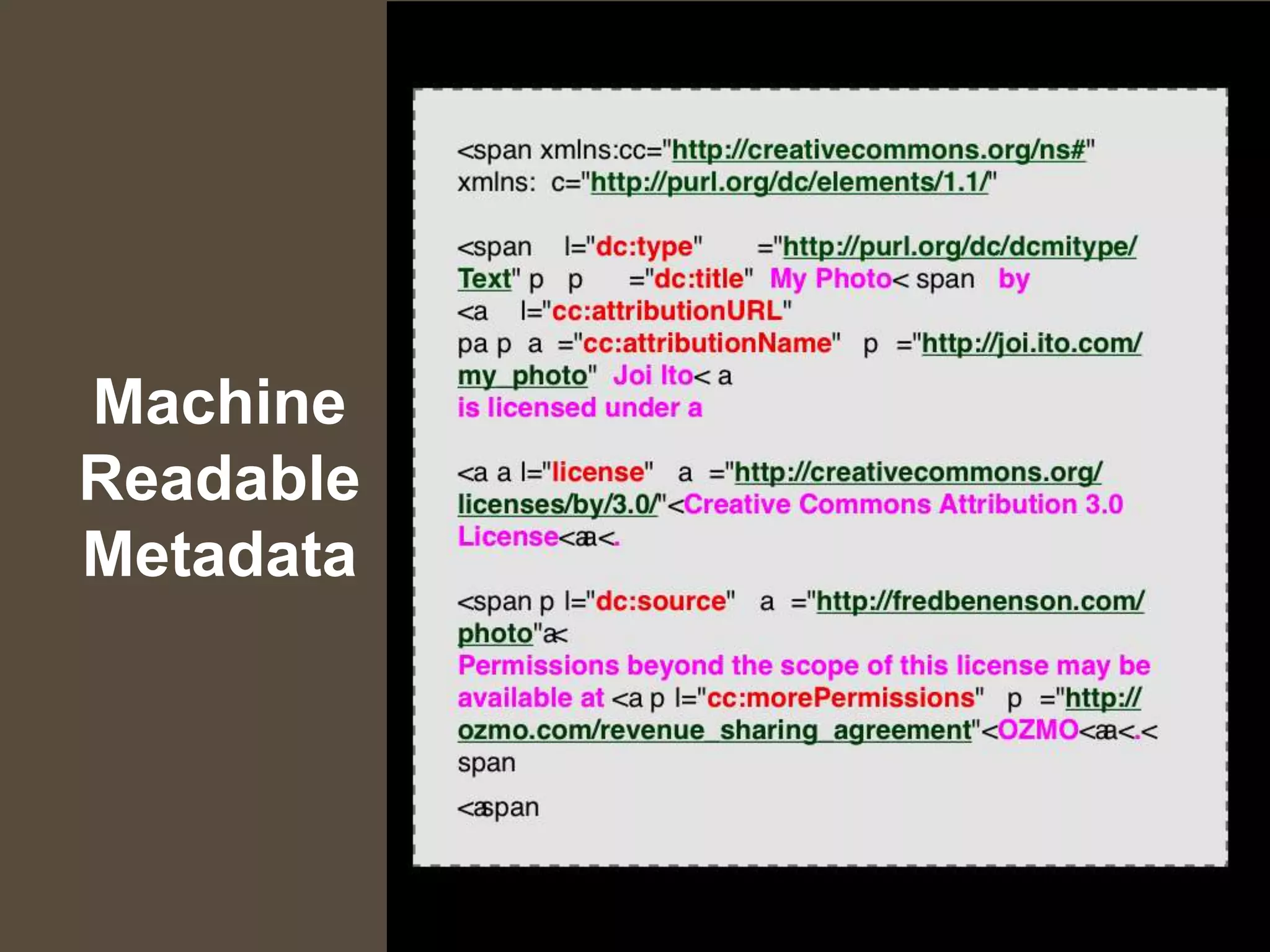
Machine
Readable
Metadata
Digital collections
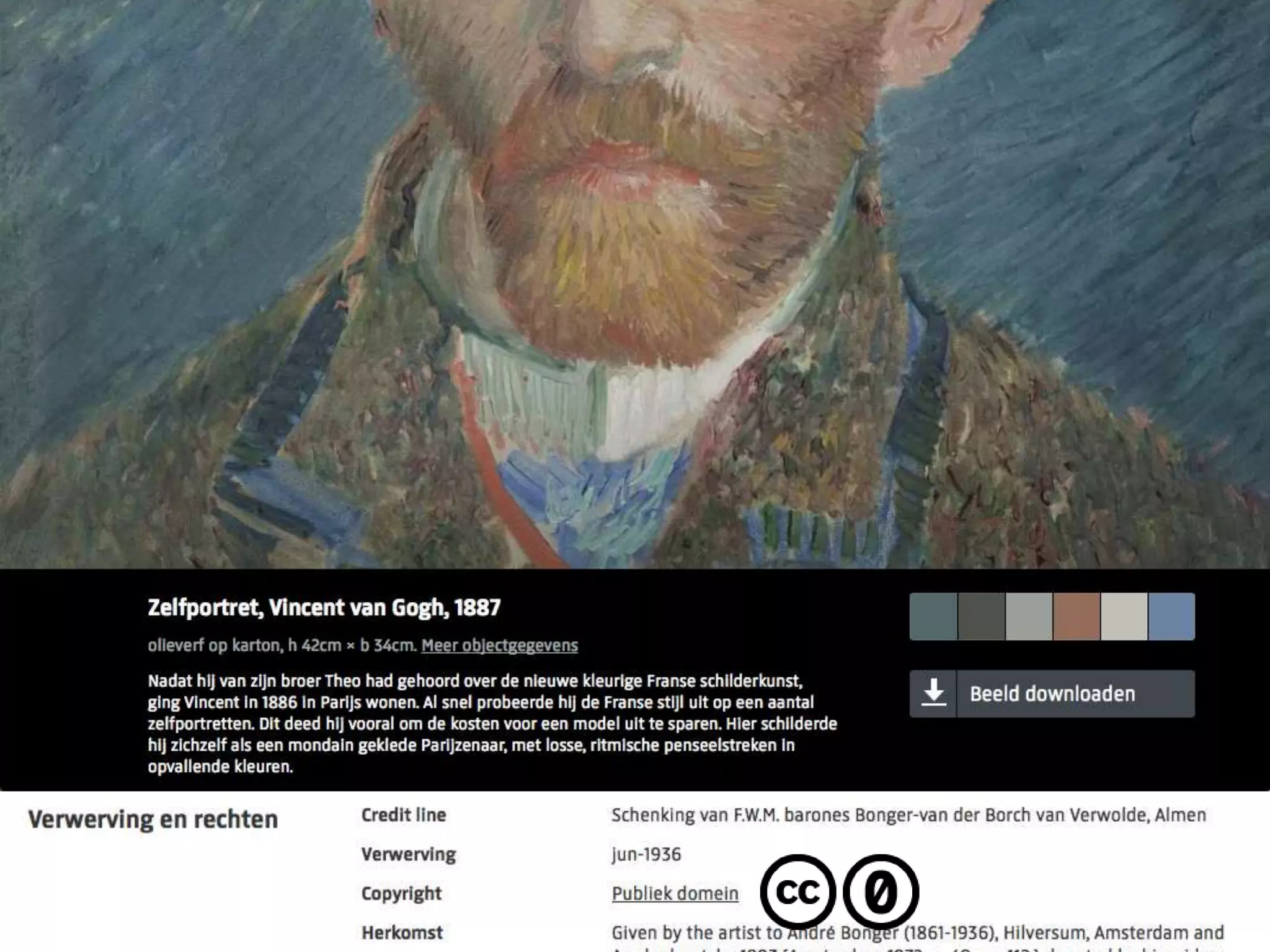
 150,000 images of its public domain
collection released via CC0
 Initial hesitation, but marketing dept
argued that “the digital reproduction of
an item would pique public interest in
it, leading them to buy tickets to the
museum to see the real deal”
Rijksmuseum
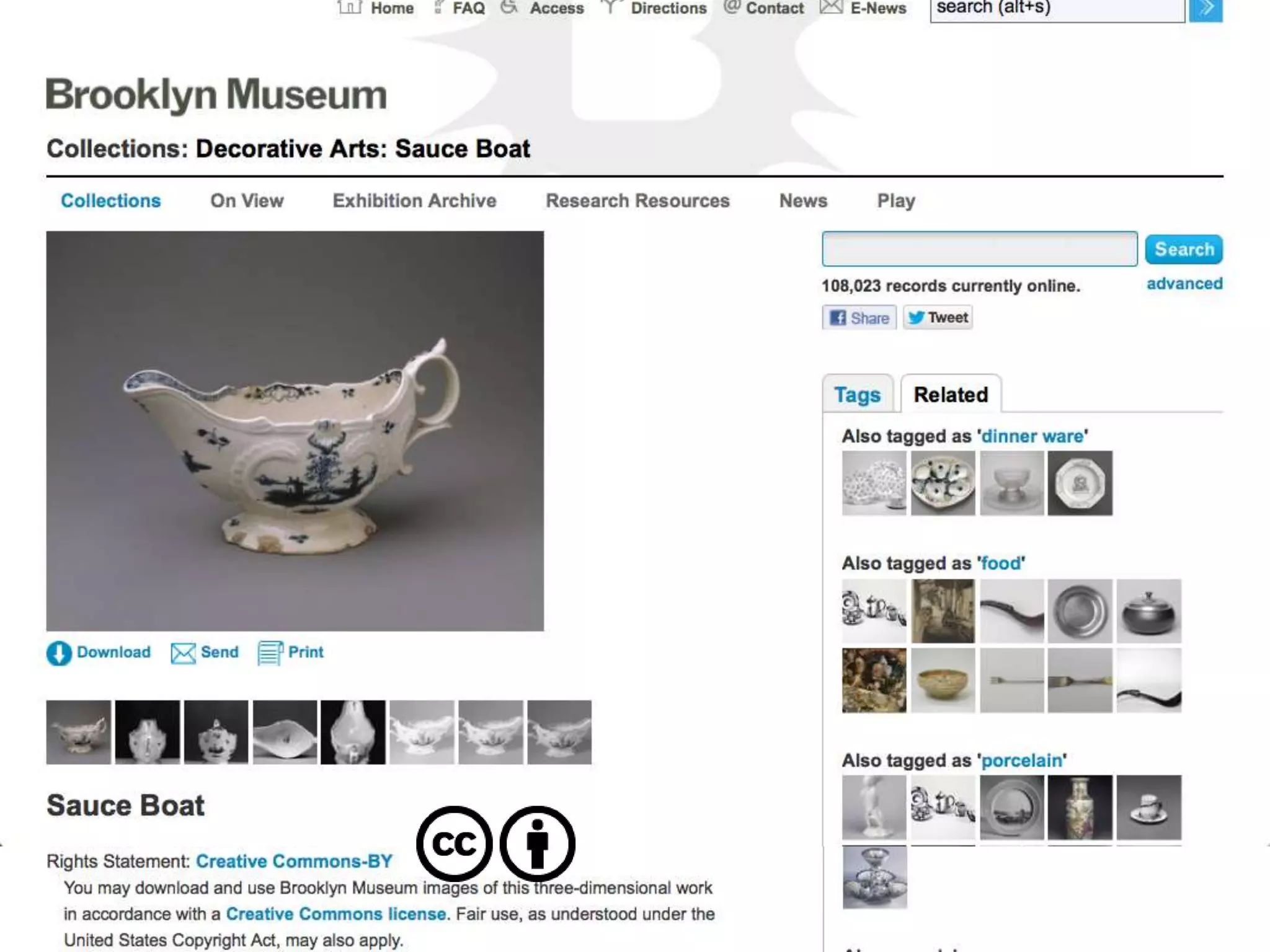
 100k+ online image collection
 CC BY for images and text owned by
museum; PD for PD works
 Most restrictive  most open
 2004: CC BY-NC-ND
 2010: CC BY-NC
 Today: CC BY & PD statement
Brooklyn Museum
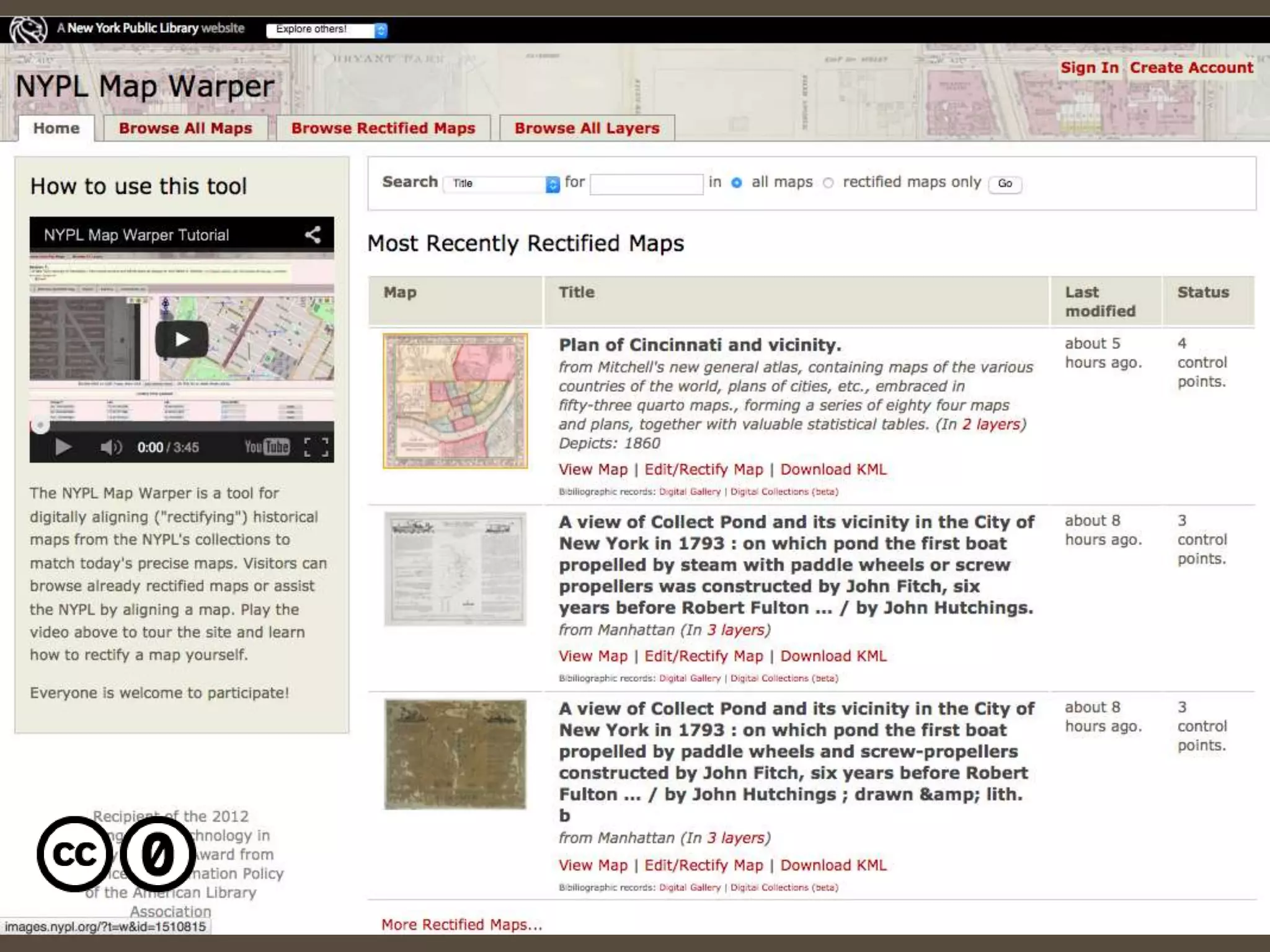
 20,000 cartographic works released as
high resolution downloads via CC0
 CC0 for digital reproductions b/c maps
are in the public domain
 “We believe our collections inspire all
kinds of creativity, innovation and
discovery."
New York Public Library
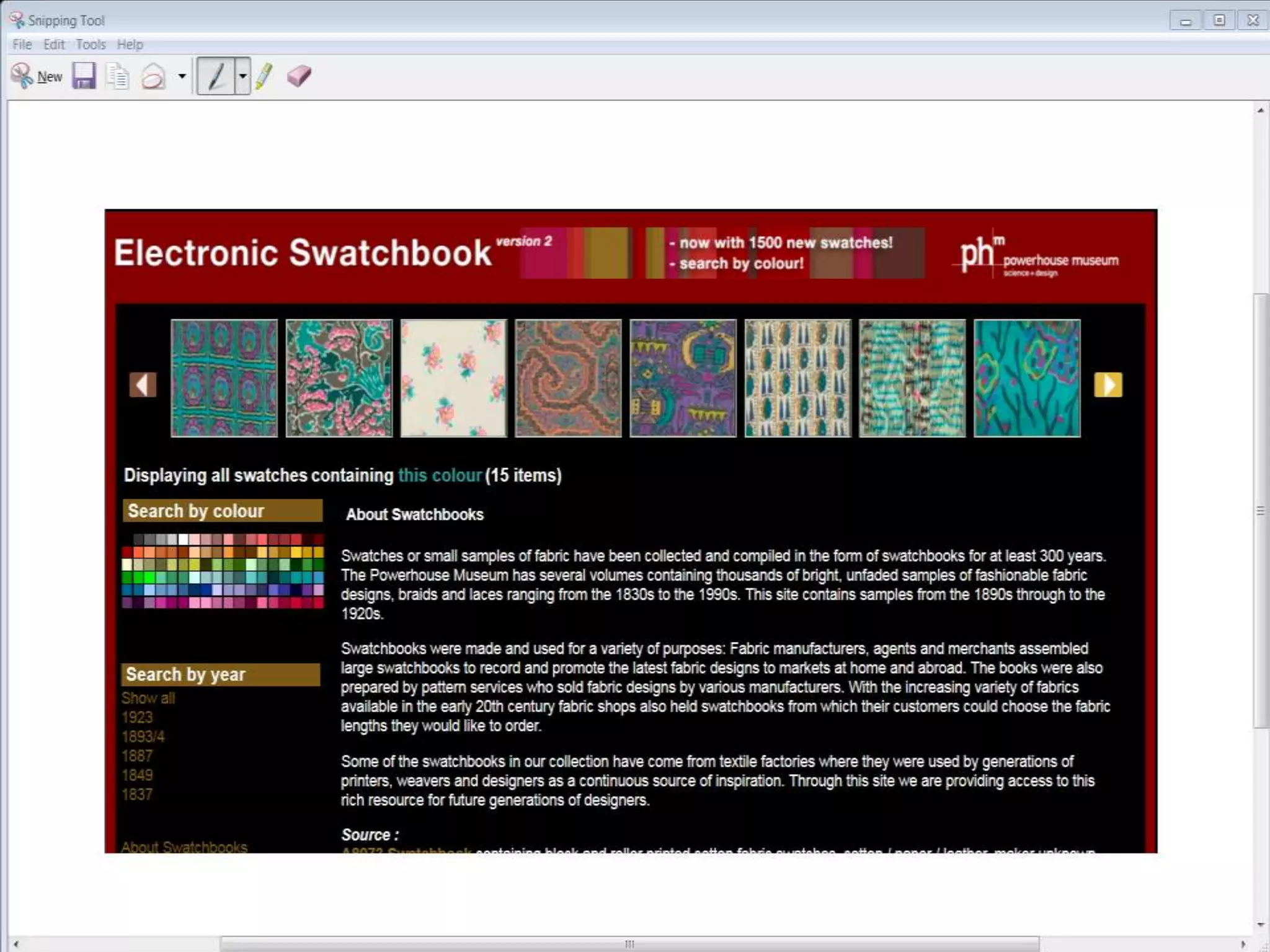
 An ‘Electronic Swatchbook’
 All in the public domain (in Australia)
 "Through this site we are providing
access to this rich resource for future
generations of designers"
Powerhouse Museum
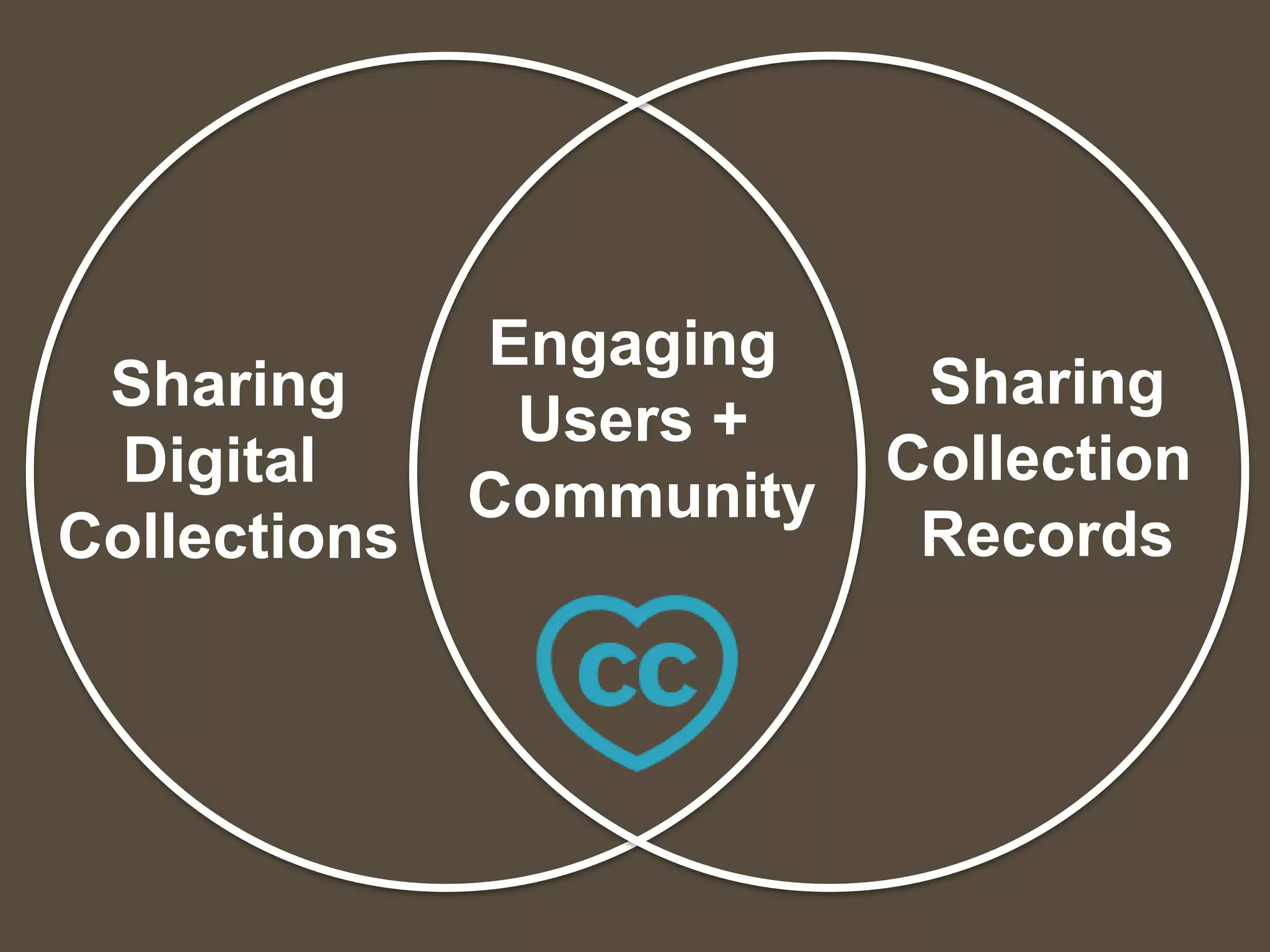
Sharing
Digital
Collections
Sharing
Collection
Records
Engaging
Users +
Community
 CC licenses are robust, built on © law
 Clarity and specificity regarding use
 Data embedded w/assets; enables
browse/search filters
 Minimizes overhead for individual
transactions
 Clear way to share PD collections
 Promotional & educational tool
 Increases reach + impact of museum
 Good will w/public, creative industries
 Enable unexpected, creative &
delightful results
 Lead to refocusing of resources, new
funding + revenue models
Resources
 Warwick Cathro. 2007 .“Federated discovery opportunities for Australia’s
collecting institutions”
https://www.nla.gov.au/openpublish/index.php/nlasp/article/viewFile/10
35/1303
 Mansfield, T., Winter, C., Griffith, C., Dockerty, A., Brown, T. 2014. “An
Innovation Study: Challenges and Opportunities for Australia’s Galleries,
Libraries, Archives and Museums”.
http://museumsaustralia.org.au/userfiles/file/GLAM_Innovation_Study_S
eptember2014-Report_Final_accessible.pdf
 The Open Data Handbook
http://opendatahandbook.org/en/
 Australian Government Open Access Framework (AusGOAL)
http://www.ausgoal.gov.au
Except where otherwise noted: CC BY
creativecommons.org/licenses/by/4.0
Creative Commons and the double C in a circle are registered trademarks of
Creative Commons in the United States and other countries. Third party marks
and brands are the property of their respective holders.
This work, “Creative Commons & Digital Collections ", is a
derivative of "Creative Commons and cultural heritage" by Jane
Park used under CC BY. " Creative Commons & Digital Collections "
is licensed under CC BY by Nerida Quatermass.

C cau glam_cc&digital collections_nsw local studies librarians group_dist_may2015

  • 1.
  • 2.
    A simple, standardized, legallyrobust way to grant © permissions to cultural works and data
  • 4.
     Enable ©holders to grant copy and reuse permissions to the public  6 licenses:  Some grant commercial uses  Some grant derivative uses  All require attribution CC Licenses
  • 5.
     Attribution  ShareAlike NonCommercial  NoDerivatives 4 Elements
  • 6.
  • 7.
    CC Zero = Iwant to waive all of MY rights to a work. (legally operable)
  • 9.
    PD Mark = Forworks already in the public domain. (legally operable)
  • 12.
  • 13.
  • 14.
  • 18.
  • 19.
     150,000 imagesof its public domain collection released via CC0  Initial hesitation, but marketing dept argued that “the digital reproduction of an item would pique public interest in it, leading them to buy tickets to the museum to see the real deal” Rijksmuseum
  • 21.
     100k+ onlineimage collection  CC BY for images and text owned by museum; PD for PD works  Most restrictive  most open  2004: CC BY-NC-ND  2010: CC BY-NC  Today: CC BY & PD statement Brooklyn Museum
  • 23.
     20,000 cartographicworks released as high resolution downloads via CC0  CC0 for digital reproductions b/c maps are in the public domain  “We believe our collections inspire all kinds of creativity, innovation and discovery." New York Public Library
  • 25.
     An ‘ElectronicSwatchbook’  All in the public domain (in Australia)  "Through this site we are providing access to this rich resource for future generations of designers" Powerhouse Museum
  • 27.
  • 28.
     CC licensesare robust, built on © law  Clarity and specificity regarding use  Data embedded w/assets; enables browse/search filters  Minimizes overhead for individual transactions  Clear way to share PD collections
  • 29.
     Promotional &educational tool  Increases reach + impact of museum  Good will w/public, creative industries  Enable unexpected, creative & delightful results  Lead to refocusing of resources, new funding + revenue models
  • 30.
    Resources  Warwick Cathro.2007 .“Federated discovery opportunities for Australia’s collecting institutions” https://www.nla.gov.au/openpublish/index.php/nlasp/article/viewFile/10 35/1303  Mansfield, T., Winter, C., Griffith, C., Dockerty, A., Brown, T. 2014. “An Innovation Study: Challenges and Opportunities for Australia’s Galleries, Libraries, Archives and Museums”. http://museumsaustralia.org.au/userfiles/file/GLAM_Innovation_Study_S eptember2014-Report_Final_accessible.pdf  The Open Data Handbook http://opendatahandbook.org/en/  Australian Government Open Access Framework (AusGOAL) http://www.ausgoal.gov.au
  • 31.
    Except where otherwisenoted: CC BY creativecommons.org/licenses/by/4.0 Creative Commons and the double C in a circle are registered trademarks of Creative Commons in the United States and other countries. Third party marks and brands are the property of their respective holders. This work, “Creative Commons & Digital Collections ", is a derivative of "Creative Commons and cultural heritage" by Jane Park used under CC BY. " Creative Commons & Digital Collections " is licensed under CC BY by Nerida Quatermass.