Kerala university of fisheries
& ocean studies, kochi
Presented by,
Ashish sahu
Responsible Fisheries
FRM
Instructor,
Dr. M. K. Sanjeevan
What is bycatch ?
 Bycatch Includes all non-target animals
and non-living material which are caught
during fishing.
 Bycatch is the portion of the catch that is
not comprised of the fishery’s target species .
 Species that are caught accidentally.
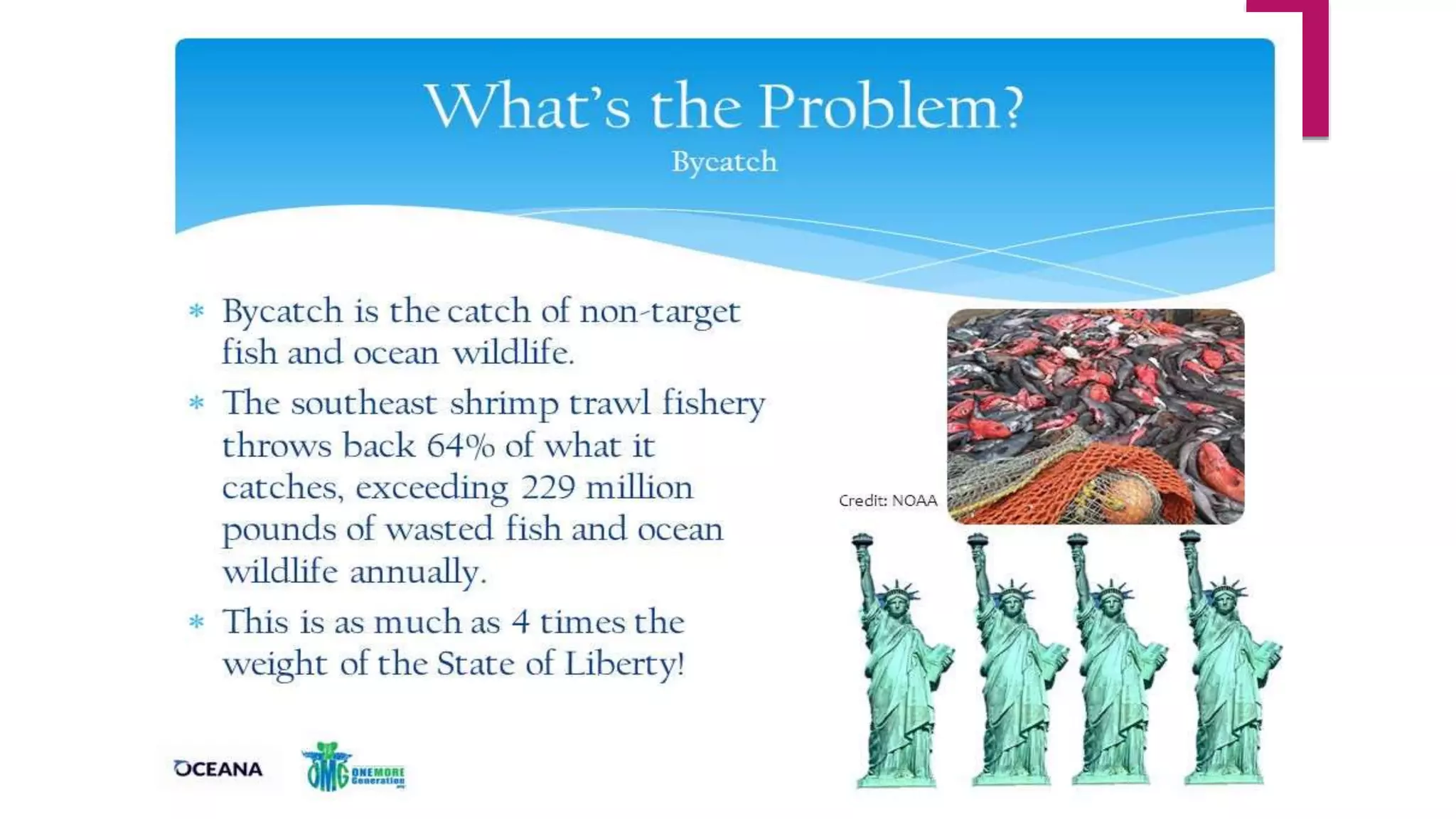
Bycatch from a shrimp
trawler
 Nearly 20 percent of shark species are threatened with extinction, primarily
as a result of being caught accidentally on longlines.
 Bycatch also includes young fish that could rebuild populations if they were
allowed to grow and breed.
 FAO estimates: 7.3 million tonnes of fish is discarded every year.
“Bycatch from shrimp trawling
usually consists of many fish
species and occasionally large
animals”.
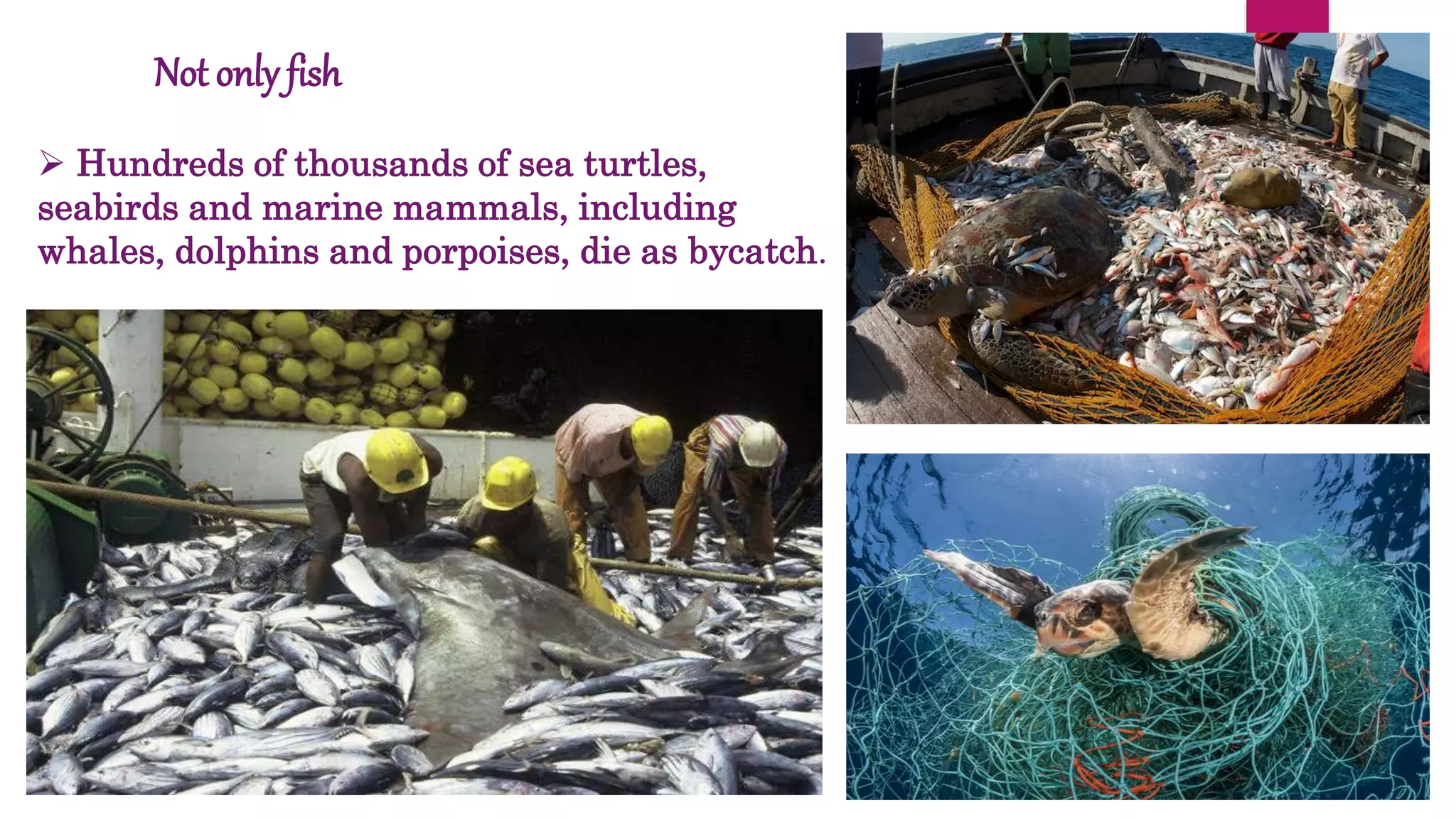
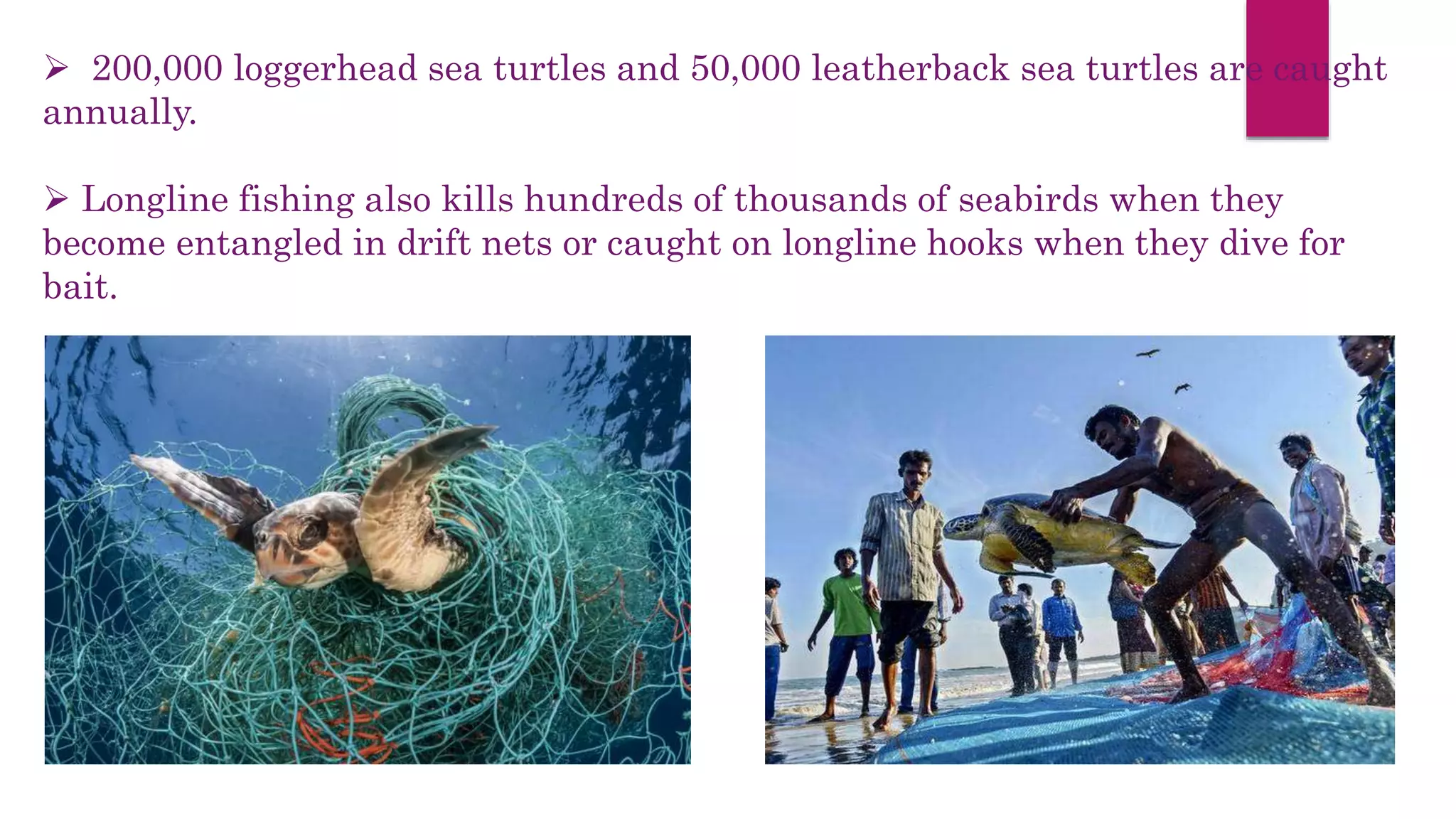
Not only fish
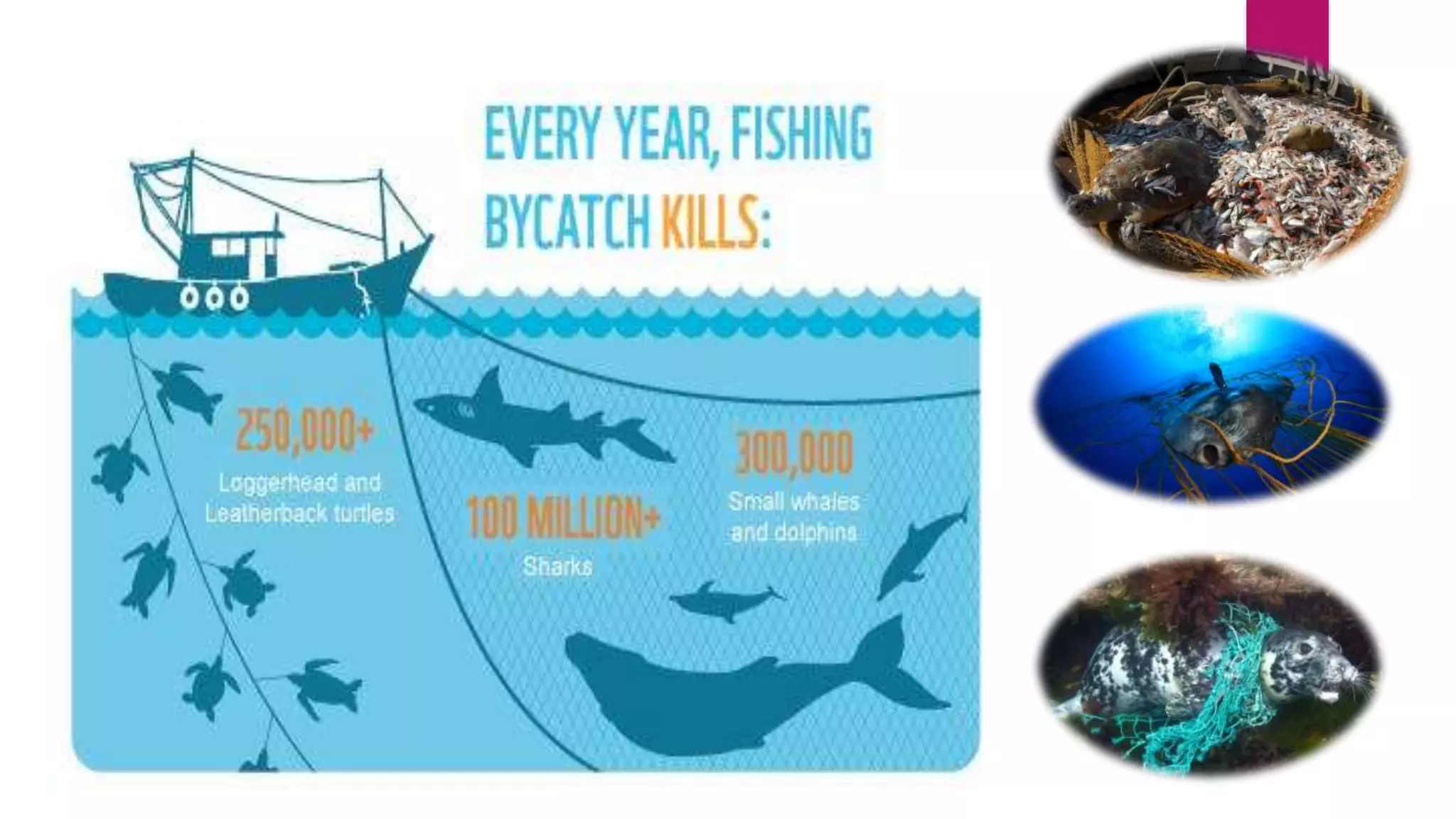
 Hundreds of thousands of sea turtles,
seabirds and marine mammals, including
whales, dolphins and porpoises, die as bycatch.
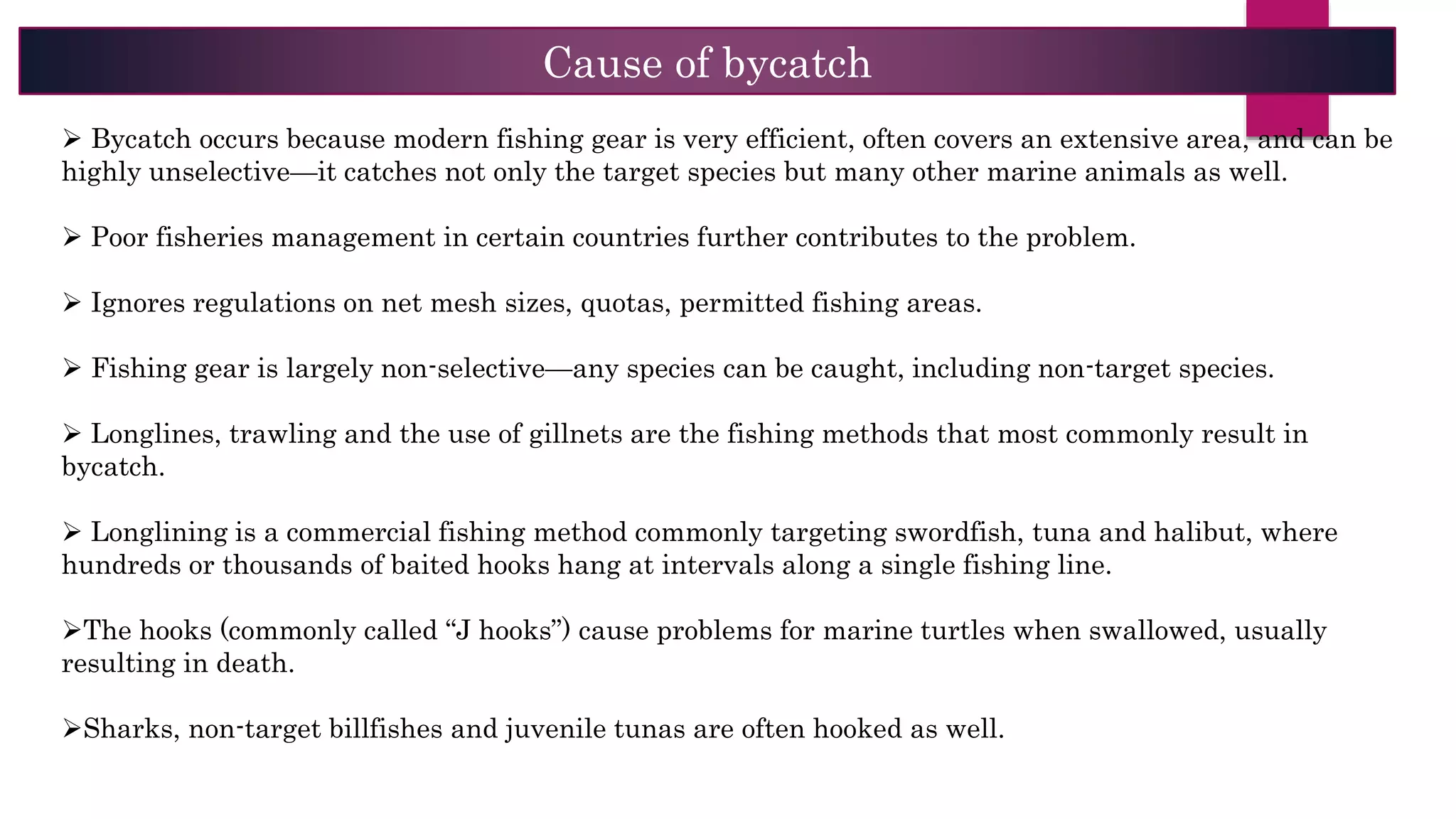
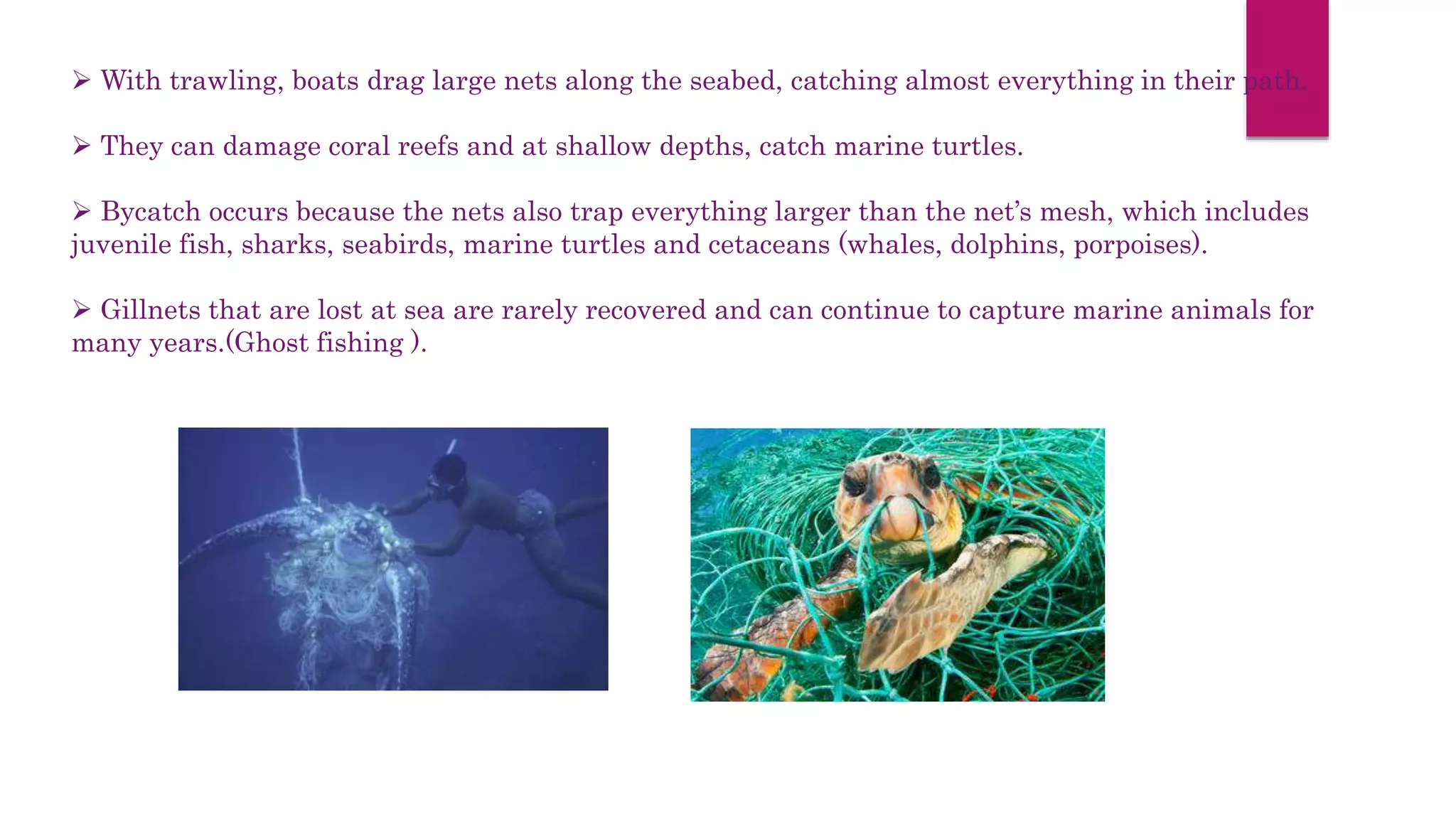
 200,000 loggerhead sea turtles and 50,000 leatherback sea turtles are caught
annually.
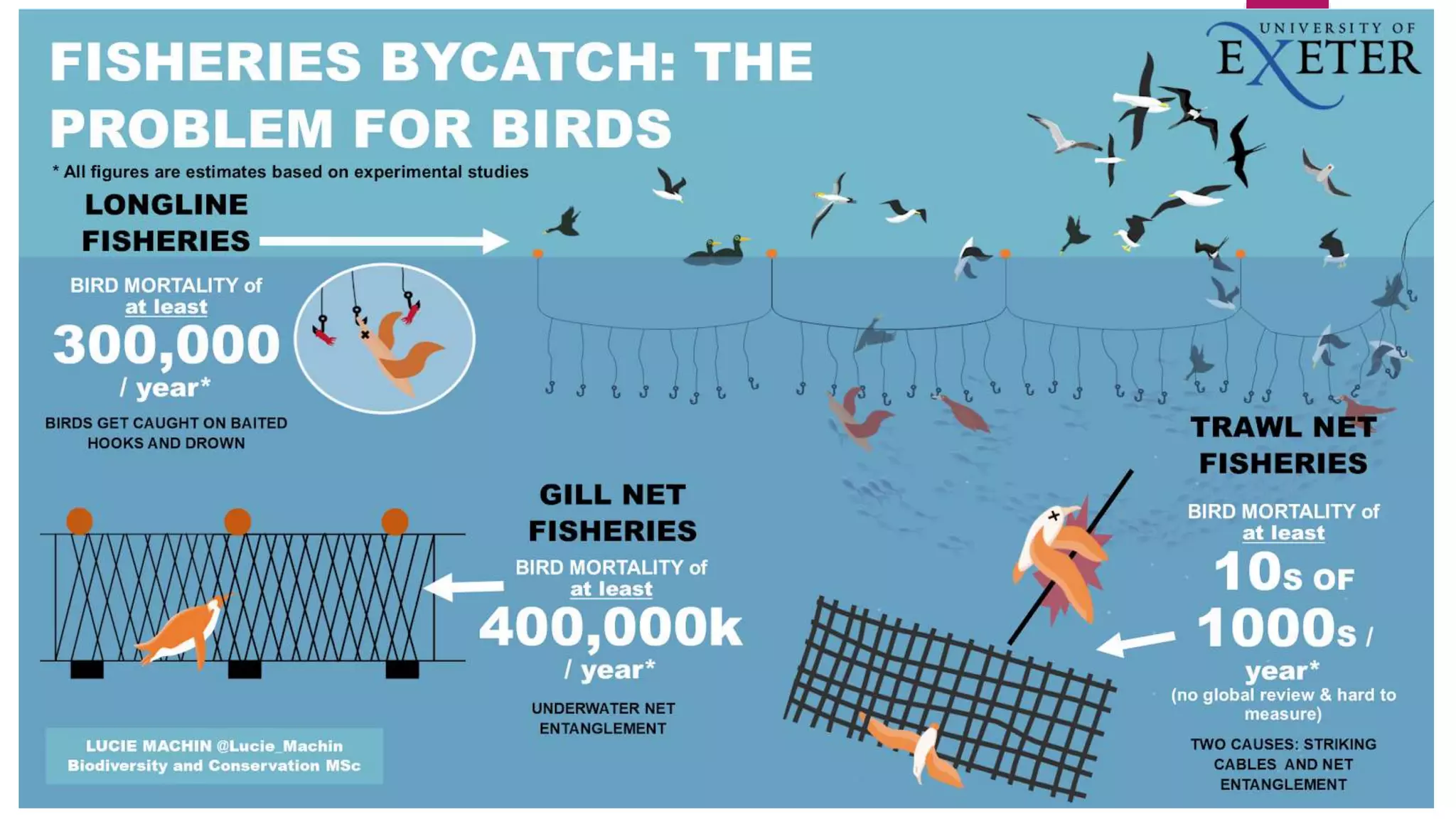
 Longline fishing also kills hundreds of thousands of seabirds when they
become entangled in drift nets or caught on longline hooks when they dive for
bait.
Cause of bycatch
 Bycatch occurs because modern fishing gear is very efficient, often covers an extensive area, and can be
highly unselective—it catches not only the target species but many other marine animals as well.
 Poor fisheries management in certain countries further contributes to the problem.
 Ignores regulations on net mesh sizes, quotas, permitted fishing areas.
 Fishing gear is largely non-selective—any species can be caught, including non-target species.
 Longlines, trawling and the use of gillnets are the fishing methods that most commonly result in
bycatch.
 Longlining is a commercial fishing method commonly targeting swordfish, tuna and halibut, where
hundreds or thousands of baited hooks hang at intervals along a single fishing line.
The hooks (commonly called “J hooks”) cause problems for marine turtles when swallowed, usually
resulting in death.
Sharks, non-target billfishes and juvenile tunas are often hooked as well.
 With trawling, boats drag large nets along the seabed, catching almost everything in their path.
 They can damage coral reefs and at shallow depths, catch marine turtles.
 Bycatch occurs because the nets also trap everything larger than the net’s mesh, which includes
juvenile fish, sharks, seabirds, marine turtles and cetaceans (whales, dolphins, porpoises).
 Gillnets that are lost at sea are rarely recovered and can continue to capture marine animals for
many years.(Ghost fishing ).
What is discards ?
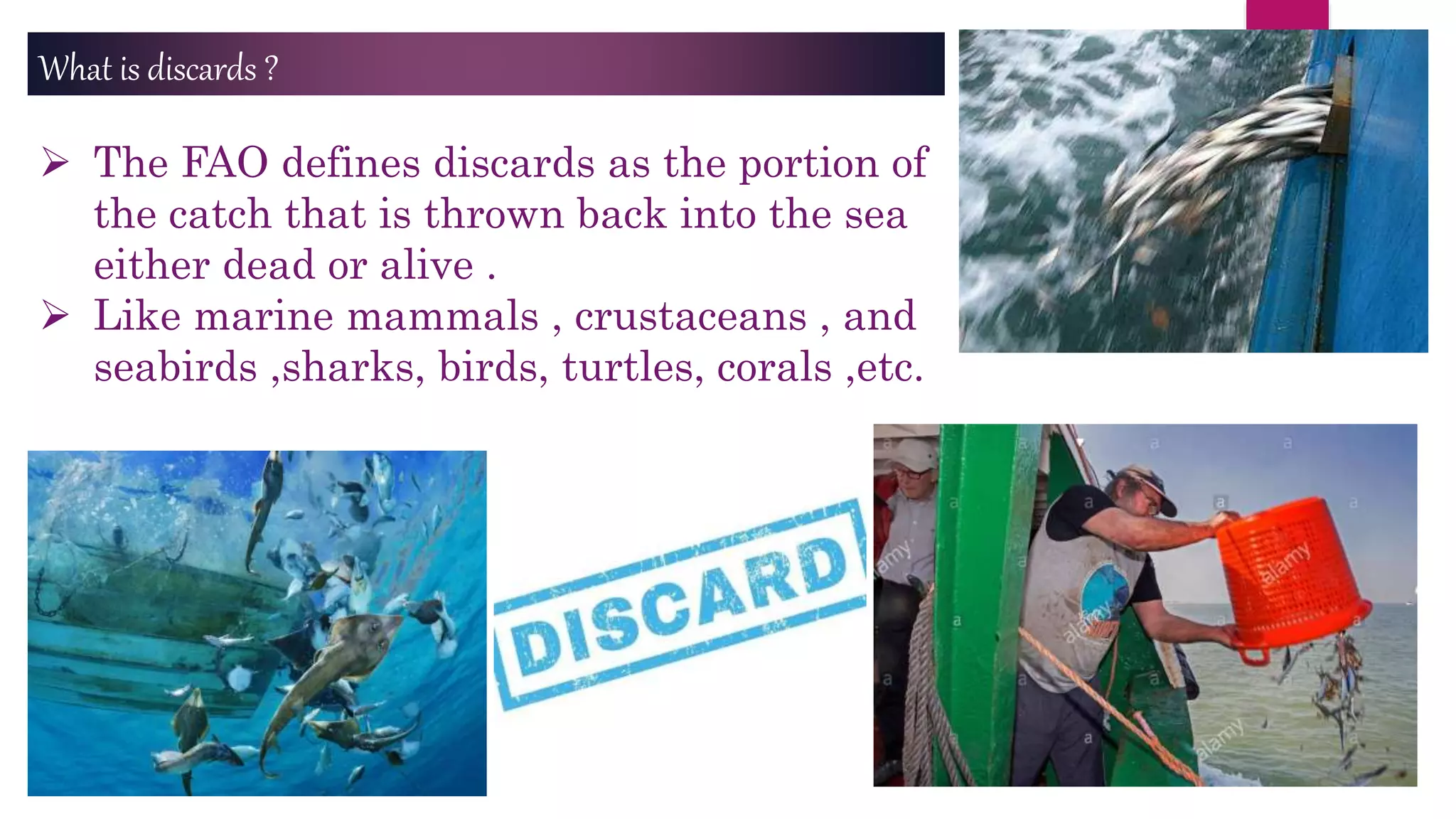
 The FAO defines discards as the portion of
the catch that is thrown back into the sea
either dead or alive .
 Like marine mammals , crustaceans , and
seabirds ,sharks, birds, turtles, corals ,etc.
Target species Valuable bycatch
• Non valuable species
• Over quota species
• Undersized individuals
Catch
Discard
Market
Solution of control bycatch:
 Use and development of species selective gear.
 Monitoring and control of fishing gears
 Motivating Technical conservation measures to improve gear selectivity.
 The use of closed areas or protected areas to protect juvenile and spawning fish.
 Fisheries management & marketing strategies
 State’s laws for prohibiting discards & over grading.
 Use by catch reduction devices.
 Using mesh sizes big enough to allow some small animals to escape
 Using TEDs and BRDs.
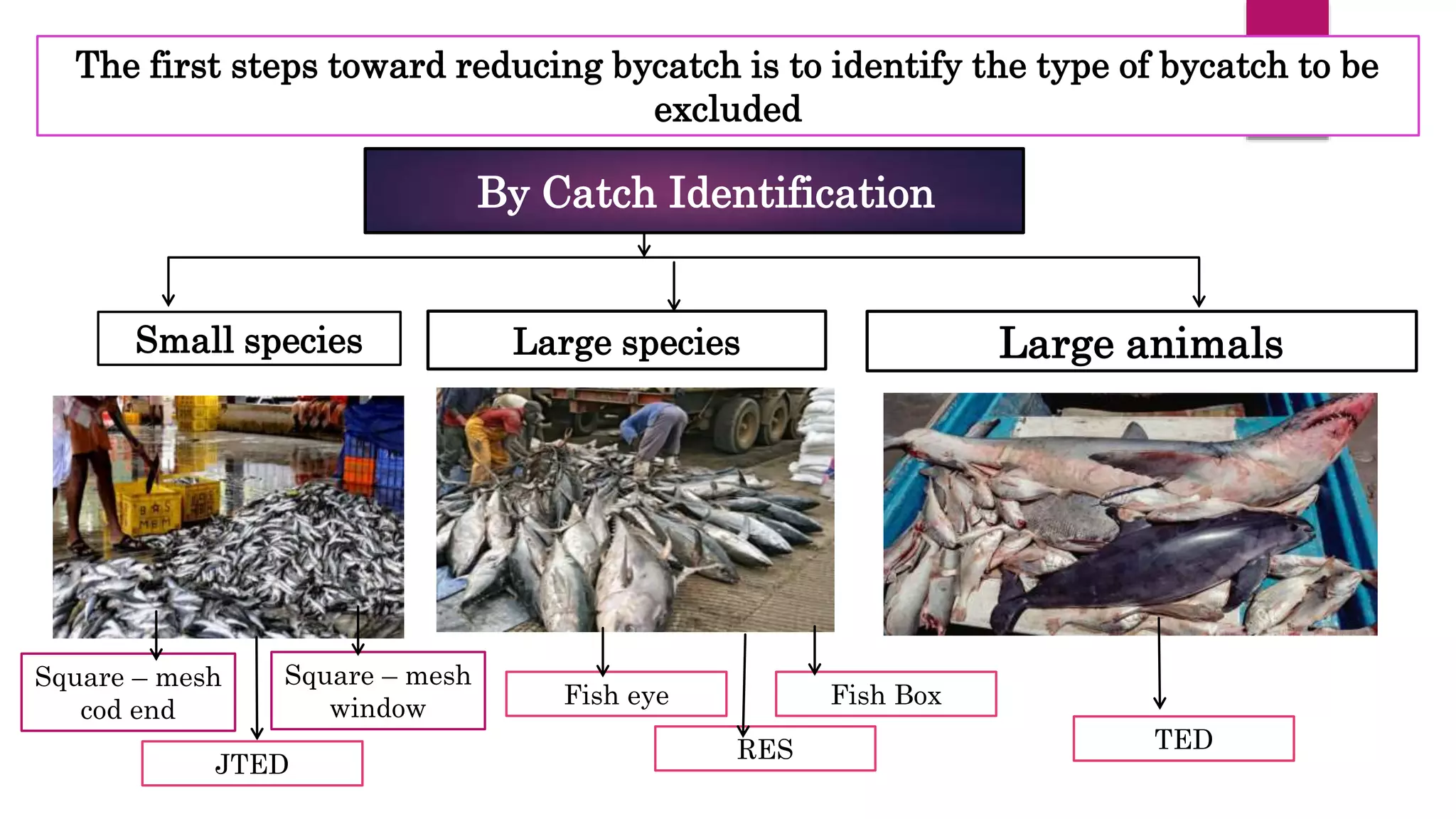
The first steps toward reducing bycatch is to identify the type of bycatch to be
excluded
Small species Large species Large animals
By Catch Identification
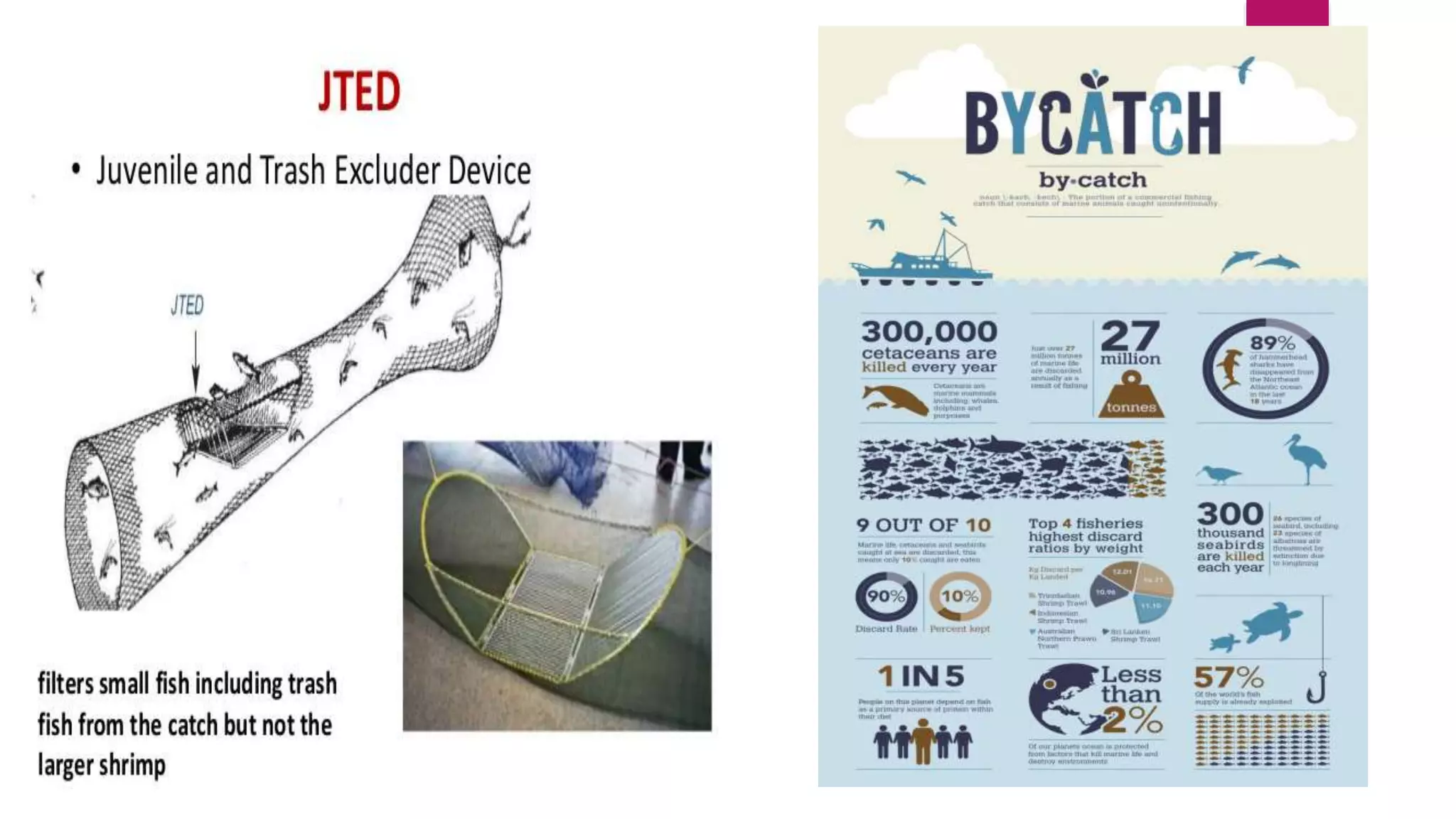
JTED
Square – mesh
cod end
Square – mesh
window Fish BoxFish eye
RES TED
1. Ted ( Turtle excluder Device):
 Used to exclude turtles and
other large animals from the
trawl
WHAT WWF IS DOING?
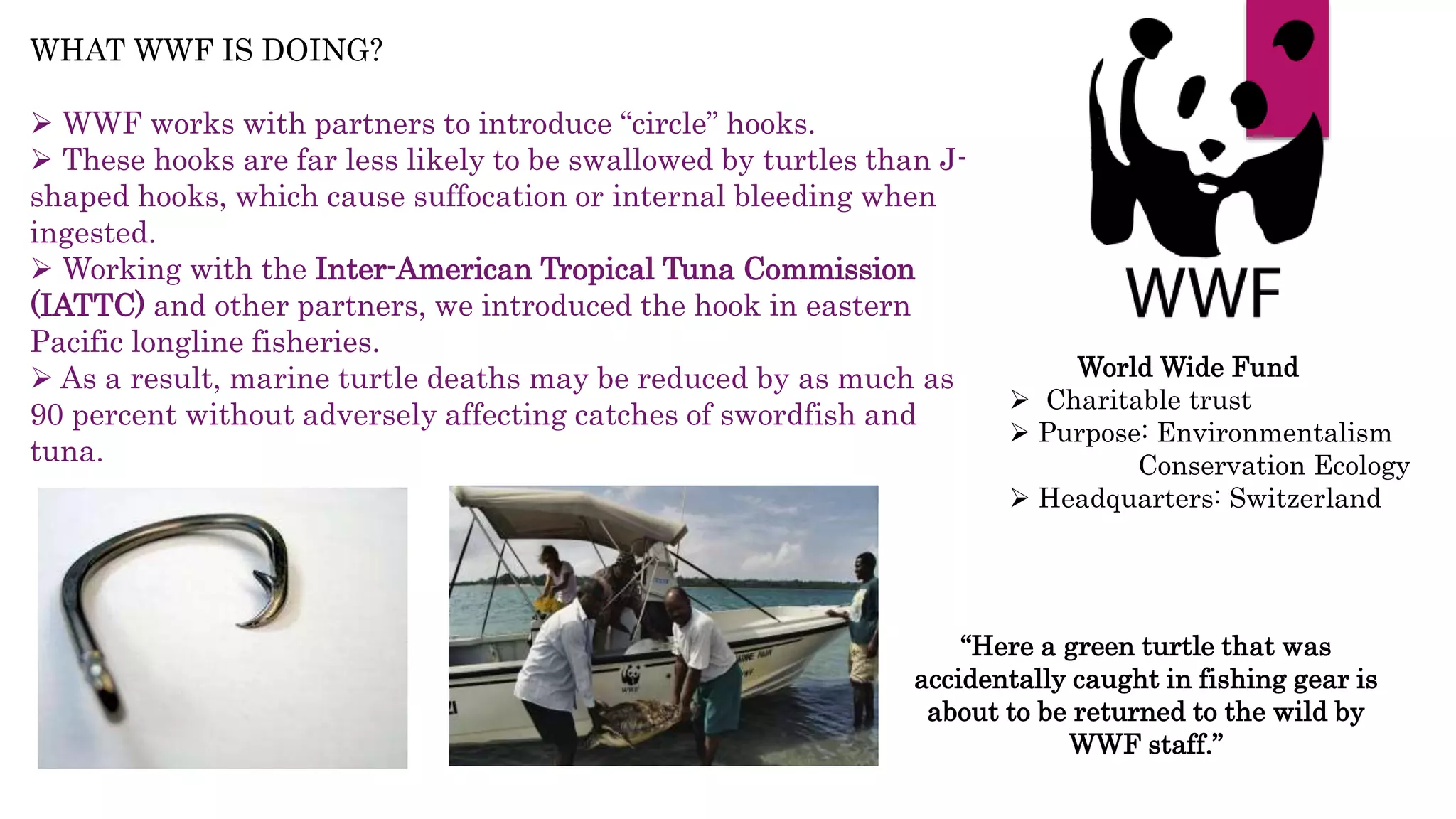
 WWF works with partners to introduce “circle” hooks.
 These hooks are far less likely to be swallowed by turtles than J-
shaped hooks, which cause suffocation or internal bleeding when
ingested.
 Working with the Inter-American Tropical Tuna Commission
(IATTC) and other partners, we introduced the hook in eastern
Pacific longline fisheries.
 As a result, marine turtle deaths may be reduced by as much as
90 percent without adversely affecting catches of swordfish and
tuna.
“Here a green turtle that was
accidentally caught in fishing gear is
about to be returned to the wild by
WWF staff.”
World Wide Fund
 Charitable trust
 Purpose: Environmentalism
Conservation Ecology
 Headquarters: Switzerland
INSPIRING INNOVATION OPERATED BY WWF :
 Bycatch mortalities can often be reduced by modifying fishing gear so that
fewer non-target species are caught or so that non-target species can escape.
 WWF created the International Smart Gear Competition to promote the
development of such innovative technology.
 WWF offers more than $50,000 in prize money to attract new ideas that
may prove to be a valuable solution to some of the most pressing bycatch
problems in fisheries around the globe.
Winning entries have resulted in effective solutions to prevent bycatch of
marine turtles and seabirds and have even been implemented by the
recreational fishing industry
References:
 http://www.worldwildlife.org
 http://oceana.org
 http://www.fao.org
 http://www.seafoodwatch.org
 http://en.wikipedia.org
 https://www.youtube.com
 https://www.youtube.com/watch
 http://www.fao.org
 https://www.youtube.com
Thank you…..

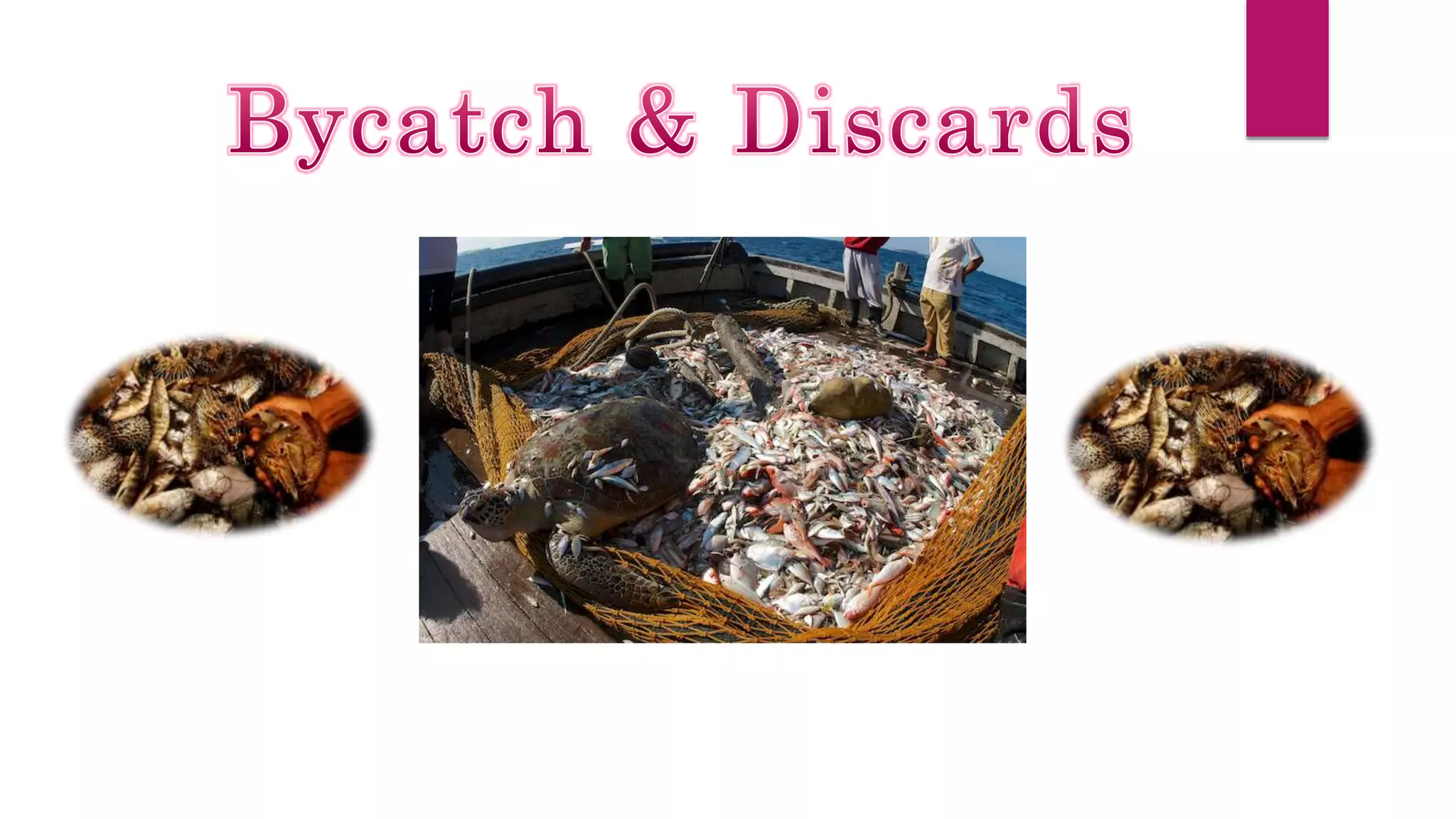
Bycatch and Discard and their sollution & effect

  • 2.
    Kerala university offisheries & ocean studies, kochi Presented by, Ashish sahu Responsible Fisheries FRM Instructor, Dr. M. K. Sanjeevan
  • 3.
    What is bycatch?  Bycatch Includes all non-target animals and non-living material which are caught during fishing.  Bycatch is the portion of the catch that is not comprised of the fishery’s target species .  Species that are caught accidentally. Bycatch from a shrimp trawler
  • 4.
     Nearly 20percent of shark species are threatened with extinction, primarily as a result of being caught accidentally on longlines.  Bycatch also includes young fish that could rebuild populations if they were allowed to grow and breed.  FAO estimates: 7.3 million tonnes of fish is discarded every year. “Bycatch from shrimp trawling usually consists of many fish species and occasionally large animals”.
  • 5.
    Not only fish Hundreds of thousands of sea turtles, seabirds and marine mammals, including whales, dolphins and porpoises, die as bycatch.
  • 6.
     200,000 loggerheadsea turtles and 50,000 leatherback sea turtles are caught annually.  Longline fishing also kills hundreds of thousands of seabirds when they become entangled in drift nets or caught on longline hooks when they dive for bait.
  • 7.
    Cause of bycatch Bycatch occurs because modern fishing gear is very efficient, often covers an extensive area, and can be highly unselective—it catches not only the target species but many other marine animals as well.  Poor fisheries management in certain countries further contributes to the problem.  Ignores regulations on net mesh sizes, quotas, permitted fishing areas.  Fishing gear is largely non-selective—any species can be caught, including non-target species.  Longlines, trawling and the use of gillnets are the fishing methods that most commonly result in bycatch.  Longlining is a commercial fishing method commonly targeting swordfish, tuna and halibut, where hundreds or thousands of baited hooks hang at intervals along a single fishing line. The hooks (commonly called “J hooks”) cause problems for marine turtles when swallowed, usually resulting in death. Sharks, non-target billfishes and juvenile tunas are often hooked as well.
  • 8.
     With trawling,boats drag large nets along the seabed, catching almost everything in their path.  They can damage coral reefs and at shallow depths, catch marine turtles.  Bycatch occurs because the nets also trap everything larger than the net’s mesh, which includes juvenile fish, sharks, seabirds, marine turtles and cetaceans (whales, dolphins, porpoises).  Gillnets that are lost at sea are rarely recovered and can continue to capture marine animals for many years.(Ghost fishing ).
  • 11.
    What is discards?  The FAO defines discards as the portion of the catch that is thrown back into the sea either dead or alive .  Like marine mammals , crustaceans , and seabirds ,sharks, birds, turtles, corals ,etc.
  • 12.
    Target species Valuablebycatch • Non valuable species • Over quota species • Undersized individuals Catch Discard Market
  • 14.
    Solution of controlbycatch:  Use and development of species selective gear.  Monitoring and control of fishing gears  Motivating Technical conservation measures to improve gear selectivity.  The use of closed areas or protected areas to protect juvenile and spawning fish.  Fisheries management & marketing strategies  State’s laws for prohibiting discards & over grading.  Use by catch reduction devices.  Using mesh sizes big enough to allow some small animals to escape  Using TEDs and BRDs.
  • 15.
    The first stepstoward reducing bycatch is to identify the type of bycatch to be excluded Small species Large species Large animals By Catch Identification JTED Square – mesh cod end Square – mesh window Fish BoxFish eye RES TED
  • 16.
    1. Ted (Turtle excluder Device):  Used to exclude turtles and other large animals from the trawl
  • 18.
    WHAT WWF ISDOING?  WWF works with partners to introduce “circle” hooks.  These hooks are far less likely to be swallowed by turtles than J- shaped hooks, which cause suffocation or internal bleeding when ingested.  Working with the Inter-American Tropical Tuna Commission (IATTC) and other partners, we introduced the hook in eastern Pacific longline fisheries.  As a result, marine turtle deaths may be reduced by as much as 90 percent without adversely affecting catches of swordfish and tuna. “Here a green turtle that was accidentally caught in fishing gear is about to be returned to the wild by WWF staff.” World Wide Fund  Charitable trust  Purpose: Environmentalism Conservation Ecology  Headquarters: Switzerland
  • 19.
    INSPIRING INNOVATION OPERATEDBY WWF :  Bycatch mortalities can often be reduced by modifying fishing gear so that fewer non-target species are caught or so that non-target species can escape.  WWF created the International Smart Gear Competition to promote the development of such innovative technology.  WWF offers more than $50,000 in prize money to attract new ideas that may prove to be a valuable solution to some of the most pressing bycatch problems in fisheries around the globe. Winning entries have resulted in effective solutions to prevent bycatch of marine turtles and seabirds and have even been implemented by the recreational fishing industry
  • 20.
    References:  http://www.worldwildlife.org  http://oceana.org http://www.fao.org  http://www.seafoodwatch.org  http://en.wikipedia.org  https://www.youtube.com  https://www.youtube.com/watch  http://www.fao.org  https://www.youtube.com
  • 21.