
Organizational Behavior
deals with how people act
and react in organizations
of all kinds.
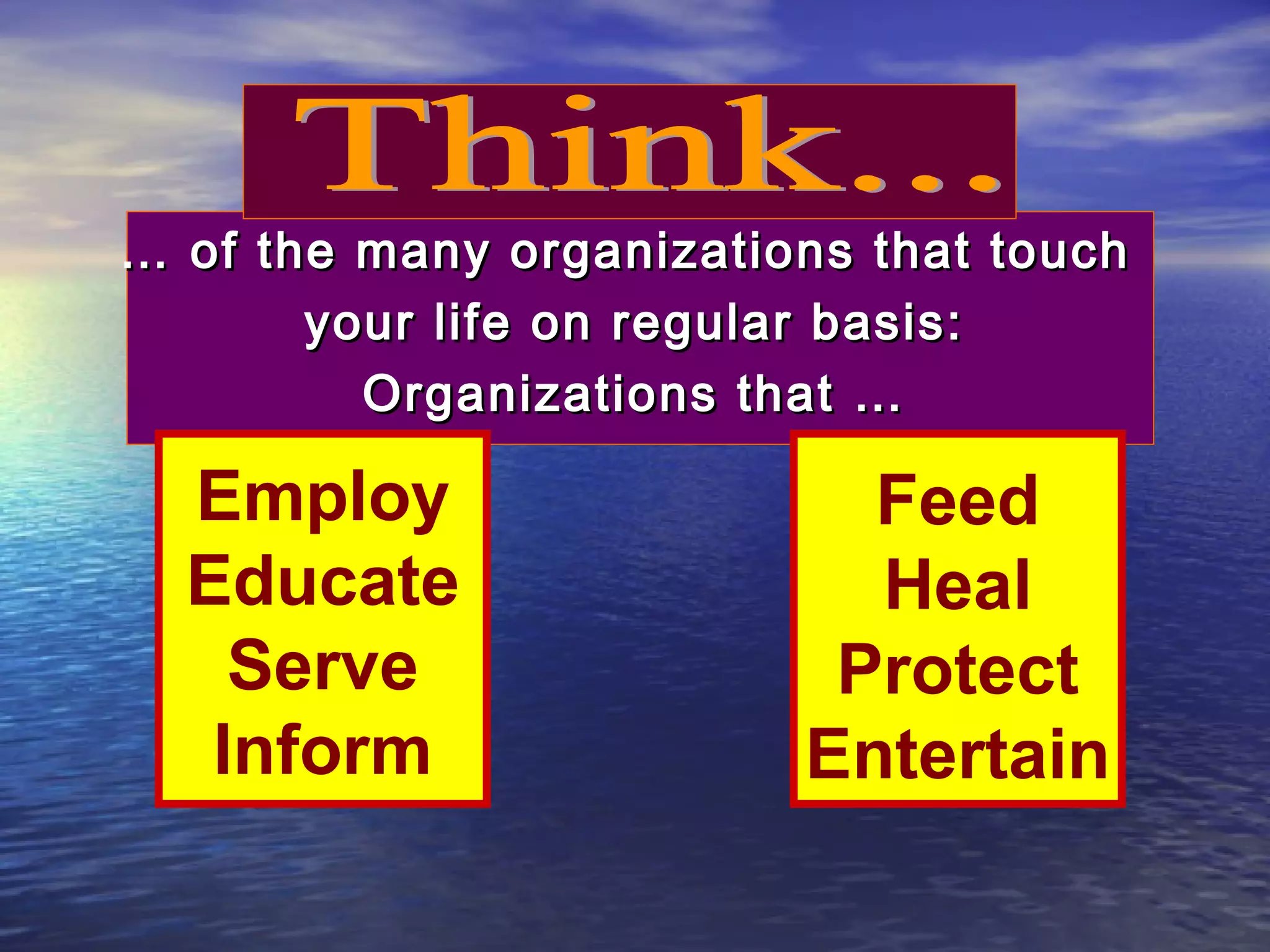
… of the many organizations that touch
your life on regular basis:
Organizations that …

Employ
Educate
Serve
Inform

Feed
Heal
Protect
Entertain
There are doubtless many factors
responsible for the success of
Southwest Airlines.
Its…
unique reservation system
the uniformity of its equipment
use of less expensive secondary
airports all these certainly
play a part
But …
Herb Kelleher’s
special relationship with the people
who make up the company
stands out the most.
Thus it makes sense to realize that
“the human side of work”
is a critical element in the effective
functioning – and basic existence
of organizations.
OB scientist and practitioners study
and attempt to solve problems by
using knowledge derived from
research in the Behavioral Science,
such as Psychology and Sociology.
The valuable information helps to solve a
wide range of organizational problems
Such as:
What can be done to make people more productive?
What can be done to make people more satisfied?
When and how should people be organized into teams?
How should jobs be designed to make people adapt to change?
How should organizations be designed to meet challenges?
OB Applies the Scientific Method
to Practical Managerial Problems.
“The field that seeks increased
knowledge of all aspects of
behavior in organizational setting
through the use of scientific method.”
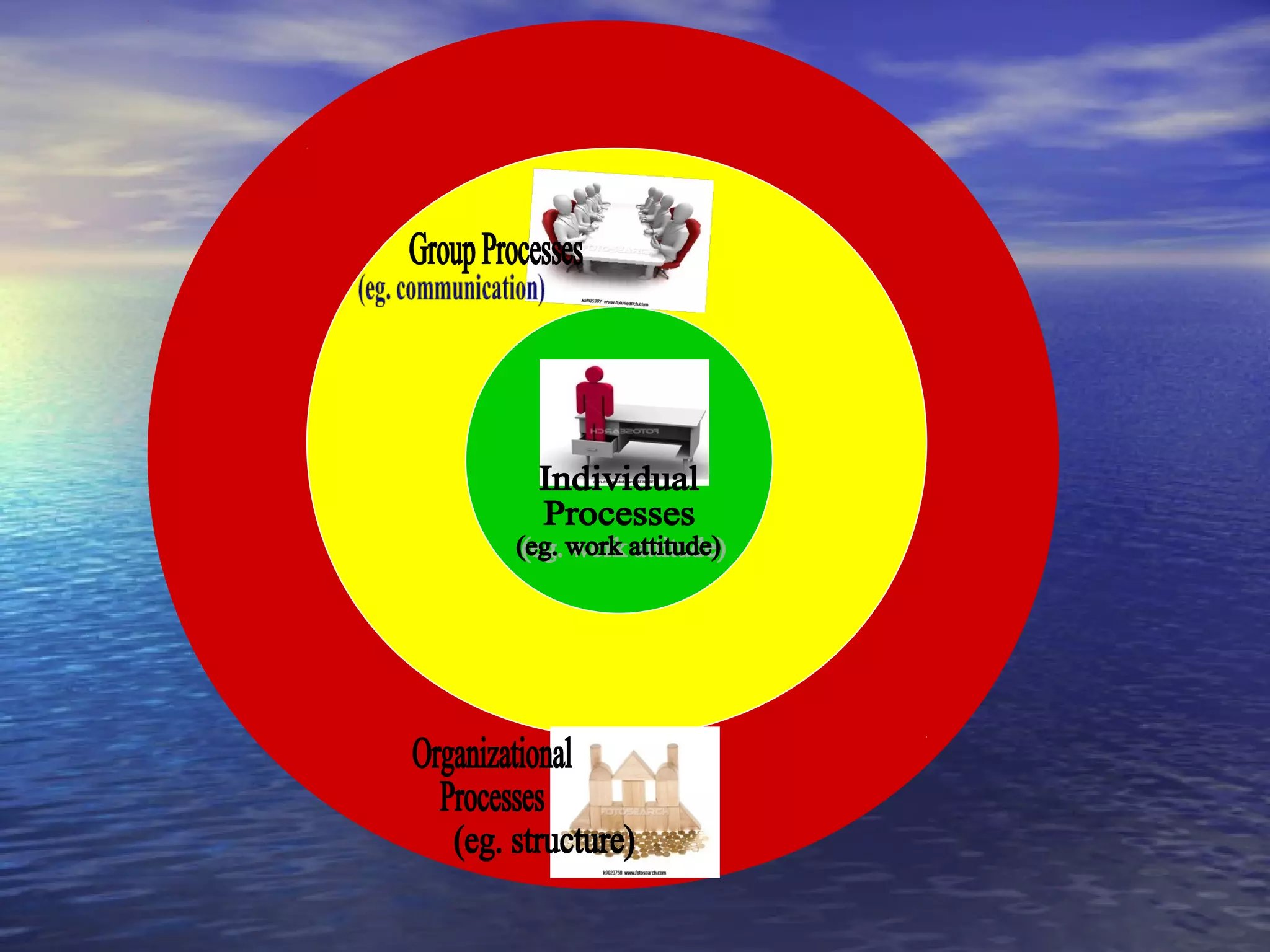
To understand fully behavior in
organizations, we must consider
three levels of analysis: Process
occurring within …
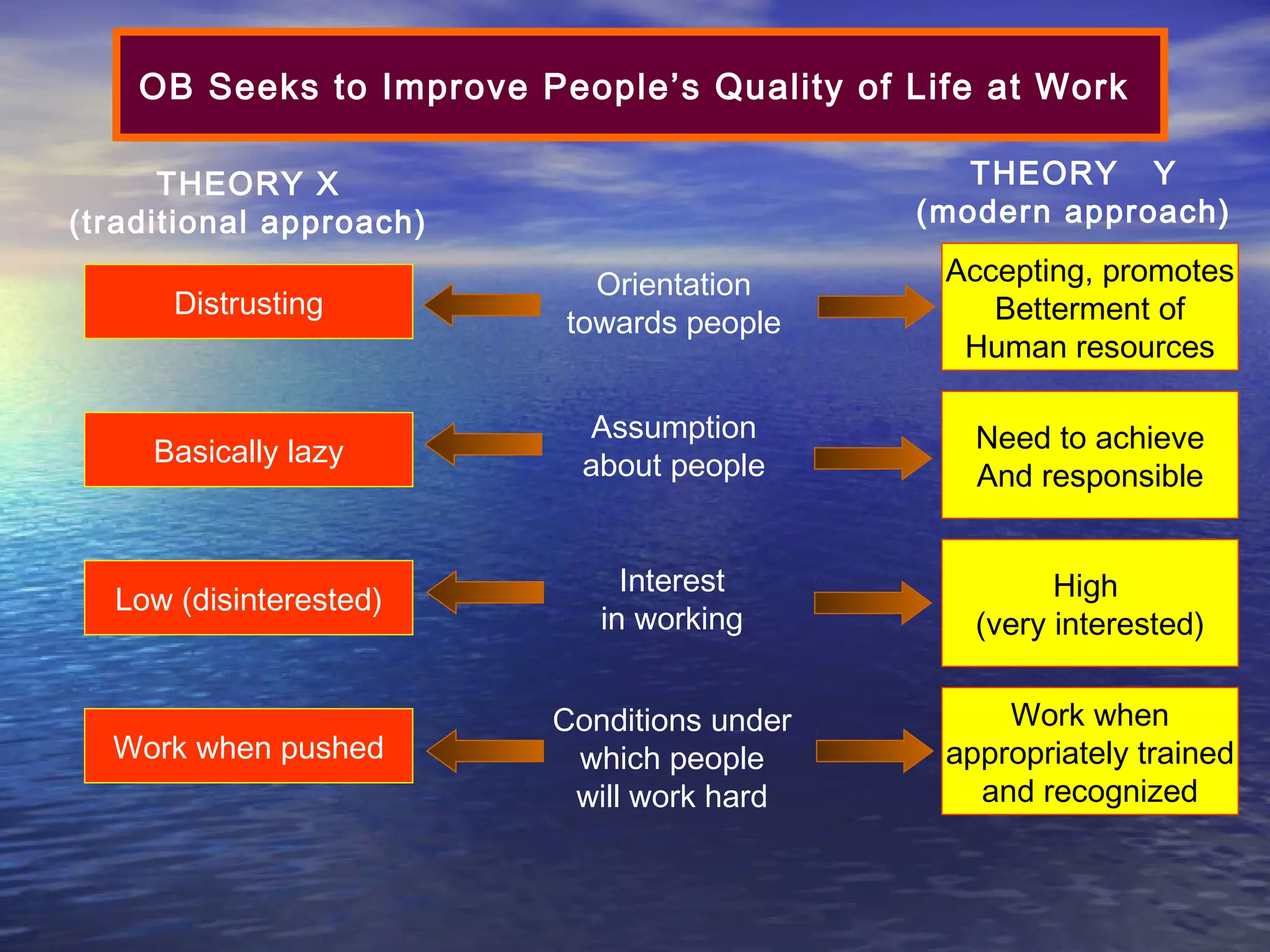
OB Seeks to Improve People’s Quality of Life at Work
THEORY Y
(modern approach)

THEORY X
(traditional approach)
Distrusting

Orientation
towards people

Accepting, promotes
Betterment of
Human resources

Basically lazy

Assumption
about people

Need to achieve
And responsible

Low (disinterested)

Interest
in working

High
(very interested)

Work when pushed

Conditions under
which people
will work hard

Work when
appropriately trained
and recognized
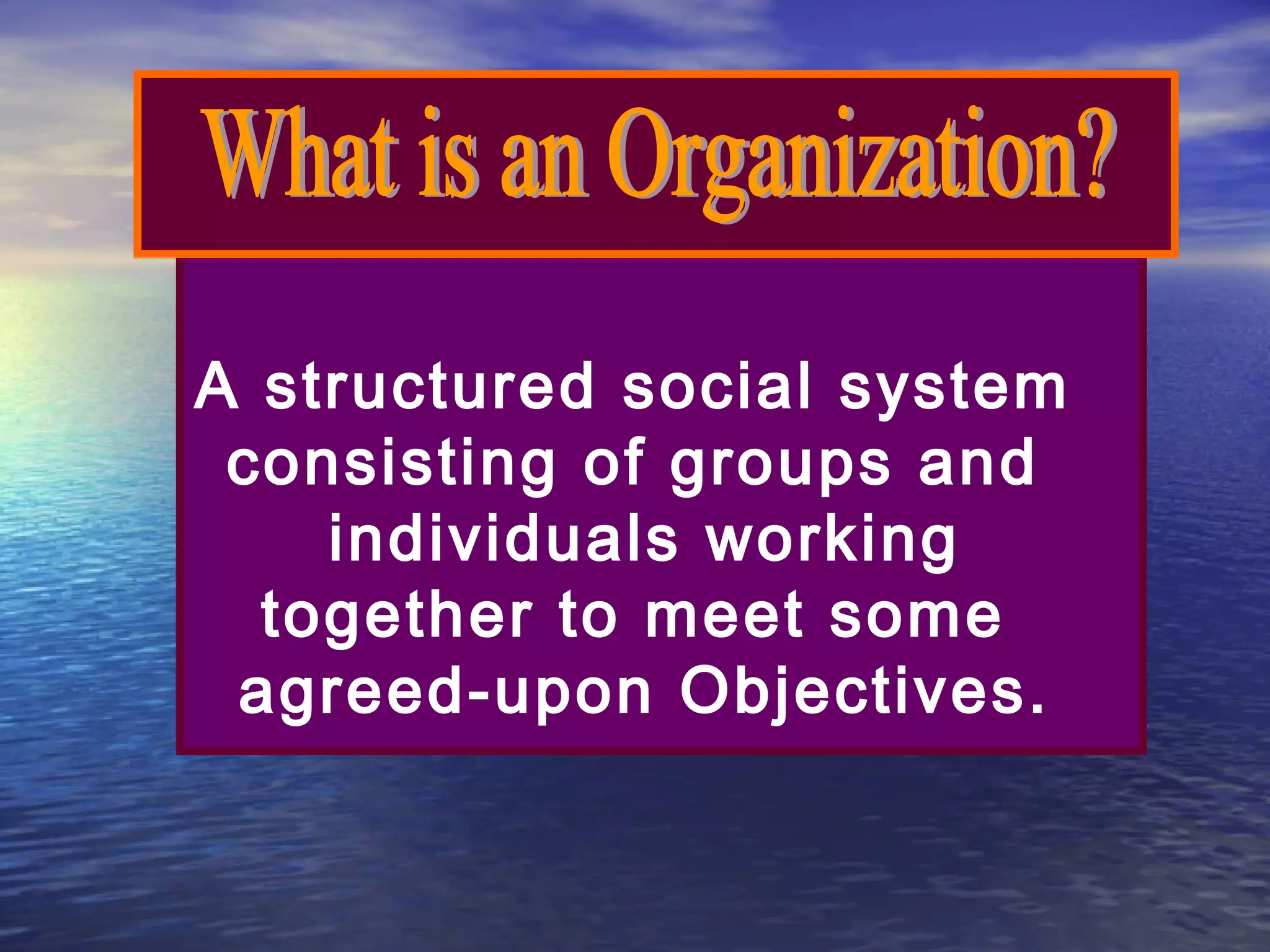
A structured social system
consisting of groups and
individuals working
together to meet some
agreed-upon Objectives.
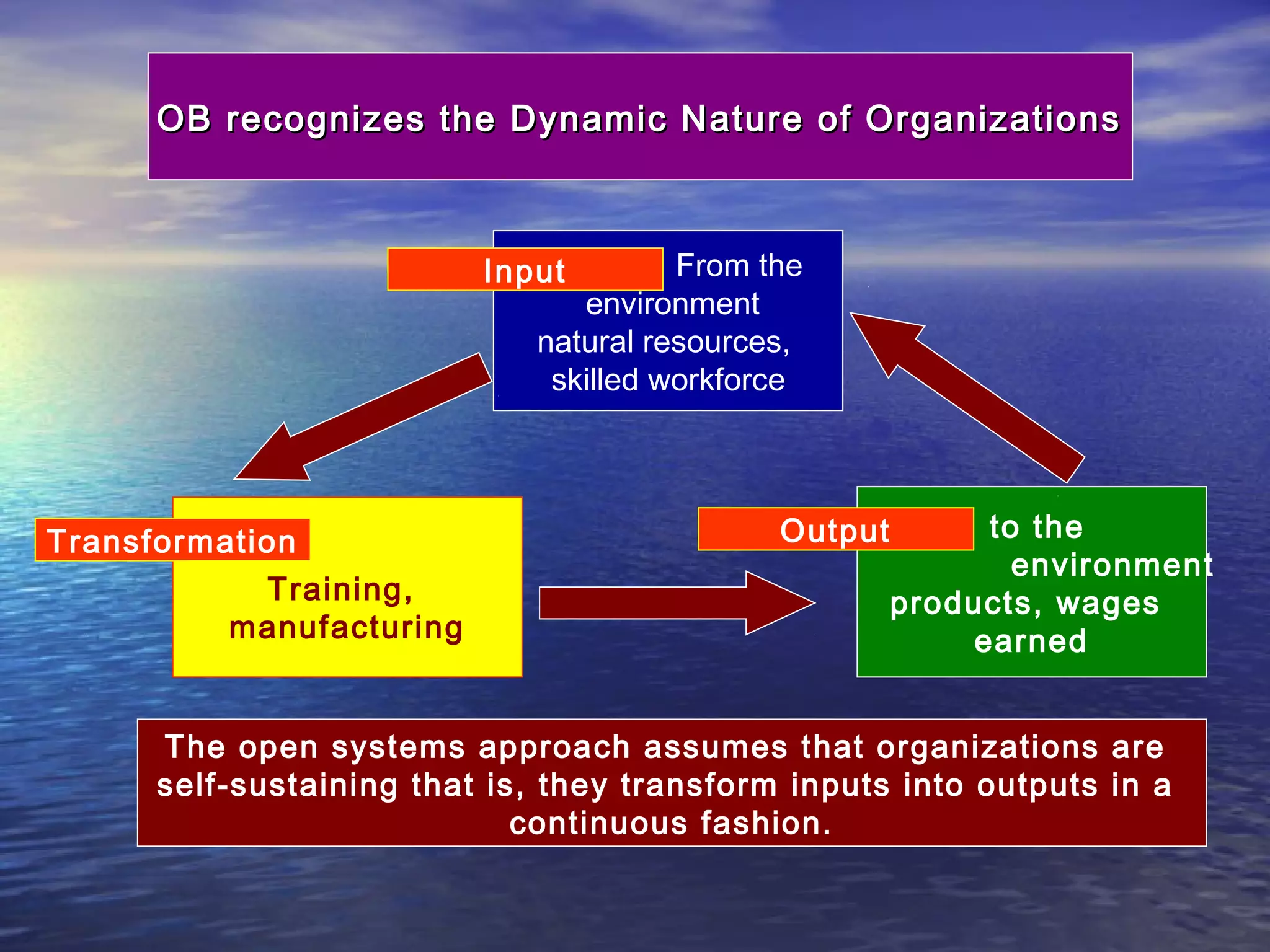
OB recognizes the Dynamic Nature of Organizations

From the
environment
natural resources,
skilled workforce

Input

Transformation
Training,
manufacturing

Output

to the
environment
products, wages
earned

The open systems approach assumes that organizations are
self-sustaining that is, they transform inputs into outputs in a
continuous fashion.
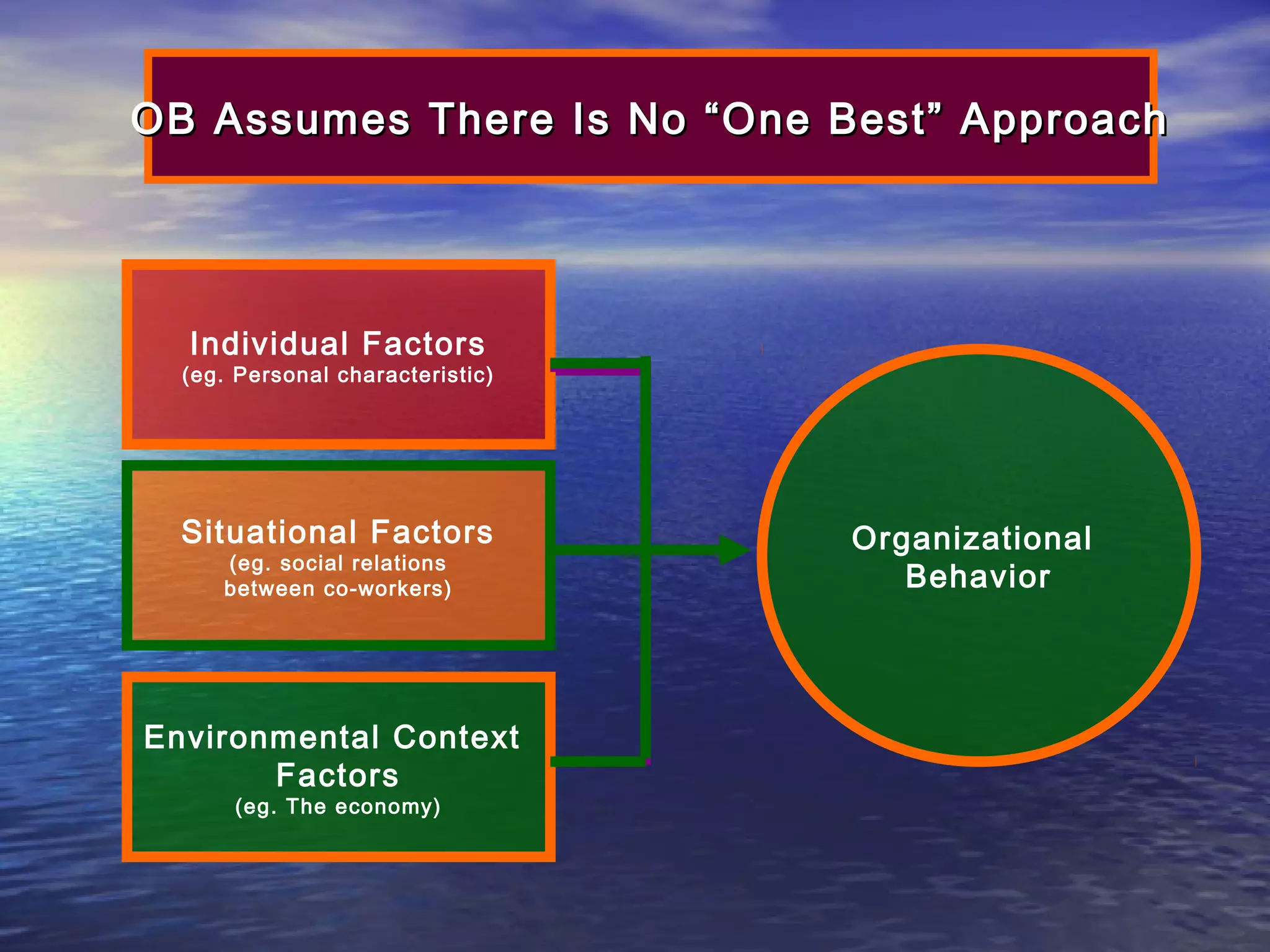
OB Assumes There Is No “One Best” Approach

Individual Factors

(eg. Personal characteristic)

Situational Factors
(eg. social relations
between co-workers)

Environmental Context
Factors
(eg. The economy)

Organizational
Behavior
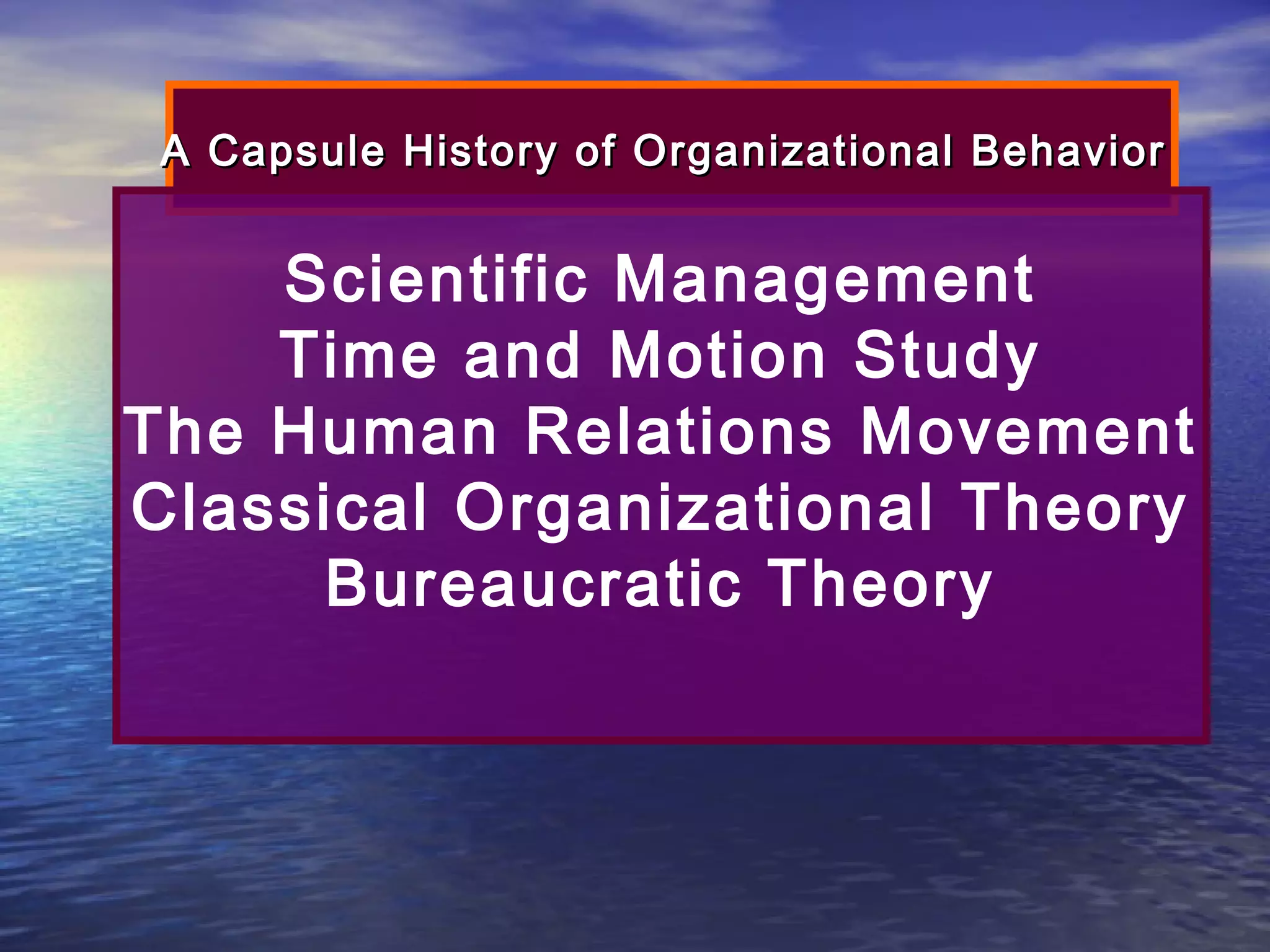
A Capsule History of Organizational Behavior

Scientific Management
Time and Motion Study
The Human Relations Movement
Classical Organizational Theory
Bureaucratic Theory
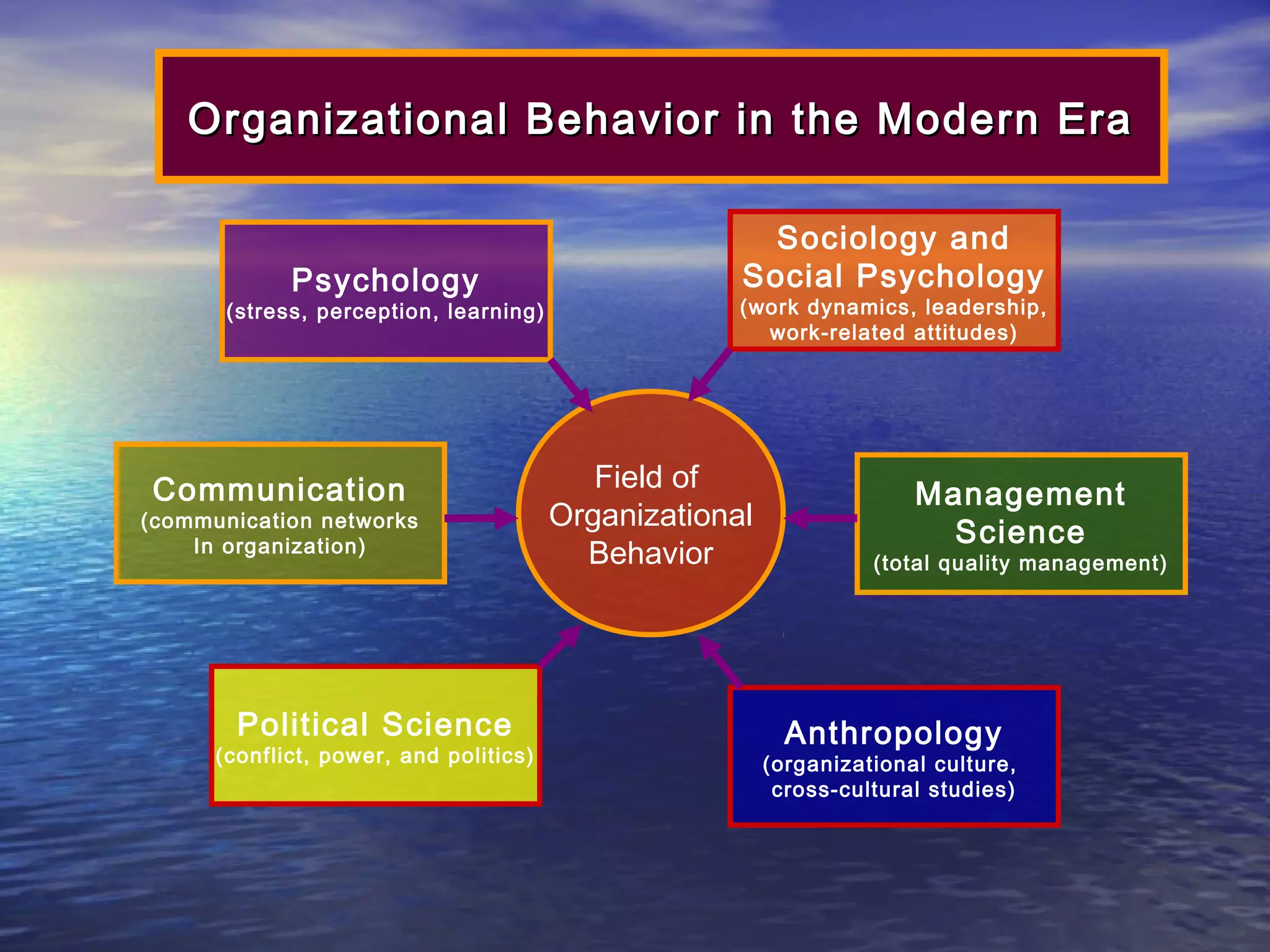
Organizational Behavior in the Modern Era

Psychology

(stress, perception, learning)

Communication

(communication networks
In organization)

Political Science

(conflict, power, and politics)

Sociology and
Social Psychology

(work dynamics, leadership,
work-related attitudes)

Field of
Organizational
Behavior

Management
Science

(total quality management)

Anthropology

(organizational culture,
cross-cultural studies)
By Mahmood Qasim Introduction to Organizational Behaviour for BBA and MBA students

By Mahmood Qasim Introduction to Organizational Behaviour for BBA and MBA students

  • 2.
    Organizational Behavior deals withhow people act and react in organizations of all kinds.
  • 3.
    … of themany organizations that touch your life on regular basis: Organizations that … Employ Educate Serve Inform Feed Heal Protect Entertain
  • 4.
    There are doubtlessmany factors responsible for the success of Southwest Airlines.
  • 5.
    Its… unique reservation system theuniformity of its equipment use of less expensive secondary airports all these certainly play a part But …
  • 6.
    Herb Kelleher’s special relationshipwith the people who make up the company stands out the most.
  • 7.
    Thus it makessense to realize that “the human side of work” is a critical element in the effective functioning – and basic existence of organizations.
  • 8.
    OB scientist andpractitioners study and attempt to solve problems by using knowledge derived from research in the Behavioral Science, such as Psychology and Sociology.
  • 9.
    The valuable informationhelps to solve a wide range of organizational problems Such as: What can be done to make people more productive? What can be done to make people more satisfied? When and how should people be organized into teams? How should jobs be designed to make people adapt to change? How should organizations be designed to meet challenges?
  • 10.
    OB Applies theScientific Method to Practical Managerial Problems. “The field that seeks increased knowledge of all aspects of behavior in organizational setting through the use of scientific method.”
  • 11.
    To understand fullybehavior in organizations, we must consider three levels of analysis: Process occurring within …
  • 13.
    OB Seeks toImprove People’s Quality of Life at Work THEORY Y (modern approach) THEORY X (traditional approach) Distrusting Orientation towards people Accepting, promotes Betterment of Human resources Basically lazy Assumption about people Need to achieve And responsible Low (disinterested) Interest in working High (very interested) Work when pushed Conditions under which people will work hard Work when appropriately trained and recognized
  • 14.
    A structured socialsystem consisting of groups and individuals working together to meet some agreed-upon Objectives.
  • 15.
    OB recognizes theDynamic Nature of Organizations From the environment natural resources, skilled workforce Input Transformation Training, manufacturing Output to the environment products, wages earned The open systems approach assumes that organizations are self-sustaining that is, they transform inputs into outputs in a continuous fashion.
  • 16.
    OB Assumes ThereIs No “One Best” Approach Individual Factors (eg. Personal characteristic) Situational Factors (eg. social relations between co-workers) Environmental Context Factors (eg. The economy) Organizational Behavior
  • 17.
    A Capsule Historyof Organizational Behavior Scientific Management Time and Motion Study The Human Relations Movement Classical Organizational Theory Bureaucratic Theory
  • 18.
    Organizational Behavior inthe Modern Era Psychology (stress, perception, learning) Communication (communication networks In organization) Political Science (conflict, power, and politics) Sociology and Social Psychology (work dynamics, leadership, work-related attitudes) Field of Organizational Behavior Management Science (total quality management) Anthropology (organizational culture, cross-cultural studies)