Mrs. Ferrington
9 th Grade English
 Many words look or sound similar

 Use the right word so the reader knows your meaning

 Incorrect words can be distracting!
 There is used when you are referring to a PLACE


 Examples:
   The book belongs over there.
   There are many different ways to begin a story.
 Their refers to possession of something


 Examples:
   This is their house.
   Their parents are both teachers.
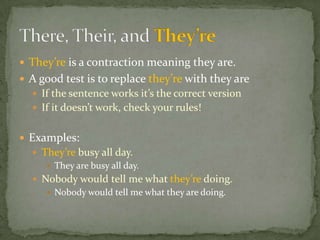
 They’re is a contraction meaning they are.
 A good test is to replace they’re with they are
   If the sentence works it’s the correct version
   If it doesn’t work, check your rules!


 Examples:
   They’re busy all day.
      They are busy all day.
   Nobody would tell me what they’re doing.
      Nobody would tell me what they are doing.
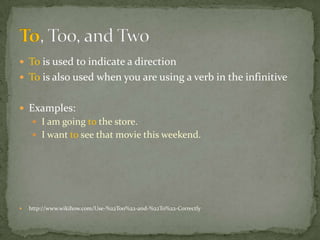
 To is used to indicate a direction
 To is also used when you are using a verb in the infinitive


 Examples:
      I am going to the store.
      I want to see that movie this weekend.


   http://www.wikihow.com/Use-%22Too%22-and-%22To%22-Correctly
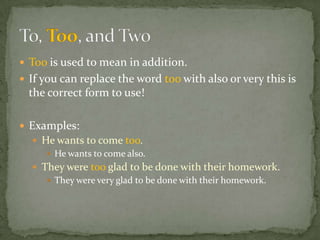
 Too is used to mean in addition.
 If you can replace the word too with also or very this is
  the correct form to use!

 Examples:
   He wants to come too.
      He wants to come also.
   They were too glad to be done with their homework.
      They were very glad to be done with their homework.
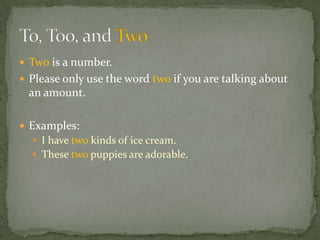
 Two is a number.
 Please only use the word two if you are talking about
 an amount.

 Examples:
   I have two kinds of ice cream.
   These two puppies are adorable.
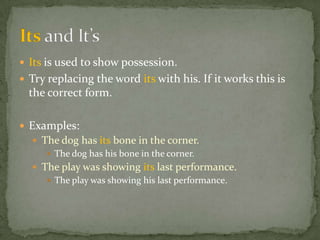
 Its is used to show possession.
 Try replacing the word its with his. If it works this is
  the correct form.

 Examples:
   The dog has its bone in the corner.
      The dog has his bone in the corner.
   The play was showing its last performance.
      The play was showing his last performance.
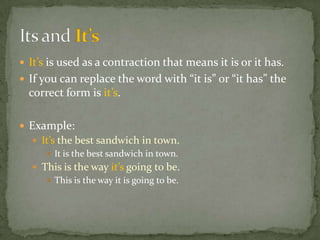
 It’s is used as a contraction that means it is or it has.
 If you can replace the word with “it is” or “it has” the
  correct form is it’s.

 Example:
   It’s the best sandwich in town.
      It is the best sandwich in town.
   This is the way it’s going to be.
      This is the way it is going to be.
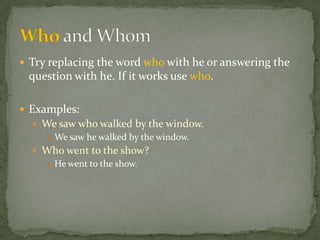
 Try replacing the word who with he or answering the
 question with he. If it works use who.

 Examples:
   We saw who walked by the window.
     We saw he walked by the window.
   Who went to the show?
     He went to the show.
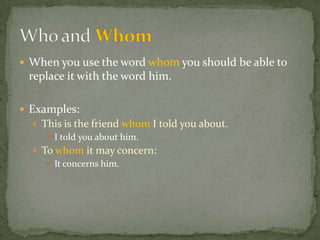
 When you use the word whom you should be able to
 replace it with the word him.

 Examples:
   This is the friend whom I told you about.
      I told you about him.
   To whom it may concern:
      It concerns him.
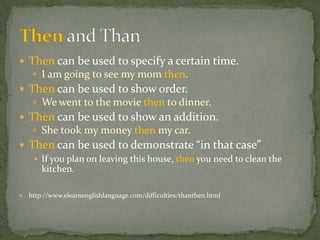
 Then can be used to specify a certain time.
      I am going to see my mom then.
 Then can be used to show order.
      We went to the movie then to dinner.
 Then can be used to show an addition.
      She took my money then my car.
 Then can be used to demonstrate “in that case”
    If you plan on leaving this house, then you need to clean the
     kitchen.

   http://www.elearnenglishlanguage.com/difficulties/thanthen.html
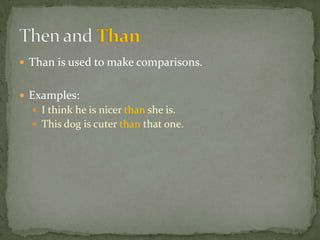
 Than is used to make comparisons.


 Examples:
   I think he is nicer than she is.
   This dog is cuter than that one.
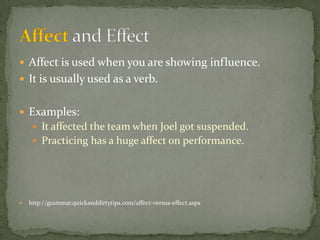
 Affect is used when you are showing influence.
 It is usually used as a verb.


 Examples:
      It affected the team when Joel got suspended.
      Practicing has a huge affect on performance.


   http://grammar.quickanddirtytips.com/affect-versus-effect.aspx
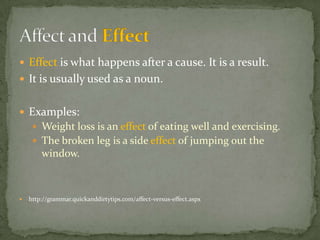
 Effect is what happens after a cause. It is a result.
 It is usually used as a noun.


 Examples:
      Weight loss is an effect of eating well and exercising.
      The broken leg is a side effect of jumping out the
        window.


   http://grammar.quickanddirtytips.com/affect-versus-effect.aspx

Commonly confused words

  • 1.
    Mrs. Ferrington 9 thGrade English
  • 2.
     Many wordslook or sound similar  Use the right word so the reader knows your meaning  Incorrect words can be distracting!
  • 3.
     There isused when you are referring to a PLACE  Examples:  The book belongs over there.  There are many different ways to begin a story.
  • 4.
     Their refersto possession of something  Examples:  This is their house.  Their parents are both teachers.
  • 5.
     They’re isa contraction meaning they are.  A good test is to replace they’re with they are  If the sentence works it’s the correct version  If it doesn’t work, check your rules!  Examples:  They’re busy all day.  They are busy all day.  Nobody would tell me what they’re doing.  Nobody would tell me what they are doing.
  • 6.
     To isused to indicate a direction  To is also used when you are using a verb in the infinitive  Examples:  I am going to the store.  I want to see that movie this weekend.  http://www.wikihow.com/Use-%22Too%22-and-%22To%22-Correctly
  • 7.
     Too isused to mean in addition.  If you can replace the word too with also or very this is the correct form to use!  Examples:  He wants to come too.  He wants to come also.  They were too glad to be done with their homework.  They were very glad to be done with their homework.
  • 8.
     Two isa number.  Please only use the word two if you are talking about an amount.  Examples:  I have two kinds of ice cream.  These two puppies are adorable.
  • 9.
     Its isused to show possession.  Try replacing the word its with his. If it works this is the correct form.  Examples:  The dog has its bone in the corner.  The dog has his bone in the corner.  The play was showing its last performance.  The play was showing his last performance.
  • 10.
     It’s isused as a contraction that means it is or it has.  If you can replace the word with “it is” or “it has” the correct form is it’s.  Example:  It’s the best sandwich in town.  It is the best sandwich in town.  This is the way it’s going to be.  This is the way it is going to be.
  • 11.
     Try replacingthe word who with he or answering the question with he. If it works use who.  Examples:  We saw who walked by the window.  We saw he walked by the window.  Who went to the show?  He went to the show.
  • 12.
     When youuse the word whom you should be able to replace it with the word him.  Examples:  This is the friend whom I told you about.  I told you about him.  To whom it may concern:  It concerns him.
  • 13.
     Then canbe used to specify a certain time.  I am going to see my mom then.  Then can be used to show order.  We went to the movie then to dinner.  Then can be used to show an addition.  She took my money then my car.  Then can be used to demonstrate “in that case”  If you plan on leaving this house, then you need to clean the kitchen.  http://www.elearnenglishlanguage.com/difficulties/thanthen.html
  • 14.
     Than isused to make comparisons.  Examples:  I think he is nicer than she is.  This dog is cuter than that one.
  • 15.
     Affect isused when you are showing influence.  It is usually used as a verb.  Examples:  It affected the team when Joel got suspended.  Practicing has a huge affect on performance.  http://grammar.quickanddirtytips.com/affect-versus-effect.aspx
  • 16.
     Effect iswhat happens after a cause. It is a result.  It is usually used as a noun.  Examples:  Weight loss is an effect of eating well and exercising.  The broken leg is a side effect of jumping out the window.  http://grammar.quickanddirtytips.com/affect-versus-effect.aspx