PRESENTATION ON BODY LANGUAGE BY :-
1-Rishabh Aggarwal
2-Babita Kandpal
3-Saurabh Dangwal
4-Neha Sah
5-Richa Solanki
6-Anurag Pathak
7-Shailja Bhatt
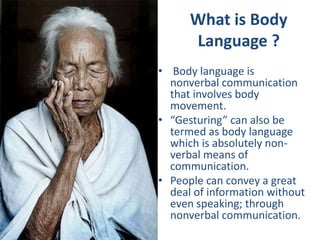
• Body language is
nonverbal communication
that involves body
movement.
• “Gesturing” can also be
termed as body language
which is absolutely non-
verbal means of
communication.
• People can convey a great
deal of information without
even speaking; through
nonverbal communication.
What is Body
Language ?
How Does Body Speak?
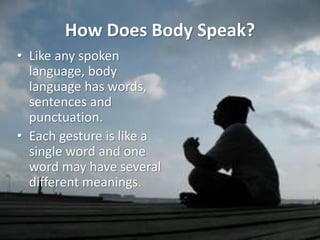
• Like any spoken
language, body
language has words,
sentences and
punctuation.
• Each gesture is like a
single word and one
word may have several
different meanings.
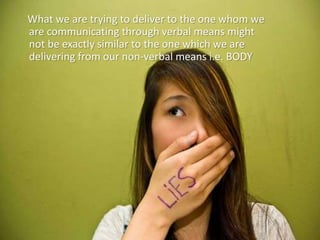
What we are trying to deliver to the one whom we
are communicating through verbal means might
not be exactly similar to the one which we are
delivering from our non-verbal means i.e. BODY
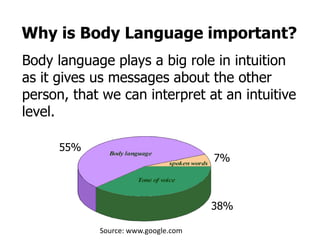
Why is Body Language important?
Body language plays a big role in intuition
as it gives us messages about the other
person, that we can interpret at an intuitive
level.
55%
38%
7%
Source: www.google.com
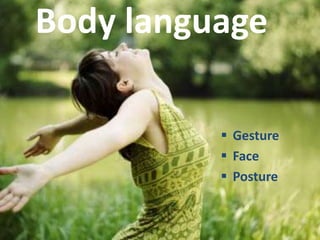
Body language
 Gesture
 Face
 Posture
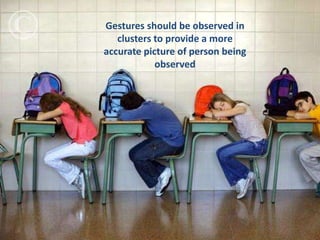
Gestures should be observed in
clusters to provide a more
accurate picture of person being
observed
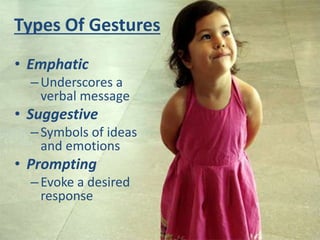
Types Of Gestures
• Emphatic
–Underscores a
verbal message
• Suggestive
–Symbols of ideas
and emotions
• Prompting
–Evoke a desired
response
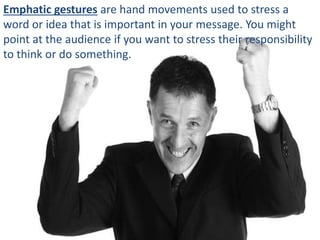
Emphatic gestures are hand movements used to stress a
word or idea that is important in your message. You might
point at the audience if you want to stress their responsibility
to think or do something.
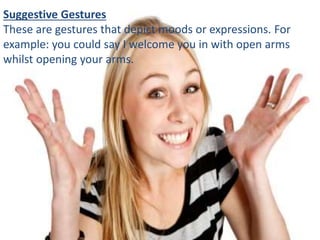
Suggestive Gestures
These are gestures that depict moods or expressions. For
example: you could say I welcome you in with open arms
whilst opening your arms.
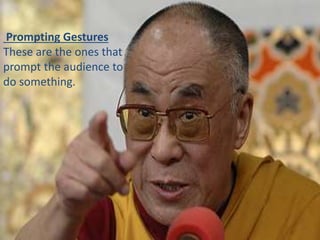
Prompting Gestures
These are the ones that
prompt the audience to
do something.
HOW TO IDENTIFY…
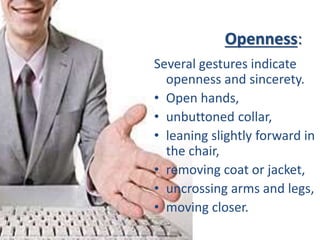
Openness:
Several gestures indicate
openness and sincerety.
• Open hands,
• unbuttoned collar,
• leaning slightly forward in
the chair,
• removing coat or jacket,
• uncrossing arms and legs,
• moving closer.
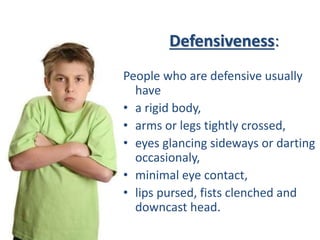
Defensiveness:
People who are defensive usually
have
• a rigid body,
• arms or legs tightly crossed,
• eyes glancing sideways or darting
occasionaly,
• minimal eye contact,
• lips pursed, fists clenched and
downcast head.
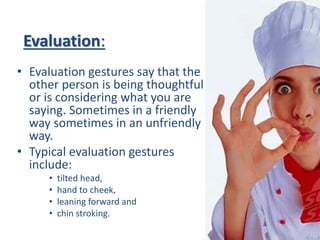
Evaluation:
• Evaluation gestures say that the
other person is being thoughtful
or is considering what you are
saying. Sometimes in a friendly
way sometimes in an unfriendly
way.
• Typical evaluation gestures
include:
• tilted head,
• hand to cheek,
• leaning forward and
• chin stroking.
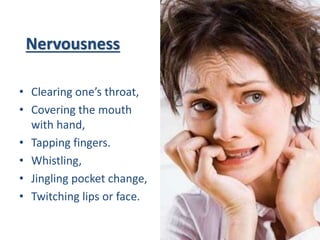
Nervousness
• Clearing one’s throat,
• Covering the mouth
with hand,
• Tapping fingers.
• Whistling,
• Jingling pocket change,
• Twitching lips or face.
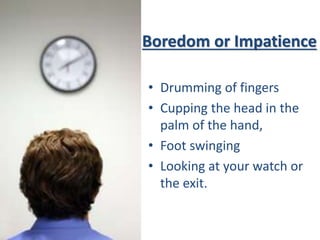
Boredom or Impatience
• Drumming of fingers
• Cupping the head in the
palm of the hand,
• Foot swinging
• Looking at your watch or
the exit.
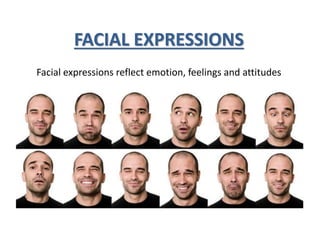
FACIAL EXPRESSIONS
Facial expressions reflect emotion, feelings and attitudes
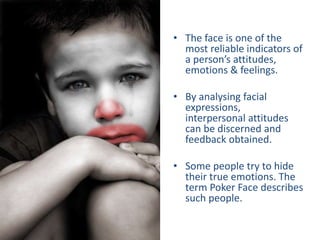
• The face is one of the
most reliable indicators of
a person’s attitudes,
emotions & feelings.
• By analysing facial
expressions,
interpersonal attitudes
can be discerned and
feedback obtained.
• Some people try to hide
their true emotions. The
term Poker Face describes
such people.
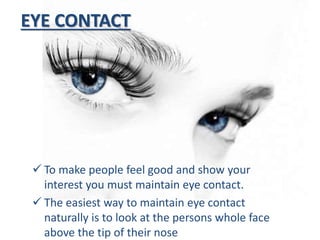
EYE CONTACT
 To make people feel good and show your
interest you must maintain eye contact.
 The easiest way to maintain eye contact
naturally is to look at the persons whole face
above the tip of their nose
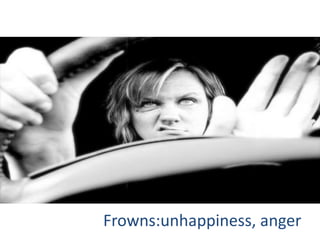
Frowns:unhappiness, anger
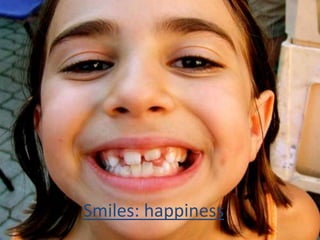
Smiles: happiness
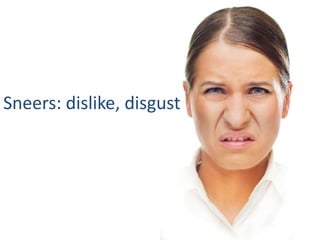
Sneers: dislike, disgust
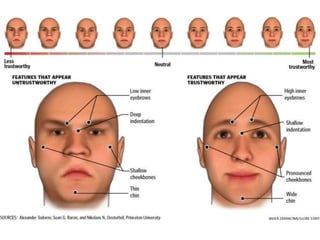
The Most Attractive And Trustworthy
Facial Features
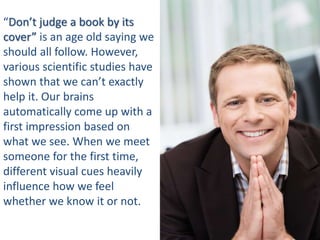
“Don’t judge a book by its
cover” is an age old saying we
should all follow. However,
various scientific studies have
shown that we can’t exactly
help it. Our brains
automatically come up with a
first impression based on
what we see. When we meet
someone for the first time,
different visual cues heavily
influence how we feel
whether we know it or not.
Hand Gestures
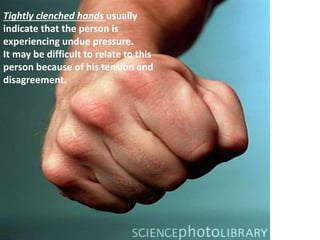
Tightly clenched hands usually
indicate that the person is
experiencing undue pressure.
It may be difficult to relate to this
person because of his tension and
disagreement.
Crossed arms
tend to signal
defensiveness.
They seemingly
act as a protective
guard against an
anticipated attack
or a fixed position
which the other
person would
rather not move.
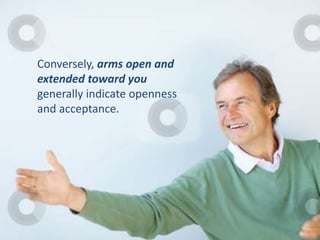
Conversely, arms open and
extended toward you
generally indicate openness
and acceptance.
POSTURE
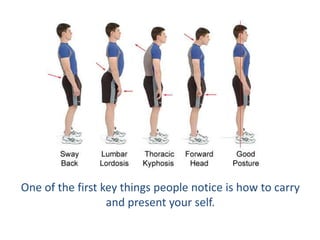
One of the first key things people notice is how to carry
and present your self.
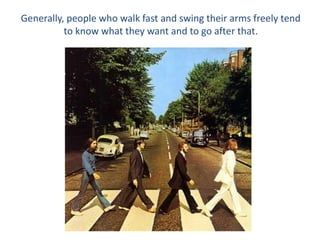
Generally, people who walk fast and swing their arms freely tend
to know what they want and to go after that.
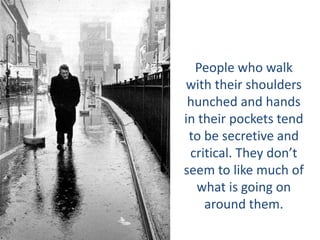
People who walk
with their shoulders
hunched and hands
in their pockets tend
to be secretive and
critical. They don’t
seem to like much of
what is going on
around them.
Body language

Body language

  • 2.
    PRESENTATION ON BODYLANGUAGE BY :- 1-Rishabh Aggarwal 2-Babita Kandpal 3-Saurabh Dangwal 4-Neha Sah 5-Richa Solanki 6-Anurag Pathak 7-Shailja Bhatt
  • 4.
    • Body languageis nonverbal communication that involves body movement. • “Gesturing” can also be termed as body language which is absolutely non- verbal means of communication. • People can convey a great deal of information without even speaking; through nonverbal communication. What is Body Language ?
  • 5.
    How Does BodySpeak? • Like any spoken language, body language has words, sentences and punctuation. • Each gesture is like a single word and one word may have several different meanings.
  • 6.
    What we aretrying to deliver to the one whom we are communicating through verbal means might not be exactly similar to the one which we are delivering from our non-verbal means i.e. BODY
  • 7.
    Why is BodyLanguage important? Body language plays a big role in intuition as it gives us messages about the other person, that we can interpret at an intuitive level. 55% 38% 7% Source: www.google.com
  • 9.
  • 10.
    Gestures should beobserved in clusters to provide a more accurate picture of person being observed
  • 11.
    Types Of Gestures •Emphatic –Underscores a verbal message • Suggestive –Symbols of ideas and emotions • Prompting –Evoke a desired response
  • 12.
    Emphatic gestures arehand movements used to stress a word or idea that is important in your message. You might point at the audience if you want to stress their responsibility to think or do something.
  • 13.
    Suggestive Gestures These aregestures that depict moods or expressions. For example: you could say I welcome you in with open arms whilst opening your arms.
  • 14.
    Prompting Gestures These arethe ones that prompt the audience to do something.
  • 15.
  • 16.
    Openness: Several gestures indicate opennessand sincerety. • Open hands, • unbuttoned collar, • leaning slightly forward in the chair, • removing coat or jacket, • uncrossing arms and legs, • moving closer.
  • 17.
    Defensiveness: People who aredefensive usually have • a rigid body, • arms or legs tightly crossed, • eyes glancing sideways or darting occasionaly, • minimal eye contact, • lips pursed, fists clenched and downcast head.
  • 18.
    Evaluation: • Evaluation gesturessay that the other person is being thoughtful or is considering what you are saying. Sometimes in a friendly way sometimes in an unfriendly way. • Typical evaluation gestures include: • tilted head, • hand to cheek, • leaning forward and • chin stroking.
  • 19.
    Nervousness • Clearing one’sthroat, • Covering the mouth with hand, • Tapping fingers. • Whistling, • Jingling pocket change, • Twitching lips or face.
  • 20.
    Boredom or Impatience •Drumming of fingers • Cupping the head in the palm of the hand, • Foot swinging • Looking at your watch or the exit.
  • 21.
    FACIAL EXPRESSIONS Facial expressionsreflect emotion, feelings and attitudes
  • 22.
    • The faceis one of the most reliable indicators of a person’s attitudes, emotions & feelings. • By analysing facial expressions, interpersonal attitudes can be discerned and feedback obtained. • Some people try to hide their true emotions. The term Poker Face describes such people.
  • 23.
    EYE CONTACT  Tomake people feel good and show your interest you must maintain eye contact.  The easiest way to maintain eye contact naturally is to look at the persons whole face above the tip of their nose
  • 24.
  • 25.
  • 26.
  • 27.
    The Most AttractiveAnd Trustworthy Facial Features
  • 28.
    “Don’t judge abook by its cover” is an age old saying we should all follow. However, various scientific studies have shown that we can’t exactly help it. Our brains automatically come up with a first impression based on what we see. When we meet someone for the first time, different visual cues heavily influence how we feel whether we know it or not.
  • 30.
  • 31.
    Tightly clenched handsusually indicate that the person is experiencing undue pressure. It may be difficult to relate to this person because of his tension and disagreement.
  • 32.
    Crossed arms tend tosignal defensiveness. They seemingly act as a protective guard against an anticipated attack or a fixed position which the other person would rather not move.
  • 33.
    Conversely, arms openand extended toward you generally indicate openness and acceptance.
  • 34.
  • 35.
    One of thefirst key things people notice is how to carry and present your self.
  • 36.
    Generally, people whowalk fast and swing their arms freely tend to know what they want and to go after that.
  • 37.
    People who walk withtheir shoulders hunched and hands in their pockets tend to be secretive and critical. They don’t seem to like much of what is going on around them.