UNIT - 4
PLANNING
TOPICS COVERED
Planning
 Concept,
 Importance
 Limitations
Planning Process
Types of Plans
 StandingandSingleusePlans
• Objectives
• Strategies
• Policy
• Procedure
• Method
• Rule
• Budget
• Programme
PLANNING
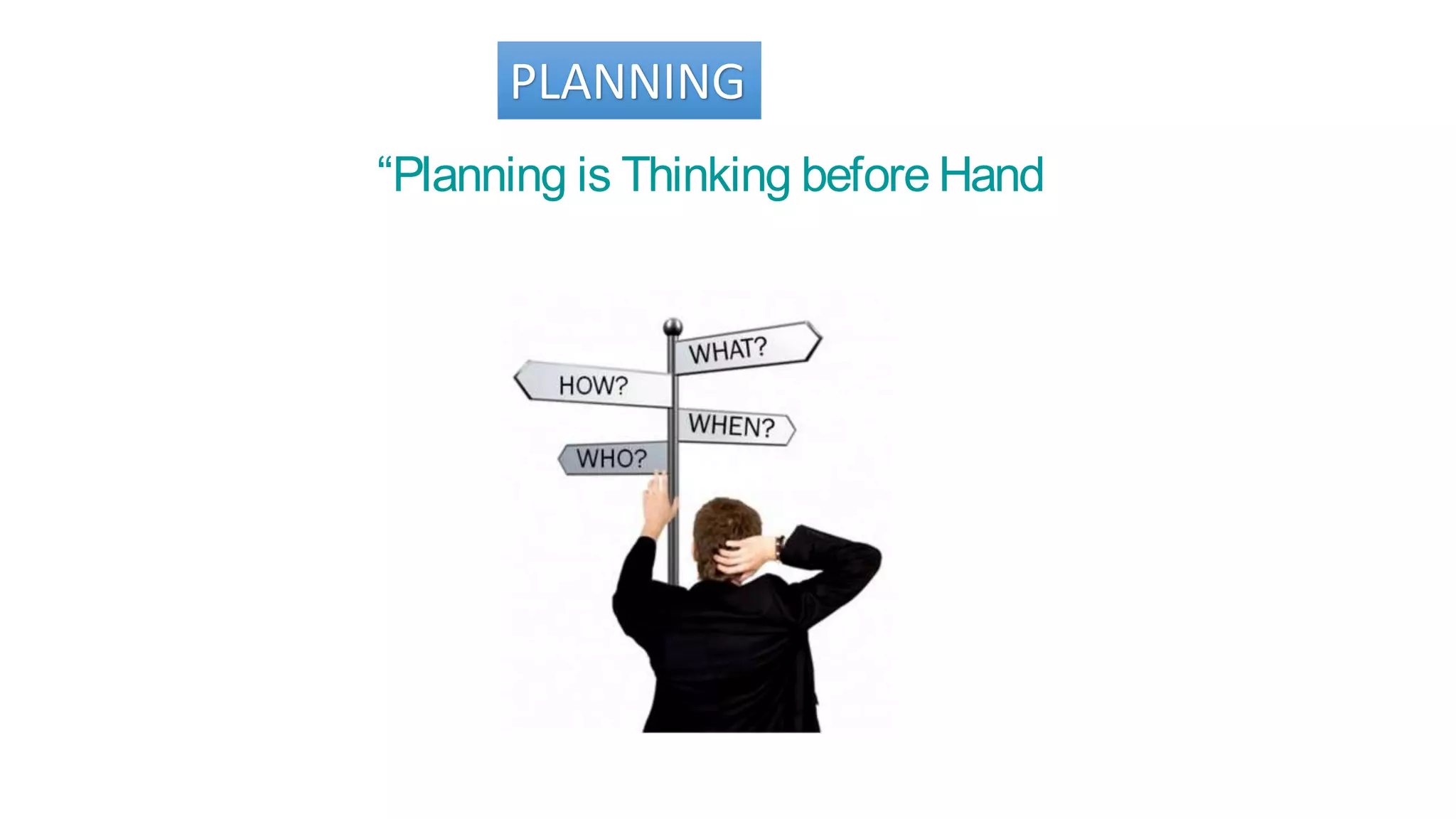
“Planning is Thinking before Hand
Planning is deciding in advance
 what todo,
 howtodoit,
 when todoit,and
 who istodoit.
•
- KoontzandO'Donnell
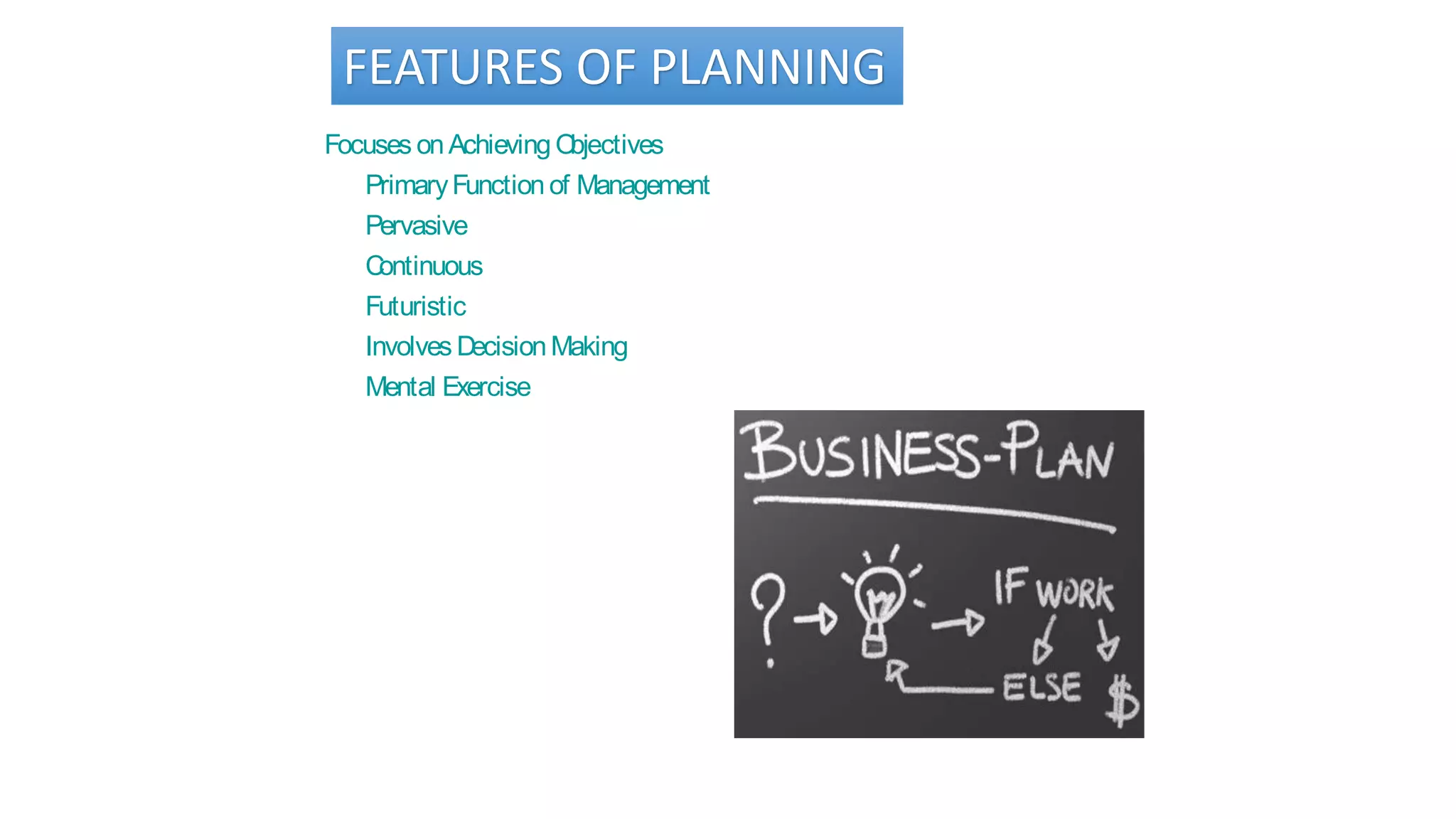
FEATURES OF PLANNING
Focuses onAchieving Objectives
PrimaryFunctionof Management
Pervasive
Continuous
Futuristic
Involves DecisionMaking
Mental Exercise
TOPICS COVERED
Provides Direction
Reduces Risk of Uncertainty
Reduces Overlapping&Wasteful Activities
Promotes InnovativeIdeas
Facilitates DecisionMaking
Establishes Standardfor Controlling
LIMITATIONS
Creates Rigidity
Internal Inflexibility
External Inflexibility
Does not Works in Dynamic
Environment
Reduces Creativity
Costly
Time Consuming Process
No Guarantee of Success
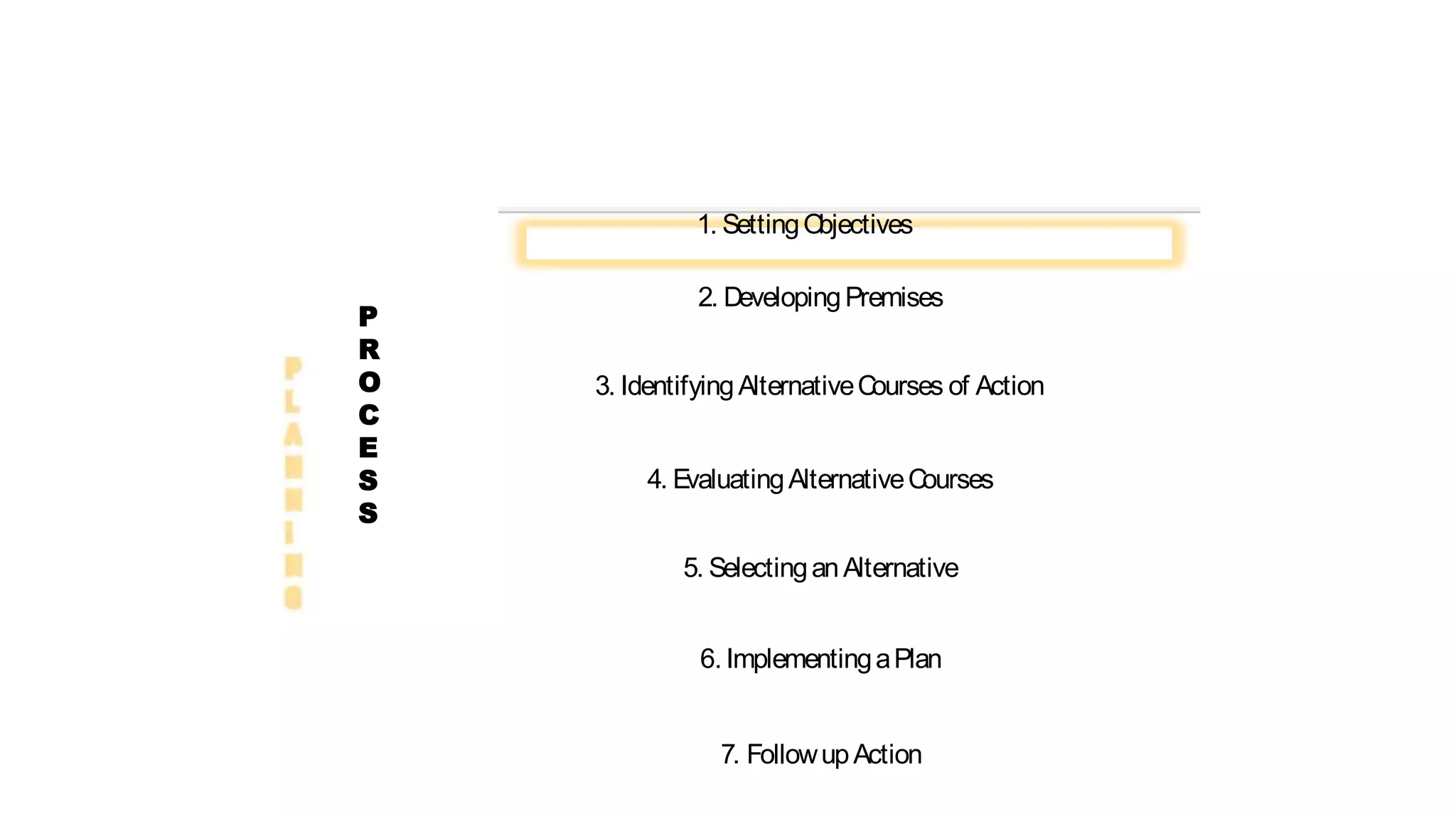
1. SettingObjectives
2. DevelopingPremises
3. IdentifyingAlternativeCourses of Action
4. EvaluatingAlternativeCourses
5. SelectinganAlternative
6.ImplementingaPlan
7. FollowupAction
P
R
O
C
E
S
S
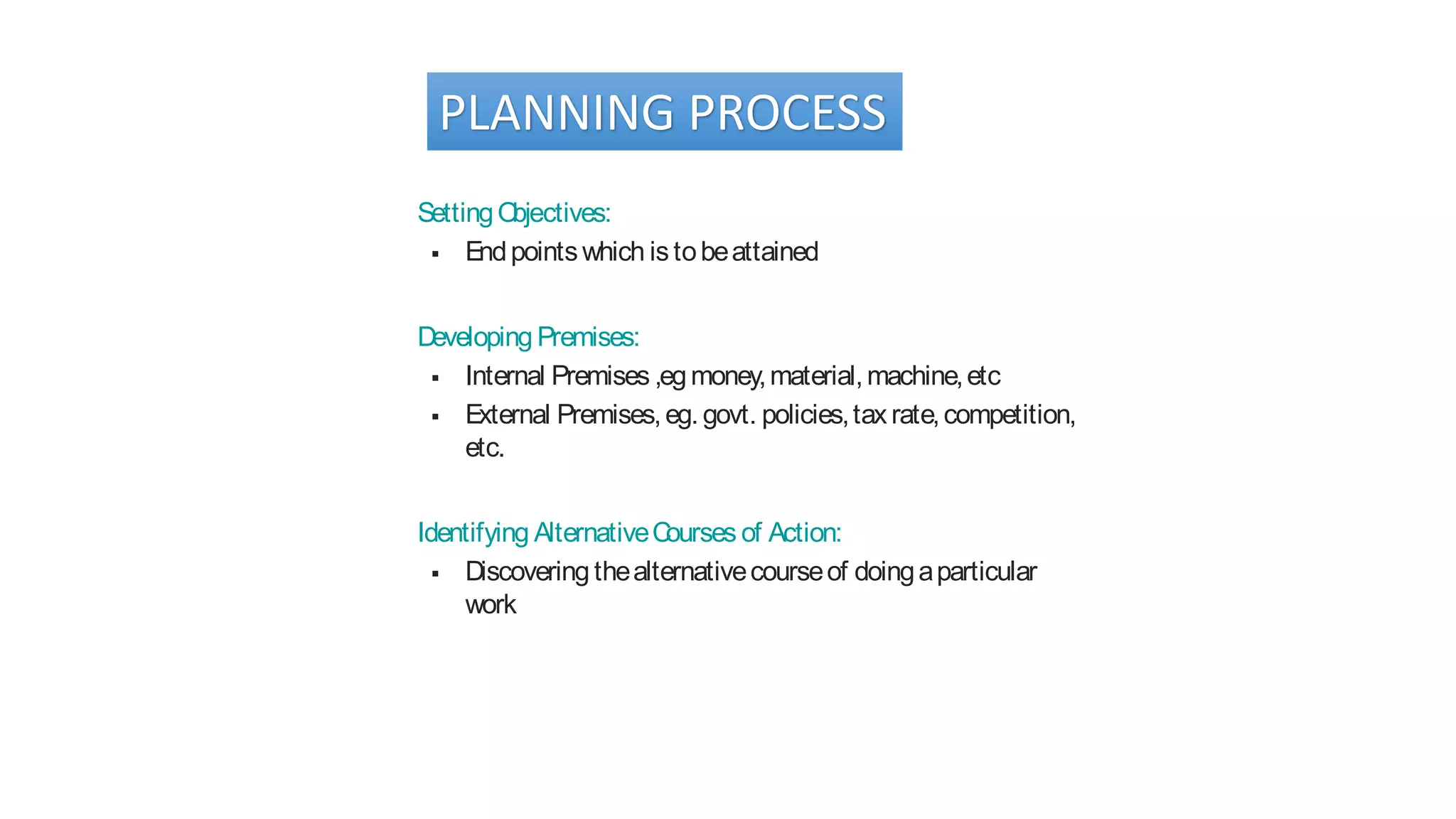
PLANNING PROCESS
SettingObjectives:
 Endpointswhich istobeattained
Developing Premises:
 Internal Premises ,egmoney,material,machine,etc
 External Premises,eg. govt. policies,tax rate,competition,
etc.
Identifying AlternativeCourses of Action:
 Discovering thealternativecourseof doingaparticular
work
PLANNING PROCESS
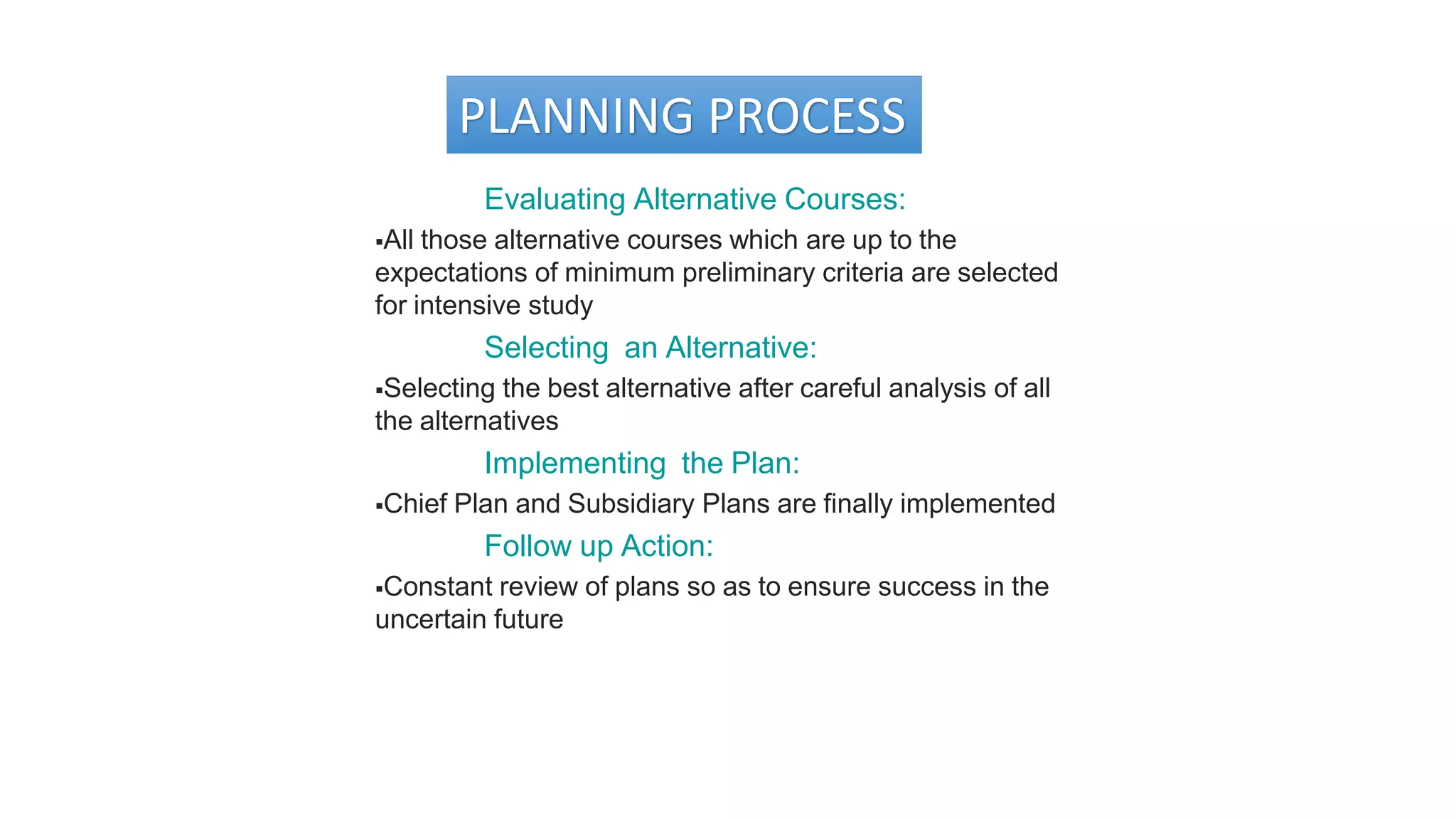
Evaluating Alternative Courses:
All those alternative courses which are up to the
expectations of minimum preliminary criteria are selected
for intensive study
Selecting an Alternative:
Selecting the best alternative after careful analysis of all
the alternatives
Implementing the Plan:
Chief Plan and Subsidiary Plans are finally implemented
Follow up Action:
Constant review of plans so as to ensure success in the
uncertain future
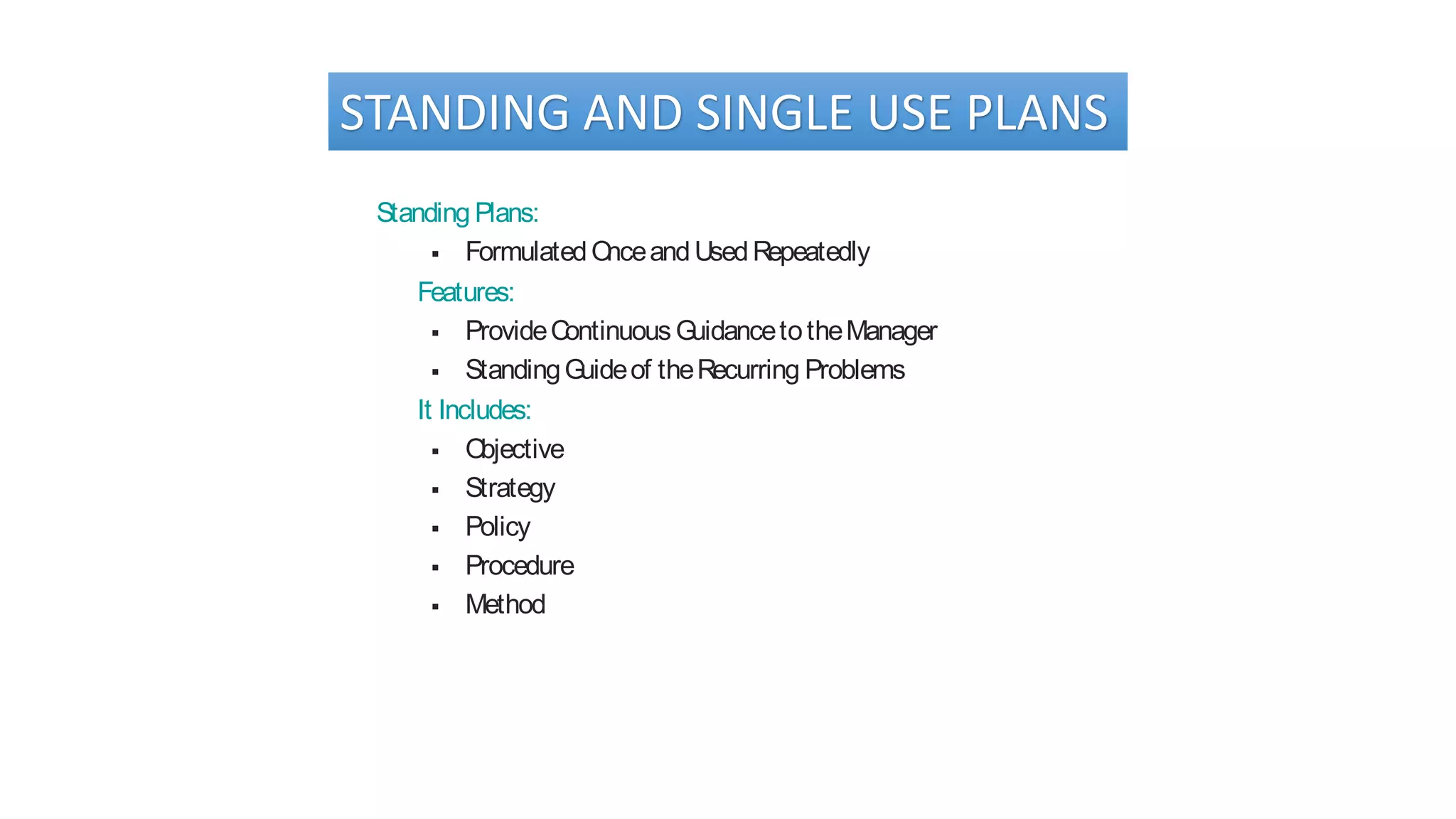
STANDING AND SINGLE USE PLANS
Standing Plans:
 FormulatedOnceandUsedRepeatedly
Features:
 ProvideContinuous GuidancetotheManager
 StandingGuideof theRecurring Problems
It Includes:
 Objective
 Strategy
 Policy
 Procedure
 Method
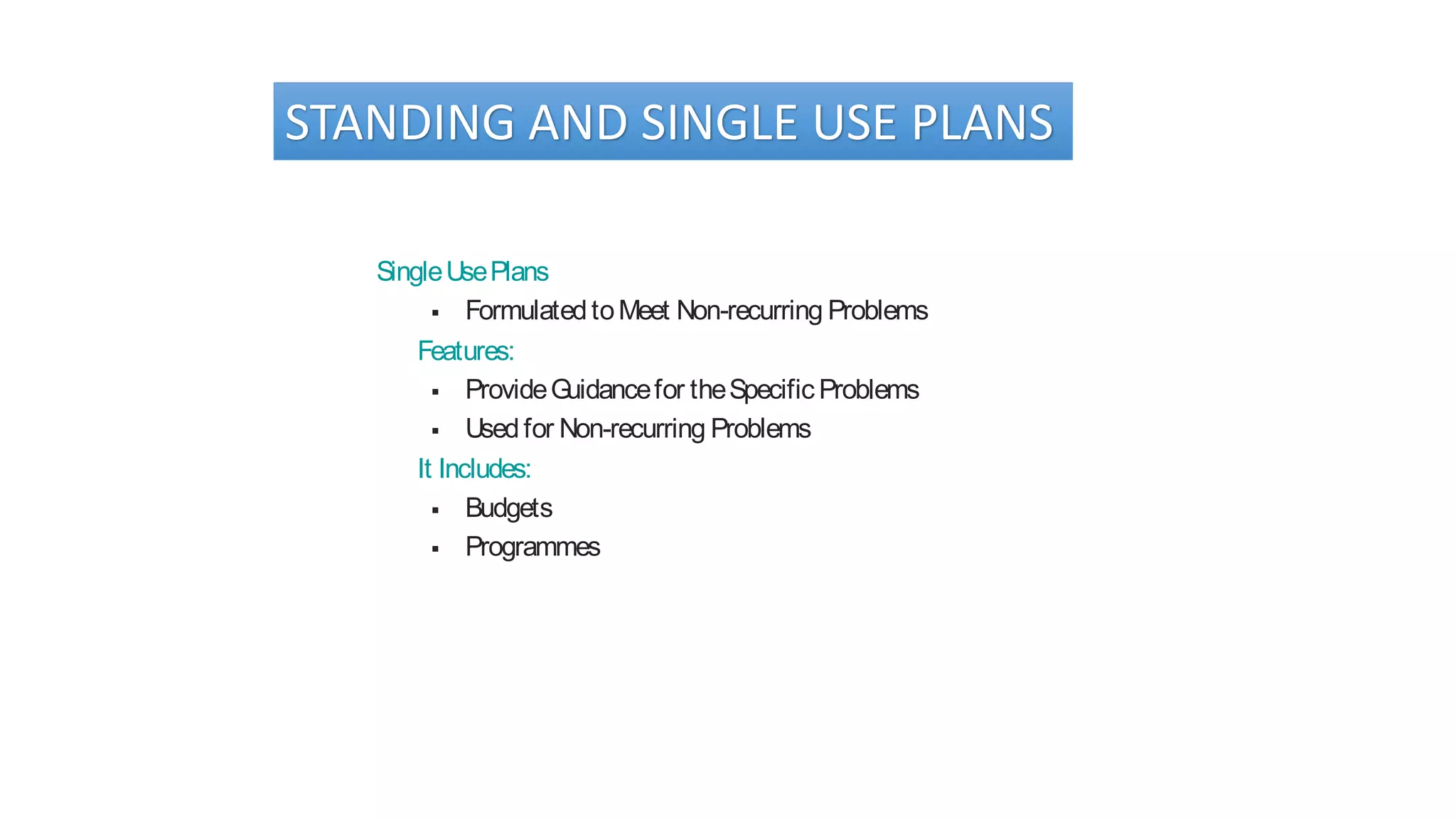
STANDING AND SINGLE USE PLANS
SingleUsePlans
 FormulatedtoMeet Non-recurring Problems
Features:
 ProvideGuidancefor theSpecific Problems
 Usedfor Non-recurring Problems
It Includes:
 Budgets
 Programmes
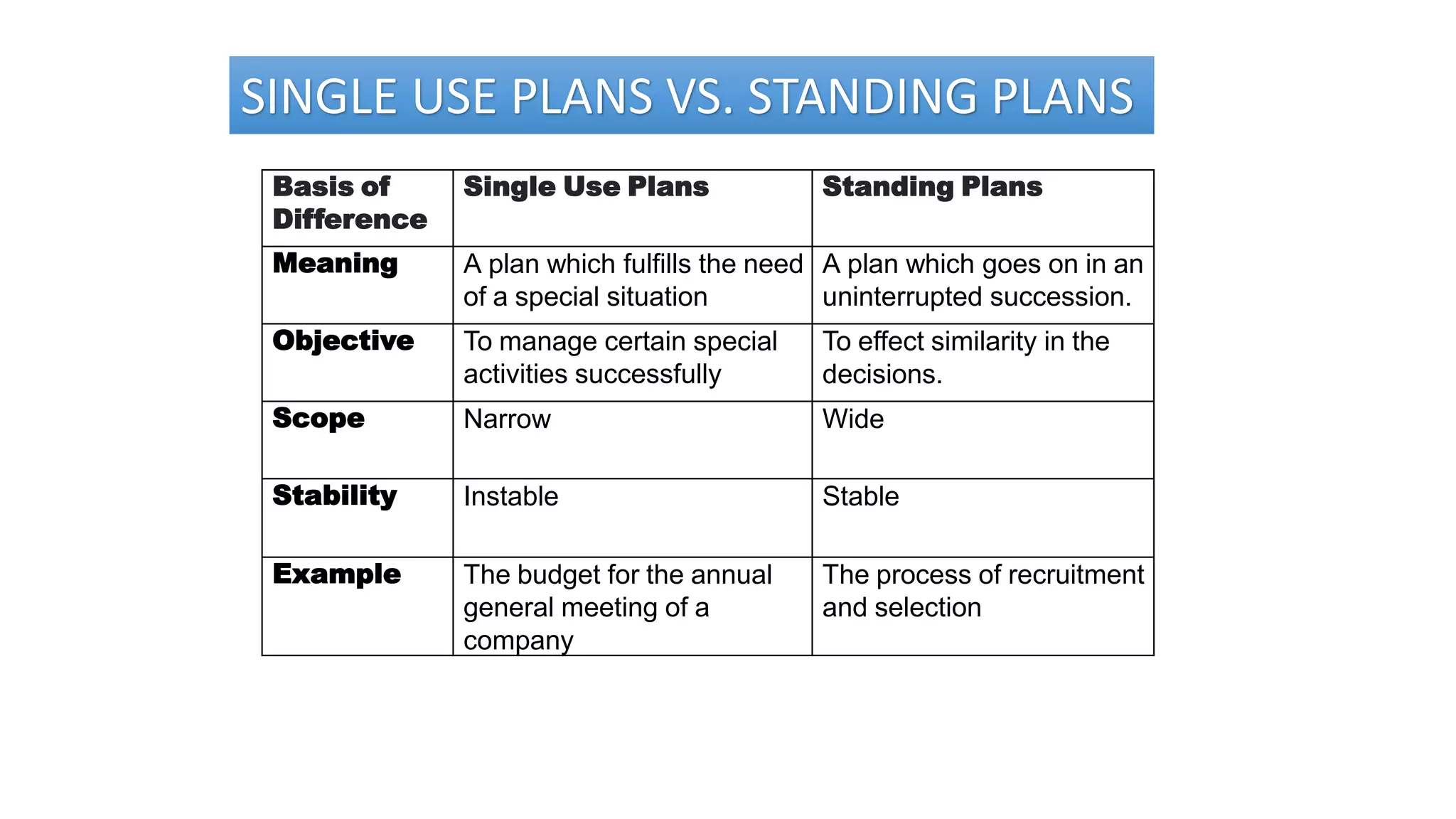
SINGLE USE PLANS VS. STANDING PLANS
Basis of
Difference
Single Use Plans Standing Plans
Meaning A plan which fulfills the need
of a special situation
A plan which goes on in an
uninterrupted succession.
Objective To manage certain special
activities successfully
To effect similarity in the
decisions.
Scope Narrow Wide
Stability Instable Stable
Example The budget for the annual
general meeting of a
company
The process of recruitment
and selection
TYPES OF PLANS
1Objective
2. Strategy
3. Policy
4. Procedure
5. Method
6. Rule
7. Programmes
8. Budget
TYPES OF PLANS
Objectives:
Objective is a special target to be achieved by an
organization
Strategies:
Plan which take into account the environmental
opportunities, threat and the organizations strength and
weakness and provide an optimal match between the
organization and the environment
Policies:
General Statements which are decided for the guidance
of employees while taking decisions
TYPES OF PLANS
Procedures:
 Planthat determines thesequenceof any work
performance
Methods:
 Planthat determines howdifferent activitiesof work are
completed
Rules:
 Planthat tellswhat istobedoneandwhat not tobedone
inaparticular situation
TYPES OF PLANS
Programmes:
Plan that covers a relatively larger organizational
activities and specifies main steps, their order and
timing and the department responsible for each step
Budget:
Quantitative expression of the plan of action
Please be free to write query at:
Dr. Ramesh C Sharma
rameshchandersharma@gmail.com
http://rameshchandersharma.blogsspot.in
+91-94180-45154

Business studies +2 Unit 4

  • 1.
  • 2.
    TOPICS COVERED Planning  Concept, Importance  Limitations Planning Process Types of Plans  StandingandSingleusePlans • Objectives • Strategies • Policy • Procedure • Method • Rule • Budget • Programme
  • 3.
  • 4.
    Planning is decidingin advance  what todo,  howtodoit,  when todoit,and  who istodoit. • - KoontzandO'Donnell
  • 5.
    FEATURES OF PLANNING FocusesonAchieving Objectives PrimaryFunctionof Management Pervasive Continuous Futuristic Involves DecisionMaking Mental Exercise
  • 6.
    TOPICS COVERED Provides Direction ReducesRisk of Uncertainty Reduces Overlapping&Wasteful Activities Promotes InnovativeIdeas Facilitates DecisionMaking Establishes Standardfor Controlling
  • 7.
    LIMITATIONS Creates Rigidity Internal Inflexibility ExternalInflexibility Does not Works in Dynamic Environment Reduces Creativity Costly Time Consuming Process No Guarantee of Success
  • 8.
    1. SettingObjectives 2. DevelopingPremises 3.IdentifyingAlternativeCourses of Action 4. EvaluatingAlternativeCourses 5. SelectinganAlternative 6.ImplementingaPlan 7. FollowupAction P R O C E S S
  • 9.
    PLANNING PROCESS SettingObjectives:  Endpointswhichistobeattained Developing Premises:  Internal Premises ,egmoney,material,machine,etc  External Premises,eg. govt. policies,tax rate,competition, etc. Identifying AlternativeCourses of Action:  Discovering thealternativecourseof doingaparticular work
  • 10.
    PLANNING PROCESS Evaluating AlternativeCourses: All those alternative courses which are up to the expectations of minimum preliminary criteria are selected for intensive study Selecting an Alternative: Selecting the best alternative after careful analysis of all the alternatives Implementing the Plan: Chief Plan and Subsidiary Plans are finally implemented Follow up Action: Constant review of plans so as to ensure success in the uncertain future
  • 11.
    STANDING AND SINGLEUSE PLANS Standing Plans:  FormulatedOnceandUsedRepeatedly Features:  ProvideContinuous GuidancetotheManager  StandingGuideof theRecurring Problems It Includes:  Objective  Strategy  Policy  Procedure  Method
  • 12.
    STANDING AND SINGLEUSE PLANS SingleUsePlans  FormulatedtoMeet Non-recurring Problems Features:  ProvideGuidancefor theSpecific Problems  Usedfor Non-recurring Problems It Includes:  Budgets  Programmes
  • 13.
    SINGLE USE PLANSVS. STANDING PLANS Basis of Difference Single Use Plans Standing Plans Meaning A plan which fulfills the need of a special situation A plan which goes on in an uninterrupted succession. Objective To manage certain special activities successfully To effect similarity in the decisions. Scope Narrow Wide Stability Instable Stable Example The budget for the annual general meeting of a company The process of recruitment and selection
  • 14.
    TYPES OF PLANS 1Objective 2.Strategy 3. Policy 4. Procedure 5. Method 6. Rule 7. Programmes 8. Budget
  • 15.
    TYPES OF PLANS Objectives: Objectiveis a special target to be achieved by an organization Strategies: Plan which take into account the environmental opportunities, threat and the organizations strength and weakness and provide an optimal match between the organization and the environment Policies: General Statements which are decided for the guidance of employees while taking decisions
  • 16.
    TYPES OF PLANS Procedures: Planthat determines thesequenceof any work performance Methods:  Planthat determines howdifferent activitiesof work are completed Rules:  Planthat tellswhat istobedoneandwhat not tobedone inaparticular situation
  • 17.
    TYPES OF PLANS Programmes: Planthat covers a relatively larger organizational activities and specifies main steps, their order and timing and the department responsible for each step Budget: Quantitative expression of the plan of action
  • 18.
    Please be freeto write query at: Dr. Ramesh C Sharma rameshchandersharma@gmail.com http://rameshchandersharma.blogsspot.in +91-94180-45154