
Planning &Types of Plan
By:-
Abdul Khalique
MBA
(Finance & Marketing)
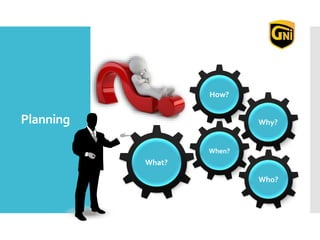
Planning
What?
When?
How?
Why?
Who?
Definition  “Planning is deciding in advance what to do, how to
do it, when to do it, and who is to do it.”
- Koontz and O’Donnell.
Definition
 “Planning is deciding in advance what is to be
done.”
-Haimann
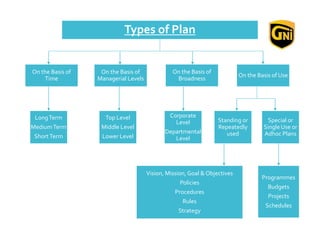
Types of Plan
On the Basis of
Time
LongTerm
MediumTerm
ShortTerm
On the Basis of
Managerial Levels
Top Level
Middle Level
Lower Level
On the Basis of
Broadness
Corporate
Level
Departmental
Level
On the Basis of Use
Standing or
Repeatedly
used
Vision, Mission, Goal & Objectives
Policies
Procedures
Rules
Strategy
Special or
Single Use or
Adhoc Plans
Programmes
Budgets
Projects
Schedules
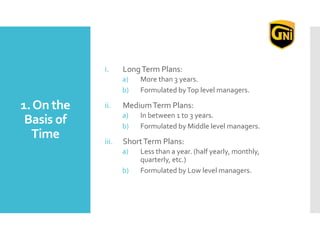
1.On the
Basis of
Time
i. LongTerm Plans:
a) More than 3 years.
b) Formulated byTop level managers.
ii. MediumTerm Plans:
a) In between 1 to 3 years.
b) Formulated by Middle level managers.
iii. ShortTerm Plans:
a) Less than a year. (half yearly, monthly,
quarterly, etc.)
b) Formulated by Low level managers.
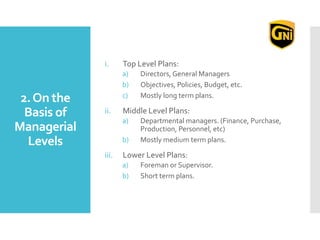
2.On the
Basis of
Managerial
Levels
i. Top Level Plans:
a) Directors, General Managers
b) Objectives, Policies, Budget, etc.
c) Mostly long term plans.
ii. Middle Level Plans:
a) Departmental managers. (Finance, Purchase,
Production, Personnel, etc)
b) Mostly medium term plans.
iii. Lower Level Plans:
a) Foreman or Supervisor.
b) Short term plans.
3.On the
Basis of
Broadness
i. Corporate Level Plans:
a) Prepared for whole organisation (LongTerm)
ii. Departmental Level Plans:
a) Prepared by various department.
b) To tackle immediate or near future problems.
4.On the
Basis ofUse
i. Standing or Repeatedly Used Plans:
a) Vision, Mission & Objective:
• Vision- Dream that an individual or company wants
to be in future.
• Mission/ Goal- what an individual or a company
wants to provide or achieve.
• Objectives- Special target to be achieved by the
organisation.
b) Policies: Limits or boundaries or guidelines
under which an organisation make a decision.
c) Procedures: Sequence of any work
performance.
d) Rules: Plan that tells what is to be done and
what and what is not to be done in a particular
situation.
e) Strategy: Military word which means to defeat
enemy by systematic plan. In business it means
a systematic plan to overcome the future
problems.
Cont…
ii. Special or Single Use or Adhoc Plans:
Formulated for one time use or to tackle the special
situation. Like-
 Programme
 Budget
 Projects
 Schedules
Queries?

Planning & Types of plan

  • 1.
    Planning &Types ofPlan By:- Abdul Khalique MBA (Finance & Marketing)
  • 2.
  • 3.
    Definition  “Planningis deciding in advance what to do, how to do it, when to do it, and who is to do it.” - Koontz and O’Donnell.
  • 4.
    Definition  “Planning isdeciding in advance what is to be done.” -Haimann
  • 5.
    Types of Plan Onthe Basis of Time LongTerm MediumTerm ShortTerm On the Basis of Managerial Levels Top Level Middle Level Lower Level On the Basis of Broadness Corporate Level Departmental Level On the Basis of Use Standing or Repeatedly used Vision, Mission, Goal & Objectives Policies Procedures Rules Strategy Special or Single Use or Adhoc Plans Programmes Budgets Projects Schedules
  • 6.
    1.On the Basis of Time i.LongTerm Plans: a) More than 3 years. b) Formulated byTop level managers. ii. MediumTerm Plans: a) In between 1 to 3 years. b) Formulated by Middle level managers. iii. ShortTerm Plans: a) Less than a year. (half yearly, monthly, quarterly, etc.) b) Formulated by Low level managers.
  • 7.
    2.On the Basis of Managerial Levels i.Top Level Plans: a) Directors, General Managers b) Objectives, Policies, Budget, etc. c) Mostly long term plans. ii. Middle Level Plans: a) Departmental managers. (Finance, Purchase, Production, Personnel, etc) b) Mostly medium term plans. iii. Lower Level Plans: a) Foreman or Supervisor. b) Short term plans.
  • 8.
    3.On the Basis of Broadness i.Corporate Level Plans: a) Prepared for whole organisation (LongTerm) ii. Departmental Level Plans: a) Prepared by various department. b) To tackle immediate or near future problems.
  • 9.
    4.On the Basis ofUse i.Standing or Repeatedly Used Plans: a) Vision, Mission & Objective: • Vision- Dream that an individual or company wants to be in future. • Mission/ Goal- what an individual or a company wants to provide or achieve. • Objectives- Special target to be achieved by the organisation. b) Policies: Limits or boundaries or guidelines under which an organisation make a decision. c) Procedures: Sequence of any work performance. d) Rules: Plan that tells what is to be done and what and what is not to be done in a particular situation. e) Strategy: Military word which means to defeat enemy by systematic plan. In business it means a systematic plan to overcome the future problems.
  • 10.
    Cont… ii. Special orSingle Use or Adhoc Plans: Formulated for one time use or to tackle the special situation. Like-  Programme  Budget  Projects  Schedules
  • 11.