BUSINESS CYCLES


Farala, Mary Ann Camille
Forbes, Camella Joy N.
Galanto, Lhenny Ann S.
Gueriva, Myrene Mae A.
III-ACSAD
Business Cycle

    The term business cycle refers to
 the recurrent ups and downs in the
 level of economic activity, which
 extend over several years.
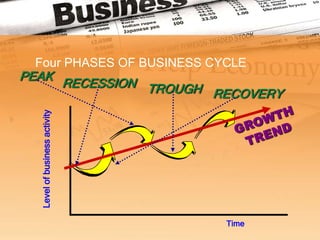
Four PHASES OF BUSINESS CYCLE
PEAK
                               RECESSION TROUGH
                                                RECOVERY
  Level of business activity


                                                 Time
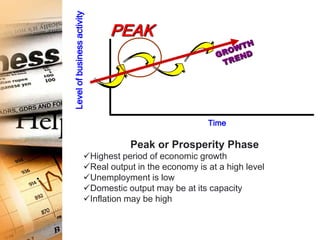
Level of business activity
                             PEAK


                                                      Time

                                  Peak or Prosperity Phase
                       Highest period of economic growth
                       Real output in the economy is at a high level
                       Unemployment is low
                       Domestic output may be at its capacity
                       Inflation may be high
Level of business activity
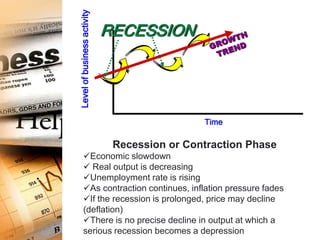
                             RECESSION


                                              Time

                              Recession or Contraction Phase
        Economic slowdown
         Real output is decreasing
        Unemployment rate is rising
        As contraction continues, inflation pressure fades
        If the recession is prolonged, price may decline
        (deflation)
        There is no precise decline in output at which a
        serious recession becomes a depression
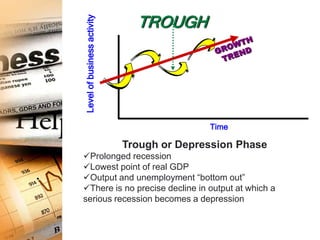
TROUGH


Level of business activity


                                            Time

                             Trough or Depression Phase
Prolonged recession
Lowest point of real GDP
Output and unemployment “bottom out”
There is no precise decline in output at which a
serious recession becomes a depression
Level of business activity
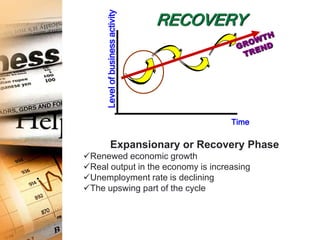
                                  RECOVERY


                                        Time

              Expansionary or Recovery Phase
Renewed economic growth
Real output in the economy is increasing
Unemployment rate is declining
The upswing part of the cycle
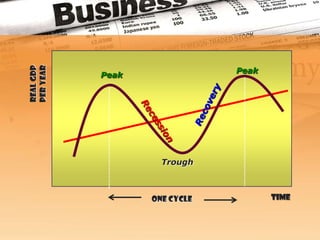
per year
Real GDP


                              Peak
           Peak


                    Trough


                  One cycle          Time
Indicators
• Economists use changes in a variety of
  activities measure the business cycle, and
  to try to predict where the economy is
  headed.

• They include:
  – Leading indicators
  – Lagging indicators
LEADING INDICATORS
• Variables that change before real output changes.
      They include:
         Unemployment claims
         Manufacturers’ new orders

Lagging INDICATORS
 • Variables that change after real output changes.
       They include:
          Inventories to sales ratio
          Outstanding commercial loans
characteristics
Wave like fluctuation
The periods of boom and depression occur alternatively.
It is recurring in nature
The four phases of trade cycle repeat themselves with some
sort of regularity.
No two trade cycles are identical
The cause, impact and periodicity of two trade cycles may not be same.
Steep wall towards depression
The upward movement towards boom is slow and steady. But the downfall is
    steep, sudden and often violent causing disaster all round.
Synchronic in nature
Different phases of trade cycle occur almost simultaneously in different
      industry.
characteristics
Expansion
•   phase of high growth coupled with large investments,
•   increase in employment, income and expenditure,
•   but that is not all about it. Expansion also comes along with
    inflation and competition.


Recession
•   Recession is unwarranted and creates negative implications for the
    economy.
•   the basic problems - unemployment, excessive inventory, below
    capacity operations and liquidation of firms.
Controlling business cycle
      During expansion firms gain, so desired phase & during recession
       firms suffer, the unwarranted phase
      Take preventive & corrective measures to minimize their losses
       during recession and to bring in stability in the economy
   At Firm Level
      Investment – balanced mix of debt & equity
      Inventory – should not create large inventory, just-in-time strategy
       is helpful
      Products – diversify in different markets                &   different
       products, because in this way risk is also diversified
      Pricing – flexibility preferred. During recession prices may be
       adjusted to increase demand
   At Government level
      Monetary policy
      Fiscal policy

Business cycles

  • 1.
    BUSINESS CYCLES Farala, MaryAnn Camille Forbes, Camella Joy N. Galanto, Lhenny Ann S. Gueriva, Myrene Mae A. III-ACSAD
  • 2.
    Business Cycle The term business cycle refers to the recurrent ups and downs in the level of economic activity, which extend over several years.
  • 3.
    Four PHASES OFBUSINESS CYCLE PEAK RECESSION TROUGH RECOVERY Level of business activity Time
  • 4.
    Level of businessactivity PEAK Time Peak or Prosperity Phase Highest period of economic growth Real output in the economy is at a high level Unemployment is low Domestic output may be at its capacity Inflation may be high
  • 5.
    Level of businessactivity RECESSION Time Recession or Contraction Phase Economic slowdown  Real output is decreasing Unemployment rate is rising As contraction continues, inflation pressure fades If the recession is prolonged, price may decline (deflation) There is no precise decline in output at which a serious recession becomes a depression
  • 6.
    TROUGH Level of businessactivity Time Trough or Depression Phase Prolonged recession Lowest point of real GDP Output and unemployment “bottom out” There is no precise decline in output at which a serious recession becomes a depression
  • 7.
    Level of businessactivity RECOVERY Time Expansionary or Recovery Phase Renewed economic growth Real output in the economy is increasing Unemployment rate is declining The upswing part of the cycle
  • 8.
    per year Real GDP Peak Peak Trough One cycle Time
  • 9.
    Indicators • Economists usechanges in a variety of activities measure the business cycle, and to try to predict where the economy is headed. • They include: – Leading indicators – Lagging indicators
  • 10.
    LEADING INDICATORS • Variablesthat change before real output changes. They include: Unemployment claims Manufacturers’ new orders Lagging INDICATORS • Variables that change after real output changes. They include: Inventories to sales ratio Outstanding commercial loans
  • 11.
    characteristics Wave like fluctuation Theperiods of boom and depression occur alternatively. It is recurring in nature The four phases of trade cycle repeat themselves with some sort of regularity. No two trade cycles are identical The cause, impact and periodicity of two trade cycles may not be same. Steep wall towards depression The upward movement towards boom is slow and steady. But the downfall is steep, sudden and often violent causing disaster all round. Synchronic in nature Different phases of trade cycle occur almost simultaneously in different industry.
  • 12.
    characteristics Expansion • phase of high growth coupled with large investments, • increase in employment, income and expenditure, • but that is not all about it. Expansion also comes along with inflation and competition. Recession • Recession is unwarranted and creates negative implications for the economy. • the basic problems - unemployment, excessive inventory, below capacity operations and liquidation of firms.
  • 13.
    Controlling business cycle  During expansion firms gain, so desired phase & during recession firms suffer, the unwarranted phase  Take preventive & corrective measures to minimize their losses during recession and to bring in stability in the economy At Firm Level  Investment – balanced mix of debt & equity  Inventory – should not create large inventory, just-in-time strategy is helpful  Products – diversify in different markets & different products, because in this way risk is also diversified  Pricing – flexibility preferred. During recession prices may be adjusted to increase demand At Government level  Monetary policy  Fiscal policy