BUS 301 Week 7
Critical Thinking
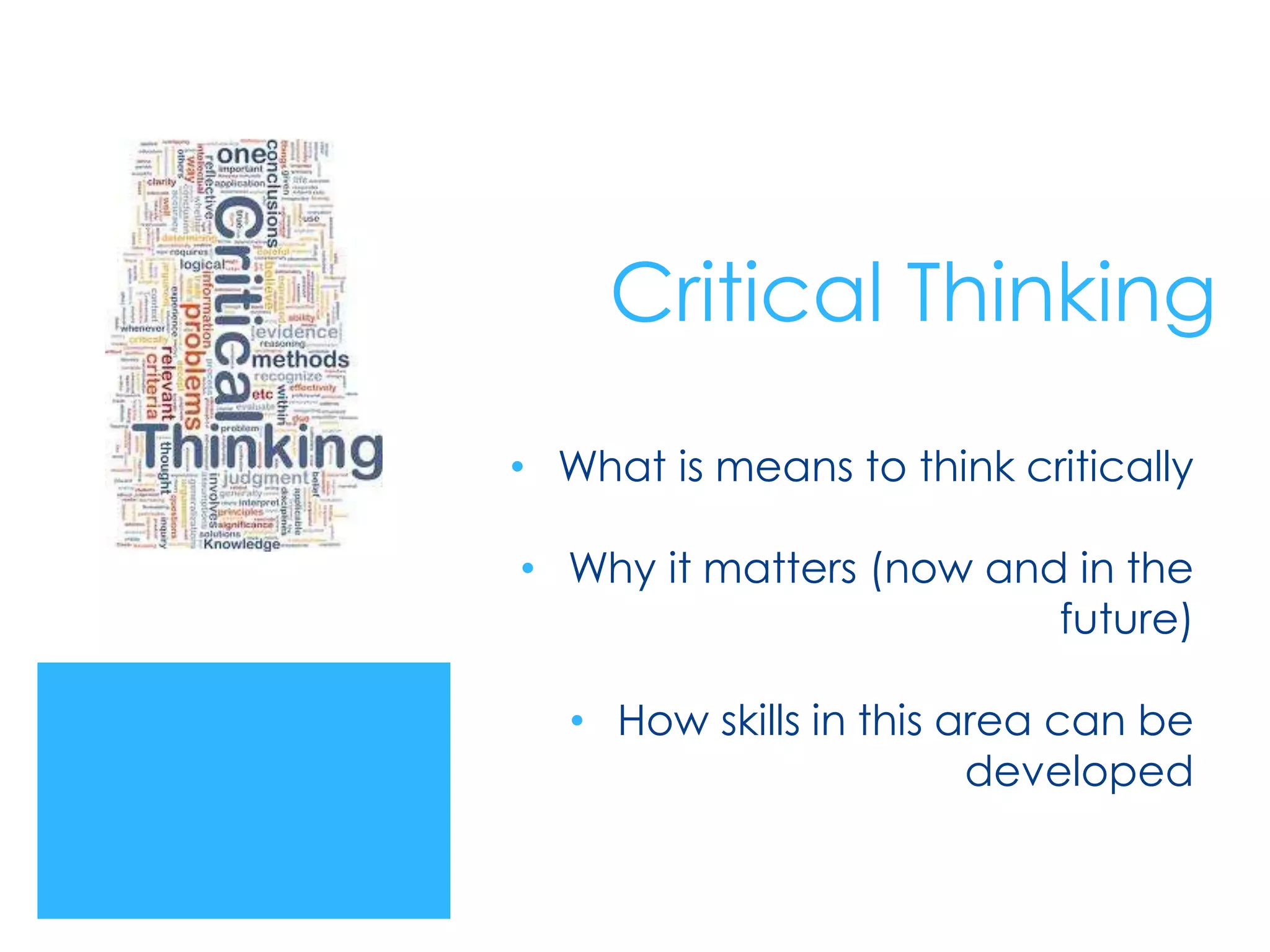
Critical Thinking
• What is means to think critically

• Why it matters (now and in the
                         future)

   • How skills in this area can be
                         developed
What does it mean
to think critically?
• Critical thinkers question
  the world around them and
  know the difference
  between opinion and fact.
• They consider opposing
  viewpoints and the basis of
  them.
• They make decisions
  supported by evidence
  and not assumptions.
• Critical thinkers are not
  simply persuaded by short
  term benefits but consider
  long term outcomes.
• Critical thinkers reason and
  analyze before deciding.
Uses of critical
thinking
• Critical thinking informs
  reading, writing, speaking and
  listening
• Critical thinking uncovers bias
  and prejudice
• Critical thinking reveals non-
  sense (crap detector!), half-
  truths and deception
• Critical thinking leads to better
  decisions

Acquiring this skill is one of the
major goals of education

Being educated means being a
critical thinker!
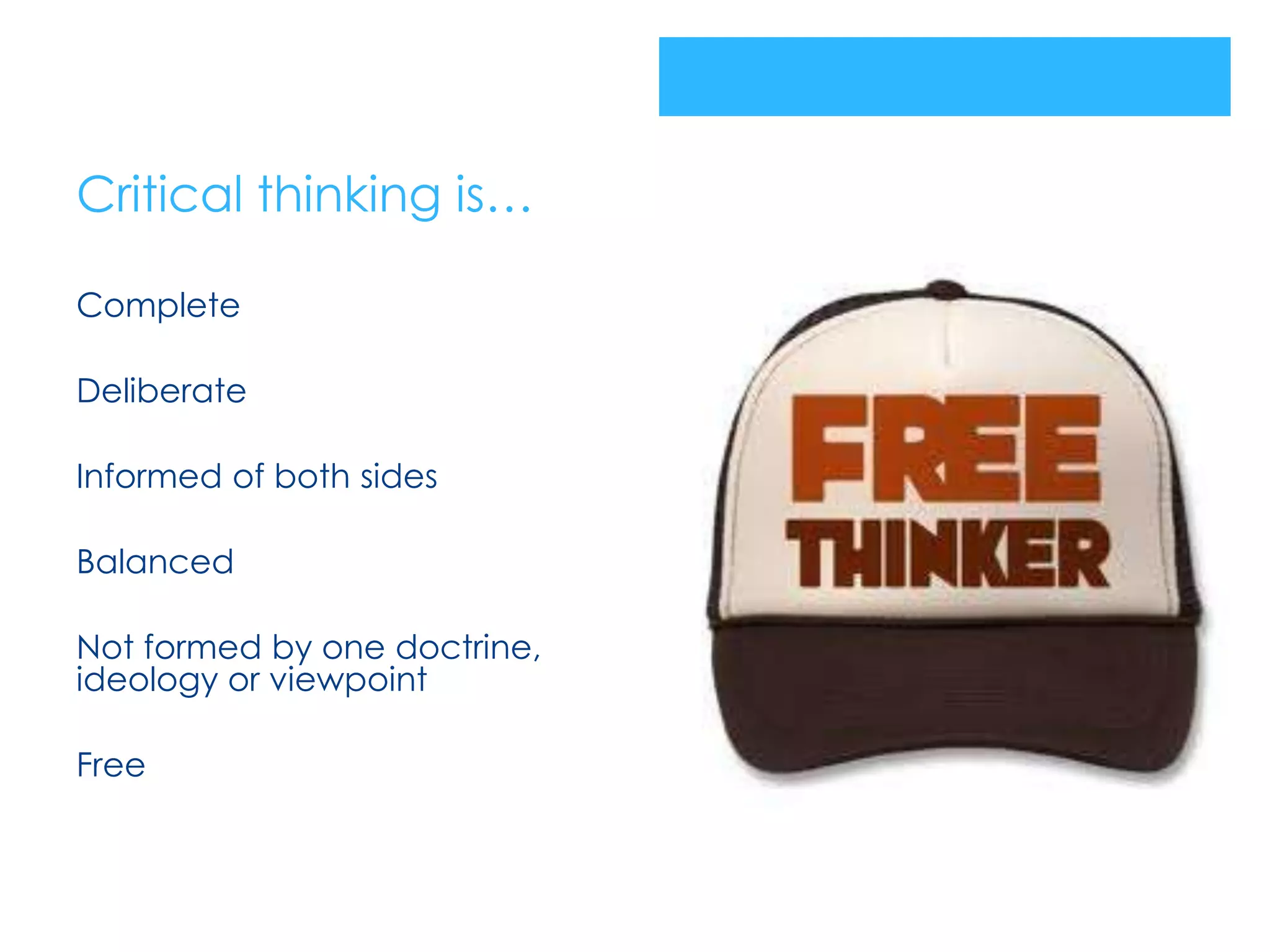
Critical thinking is…

Complete

Deliberate

Informed of both sides

Balanced

Not formed by one doctrine,
ideology or viewpoint

Free
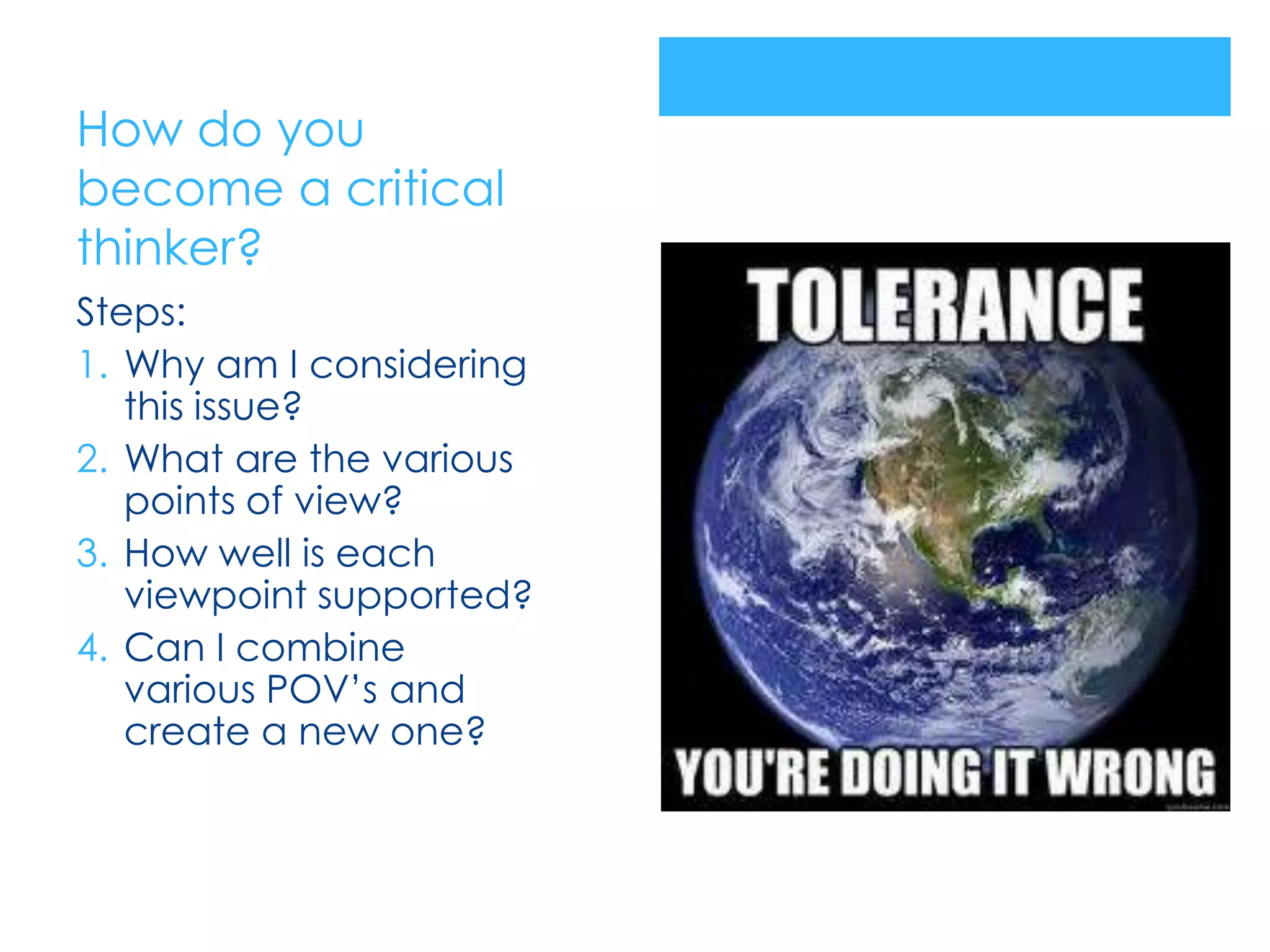
How do you
become a critical
thinker?
Steps:
1. Why am I considering
   this issue?
2. What are the various
   points of view?
3. How well is each
   viewpoint supported?
4. Can I combine
   various POV’s and
   create a new one?
Attitudes of
critical thinkers
•   Truth seeking
•   Open minded
•   Analytical
•   Systematic
•   Self-confident
•   Inquisitive
•   Mature
Critical thinking leaves you
open to new ideas
 This is the number one reason employers like
  critical thinkers!
 Critical thinkers are idea people…non-critical
  thinkers are stuck.
 Brainstormers
 Open to serendipity
 Change their minds often—refine ideas!
 Analyze data to come up with new
  thoughts/intereptations
Barriers to Critical
Thinking
•   Jumping to conclusions
•   Personal attacks
•   Appeals to authority
•   False causation
•   Scorched earth/all or nothing
    thinking
•   Emotional appeals
•   Straw dogs
•   Tradition
•   Slippery slope
•   Red herrings
Critical Thinking
      Jeopardy!

BUS 301 Week 7

  • 1.
    BUS 301 Week7 Critical Thinking
  • 2.
    Critical Thinking • Whatis means to think critically • Why it matters (now and in the future) • How skills in this area can be developed
  • 3.
    What does itmean to think critically? • Critical thinkers question the world around them and know the difference between opinion and fact. • They consider opposing viewpoints and the basis of them. • They make decisions supported by evidence and not assumptions. • Critical thinkers are not simply persuaded by short term benefits but consider long term outcomes. • Critical thinkers reason and analyze before deciding.
  • 4.
    Uses of critical thinking •Critical thinking informs reading, writing, speaking and listening • Critical thinking uncovers bias and prejudice • Critical thinking reveals non- sense (crap detector!), half- truths and deception • Critical thinking leads to better decisions Acquiring this skill is one of the major goals of education Being educated means being a critical thinker!
  • 5.
    Critical thinking is… Complete Deliberate Informedof both sides Balanced Not formed by one doctrine, ideology or viewpoint Free
  • 6.
    How do you becomea critical thinker? Steps: 1. Why am I considering this issue? 2. What are the various points of view? 3. How well is each viewpoint supported? 4. Can I combine various POV’s and create a new one?
  • 7.
    Attitudes of critical thinkers • Truth seeking • Open minded • Analytical • Systematic • Self-confident • Inquisitive • Mature
  • 8.
    Critical thinking leavesyou open to new ideas  This is the number one reason employers like critical thinkers!  Critical thinkers are idea people…non-critical thinkers are stuck.  Brainstormers  Open to serendipity  Change their minds often—refine ideas!  Analyze data to come up with new thoughts/intereptations
  • 9.
    Barriers to Critical Thinking • Jumping to conclusions • Personal attacks • Appeals to authority • False causation • Scorched earth/all or nothing thinking • Emotional appeals • Straw dogs • Tradition • Slippery slope • Red herrings
  • 10.