

“Thinking-The Ultimate Human
Resource”
 We can always improve our thinking skills.

 Confused thinking arises from trying to do
too much at once.
We should emphasize what can be, not
what is.
Parallel Thinking
At any moment
everyone is looking in the same
direction.
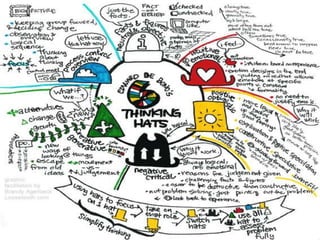
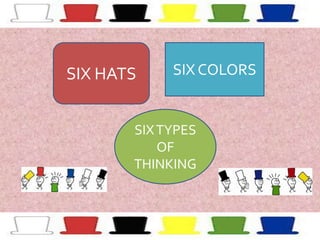
SIX HATS

SIX COLORS

SIX TYPES
OF
THINKING
General Hat Issues
 Direction, not description
– Set out to think in a certain direction
– “Let’s have some black hat thinking…”

 Not categories of people
– Not: “He’s a black hat thinker.”
– Everyone can and should use all the hats

 A constructive form of showing off
– Show off by being a better thinker
– Not destructive right vs. wrong argument

 Use in whole or in part
The WHITE Hat
 What information is available?
 What information do we
need?
 How are we going to get the
missing information?
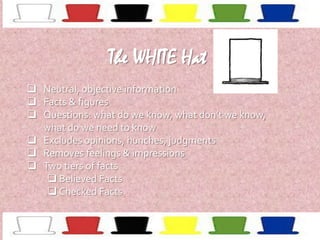
The WHITE Hat
 Neutral, objective information
 Facts & figures
 Questions: what do we know, what don’t we know,
what do we need to know
 Excludes opinions, hunches, judgments
 Removes feelings & impressions
 Two tiers of facts
 Believed Facts
 Checked Facts
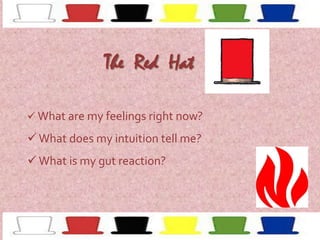
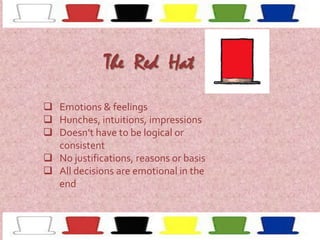
The Red Hat
 What are my feelings right now?

 What does my intuition tell me?
 What is my gut reaction?
The Red Hat
 Emotions & feelings
 Hunches, intuitions, impressions
 Doesn’t have to be logical or
consistent
 No justifications, reasons or basis
 All decisions are emotional in the
end
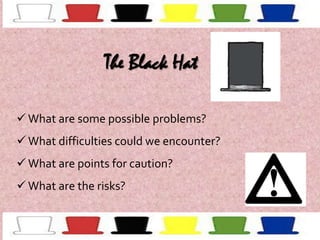
The Black Hat
 What are some possible problems?

 What difficulties could we encounter?
 What are points for caution?
 What are the risks?
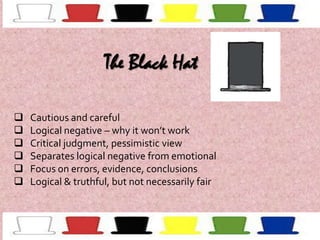
The Black Hat







Cautious and careful
Logical negative – why it won’t work
Critical judgment, pessimistic view
Separates logical negative from emotional
Focus on errors, evidence, conclusions
Logical & truthful, but not necessarily fair
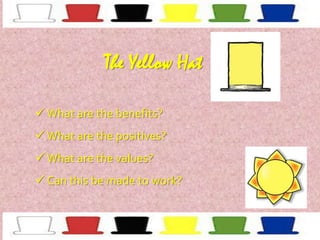
The Yellow Hat
 What are the benefits?
 What are the positives?
 What are the values?
 Can this be made to work?
The Yellow Hat






Positive & speculative
Positive thinking, optimism, opportunity
Benefits
Best-case scenarios
Exploration
The Green Hat
What creative ideas do we have?

What are the alternatives?
How can we overcome the black hat
difficulties?
The Green Hat






New ideas, concepts, perceptions
Deliberate creation of new ideas
Alternatives and more alternatives
New approaches to problems
Creative & lateral thinking
The Blue Hat
 Where should we start?

 What is the agenda?
 What are the objectives?
 Which hats should we use?
 How can we summarize?
 What should we do next?
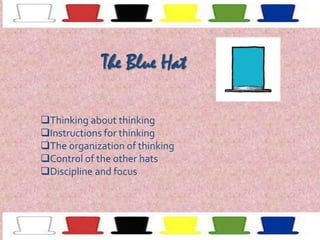
The Blue Hat
Thinking about thinking
Instructions for thinking
The organization of thinking
Control of the other hats
Discipline and focus
Ways to Use the Hats


Individually (i.e., thinking alone)



In conversation



In meetings



Reports and presentations
Benefits of Six Hats Method
Provides a common language
Experience & intelligence of each person
(Diversity of thought)
Use more of our brains
Helps people work against type, preference
Removal of ego (reduce confrontation)
Save time
Focus (one thing at a time)
Create, evaluate & implement action plans
Thank you for listening!

Six thinking hats

  • 3.
    “Thinking-The Ultimate Human Resource” We can always improve our thinking skills.  Confused thinking arises from trying to do too much at once. We should emphasize what can be, not what is.
  • 4.
    Parallel Thinking At anymoment everyone is looking in the same direction.
  • 5.
    SIX HATS SIX COLORS SIXTYPES OF THINKING
  • 6.
    General Hat Issues Direction, not description – Set out to think in a certain direction – “Let’s have some black hat thinking…”  Not categories of people – Not: “He’s a black hat thinker.” – Everyone can and should use all the hats  A constructive form of showing off – Show off by being a better thinker – Not destructive right vs. wrong argument  Use in whole or in part
  • 7.
    The WHITE Hat What information is available?  What information do we need?  How are we going to get the missing information?
  • 8.
    The WHITE Hat Neutral, objective information  Facts & figures  Questions: what do we know, what don’t we know, what do we need to know  Excludes opinions, hunches, judgments  Removes feelings & impressions  Two tiers of facts  Believed Facts  Checked Facts
  • 9.
    The Red Hat What are my feelings right now?  What does my intuition tell me?  What is my gut reaction?
  • 10.
    The Red Hat Emotions & feelings  Hunches, intuitions, impressions  Doesn’t have to be logical or consistent  No justifications, reasons or basis  All decisions are emotional in the end
  • 11.
    The Black Hat What are some possible problems?  What difficulties could we encounter?  What are points for caution?  What are the risks?
  • 12.
    The Black Hat       Cautiousand careful Logical negative – why it won’t work Critical judgment, pessimistic view Separates logical negative from emotional Focus on errors, evidence, conclusions Logical & truthful, but not necessarily fair
  • 13.
    The Yellow Hat What are the benefits?  What are the positives?  What are the values?  Can this be made to work?
  • 14.
    The Yellow Hat      Positive& speculative Positive thinking, optimism, opportunity Benefits Best-case scenarios Exploration
  • 15.
    The Green Hat Whatcreative ideas do we have? What are the alternatives? How can we overcome the black hat difficulties?
  • 16.
    The Green Hat      Newideas, concepts, perceptions Deliberate creation of new ideas Alternatives and more alternatives New approaches to problems Creative & lateral thinking
  • 17.
    The Blue Hat Where should we start?  What is the agenda?  What are the objectives?  Which hats should we use?  How can we summarize?  What should we do next?
  • 18.
    The Blue Hat Thinkingabout thinking Instructions for thinking The organization of thinking Control of the other hats Discipline and focus
  • 19.
    Ways to Usethe Hats  Individually (i.e., thinking alone)  In conversation  In meetings  Reports and presentations
  • 20.
    Benefits of SixHats Method Provides a common language Experience & intelligence of each person (Diversity of thought) Use more of our brains Helps people work against type, preference Removal of ego (reduce confrontation) Save time Focus (one thing at a time) Create, evaluate & implement action plans
  • 21.
    Thank you forlistening!