











Dok Chon, Jahnvi Manek, Vimvipa Poome and Young Joo Kim
INTERNAL COMMUNICATIONS PLAN PROPOSAL
for
STOPBULLYING.GOV
INTRODUCTION
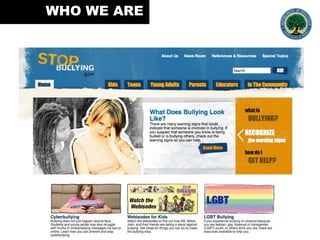
WHO WE ARE
BACKGROUND
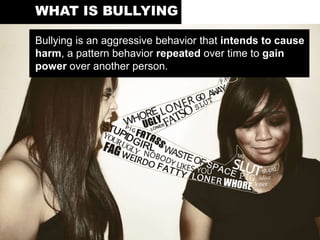
WHAT IS BULLYING
Bullying is an aggressive behavior that intends to cause
harm, a pattern behavior repeated over time to gain
power over another person.
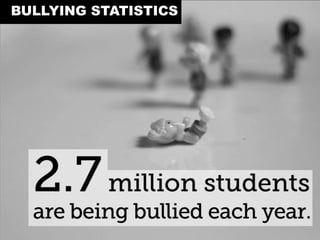
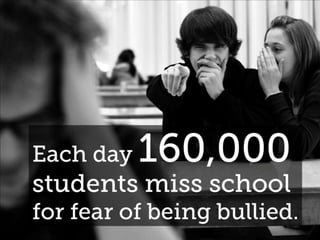
BULLYING STATISTICS
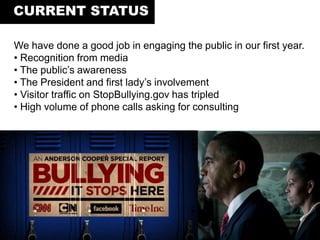
We have done a good job in engaging the public in our first year.
• Recognition from media
• The public’s awareness
• The President and first lady’s involvement
• Visitor traffic on StopBullying.gov has tripled
• High volume of phone calls asking for consulting
CURRENT STATUS
NEXT STEP
Why we need it?
•Answer the public’s demand
•Centralize the information
•Distribute the collected data along with real practical
guidance
COMMUNICATION
STRATEGY
AND METHODS
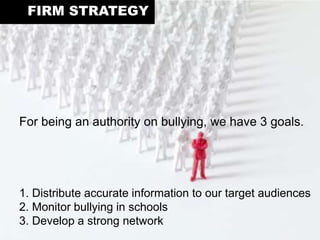
FIRM STRATEGY
For being an authority on bullying, we have 3 goals.
1. Distribute accurate information to our target audiences
2. Monitor bullying in schools
3. Develop a strong network
AUDIENCE + MESSAGES
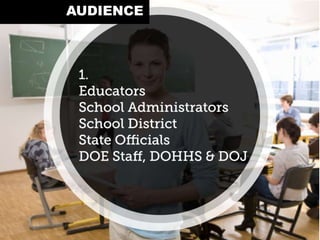
AUDIENCE
AUDIENCE
AUDIENCE
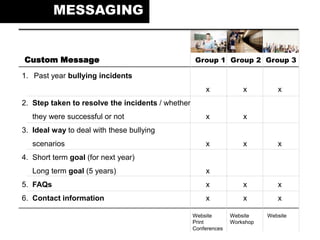
1. Past year bullying incidents from
the
2. Step taken to resolve the incidents / whether
they were successful or not
3. Ideal way to deal with these bullying
scenarios
4. Short term goal (for next year)
Long term goal (5 years)
5. FAQs
6. Contact information
MESSAGING
Custom Message Group 1 Group 2 Group 3
x
x
x
x
x
x
x
x
x
x
x
x
x
x
x
x
x
x
Website
Print
Conferences
Website
Workshop
Website
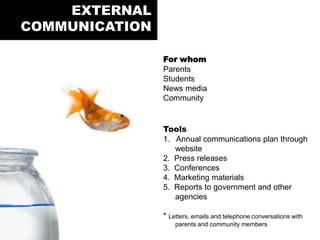
EXTERNAL
COMMUNICATION
For whom
Parents
Students
News media
Community
Tools
1. Annual communications plan through
website
2. Press releases
3. Conferences
4. Marketing materials
5. Reports to government and other
agencies
* Letters, emails and telephone conversations with
parents and community members
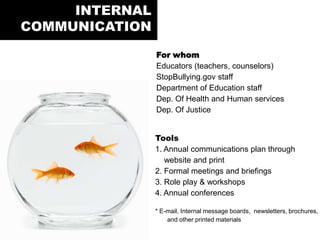
INTERNAL
COMMUNICATION
For whom
Educators (teachers, counselors)
StopBullying.gov staff
Department of Education staff
Dep. Of Health and Human services
Dep. Of Justice
Tools
1. Annual communications plan through
website and print
2. Formal meetings and briefings
3. Role play & workshops
4. Annual conferences
* E-mail, Internal message boards, newsletters, brochures,
and other printed materials
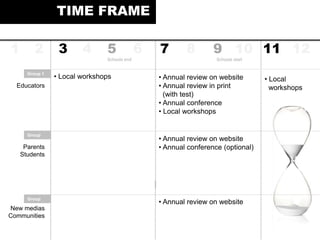
1 2 3 4 5 6 7 8 9 10 11 12
• Local
workshops
Group 1
Schools end Schools start
Group
Group
TIME FRAME
• Annual review on website
• Annual review in print
(with test)
• Annual conference
• Local workshops
• Annual review on website
• Annual conference (optional)
• Annual review on website
• Local workshops
Educators
Parents
Students
New medias
Communities
RESOURCE
OVERVIEW
Model 1
Responsibility:
Website development
Time Frame:
May - July (full time)
August -April (part time)
Team:
Web specialist
Data analyst/strategist
Researcher
Human resources
Model 2
Responsibility:
+Model 1
Producing print catalog
(and creating a test)
Time Frame:
May - July (full time)
August -April (part time)
Team:
+Model1
Trained child counselor/
Psychologist
PR/communication personnel
Model 3
Responsibility:
+ Model 2
Planning conference,
Workshops, and employee
engagement events
Time Frame:
All Year (full time)
Team :
+ Model 2
Project coordinator
Event planner
FUNDING
Funding Categories
Labor cost
Office expenses
Development cost
Technology/ tools
Travel & entertainment
Office supplies
Funding Steps
Model 1: $814,000
• Develop the website
further
Model 2: $1,124,000
• Develop the website
• Produce print catalog
Model 3: $2,488,000
• Develop the website
• Produce print catalog
• Arrange conferences and
workshops
EVALUATION
DESIRED ACTION
EVALUATION
Model 1: Website: StopBullying.gov
• Increased traffic on website
• Increased activity on Twitter
• Start building relationships with partners
Model 2: Research and Communication
+ Model 1
• Bullying rate based on the field research (data analysis)
• Feedback from teachers, students, and parents
• Inquiries
Model 3: Employee Engagement
+ Model 2
• Conference participation
• Feedback after workshop
Stop Bullying presentation

Stop Bullying presentation

  • 1.
    Dok Chon, JahnviManek, Vimvipa Poome and Young Joo Kim INTERNAL COMMUNICATIONS PLAN PROPOSAL for STOPBULLYING.GOV
  • 2.
  • 3.
  • 4.
  • 5.
    WHAT IS BULLYING Bullyingis an aggressive behavior that intends to cause harm, a pattern behavior repeated over time to gain power over another person.
  • 6.
  • 13.
    We have donea good job in engaging the public in our first year. • Recognition from media • The public’s awareness • The President and first lady’s involvement • Visitor traffic on StopBullying.gov has tripled • High volume of phone calls asking for consulting CURRENT STATUS
  • 14.
    NEXT STEP Why weneed it? •Answer the public’s demand •Centralize the information •Distribute the collected data along with real practical guidance
  • 15.
  • 16.
    FIRM STRATEGY For beingan authority on bullying, we have 3 goals. 1. Distribute accurate information to our target audiences 2. Monitor bullying in schools 3. Develop a strong network
  • 17.
  • 18.
  • 19.
  • 20.
  • 21.
    1. Past yearbullying incidents from the 2. Step taken to resolve the incidents / whether they were successful or not 3. Ideal way to deal with these bullying scenarios 4. Short term goal (for next year) Long term goal (5 years) 5. FAQs 6. Contact information MESSAGING Custom Message Group 1 Group 2 Group 3 x x x x x x x x x x x x x x x x x x Website Print Conferences Website Workshop Website
  • 22.
    EXTERNAL COMMUNICATION For whom Parents Students News media Community Tools 1.Annual communications plan through website 2. Press releases 3. Conferences 4. Marketing materials 5. Reports to government and other agencies * Letters, emails and telephone conversations with parents and community members
  • 23.
    INTERNAL COMMUNICATION For whom Educators (teachers,counselors) StopBullying.gov staff Department of Education staff Dep. Of Health and Human services Dep. Of Justice Tools 1. Annual communications plan through website and print 2. Formal meetings and briefings 3. Role play & workshops 4. Annual conferences * E-mail, Internal message boards, newsletters, brochures, and other printed materials
  • 24.
    1 2 34 5 6 7 8 9 10 11 12 • Local workshops Group 1 Schools end Schools start Group Group TIME FRAME • Annual review on website • Annual review in print (with test) • Annual conference • Local workshops • Annual review on website • Annual conference (optional) • Annual review on website • Local workshops Educators Parents Students New medias Communities
  • 25.
  • 26.
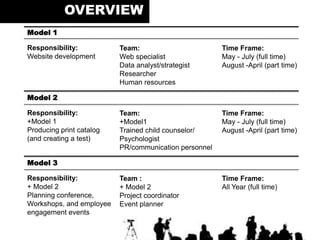
    OVERVIEW Model 1 Responsibility: Website development TimeFrame: May - July (full time) August -April (part time) Team: Web specialist Data analyst/strategist Researcher Human resources Model 2 Responsibility: +Model 1 Producing print catalog (and creating a test) Time Frame: May - July (full time) August -April (part time) Team: +Model1 Trained child counselor/ Psychologist PR/communication personnel Model 3 Responsibility: + Model 2 Planning conference, Workshops, and employee engagement events Time Frame: All Year (full time) Team : + Model 2 Project coordinator Event planner
  • 27.
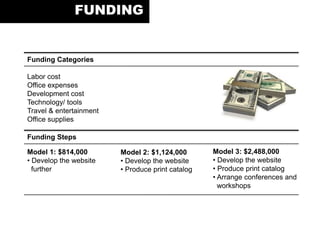
    FUNDING Funding Categories Labor cost Officeexpenses Development cost Technology/ tools Travel & entertainment Office supplies Funding Steps Model 1: $814,000 • Develop the website further Model 2: $1,124,000 • Develop the website • Produce print catalog Model 3: $2,488,000 • Develop the website • Produce print catalog • Arrange conferences and workshops
  • 28.
  • 29.
  • 30.
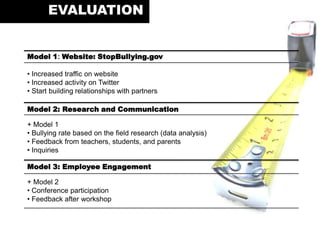
    EVALUATION Model 1: Website:StopBullying.gov • Increased traffic on website • Increased activity on Twitter • Start building relationships with partners Model 2: Research and Communication + Model 1 • Bullying rate based on the field research (data analysis) • Feedback from teachers, students, and parents • Inquiries Model 3: Employee Engagement + Model 2 • Conference participation • Feedback after workshop

Editor's Notes

  • #4 StopBullying.gov is a website that provides information from various government agencies on how kids, teens, young adults, parents and educators can prevent or stop bullying.
  • #6 definitions of bullying vary, most agree that bullying involves:Imbalance of Power: people who bully use their power to control or harm and the people being bullied may have a hard time defending themselvesIntent to Cause Harm: actions done by accident are not bullying; the person bullying has a goal to cause harmRepetition: incidents of bullying happen to the same the person over and over by the same person or group