Downloaded 70 times

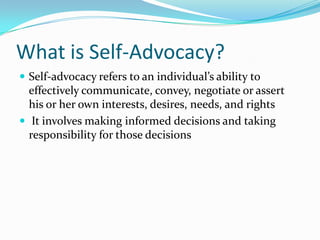
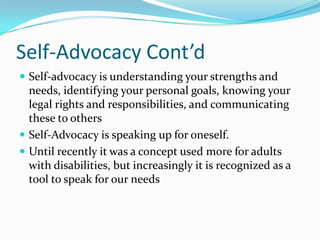
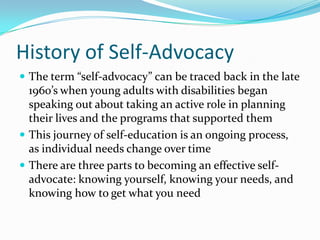
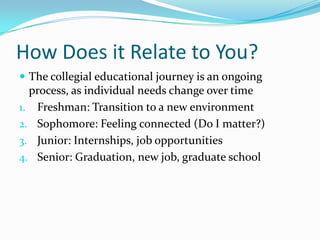

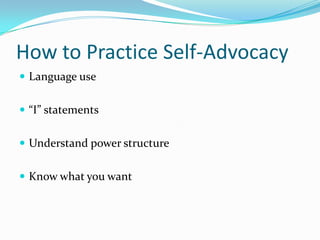

This document discusses self-advocacy, which refers to an individual's ability to effectively communicate their own interests, desires, needs, and rights. It involves making informed decisions and taking responsibility for those decisions. The concept of self-advocacy began in the late 1960s when young adults with disabilities began advocating for themselves in planning their lives and support programs. There are three parts to effective self-advocacy: knowing yourself, knowing your needs, and knowing how to get what you need. The document also provides tips on how to practice self-advocacy, such as using "I" statements and understanding power structures.


![EMPOWERMENT AND ADVOCACY OF COMMUNITY-ACTION INITIATIVES [Autosaved].pptx](https://cdn.slidesharecdn.com/ss_thumbnails/empowermentandadvocacyofcommunity-actioninitiativesautosaved-251126012039-a83e9593-thumbnail.jpg?width=640&height=640&fit=bounds)


