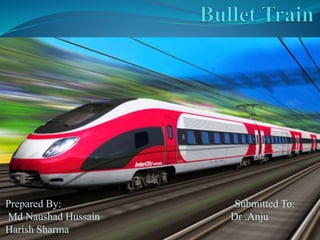
Prepared By: Submitted To:
Md Naushad Hussain Dr .Anju
Harish Sharma
What is a Bullet Train ?
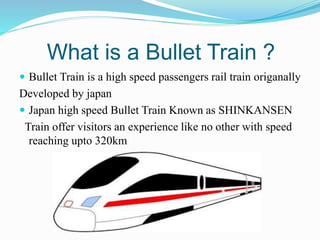
 Bullet Train is a high speed passengers rail train origanally
Developed by japan
 Japan high speed Bullet Train Known as SHINKANSEN
Train offer visitors an experience like no other with speed
reaching upto 320km
Bullet vs.Conventional Trains
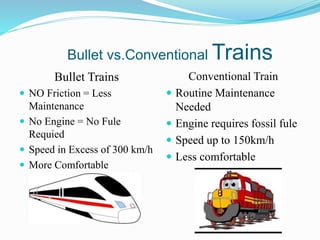
Bullet Trains
 NO Friction = Less
Maintenance
 No Engine = No Fule
Requied
 Speed in Excess of 300 km/h
 More Comfortable
Conventional Train
 Routine Maintenance
Needed
 Engine requires fossil fule
 Speed up to 150km/h
 Less comfortable
BENEFIT OF BULLET TRAIN IN INDIA
 Bullet Train Project Provide New Jobs For The Indians.
 It Will Provide A Good Competition To The Airlines.
 The Bullet Train Is Expected To Double Its Revenue After
20Years Of Its Completition.
Facts About Bullet Trains In
India
 The First Bullet Train In India Will Be Laid With The
Help Of Japan.To Make The Bullet TrainViable For The
Indian Railways.
 The Charges For The Train Would Be Around Rs.5/km.
 The Cost Of Building 1km Of Track Is Equal To Rs.115
Crore.
Bullet Train a Big Boost To The
Indian railway
 On 18 December 2015. India And Japan Signed A
98,000 Crore Rs Project To Lay India’s First Bullet Train
Network Between Mumbai To Ahmedabad.
 Our Prime Minister Mr. Narendar Modi Said That This
Step Would Revolutionize The Indian Railways And
Would Also Speed up Indian Journey Into The Future.
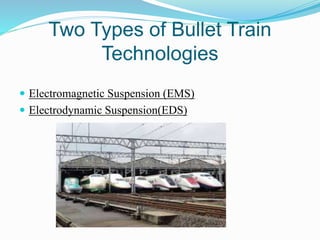
Two Types of Bullet Train
Technologies
 Electromagnetic Suspension (EMS)
 Electrodynamic Suspension(EDS)
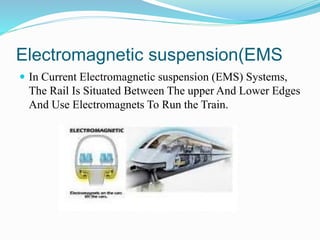
Electromagnetic suspension(EMS
 In Current Electromagnetic suspension (EMS) Systems,
The Rail Is Situated Between The upper And Lower Edges
And Use Electromagnets To Run the Train.
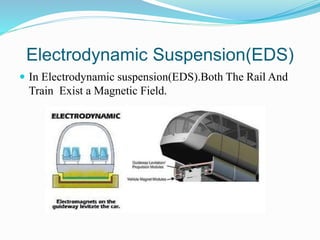
Electrodynamic Suspension(EDS)
 In Electrodynamic suspension(EDS).Both The Rail And
Train Exist a Magnetic Field.
Seating Capacity And Classes
 The Train Has Three Seprate Classes Namely Business
Class,Green Class,Ordinary Class.
 E 5 Series Shinkansen Train Configured With Ten Cars
And Has a Capacity To Carry 731 Passenger.
 658 seats of ordinary class,55 seats are of green class and
18 seats are in buisness class.
Cost
 According To News Media , The Cost For Constructing
Such Rail Line In India Are Estimated To Be 700-1000
Million Per Km.
 The Mumbai- Ahmedabad Route Of 500km.Will Cost Rs
370 Billion To Build And To Make a Profit,Passengers
Will Have To be Charged Rs 5 Per Km.
Better For The Enviroment
 Less Energy Consumption Because No Rail-Track
Friction.
 Requires No Fossil Fuel Which Can Harm the
Enviromrnt.
 Less Noise Pollution Since The Train Never Hits the
Track.
Conclusion
 We Are Hoping That This Project Will Changed Rail
Travel Experience In India And Will Write a New Chapter
In History of India.
 It also Reducing The Travel Time By More Than Half.

Bullet train .

  • 1.
    Prepared By: SubmittedTo: Md Naushad Hussain Dr .Anju Harish Sharma
  • 2.
    What is aBullet Train ?  Bullet Train is a high speed passengers rail train origanally Developed by japan  Japan high speed Bullet Train Known as SHINKANSEN Train offer visitors an experience like no other with speed reaching upto 320km
  • 3.
    Bullet vs.Conventional Trains BulletTrains  NO Friction = Less Maintenance  No Engine = No Fule Requied  Speed in Excess of 300 km/h  More Comfortable Conventional Train  Routine Maintenance Needed  Engine requires fossil fule  Speed up to 150km/h  Less comfortable
  • 4.
    BENEFIT OF BULLETTRAIN IN INDIA  Bullet Train Project Provide New Jobs For The Indians.  It Will Provide A Good Competition To The Airlines.  The Bullet Train Is Expected To Double Its Revenue After 20Years Of Its Completition.
  • 5.
    Facts About BulletTrains In India  The First Bullet Train In India Will Be Laid With The Help Of Japan.To Make The Bullet TrainViable For The Indian Railways.  The Charges For The Train Would Be Around Rs.5/km.  The Cost Of Building 1km Of Track Is Equal To Rs.115 Crore.
  • 6.
    Bullet Train aBig Boost To The Indian railway  On 18 December 2015. India And Japan Signed A 98,000 Crore Rs Project To Lay India’s First Bullet Train Network Between Mumbai To Ahmedabad.  Our Prime Minister Mr. Narendar Modi Said That This Step Would Revolutionize The Indian Railways And Would Also Speed up Indian Journey Into The Future.
  • 7.
    Two Types ofBullet Train Technologies  Electromagnetic Suspension (EMS)  Electrodynamic Suspension(EDS)
  • 8.
    Electromagnetic suspension(EMS  InCurrent Electromagnetic suspension (EMS) Systems, The Rail Is Situated Between The upper And Lower Edges And Use Electromagnets To Run the Train.
  • 9.
    Electrodynamic Suspension(EDS)  InElectrodynamic suspension(EDS).Both The Rail And Train Exist a Magnetic Field.
  • 10.
    Seating Capacity AndClasses  The Train Has Three Seprate Classes Namely Business Class,Green Class,Ordinary Class.  E 5 Series Shinkansen Train Configured With Ten Cars And Has a Capacity To Carry 731 Passenger.  658 seats of ordinary class,55 seats are of green class and 18 seats are in buisness class.
  • 11.
    Cost  According ToNews Media , The Cost For Constructing Such Rail Line In India Are Estimated To Be 700-1000 Million Per Km.  The Mumbai- Ahmedabad Route Of 500km.Will Cost Rs 370 Billion To Build And To Make a Profit,Passengers Will Have To be Charged Rs 5 Per Km.
  • 12.
    Better For TheEnviroment  Less Energy Consumption Because No Rail-Track Friction.  Requires No Fossil Fuel Which Can Harm the Enviromrnt.  Less Noise Pollution Since The Train Never Hits the Track.
  • 13.
    Conclusion  We AreHoping That This Project Will Changed Rail Travel Experience In India And Will Write a New Chapter In History of India.  It also Reducing The Travel Time By More Than Half.