Ar. SIMRAN VATS
ASSISTANT PROFESSOR
VERNACULAR ARCHITECTURE
Introduction
Vernacular Strategies for Flood-
Resistant Structures
Vernacular Strategies for Earthquake-
Resistant Structures
Vernacular Strategies for Cyclone-
Resistant Structures
Vernacular Strategies for Landslide-
Resistant Structures
Conclusion
CONTENET
 India is a country that is
prone to various disasters
such as earthquakes,
floods, cyclones, and
landslides. These
disasters have caused
immense damage to life
and property in the past.
 One of the ways to
mitigate the impact of
these disasters is by
constructing disaster-
resistant structures using
vernacular strategies.
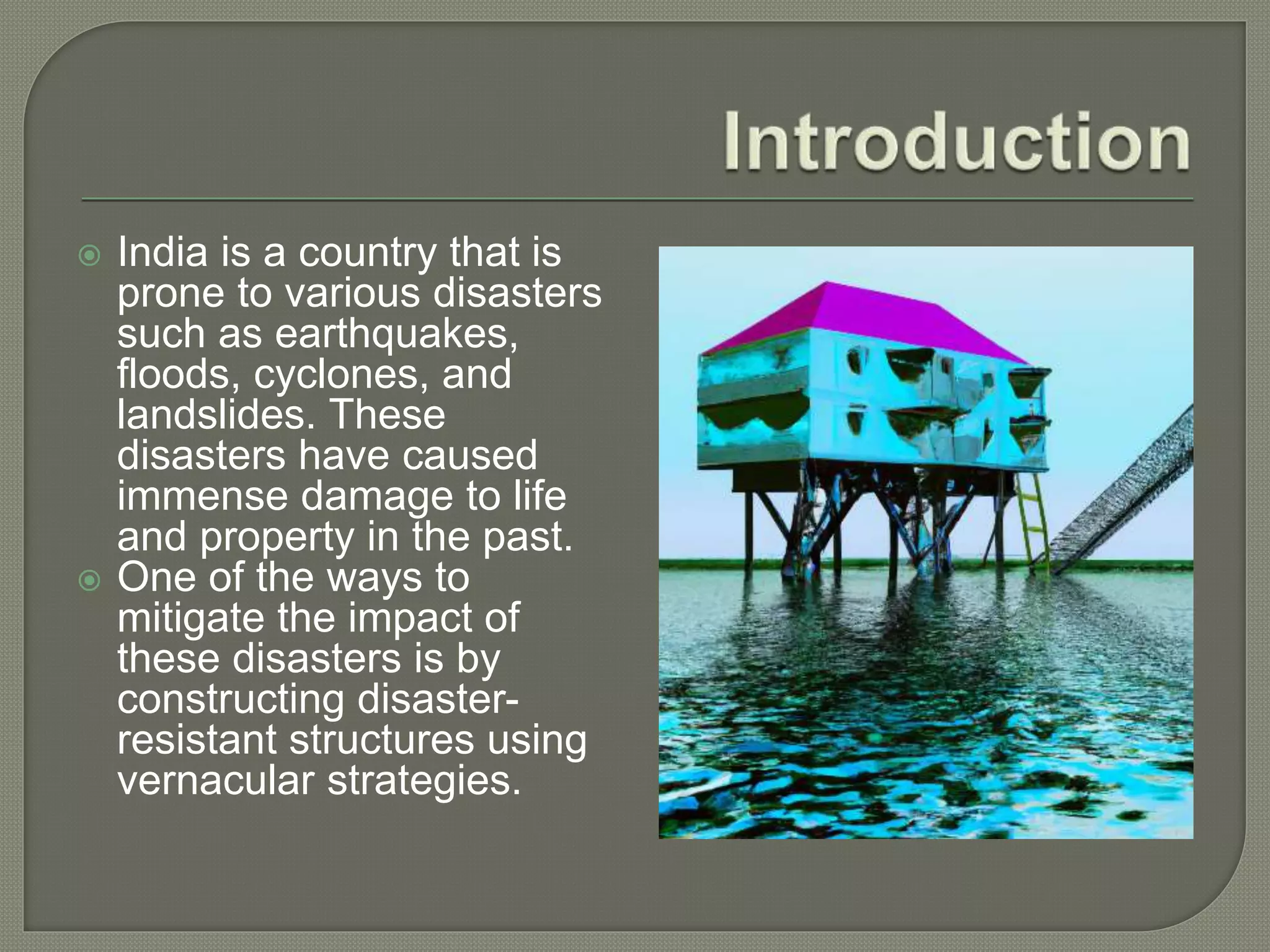
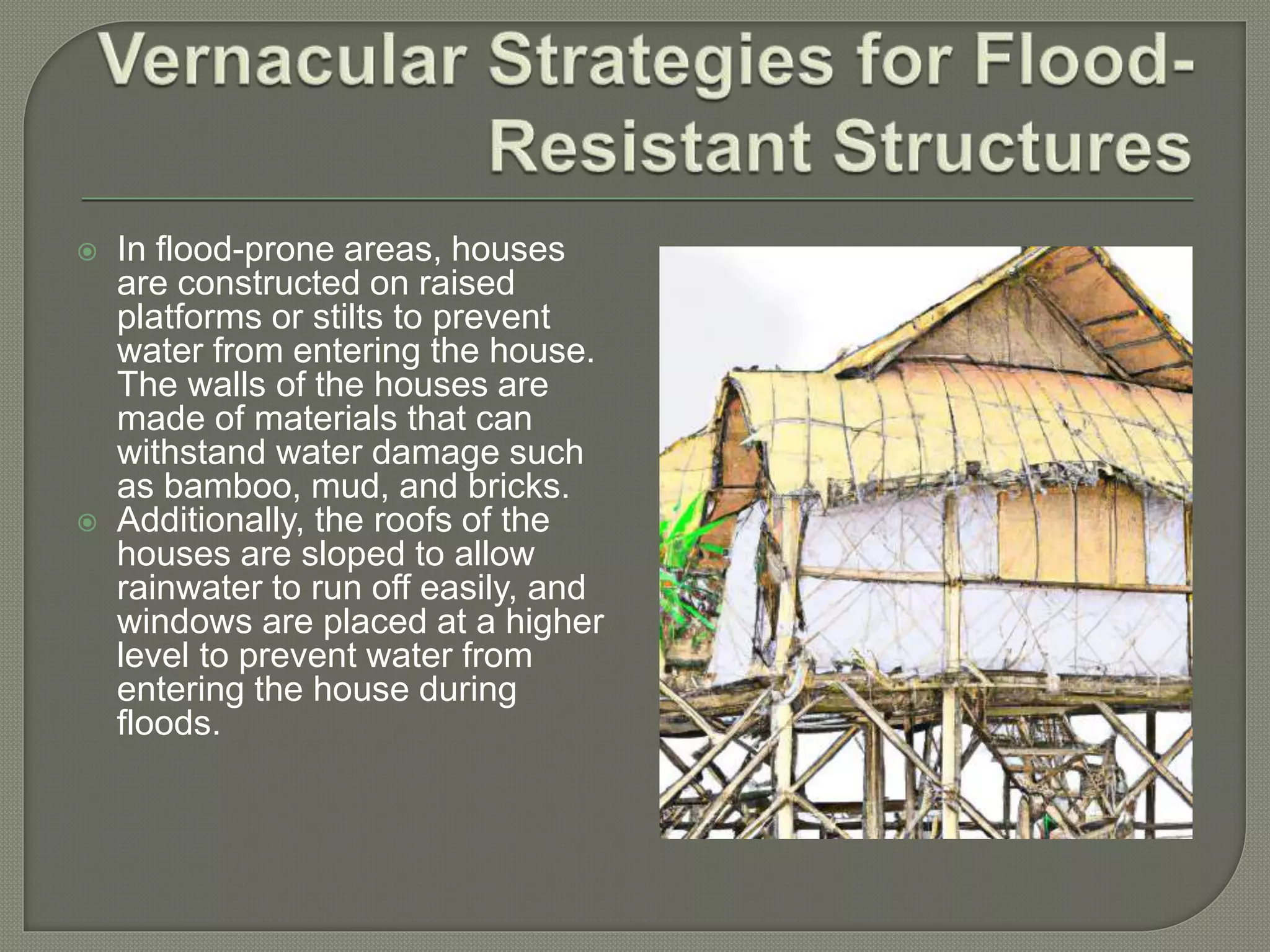
 In flood-prone areas, houses
are constructed on raised
platforms or stilts to prevent
water from entering the house.
The walls of the houses are
made of materials that can
withstand water damage such
as bamboo, mud, and bricks.
 Additionally, the roofs of the
houses are sloped to allow
rainwater to run off easily, and
windows are placed at a higher
level to prevent water from
entering the house during
floods.
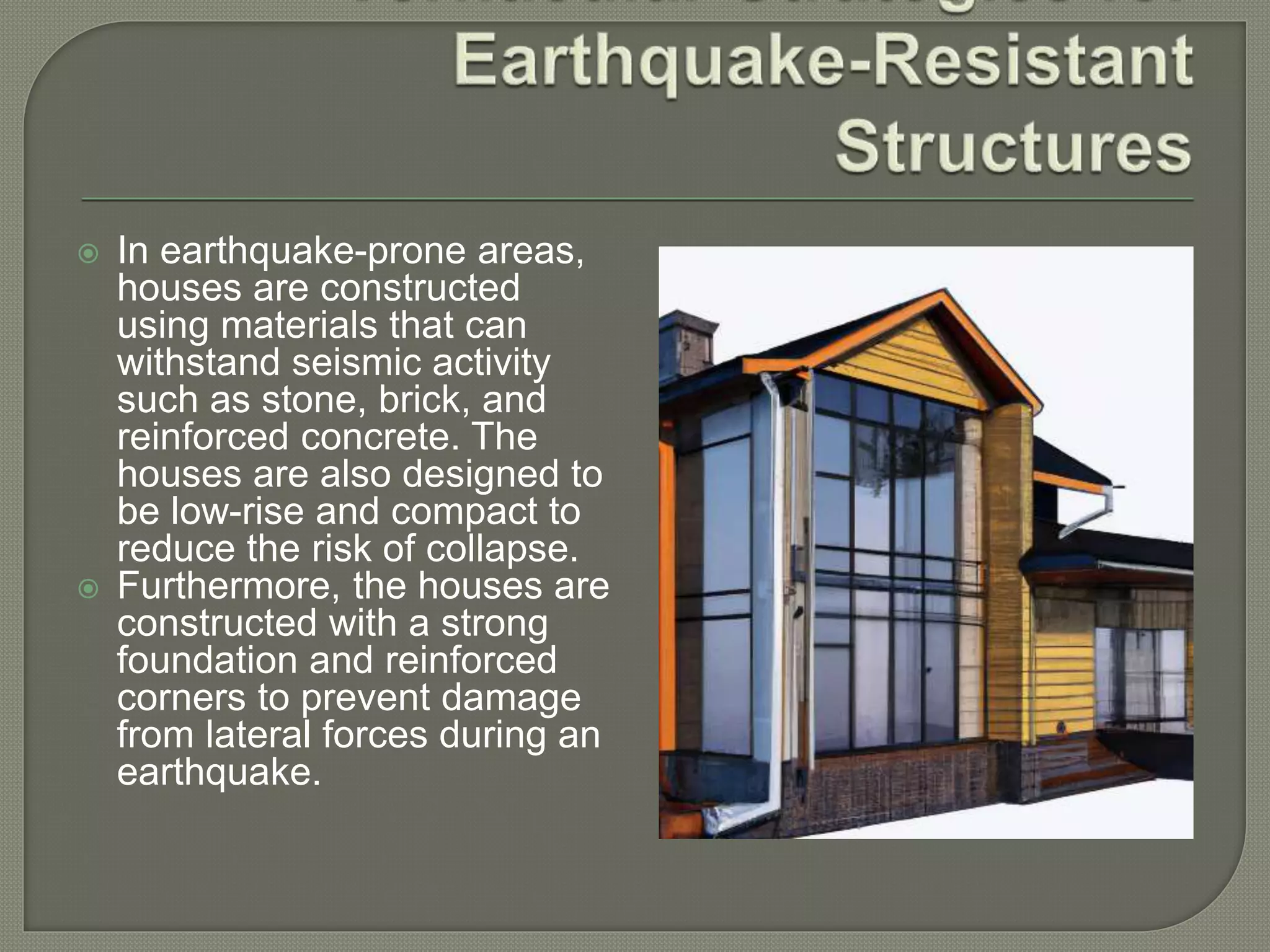
 In earthquake-prone areas,
houses are constructed
using materials that can
withstand seismic activity
such as stone, brick, and
reinforced concrete. The
houses are also designed to
be low-rise and compact to
reduce the risk of collapse.
 Furthermore, the houses are
constructed with a strong
foundation and reinforced
corners to prevent damage
from lateral forces during an
earthquake.
 In cyclone-prone areas, houses are constructed
using materials that can withstand high winds
such as bamboo, thatch, and mud. The roofs of
the houses are sloped and reinforced to prevent
them from being blown away.
 Additionally, the windows of the houses are
fitted with shutters to protect them from flying
debris and the doors are made of strong
materials to prevent them from being blown
open.
 In landslide-prone areas, houses are
constructed on stable ground and away from
steep slopes. The houses are also designed to
be lightweight and flexible to absorb the impact
of landslides.
 Furthermore, the houses are constructed using
materials that can withstand the force of
landslides such as bamboo, wood, and steel.
The roofs of the houses are also sloped to allow
rainwater to run off easily and prevent soil
erosion.
 Vernacular strategies for disaster-
resistant structures have been
developed over centuries by
communities living in disaster-
prone areas. These strategies not
only help in mitigating the impact
of disasters but also provide
sustainable solutions that are cost-
effective and environmentally
friendly.
 By incorporating these strategies
into modern construction practices,
we can create disaster-resistant
structures that are resilient and
can withstand the challenges
posed by natural disasters
SIMRAN VATS

Building Resilience: Vernacular Strategies for Disaster-resistant Structures in India

  • 1.
    Ar. SIMRAN VATS ASSISTANTPROFESSOR VERNACULAR ARCHITECTURE
  • 2.
    Introduction Vernacular Strategies forFlood- Resistant Structures Vernacular Strategies for Earthquake- Resistant Structures Vernacular Strategies for Cyclone- Resistant Structures Vernacular Strategies for Landslide- Resistant Structures Conclusion CONTENET
  • 3.
     India isa country that is prone to various disasters such as earthquakes, floods, cyclones, and landslides. These disasters have caused immense damage to life and property in the past.  One of the ways to mitigate the impact of these disasters is by constructing disaster- resistant structures using vernacular strategies.
  • 4.
     In flood-proneareas, houses are constructed on raised platforms or stilts to prevent water from entering the house. The walls of the houses are made of materials that can withstand water damage such as bamboo, mud, and bricks.  Additionally, the roofs of the houses are sloped to allow rainwater to run off easily, and windows are placed at a higher level to prevent water from entering the house during floods.
  • 5.
     In earthquake-proneareas, houses are constructed using materials that can withstand seismic activity such as stone, brick, and reinforced concrete. The houses are also designed to be low-rise and compact to reduce the risk of collapse.  Furthermore, the houses are constructed with a strong foundation and reinforced corners to prevent damage from lateral forces during an earthquake.
  • 6.
     In cyclone-proneareas, houses are constructed using materials that can withstand high winds such as bamboo, thatch, and mud. The roofs of the houses are sloped and reinforced to prevent them from being blown away.  Additionally, the windows of the houses are fitted with shutters to protect them from flying debris and the doors are made of strong materials to prevent them from being blown open.
  • 7.
     In landslide-proneareas, houses are constructed on stable ground and away from steep slopes. The houses are also designed to be lightweight and flexible to absorb the impact of landslides.  Furthermore, the houses are constructed using materials that can withstand the force of landslides such as bamboo, wood, and steel. The roofs of the houses are also sloped to allow rainwater to run off easily and prevent soil erosion.
  • 8.
     Vernacular strategiesfor disaster- resistant structures have been developed over centuries by communities living in disaster- prone areas. These strategies not only help in mitigating the impact of disasters but also provide sustainable solutions that are cost- effective and environmentally friendly.  By incorporating these strategies into modern construction practices, we can create disaster-resistant structures that are resilient and can withstand the challenges posed by natural disasters
  • 9.