








GROUP-4
building customer satisfaction
 No business can run without building
customer satisfaction and loyalty.
Satisfaction will be determined by the value
of the difference between what the
customer receives and what they pay to
receive
Companies can achieve Customer Satisfaction
by.
• Incorporating good business practices
• Creating and delivering value
• Customer relation management
Importance of building customer satisfaction
 Customer-oriented management
 Comparison with the competitors
 Comparison over time
 Profit from specific insights
 Loyalty
 Reduced costs
 Leads and referrals
 Ideas for new development
Tools for building strong customer satisfaction/
relationships
Strategies for improving customer relations
and building customer loyalty range from simply
opening up communications channels in
implementing elaborate point system that
reward loyalty. Enhanced customer
communications approaches include.
 Providing customer feedback forms
 Asking about customer needs in general
when customers call with problems
 Training call centre staff to handle disputes
uniformly and constructively
 Responding directly to customer feedback
Demonstrating how the company listens to its
customers
 Encouraging the service culture throughout
the organization
Tools for building strong customer satisfaction/ relationships
Companies also encourage a wide variety of
tactics to directly encourage customer loyalty
through promotions or special treatment.
 Creating a point system that offers rewards once
a customer accumulates a certain number of points
 Offering discounts on free- product coupons
Running contests in which customers may win prizes
by entering a drawing
 Offering lifetime guarantees.
MEASURING CUSTOMER
SATISFACTION
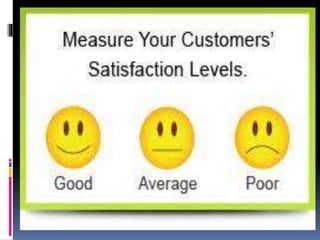
Measuring Customer satisfaction
 Customer satisfaction Review And Evaluation
or measurement of customer satisfaction Is
Essential to maintain.
 Customer satisfaction measurement is done
Using customer survey method.
 It may be in oral form or return form.
 3 possible methods of administering the survey
Interview administered
Machine administered
self administered
Reasons for customers
satisfaction measurement
Business related
Customer related
Supplier related
competitors related
Performance related
Methods to measure Cost
Satisfaction
 Comment cards
 Focus groups
 Visiting to the customers
 Mass communication
 Questioners
 Toll free number lines
 Report cards
 Customer satisfaction index
Essential Of customer
satisfaction measurement
 Measures should be Accurate
 Measures should be sensitive
 Measures provide a competitive contact
 Measures should be Regular
 Measures should be Easy to communicate
and understand
CUSTOMER RELATIONSHIP
MANAGEMENT
DEFINITION
 It is a business strategy designed to optimise
profitability , revenue and customer
satisfaction.
 It is a multifaceted process , mediated by a
set of information technologies that focuses
on creating two way exchanges with
customers so that firms have an intimate
knowledge of their needs , wants and buying
patterns.
CHARACTERISTICS OF CRM
1. SHARE OF CUSTOMER
2. LIFETIMEVALUE OFTHE CUSTOMER
3. CUSTOMER EQUITY
4. GREATER FOCUS ON HIGHVALUE CUSTOMERS
OBJECTIVES OF CRM
1. To provide updated information
2. To customise strategies
3. To anticipate problems
4. To prompt follow-up
5. To establish problem solving mechanism
6. To assess customer interests
7. To integrate functional system
TYPES OF CRM
1. OPERATIONALCRM
2. ANALYTICAL CRM
3. COLLABORATIVECRM
PROCESS OF CRM
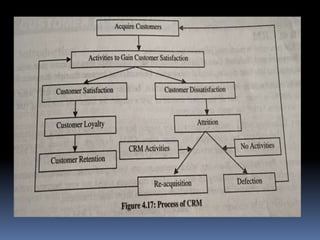
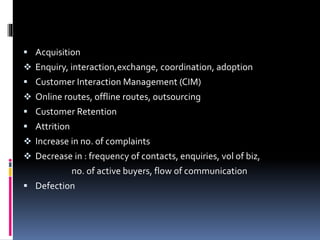
 Acquisition
 Enquiry, interaction,exchange, coordination, adoption
 Customer Interaction Management (CIM)
 Online routes, offline routes, outsourcing
 Customer Retention
 Attrition
 Increase in no. of complaints
 Decrease in : frequency of contacts, enquiries, vol of biz,
no. of active buyers, flow of communication
 Defection
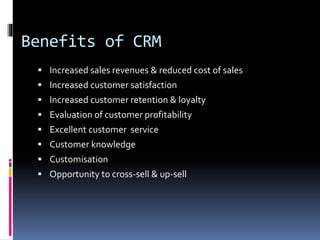
Benefits of CRM
 Increased sales revenues & reduced cost of sales
 Increased customer satisfaction
 Increased customer retention & loyalty
 Evaluation of customer profitability
 Excellent customer service
 Customer knowledge
 Customisation
 Opportunity to cross-sell & up-sell
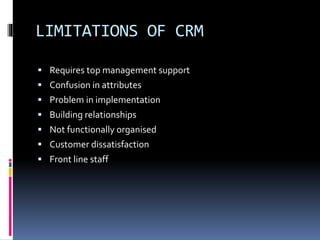
LIMITATIONS OF CRM
 Requires top management support
 Confusion in attributes
 Problem in implementation
 Building relationships
 Not functionally organised
 Customer dissatisfaction
 Front line staff
MARKETING RESEARCH
DEFINITION
Marketing research is the function which links
the consumer, customer, and public to the
market through information used to identify and
define marketing opportunities and problems,
generate, refine, ad evaluate marketing actions;
monitor marketing performance, an improve
understanding of market as a process.
-AMA
Marketing research is the systematic design,
collection, analysis, and reporting of data
relevant to a specific marketing situation facing
an organization.
PHILIP KOTLER
CHARACTERISTICS
 Functions of marketing management
 Integrated effort
 Systems approach
 Inter-disciplinary process
 Imperfect science
 Indispensable for the new product information
 Market orientation
OBJECTIVES
 Discovering the new market
 Capturing the greater market share
 Analysing tastes and preferences of customers
 Anticipating the future sales volume
 Reducing the cost of market
 Improving the quality of product
 Helping in formulation of suitable price policy
 Facing cut throat competition
 Making liaison with ultimate consumers
 Studying the external environment
IMPORTANCE OF MARKETING
RESEARCH
 Decision making tool
 Management planning
 Problem solving
 Control technique
 Large scale production
 Complex market
 Pattern of consumption
 Market complex
 Suitable marketing operations
 pricing
 Marketing strategy
 Distribution
 Sales promotion
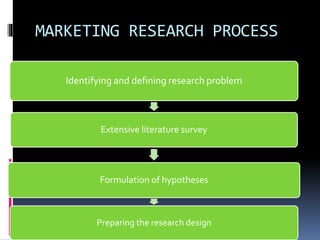
MARKETING RESEARCH PROCESS
Identifying and defining research problem
Extensive literature survey
Formulation of hypotheses
Preparing the research design
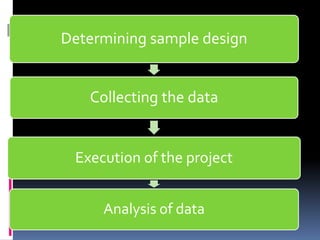
Determining sample design
Collecting the data
Execution of the project
Analysis of data
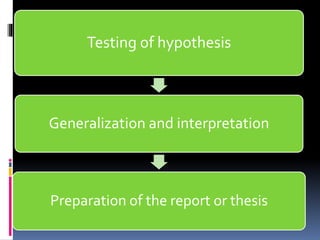
Testing of hypothesis
Generalization and interpretation
Preparation of the report or thesis

building customer satisfaction

  • 1.
  • 2.
    building customer satisfaction No business can run without building customer satisfaction and loyalty. Satisfaction will be determined by the value of the difference between what the customer receives and what they pay to receive
  • 4.
    Companies can achieveCustomer Satisfaction by. • Incorporating good business practices • Creating and delivering value • Customer relation management
  • 5.
    Importance of buildingcustomer satisfaction  Customer-oriented management  Comparison with the competitors  Comparison over time  Profit from specific insights  Loyalty  Reduced costs  Leads and referrals  Ideas for new development
  • 6.
    Tools for buildingstrong customer satisfaction/ relationships Strategies for improving customer relations and building customer loyalty range from simply opening up communications channels in implementing elaborate point system that reward loyalty. Enhanced customer communications approaches include.
  • 7.
     Providing customerfeedback forms  Asking about customer needs in general when customers call with problems  Training call centre staff to handle disputes uniformly and constructively  Responding directly to customer feedback Demonstrating how the company listens to its customers  Encouraging the service culture throughout the organization Tools for building strong customer satisfaction/ relationships
  • 8.
    Companies also encouragea wide variety of tactics to directly encourage customer loyalty through promotions or special treatment.  Creating a point system that offers rewards once a customer accumulates a certain number of points  Offering discounts on free- product coupons Running contests in which customers may win prizes by entering a drawing  Offering lifetime guarantees.
  • 9.
  • 11.
    Measuring Customer satisfaction Customer satisfaction Review And Evaluation or measurement of customer satisfaction Is Essential to maintain.  Customer satisfaction measurement is done Using customer survey method.  It may be in oral form or return form.  3 possible methods of administering the survey Interview administered Machine administered self administered
  • 12.
    Reasons for customers satisfactionmeasurement Business related Customer related Supplier related competitors related Performance related
  • 13.
    Methods to measureCost Satisfaction  Comment cards  Focus groups  Visiting to the customers  Mass communication  Questioners  Toll free number lines  Report cards  Customer satisfaction index
  • 14.
    Essential Of customer satisfactionmeasurement  Measures should be Accurate  Measures should be sensitive  Measures provide a competitive contact  Measures should be Regular  Measures should be Easy to communicate and understand
  • 15.
  • 17.
    DEFINITION  It isa business strategy designed to optimise profitability , revenue and customer satisfaction.  It is a multifaceted process , mediated by a set of information technologies that focuses on creating two way exchanges with customers so that firms have an intimate knowledge of their needs , wants and buying patterns.
  • 18.
    CHARACTERISTICS OF CRM 1.SHARE OF CUSTOMER 2. LIFETIMEVALUE OFTHE CUSTOMER 3. CUSTOMER EQUITY 4. GREATER FOCUS ON HIGHVALUE CUSTOMERS
  • 19.
    OBJECTIVES OF CRM 1.To provide updated information 2. To customise strategies 3. To anticipate problems 4. To prompt follow-up 5. To establish problem solving mechanism 6. To assess customer interests 7. To integrate functional system
  • 20.
    TYPES OF CRM 1.OPERATIONALCRM 2. ANALYTICAL CRM 3. COLLABORATIVECRM
  • 21.
  • 24.
     Acquisition  Enquiry,interaction,exchange, coordination, adoption  Customer Interaction Management (CIM)  Online routes, offline routes, outsourcing  Customer Retention  Attrition  Increase in no. of complaints  Decrease in : frequency of contacts, enquiries, vol of biz, no. of active buyers, flow of communication  Defection
  • 25.
    Benefits of CRM Increased sales revenues & reduced cost of sales  Increased customer satisfaction  Increased customer retention & loyalty  Evaluation of customer profitability  Excellent customer service  Customer knowledge  Customisation  Opportunity to cross-sell & up-sell
  • 26.
    LIMITATIONS OF CRM Requires top management support  Confusion in attributes  Problem in implementation  Building relationships  Not functionally organised  Customer dissatisfaction  Front line staff
  • 27.
  • 29.
    DEFINITION Marketing research isthe function which links the consumer, customer, and public to the market through information used to identify and define marketing opportunities and problems, generate, refine, ad evaluate marketing actions; monitor marketing performance, an improve understanding of market as a process. -AMA
  • 30.
    Marketing research isthe systematic design, collection, analysis, and reporting of data relevant to a specific marketing situation facing an organization. PHILIP KOTLER
  • 31.
    CHARACTERISTICS  Functions ofmarketing management  Integrated effort  Systems approach  Inter-disciplinary process  Imperfect science  Indispensable for the new product information  Market orientation
  • 32.
    OBJECTIVES  Discovering thenew market  Capturing the greater market share  Analysing tastes and preferences of customers  Anticipating the future sales volume  Reducing the cost of market
  • 33.
     Improving thequality of product  Helping in formulation of suitable price policy  Facing cut throat competition  Making liaison with ultimate consumers  Studying the external environment
  • 34.
  • 36.
     Decision makingtool  Management planning  Problem solving  Control technique  Large scale production  Complex market  Pattern of consumption
  • 37.
     Market complex Suitable marketing operations  pricing  Marketing strategy  Distribution  Sales promotion
  • 38.
    MARKETING RESEARCH PROCESS Identifyingand defining research problem Extensive literature survey Formulation of hypotheses Preparing the research design
  • 39.
    Determining sample design Collectingthe data Execution of the project Analysis of data
  • 40.
    Testing of hypothesis Generalizationand interpretation Preparation of the report or thesis