@leowid
Top 10 Learnings Growing
to $10 Million ARR
by @leowid
Co-founder and COO at Buffer
@leowid
1. Experiment with a weekly
mastermind with your
co-founder in this format
@leowid
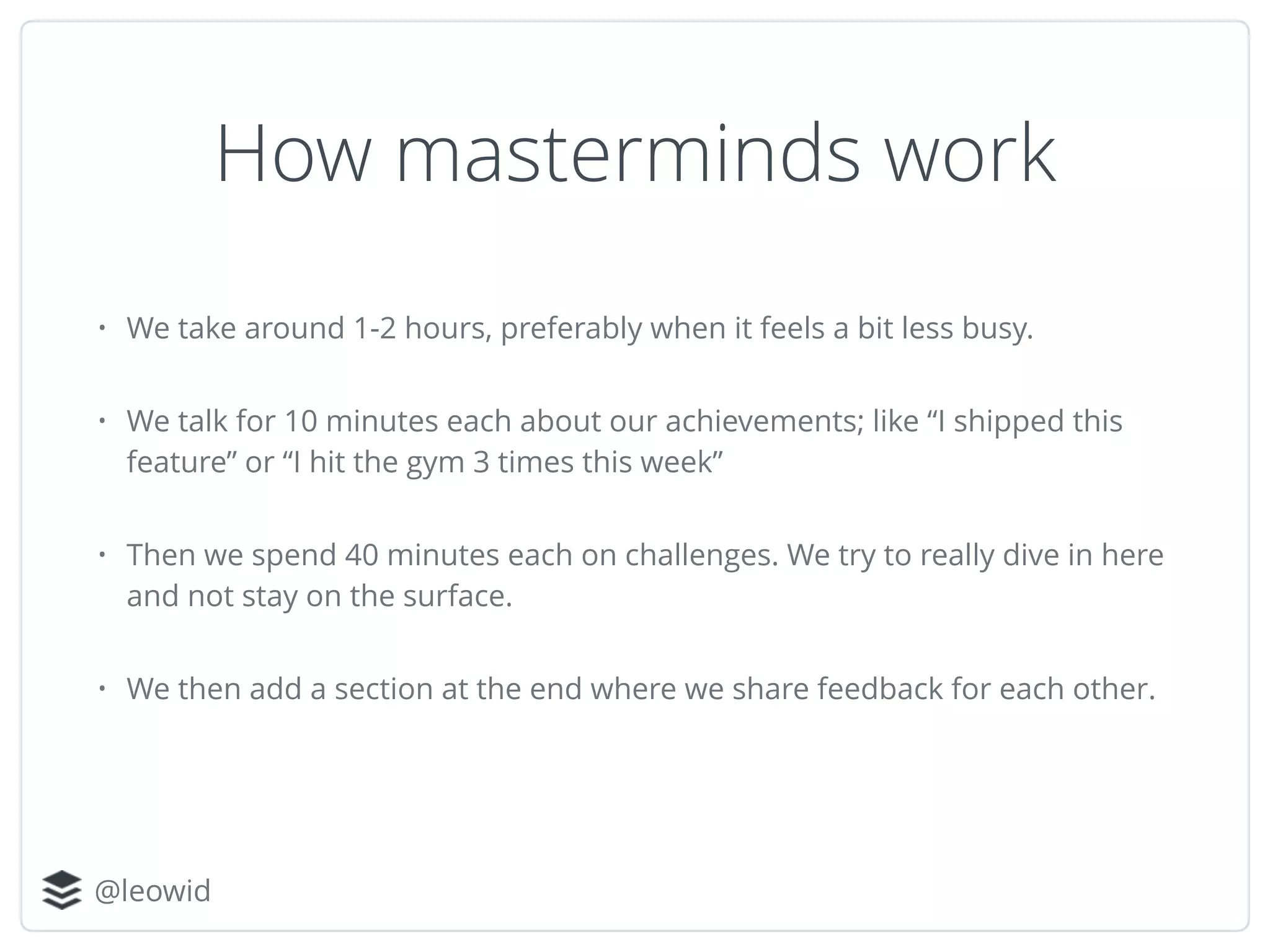
How masterminds work
• We take around 1-2 hours, preferably when it feels a bit less busy.
• We talk for 10 minutes each about our achievements; like “I shipped this
feature” or “I hit the gym 3 times this week”
• Then we spend 40 minutes each on challenges. We try to really dive in here
and not stay on the surface.
• We then add a section at the end where we share feedback for each other.
@leowid
2. Avoid being distracted by
data too early on
@leowid
Most early stage startups won't have enough customers to
rely on quantitative data. You need to be acquiring
hundreds of customers every month (preferably thousands)
to have enough data to support A/B tests, etc.
Hiten Shah
Co-founder of CrazyEgg, KISSmetrics and QuickSprout
@leowid
3. Try asking these 5
questions to learn better
from customers
@leowid
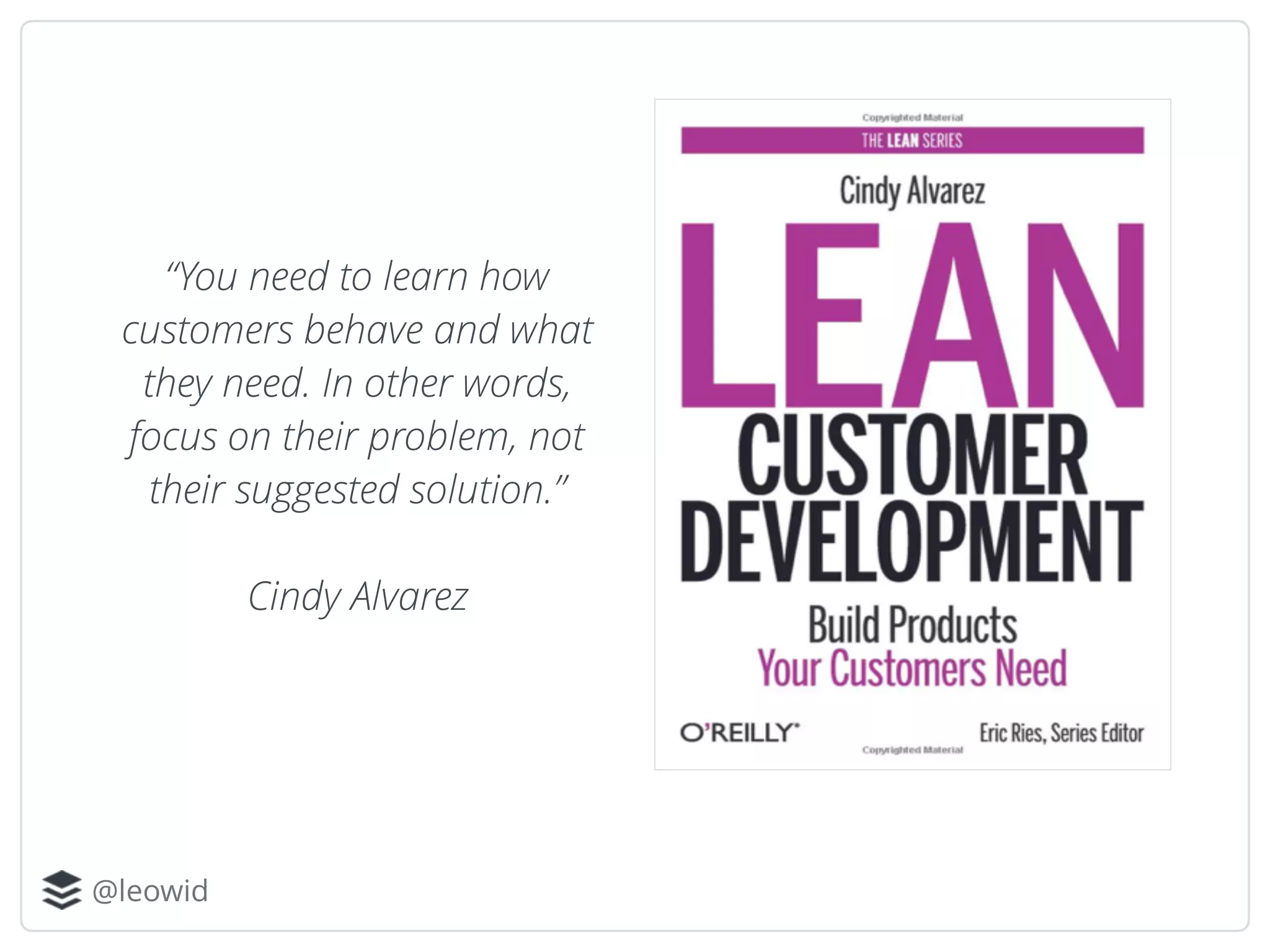
“You need to learn how
customers behave and what
they need. In other words,
focus on their problem, not
their suggested solution.”
Cindy Alvarez
@leowid
Questions to ask
Tell me about how you do _________ today…. 
Do you use any [tools/products/apps/tricks] to help you get
________ done? 
If you could wave a magic wand and be able to do anything that
you can’t do today, what would it be? Don’t worry about whether
it’s possible, just anything. 
Last time you did ___________, what were you doing right before
you got started? Once you finished, what did you do afterward? 
Is there anything else about _________ that I should have asked?
Link to full template
bit.ly/buffercustdev
@leowid
4. Keep your data in house
to be more flexible
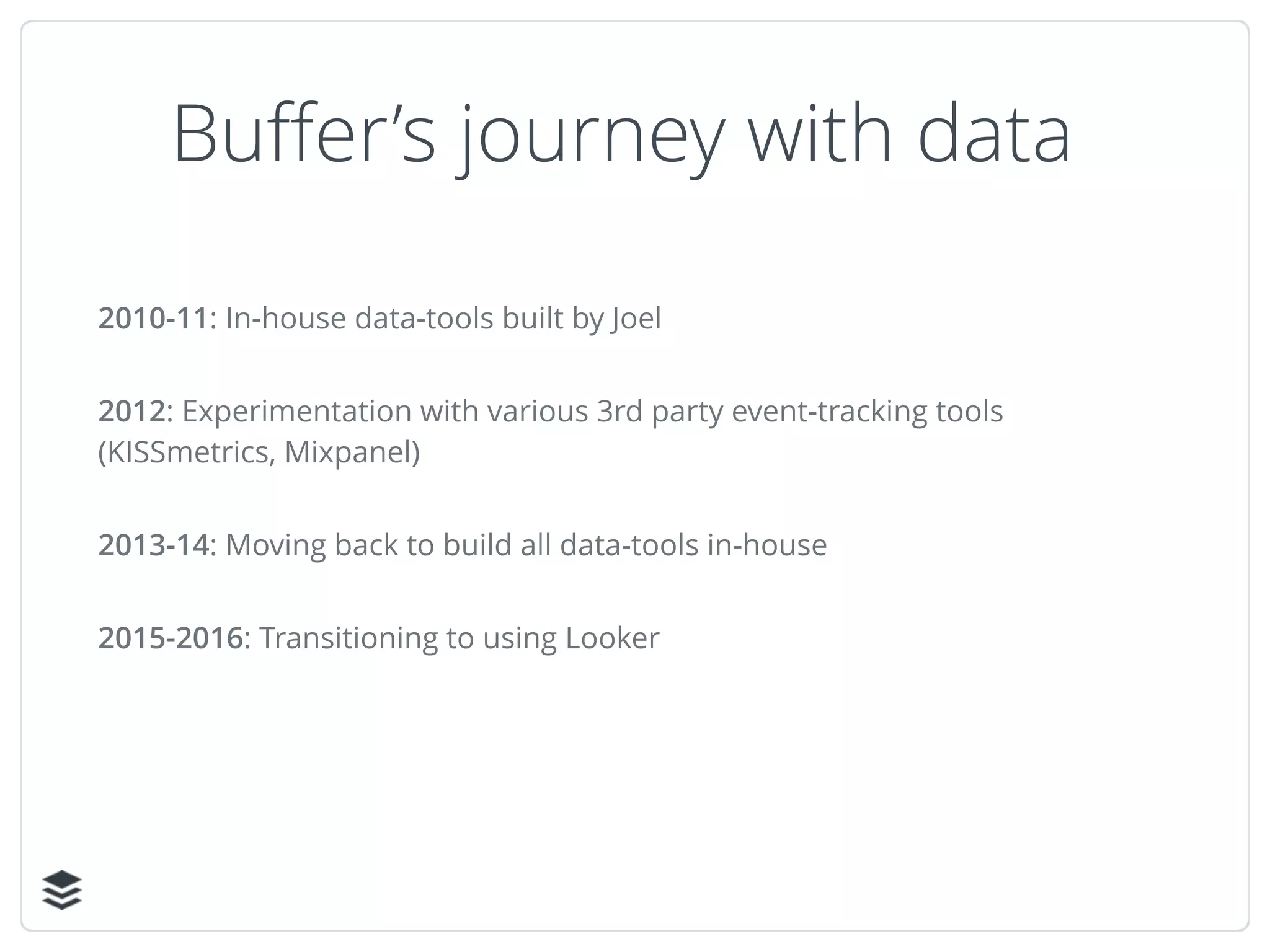
Buffer’s journey with data
2010-11: In-house data-tools built by Joel
2012: Experimentation with various 3rd party event-tracking tools
(KISSmetrics, Mixpanel)
2013-14: Moving back to build all data-tools in-house
2015-2016: Transitioning to using Looker
@leowid
5. Pick one channel to
double down on instead of
many (Bullseye exercise)
@leowid
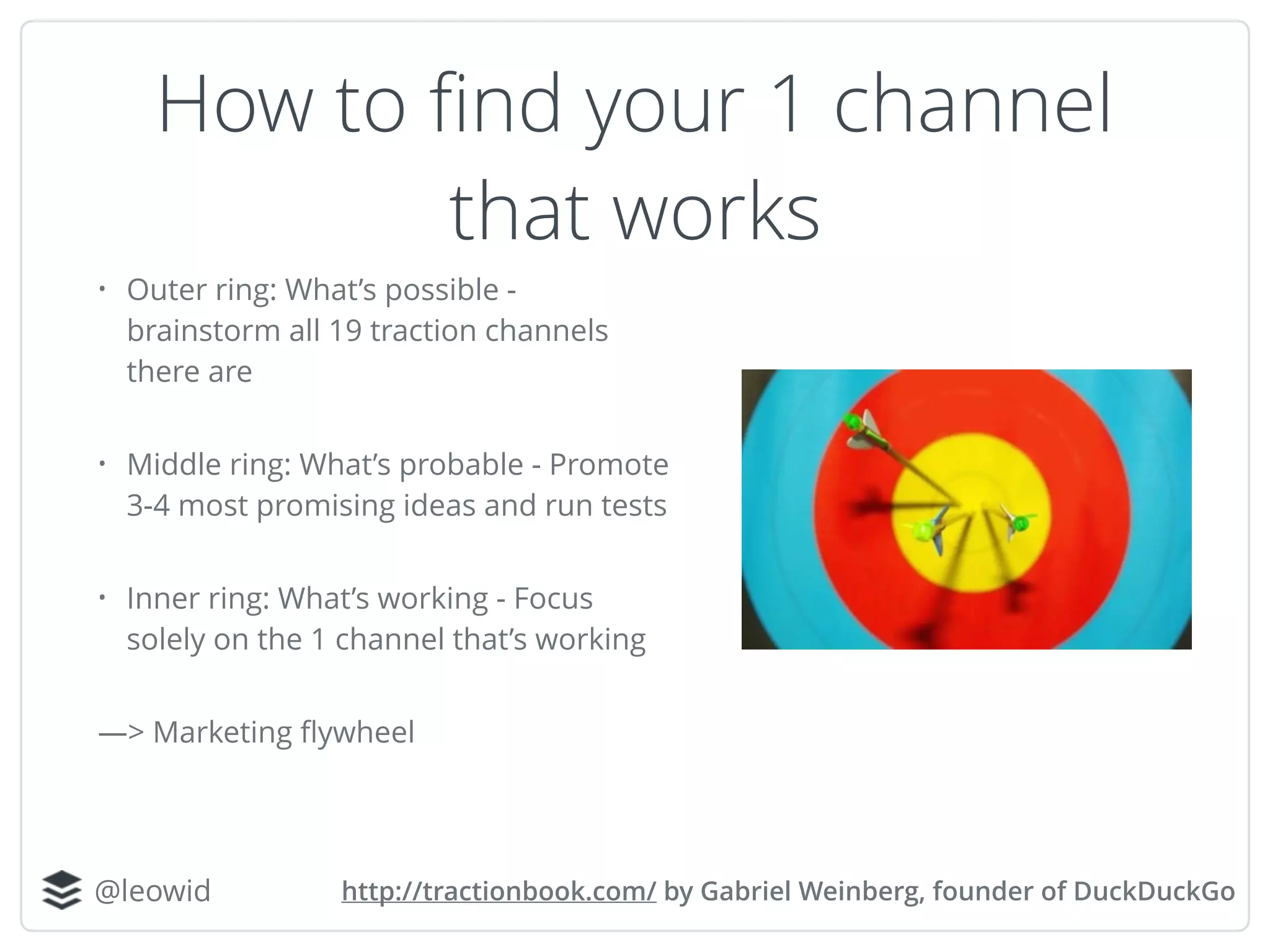
How to find your 1 channel
that works
• Outer ring: What’s possible -
brainstorm all 19 traction channels
there are
• Middle ring: What’s probable - Promote
3-4 most promising ideas and run tests
• Inner ring: What’s working - Focus
solely on the 1 channel that’s working
—> Marketing flywheel
http://tractionbook.com/ by Gabriel Weinberg, founder of DuckDuckGo
@leowid
6. Seek conflicting advice
from at least 2 mentors on
your biggest decisions
@leowid
7. Experiment with changing
your prices often as you add
value
@leowid
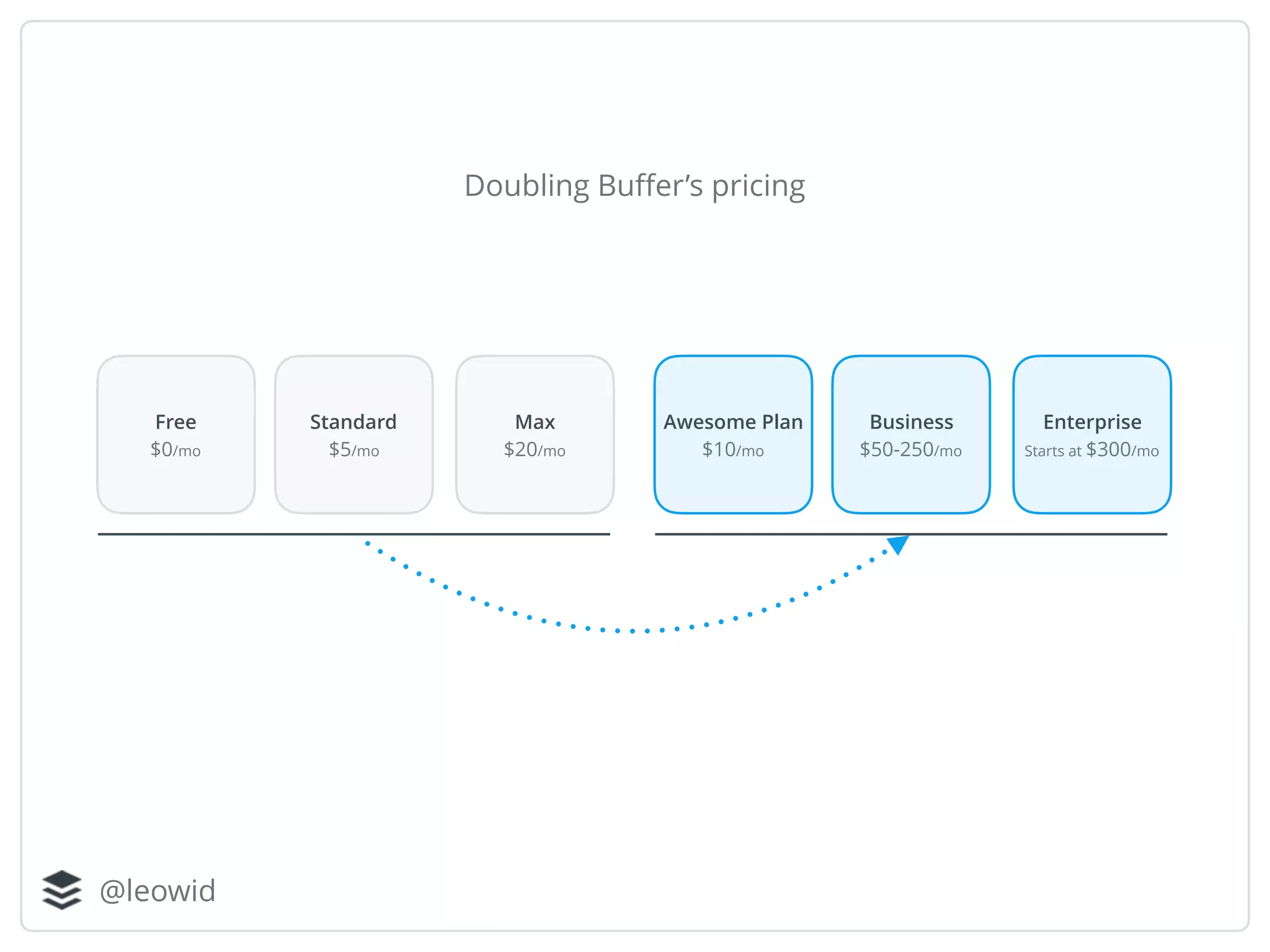
Doubling Buffer’s pricing
Free
$0/mo
Standard
$5/mo
Max
$20/mo
Awesome Plan
$10/mo
Business
$50-250/mo
Enterprise
Starts at $300/mo
@leowid
8. Use the lean startup
methodology for every feature
you build, especially post launch
@leowid
@leowid
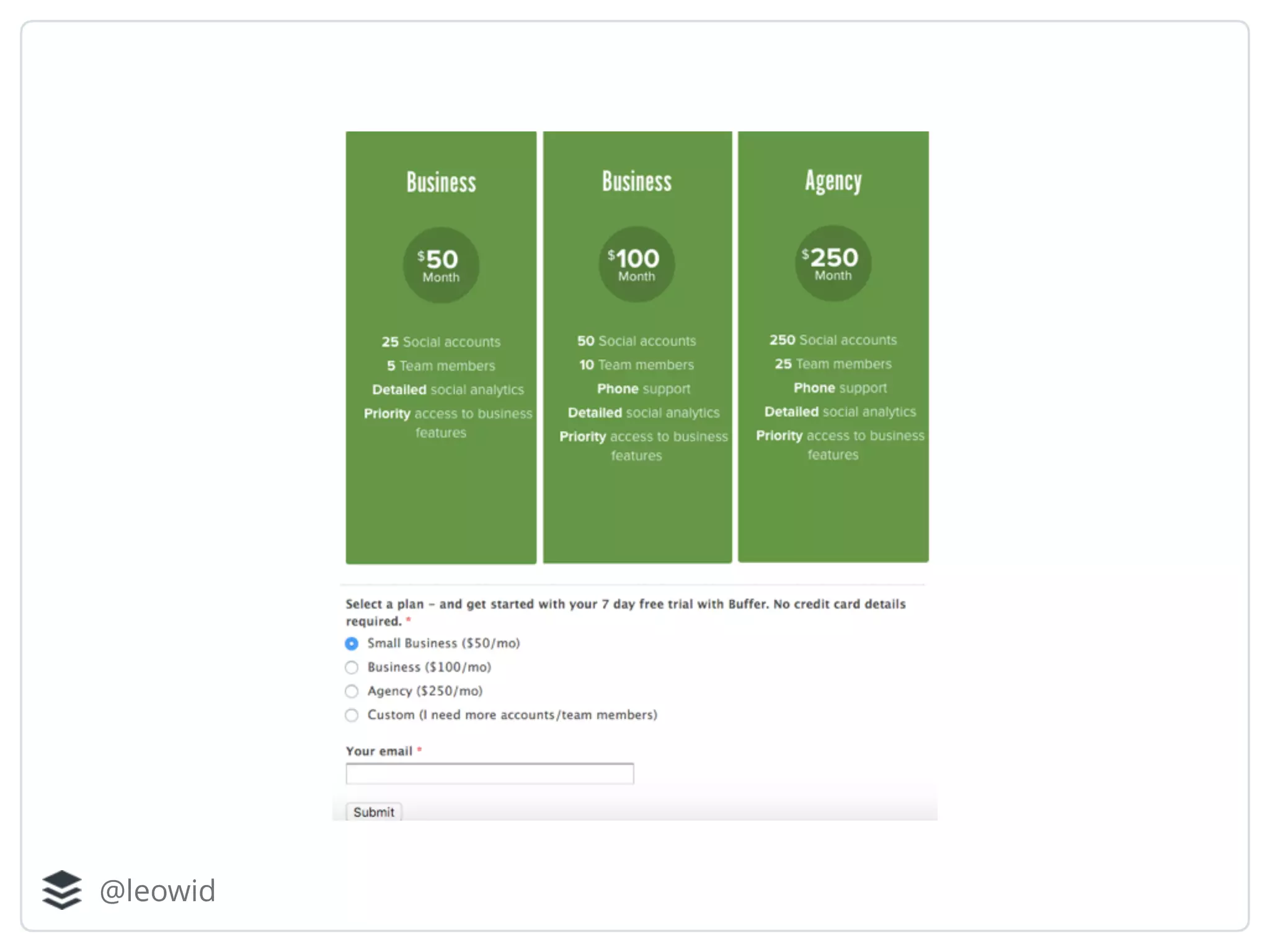
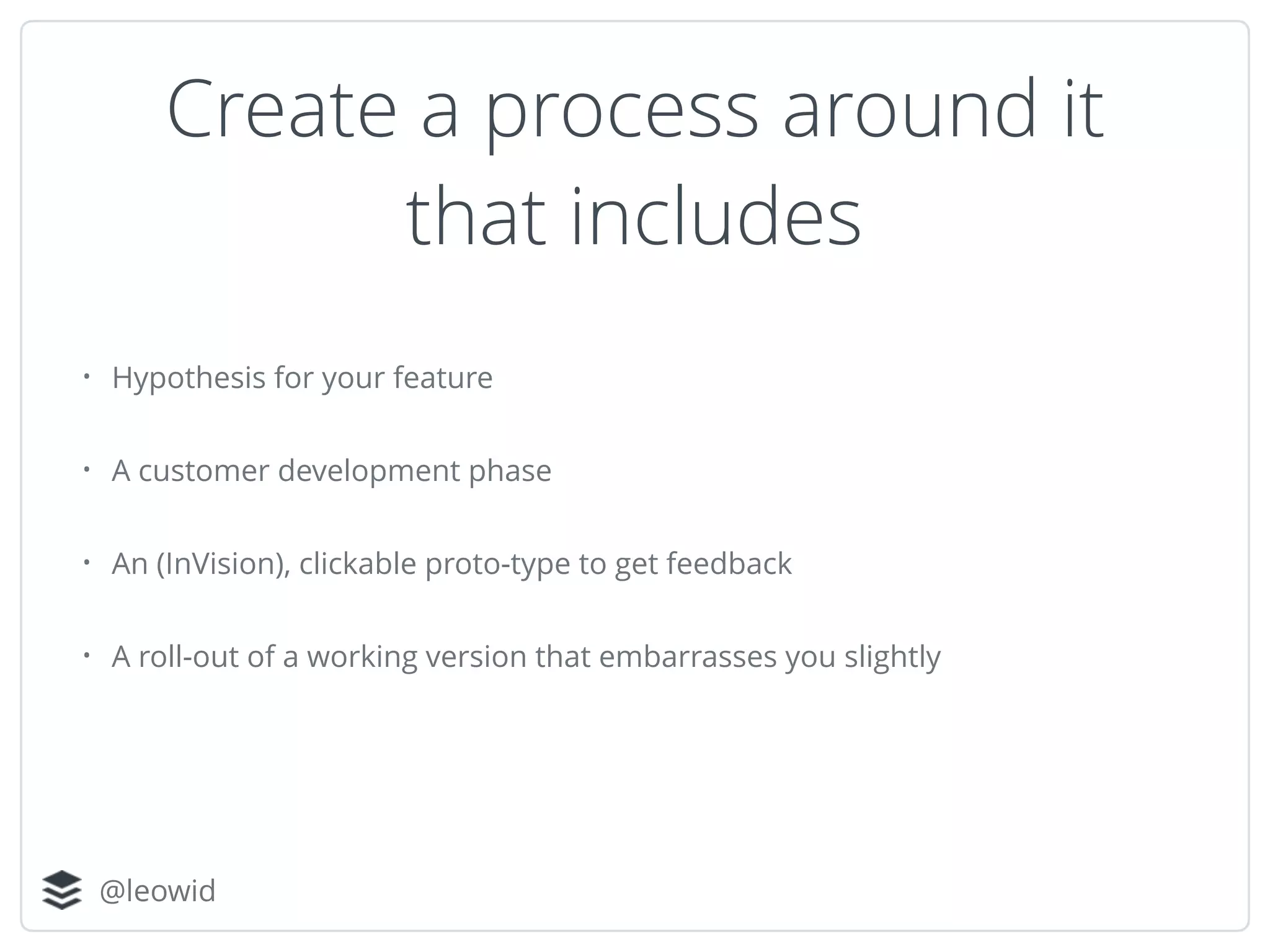
• Hypothesis for your feature
• A customer development phase
• An (InVision), clickable proto-type to get feedback
• A roll-out of a working version that embarrasses you slightly
Create a process around it
that includes
@leowid
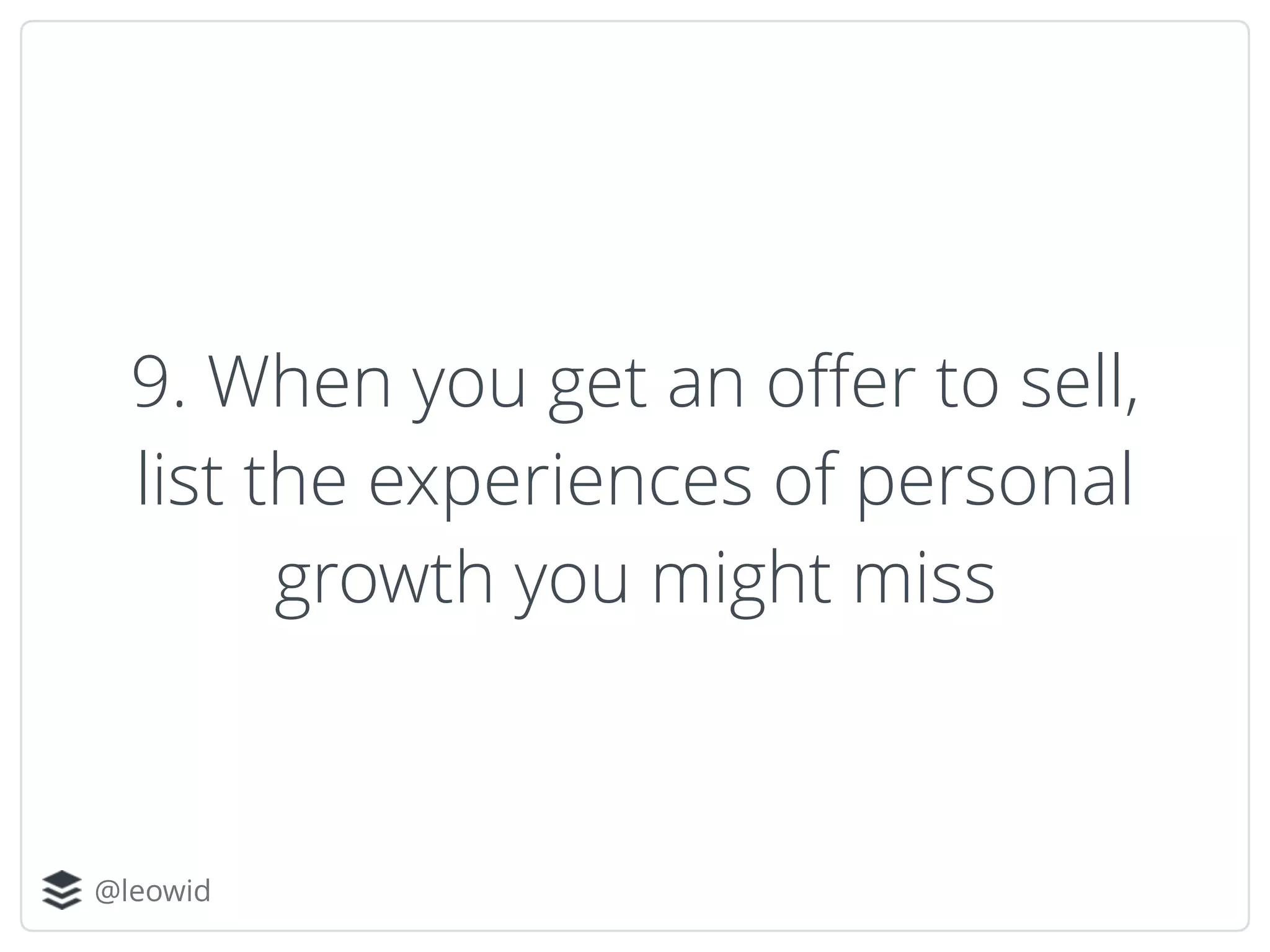
9. When you get an offer to sell,
list the experiences of personal
growth you might miss
@leowid
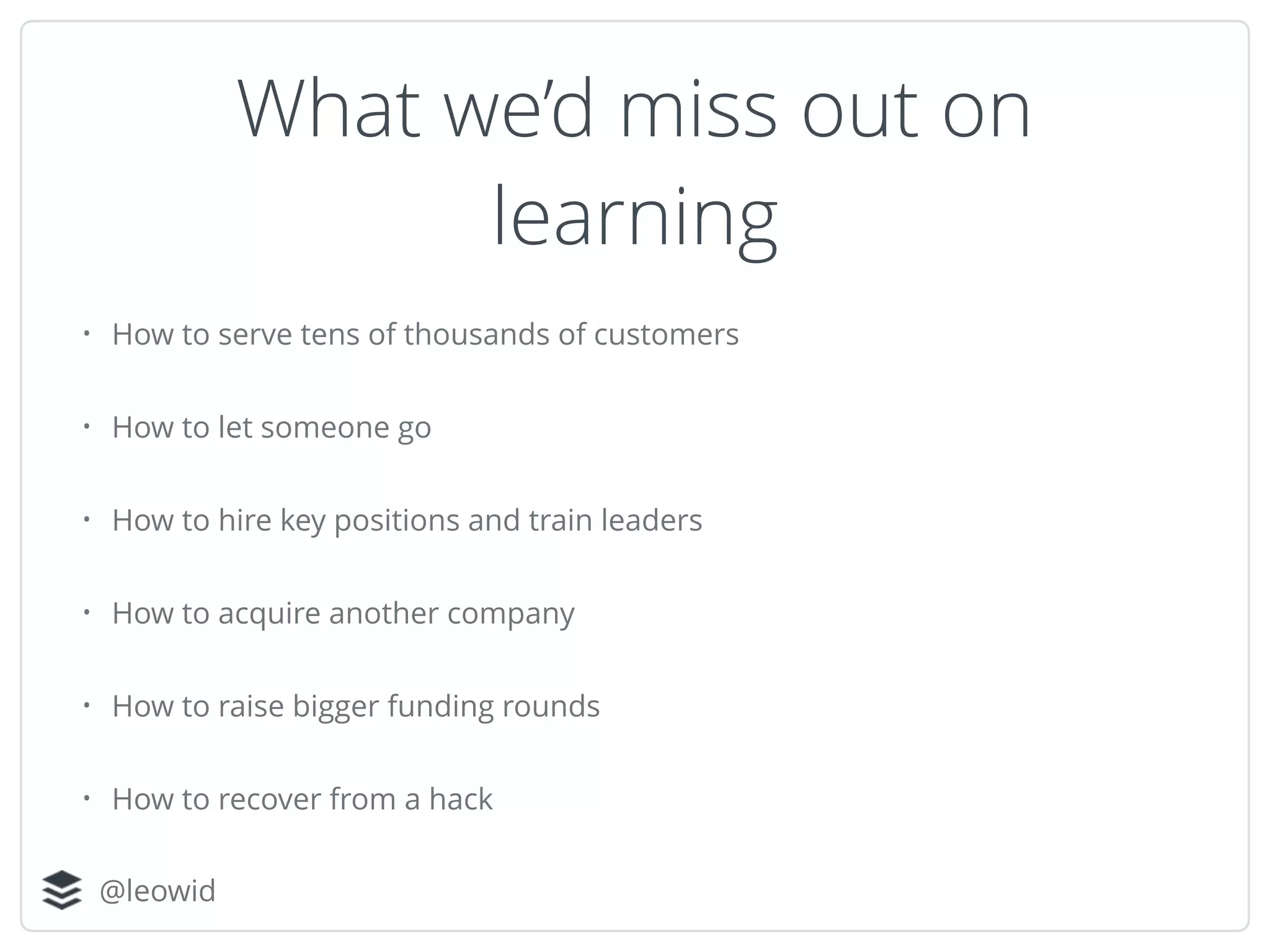
• How to serve tens of thousands of customers
• How to let someone go
• How to hire key positions and train leaders
• How to acquire another company
• How to raise bigger funding rounds
• How to recover from a hack
What we’d miss out on
learning
@leowid
“Stop thinking about making a million dollars and start
thinking about serving a million people”
Dharmesh Shah
Founder & CTO at HubSpot
@leowid
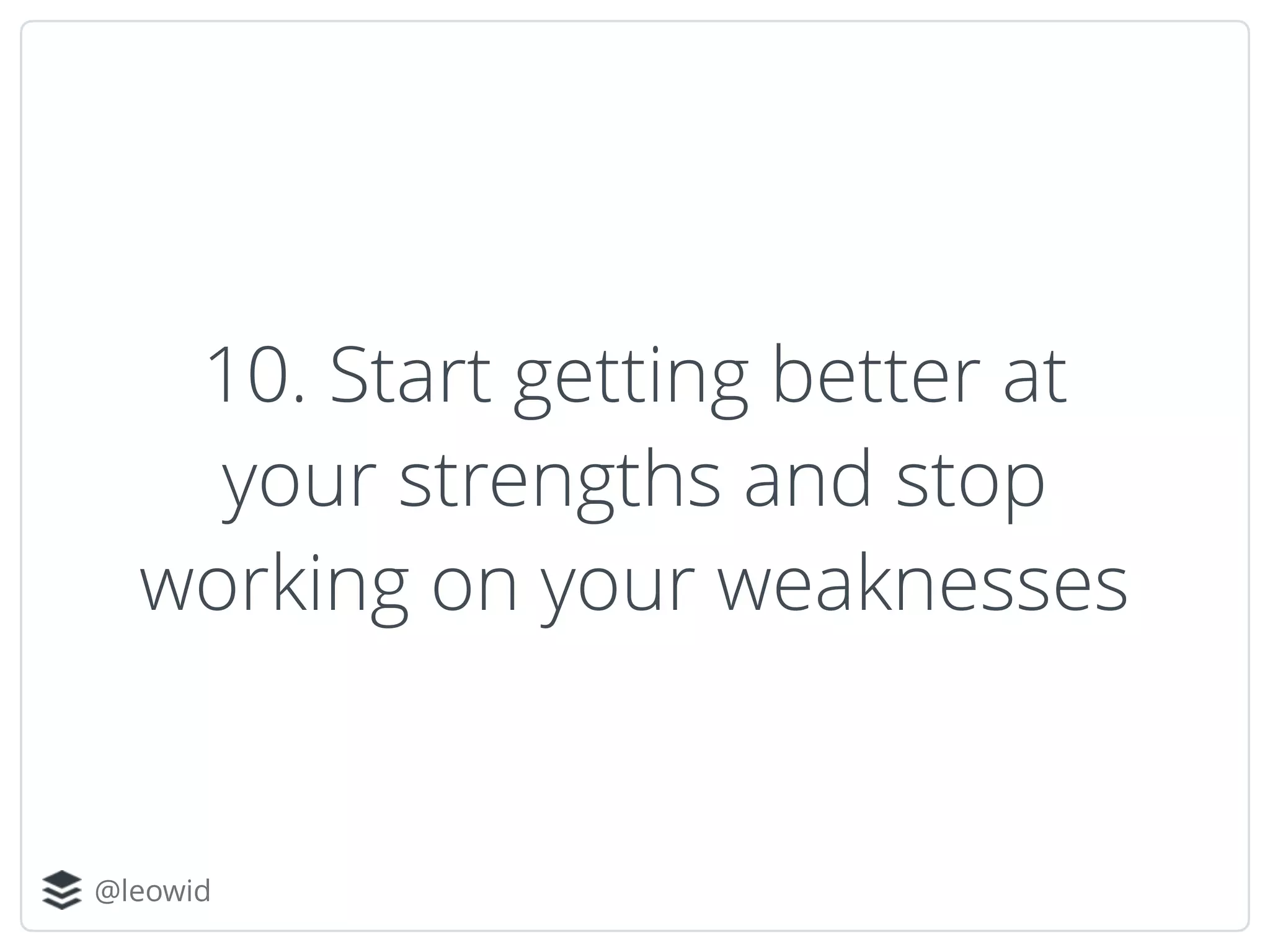
10. Start getting better at
your strengths and stop
working on your weaknesses
@leowid
Identifying and embracing your
strengths allows more forward
momentum and can free you to move
much more strongly as a team.
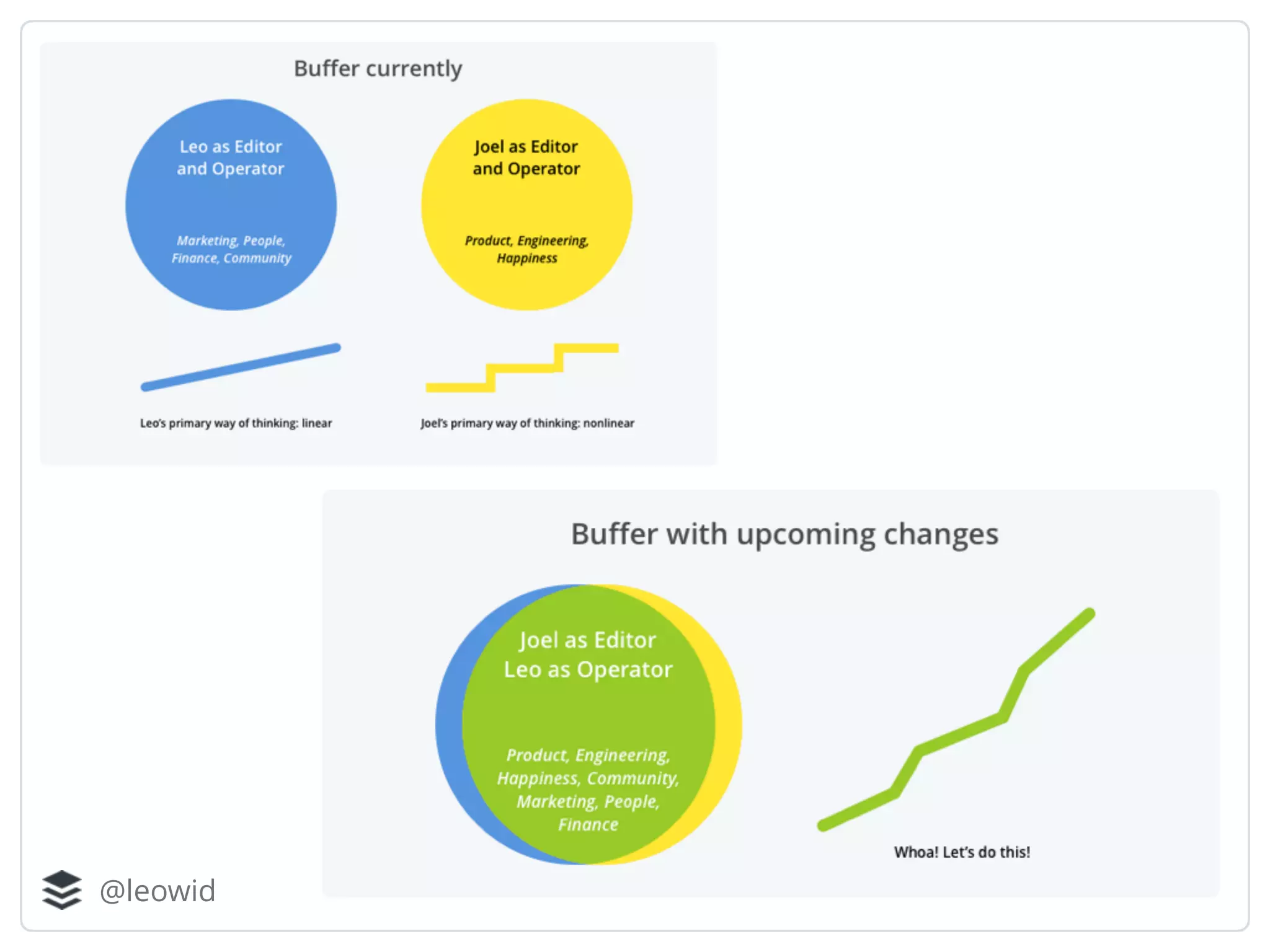
Example: Editor/Operator
• We identified Joel as an Editor: thrives when going deep into one project at
a time.
• On the other hand, Leo finds joy in shipping and moving many projects
forward at once, as an operator.
@leowid
@leowid
buffer.com/transparency
leo@buffer.com
@LeoWid
Thanks!

Buffer's Top 10 Learnings Growing to $10 Million ARR

  • 1.
    @leowid Top 10 LearningsGrowing to $10 Million ARR by @leowid Co-founder and COO at Buffer
  • 2.
    @leowid 1. Experiment witha weekly mastermind with your co-founder in this format
  • 3.
    @leowid How masterminds work •We take around 1-2 hours, preferably when it feels a bit less busy. • We talk for 10 minutes each about our achievements; like “I shipped this feature” or “I hit the gym 3 times this week” • Then we spend 40 minutes each on challenges. We try to really dive in here and not stay on the surface. • We then add a section at the end where we share feedback for each other.
  • 4.
    @leowid 2. Avoid beingdistracted by data too early on
  • 5.
    @leowid Most early stagestartups won't have enough customers to rely on quantitative data. You need to be acquiring hundreds of customers every month (preferably thousands) to have enough data to support A/B tests, etc. Hiten Shah Co-founder of CrazyEgg, KISSmetrics and QuickSprout
  • 6.
    @leowid 3. Try askingthese 5 questions to learn better from customers
  • 7.
    @leowid “You need tolearn how customers behave and what they need. In other words, focus on their problem, not their suggested solution.” Cindy Alvarez
  • 8.
    @leowid Questions to ask Tellme about how you do _________ today….  Do you use any [tools/products/apps/tricks] to help you get ________ done?  If you could wave a magic wand and be able to do anything that you can’t do today, what would it be? Don’t worry about whether it’s possible, just anything.  Last time you did ___________, what were you doing right before you got started? Once you finished, what did you do afterward?  Is there anything else about _________ that I should have asked? Link to full template bit.ly/buffercustdev
  • 9.
    @leowid 4. Keep yourdata in house to be more flexible
  • 10.
    Buffer’s journey withdata 2010-11: In-house data-tools built by Joel 2012: Experimentation with various 3rd party event-tracking tools (KISSmetrics, Mixpanel) 2013-14: Moving back to build all data-tools in-house 2015-2016: Transitioning to using Looker
  • 11.
    @leowid 5. Pick onechannel to double down on instead of many (Bullseye exercise)
  • 12.
    @leowid How to findyour 1 channel that works • Outer ring: What’s possible - brainstorm all 19 traction channels there are • Middle ring: What’s probable - Promote 3-4 most promising ideas and run tests • Inner ring: What’s working - Focus solely on the 1 channel that’s working —> Marketing flywheel http://tractionbook.com/ by Gabriel Weinberg, founder of DuckDuckGo
  • 13.
    @leowid 6. Seek conflictingadvice from at least 2 mentors on your biggest decisions
  • 14.
    @leowid 7. Experiment withchanging your prices often as you add value
  • 15.
    @leowid Doubling Buffer’s pricing Free $0/mo Standard $5/mo Max $20/mo AwesomePlan $10/mo Business $50-250/mo Enterprise Starts at $300/mo
  • 16.
    @leowid 8. Use thelean startup methodology for every feature you build, especially post launch
  • 17.
  • 18.
    @leowid • Hypothesis foryour feature • A customer development phase • An (InVision), clickable proto-type to get feedback • A roll-out of a working version that embarrasses you slightly Create a process around it that includes
  • 19.
    @leowid 9. When youget an offer to sell, list the experiences of personal growth you might miss
  • 20.
    @leowid • How toserve tens of thousands of customers • How to let someone go • How to hire key positions and train leaders • How to acquire another company • How to raise bigger funding rounds • How to recover from a hack What we’d miss out on learning
  • 21.
    @leowid “Stop thinking aboutmaking a million dollars and start thinking about serving a million people” Dharmesh Shah Founder & CTO at HubSpot
  • 22.
    @leowid 10. Start gettingbetter at your strengths and stop working on your weaknesses
  • 23.
    @leowid Identifying and embracingyour strengths allows more forward momentum and can free you to move much more strongly as a team.
  • 24.
    Example: Editor/Operator • Weidentified Joel as an Editor: thrives when going deep into one project at a time. • On the other hand, Leo finds joy in shipping and moving many projects forward at once, as an operator.
  • 25.
  • 26.
  • 27.