

Buffer system
Ashok Kumar Mourya UCMS 9th
batch presentation
Content
1. Introduction
2. Buffer system and its type
3. Henderson hasselbach equation
4. Sorensen pH scale
5. pH determination by electrometric method
6. Buffer capacity
7. Buffer Application
8. Buffer in pharmaceutical and biological system
Introduction
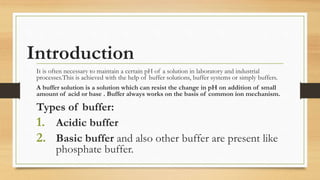
It is often necessary to maintain a certain pH of a solution in laboratory and industrial
processes.This is achieved with the help of buffer solutions, buffer systems or simply buffers.
A buffer solution is a solution which can resist the change in pH on addition of small
amount of acid or base . Buffer always works on the basis of common ion mechanism.
Types of buffer:
1. Acidic buffer
2. Basic buffer and also other buffer are present like
phosphate buffer.
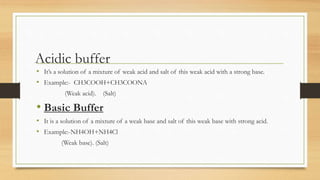
Acidic buffer
• It’s a solution of a mixture of weak acid and salt of this weak acid with a strong base.
• Example:- CH3COOH+CH3COONA
(Weak acid). (Salt)
• Basic Buffer
• It is a solution of a mixture of a weak base and salt of this weak base with strong acid.
• Example:-NH4OH+NH4Cl
(Weak base). (Salt)
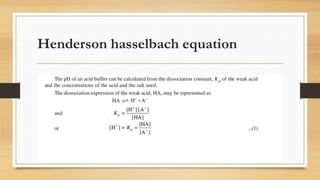
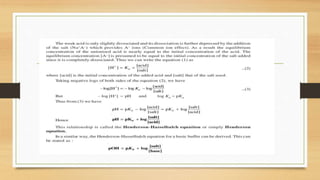
Henderson hasselbach equation
Sorensen pH scale
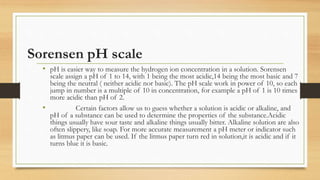
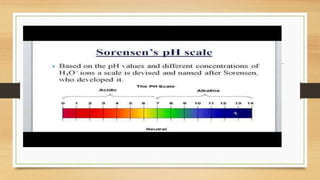
• pH is easier way to measure the hydrogen ion concentration in a solution. Sorensen
scale assign a pH of 1 to 14, with 1 being the most acidic,14 being the most basic and 7
being the neutral ( neither acidic nor basic). The pH scale work in power of 10, so each
jump in number is a multiple of 10 in concentration, for example a pH of 1 is 10 times
more acidic than pH of 2.
• Certain factors allow us to guess whether a solution is acidic or alkaline, and
pH of a substance can be used to determine the properties of the substance.Acidic
things usually have sour taste and alkaline things usually bitter. Alkaline solution are also
often slippery, like soap. For more accurate measurement a pH meter or indicator such
as litmus paper can be used. If the litmus paper turn red in solution,it is acidic and if it
turns blue it is basic.
• Application of Sorensen pH scale:-
. The pH scale is mostly used to regulate certain functions .
1.One of the most widely used application of pH scale is in soil testing,it is
necessary to maintain the pH of soil for cultivation of medicinal plants.
2. In our bodies there are system that regulate the pH, the pH of blood must
be maintained around 7.4.
3.Water must have a pH of 6to 8.5 to be safe to drink . Deviation from these
normal pH value could leads to disease and irregularities, and pH is useful tool
in testing for and diagnostic these problems.
pH determination method
1. By litmus paper ( pH stripes)
2. By Universal indicator ( pH indicator)
3. By electrometric method (pH meter)
4. By colorimetric method ( Lovibond method)
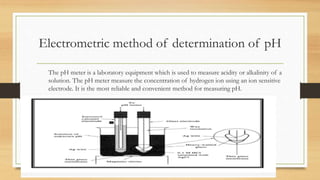
Electrometric method of determination of pH
The pH meter is a laboratory equipment which is used to measure acidity or alkalinity of a
solution. The pH meter measure the concentration of hydrogen ion using an ion sensitive
electrode. It is the most reliable and convenient method for measuring pH.
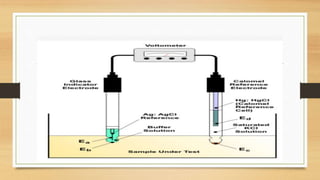
Important component of pH meter
1. Glass electrode:-
. It consists of a very thin bulb about 0.1mm thick blown on to
a hard glass tube of high resistance. The bulb contains 0.1 ml/ ltr HCl
cometernnected to a platinum wire via a silver-silver chloride combination.
2. Calomel Electrode:-
. It consists of a glass tube containing saturated Kcl
connected to a platinum wire through a mercury-mercurous chloride paste.
3.Electrometer:-
Electrometer is a device capable of measuring very small
differences in electric potentials in a circuit of extremely high resistance.
Working Mechanism
An acidic solutions has far more positively charged (H+)ions than an alkaline
one,so it has greater potential to produce an electric current in a certain situation.
In other words,it is a bit like battery that can produce a greater voltage. A pH
meter takes advantage of this and works like a voltameter. It measure the the
voltage produced by the solution. When two electrodes are dipped into solution,
some of the hydrogen ion in the solution move towards the glass electrode and
replace some of the metal ions in it special glass coating. This creates a tiny
voltage across the glass of the silver electrod picks up and possess to the
voltmeter. Reference electrode acts as a baseline of reference for the
measurement.
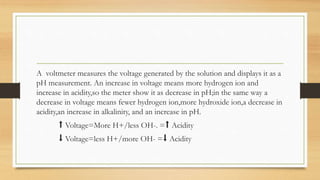
A voltmeter measures the voltage generated by the solution and displays it as a
pH measurement. An increase in voltage means more hydrogen ion and
increase in acidity,so the meter show it as decrease in pH;in the same way a
decrease in voltage means fewer hydrogen ion,more hydroxide ion,a decrease in
acidity,an increase in alkalinity, and an increase in pH.
⬆️ Voltage=More H+/less OH-. =⬆️ Acidity
⬇️ Voltage=less H+/more OH- =⬇️ Acidity
Application of pH meter
• Diagnosis of various disorders in human body.
• Agriculture
• Brewing
• Dyeing
• Printing
• Pharmaceutical
Buffer presentation

Buffer presentation

  • 1.
    Buffer system Ashok KumarMourya UCMS 9th batch presentation
  • 2.
    Content 1. Introduction 2. Buffersystem and its type 3. Henderson hasselbach equation 4. Sorensen pH scale 5. pH determination by electrometric method 6. Buffer capacity 7. Buffer Application 8. Buffer in pharmaceutical and biological system
  • 3.
    Introduction It is oftennecessary to maintain a certain pH of a solution in laboratory and industrial processes.This is achieved with the help of buffer solutions, buffer systems or simply buffers. A buffer solution is a solution which can resist the change in pH on addition of small amount of acid or base . Buffer always works on the basis of common ion mechanism. Types of buffer: 1. Acidic buffer 2. Basic buffer and also other buffer are present like phosphate buffer.
  • 4.
    Acidic buffer • It’sa solution of a mixture of weak acid and salt of this weak acid with a strong base. • Example:- CH3COOH+CH3COONA (Weak acid). (Salt) • Basic Buffer • It is a solution of a mixture of a weak base and salt of this weak base with strong acid. • Example:-NH4OH+NH4Cl (Weak base). (Salt)
  • 5.
  • 7.
    Sorensen pH scale •pH is easier way to measure the hydrogen ion concentration in a solution. Sorensen scale assign a pH of 1 to 14, with 1 being the most acidic,14 being the most basic and 7 being the neutral ( neither acidic nor basic). The pH scale work in power of 10, so each jump in number is a multiple of 10 in concentration, for example a pH of 1 is 10 times more acidic than pH of 2. • Certain factors allow us to guess whether a solution is acidic or alkaline, and pH of a substance can be used to determine the properties of the substance.Acidic things usually have sour taste and alkaline things usually bitter. Alkaline solution are also often slippery, like soap. For more accurate measurement a pH meter or indicator such as litmus paper can be used. If the litmus paper turn red in solution,it is acidic and if it turns blue it is basic.
  • 9.
    • Application ofSorensen pH scale:- . The pH scale is mostly used to regulate certain functions . 1.One of the most widely used application of pH scale is in soil testing,it is necessary to maintain the pH of soil for cultivation of medicinal plants. 2. In our bodies there are system that regulate the pH, the pH of blood must be maintained around 7.4. 3.Water must have a pH of 6to 8.5 to be safe to drink . Deviation from these normal pH value could leads to disease and irregularities, and pH is useful tool in testing for and diagnostic these problems.
  • 10.
    pH determination method 1.By litmus paper ( pH stripes) 2. By Universal indicator ( pH indicator) 3. By electrometric method (pH meter) 4. By colorimetric method ( Lovibond method)
  • 11.
    Electrometric method ofdetermination of pH The pH meter is a laboratory equipment which is used to measure acidity or alkalinity of a solution. The pH meter measure the concentration of hydrogen ion using an ion sensitive electrode. It is the most reliable and convenient method for measuring pH.
  • 13.
    Important component ofpH meter 1. Glass electrode:- . It consists of a very thin bulb about 0.1mm thick blown on to a hard glass tube of high resistance. The bulb contains 0.1 ml/ ltr HCl cometernnected to a platinum wire via a silver-silver chloride combination. 2. Calomel Electrode:- . It consists of a glass tube containing saturated Kcl connected to a platinum wire through a mercury-mercurous chloride paste. 3.Electrometer:- Electrometer is a device capable of measuring very small differences in electric potentials in a circuit of extremely high resistance.
  • 14.
    Working Mechanism An acidicsolutions has far more positively charged (H+)ions than an alkaline one,so it has greater potential to produce an electric current in a certain situation. In other words,it is a bit like battery that can produce a greater voltage. A pH meter takes advantage of this and works like a voltameter. It measure the the voltage produced by the solution. When two electrodes are dipped into solution, some of the hydrogen ion in the solution move towards the glass electrode and replace some of the metal ions in it special glass coating. This creates a tiny voltage across the glass of the silver electrod picks up and possess to the voltmeter. Reference electrode acts as a baseline of reference for the measurement.
  • 15.
    A voltmeter measuresthe voltage generated by the solution and displays it as a pH measurement. An increase in voltage means more hydrogen ion and increase in acidity,so the meter show it as decrease in pH;in the same way a decrease in voltage means fewer hydrogen ion,more hydroxide ion,a decrease in acidity,an increase in alkalinity, and an increase in pH. ⬆️ Voltage=More H+/less OH-. =⬆️ Acidity ⬇️ Voltage=less H+/more OH- =⬇️ Acidity
  • 16.
    Application of pHmeter • Diagnosis of various disorders in human body. • Agriculture • Brewing • Dyeing • Printing • Pharmaceutical