

Energy-Efficient Parallel Storage Systems with Write-Buffer DisksXiaojunRuan and Xiao QinComputer Science and Software EngineeringSamuel Ginn College of EngineeringAuburn University
My Research Group: 2011
Overview of the ProjectEnergy EfficiencySecuritySolid State DrivesPerformance of Secure Disk Systems[IEEE NAS09]Design, Model, Simulate, And Evaluate Disk Systems with Buffer Disks[ACM SAC09][ICPP09]Enhancing Internal Parallelism of SSDs[To Be Submitted11]Message Passing Interface with Enhanced Security[IPCCC 2010]Energy-EfficientDistributed StorageSystems [IPCCC10]Energy-Efficient Dynamic Voltage Scaling[ICCCN07] Xiaojun Ruan3BUD
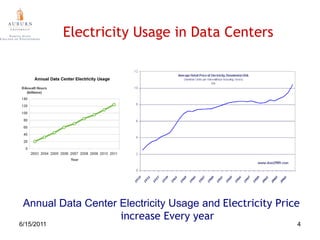
46/10/2011Electricity Usage in Data CentersAnnual Data Center Electricity Usage and Electricity Price increase Every year
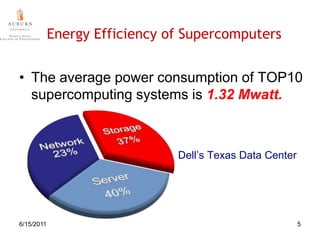
The average power consumption of TOP10 supercomputing systems is 1.32 Mwatt.Dell’s Texas Data Center56/10/2011Energy Efficiency of Supercomputers
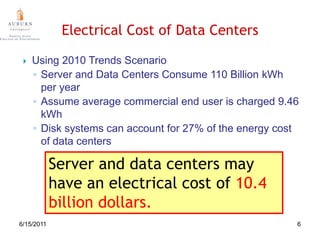
Electrical Cost of Data CentersUsing 2010 Trends Scenario
Server and Data Centers Consume 110 Billion kWh per year
Assume average commercial end user is charged 9.46 kWh
Disk systems can account for 27% of the energy cost of data centers6/10/20116Server and data centers may have an electrical cost of 10.4 billion dollars.
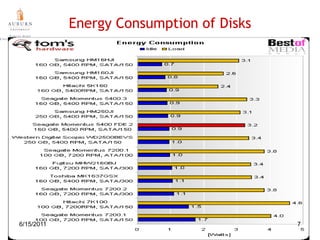
76/10/2011Energy Consumption of Disks
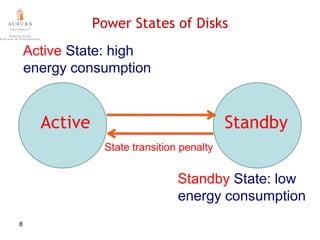
Power States of Disks   Active State: high energy consumptionActiveStandbyState transition penalty   Standby State: low energy consumption8
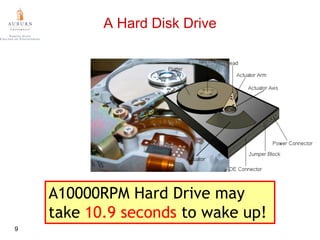
A Hard Disk DriveA10000RPM Hard Drive may take 10.9 seconds to wake up!9
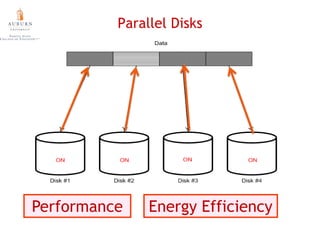
Parallel DisksPerformanceEnergy Efficiency
ChallangesPerformance Oriented:  Best Performance
 Huge Electricity Bills Energy Efficiency Oriented:  Worst Performance?
 Small Electricity BillsBasic Idea of BUDKeep Disks in Standby mode as long as possible
Reduce Status Transitions as many as possible12
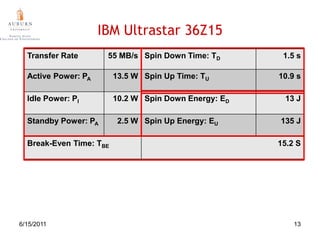
IBM Ultrastar 36Z156/10/201113
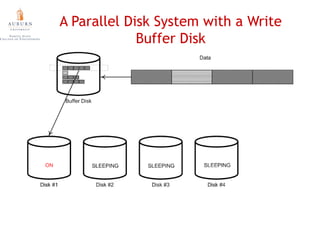
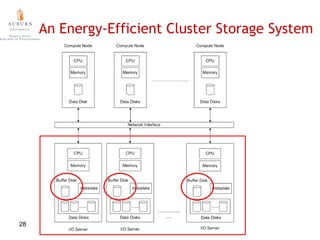
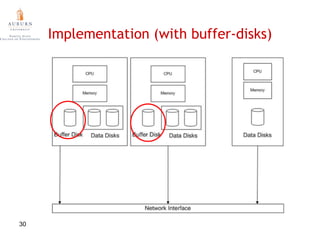
A Parallel Disk System with a Write Buffer Disk
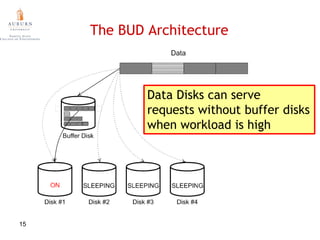
The BUD ArchitectureData Disks can serve requests without buffer disks when workload is high15
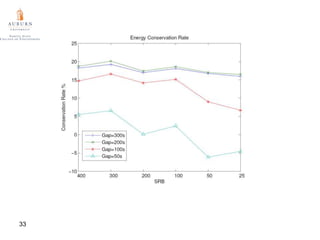
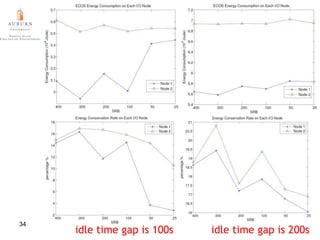
Auburn University	16Sum of Requests in Buffer (SRB)SRB is Number of the buffered requests targetingat the same data disk.
SRB is set by administrators
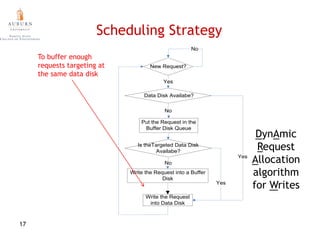
Once SRB is satisfied, spin up the targeted data disk, dump all those data, then spin the disk down.Scheduling StrategyTo buffer enough requests targeting at the same data diskDynAmic Request Allocation algorithm for Writes17
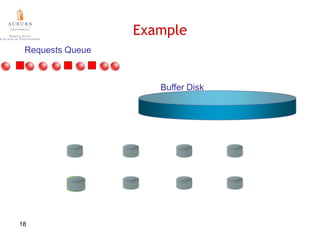
ExampleBuffer DiskRequests Queue18
Auburn University Xiaojun Ruan19From Design to Simulation
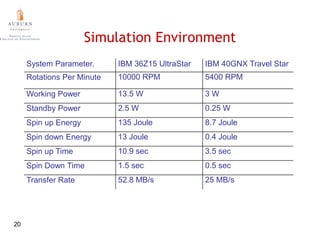
Simulation Environment20
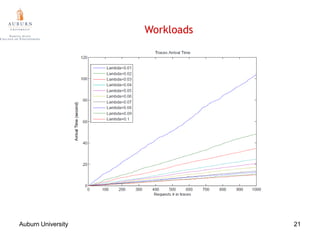
Auburn University	21Workloads
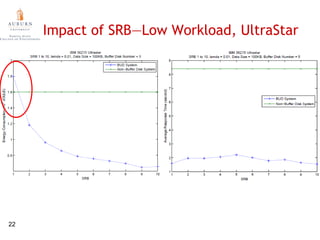
Impact of SRB—Low Workload, UltraStar22
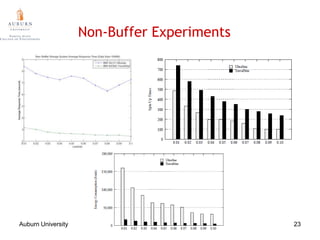
Auburn University	Xiaojun Ruan23Non-Buffer Experiments
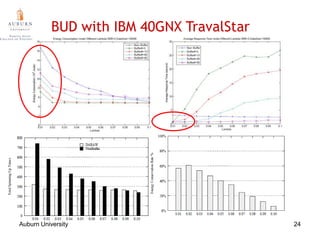
Auburn University	24BUD with IBM 40GNX TravalStar
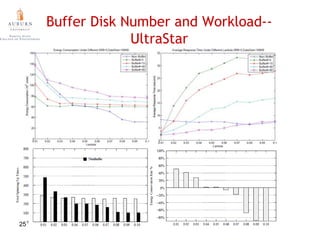
Buffer Disk Number and Workload-- UltraStar25
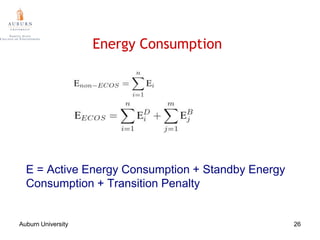
Auburn University	26Energy ConsumptionE = Active Energy Consumption + Standby Energy Consumption + Transition Penalty
Auburn University Xiaojun Ruan27From  Simulation to Real Implementation
An Energy-Efficient Cluster Storage System28
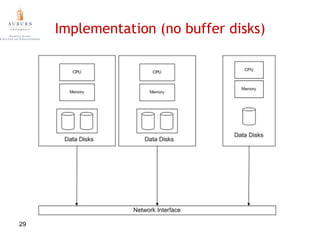
Implementation (no buffer disks)29
Implementation (with buffer-disks)30
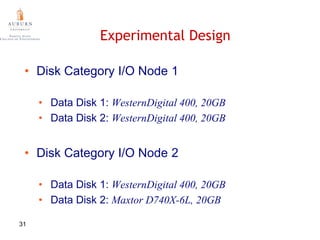
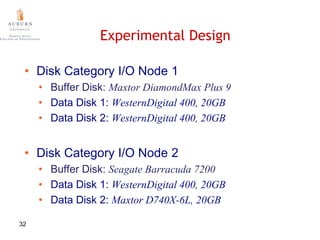
Experimental DesignDisk Category I/O Node 1
Data Disk 1: WesternDigital 400, 20GB
Data Disk 2: WesternDigital 400, 20GB
Disk Category I/O Node 2

BUDW: Energy-Efficient Parallel Storage Systems with Write-Buffer Disks

Editor's Notes

  • #7 Web Servers they account for 24% of the energy, 77% proxy server, 27% in data center
  • #18 , then spin the data disk on, otherwise we always keep data disks in standby mode.
  • #23 SRB is small, transfer data from buffer disk to data disk for too many times. Small SRB, more spin up and spin down times.
  • #26 Trend is similar, but ultrastar penalty is higher
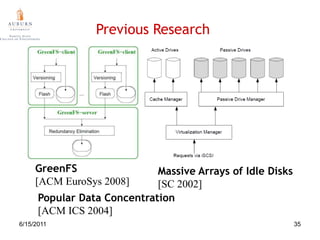
  • #36 MAID:GreenFS:Benefits: low energy cost, Flaws: low capacity, low reliability