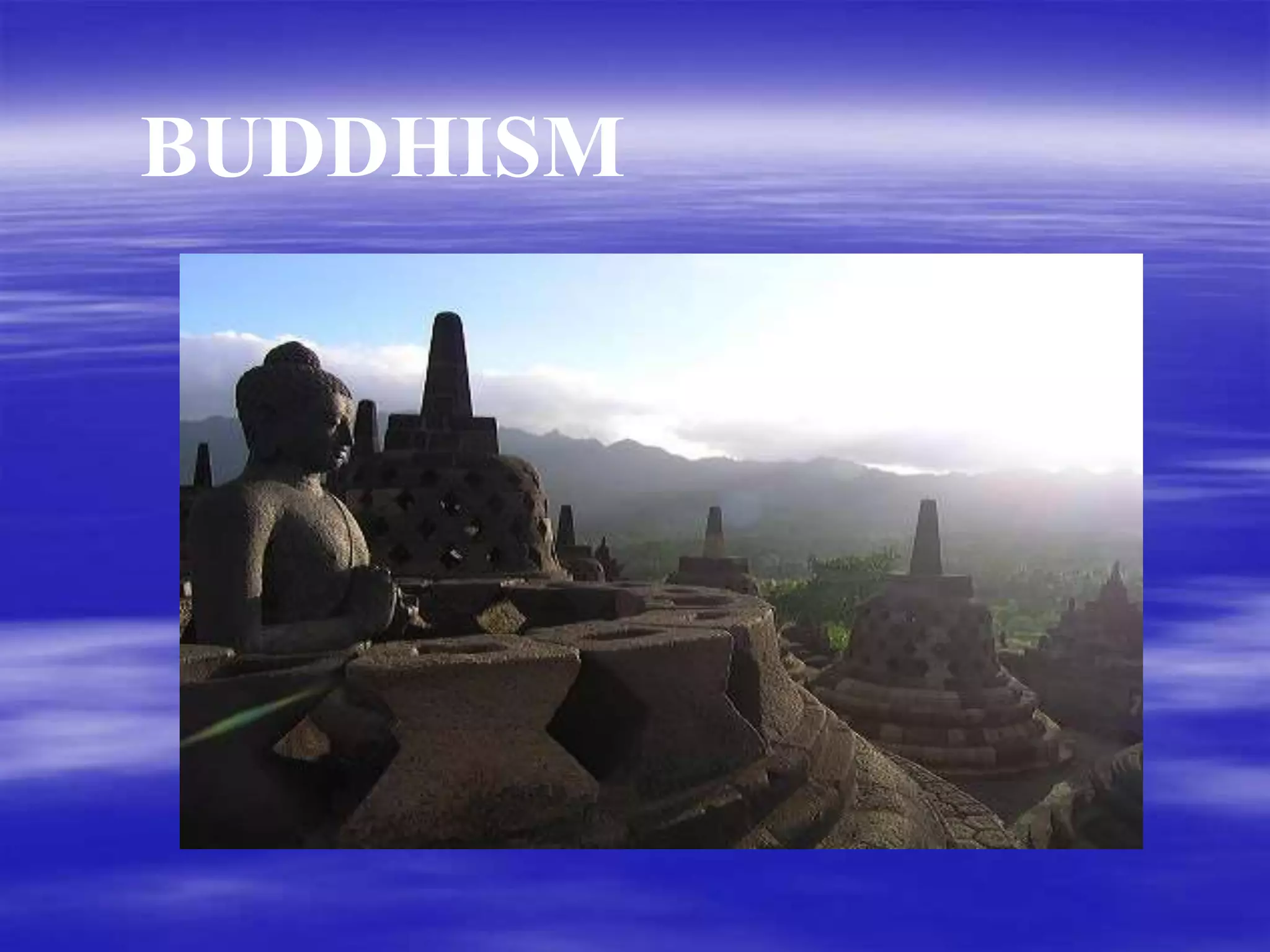
BUDDHISM
Vocabulary to Know… 
 Siddhartha Gautama 
 Enlightenment 
 Nirvana 
 Four Noble Truths
Foundation 
 Founded in India by Siddhartha 
Gautama (the Buddha) 
 Challenged the power of priests as well 
as elements of caste and gender 
structures in Hindu India. 
 Four Noble Truths-Buddha’s 
enlightenment as to why there is 
suffering in the world
Life & Worship 
Middle path of moderation (knowledge). 
 life is suffering 
 suffering is from desire 
 the solution of suffering lies in ending 
desire 
 desire can be lessened by following the 
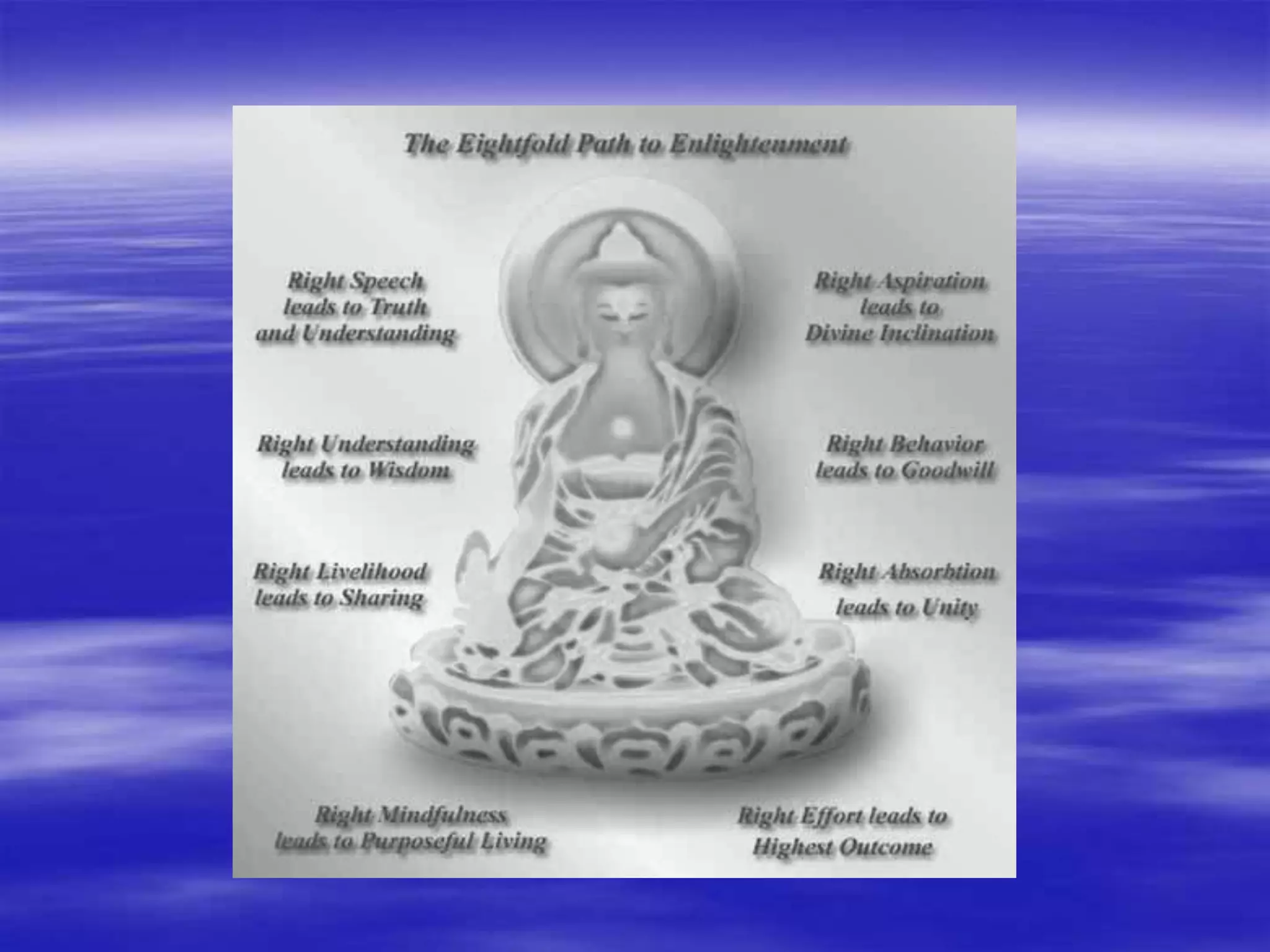
8 fold path – actions and thoughts 
toward perfection
Life & Worship 
 ultimate reality is nirvana - breaking the 
cycle of reincarnations after getting rid 
of desires
GODS 
 Neither rejected gods nor had use for 
gods. 
 Bodhisattvas - enlightened ones - were 
revered as saints. 
 Some followers of Mahayana Buddhism 
worshipped the Buddha as a god as well.
Sacred Texts 
 Tripitaka & Sutras- collection of the 
Buddha’s teaching, commentaries on 
his teaching , & rules for monastic life
Spread & Change 
 Monasteries developed while Buddhism 
spread. 
 Some began to worship the Buddha as a 
god or savior. 
 Bodhisattvas were revered (those who 
could achieve nirvana but chose to 
remain as a guide to others). 
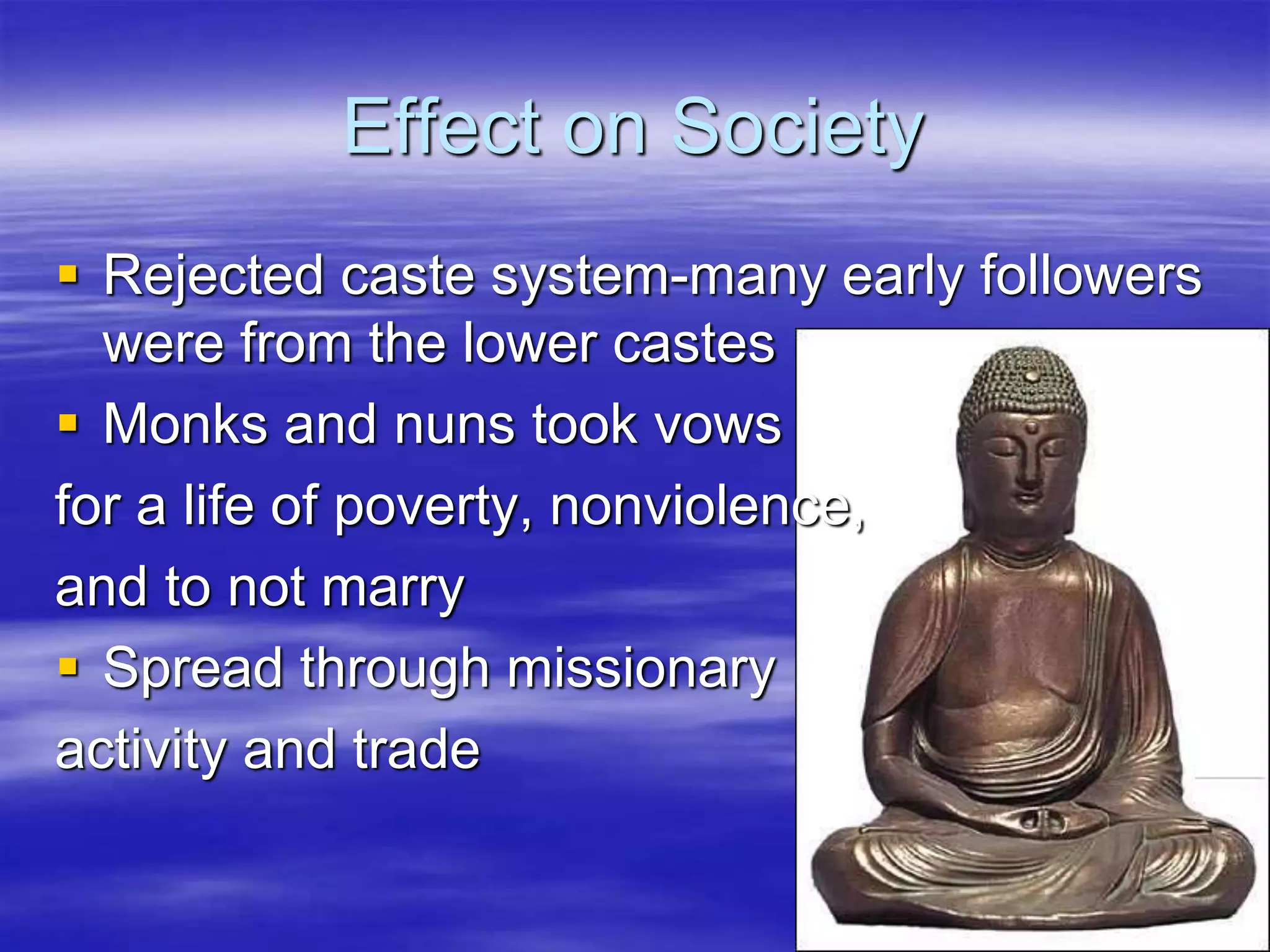
 Statues and pictures of the bodhisattvas 
were produced.
Effect on Society 
 Rejected caste system-many early followers 
were from the lower castes 
 Monks and nuns took vows 
for a life of poverty, nonviolence, 
and to not marry 
 Spread through missionary 
activity and trade
Spread & Change 
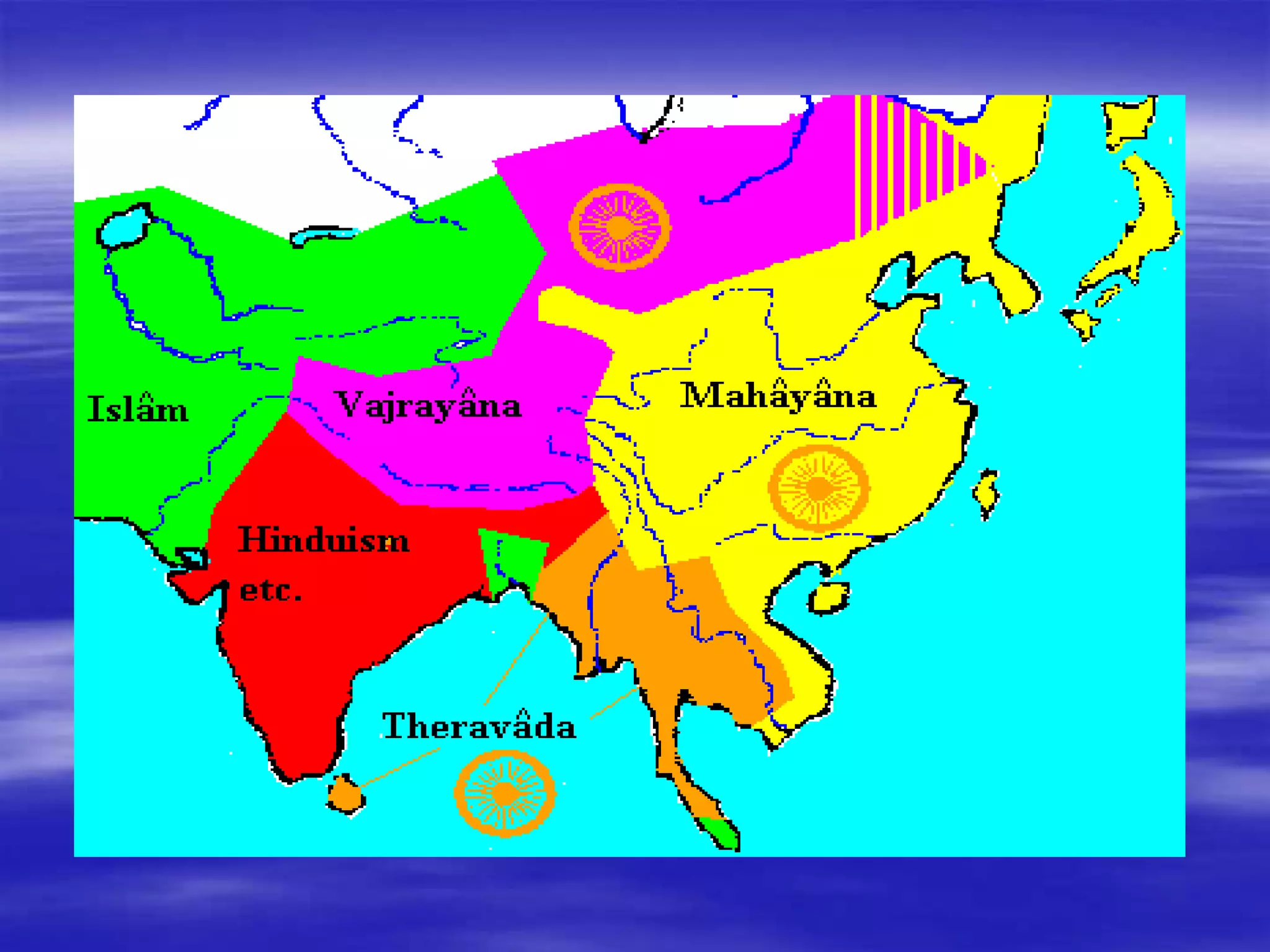
 In India, Buddhism was mostly absorbed 
back into Hinduism. Buddhism spread 
into and remained strongest in other 
parts of Asia. 
 Buddhism challenged elements of 
violence, intolerance, and social 
structures
Buddhism lecture outline

Buddhism lecture outline

  • 1.
  • 2.
    Vocabulary to Know…  Siddhartha Gautama  Enlightenment  Nirvana  Four Noble Truths
  • 3.
    Foundation  Foundedin India by Siddhartha Gautama (the Buddha)  Challenged the power of priests as well as elements of caste and gender structures in Hindu India.  Four Noble Truths-Buddha’s enlightenment as to why there is suffering in the world
  • 4.
    Life & Worship Middle path of moderation (knowledge).  life is suffering  suffering is from desire  the solution of suffering lies in ending desire  desire can be lessened by following the 8 fold path – actions and thoughts toward perfection
  • 6.
    Life & Worship  ultimate reality is nirvana - breaking the cycle of reincarnations after getting rid of desires
  • 7.
    GODS  Neitherrejected gods nor had use for gods.  Bodhisattvas - enlightened ones - were revered as saints.  Some followers of Mahayana Buddhism worshipped the Buddha as a god as well.
  • 8.
    Sacred Texts Tripitaka & Sutras- collection of the Buddha’s teaching, commentaries on his teaching , & rules for monastic life
  • 9.
    Spread & Change  Monasteries developed while Buddhism spread.  Some began to worship the Buddha as a god or savior.  Bodhisattvas were revered (those who could achieve nirvana but chose to remain as a guide to others).  Statues and pictures of the bodhisattvas were produced.
  • 10.
    Effect on Society  Rejected caste system-many early followers were from the lower castes  Monks and nuns took vows for a life of poverty, nonviolence, and to not marry  Spread through missionary activity and trade
  • 11.
    Spread & Change  In India, Buddhism was mostly absorbed back into Hinduism. Buddhism spread into and remained strongest in other parts of Asia.  Buddhism challenged elements of violence, intolerance, and social structures