submitted by;-
DIVYANSHI SINGH
IITTM,BBSR
 Began by Siddhartha, also known as Gautama,
tathagata (thus gone) and sakyamuni (sage of
sakyas)
 The religion started after Buddha attained
enlightenment in between 6th and 4th centuries
BCE
THE FOUR NOBLE TRUTH
 DUKHA: Suffering
 SAMUDAYO: Life is suffering
 NIRODHA: Cessation of pain
 MARGA: Path toward Moksha
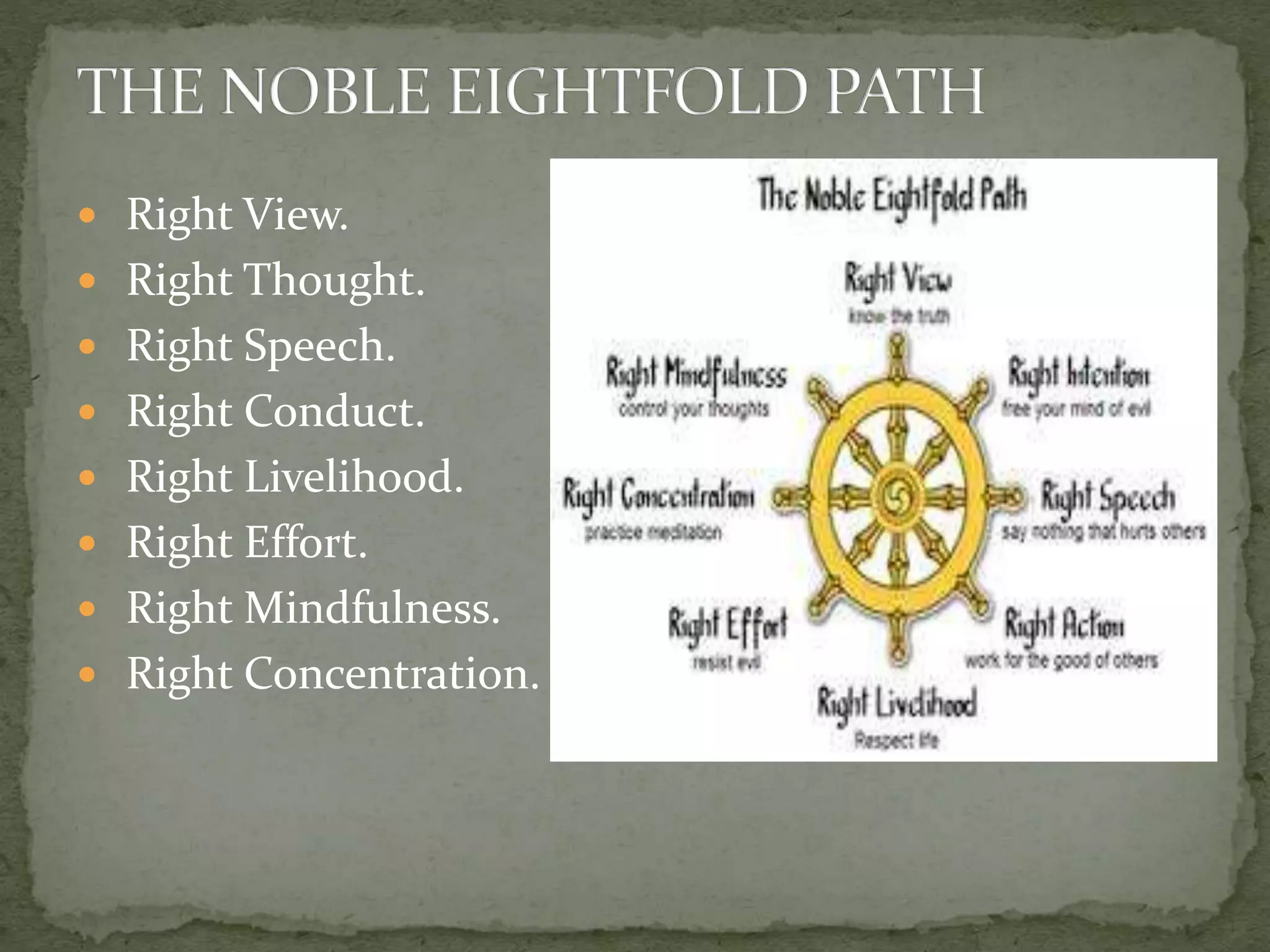
 Right View.
 Right Thought.
 Right Speech.
 Right Conduct.
 Right Livelihood.
 Right Effort.
 Right Mindfulness.
 Right Concentration.
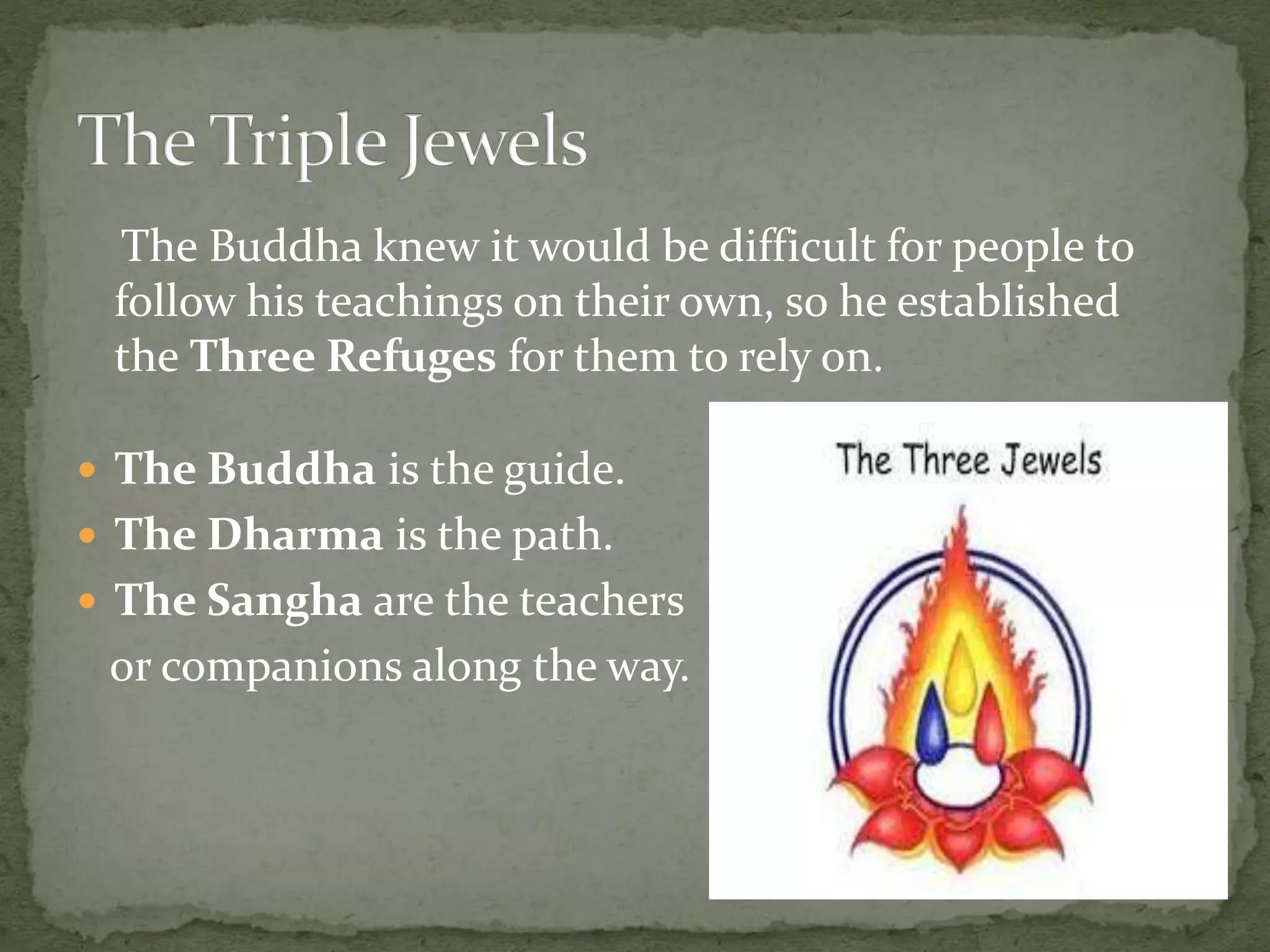
The Buddha knew it would be difficult for people to
follow his teachings on their own, so he established
the Three Refuges for them to rely on.
 The Buddha is the guide.
 The Dharma is the path.
 The Sangha are the teachers
or companions along the way.
 Jainism was born in India about the same period as
Buddhism.
 Established by Mahavira
 Establishd in (599BC-527BC)
 After years of hardship and meditation he attained
enlightenment; thereafter he preached Jainism for
about 30 years and died at Pava (also in Bihar) in 527
BC.
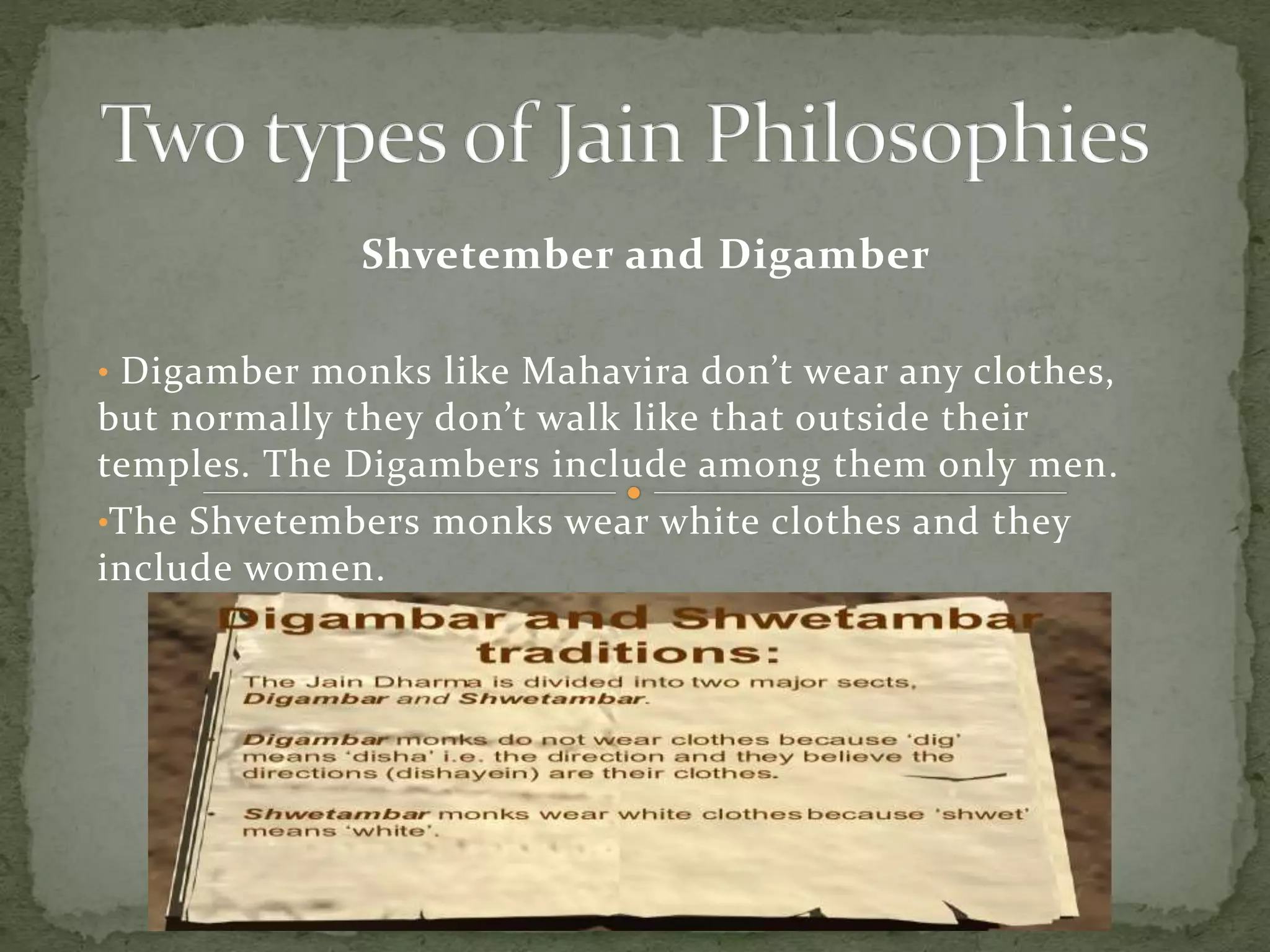
Shvetember and Digamber
• Digamber monks like Mahavira don’t wear any clothes,
but normally they don’t walk like that outside their
temples. The Digambers include among them only men.
•The Shvetembers monks wear white clothes and they
include women.
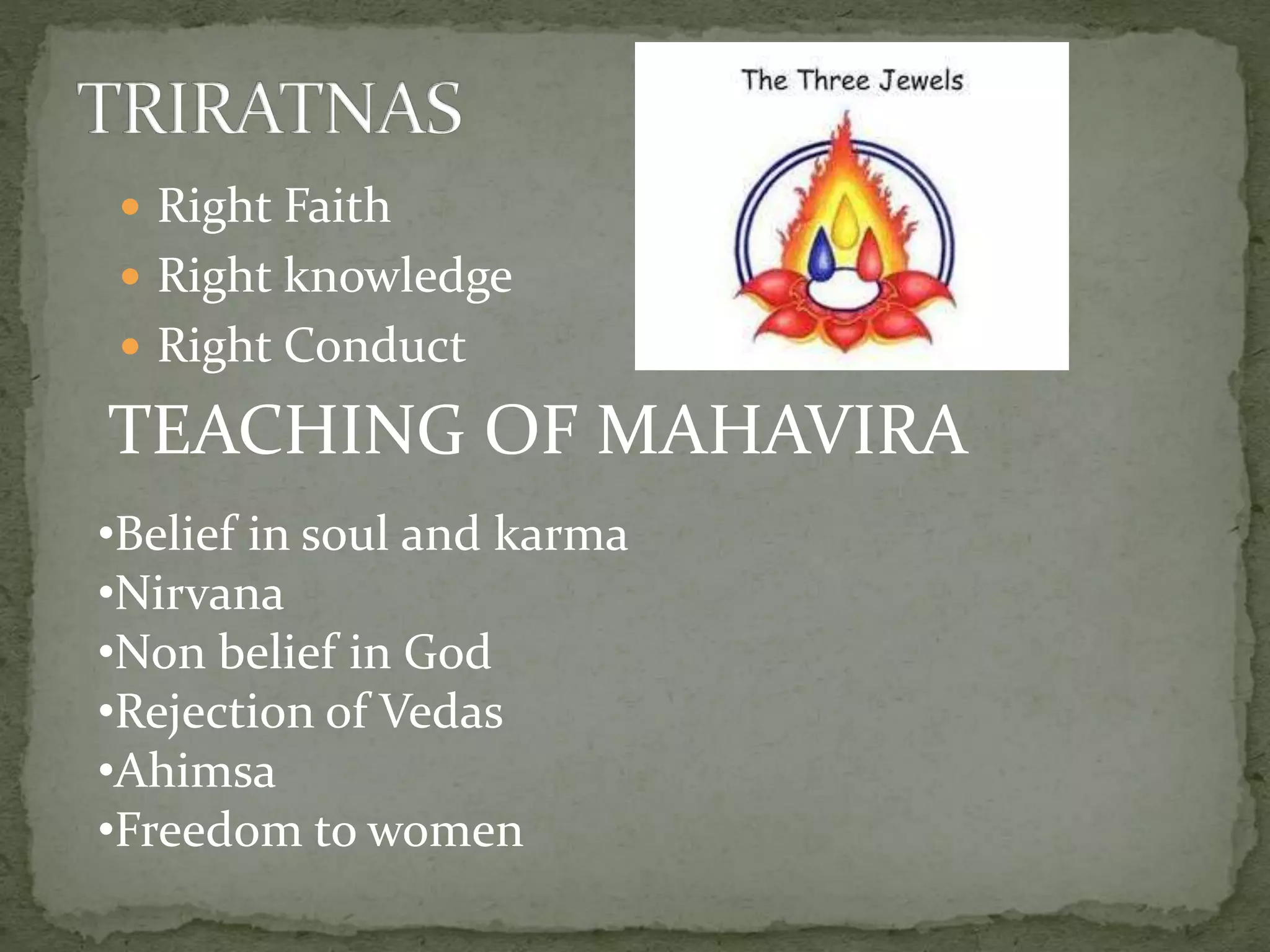
 Right Faith
 Right knowledge
 Right Conduct
TEACHING OF MAHAVIRA
•Belief in soul and karma
•Nirvana
•Non belief in God
•Rejection of Vedas
•Ahimsa
•Freedom to women
Buddhism Teaching
 In Buddhism, he did not
involve himself in
fruitless controversies
regarding metaphysical
questions like God, Soul,
Karma, Rebirth
 Concerned himself with
the practice problems
confronting man.
 Mahavira regarded all
objects both animals and
inanimate, have soul,
They passes life and feel
pain.
 Rejected the authority of
vedas and objects to the
vedic rituals.
Jainism Teaching
Buddhism Teaching
 Moksh can be attained
by deleting or sacrificing
all the world pleasures
by living in the world.
 Nirvana can be attained
through five vows
ahimsa, satya,asteya,
brahmacharaya,
aparigraha
Jainism Teaching
Difference between teaching of buddhism and jainism

Difference between teaching of buddhism and jainism

  • 1.
  • 2.
     Began bySiddhartha, also known as Gautama, tathagata (thus gone) and sakyamuni (sage of sakyas)  The religion started after Buddha attained enlightenment in between 6th and 4th centuries BCE
  • 3.
    THE FOUR NOBLETRUTH  DUKHA: Suffering  SAMUDAYO: Life is suffering  NIRODHA: Cessation of pain  MARGA: Path toward Moksha
  • 4.
     Right View. Right Thought.  Right Speech.  Right Conduct.  Right Livelihood.  Right Effort.  Right Mindfulness.  Right Concentration.
  • 5.
    The Buddha knewit would be difficult for people to follow his teachings on their own, so he established the Three Refuges for them to rely on.  The Buddha is the guide.  The Dharma is the path.  The Sangha are the teachers or companions along the way.
  • 6.
     Jainism wasborn in India about the same period as Buddhism.  Established by Mahavira  Establishd in (599BC-527BC)  After years of hardship and meditation he attained enlightenment; thereafter he preached Jainism for about 30 years and died at Pava (also in Bihar) in 527 BC.
  • 7.
    Shvetember and Digamber •Digamber monks like Mahavira don’t wear any clothes, but normally they don’t walk like that outside their temples. The Digambers include among them only men. •The Shvetembers monks wear white clothes and they include women.
  • 8.
     Right Faith Right knowledge  Right Conduct TEACHING OF MAHAVIRA •Belief in soul and karma •Nirvana •Non belief in God •Rejection of Vedas •Ahimsa •Freedom to women
  • 9.
    Buddhism Teaching  InBuddhism, he did not involve himself in fruitless controversies regarding metaphysical questions like God, Soul, Karma, Rebirth  Concerned himself with the practice problems confronting man.  Mahavira regarded all objects both animals and inanimate, have soul, They passes life and feel pain.  Rejected the authority of vedas and objects to the vedic rituals. Jainism Teaching
  • 10.
    Buddhism Teaching  Mokshcan be attained by deleting or sacrificing all the world pleasures by living in the world.  Nirvana can be attained through five vows ahimsa, satya,asteya, brahmacharaya, aparigraha Jainism Teaching