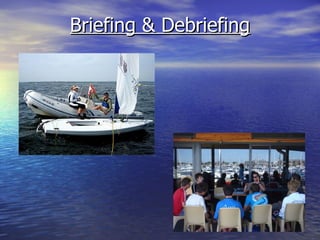
Briefing & Debriefing
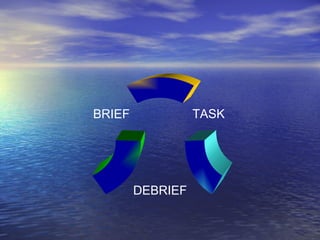
BRIEF             TASK


        DEBRIEF
Briefing your instructors:

• What should be included in the brief?
• Why ask questions? What questions
  should we ask?
• How can we communicate effectively?
What to include:
• Objective/Aim/Purpose of session
• Sailing area
• Timings
• Safety
• Recall signals/Comms
• Craft/students
• Level
• Progression
How to get your message
across:
• Clear, Concise
• K.I.S.S.
• Don’t assume..
• Check understanding
• Visual aids
• V.A.R.K.
Fitting everything into your brief

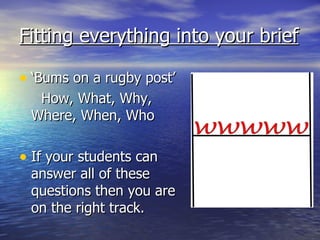
• ‘Bums on a rugby post’
  How, What, Why,
 Where, When, Who

• If your students can
 answer all of these
 questions then you are
 on the right track.
Task

• Set the right level of task.
• Allow mistakes – people learn! If you are
   tempted to interfere, ask yourself:
‘Is this error a useful learning opportunity?’
• Observe carefully, take notes on session.
• Max observation, Min disruption.
Debrief
• As soon as possible after the session/course.
• Be positive, good natured, helpful.
• Weaknesses: Be direct & honest – constructive
    criticism.
•   Good use of questions (they will debrief
    themselves! – we are our own worst critic)
•   Avoid any ‘edge’.
•   Tell them how to improve/ Find solutions
•   Get feedback from the students.
•   Emphasise the good points/ Reinforce positives
•   PRAISE = PERFORMANCE.

Briefing & debriefing skills

  • 1.
  • 2.
    BRIEF TASK DEBRIEF
  • 3.
    Briefing your instructors: •What should be included in the brief? • Why ask questions? What questions should we ask? • How can we communicate effectively?
  • 4.
    What to include: •Objective/Aim/Purpose of session • Sailing area • Timings • Safety • Recall signals/Comms • Craft/students • Level • Progression
  • 5.
    How to getyour message across: • Clear, Concise • K.I.S.S. • Don’t assume.. • Check understanding • Visual aids • V.A.R.K.
  • 6.
    Fitting everything intoyour brief • ‘Bums on a rugby post’ How, What, Why, Where, When, Who • If your students can answer all of these questions then you are on the right track.
  • 7.
    Task • Set theright level of task. • Allow mistakes – people learn! If you are tempted to interfere, ask yourself: ‘Is this error a useful learning opportunity?’ • Observe carefully, take notes on session. • Max observation, Min disruption.
  • 8.
    Debrief • As soonas possible after the session/course. • Be positive, good natured, helpful. • Weaknesses: Be direct & honest – constructive criticism. • Good use of questions (they will debrief themselves! – we are our own worst critic) • Avoid any ‘edge’. • Tell them how to improve/ Find solutions • Get feedback from the students. • Emphasise the good points/ Reinforce positives • PRAISE = PERFORMANCE.