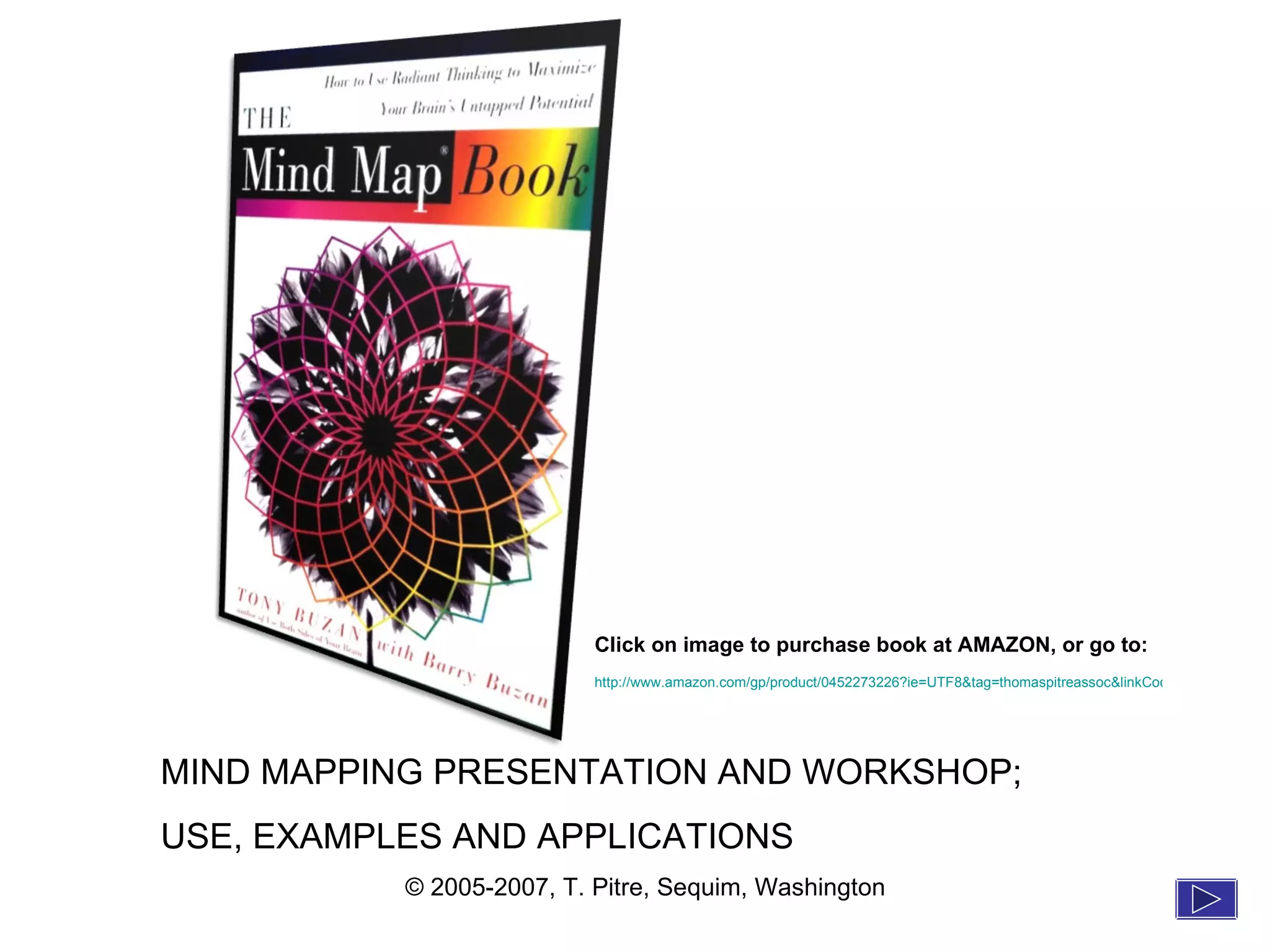
MIND MAPPING PRESENTATION AND WORKSHOP; USE, EXAMPLES AND APPLICATIONS © 2005-2007, T. Pitre, Sequim, Washington Click on image to purchase book at AMAZON, or go to:   http://www.amazon.com/gp/product/0452273226?ie=UTF8&tag=thomaspitreassoc&linkCode=as2&camp=1789&creative=9325&creativeASIN=0452273226
Mind maps  were developed in the late 60s by  Tony Buzan  as a way of helping students make notes that used only  key words and images.  They are much quicker to make, and because of their visual quality  much easier to remember and review . The  non-linear  nature of mind maps makes it  easy to link  and cross-reference different elements of the map.  –Peter Russell Mind Mapping is  an alternative method of note taking , one which uses an artistic ( stream of consciousness ) approach. A  mind map  is a  diagram  used to represent  words ,  ideas , tasks or other items linked to and arranged radially around a central key word or idea. It is used to  generate ,  visualize ,  structure  and  classify  ideas, and as an aid in  study ,  organization ,  problem solving ,  decision making , and writing.  - WikiPedia
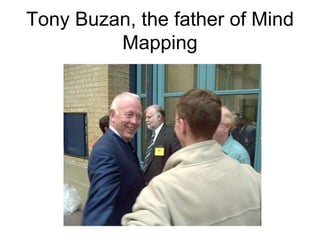
Tony Buzan, the father of Mind Mapping
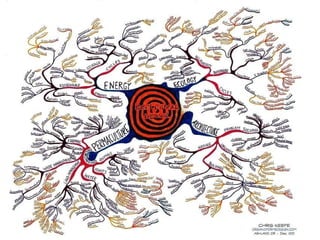
The next slide is from Chris Keffe of  Organic Forms Design   in Ashland, Oregon.  He was kind enough to lend his image to my project.  -tp.
 
Why use Mindmaps? Used for  recall . Makes planning and note-taking  fun . It is more effective for improving the creative thought process as well as recording ideas and information. It is  faster  than “note taking”, therefore it saves time and helps to organize material. Symbols can be used. Things are  more easily remembered  when BIG and in  COLOR   The author can FREE associate and see relationships between concepts.
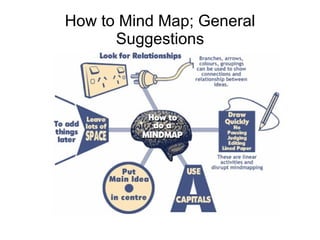
How to Mind Map; General Suggestions
Mind maps seem to have the same rules as a BRAIN-STORMING session… No judgment. No pausing. Do it quickly. Record ideas.
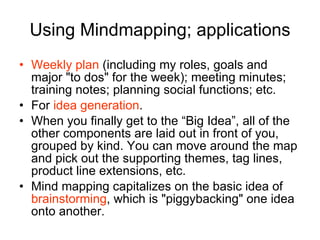
Using Mindmapping; applications Weekly plan  (including my roles, goals and major "to dos" for the week); meeting minutes; training notes; planning social functions; etc. For  idea generation .  When you finally get to the “Big Idea”, all of the other components are laid out in front of you, grouped by kind. You can move around the map and pick out the supporting themes, tag lines, product line extensions, etc.  Mind mapping capitalizes on the basic idea of  brainstorming , which is "piggybacking" one idea onto another.
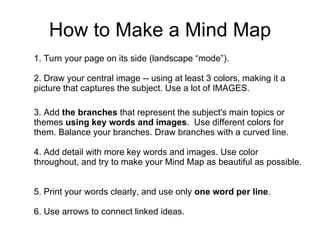
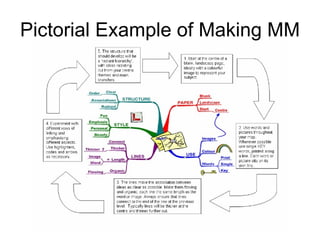
How to Make a Mind Map 1. Turn your page on its side (landscape “mode”).  2. Draw your central image -- using at least 3 colors, making it a picture that captures the subject. Use a lot of IMAGES. 3. Add  the branches  that represent the subject's main topics or themes  using key words and images .  Use different colors for them. Balance your branches. Draw branches with a curved line. 4. Add detail with more key words and images. Use color throughout, and try to make your Mind Map as beautiful as possible.  5. Print your words clearly, and use only  one word per line .  6. Use arrows to connect linked ideas.
Pictorial Example of Making MM
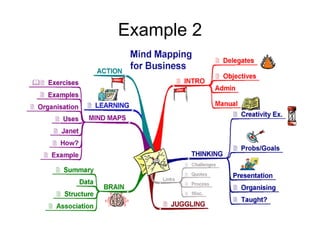
Example 2
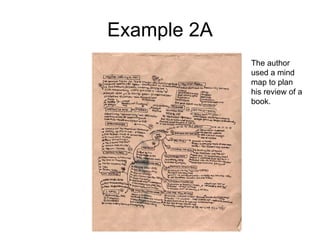
Example 2A The author used a mind map to plan his review of a book.
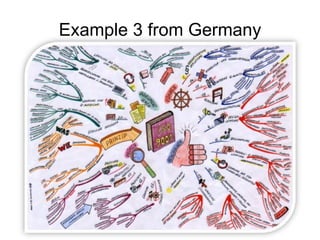
Example 3 from Germany
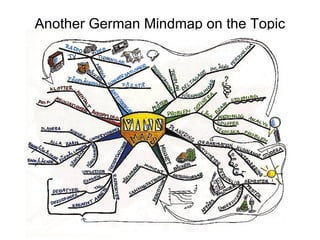
Another German Mindmap on the Topic
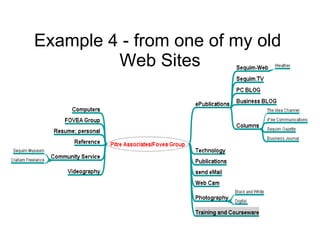
Example 4 - from one of my old  Web Sites
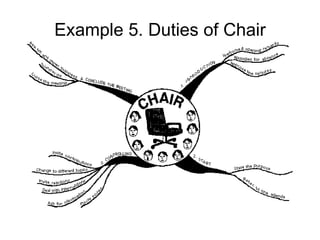
Example 5. Duties of Chair
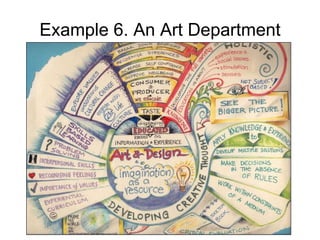
Example 6. An Art Department
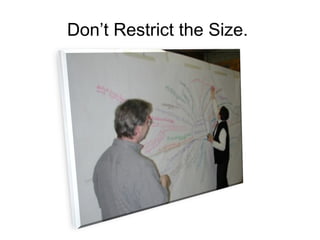
Don’t Restrict the Size.
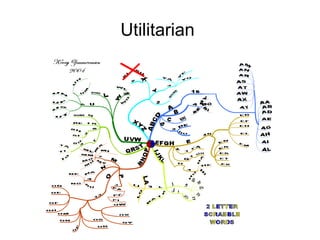
Utilitarian
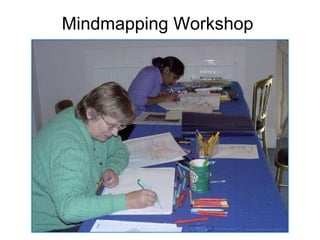
Mindmapping Workshop
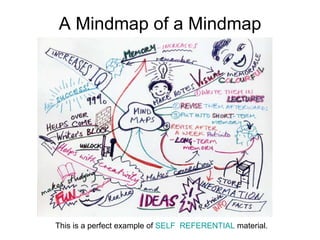
A Mindmap of a Mindmap This is a perfect example of  SELF  REFERENTIAL  material.
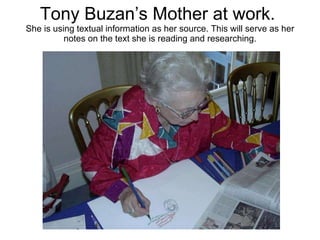
Tony Buzan’s Mother at work.  She is using textual information as her source. This will serve as her notes on the text she is reading and researching.
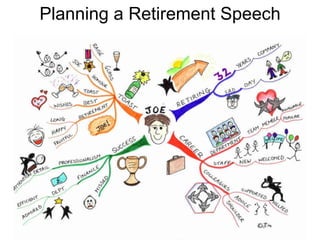
Planning a Retirement Speech
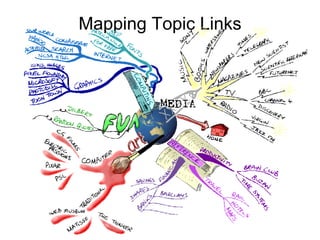
Mapping Topic Links
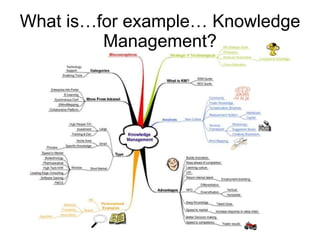
What is…for example… Knowledge Management?
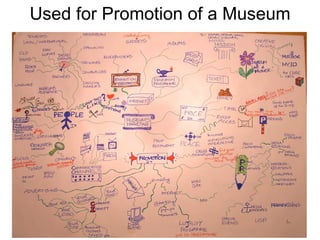
Used for Promotion of a Museum
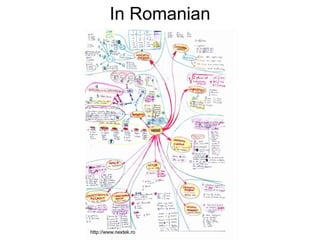
In Romanian
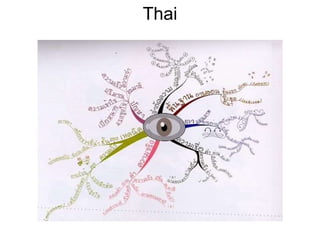
Thai
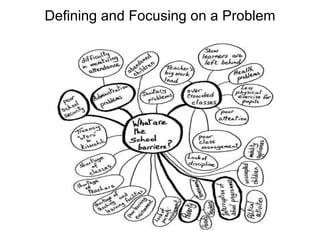
Defining and Focusing on a Problem
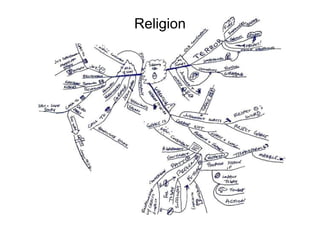
Religion
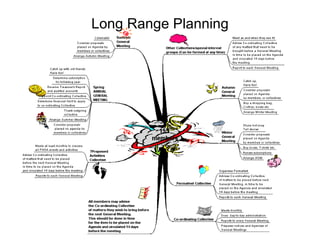
Long Range Planning
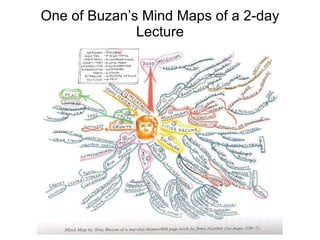
One of Buzan’s Mind Maps of a 2-day Lecture
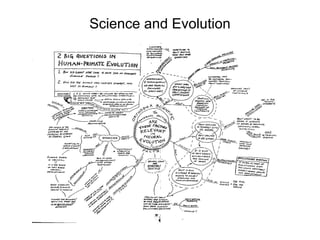
Science and Evolution
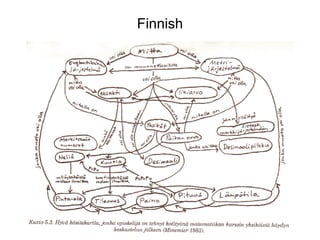
Finnish
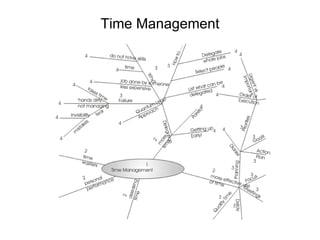
Time Management
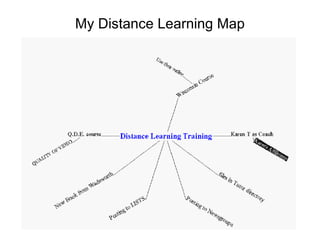
My Distance Learning Map
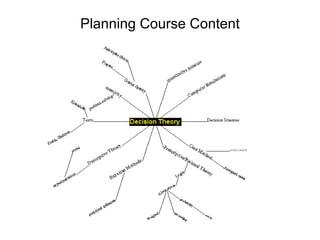
Planning Course Content
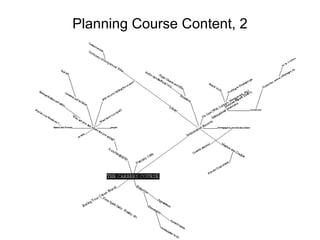
Planning Course Content, 2
Resources I will put a copy of FreeMind (3.2M) on our club web site in the member’s area.  It is FREE, and easy to use. See:  http://www.mind-mapping.co.uk/make-mind-map.htm On line Mind Mapping Tools  (bubbl.us) A copy of Mindmapping Toolbox will also be on the member’s pages, along with this PowerPoint presentation.
Pitre is a 1987 graduate of  The Institute on Thinking, Critical and Creative ,  Harvard Graduate School of Education , Cambridge, MA  He has lectured on the topic, written several papers and delivered on-line training courses and professional papers dealing with creativity and problem solving. His favorite work, and the best of them, is “ Put Grandma in the Crib ” – based on his work in creativity -- inspired by -- and dedicated to  Dr. Edward deBono .  It was first presented to the California Adult Education Association Convention in Southern California in the 1980’s This work is licensed under the Creative Commons Attribution-Noncommercial-Share Alike 3.0 Unported License. To view a copy of this license, visit http://creativecommons.org/licenses/by-nc-sa/3.0/ or send a letter to Creative Commons, 171 Second Street, Suite 300, San Francisco, California, 94105, USA.

Mind mapping

  • 1.
    MIND MAPPING PRESENTATIONAND WORKSHOP; USE, EXAMPLES AND APPLICATIONS © 2005-2007, T. Pitre, Sequim, Washington Click on image to purchase book at AMAZON, or go to: http://www.amazon.com/gp/product/0452273226?ie=UTF8&tag=thomaspitreassoc&linkCode=as2&camp=1789&creative=9325&creativeASIN=0452273226
  • 2.
    Mind maps were developed in the late 60s by Tony Buzan as a way of helping students make notes that used only key words and images. They are much quicker to make, and because of their visual quality much easier to remember and review . The non-linear nature of mind maps makes it easy to link and cross-reference different elements of the map. –Peter Russell Mind Mapping is an alternative method of note taking , one which uses an artistic ( stream of consciousness ) approach. A mind map is a diagram used to represent words , ideas , tasks or other items linked to and arranged radially around a central key word or idea. It is used to generate , visualize , structure and classify ideas, and as an aid in study , organization , problem solving , decision making , and writing. - WikiPedia
  • 3.
    Tony Buzan, thefather of Mind Mapping
  • 4.
    The next slideis from Chris Keffe of Organic Forms Design in Ashland, Oregon. He was kind enough to lend his image to my project. -tp.
  • 5.
  • 6.
    Why use Mindmaps?Used for recall . Makes planning and note-taking fun . It is more effective for improving the creative thought process as well as recording ideas and information. It is faster than “note taking”, therefore it saves time and helps to organize material. Symbols can be used. Things are more easily remembered when BIG and in COLOR The author can FREE associate and see relationships between concepts.
  • 7.
    How to MindMap; General Suggestions
  • 8.
    Mind maps seemto have the same rules as a BRAIN-STORMING session… No judgment. No pausing. Do it quickly. Record ideas.
  • 9.
    Using Mindmapping; applicationsWeekly plan (including my roles, goals and major "to dos" for the week); meeting minutes; training notes; planning social functions; etc. For idea generation . When you finally get to the “Big Idea”, all of the other components are laid out in front of you, grouped by kind. You can move around the map and pick out the supporting themes, tag lines, product line extensions, etc. Mind mapping capitalizes on the basic idea of brainstorming , which is "piggybacking" one idea onto another.
  • 10.
    How to Makea Mind Map 1. Turn your page on its side (landscape “mode”). 2. Draw your central image -- using at least 3 colors, making it a picture that captures the subject. Use a lot of IMAGES. 3. Add the branches that represent the subject's main topics or themes using key words and images . Use different colors for them. Balance your branches. Draw branches with a curved line. 4. Add detail with more key words and images. Use color throughout, and try to make your Mind Map as beautiful as possible. 5. Print your words clearly, and use only one word per line . 6. Use arrows to connect linked ideas.
  • 11.
  • 12.
  • 13.
    Example 2A Theauthor used a mind map to plan his review of a book.
  • 14.
  • 15.
  • 16.
    Example 4 -from one of my old Web Sites
  • 17.
  • 18.
    Example 6. AnArt Department
  • 19.
  • 20.
  • 21.
  • 22.
    A Mindmap ofa Mindmap This is a perfect example of SELF REFERENTIAL material.
  • 23.
    Tony Buzan’s Motherat work. She is using textual information as her source. This will serve as her notes on the text she is reading and researching.
  • 24.
  • 25.
  • 26.
    What is…for example…Knowledge Management?
  • 27.
    Used for Promotionof a Museum
  • 28.
  • 29.
  • 30.
  • 31.
  • 32.
  • 33.
    One of Buzan’sMind Maps of a 2-day Lecture
  • 34.
  • 35.
  • 36.
  • 37.
  • 38.
  • 39.
  • 40.
    Resources I willput a copy of FreeMind (3.2M) on our club web site in the member’s area. It is FREE, and easy to use. See: http://www.mind-mapping.co.uk/make-mind-map.htm On line Mind Mapping Tools (bubbl.us) A copy of Mindmapping Toolbox will also be on the member’s pages, along with this PowerPoint presentation.
  • 41.
    Pitre is a1987 graduate of The Institute on Thinking, Critical and Creative , Harvard Graduate School of Education , Cambridge, MA He has lectured on the topic, written several papers and delivered on-line training courses and professional papers dealing with creativity and problem solving. His favorite work, and the best of them, is “ Put Grandma in the Crib ” – based on his work in creativity -- inspired by -- and dedicated to Dr. Edward deBono . It was first presented to the California Adult Education Association Convention in Southern California in the 1980’s This work is licensed under the Creative Commons Attribution-Noncommercial-Share Alike 3.0 Unported License. To view a copy of this license, visit http://creativecommons.org/licenses/by-nc-sa/3.0/ or send a letter to Creative Commons, 171 Second Street, Suite 300, San Francisco, California, 94105, USA.