Bridging OpenStack and
Mobile Cloud
Gene Mullis
Storage Strategist/CTO
Endist, LLC
August 23, 2016
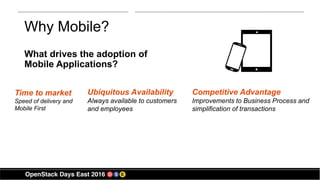
Why Mobile?
What drives the adoption of
Mobile Applications?
Time to market
Speed of delivery and
Mobile First
Ubiquitous Availability
Always available to customers
and employees
Competitive Advantage
Improvements to Business Process and
simplification of transactions
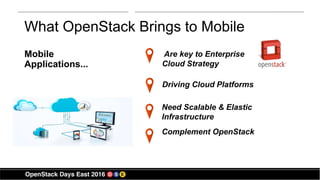
What OpenStack Brings to Mobile
Mobile
Applications...
Are key to Enterprise
Cloud Strategy
Driving Cloud Platforms
Need Scalable & Elastic
Infrastructure
Complement OpenStack
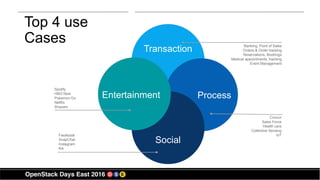
Top 4 use
Cases
Transaction
Entertainment Process
Social
Facebook
SnapChat
Instagram
Kik
Banking, Point of Sales
Orders & Order tracking
Reservations, Bookings
Medical appointments, tracking
Event Management
Concur
Sales Force
Health care
Collective Sensing
IoT
Spotify
HBO Now
Pokemon Go
Netflix
Shazam
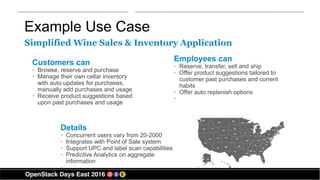
Example Use Case
Customers can
• Browse, reserve and purchase
• Manage their own cellar inventory
with auto updates for purchases,
manually add purchases and usage
• Receive product suggestions based
upon past purchases and usage
Details
• Concurrent users vary from 20-2000
• Integrates with Point of Sale system
• Support UPC and label scan capabilities
• Predictive Analytics on aggregate
information
•
Employees can
• Reserve, transfer, sell and ship
• Offer product suggestions tailored to
customer past purchases and current
habits
• Offer auto replenish options
•
Simplified Wine Sales & Inventory Application
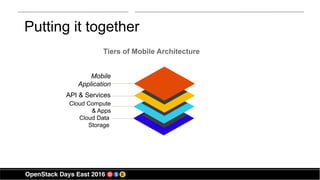
Putting it together
Tiers of Mobile Architecture
Cloud Compute
& Apps
API & Services
Mobile
Application
Cloud Data
Storage
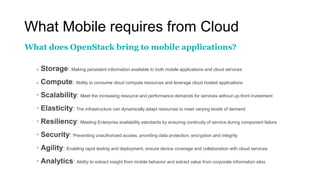
What Mobile requires from Cloud
 Storage: Making persistent information available to both mobile applications and cloud services
 Compute: Ability to consume cloud compute resources and leverage cloud hosted applications
• Scalability: Meet the increasing resource and performance demands for services without up-front investment
• Elasticity: The infrastructure can dynamically adapt resources to meet varying levels of demand
• Resiliency: Meeting Enterprise availability standards by ensuring continuity of service during component failure
• Security: Preventing unauthorized access, providing data protection, encryption and integrity
• Agility: Enabling rapid testing and deployment, ensure device coverage and collaboration with cloud services
• Analytics: Ability to extract insight from mobile behavior and extract value from corporate information silos
What does OpenStack bring to mobile applications?
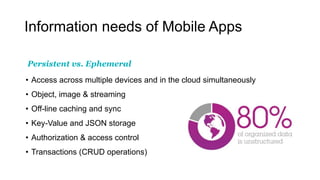
Information needs of Mobile Apps
• Access across multiple devices and in the cloud simultaneously
• Object, image & streaming
• Off-line caching and sync
• Key-Value and JSON storage
• Authorization & access control
• Transactions (CRUD operations)
Persistent vs. Ephemeral
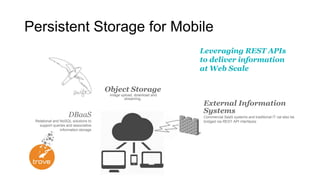
Persistent Storage for Mobile
Leveraging REST APIs
to deliver information
at Web Scale
Object Storage
image upload, download and
streaming.
External Information
Systems
Commercial SaaS systems and traditional IT cal also be
bridged via REST API interfaces
DBaaS
Relational and NoSQL solutions to
support queries and associative
information storage
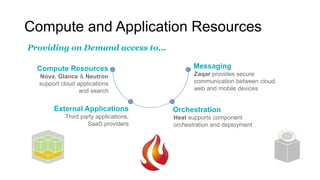
Compute and Application Resources
Compute Resources
Nova, Glance & Neutron
support cloud applications
and search
Orchestration
Heat supports component
orchestration and deployment
Messaging
Zaqar provides secure
communication between cloud,
web and mobile devices
External Applications
Third party applications,
SaaS providers
Providing on Demand access to...
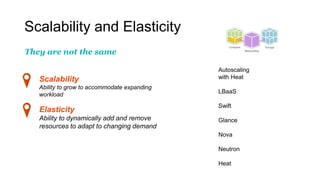
Scalability and Elasticity
They are not the same
Scalability
Ability to grow to accommodate expanding
workload
Elasticity
Ability to dynamically add and remove
resources to adapt to changing demand
Autoscaling
with Heat
LBaaS
Swift
Glance
Nova
Neutron
Heat
Resiliency and Security
Maintaining Service Levels
• Load Balancing
• Auto Scaling
• Telemetry with Ceilometer
• Availability with Senlin
• Swift for data durability
•
Deploying with confidence
• Keystone for authentication, authorization,
and role management
• Tenant isolation with Nova and Neutron
• Usage Analytics
High availability requires that
you plan for failure
Mobile Backend as a Service (MBaaS)
Why MBaaS
• Simplified Application Development
• Reduce time to market
• Focus on end user experience
• Promise of write once for Mobile &
web
Several Models
• Open Source
• Public Cloud
• Hybrid Enterprise
•
“BaaS Market size to grow from USD $1.32B in 2015 to USD $28.10B by
2020, at a CAGR of 84.2%”
*Research and Markets (Feb 2016). Cloud/Mobile Backend as a Service Market Forecast to 2020 ID:3617261.
http://www.researchandmarkets.com/research/8hqfrk/cloudmobile
Mobile Backend as a Service (MbaaS)
and Backend as a service (BaaS) are
often used interchangeably.
Mobile Backend as a Service (MBaaS)
Standard services
• User Authentication, Authorization and role management
• Connecting mobile applications to persistent cloud storage
• Push Notifications
• Analytics
Currently over 30 Open Source projects
Many OpenStack Partners have offerings
Public Cloud MBaaS Options
Public PaaS vendors have proprietary solutions
• Google FireBase
• Azure Mobile Services
• Amazon Mobile SDK (Cognito, Mobile Analytics, SNS Push)
Looking forward
Mobile
Applications...
Are key to Enterprise
Cloud Strategy
Driving Cloud Platforms
Need Scalable & Elastic
Infrastructure
Complement OpenStack
Thank you!
Bridging OpenStack and Mobile Cloud

Bridging OpenStack and Mobile Cloud

  • 1.
    Bridging OpenStack and MobileCloud Gene Mullis Storage Strategist/CTO Endist, LLC August 23, 2016
  • 2.
    Why Mobile? What drivesthe adoption of Mobile Applications? Time to market Speed of delivery and Mobile First Ubiquitous Availability Always available to customers and employees Competitive Advantage Improvements to Business Process and simplification of transactions
  • 3.
    What OpenStack Bringsto Mobile Mobile Applications... Are key to Enterprise Cloud Strategy Driving Cloud Platforms Need Scalable & Elastic Infrastructure Complement OpenStack
  • 4.
    Top 4 use Cases Transaction EntertainmentProcess Social Facebook SnapChat Instagram Kik Banking, Point of Sales Orders & Order tracking Reservations, Bookings Medical appointments, tracking Event Management Concur Sales Force Health care Collective Sensing IoT Spotify HBO Now Pokemon Go Netflix Shazam
  • 5.
    Example Use Case Customerscan • Browse, reserve and purchase • Manage their own cellar inventory with auto updates for purchases, manually add purchases and usage • Receive product suggestions based upon past purchases and usage Details • Concurrent users vary from 20-2000 • Integrates with Point of Sale system • Support UPC and label scan capabilities • Predictive Analytics on aggregate information • Employees can • Reserve, transfer, sell and ship • Offer product suggestions tailored to customer past purchases and current habits • Offer auto replenish options • Simplified Wine Sales & Inventory Application
  • 6.
    Putting it together Tiersof Mobile Architecture Cloud Compute & Apps API & Services Mobile Application Cloud Data Storage
  • 7.
    What Mobile requiresfrom Cloud  Storage: Making persistent information available to both mobile applications and cloud services  Compute: Ability to consume cloud compute resources and leverage cloud hosted applications • Scalability: Meet the increasing resource and performance demands for services without up-front investment • Elasticity: The infrastructure can dynamically adapt resources to meet varying levels of demand • Resiliency: Meeting Enterprise availability standards by ensuring continuity of service during component failure • Security: Preventing unauthorized access, providing data protection, encryption and integrity • Agility: Enabling rapid testing and deployment, ensure device coverage and collaboration with cloud services • Analytics: Ability to extract insight from mobile behavior and extract value from corporate information silos What does OpenStack bring to mobile applications?
  • 8.
    Information needs ofMobile Apps • Access across multiple devices and in the cloud simultaneously • Object, image & streaming • Off-line caching and sync • Key-Value and JSON storage • Authorization & access control • Transactions (CRUD operations) Persistent vs. Ephemeral
  • 9.
    Persistent Storage forMobile Leveraging REST APIs to deliver information at Web Scale Object Storage image upload, download and streaming. External Information Systems Commercial SaaS systems and traditional IT cal also be bridged via REST API interfaces DBaaS Relational and NoSQL solutions to support queries and associative information storage
  • 10.
    Compute and ApplicationResources Compute Resources Nova, Glance & Neutron support cloud applications and search Orchestration Heat supports component orchestration and deployment Messaging Zaqar provides secure communication between cloud, web and mobile devices External Applications Third party applications, SaaS providers Providing on Demand access to...
  • 11.
    Scalability and Elasticity Theyare not the same Scalability Ability to grow to accommodate expanding workload Elasticity Ability to dynamically add and remove resources to adapt to changing demand Autoscaling with Heat LBaaS Swift Glance Nova Neutron Heat
  • 12.
    Resiliency and Security MaintainingService Levels • Load Balancing • Auto Scaling • Telemetry with Ceilometer • Availability with Senlin • Swift for data durability • Deploying with confidence • Keystone for authentication, authorization, and role management • Tenant isolation with Nova and Neutron • Usage Analytics High availability requires that you plan for failure
  • 13.
    Mobile Backend asa Service (MBaaS) Why MBaaS • Simplified Application Development • Reduce time to market • Focus on end user experience • Promise of write once for Mobile & web Several Models • Open Source • Public Cloud • Hybrid Enterprise • “BaaS Market size to grow from USD $1.32B in 2015 to USD $28.10B by 2020, at a CAGR of 84.2%” *Research and Markets (Feb 2016). Cloud/Mobile Backend as a Service Market Forecast to 2020 ID:3617261. http://www.researchandmarkets.com/research/8hqfrk/cloudmobile Mobile Backend as a Service (MbaaS) and Backend as a service (BaaS) are often used interchangeably.
  • 14.
    Mobile Backend asa Service (MBaaS) Standard services • User Authentication, Authorization and role management • Connecting mobile applications to persistent cloud storage • Push Notifications • Analytics Currently over 30 Open Source projects Many OpenStack Partners have offerings
  • 15.
    Public Cloud MBaaSOptions Public PaaS vendors have proprietary solutions • Google FireBase • Azure Mobile Services • Amazon Mobile SDK (Cognito, Mobile Analytics, SNS Push)
  • 16.
    Looking forward Mobile Applications... Are keyto Enterprise Cloud Strategy Driving Cloud Platforms Need Scalable & Elastic Infrastructure Complement OpenStack
  • 17.