GPB-607
Advances In Breeding of Major Field Crops
Term paper presentation
on
Breeding For Quality Traits In Groundnut
BY
B.SUKRUTHA
2020608008
Cultivated groundnut (Arachis hypogaea L.) is commonly known as
monkey nut, pea nut , goober nut, manila nut, earth nut and popularly
called as magphooli.
It is an seasonal annual legume, unique among all the leguminous
crops and designated as “ WONDER LEGUME”.
It is a self pollinated, autotetraploid legume crop with 2n = 4x = 40
chromosomes.
It is one of the principal economic crops of the world, ranking 13th
among food crops. It is also first ranking oilseed crop of India.
It is grown in nearly 100 countries. Major producers are China, India,
Nigeria, USA, Indonesia and Sudan.
It is an important food, feed and oilseed crop. In recent times,
groundnut is gaining importance as a food crop, due to its high content
of digestible proteins, vitamins and minerals, due to increased
consumer’s preference after value addition.
Intro..,
A) Morphological and Physical Quality Characters
B) Organolaptic Quality Parameters
C) Biological Quality Parameters
D) Other Quality Parameters
E) Biochemical Quality Parameters
F) Undesirable Quality Parameters
IMPORTANT QUALITY TRAITS
4
A) Morphological and Physical Quality Characters
Following traits are related to external appearance of the seed.
These traits are easily observable and usually play the main role in
determining consumer acceptance of the produce.
• Seed shape
•Uniformity in seed mass
•Integrity of testa
•Absences of extraneous materials and immature seeds
•Integrity of seed during processing and Blanching
•Moisture content
• Seed colour ( Variegated and non variegated)
• Seed size ( Ranges - length- 7 to 21 mm , diameter- 5 to 13
mm )
• Seed texture
•Seed surface
•Seed weight ( ranges 0.17 to 1.24g, larger and heavier var.
hypogaea > var. fastigata)
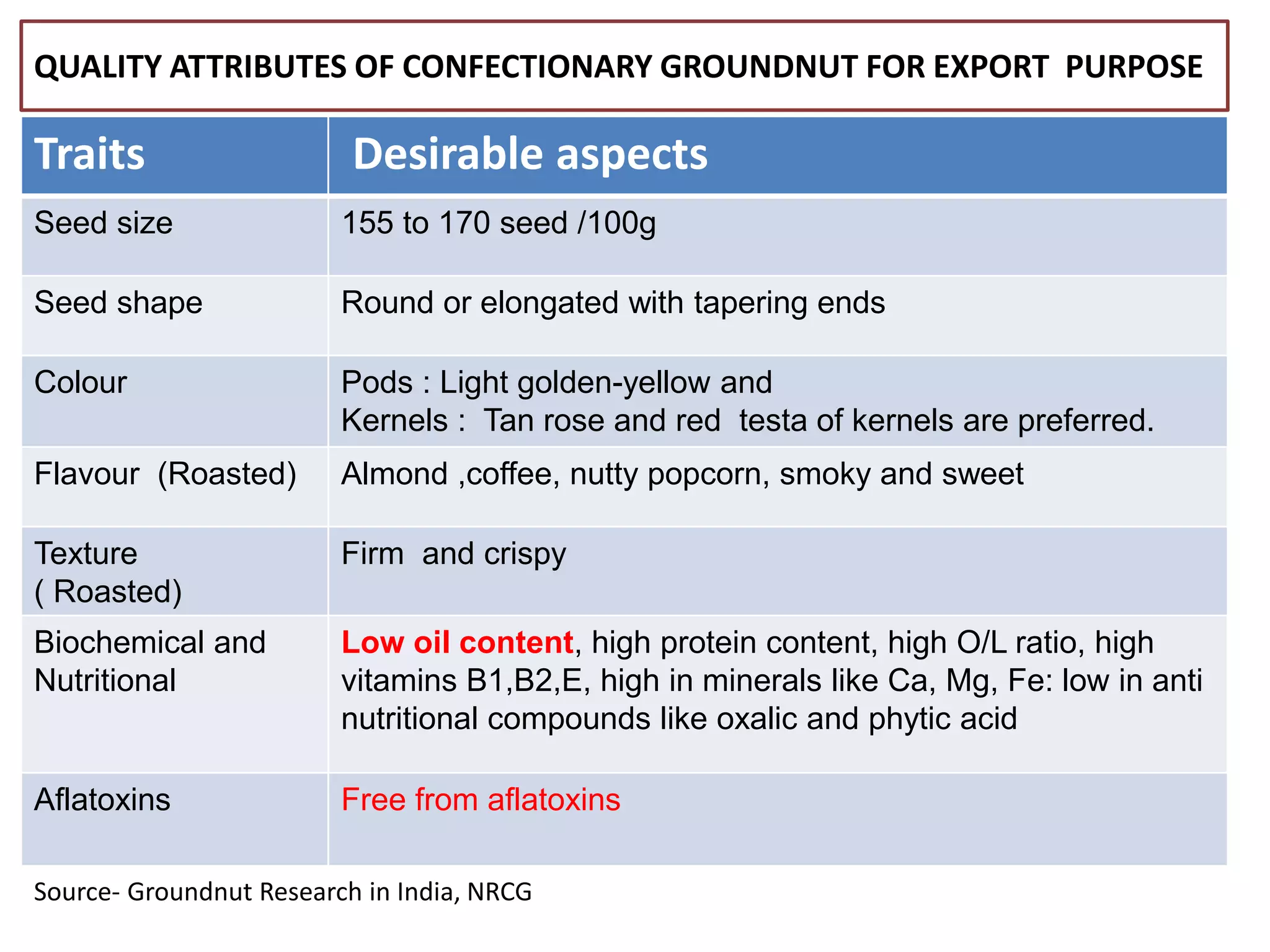
QUALITY ATTRIBUTES OF CONFECTIONARY GROUNDNUT FOR EXPORT PURPOSE
Traits Desirable aspects
Seed size 155 to 170 seed /100g
Seed shape Round or elongated with tapering ends
Colour Pods : Light golden-yellow and
Kernels : Tan rose and red testa of kernels are preferred.
Flavour (Roasted) Almond ,coffee, nutty popcorn, smoky and sweet
Texture
( Roasted)
Firm and crispy
Biochemical and
Nutritional
Low oil content, high protein content, high O/L ratio, high
vitamins B1,B2,E, high in minerals like Ca, Mg, Fe: low in anti
nutritional compounds like oxalic and phytic acid
Aflatoxins Free from aflatoxins
Source- Groundnut Research in India, NRCG
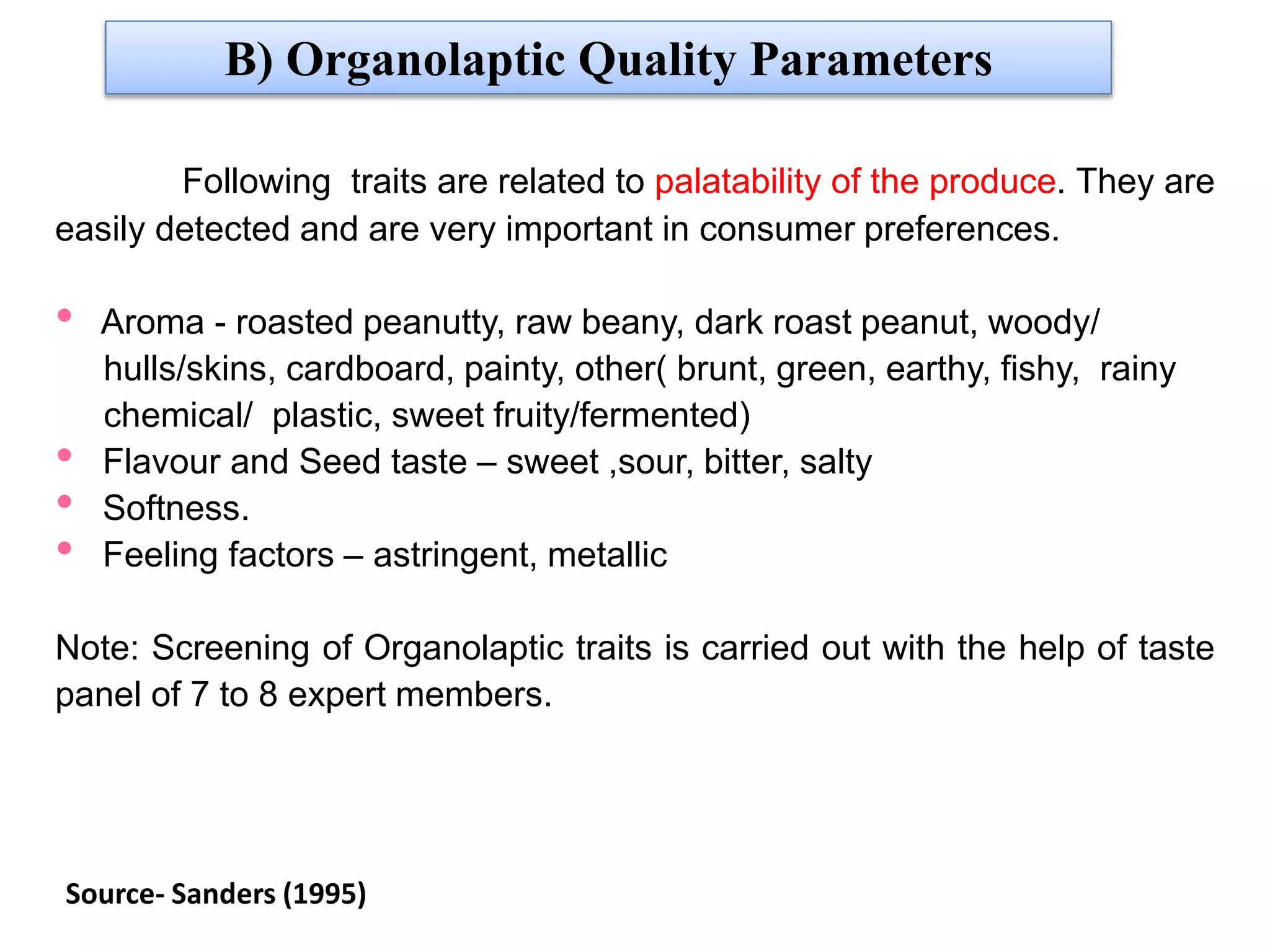
B) Organolaptic Quality Parameters
Following traits are related to palatability of the produce. They are
easily detected and are very important in consumer preferences.
• Aroma - roasted peanutty, raw beany, dark roast peanut, woody/
hulls/skins, cardboard, painty, other( brunt, green, earthy, fishy, rainy
chemical/ plastic, sweet fruity/fermented)
• Flavour and Seed taste – sweet ,sour, bitter, salty
• Softness.
• Feeling factors – astringent, metallic
Note: Screening of Organolaptic traits is carried out with the help of taste
panel of 7 to 8 expert members.
Source- Sanders (1995)
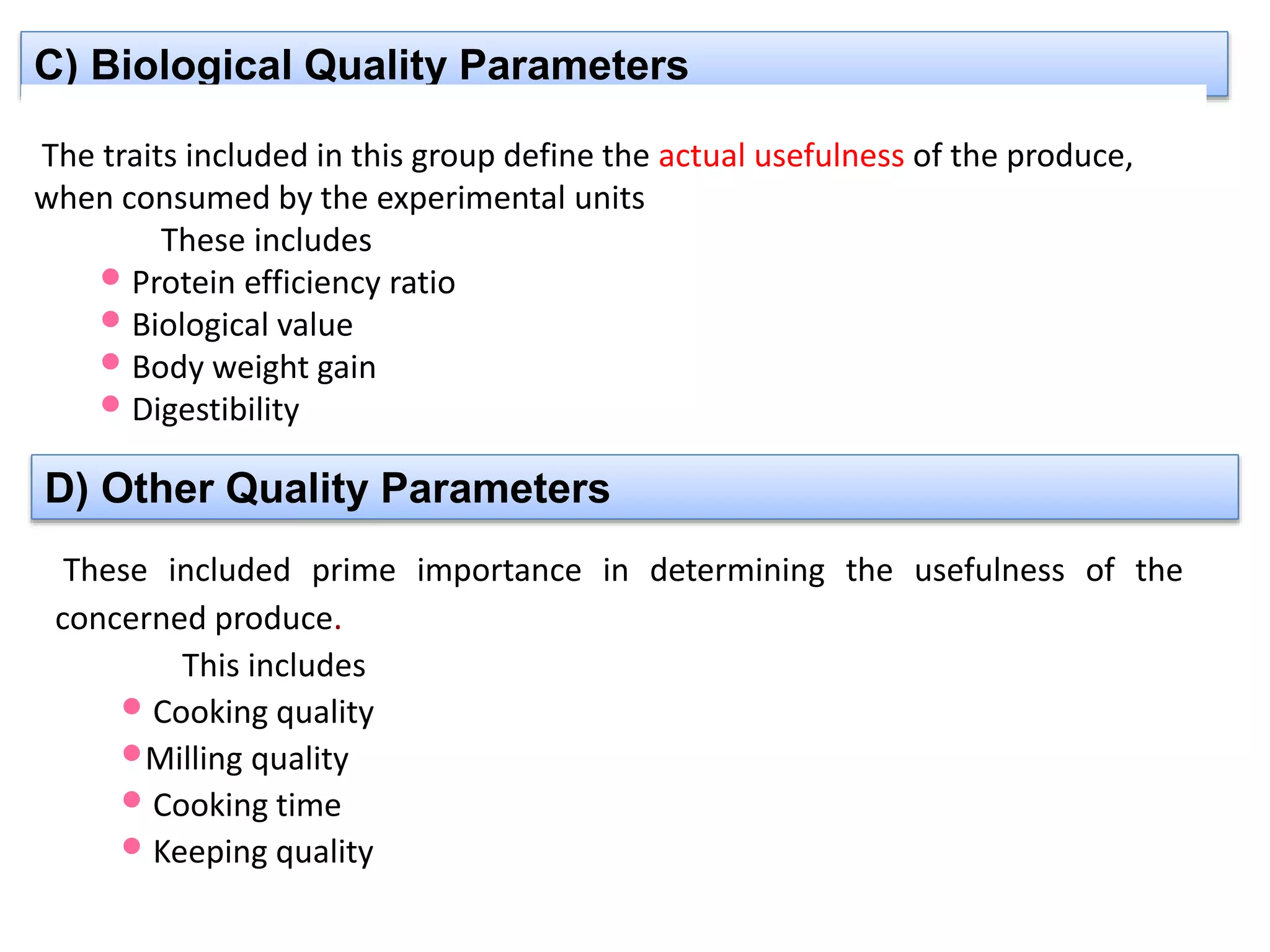
C) Biological Quality Parameters
The traits included in this group define the actual usefulness of the produce,
when consumed by the experimental units
These includes
•Protein efficiency ratio
•Biological value
•Body weight gain
•Digestibility
D) Other Quality Parameters
These included prime importance in determining the usefulness of the
concerned produce.
This includes
• Cooking quality
•Milling quality
• Cooking time
• Keeping quality
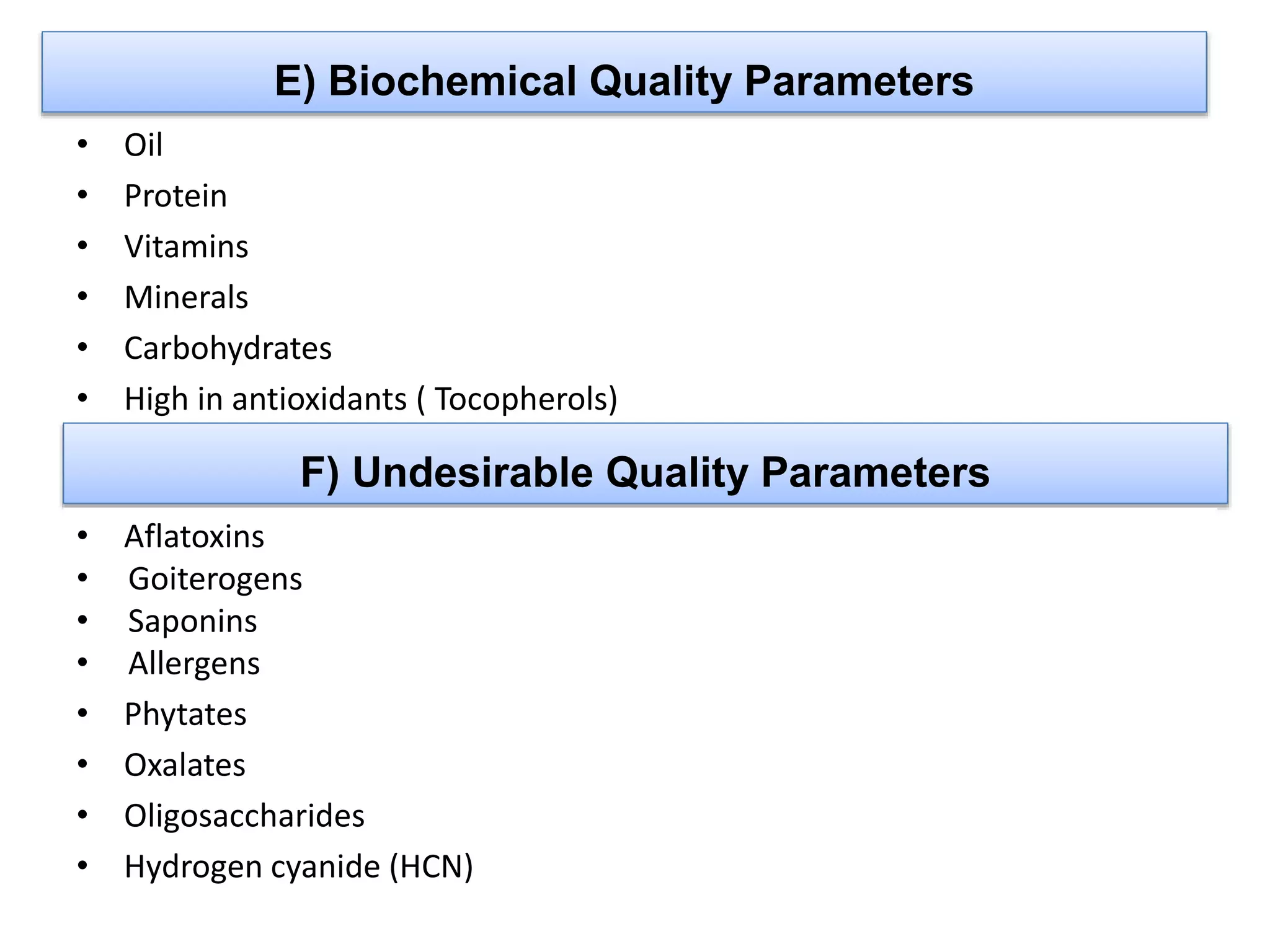
• Oil
• Protein
• Vitamins
• Minerals
• Carbohydrates
• High in antioxidants ( Tocopherols)
E) Biochemical Quality Parameters
F) Undesirable Quality Parameters
• Aflatoxins
• Goiterogens
• Saponins
• Allergens
• Phytates
• Oxalates
• Oligosaccharides
• Hydrogen cyanide (HCN)
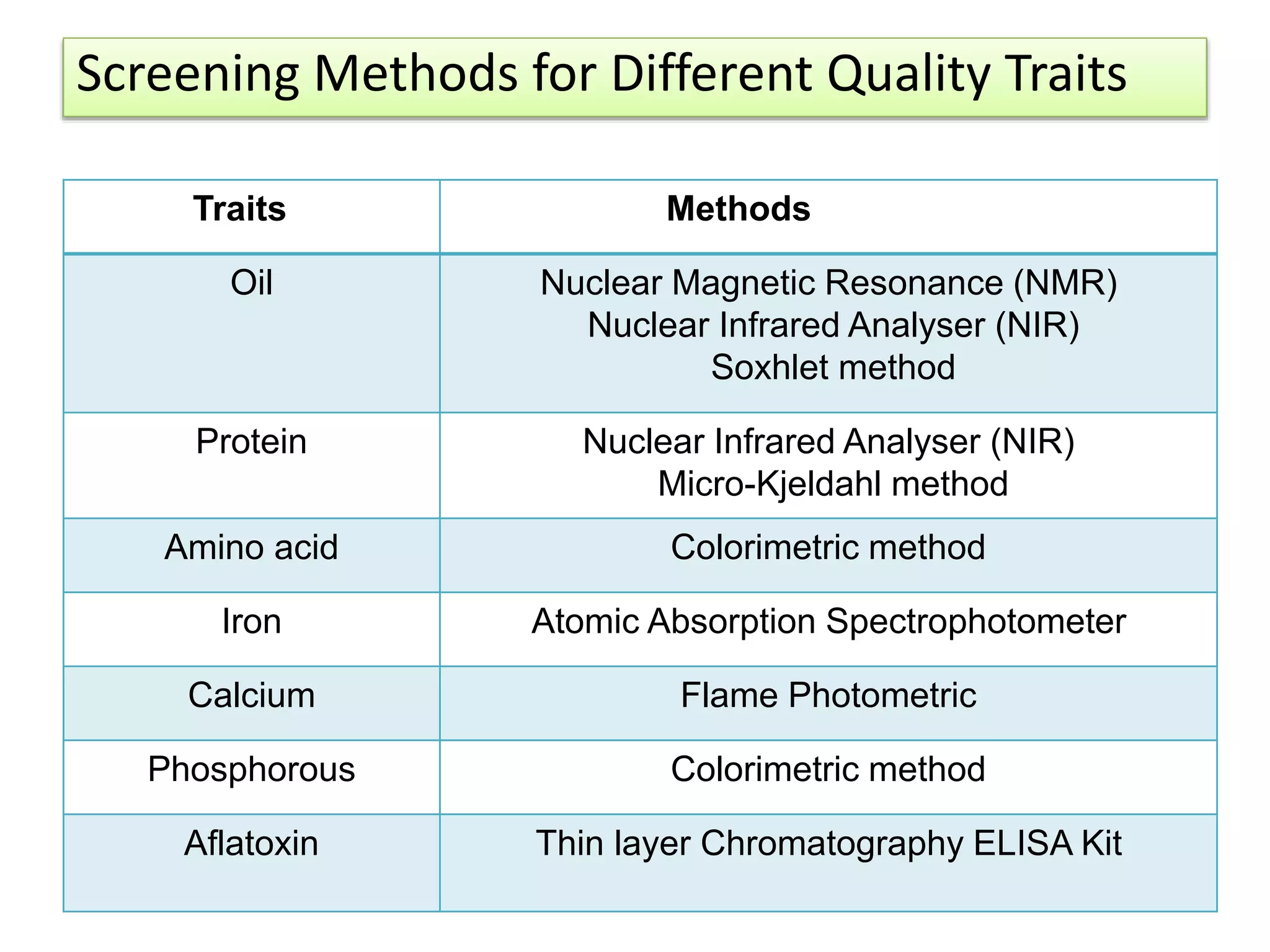
Screening Methods for Different Quality Traits
Traits Methods
Oil Nuclear Magnetic Resonance (NMR)
Nuclear Infrared Analyser (NIR)
Soxhlet method
Protein Nuclear Infrared Analyser (NIR)
Micro-Kjeldahl method
Amino acid Colorimetric method
Iron Atomic Absorption Spectrophotometer
Calcium Flame Photometric
Phosphorous Colorimetric method
Aflatoxin Thin layer Chromatography ELISA Kit
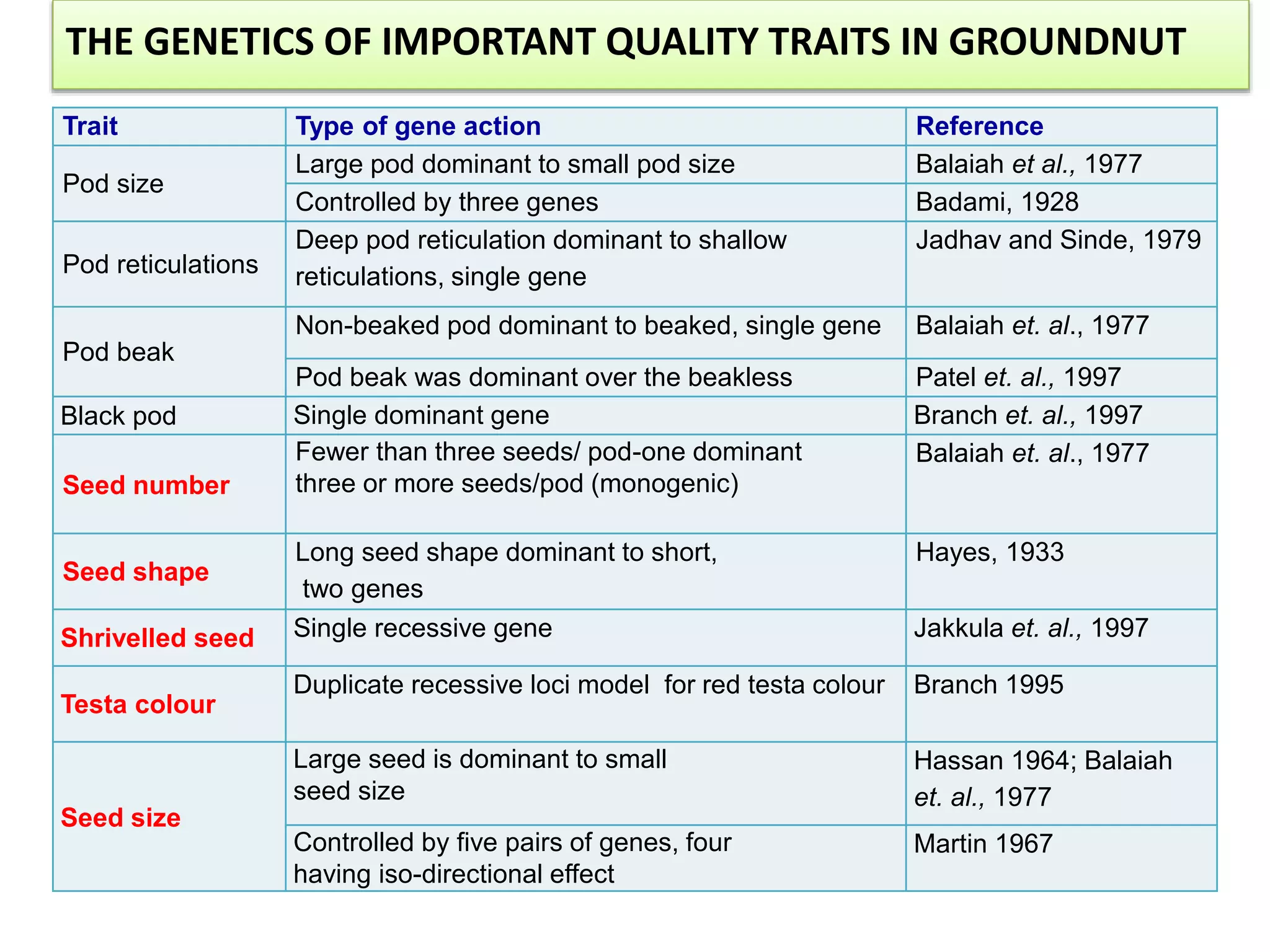
Trait Type of gene action Reference
Pod size
Large pod dominant to small pod size Balaiah et al., 1977
Controlled by three genes Badami, 1928
Pod reticulations
Deep pod reticulation dominant to shallow
reticulations, single gene
Jadhav and Sinde, 1979
Pod beak
Non-beaked pod dominant to beaked, single gene Balaiah et. al., 1977
Pod beak was dominant over the beakless Patel et. al., 1997
Black pod Single dominant gene Branch et. al., 1997
Seed number
Fewer than three seeds/ pod-one dominant
three or more seeds/pod (monogenic)
Balaiah et. al., 1977
Seed shape
Long seed shape dominant to short,
two genes
Hayes, 1933
Shrivelled seed Single recessive gene Jakkula et. al., 1997
Testa colour
Duplicate recessive loci model for red testa colour Branch 1995
Seed size
Large seed is dominant to small
seed size
Hassan 1964; Balaiah
et. al., 1977
Controlled by five pairs of genes, four
having iso-directional effect
Martin 1967
THE GENETICS OF IMPORTANT QUALITY TRAITS IN GROUNDNUT
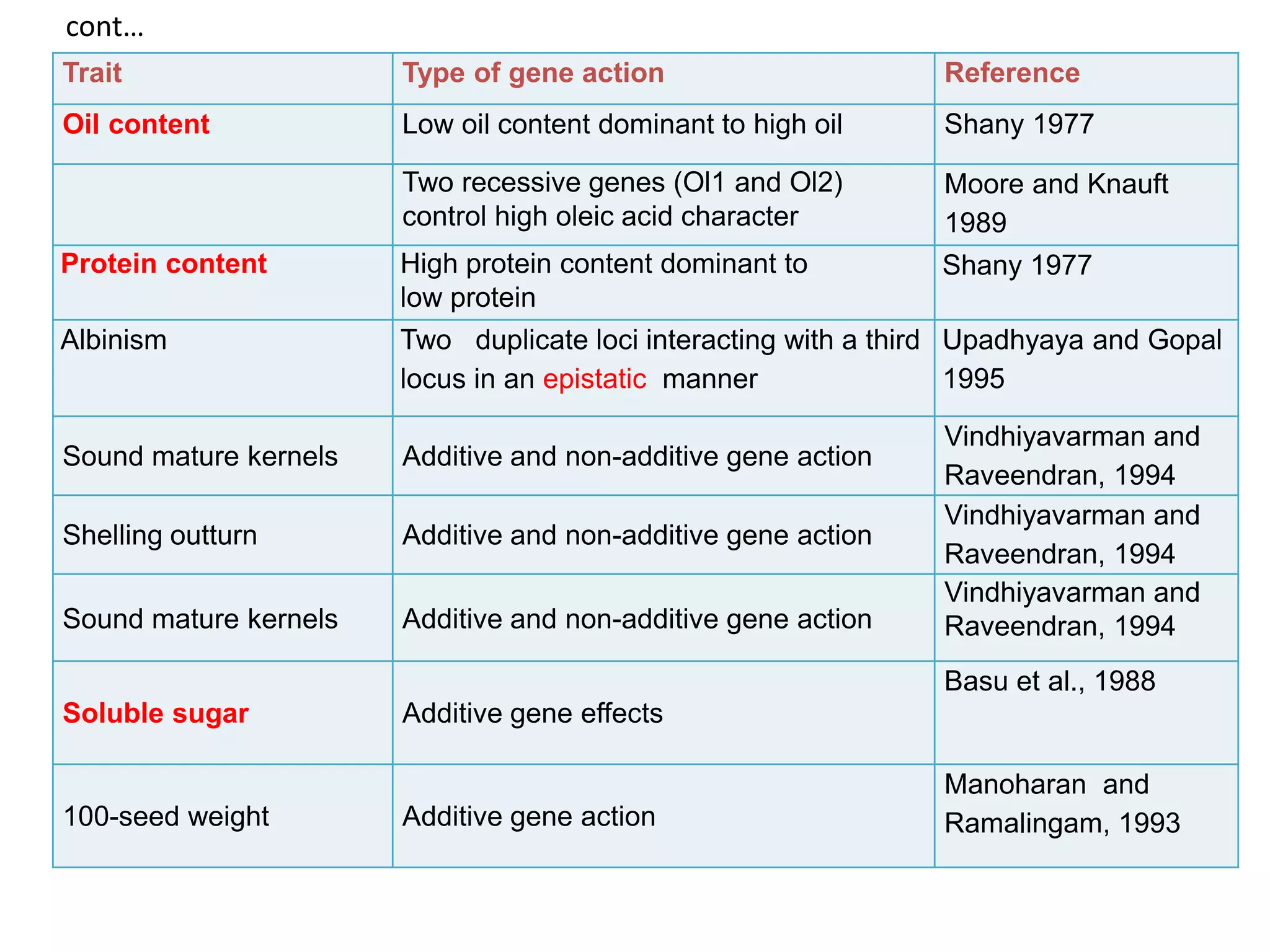
Trait Type of gene action Reference
Oil content Low oil content dominant to high oil Shany 1977
Two recessive genes (Ol1 and Ol2)
control high oleic acid character
Moore and Knauft
1989
Protein content High protein content dominant to
low protein
Shany 1977
Albinism Two duplicate loci interacting with a third
locus in an epistatic manner
Upadhyaya and Gopal
1995
Sound mature kernels Additive and non-additive gene action
Vindhiyavarman and
Raveendran, 1994
Shelling outturn Additive and non-additive gene action
Vindhiyavarman and
Raveendran, 1994
Sound mature kernels Additive and non-additive gene action
Vindhiyavarman and
Raveendran, 1994
Soluble sugar Additive gene effects
Basu et al., 1988
100-seed weight Additive gene action
Manoharan and
Ramalingam, 1993
cont…
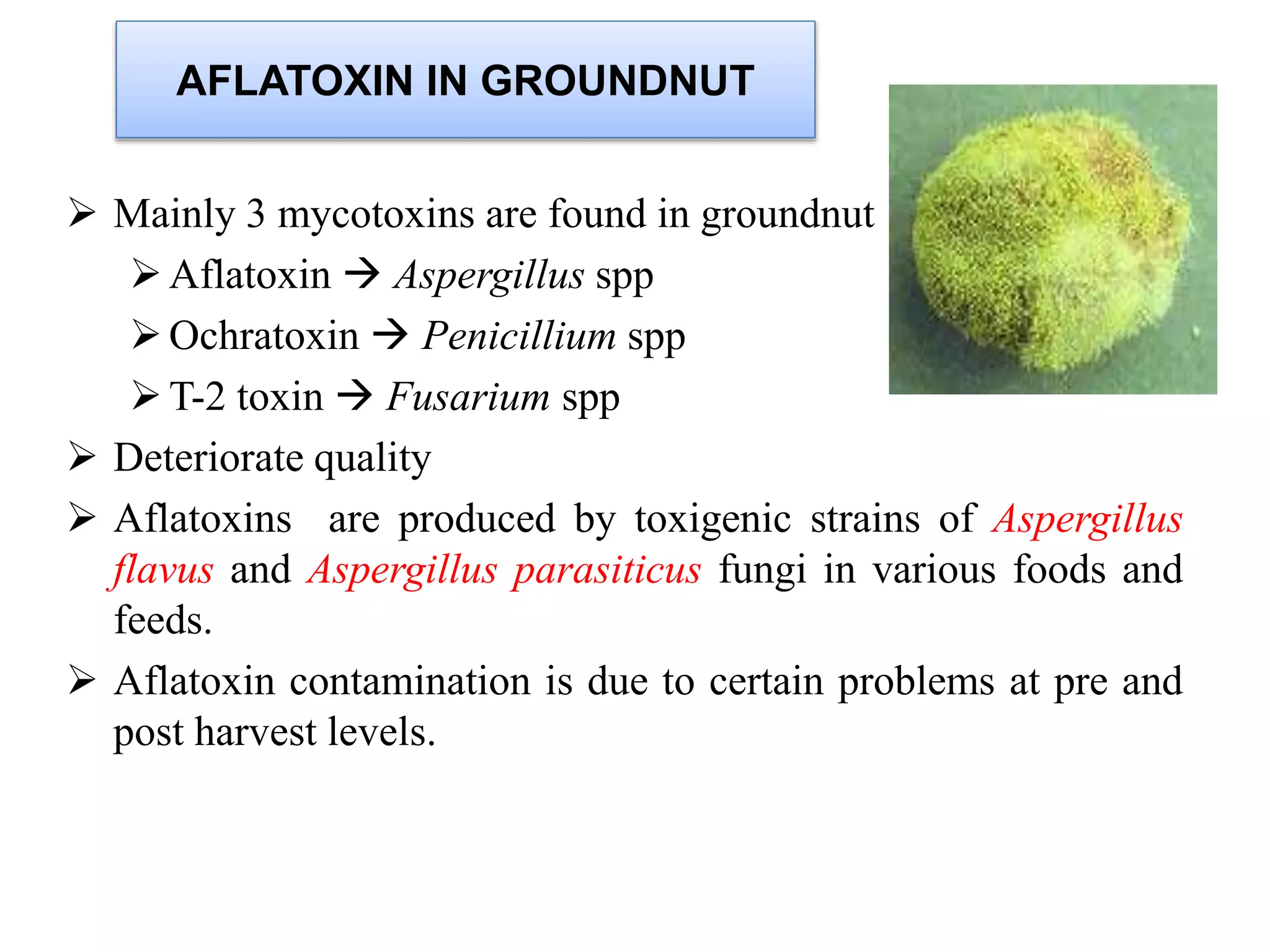
 Mainly 3 mycotoxins are found in groundnut
Aflatoxin  Aspergillus spp
Ochratoxin  Penicillium spp
T-2 toxin  Fusarium spp
 Deteriorate quality
 Aflatoxins are produced by toxigenic strains of Aspergillus
flavus and Aspergillus parasiticus fungi in various foods and
feeds.
 Aflatoxin contamination is due to certain problems at pre and
post harvest levels.
AFLATOXIN IN GROUNDNUT
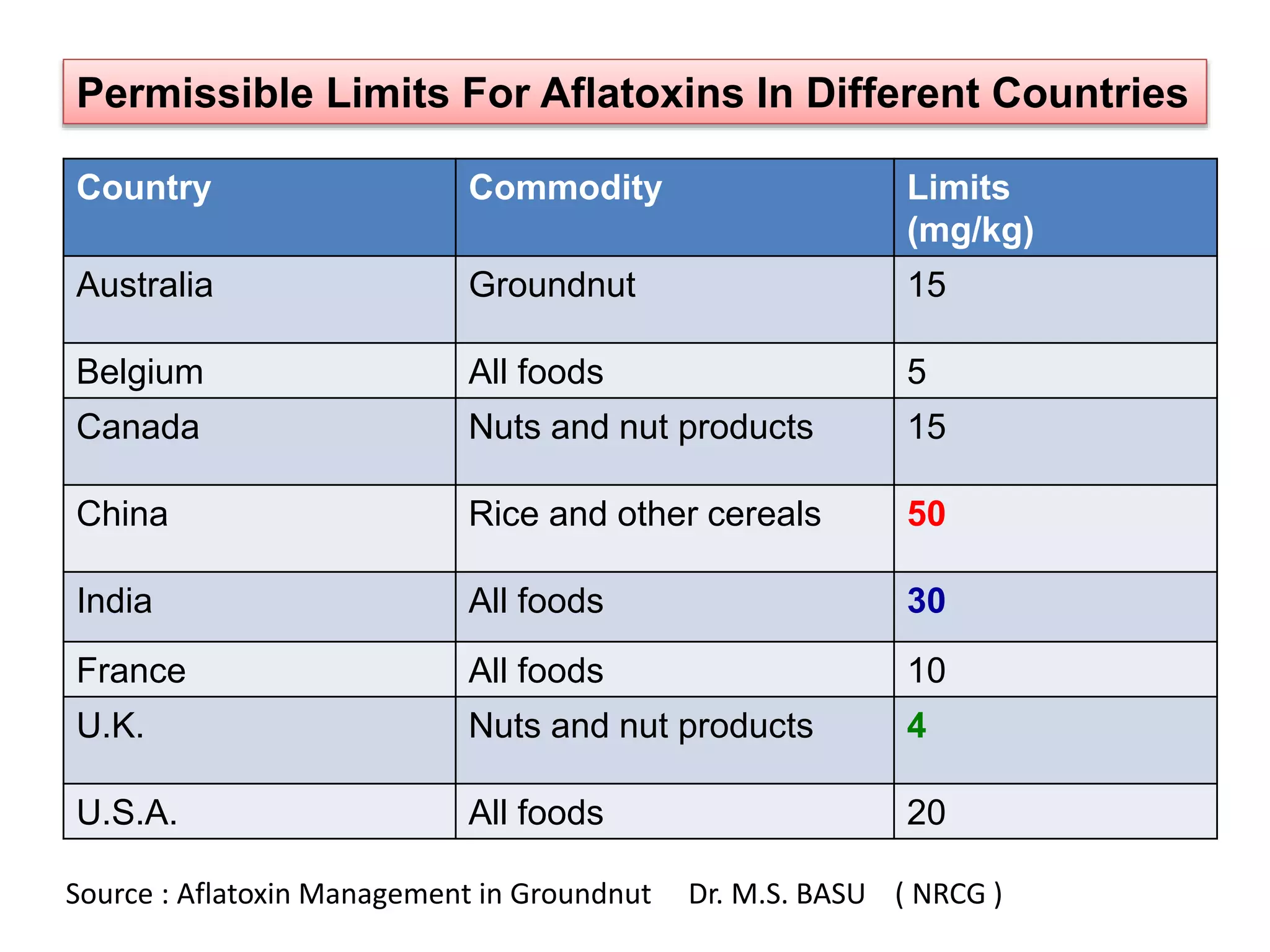
Permissible Limits For Aflatoxins In Different Countries
Country Commodity Limits
(mg/kg)
Australia Groundnut 15
Belgium All foods 5
Canada Nuts and nut products 15
China Rice and other cereals 50
India All foods 30
France All foods 10
U.K. Nuts and nut products 4
U.S.A. All foods 20
Source : Aflatoxin Management in Groundnut Dr. M.S. BASU ( NRCG )
1. Resistance is effective only when the seed coat remains intact
2. The drought tolerance and resistance to damage of pods by insect can
reduce the extent of aflatoxin contamination.
3. New molecular techniques to develop resistance to aflatoxigenic
fungi/aflatoxin should be developed for groundnut.
4. Use of wild species of Arachis for disease resistance
5. The high level of resistance or immunity to aflatoxin, must be
transferred to cultivated groundnut (Stalker and Moss, 1987).
BREEDING STRATEGIES FOR AFLATOXIN
RESISTANCE
Limitation Of Aflatoxin Resistance Breeding
1) Complexity of nature of resistance.
2) Non-availability of any genotypes in which all the seeds can be free
from infection of the aflatoxin producing fungi.
3) No method is available for selection in segregating generations.
4) There appears to be different genes in conferring resistance to
seed colonization at preharvest seed infection, and post-harvest
aflatoxin production.
5) When dealing specifically with resistance to natural seed infection
in the field, resistance mechanisms may operate at the pod
surface, within the shell, at the seed surface and within the
testa/cotyledons. This makes it difficult for breeders to specify the
particular resistance traits to which he aim.
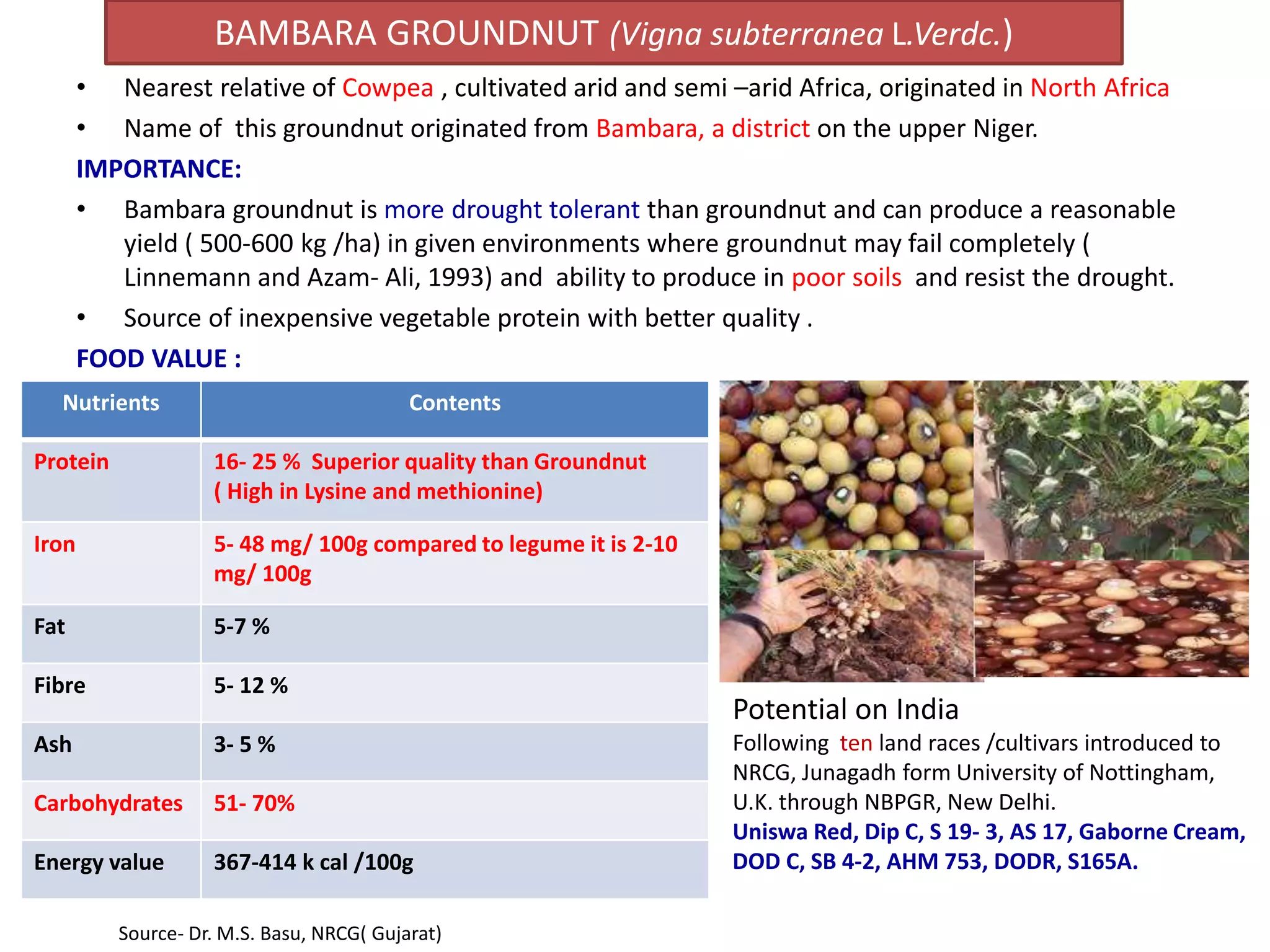
• Nearest relative of Cowpea , cultivated arid and semi –arid Africa, originated in North Africa
• Name of this groundnut originated from Bambara, a district on the upper Niger.
IMPORTANCE:
• Bambara groundnut is more drought tolerant than groundnut and can produce a reasonable
yield ( 500-600 kg /ha) in given environments where groundnut may fail completely (
Linnemann and Azam- Ali, 1993) and ability to produce in poor soils and resist the drought.
• Source of inexpensive vegetable protein with better quality .
FOOD VALUE :
Potential on India
Following ten land races /cultivars introduced to
NRCG, Junagadh form University of Nottingham,
U.K. through NBPGR, New Delhi.
Uniswa Red, Dip C, S 19- 3, AS 17, Gaborne Cream,
DOD C, SB 4-2, AHM 753, DODR, S165A.
Nutrients Contents
Protein 16- 25 % Superior quality than Groundnut
( High in Lysine and methionine)
Iron 5- 48 mg/ 100g compared to legume it is 2-10
mg/ 100g
Fat 5-7 %
Fibre 5- 12 %
Ash 3- 5 %
Carbohydrates 51- 70%
Energy value 367-414 k cal /100g
BAMBARA GROUNDNUT (Vigna subterranea L.Verdc.)
Source- Dr. M.S. Basu, NRCG( Gujarat)
BREEDING METHODS
17
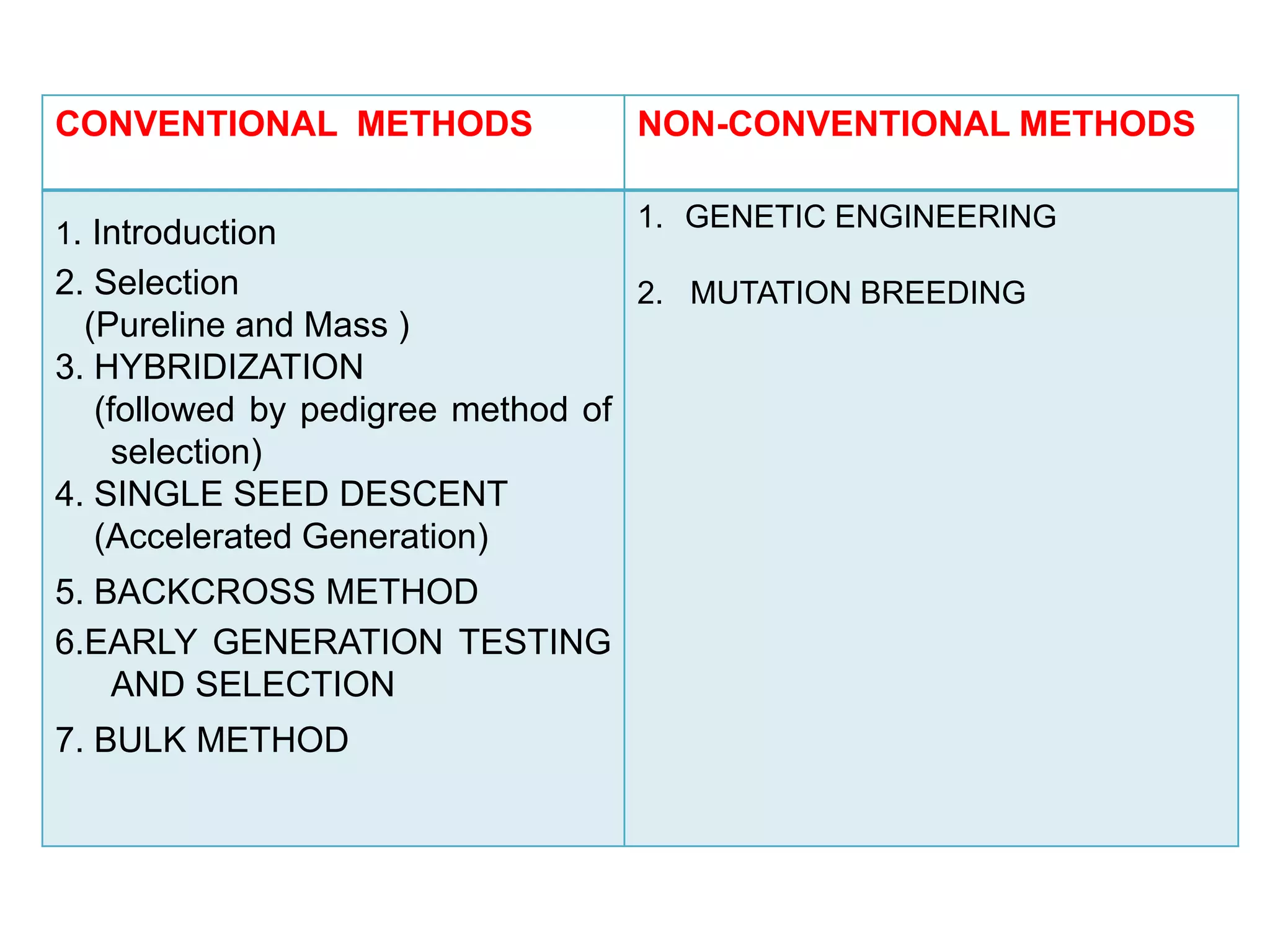
CONVENTIONAL METHODS NON-CONVENTIONAL METHODS
1. Introduction
2. Selection
(Pureline and Mass )
3. HYBRIDIZATION
(followed by pedigree method of
selection)
4. SINGLE SEED DESCENT
(Accelerated Generation)
5. BACKCROSS METHOD
6.EARLY GENERATION TESTING
AND SELECTION
7. BULK METHOD
1. GENETIC ENGINEERING
2. MUTATION BREEDING
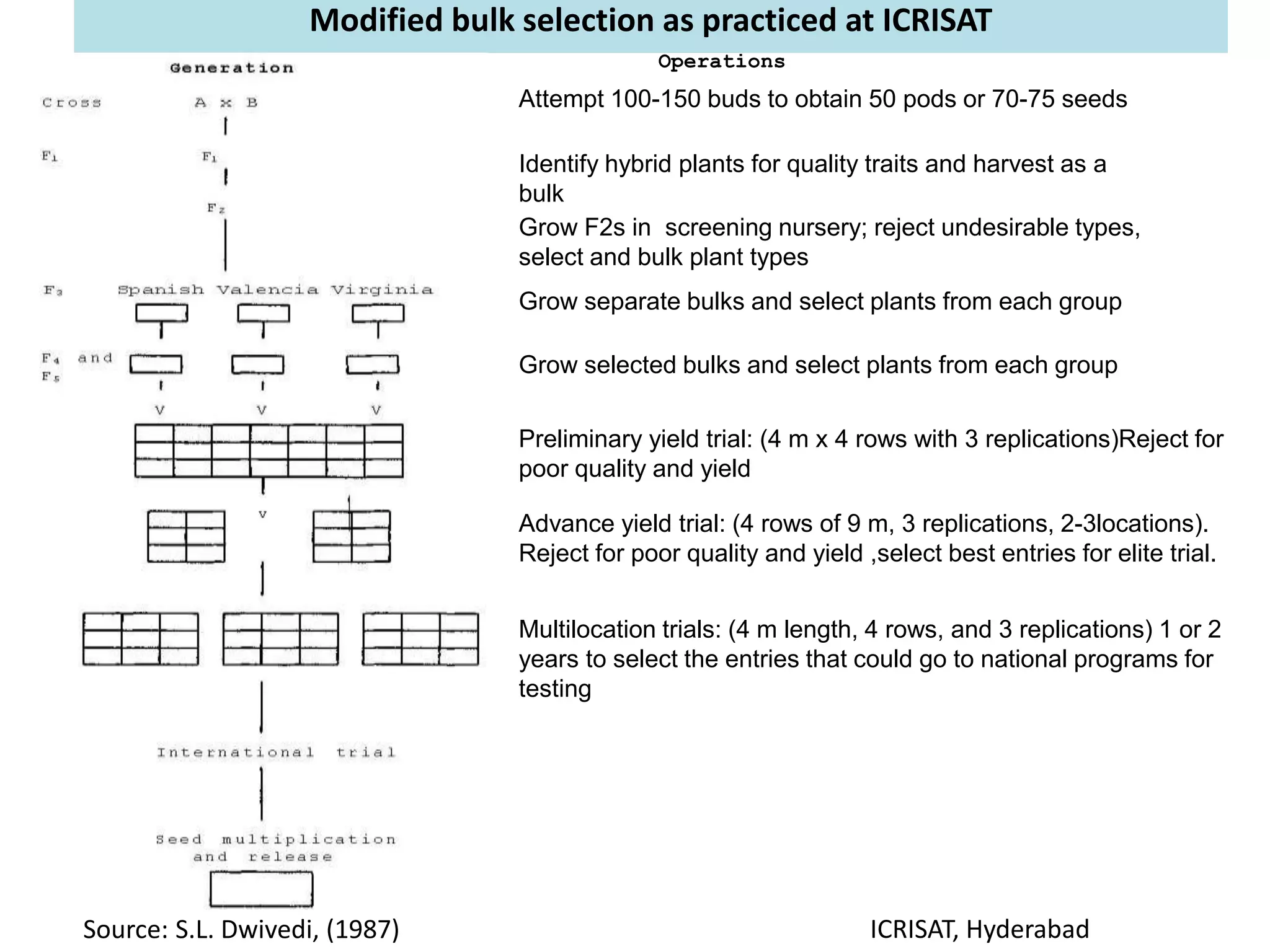
Modified bulk selection as practiced at ICRISAT
Operations
Attempt 100-150 buds to obtain 50 pods or 70-75 seeds
Identify hybrid plants for quality traits and harvest as a
bulk
Grow F2s in screening nursery; reject undesirable types,
select and bulk plant types
Grow separate bulks and select plants from each group
Grow selected bulks and select plants from each group
Preliminary yield trial: (4 m x 4 rows with 3 replications)Reject for
poor quality and yield
Advance yield trial: (4 rows of 9 m, 3 replications, 2-3locations).
Reject for poor quality and yield ,select best entries for elite trial.
Multilocation trials: (4 m length, 4 rows, and 3 replications) 1 or 2
years to select the entries that could go to national programs for
testing
Source: S.L. Dwivedi, (1987) ICRISAT, Hyderabad
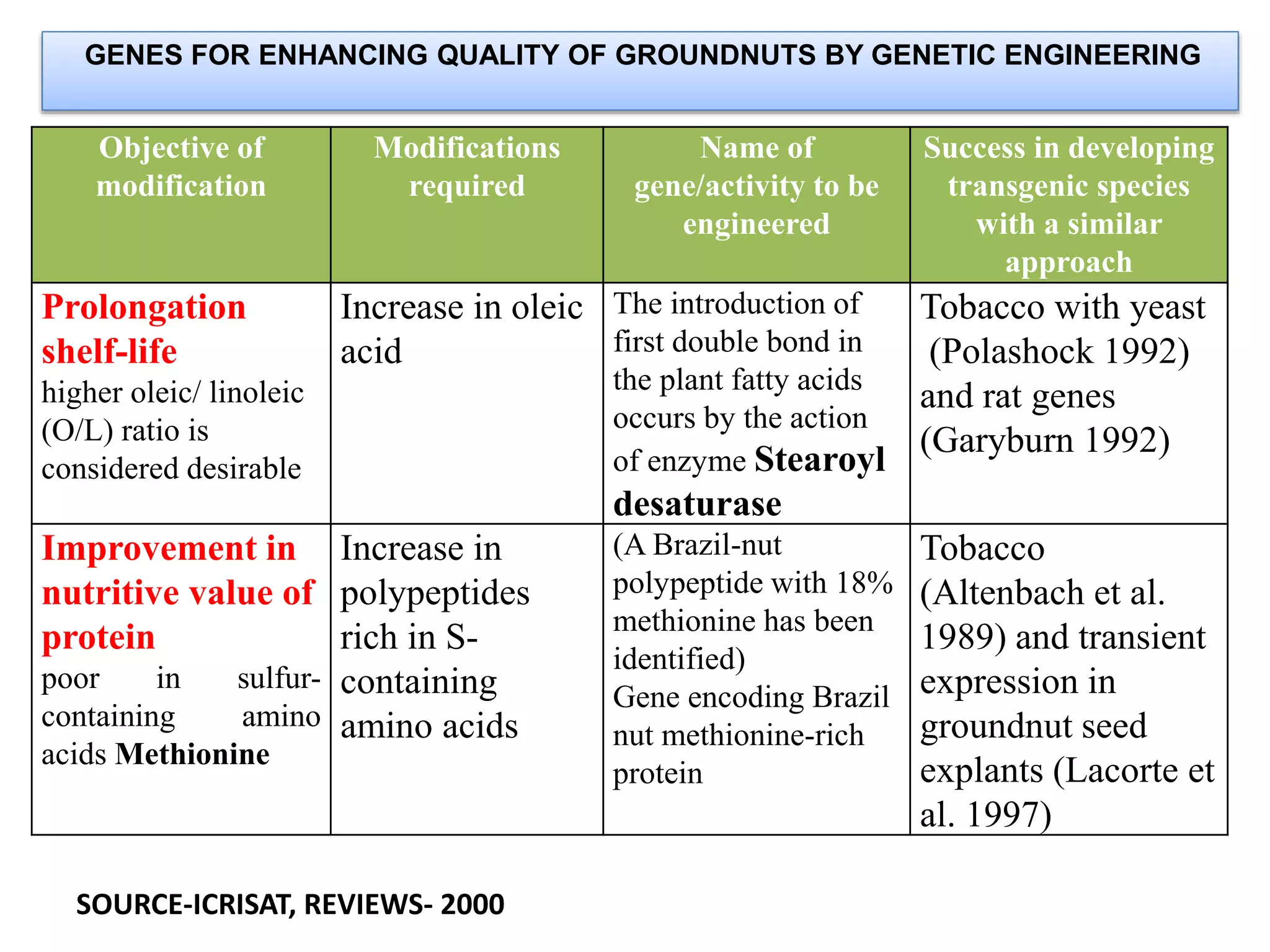
GENES FOR ENHANCING QUALITY OF GROUNDNUTS BY GENETIC ENGINEERING
Objective of
modification
Modifications
required
Name of
gene/activity to be
engineered
Success in developing
transgenic species
with a similar
approach
Prolongation
shelf-life
higher oleic/ linoleic
(O/L) ratio is
considered desirable
Increase in oleic
acid
The introduction of
first double bond in
the plant fatty acids
occurs by the action
of enzyme Stearoyl
desaturase
Tobacco with yeast
(Polashock 1992)
and rat genes
(Garyburn 1992)
Improvement in
nutritive value of
protein
poor in sulfur-
containing amino
acids Methionine
Increase in
polypeptides
rich in S-
containing
amino acids
(A Brazil-nut
polypeptide with 18%
methionine has been
identified)
Gene encoding Brazil
nut methionine-rich
protein
Tobacco
(Altenbach et al.
1989) and transient
expression in
groundnut seed
explants (Lacorte et
al. 1997)
SOURCE-ICRISAT, REVIEWS- 2000
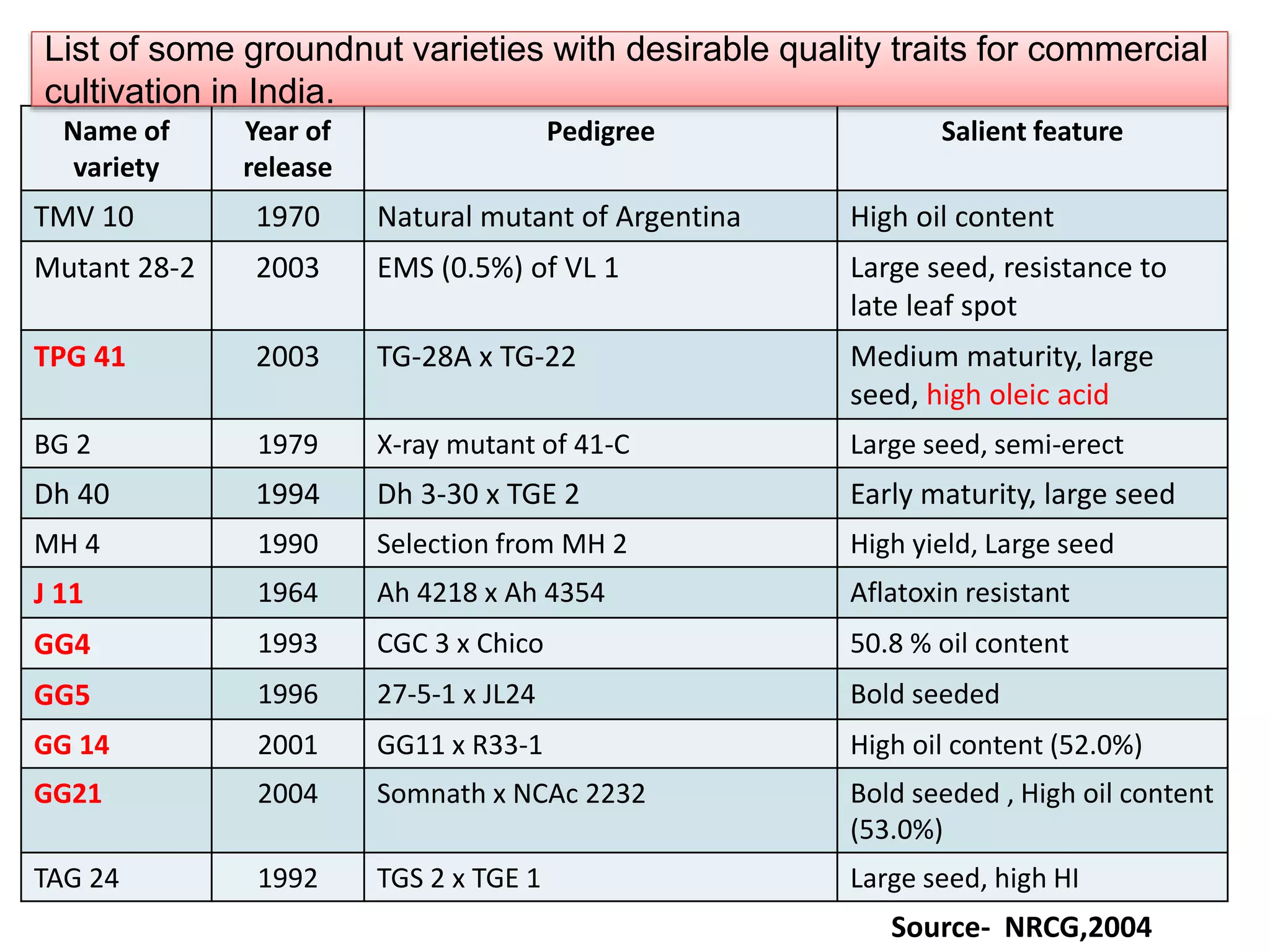
Name of
variety
Year of
release
Pedigree Salient feature
TMV 10 1970 Natural mutant of Argentina High oil content
Mutant 28-2 2003 EMS (0.5%) of VL 1 Large seed, resistance to
late leaf spot
TPG 41 2003 TG-28A x TG-22 Medium maturity, large
seed, high oleic acid
BG 2 1979 X-ray mutant of 41-C Large seed, semi-erect
Dh 40 1994 Dh 3-30 x TGE 2 Early maturity, large seed
MH 4 1990 Selection from MH 2 High yield, Large seed
J 11 1964 Ah 4218 x Ah 4354 Aflatoxin resistant
GG4 1993 CGC 3 x Chico 50.8 % oil content
GG5 1996 27-5-1 x JL24 Bold seeded
GG 14 2001 GG11 x R33-1 High oil content (52.0%)
GG21 2004 Somnath x NCAc 2232 Bold seeded , High oil content
(53.0%)
TAG 24 1992 TGS 2 x TGE 1 Large seed, high HI
Source- NRCG,2004
List of some groundnut varieties with desirable quality traits for commercial
cultivation in India.
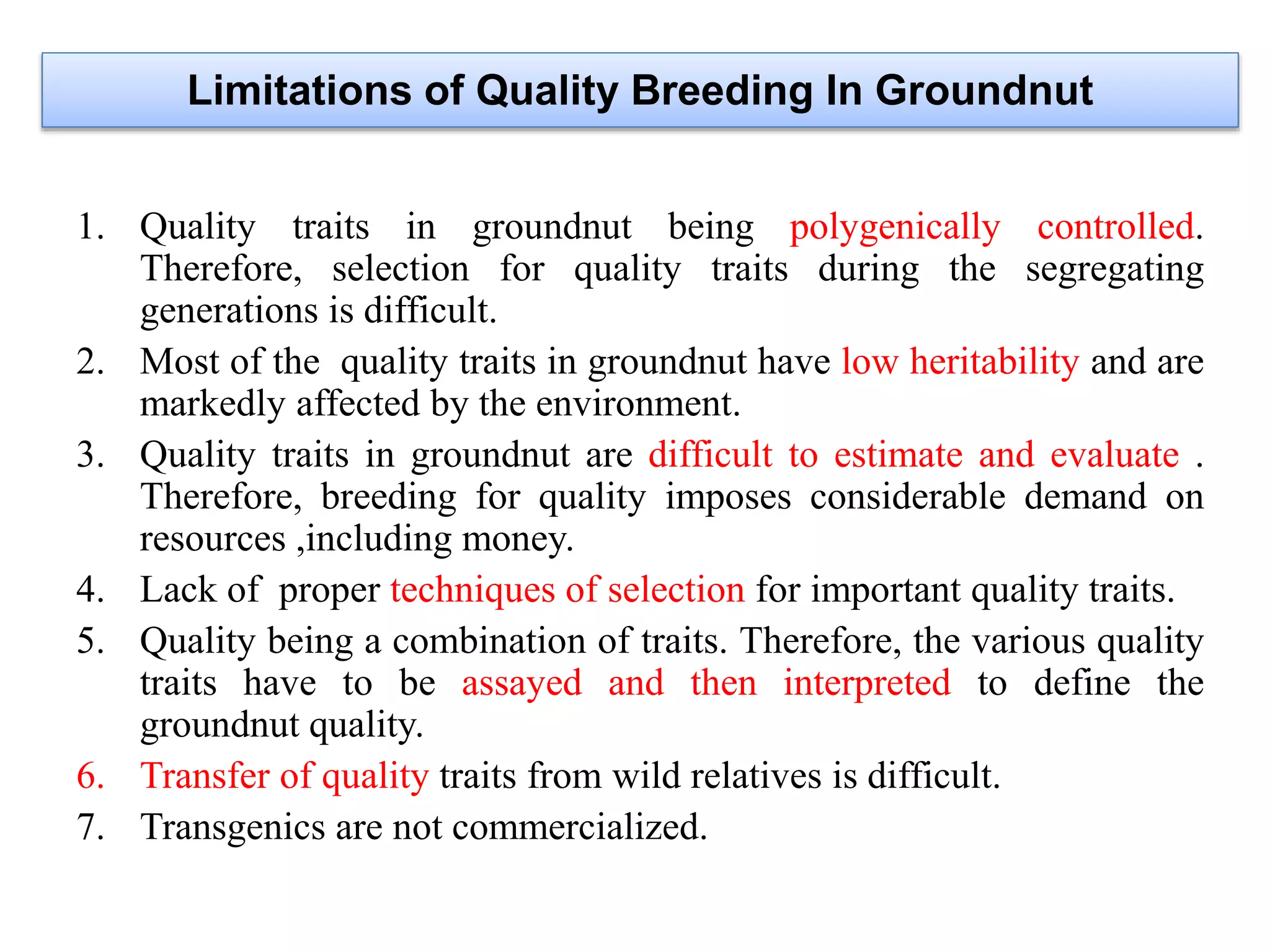
1. Quality traits in groundnut being polygenically controlled.
Therefore, selection for quality traits during the segregating
generations is difficult.
2. Most of the quality traits in groundnut have low heritability and are
markedly affected by the environment.
3. Quality traits in groundnut are difficult to estimate and evaluate .
Therefore, breeding for quality imposes considerable demand on
resources ,including money.
4. Lack of proper techniques of selection for important quality traits.
5. Quality being a combination of traits. Therefore, the various quality
traits have to be assayed and then interpreted to define the
groundnut quality.
6. Transfer of quality traits from wild relatives is difficult.
7. Transgenics are not commercialized.
Limitations of Quality Breeding In Groundnut
CONCLUSION
1. Oil content is usually associated with lower yields. Breeding
efforts are required to break this negative association
2. As Oleic acid content, O/L ratio and Iodine value (IV) are
predominantly under the control of additive gene action, the
selection for these traits can practiced in early generation.
3. Some quality traits are positively associated with yield, hence
quality traits might be improved with increased yield.
4. In confectionary purpose, besides high yield and large kernels,
seed with lower oil and higher protein and sucrose contents are
preferred
5. Technological advances in genetic engineering provide
alternative way to overcome the problem of aflatoxin
contamination along with conventional aflatoxin resistance
breeding.
1. The search for better sources of quality traits in cultivated
and wild Arachis germplasm needs to be done more
vigorously.
2. Stability in quality traits and realization / maintenance of high
quality will be the main priority concerns for groundnut
breeders.
3. Groundnut cultivars need to be developed that are resistant to
invasion by aflatoxigenic moulds and subsequent aflatoxin
production.
4. Tagging of genes for various quality parameters and their
introgressions to cultivated types with the help of
biotechnological techniques.
FUTURE THRUST
Thank You..

Breeding for Quality traits in Groundnut

  • 1.
    GPB-607 Advances In Breedingof Major Field Crops Term paper presentation on Breeding For Quality Traits In Groundnut BY B.SUKRUTHA 2020608008
  • 2.
    Cultivated groundnut (Arachishypogaea L.) is commonly known as monkey nut, pea nut , goober nut, manila nut, earth nut and popularly called as magphooli. It is an seasonal annual legume, unique among all the leguminous crops and designated as “ WONDER LEGUME”. It is a self pollinated, autotetraploid legume crop with 2n = 4x = 40 chromosomes. It is one of the principal economic crops of the world, ranking 13th among food crops. It is also first ranking oilseed crop of India. It is grown in nearly 100 countries. Major producers are China, India, Nigeria, USA, Indonesia and Sudan. It is an important food, feed and oilseed crop. In recent times, groundnut is gaining importance as a food crop, due to its high content of digestible proteins, vitamins and minerals, due to increased consumer’s preference after value addition. Intro..,
  • 3.
    A) Morphological andPhysical Quality Characters B) Organolaptic Quality Parameters C) Biological Quality Parameters D) Other Quality Parameters E) Biochemical Quality Parameters F) Undesirable Quality Parameters IMPORTANT QUALITY TRAITS
  • 4.
    4 A) Morphological andPhysical Quality Characters Following traits are related to external appearance of the seed. These traits are easily observable and usually play the main role in determining consumer acceptance of the produce. • Seed shape •Uniformity in seed mass •Integrity of testa •Absences of extraneous materials and immature seeds •Integrity of seed during processing and Blanching •Moisture content • Seed colour ( Variegated and non variegated) • Seed size ( Ranges - length- 7 to 21 mm , diameter- 5 to 13 mm ) • Seed texture •Seed surface •Seed weight ( ranges 0.17 to 1.24g, larger and heavier var. hypogaea > var. fastigata)
  • 5.
    QUALITY ATTRIBUTES OFCONFECTIONARY GROUNDNUT FOR EXPORT PURPOSE Traits Desirable aspects Seed size 155 to 170 seed /100g Seed shape Round or elongated with tapering ends Colour Pods : Light golden-yellow and Kernels : Tan rose and red testa of kernels are preferred. Flavour (Roasted) Almond ,coffee, nutty popcorn, smoky and sweet Texture ( Roasted) Firm and crispy Biochemical and Nutritional Low oil content, high protein content, high O/L ratio, high vitamins B1,B2,E, high in minerals like Ca, Mg, Fe: low in anti nutritional compounds like oxalic and phytic acid Aflatoxins Free from aflatoxins Source- Groundnut Research in India, NRCG
  • 6.
    B) Organolaptic QualityParameters Following traits are related to palatability of the produce. They are easily detected and are very important in consumer preferences. • Aroma - roasted peanutty, raw beany, dark roast peanut, woody/ hulls/skins, cardboard, painty, other( brunt, green, earthy, fishy, rainy chemical/ plastic, sweet fruity/fermented) • Flavour and Seed taste – sweet ,sour, bitter, salty • Softness. • Feeling factors – astringent, metallic Note: Screening of Organolaptic traits is carried out with the help of taste panel of 7 to 8 expert members. Source- Sanders (1995)
  • 7.
    C) Biological QualityParameters The traits included in this group define the actual usefulness of the produce, when consumed by the experimental units These includes •Protein efficiency ratio •Biological value •Body weight gain •Digestibility D) Other Quality Parameters These included prime importance in determining the usefulness of the concerned produce. This includes • Cooking quality •Milling quality • Cooking time • Keeping quality
  • 8.
    • Oil • Protein •Vitamins • Minerals • Carbohydrates • High in antioxidants ( Tocopherols) E) Biochemical Quality Parameters F) Undesirable Quality Parameters • Aflatoxins • Goiterogens • Saponins • Allergens • Phytates • Oxalates • Oligosaccharides • Hydrogen cyanide (HCN)
  • 9.
    Screening Methods forDifferent Quality Traits Traits Methods Oil Nuclear Magnetic Resonance (NMR) Nuclear Infrared Analyser (NIR) Soxhlet method Protein Nuclear Infrared Analyser (NIR) Micro-Kjeldahl method Amino acid Colorimetric method Iron Atomic Absorption Spectrophotometer Calcium Flame Photometric Phosphorous Colorimetric method Aflatoxin Thin layer Chromatography ELISA Kit
  • 10.
    Trait Type ofgene action Reference Pod size Large pod dominant to small pod size Balaiah et al., 1977 Controlled by three genes Badami, 1928 Pod reticulations Deep pod reticulation dominant to shallow reticulations, single gene Jadhav and Sinde, 1979 Pod beak Non-beaked pod dominant to beaked, single gene Balaiah et. al., 1977 Pod beak was dominant over the beakless Patel et. al., 1997 Black pod Single dominant gene Branch et. al., 1997 Seed number Fewer than three seeds/ pod-one dominant three or more seeds/pod (monogenic) Balaiah et. al., 1977 Seed shape Long seed shape dominant to short, two genes Hayes, 1933 Shrivelled seed Single recessive gene Jakkula et. al., 1997 Testa colour Duplicate recessive loci model for red testa colour Branch 1995 Seed size Large seed is dominant to small seed size Hassan 1964; Balaiah et. al., 1977 Controlled by five pairs of genes, four having iso-directional effect Martin 1967 THE GENETICS OF IMPORTANT QUALITY TRAITS IN GROUNDNUT
  • 11.
    Trait Type ofgene action Reference Oil content Low oil content dominant to high oil Shany 1977 Two recessive genes (Ol1 and Ol2) control high oleic acid character Moore and Knauft 1989 Protein content High protein content dominant to low protein Shany 1977 Albinism Two duplicate loci interacting with a third locus in an epistatic manner Upadhyaya and Gopal 1995 Sound mature kernels Additive and non-additive gene action Vindhiyavarman and Raveendran, 1994 Shelling outturn Additive and non-additive gene action Vindhiyavarman and Raveendran, 1994 Sound mature kernels Additive and non-additive gene action Vindhiyavarman and Raveendran, 1994 Soluble sugar Additive gene effects Basu et al., 1988 100-seed weight Additive gene action Manoharan and Ramalingam, 1993 cont…
  • 12.
     Mainly 3mycotoxins are found in groundnut Aflatoxin  Aspergillus spp Ochratoxin  Penicillium spp T-2 toxin  Fusarium spp  Deteriorate quality  Aflatoxins are produced by toxigenic strains of Aspergillus flavus and Aspergillus parasiticus fungi in various foods and feeds.  Aflatoxin contamination is due to certain problems at pre and post harvest levels. AFLATOXIN IN GROUNDNUT
  • 13.
    Permissible Limits ForAflatoxins In Different Countries Country Commodity Limits (mg/kg) Australia Groundnut 15 Belgium All foods 5 Canada Nuts and nut products 15 China Rice and other cereals 50 India All foods 30 France All foods 10 U.K. Nuts and nut products 4 U.S.A. All foods 20 Source : Aflatoxin Management in Groundnut Dr. M.S. BASU ( NRCG )
  • 14.
    1. Resistance iseffective only when the seed coat remains intact 2. The drought tolerance and resistance to damage of pods by insect can reduce the extent of aflatoxin contamination. 3. New molecular techniques to develop resistance to aflatoxigenic fungi/aflatoxin should be developed for groundnut. 4. Use of wild species of Arachis for disease resistance 5. The high level of resistance or immunity to aflatoxin, must be transferred to cultivated groundnut (Stalker and Moss, 1987). BREEDING STRATEGIES FOR AFLATOXIN RESISTANCE
  • 15.
    Limitation Of AflatoxinResistance Breeding 1) Complexity of nature of resistance. 2) Non-availability of any genotypes in which all the seeds can be free from infection of the aflatoxin producing fungi. 3) No method is available for selection in segregating generations. 4) There appears to be different genes in conferring resistance to seed colonization at preharvest seed infection, and post-harvest aflatoxin production. 5) When dealing specifically with resistance to natural seed infection in the field, resistance mechanisms may operate at the pod surface, within the shell, at the seed surface and within the testa/cotyledons. This makes it difficult for breeders to specify the particular resistance traits to which he aim.
  • 16.
    • Nearest relativeof Cowpea , cultivated arid and semi –arid Africa, originated in North Africa • Name of this groundnut originated from Bambara, a district on the upper Niger. IMPORTANCE: • Bambara groundnut is more drought tolerant than groundnut and can produce a reasonable yield ( 500-600 kg /ha) in given environments where groundnut may fail completely ( Linnemann and Azam- Ali, 1993) and ability to produce in poor soils and resist the drought. • Source of inexpensive vegetable protein with better quality . FOOD VALUE : Potential on India Following ten land races /cultivars introduced to NRCG, Junagadh form University of Nottingham, U.K. through NBPGR, New Delhi. Uniswa Red, Dip C, S 19- 3, AS 17, Gaborne Cream, DOD C, SB 4-2, AHM 753, DODR, S165A. Nutrients Contents Protein 16- 25 % Superior quality than Groundnut ( High in Lysine and methionine) Iron 5- 48 mg/ 100g compared to legume it is 2-10 mg/ 100g Fat 5-7 % Fibre 5- 12 % Ash 3- 5 % Carbohydrates 51- 70% Energy value 367-414 k cal /100g BAMBARA GROUNDNUT (Vigna subterranea L.Verdc.) Source- Dr. M.S. Basu, NRCG( Gujarat)
  • 17.
  • 18.
    CONVENTIONAL METHODS NON-CONVENTIONALMETHODS 1. Introduction 2. Selection (Pureline and Mass ) 3. HYBRIDIZATION (followed by pedigree method of selection) 4. SINGLE SEED DESCENT (Accelerated Generation) 5. BACKCROSS METHOD 6.EARLY GENERATION TESTING AND SELECTION 7. BULK METHOD 1. GENETIC ENGINEERING 2. MUTATION BREEDING
  • 19.
    Modified bulk selectionas practiced at ICRISAT Operations Attempt 100-150 buds to obtain 50 pods or 70-75 seeds Identify hybrid plants for quality traits and harvest as a bulk Grow F2s in screening nursery; reject undesirable types, select and bulk plant types Grow separate bulks and select plants from each group Grow selected bulks and select plants from each group Preliminary yield trial: (4 m x 4 rows with 3 replications)Reject for poor quality and yield Advance yield trial: (4 rows of 9 m, 3 replications, 2-3locations). Reject for poor quality and yield ,select best entries for elite trial. Multilocation trials: (4 m length, 4 rows, and 3 replications) 1 or 2 years to select the entries that could go to national programs for testing Source: S.L. Dwivedi, (1987) ICRISAT, Hyderabad
  • 20.
    GENES FOR ENHANCINGQUALITY OF GROUNDNUTS BY GENETIC ENGINEERING Objective of modification Modifications required Name of gene/activity to be engineered Success in developing transgenic species with a similar approach Prolongation shelf-life higher oleic/ linoleic (O/L) ratio is considered desirable Increase in oleic acid The introduction of first double bond in the plant fatty acids occurs by the action of enzyme Stearoyl desaturase Tobacco with yeast (Polashock 1992) and rat genes (Garyburn 1992) Improvement in nutritive value of protein poor in sulfur- containing amino acids Methionine Increase in polypeptides rich in S- containing amino acids (A Brazil-nut polypeptide with 18% methionine has been identified) Gene encoding Brazil nut methionine-rich protein Tobacco (Altenbach et al. 1989) and transient expression in groundnut seed explants (Lacorte et al. 1997) SOURCE-ICRISAT, REVIEWS- 2000
  • 21.
    Name of variety Year of release PedigreeSalient feature TMV 10 1970 Natural mutant of Argentina High oil content Mutant 28-2 2003 EMS (0.5%) of VL 1 Large seed, resistance to late leaf spot TPG 41 2003 TG-28A x TG-22 Medium maturity, large seed, high oleic acid BG 2 1979 X-ray mutant of 41-C Large seed, semi-erect Dh 40 1994 Dh 3-30 x TGE 2 Early maturity, large seed MH 4 1990 Selection from MH 2 High yield, Large seed J 11 1964 Ah 4218 x Ah 4354 Aflatoxin resistant GG4 1993 CGC 3 x Chico 50.8 % oil content GG5 1996 27-5-1 x JL24 Bold seeded GG 14 2001 GG11 x R33-1 High oil content (52.0%) GG21 2004 Somnath x NCAc 2232 Bold seeded , High oil content (53.0%) TAG 24 1992 TGS 2 x TGE 1 Large seed, high HI Source- NRCG,2004 List of some groundnut varieties with desirable quality traits for commercial cultivation in India.
  • 22.
    1. Quality traitsin groundnut being polygenically controlled. Therefore, selection for quality traits during the segregating generations is difficult. 2. Most of the quality traits in groundnut have low heritability and are markedly affected by the environment. 3. Quality traits in groundnut are difficult to estimate and evaluate . Therefore, breeding for quality imposes considerable demand on resources ,including money. 4. Lack of proper techniques of selection for important quality traits. 5. Quality being a combination of traits. Therefore, the various quality traits have to be assayed and then interpreted to define the groundnut quality. 6. Transfer of quality traits from wild relatives is difficult. 7. Transgenics are not commercialized. Limitations of Quality Breeding In Groundnut
  • 23.
    CONCLUSION 1. Oil contentis usually associated with lower yields. Breeding efforts are required to break this negative association 2. As Oleic acid content, O/L ratio and Iodine value (IV) are predominantly under the control of additive gene action, the selection for these traits can practiced in early generation. 3. Some quality traits are positively associated with yield, hence quality traits might be improved with increased yield. 4. In confectionary purpose, besides high yield and large kernels, seed with lower oil and higher protein and sucrose contents are preferred 5. Technological advances in genetic engineering provide alternative way to overcome the problem of aflatoxin contamination along with conventional aflatoxin resistance breeding.
  • 24.
    1. The searchfor better sources of quality traits in cultivated and wild Arachis germplasm needs to be done more vigorously. 2. Stability in quality traits and realization / maintenance of high quality will be the main priority concerns for groundnut breeders. 3. Groundnut cultivars need to be developed that are resistant to invasion by aflatoxigenic moulds and subsequent aflatoxin production. 4. Tagging of genes for various quality parameters and their introgressions to cultivated types with the help of biotechnological techniques. FUTURE THRUST
  • 25.