Brandy
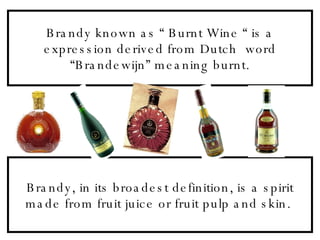
Brandy known as “ Burnt Wine “ is a expression derived from Dutch  word “Brandewijn” meaning burnt. Brandy, in its broadest definition, is a spirit made from fruit juice or fruit pulp and skin.
Brandy can be divided into three broad categories: Grape Brandy   : Brandy made from fermented grape juice and crushed grape skin and seeds. Fruit Brandy   : It is term used for brandies which are made from fermenting juices of fruits other than grapes. Pomace   : Brandy made from pressed grape skin, pulp and seeds the residue which remains after all the juice has been extracted for wine.
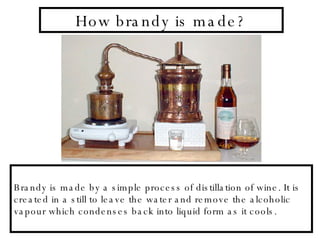
How brandy is made? Brandy is made by a simple process of distillation of wine. It is created in a still to leave the water and remove the alcoholic vapour which condenses back into liquid form as it cools.
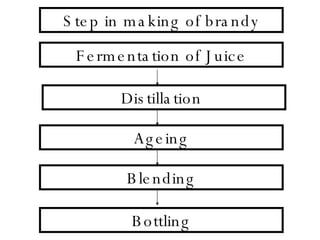
Step in making of brandy Fermentation of Juice Distillation  Ageing Blending Bottling
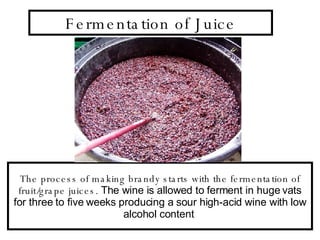
Fermentation of Juice The process of making brandy starts with the fermentation of fruit/grape juices.  The wine is allowed to ferment in huge vats for three to five weeks producing a sour high-acid wine with low alcohol content
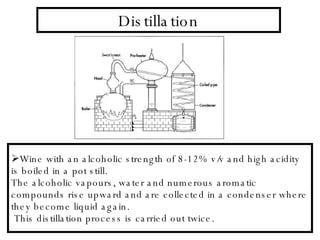
Distillation Wine with an alcoholic strength of 8-12% v/v and high acidity is boiled in a pot still. The alcoholic vapours, water and numerous aromatic compounds rise upward and are collected in a condenser where they become liquid again.  This distillation process is carried out twice.
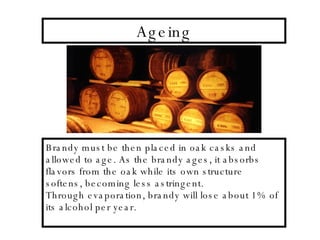
Ageing Brandy must be then placed in oak casks and allowed to age. As the brandy ages, it absorbs flavors from the oak while its own structure softens, becoming less astringent. Through evaporation, brandy will lose about 1% of its alcohol per year.
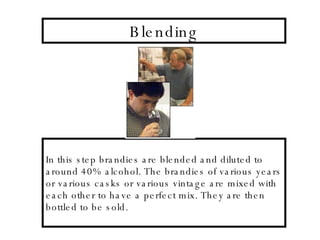
Blending In this step brandies are blended and diluted to around 40% alcohol. The brandies of various years or various casks or various vintage are mixed with each other to have a perfect mix. They are then bottled to be sold.
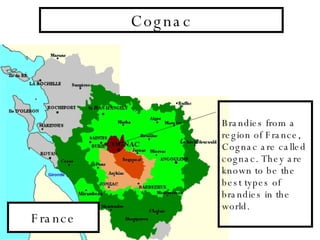
Cognac Brandies from a region of France, Cognac are called cognac. They are known to be the best types of brandies in the world. France
Brandies from the region of cognac have to: Be made from three major varieties of grapes Folle blanche, Ugni Blanc and Colombard. Be distilled twice in copper pot stills and aged at least 2 1/2 years in oak barrels in order to be called "cognac".
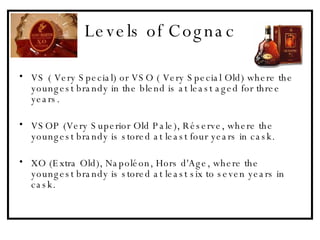
Levels of Cognac VS ( Very Special) or VSO ( Very Special Old) where the youngest brandy in the blend is at least aged for three years. VSOP (Very Superior Old Pale), Réserve, where the youngest brandy is stored at least four years in cask. XO (Extra Old), Napoléon, Hors d'Age, where the youngest brandy is stored at least six to seven years in cask.
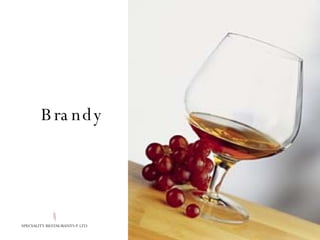
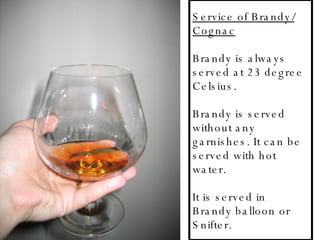
Service of Brandy/ Cognac Brandy is always served at 23 degree Celsius. Brandy is served without any garnishes. It can be served with hot water.  It is served in Brandy balloon or Snifter.
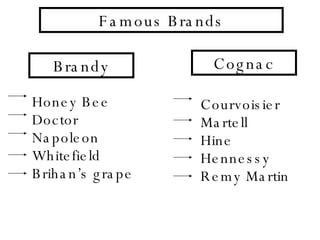
Famous Brands Brandy Cognac Courvoisier Martell Hine Hennessy Remy Martin Honey Bee Doctor Napoleon  Whitefield Brihan’s grape

Brandy: A brief

  • 1.
  • 2.
    Brandy known as“ Burnt Wine “ is a expression derived from Dutch word “Brandewijn” meaning burnt. Brandy, in its broadest definition, is a spirit made from fruit juice or fruit pulp and skin.
  • 3.
    Brandy can bedivided into three broad categories: Grape Brandy : Brandy made from fermented grape juice and crushed grape skin and seeds. Fruit Brandy : It is term used for brandies which are made from fermenting juices of fruits other than grapes. Pomace : Brandy made from pressed grape skin, pulp and seeds the residue which remains after all the juice has been extracted for wine.
  • 4.
    How brandy ismade? Brandy is made by a simple process of distillation of wine. It is created in a still to leave the water and remove the alcoholic vapour which condenses back into liquid form as it cools.
  • 5.
    Step in makingof brandy Fermentation of Juice Distillation Ageing Blending Bottling
  • 6.
    Fermentation of JuiceThe process of making brandy starts with the fermentation of fruit/grape juices. The wine is allowed to ferment in huge vats for three to five weeks producing a sour high-acid wine with low alcohol content
  • 7.
    Distillation Wine withan alcoholic strength of 8-12% v/v and high acidity is boiled in a pot still. The alcoholic vapours, water and numerous aromatic compounds rise upward and are collected in a condenser where they become liquid again. This distillation process is carried out twice.
  • 8.
    Ageing Brandy mustbe then placed in oak casks and allowed to age. As the brandy ages, it absorbs flavors from the oak while its own structure softens, becoming less astringent. Through evaporation, brandy will lose about 1% of its alcohol per year.
  • 9.
    Blending In thisstep brandies are blended and diluted to around 40% alcohol. The brandies of various years or various casks or various vintage are mixed with each other to have a perfect mix. They are then bottled to be sold.
  • 10.
    Cognac Brandies froma region of France, Cognac are called cognac. They are known to be the best types of brandies in the world. France
  • 11.
    Brandies from theregion of cognac have to: Be made from three major varieties of grapes Folle blanche, Ugni Blanc and Colombard. Be distilled twice in copper pot stills and aged at least 2 1/2 years in oak barrels in order to be called "cognac".
  • 12.
    Levels of CognacVS ( Very Special) or VSO ( Very Special Old) where the youngest brandy in the blend is at least aged for three years. VSOP (Very Superior Old Pale), Réserve, where the youngest brandy is stored at least four years in cask. XO (Extra Old), Napoléon, Hors d'Age, where the youngest brandy is stored at least six to seven years in cask.
  • 13.
    Service of Brandy/Cognac Brandy is always served at 23 degree Celsius. Brandy is served without any garnishes. It can be served with hot water. It is served in Brandy balloon or Snifter.
  • 14.
    Famous Brands BrandyCognac Courvoisier Martell Hine Hennessy Remy Martin Honey Bee Doctor Napoleon Whitefield Brihan’s grape