
Brand Management
Jyostna Jain
Unit 1
Introduction to Brand Management.
 Meaning of Brand, Branding, Brand Management.
 Importance of Branding to Consumers, Firms, Brands v/s Products.
 Scope of Branding, Branding Challenges and Opportunities.
Strategic Brand Management Process.
 Customer Based Brand Equity model (CBBE), Sources of Brand Equity, Steps of
Brand Building including Brand Building Blocks, Brand Positioning: Meaning,
Importance, Basis .
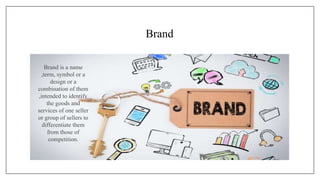
Brand
Brand is a name
,term, symbol or a
design or a
combination of them
,intended to identify
the goods and
services of one seller
or group of sellers to
differentiate them
from those of
competition.
Branding
The process involved in creating a unique name and image for a product in the
consumers' mind, mainly through advertising campaigns with a consistent theme.
Branding aims to establish a significant and differentiated presence in the market that
attracts and retains loyal customers.
Brand Management
 Brand management is nothing but an art of creating and sustaining the brand.
Branding makes customers committed to your business. A strong brand
differentiates your products from the competitors. It gives a quality image to your
business.
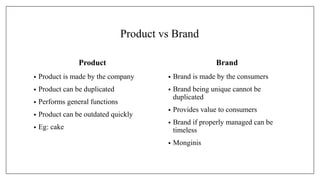
Product vs Brand
Product
• Product is made by the company
• Product can be duplicated
• Performs general functions
• Product can be outdated quickly
• Eg: cake
Brand
• Brand is made by the consumers
• Brand being unique cannot be
duplicated
• Provides value to consumers
• Brand if properly managed can be
timeless
• Monginis
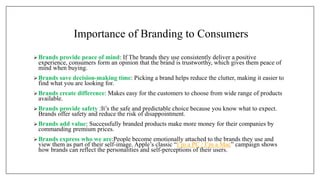
Importance of Branding to Consumers
Brands provide peace of mind: If The brands they use consistently deliver a positive
experience, consumers form an opinion that the brand is trustworthy, which gives them peace of
mind when buying.
 Brands save decision-making time: Picking a brand helps reduce the clutter, making it easier to
find what you are looking for.
 Brands create difference: Makes easy for the customers to choose from wide range of products
available.
 Brands provide safety :It’s the safe and predictable choice because you know what to expect.
Brands offer safety and reduce the risk of disappointment.
 Brands add value: Successfully branded products make more money for their companies by
commanding premium prices.
Brands express who we are:People become emotionally attached to the brands they use and
view them as part of their self-image. Apple’s classic “I’m a PC / I’m a Mac” campaign shows
how brands can reflect the personalities and self-perceptions of their users.
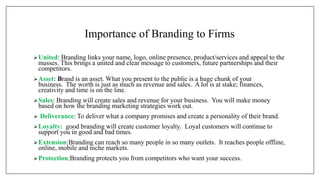
Importance of Branding to Firms
United: Branding links your name, logo, online presence, product/services and appeal to the
masses. This brings a united and clear message to customers, future partnerships and their
competitors.
Asset: Brand is an asset. What you present to the public is a huge chunk of your
business. The worth is just as much as revenue and sales. A lot is at stake; finances,
creativity and time is on the line.
Sales: Branding will create sales and revenue for your business. You will make money
based on how the branding marketing strategies work out.
 Deliverance: To deliver what a company promises and create a personality of their brand.
Loyalty: good branding will create customer loyalty. Loyal customers will continue to
support you in good and bad times.
Extension:Branding can reach so many people in so many outlets. It reaches people offline,
online, mobile and niche markets.
Protection:Branding protects you from competitors who want your success.
Scope of Branding
Means of identification
Trademark
Launch of new products or product lines
Customer loyalty
Competitive advantage
Segmenting market
Understand customer’s perspective
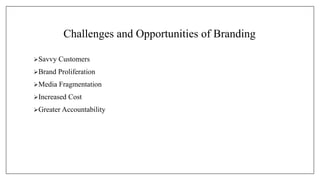
Challenges and Opportunities of Branding
Savvy Customers
Brand Proliferation
Media Fragmentation
Increased Cost
Greater Accountability
Brand Equity
Brand equity is a marketing term that describes a brand’s value.
That value is determined by consumer perception of and experiences with the brand.
If people think highly of a brand, it has positive brand equity.
 When a brand consistently under-delivers and disappoints to the point where people
recommend that others avoid it, it has negative brand equity.
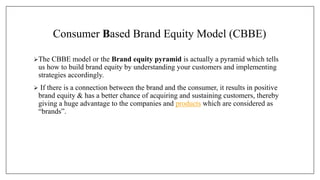
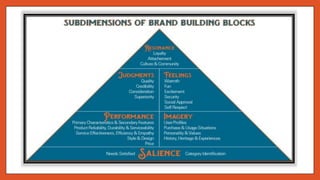
Consumer Based Brand Equity Model (CBBE)
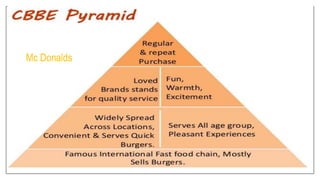
The CBBE model or the Brand equity pyramid is actually a pyramid which tells
us how to build brand equity by understanding your customers and implementing
strategies accordingly.
 If there is a connection between the brand and the consumer, it results in positive
brand equity & has a better chance of acquiring and sustaining customers, thereby
giving a huge advantage to the companies and products which are considered as
“brands”.
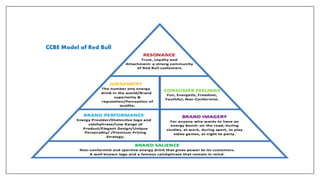
CCBE Model of Red Bull
Mc Donalds
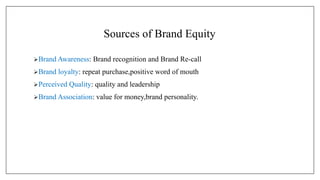
Sources of Brand Equity
Brand Awareness: Brand recognition and Brand Re-call
Brand loyalty: repeat purchase,positive word of mouth
Perceived Quality: quality and leadership
Brand Association: value for money,brand personality.
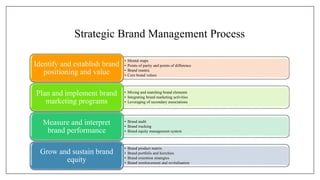
Strategic Brand Management Process
• Mental maps
• Points of parity and points of difference
• Brand mantra
• Core brand values
Identify and establish brand
positioning and value
• Mixing and matching brand elements
• Integrating brand marketing activities
• Leveraging of secondary associations
Plan and implement brand
marketing programs
• Brand audit
• Brand tracking
• Brand equity management system
Measure and interpret
brand performance
• Brand product matrix
• Brand portfolis and hierchies
• Brand extention strategies
• Brand reinforcement and revitalisation
Grow and sustain brand
equity
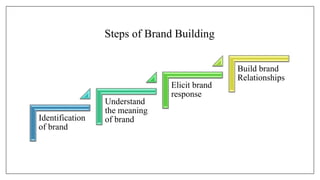
Steps of Brand Building
Identification
of brand
Understand
the meaning
of brand
Elicit brand
response
Build brand
Relationships
Brand Positioning
Brand positioning refers to “target consumer’s” reason to buy your brand in preference to
others. It is ensures that all brand activity has a common aim; is guided, directed and delivered
by the brand’s benefits/reasons to buy; and it focusses at all points of contact with the consumer.
 Brand positioning must make sure that:
 Is it unique/distinctive vs. competitors ?
Is it significant and encouraging to the niche market ?
 Is it appropriate to all major geographic markets and businesses ?
 Is the proposition validated with unique, appropriate and original products ?
 Is it sustainable - can it be delivered constantly across all points of contact with the consumer ?
Is it helpful for organization to achieve its financial goals ?
 Is it able to support and boost up the organization ?
Examples
Colgate is positioned as protective.
Patanjali can be trusted as it is fully organic.
Woodland is tough and perfect for outdoors.
Coca-Cola brings happiness.
Axe deodorants have a sexual appeal.
Basis of Brand Positioning
 Product class: This positioning strategy tends to take a leadership position in the
overall market. Statements with the general message of “we are the best in our
field” are common.
Consumer segmentation: here the main focus is on the target consumers
characteristics, needs and expectations
Consumer Perception: based on the perception of buyers.
Brand benefits and attributes: A product attribute is a specific feature or benefit of
the product. Positioning in this way focuses on one or two of the product’s best
features/benefits, relative to the competitive offerings.
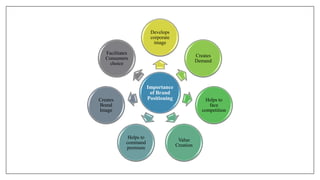
Importance
of Brand
Positioning
Develops
corporate
image
Creates
Demand
Helps to
face
competition
Value
Creation
Helps to
command
premium
Creates
Brand
Image
Facilitates
Consumers
choice

Brand management unit 1

  • 1.
  • 2.
    Unit 1 Introduction toBrand Management.  Meaning of Brand, Branding, Brand Management.  Importance of Branding to Consumers, Firms, Brands v/s Products.  Scope of Branding, Branding Challenges and Opportunities. Strategic Brand Management Process.  Customer Based Brand Equity model (CBBE), Sources of Brand Equity, Steps of Brand Building including Brand Building Blocks, Brand Positioning: Meaning, Importance, Basis .
  • 3.
    Brand Brand is aname ,term, symbol or a design or a combination of them ,intended to identify the goods and services of one seller or group of sellers to differentiate them from those of competition.
  • 4.
    Branding The process involvedin creating a unique name and image for a product in the consumers' mind, mainly through advertising campaigns with a consistent theme. Branding aims to establish a significant and differentiated presence in the market that attracts and retains loyal customers.
  • 5.
    Brand Management  Brandmanagement is nothing but an art of creating and sustaining the brand. Branding makes customers committed to your business. A strong brand differentiates your products from the competitors. It gives a quality image to your business.
  • 6.
    Product vs Brand Product •Product is made by the company • Product can be duplicated • Performs general functions • Product can be outdated quickly • Eg: cake Brand • Brand is made by the consumers • Brand being unique cannot be duplicated • Provides value to consumers • Brand if properly managed can be timeless • Monginis
  • 7.
    Importance of Brandingto Consumers Brands provide peace of mind: If The brands they use consistently deliver a positive experience, consumers form an opinion that the brand is trustworthy, which gives them peace of mind when buying.  Brands save decision-making time: Picking a brand helps reduce the clutter, making it easier to find what you are looking for.  Brands create difference: Makes easy for the customers to choose from wide range of products available.  Brands provide safety :It’s the safe and predictable choice because you know what to expect. Brands offer safety and reduce the risk of disappointment.  Brands add value: Successfully branded products make more money for their companies by commanding premium prices. Brands express who we are:People become emotionally attached to the brands they use and view them as part of their self-image. Apple’s classic “I’m a PC / I’m a Mac” campaign shows how brands can reflect the personalities and self-perceptions of their users.
  • 8.
    Importance of Brandingto Firms United: Branding links your name, logo, online presence, product/services and appeal to the masses. This brings a united and clear message to customers, future partnerships and their competitors. Asset: Brand is an asset. What you present to the public is a huge chunk of your business. The worth is just as much as revenue and sales. A lot is at stake; finances, creativity and time is on the line. Sales: Branding will create sales and revenue for your business. You will make money based on how the branding marketing strategies work out.  Deliverance: To deliver what a company promises and create a personality of their brand. Loyalty: good branding will create customer loyalty. Loyal customers will continue to support you in good and bad times. Extension:Branding can reach so many people in so many outlets. It reaches people offline, online, mobile and niche markets. Protection:Branding protects you from competitors who want your success.
  • 9.
    Scope of Branding Meansof identification Trademark Launch of new products or product lines Customer loyalty Competitive advantage Segmenting market Understand customer’s perspective
  • 10.
    Challenges and Opportunitiesof Branding Savvy Customers Brand Proliferation Media Fragmentation Increased Cost Greater Accountability
  • 11.
    Brand Equity Brand equityis a marketing term that describes a brand’s value. That value is determined by consumer perception of and experiences with the brand. If people think highly of a brand, it has positive brand equity.  When a brand consistently under-delivers and disappoints to the point where people recommend that others avoid it, it has negative brand equity.
  • 12.
    Consumer Based BrandEquity Model (CBBE) The CBBE model or the Brand equity pyramid is actually a pyramid which tells us how to build brand equity by understanding your customers and implementing strategies accordingly.  If there is a connection between the brand and the consumer, it results in positive brand equity & has a better chance of acquiring and sustaining customers, thereby giving a huge advantage to the companies and products which are considered as “brands”.
  • 14.
    CCBE Model ofRed Bull
  • 15.
  • 16.
    Sources of BrandEquity Brand Awareness: Brand recognition and Brand Re-call Brand loyalty: repeat purchase,positive word of mouth Perceived Quality: quality and leadership Brand Association: value for money,brand personality.
  • 17.
    Strategic Brand ManagementProcess • Mental maps • Points of parity and points of difference • Brand mantra • Core brand values Identify and establish brand positioning and value • Mixing and matching brand elements • Integrating brand marketing activities • Leveraging of secondary associations Plan and implement brand marketing programs • Brand audit • Brand tracking • Brand equity management system Measure and interpret brand performance • Brand product matrix • Brand portfolis and hierchies • Brand extention strategies • Brand reinforcement and revitalisation Grow and sustain brand equity
  • 18.
    Steps of BrandBuilding Identification of brand Understand the meaning of brand Elicit brand response Build brand Relationships
  • 19.
    Brand Positioning Brand positioningrefers to “target consumer’s” reason to buy your brand in preference to others. It is ensures that all brand activity has a common aim; is guided, directed and delivered by the brand’s benefits/reasons to buy; and it focusses at all points of contact with the consumer.  Brand positioning must make sure that:  Is it unique/distinctive vs. competitors ? Is it significant and encouraging to the niche market ?  Is it appropriate to all major geographic markets and businesses ?  Is the proposition validated with unique, appropriate and original products ?  Is it sustainable - can it be delivered constantly across all points of contact with the consumer ? Is it helpful for organization to achieve its financial goals ?  Is it able to support and boost up the organization ?
  • 20.
    Examples Colgate is positionedas protective. Patanjali can be trusted as it is fully organic. Woodland is tough and perfect for outdoors. Coca-Cola brings happiness. Axe deodorants have a sexual appeal.
  • 21.
    Basis of BrandPositioning  Product class: This positioning strategy tends to take a leadership position in the overall market. Statements with the general message of “we are the best in our field” are common. Consumer segmentation: here the main focus is on the target consumers characteristics, needs and expectations Consumer Perception: based on the perception of buyers. Brand benefits and attributes: A product attribute is a specific feature or benefit of the product. Positioning in this way focuses on one or two of the product’s best features/benefits, relative to the competitive offerings.
  • 22.