


INTRODUCTION
 A brain drain or human capital flight is an emigration
  of trained and talented individuals ("human capital")
  to other nations or jurisdictions.
 Brain drain can occur either when individuals who
  study abroad and complete their education do not
  return to their home country, or when individuals
  educated in their home country emigrate for higher
  wages or better opportunities.
HISTORY
 Historically, the greatest brain drains have been from rural to
  urban areas. In the 19th century and 20th century there were
  notable emigrations to North America from Europe, and in
  modern times, from developing nations to developed
  nations, especially after colonialism. Sometimes such drains
  have occurred between developed countries.
definition
 It can be simply defined as the mass emigration
  of technically skilled people from one country to
  another country.
MAIN CHARACTERISTICS
 There are numerous flows of skilled and trained persons from
  developing to developed countries.
 In these flows engineers, medical personnel and scientists
  usually tend to predominate.
 They are characterized by large flows from a comparatively
  small number of developed countries and by small flows from
  a larger number of developing countries.
 The migratory trends are stimulated both by the character of
  national educational systems by lack and inadequate planning
  for the training of students from developing countries, in
  developed states as well as the proper utilization of their-skills
  in their home country etc.
CONCEPT & MAGNITUDE
 Migration of people as a phenomenon differs from
  country to country and from time to time.
 Migration of HQM from LDCs may be due to several
  different sets of underlying social, political and
  economic forces.
 The phenomenon of migration of high quality
  manpower can justify the use of the expression on
  the term “brain drain”.
 Brain drain represents the defacto transfer of
  resources spent on imparting education and nurturing
  technical skills of the drained brain in question by the
  parent country (DCs) to the country of the transfer.
MAJOR PROBLEMS
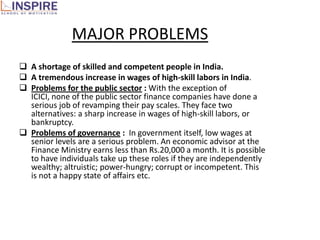
 A shortage of skilled and competent people in India.
 A tremendous increase in wages of high-skill labors in India.
 Problems for the public sector : With the exception of
  ICICI, none of the public sector finance companies have done a
  serious job of revamping their pay scales. They face two
  alternatives: a sharp increase in wages of high-skill labors, or
  bankruptcy.
 Problems of governance : In government itself, low wages at
  senior levels are a serious problem. An economic advisor at the
  Finance Ministry earns less than Rs.20,000 a month. It is possible
  to have individuals take up these roles if they are independently
  wealthy; altruistic; power-hungry; corrupt or incompetent. This
  is not a happy state of affairs etc.
PUSH FACTORS
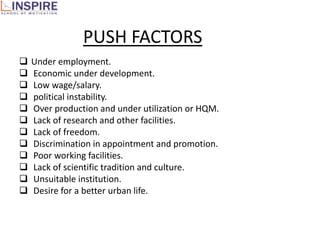
   Under employment.
   Economic under development.
   Low wage/salary.
   political instability.
   Over production and under utilization or HQM.
   Lack of research and other facilities.
   Lack of freedom.
   Discrimination in appointment and promotion.
   Poor working facilities.
   Lack of scientific tradition and culture.
   Unsuitable institution.
   Desire for a better urban life.
PULL FACTORS
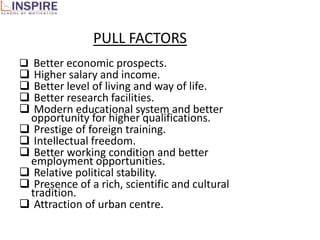
 Better economic prospects.
 Higher salary and income.
 Better level of living and way of life.
 Better research facilities.
 Modern educational system and better
 opportunity for higher qualifications.
 Prestige of foreign training.
 Intellectual freedom.
 Better working condition and better
 employment opportunities.
 Relative political stability.
 Presence of a rich, scientific and cultural
 tradition.
 Attraction of urban centre.
Individual's motives and experiences
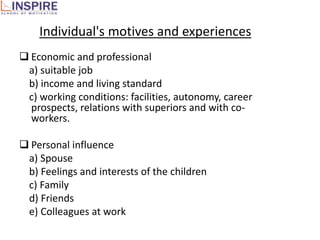
 Economic and professional
 a) suitable job
 b) income and living standard
 c) working conditions: facilities, autonomy, career
  prospects, relations with superiors and with co-
  workers.

 Personal influence
 a) Spouse
 b) Feelings and interests of the children
 c) Family
 d) Friends
 e) Colleagues at work
Ways to overcome it
 Training.
 Ensure Job Fit.
 Mentorship.
 Succession Planning.
Conclusion
 Historically, wars between nations have always been about
  land and its appropriation. Now a new type of war is
  emerging, the war about technology, human brain and its
  control.
 Because it is only a nation’s human capital that can be
  converted into real wealth.
 There is a clear need for international cooperation.
Braind drain

Braind drain

  • 2.
    INTRODUCTION  A braindrain or human capital flight is an emigration of trained and talented individuals ("human capital") to other nations or jurisdictions.  Brain drain can occur either when individuals who study abroad and complete their education do not return to their home country, or when individuals educated in their home country emigrate for higher wages or better opportunities.
  • 3.
    HISTORY  Historically, thegreatest brain drains have been from rural to urban areas. In the 19th century and 20th century there were notable emigrations to North America from Europe, and in modern times, from developing nations to developed nations, especially after colonialism. Sometimes such drains have occurred between developed countries.
  • 4.
    definition  It canbe simply defined as the mass emigration of technically skilled people from one country to another country.
  • 5.
    MAIN CHARACTERISTICS  Thereare numerous flows of skilled and trained persons from developing to developed countries.  In these flows engineers, medical personnel and scientists usually tend to predominate.  They are characterized by large flows from a comparatively small number of developed countries and by small flows from a larger number of developing countries.  The migratory trends are stimulated both by the character of national educational systems by lack and inadequate planning for the training of students from developing countries, in developed states as well as the proper utilization of their-skills in their home country etc.
  • 6.
    CONCEPT & MAGNITUDE Migration of people as a phenomenon differs from country to country and from time to time.  Migration of HQM from LDCs may be due to several different sets of underlying social, political and economic forces.  The phenomenon of migration of high quality manpower can justify the use of the expression on the term “brain drain”.  Brain drain represents the defacto transfer of resources spent on imparting education and nurturing technical skills of the drained brain in question by the parent country (DCs) to the country of the transfer.
  • 7.
    MAJOR PROBLEMS  Ashortage of skilled and competent people in India.  A tremendous increase in wages of high-skill labors in India.  Problems for the public sector : With the exception of ICICI, none of the public sector finance companies have done a serious job of revamping their pay scales. They face two alternatives: a sharp increase in wages of high-skill labors, or bankruptcy.  Problems of governance : In government itself, low wages at senior levels are a serious problem. An economic advisor at the Finance Ministry earns less than Rs.20,000 a month. It is possible to have individuals take up these roles if they are independently wealthy; altruistic; power-hungry; corrupt or incompetent. This is not a happy state of affairs etc.
  • 8.
    PUSH FACTORS  Under employment.  Economic under development.  Low wage/salary.  political instability.  Over production and under utilization or HQM.  Lack of research and other facilities.  Lack of freedom.  Discrimination in appointment and promotion.  Poor working facilities.  Lack of scientific tradition and culture.  Unsuitable institution.  Desire for a better urban life.
  • 9.
    PULL FACTORS  Bettereconomic prospects.  Higher salary and income.  Better level of living and way of life.  Better research facilities.  Modern educational system and better opportunity for higher qualifications.  Prestige of foreign training.  Intellectual freedom.  Better working condition and better employment opportunities.  Relative political stability.  Presence of a rich, scientific and cultural tradition.  Attraction of urban centre.
  • 10.
    Individual's motives andexperiences  Economic and professional a) suitable job b) income and living standard c) working conditions: facilities, autonomy, career prospects, relations with superiors and with co- workers.  Personal influence a) Spouse b) Feelings and interests of the children c) Family d) Friends e) Colleagues at work
  • 11.
    Ways to overcomeit  Training.  Ensure Job Fit.  Mentorship.  Succession Planning.
  • 12.
    Conclusion  Historically, warsbetween nations have always been about land and its appropriation. Now a new type of war is emerging, the war about technology, human brain and its control.  Because it is only a nation’s human capital that can be converted into real wealth.  There is a clear need for international cooperation.