DEFINITION
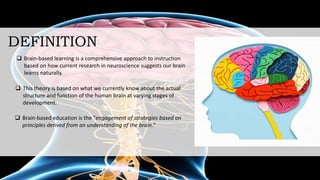
 Brain-based learning is a comprehensive approach to instruction
based on how current research in neuroscience suggests our brain
learns naturally.
 This theory is based on what we currently know about the actual
structure and function of the human brain at varying stages of
development.
 Brain-based education is the "engagement of strategies based on
principles derived from an understanding of the brain."
Geoffrey Caine and Renate Nummela Caine
Caine and Caine (1997)
Consider curriculum and instruction from a brain-based approach.
They begin with "brain-mind learning principles" derived from brain
research findings and apply these principles in the classroom.
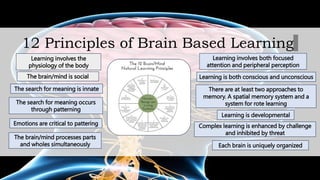
12 Principles of Brain Based Learning
Learning involves the
physiology of the body
The brain/mind is social
The search for meaning is innate
The search for meaning occurs
through patterning
Emotions are critical to pattering
The brain/mind processes parts
and wholes simultaneously
Learning involves both focused
attention and peripheral perception
Learning is both conscious and unconscious
There are at least two approaches to
memory. A spatial memory system and a
system for rote learning
Learning is developmental
Complex learning is enhanced by challenge
and inhibited by threat
Each brain is uniquely organized
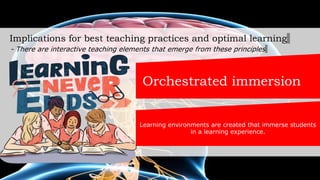
Implications for best teaching practices and optimal learning
- There are interactive teaching elements that emerge from these principles
Orchestrated immersion
Learning environments are created that immerse students
in a learning experience.
Implications for best teaching practices and optimal learning
- There are interactive teaching elements that emerge from these principles
Relaxed alertness
An effort is made to eliminate fear while maintaining a
highly challenging environment.
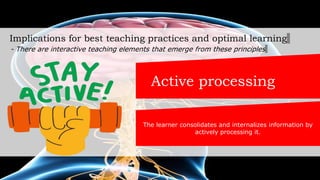
Implications for best teaching practices and optimal learning
- There are interactive teaching elements that emerge from these principles
Active processing
The learner consolidates and internalizes information by
actively processing it.

Brain-based Learning Theory (science).pptx

  • 2.
    DEFINITION  Brain-based learningis a comprehensive approach to instruction based on how current research in neuroscience suggests our brain learns naturally.  This theory is based on what we currently know about the actual structure and function of the human brain at varying stages of development.  Brain-based education is the "engagement of strategies based on principles derived from an understanding of the brain."
  • 3.
    Geoffrey Caine andRenate Nummela Caine Caine and Caine (1997) Consider curriculum and instruction from a brain-based approach. They begin with "brain-mind learning principles" derived from brain research findings and apply these principles in the classroom.
  • 4.
    12 Principles ofBrain Based Learning Learning involves the physiology of the body The brain/mind is social The search for meaning is innate The search for meaning occurs through patterning Emotions are critical to pattering The brain/mind processes parts and wholes simultaneously Learning involves both focused attention and peripheral perception Learning is both conscious and unconscious There are at least two approaches to memory. A spatial memory system and a system for rote learning Learning is developmental Complex learning is enhanced by challenge and inhibited by threat Each brain is uniquely organized
  • 5.
    Implications for bestteaching practices and optimal learning - There are interactive teaching elements that emerge from these principles Orchestrated immersion Learning environments are created that immerse students in a learning experience.
  • 6.
    Implications for bestteaching practices and optimal learning - There are interactive teaching elements that emerge from these principles Relaxed alertness An effort is made to eliminate fear while maintaining a highly challenging environment.
  • 7.
    Implications for bestteaching practices and optimal learning - There are interactive teaching elements that emerge from these principles Active processing The learner consolidates and internalizes information by actively processing it.