


How the Brain Processes Information
What should educators do with the
information we are going to learn today?


      - Reflect on their methodology
- Decide if there are new insights that could
affect their instruction and improve learning
Use your clicker to answer True or False to the
                questions below.
1.   Our brain takes in more information from our
     environment in a single day than a computer
     does in a year.


2. The thalamus is a system for screening all the
data than comes into the brain to determine the
importance to the individual.
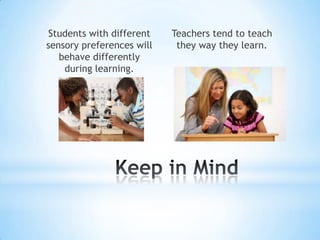
Students with different    Teachers tend to teach
sensory preferences will    they way they learn.
   behave differently
    during learning.
Use your clicker to answer True or False to the
                    questions below.
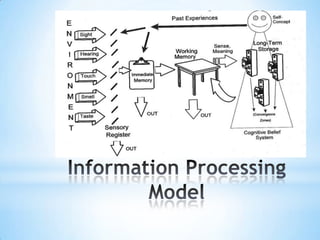
1.   Short term memory has one part; the immediate
     memory.
2.   The brain’s main job is to learn new data.
3.   How a person “feels” about a learning situation
     determines the amount of attention devoted to
     it.
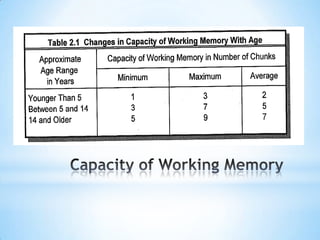
4.   The amount of working memory you have
     increases as you get older.
Use the clicker to answer True or False to the
                questions below.
1.   Learners who can perform a new learning
     task well are likely to retain it.
2.   Helping students make connections between
     subject areas by integrating the curriculum
     increases meaning and retention.
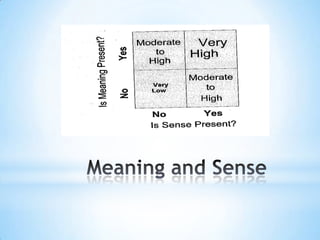
3.   Information is most likely to be stored if it
     makes sense and is easy to understand.
• Learning occurs more easily in environments
    free from threat and intimidation.
-   If a student detects a threat, thoughtful processing gives way to
    emotion or survival reactions.
-   Teachers can make their classrooms better learning
    environments by make it more democratic and allowing children
    to express their opinions in discussions.

• Humor has physiological, psychological,
    sociological, and educational benefits.
-   It gets students attention, creates a positive climate, increases
    retention, improves everyone’s mental health, and is an
    effective discipline tool.
• Motivation increases processing time.
-   Design lessons that include references to students interests as
    often as possible.
-   Hold the students accountable for the new learning.
-   Provide prompt, specific, and corrective feedback because it will
    encourage them to continue processing, making corrections, and
    retaining.

• Create meaning in new learning.
-   Why do I need to know this?
-   Model, create artificial meaning, and use examples from the
    students experiences.
• Use closure to enhance sense and meaning.
-   Use closure time to access quality and accuracy of responses and
    make necessary to teaching .
-   During closure, students do most of work by rehearsing or
    summarizing information.
-   Closure can be at any time during the lesson.
-   Closure is an investment that can pay off big time in increased
    retention.

• Testing Long Term Storage.
-   Give test no sooner than 24 hours after learning.
-   Test exactly what should have been retained
-   Surprise learner, provide no preparation time.

Brain Based Learning Information Processing

  • 1.
    How the BrainProcesses Information
  • 3.
    What should educatorsdo with the information we are going to learn today? - Reflect on their methodology - Decide if there are new insights that could affect their instruction and improve learning
  • 4.
    Use your clickerto answer True or False to the questions below. 1. Our brain takes in more information from our environment in a single day than a computer does in a year. 2. The thalamus is a system for screening all the data than comes into the brain to determine the importance to the individual.
  • 6.
    Students with different Teachers tend to teach sensory preferences will they way they learn. behave differently during learning.
  • 7.
    Use your clickerto answer True or False to the questions below. 1. Short term memory has one part; the immediate memory. 2. The brain’s main job is to learn new data. 3. How a person “feels” about a learning situation determines the amount of attention devoted to it. 4. The amount of working memory you have increases as you get older.
  • 12.
    Use the clickerto answer True or False to the questions below. 1. Learners who can perform a new learning task well are likely to retain it. 2. Helping students make connections between subject areas by integrating the curriculum increases meaning and retention. 3. Information is most likely to be stored if it makes sense and is easy to understand.
  • 16.
    • Learning occursmore easily in environments free from threat and intimidation. - If a student detects a threat, thoughtful processing gives way to emotion or survival reactions. - Teachers can make their classrooms better learning environments by make it more democratic and allowing children to express their opinions in discussions. • Humor has physiological, psychological, sociological, and educational benefits. - It gets students attention, creates a positive climate, increases retention, improves everyone’s mental health, and is an effective discipline tool.
  • 17.
    • Motivation increasesprocessing time. - Design lessons that include references to students interests as often as possible. - Hold the students accountable for the new learning. - Provide prompt, specific, and corrective feedback because it will encourage them to continue processing, making corrections, and retaining. • Create meaning in new learning. - Why do I need to know this? - Model, create artificial meaning, and use examples from the students experiences.
  • 18.
    • Use closureto enhance sense and meaning. - Use closure time to access quality and accuracy of responses and make necessary to teaching . - During closure, students do most of work by rehearsing or summarizing information. - Closure can be at any time during the lesson. - Closure is an investment that can pay off big time in increased retention. • Testing Long Term Storage. - Give test no sooner than 24 hours after learning. - Test exactly what should have been retained - Surprise learner, provide no preparation time.