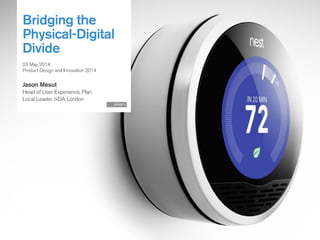
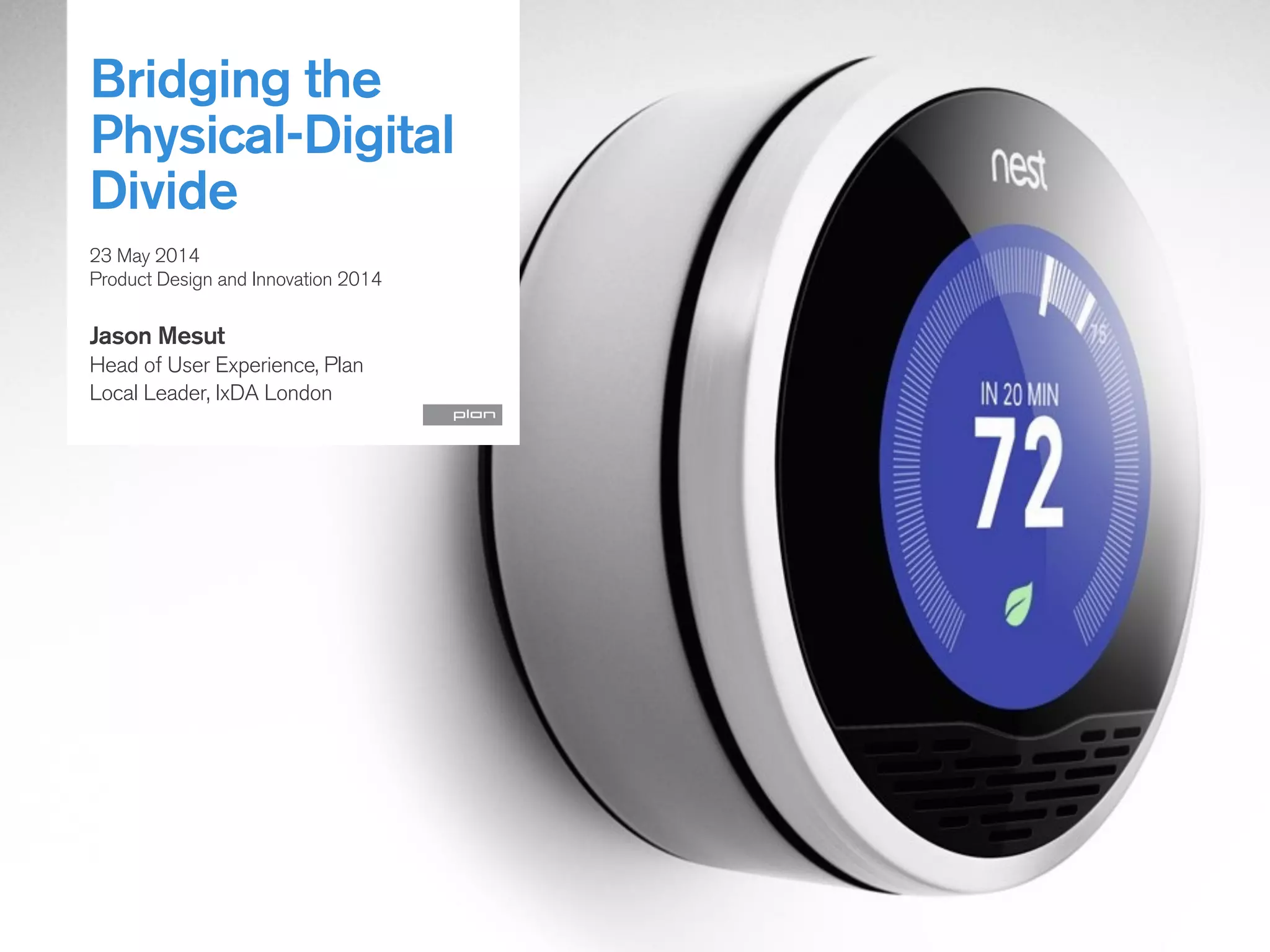


Bridging the
Physical-Digital
Divide
!
23 May 2014
Product Design and Innovation 2014
!
Jason Mesut
Head of User Experience, Plan
Local Leader, IxDA London
!
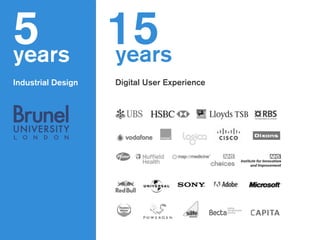
5years
!
Industrial Design
years
!
Digital User Experience
15
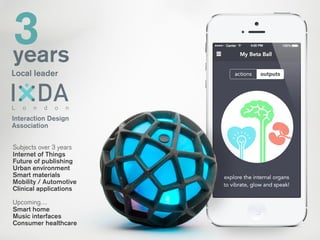
3years
Local leader
Interaction Design
Association
L o n d o n
Subjects over 3 years
Internet of Things
Future of publishing
Urban environment
Smart materials
Mobility / Automotive
Clinical applications
!
Upcoming…
Smart home
Music interfaces
Consumer healthcare
I want a future where physical
products and digital services
work in harmony
Industrial
Designers
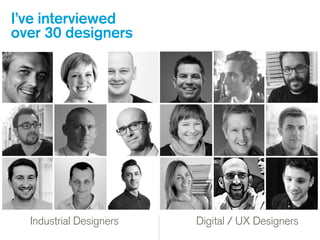
Industrial Designers Digital / UX Designers
I’ve interviewed
over 30 designers
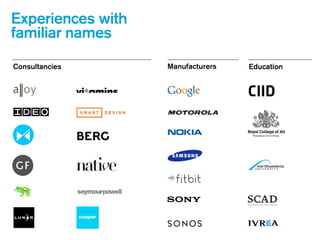
Experiences with
familiar names
Consultancies Manufacturers Education
Some key questions
—Why should we care?
—What are we aiming for?
—What are the challenges?
—How can we tackle them?
?
Some key questions
—Why should we care?
—What are we aiming for?
—What are the challenges?
—How can we tackle them?
Screens dominating
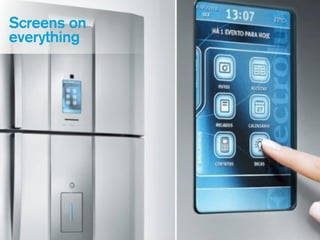
Screens on
everything
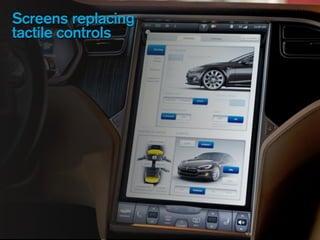
Screens replacing
tactile controls
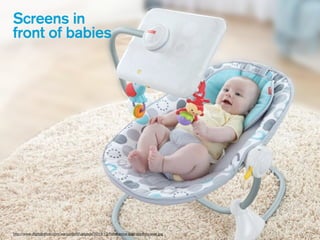
Screens in
front of babies
http://www.digitaltrends.com/wp-content/uploads/2013/12/fisher-price-ipad-apptivity-seat.jpg
Emerging hardware revival
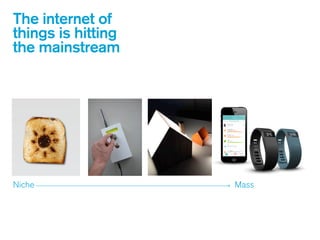
The internet of
things is hitting
the mainstream
Niche Mass
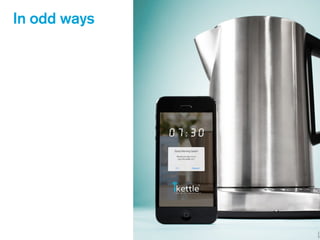
In odd ways
http://www.beamtoothbrush.com/toothbrush/
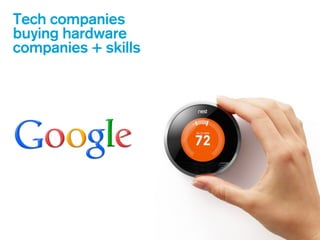
Tech companies
buying hardware
companies + skills
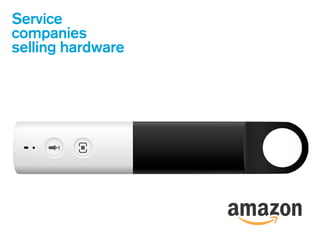
Service
companies
selling hardware
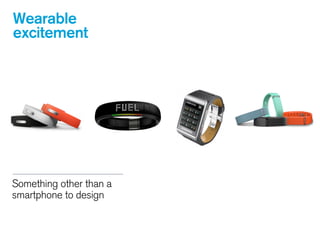
Wearable
excitement
Something other than a
smartphone to design
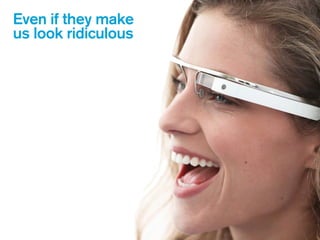
Even if they make
us look ridiculous
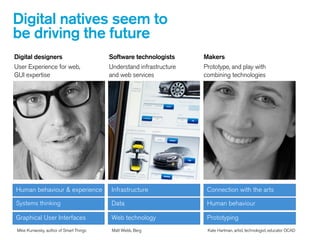
Industrial Design seems
to be losing relevancy

Digital designers

User Experience for web, 

GUI expertise
Software technologists

Understand infrastructure 

and web services
Makers

Prototype, and play with 

combining technologies
Graphical User Interfaces
Systems thinking
Human behaviour & experience
Web technology
Data
Infrastructure
Prototyping
Human behaviour
Connection with the arts
Mike Kuniavsky, author of Smart Things Matt Webb, Berg Kate Hartman, artist, technologist, educator OCAD
Digital natives seem to
be driving the future
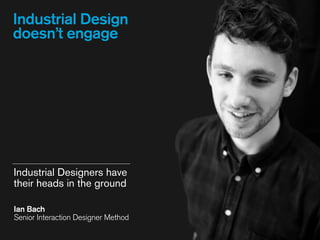
Industrial Design
doesn’t engage
Industrial Designers have
their heads in the ground
Ian Bach

Senior Interaction Designer Method
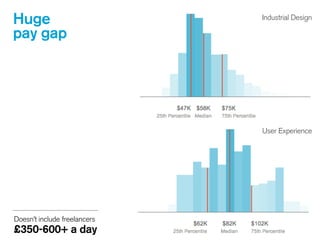
Doesn’t include freelancers
£350-600+ a day
Industrial Design
User Experience
Huge
pay gap
Some key questions
—Why should we care?
—What are we aiming for?
—What are the challenges?
—How can we tackle them?
Greater harmony between
physical and digital 

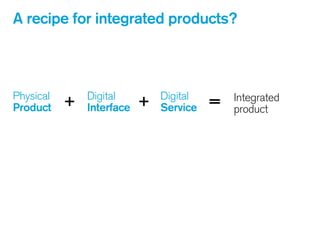
A recipe for integrated products?
+ +Physical
Product
Digital
Interface
Digital
Service
Integrated
product
=
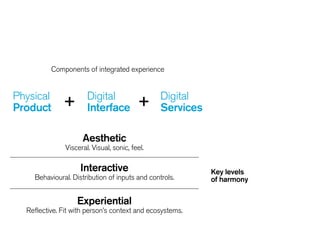
+ +Physical
Product
Digital
Interface
Digital
Services
!
Aesthetic 

Visceral. Visual, sonic, feel.

Interactive
Behavioural. Distribution of inputs and controls.
!
Experiential
Reflective. Fit with person’s context and ecosystems.
!
!
Key levels
of harmony
Components of integrated experience
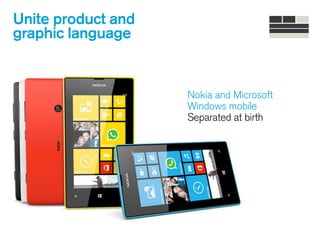
Unite product and
graphic language
Nokia and Microsoft
Windows mobile

Separated at birth

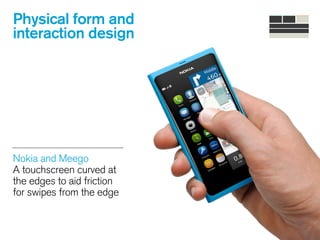
Physical form and
interaction design
Nokia and Meego

A touchscreen curved at
the edges to aid friction
for swipes from the edge

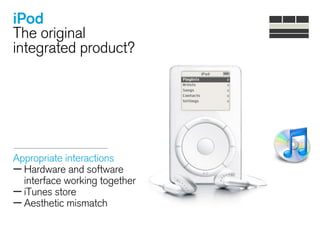
iPod
The original
integrated product?
Appropriate interactions
—Hardware and software
interface working together
—iTunes store
—Aesthetic mismatch

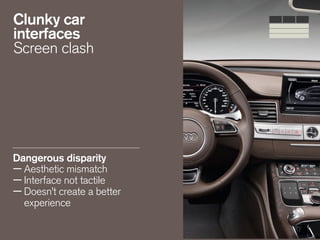
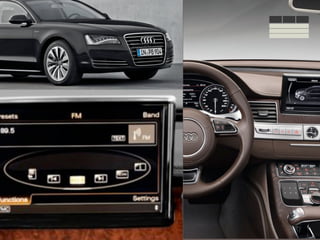
Clunky car
interfaces
Screen clash
Dangerous disparity
—Aesthetic mismatch
—Interface not tactile
—Doesn’t create a better
experience

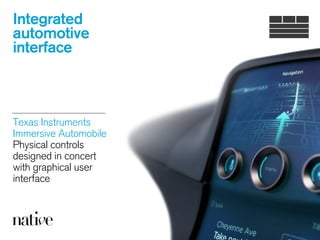
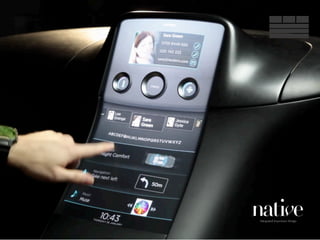
Integrated
automotive
interface
Texas Instruments

Immersive Automobile

Physical controls
designed in concert
with graphical user
interface

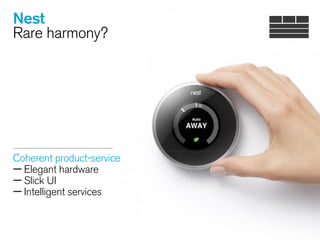
Nest
Rare harmony?
Coherent product-service
—Elegant hardware
—Slick UI
—Intelligent services

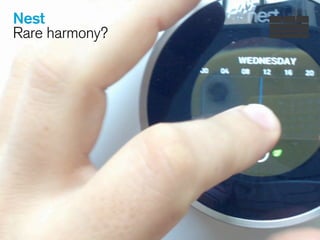
Nest
Rare harmony?
We need to seek
1. Quality balance
2. Connected design language
3. Appropriate interactions
4. Consideration of overall experience
Some key questions
—Why should we care?
—What are we aiming for?
—What are the challenges?
—How can we tackle them?
Why harmony is rare

Hardware is being
commoditised

1/2/3/4
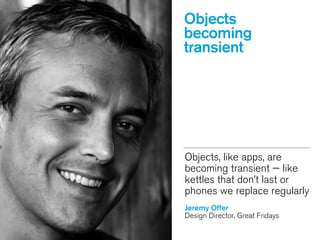
Objects, like apps, are
becoming transient — like
kettles that don’t last or
phones we replace regularly
!
Jeremy Offer
Design Director, Great Fridays
Objects
becoming
transient
Delivery timelines
are different

1/2/3/4
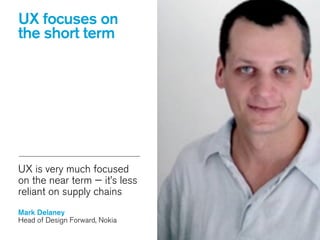
UX is very much focused
on the near term — it’s less
reliant on supply chains
!
Mark Delaney
Head of Design Forward, Nokia
UX focuses on
the short term
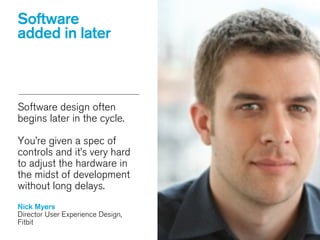
Software design often
begins later in the cycle.
!
You’re given a spec of
controls and it’s very hard
to adjust the hardware in
the midst of development
without long delays.
!
Nick Myers
Director User Experience Design,
Fitbit
Software
added in later
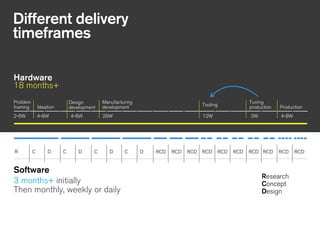
Different delivery
timeframes
18 months+
3 months+ initially
Then monthly, weekly or daily
Hardware
Software
Problem
framing Tooling
Tuning
production
Manufacturing
development
!
Ideation
!
Design
development
R C D
!
Production
2-6W 4-8W 4-8W 26W 12W 3W 4-8W
C D C D C D RCD RCD
Research
Concept
Design
RCD RCD RCD RCD RCD RCD RCD RCD
Disciplines don’t
understand each other

1/2/3/4
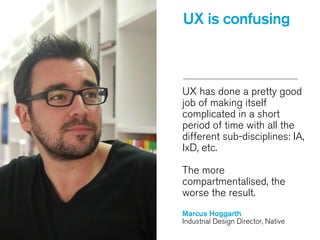
UX has done a pretty good
job of making itself
complicated in a short
period of time with all the
different sub-disciplines: IA,
IxD, etc.
!
The more
compartmentalised, the
worse the result.
!
Marcus Hoggarth
Industrial Design Director, Native
UX is confusing
Teams are
separated

1/2/3/4
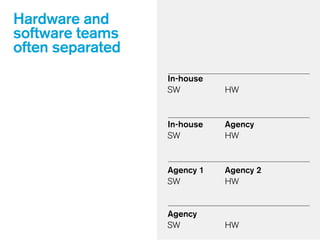
Hardware and
software teams
often separated
SW HW
SW HW
In-house
In-house Agency
SW HW
Agency 1 Agency 2
SW HW
Agency
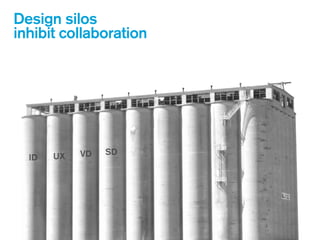
Design silos
inhibit collaboration
ID UX VD SD
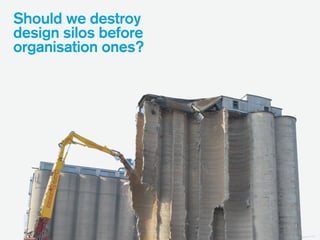
Should we destroy
design silos before
organisation ones?
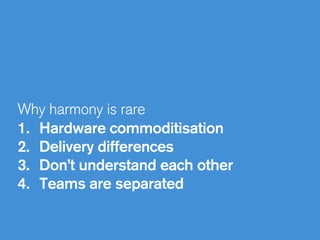
Why harmony is rare
1. Hardware commoditisation
2. Delivery differences
3. Don’t understand each other
4. Teams are separated
Some key questions
—Why should we care?
—What are we aiming for?
—What are the challenges?
—How can we tackle them?
How can we bridge the
physical-digital divide?
How can we bridge the
physical-digital divide
First, we must
Define the divide


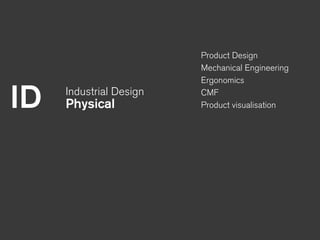
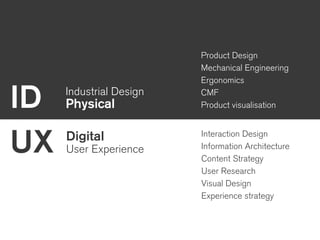
ID Industrial Design
Physical
Product Design
Mechanical Engineering
Ergonomics
CMF
Product visualisation
Offer Mindset Language Tools Time
ID Industrial Design
Physical
UX Digital
User Experience
Product Design
Mechanical Engineering
Ergonomics
CMF
Product visualisation
Interaction Design
Information Architecture
Content Strategy
User Research
Visual Design
Experience strategy
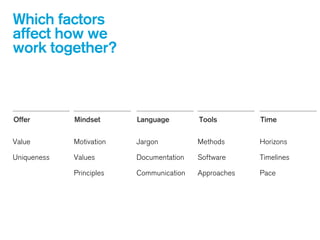
Jargon
!
Documentation
!
Communication
Motivation
!
Values
!
Principles
Methods
!
Software
!
Approaches
Value
!
Uniqueness
!
Horizons
!
Timelines
!
Pace
Which factors
affect how we
work together?
Offer Mindset Language Tools Time
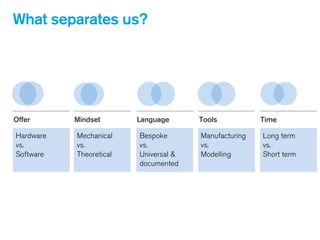
What separates us?
Bespoke
vs.
Universal &
documented
!
Design
+
Experience
Mechanical
vs.
Theoretical
!
!
Solving
problems
+
Making
solutions
Manufacturing
vs.
Modelling
!
!
Researching
+
Sketching
+
Prototyping
Hardware
vs.
Software
!
!
Understanding
people
+
Conceiving
solutions
Long term
vs.
Short term
!
!
Fast-paced
+
Immediate
interaction
Offer Mindset Language Tools Time
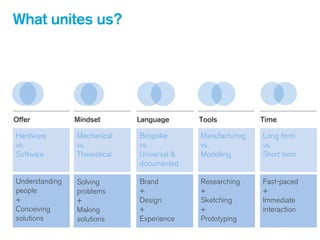
What unites us?
Bespoke
vs.
Universal &
documented
!
Brand
+
Design
+
Experience
Mechanical
vs.
Theoretical
!
!
Solving
problems
+
Making
solutions
Manufacturing
vs.
Modelling
!
!
Researching
+
Sketching
+
Prototyping
Hardware
vs.
Software
!
!
Understanding
people
+
Conceiving
solutions
Long term
vs.
Short term
!
!
Fast-paced
+
Immediate
interaction
How can we bridge the
physical-digital divide?
How can we bridge the
physical-digital divide?
We need to
Connect / Calibrate / Collaborate


How can we bridge the
physical-digital divide?
We need to
Connect / Calibrate / Collaborate


Find the common ground
Connect on a personal level
Respect differences

How can we bridge the
physical-digital divide?
We need to
Connect / Calibrate / Collaborate


 Adapt ourselves
Adapt our processes
Translate our language
!


How can we bridge the
physical-digital divide?
We need to
Connect / Calibrate / Collaborate


 Unite on common purpose
Share between teams
Prototype together
!


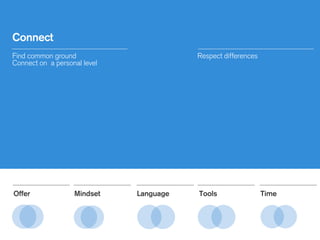
Find common ground
Connect on a personal level
Respect differences
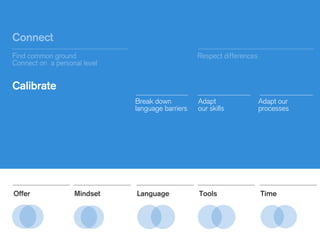
Connect
Offer Mindset Language Tools Time
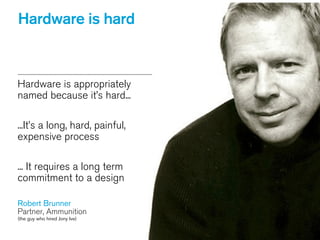
Hardware is appropriately
named because it’s hard...
!
...It’s a long, hard, painful,
expensive process
!
... It requires a long term
commitment to a design
!
Robert Brunner
Partner, Ammunition
(the guy who hired Jony Ive)
Hardware is hard
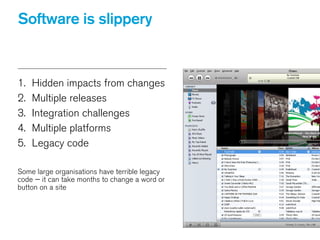
Software is slippery
1. Hidden impacts from changes
2. Multiple releases
3. Integration challenges
4. Multiple platforms
5. Legacy code
!
Some large organisations have terrible legacy
code — it can take months to change a word or
button on a site
Find common ground
Connect on a personal level
Respect differences
Break down
language barriers
Adapt
our skills
Adapt our
processes
Connect
Calibrate
Offer Mindset Language Tools Time
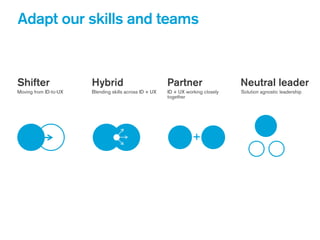
Adapt our skills and teams
Shifter Hybrid Partner Neutral leader
Moving from ID-to-UX Blending skills across ID + UX ID + UX working closely
together
Solution agnostic leadership
+
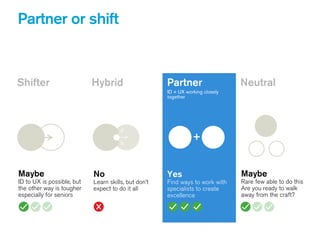
No
Learn skills, but don’t
expect to do it all
Yes
Find ways to work with
specialists to create
excellence
Maybe
Rare few able to do this
Are you ready to walk
away from the craft?
Maybe
ID to UX is possible, but
the other way is tougher
especially for seniors
Shifter Hybrid Partner Neutral
ID + UX working closely
together
Partner or shift
+
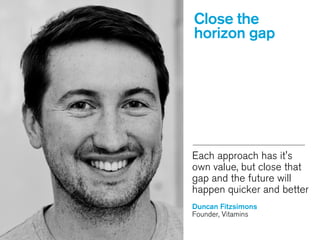
Each approach has it's
own value, but close that
gap and the future will
happen quicker and better
!
Duncan Fitzsimons
Founder, Vitamins
Close the
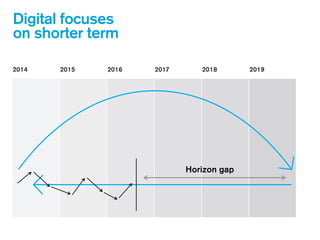
horizon gap
2014 2015 2016 2017 2018 2019
Digital focuses
on shorter term
Horizon gap
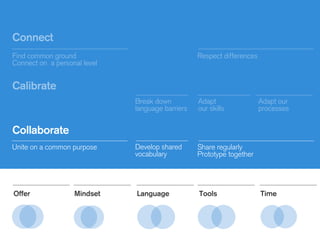
Find common ground
Connect on a personal level
Respect differences
Break down
language barriers
Adapt
our skills
Adapt our
processes
Connect
Calibrate
Collaborate
Unite on a common purpose Share regularly
Prototype together
Develop shared
vocabulary
Offer Mindset Language Tools Time
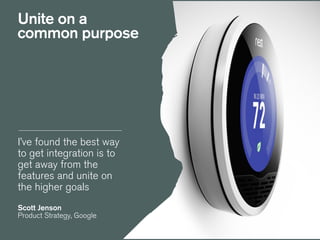
I’ve found the best way
to get integration is to
get away from the
features and unite on
the higher goals
!
Scott Jenson
Product Strategy, Google
Unite on a
common purpose
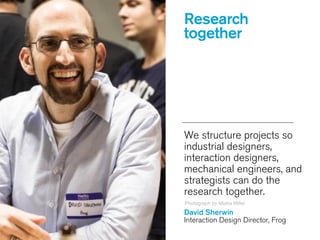
We structure projects so
industrial designers,
interaction designers,
mechanical engineers, and
strategists can do the
research together.
!
David Sherwin
Interaction Design Director, Frog
Research
together
Photograph by Misha Miller
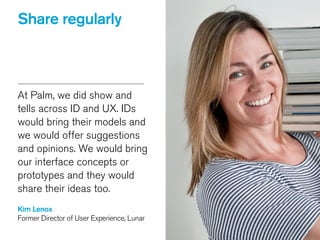
Share regularly
At Palm, we did show and
tells across ID and UX. IDs
would bring their models and
we would offer suggestions
and opinions. We would bring
our interface concepts or
prototypes and they would
share their ideas too.
!
Kim Lenox
Former Director of User Experience, Lunar
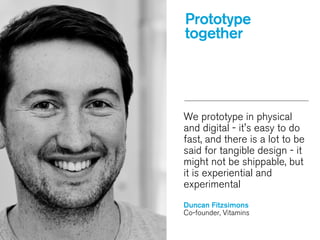
We prototype in physical
and digital - it's easy to do
fast, and there is a lot to be
said for tangible design - it
might not be shippable, but
it is experiential and
experimental
!
Duncan Fitzsimons
Co-founder, Vitamins
Prototype
together
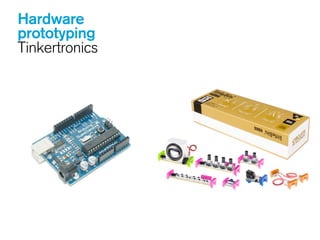
Hardware
prototyping
Tinkertronics
Hardware
Problem
framing Tooling
Tuning
production
Manufacturing
development
!
Ideation
!
Design
development
!
Production
2-6W 4-8W 4-8W 26W 12W 3W 4-8W
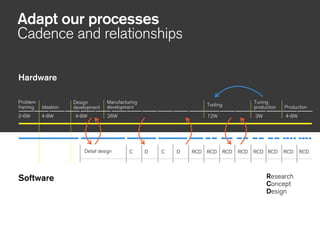
Adapt our processes
Cadence and relationships
Software
C D RCD
Research
Concept
Design
RCD RCD RCD RCD RCD RCD RCDDetail design C D
!
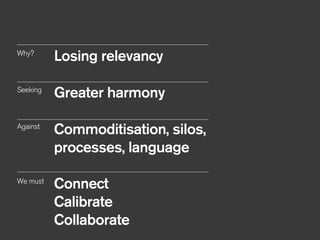
Why?
!
Seeking
!
Against
!
!
We must
!
Losing relevancy
!
Greater harmony
!
Commoditisation, silos,
processes, language

Connect
Calibrate
Collaborate

Bridging the Physical-Digital Divide: Industrial Designer Edition