 Body language is a form of non verbal
communication consisting of body postures,
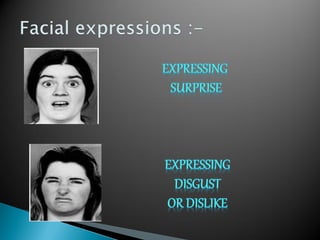
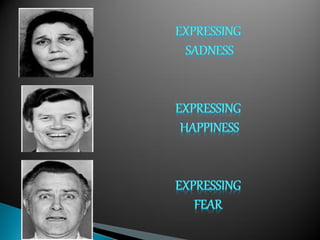
gestures , facial expressions and eye
movements.
 Humans send and interpret such signals
subconsciously.
 Body language may provide clues as to the
attitude or state of mind of a person.
 it may indicate aggression, attentiveness,
boredom, relaxed state, pleasure,
amusement, and intoxication, among many
other cues
 Words are inadequate:
Human communication consists of 93% body
language. Only 7% of communication consists
of words themselves
 Subconsciously:
Various body language signs can
complement each other to make a particular
meaning crystal clear or strengthen the
meaning of what we communicate.
 Used to express feelings:
We can make our communication clear either
intentionally or unintentionally through body
language.
Body postures
Facial expressions
gestures
Posture refers to the
positions and
movement of the body
and the hands while
sitting,standing,
walking etc
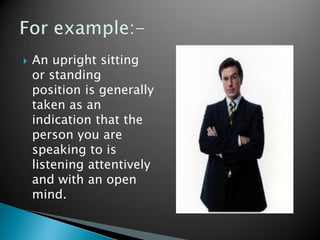
 An upright sitting
or standing
position is generally
taken as an
indication that the
person you are
speaking to is
listening attentively
and with an open
mind.
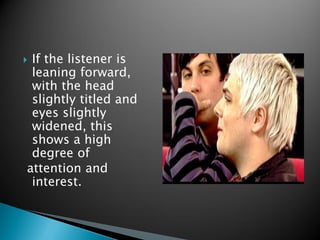
 If the listener is
leaning forward,
with the head
slightly titled and
eyes slightly
widened, this
shows a high
degree of
attention and
interest.
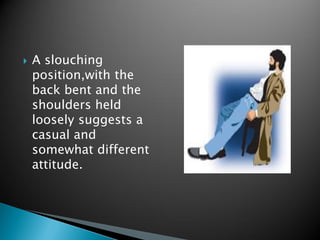
 A slouching
position,with the
back bent and the
shoulders held
loosely suggests a
casual and
somewhat different
attitude.
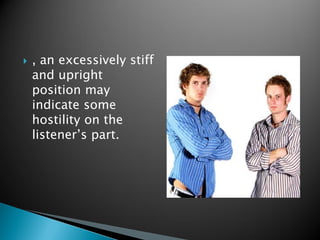
 , an excessively stiff
and upright
position may
indicate some
hostility on the
listener’s part.
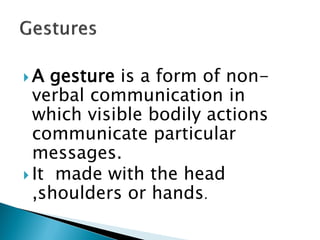
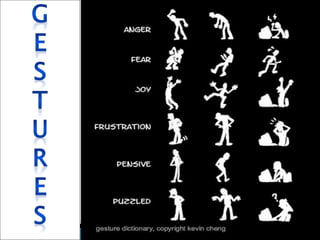
 A gesture is a form of non-
verbal communication in
which visible bodily actions
communicate particular
messages.
 It made with the head
,shoulders or hands.
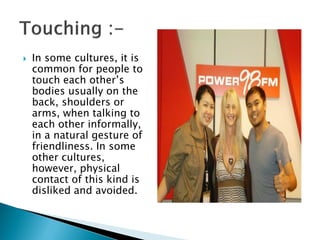
 In some cultures, it is
common for people to
touch each other’s
bodies usually on the
back, shoulders or
arms, when talking to
each other informally,
in a natural gesture of
friendliness. In some
other cultures,
however, physical
contact of this kind is
disliked and avoided.
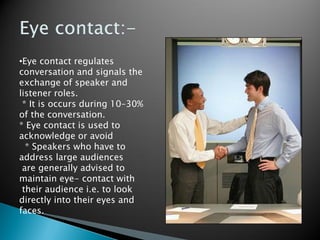
•Eye contact regulates
conversation and signals the
exchange of speaker and
listener roles.
* It is occurs during 10–30%
of the conversation.
* Eye contact is used to
acknowledge or avoid
* Speakers who have to
address large audiences
are generally advised to
maintain eye- contact with
their audience i.e. to look
directly into their eyes and
faces.
 Standing up straight and face the audience
head-on.
 Using your hands to emphasize and reinforce
your points.
 Varying your gestures and positioning.
 Nodding your head and smiling to emphasize
what you are saying.
 Aiming to make eye contact with all members
of the audience.
 Failing to make eye contact
 Do not look at your notes all the time
 Looking at the screen/board means your back is
turned to the audience cutting contact
 Don't stare, or look blankly into people's eyes
 Avoid swaying back and forth like a pendulum
 Avoid leaning against walls
 Be aware of your nervous tics
 Do not fold your arms like a barrier
 While one hand in a pocket gives a very relaxed
pose, both hands in pockets looks too casual and
should be avoided
160138468-Presentation-on-Body-Language.pdf

160138468-Presentation-on-Body-Language.pdf

  • 2.
     Body languageis a form of non verbal communication consisting of body postures, gestures , facial expressions and eye movements.  Humans send and interpret such signals subconsciously.  Body language may provide clues as to the attitude or state of mind of a person.  it may indicate aggression, attentiveness, boredom, relaxed state, pleasure, amusement, and intoxication, among many other cues
  • 3.
     Words areinadequate: Human communication consists of 93% body language. Only 7% of communication consists of words themselves  Subconsciously: Various body language signs can complement each other to make a particular meaning crystal clear or strengthen the meaning of what we communicate.  Used to express feelings: We can make our communication clear either intentionally or unintentionally through body language.
  • 4.
  • 5.
    Posture refers tothe positions and movement of the body and the hands while sitting,standing, walking etc
  • 6.
     An uprightsitting or standing position is generally taken as an indication that the person you are speaking to is listening attentively and with an open mind.
  • 7.
     If thelistener is leaning forward, with the head slightly titled and eyes slightly widened, this shows a high degree of attention and interest.
  • 8.
     A slouching position,withthe back bent and the shoulders held loosely suggests a casual and somewhat different attitude.
  • 9.
     , anexcessively stiff and upright position may indicate some hostility on the listener’s part.
  • 12.
     A gestureis a form of non- verbal communication in which visible bodily actions communicate particular messages.  It made with the head ,shoulders or hands.
  • 14.
     In somecultures, it is common for people to touch each other’s bodies usually on the back, shoulders or arms, when talking to each other informally, in a natural gesture of friendliness. In some other cultures, however, physical contact of this kind is disliked and avoided.
  • 15.
    •Eye contact regulates conversationand signals the exchange of speaker and listener roles. * It is occurs during 10–30% of the conversation. * Eye contact is used to acknowledge or avoid * Speakers who have to address large audiences are generally advised to maintain eye- contact with their audience i.e. to look directly into their eyes and faces.
  • 16.
     Standing upstraight and face the audience head-on.  Using your hands to emphasize and reinforce your points.  Varying your gestures and positioning.  Nodding your head and smiling to emphasize what you are saying.  Aiming to make eye contact with all members of the audience.
  • 17.
     Failing tomake eye contact  Do not look at your notes all the time  Looking at the screen/board means your back is turned to the audience cutting contact  Don't stare, or look blankly into people's eyes  Avoid swaying back and forth like a pendulum  Avoid leaning against walls  Be aware of your nervous tics  Do not fold your arms like a barrier  While one hand in a pocket gives a very relaxed pose, both hands in pockets looks too casual and should be avoided