Presentation on:
BODY LANGUAGE
(NON- VERBAL COMMUNICATION)
Submitted by:
JUHI KUMARI
DEFINITION
Communication through the sender’s body movements,
facial expressions etc. is known as non-verbal
communication.
Up to 93% of communication is non-verbal. The body
language can especially be felt in emotional situations.
UNDERSTANDING BODY
LANGUAGE
It is very necessary to understand body language.
It includes facial expressions through which we show
emotions by smiling, laughing, crying etc.
It also includes the way of standing, presenting and
dressing.
TYPES OF BODY LANGUAGE
Remember that you are dealing with “PEOPLE”
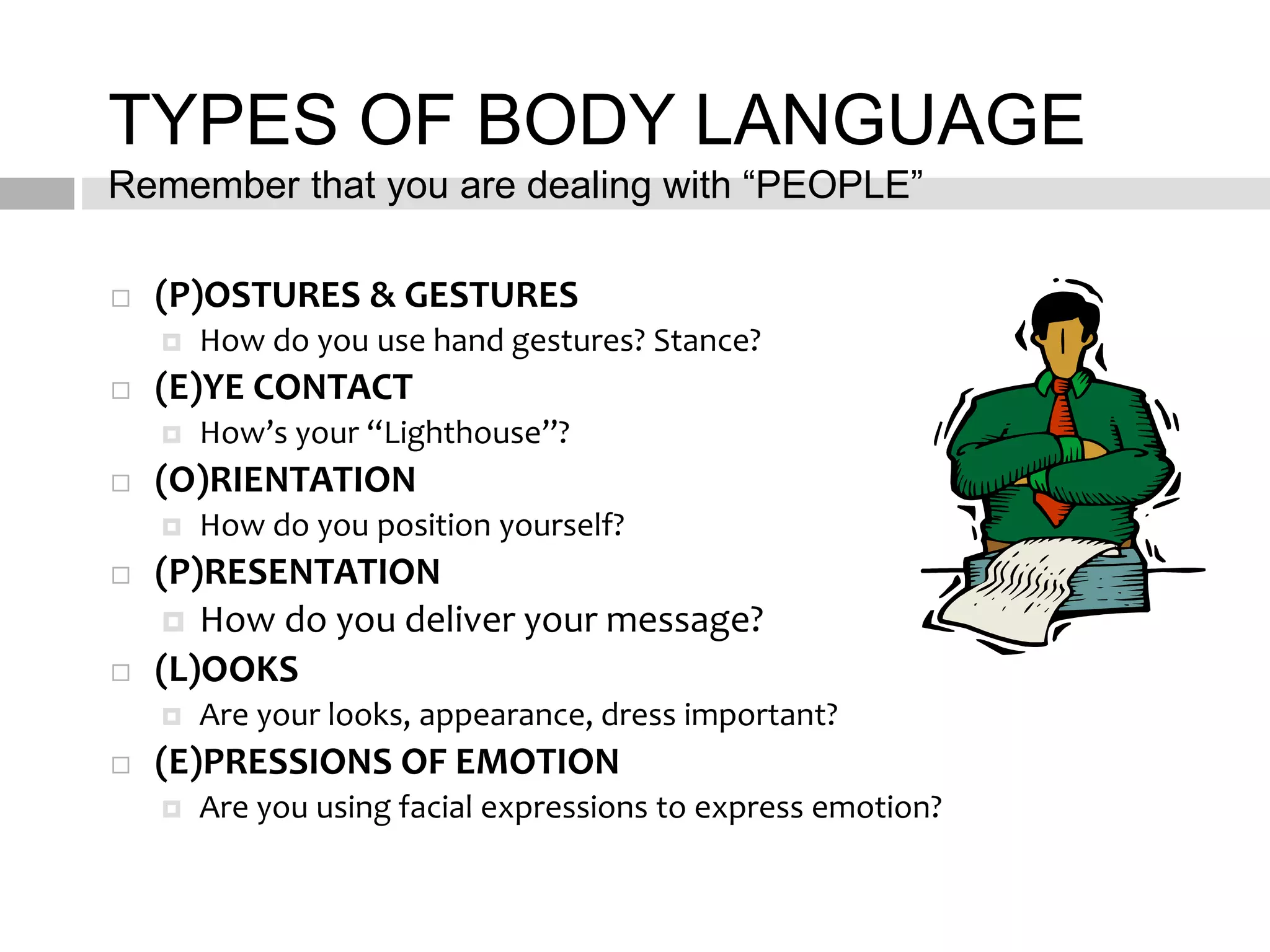
 (P)OSTURES & GESTURES
 How do you use hand gestures? Stance?
 (E)YE CONTACT
 How’s your “Lighthouse”?
 (O)RIENTATION
 How do you position yourself?
 (P)RESENTATION
 How do you deliver your message?
 (L)OOKS
 Are your looks, appearance, dress important?
 (E)PRESSIONS OF EMOTION
 Are you using facial expressions to express emotion?
POSTURE
Posture is a word that is used to
refer to the way a person sits or
stand.
One can have a relaxed posture
or he can have a posture that
tells others that he is tense or
feeling angry.
GESTURE
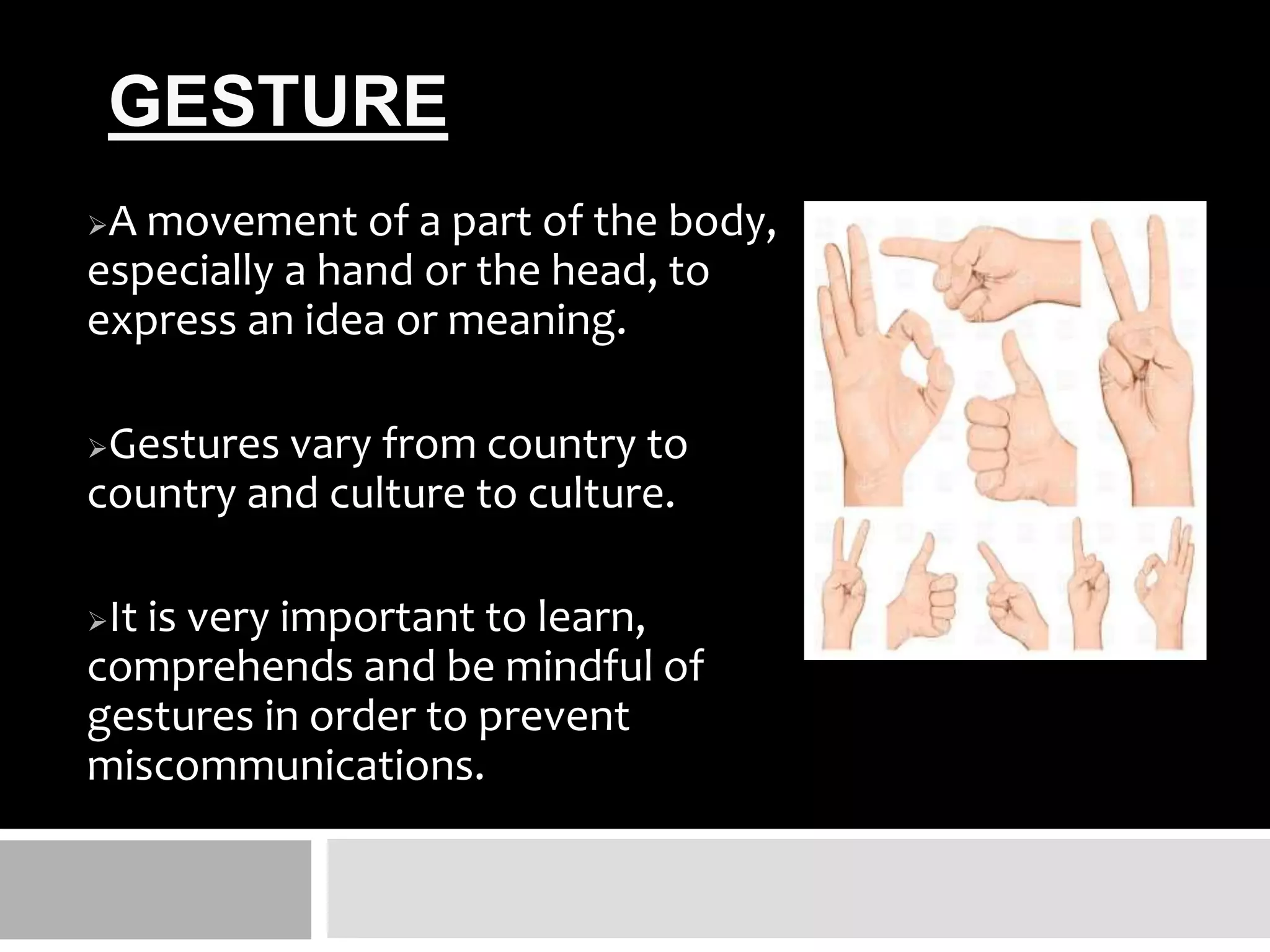
A movement of a part of the body,
especially a hand or the head, to
express an idea or meaning.
Gestures vary from country to
country and culture to culture.
It is very important to learn,
comprehends and be mindful of
gestures in order to prevent
miscommunications.
EYE CONTACT
A person can communicate with their
eyes and never say a word.
Our eyes show emotion or interest and
if thought about too much, making eye
contact can become awkward and
uncomfortable.
Eye contact during a conversation
should vital, it should show
attentiveness and interest what is being
said.
BODY POSTURE AND
ORIENTATION
Body posture is very important aspect of non
verbal communication. In western culture
standing up straight signals honesty and
confidence.
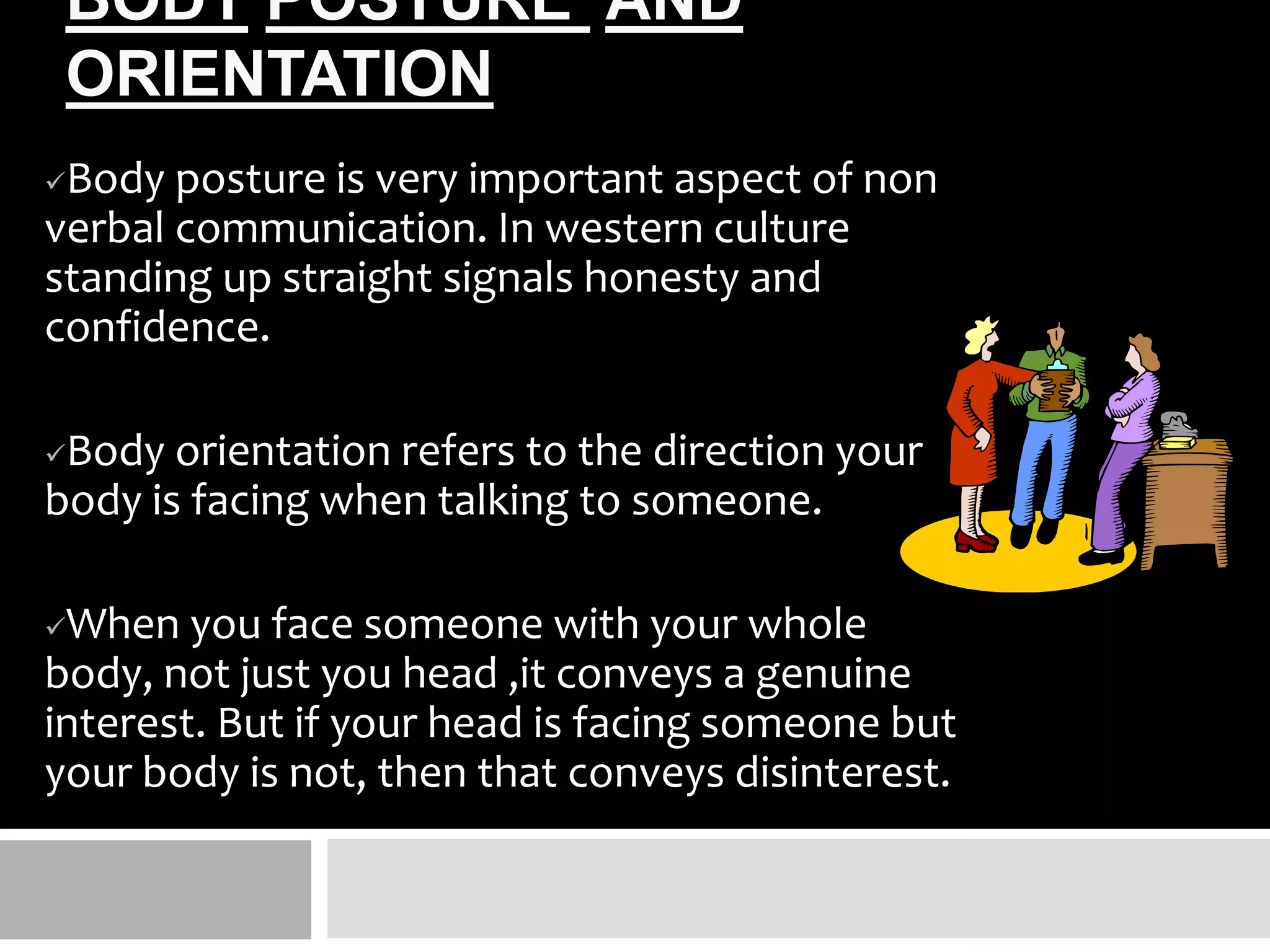
Body orientation refers to the direction your
body is facing when talking to someone.
When you face someone with your whole
body, not just you head ,it conveys a genuine
interest. But if your head is facing someone but
your body is not, then that conveys disinterest.
Body language

Body language

  • 1.
    Presentation on: BODY LANGUAGE (NON-VERBAL COMMUNICATION) Submitted by: JUHI KUMARI
  • 2.
    DEFINITION Communication through thesender’s body movements, facial expressions etc. is known as non-verbal communication. Up to 93% of communication is non-verbal. The body language can especially be felt in emotional situations.
  • 3.
    UNDERSTANDING BODY LANGUAGE It isvery necessary to understand body language. It includes facial expressions through which we show emotions by smiling, laughing, crying etc. It also includes the way of standing, presenting and dressing.
  • 4.
    TYPES OF BODYLANGUAGE Remember that you are dealing with “PEOPLE”  (P)OSTURES & GESTURES  How do you use hand gestures? Stance?  (E)YE CONTACT  How’s your “Lighthouse”?  (O)RIENTATION  How do you position yourself?  (P)RESENTATION  How do you deliver your message?  (L)OOKS  Are your looks, appearance, dress important?  (E)PRESSIONS OF EMOTION  Are you using facial expressions to express emotion?
  • 5.
    POSTURE Posture is aword that is used to refer to the way a person sits or stand. One can have a relaxed posture or he can have a posture that tells others that he is tense or feeling angry.
  • 6.
    GESTURE A movement ofa part of the body, especially a hand or the head, to express an idea or meaning. Gestures vary from country to country and culture to culture. It is very important to learn, comprehends and be mindful of gestures in order to prevent miscommunications.
  • 7.
    EYE CONTACT A personcan communicate with their eyes and never say a word. Our eyes show emotion or interest and if thought about too much, making eye contact can become awkward and uncomfortable. Eye contact during a conversation should vital, it should show attentiveness and interest what is being said.
  • 8.
    BODY POSTURE AND ORIENTATION Bodyposture is very important aspect of non verbal communication. In western culture standing up straight signals honesty and confidence. Body orientation refers to the direction your body is facing when talking to someone. When you face someone with your whole body, not just you head ,it conveys a genuine interest. But if your head is facing someone but your body is not, then that conveys disinterest.