Body Contouring and massive
   weight loss in the NHS
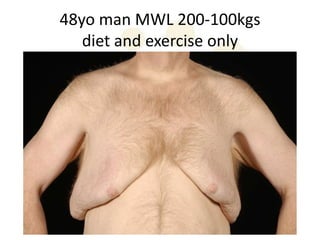
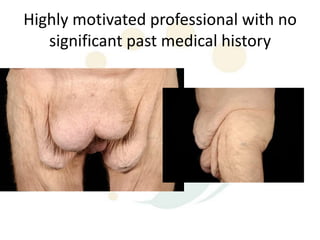
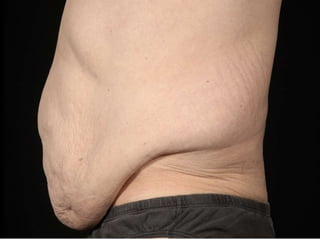
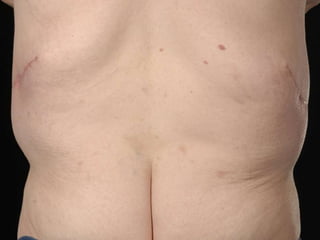
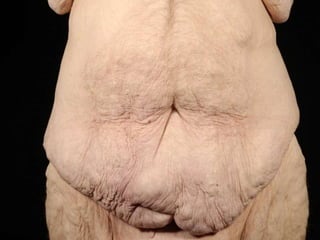
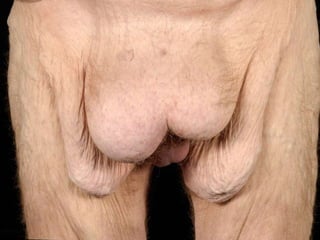
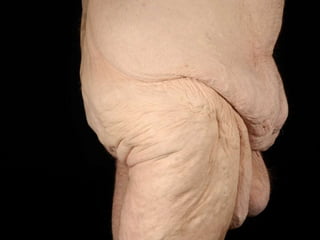
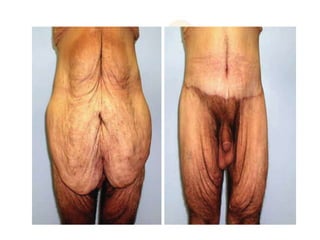
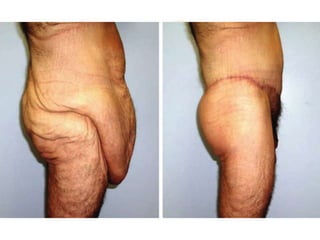
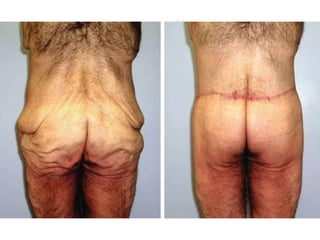
48yo man MWL 200-100kgs
   diet and exercise only
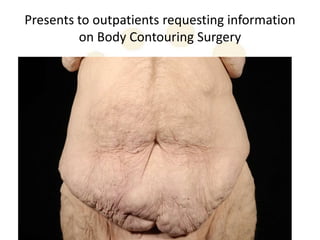
Presents to outpatients requesting information
         on Body Contouring Surgery
Highly motivated professional with no
   significant past medical history
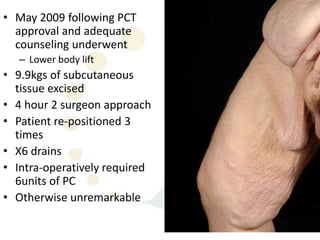
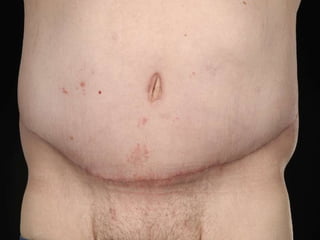
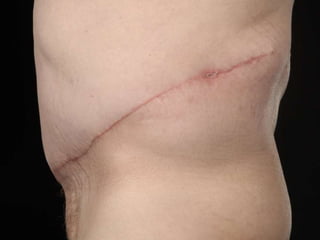
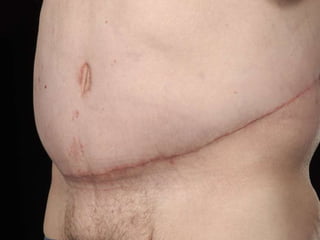
• May 2009 following PCT
  approval and adequate
  counseling underwent
   – Lower body lift
• 9.9kgs of subcutaneous
  tissue excised
• 4 hour 2 surgeon approach
• Patient re-positioned 3
  times
• X6 drains
• Intra-operatively required
  6units of PC
• Otherwise unremarkable
Post-op
• Day 1:
   – BP 80/40 HR 110, 1 drain >1L over 2 hours
   – Immediate exploration and evacuation of 3L haematoma
     with no bleeding source identified
• Day 1:
   – 12 hours after first exploration
   – BP undetectable, ABG Hb 4, aggressive resuscitation and
     re-explored
   – Minor bleeds cauterised but nil identifiable source
   – Evacuation of 2.2L haematoma
• Short stay in ICU but following 32 units of PC
  discharged day 8
Outpatients
• Weekly drainage of seroma collections
• Extremely happy!!!
• Can’t wait to get the next stage of his BC
  performed
The Obesity Epidemic
• Derived from the Latin word obesus – “to
  devour”
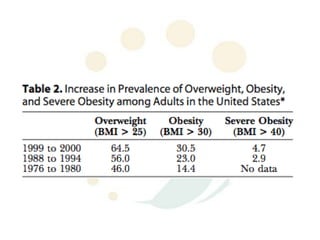
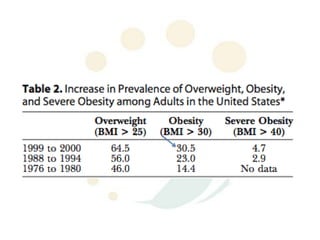
• Obesity is growing at an alarming rate in both
  children and adults in Westernized countries
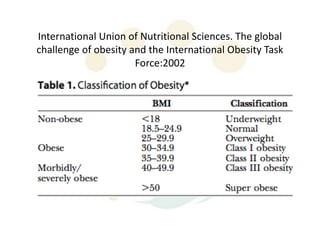
International Union of Nutritional Sciences. The global
challenge of obesity and the International Obesity Task
                      Force:2002
The Obesity Epidemic
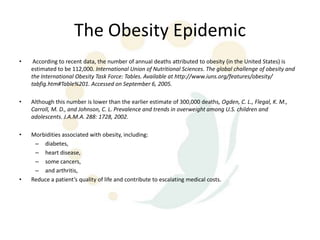
•    According to recent data, the number of annual deaths attributed to obesity (in the United States) is
    estimated to be 112,000. International Union of Nutritional Sciences. The global challenge of obesity and
    the International Obesity Task Force: Tables. Available at http://www.iuns.org/features/obesity/
    tabfig.htm#Table%201. Accessed on September 6, 2005.

•   Although this number is lower than the earlier estimate of 300,000 deaths, Ogden, C. L., Flegal, K. M.,
    Carroll, M. D., and Johnson, C. L. Prevalence and trends in overweight among U.S. children and
    adolescents. J.A.M.A. 288: 1728, 2002.

•   Morbidities associated with obesity, including:
     – diabetes,
     – heart disease,
     – some cancers,
     – and arthritis,
•   Reduce a patient’s quality of life and contribute to escalating medical costs.
Prevalence of obesity, diabetes, and obesity related health risk
factors. Mokdad, A. H., Ford, E., Bowman, B. A., et al. J.A.M.A. 289: 76, 2001

• A weight gain of 11 to 18 pounds increases a person’s
  risk of developing type 2 diabetes to twice that of
  individuals who have not gained weight
• >80% of people with diabetes are overweight or obese
• Incidence of heart disease is increased in persons who
  are overweight
• High blood pressure is twice as common in adults who
  are obese than in those who are at a healthy weight
• For every 2-pound increase in weight, the risk of
  developing arthritis is increased by 9 to 13%
Bariatric surgery: A systematic review and meta-
analysis. Buchwald, H., Avidor, Y., Braunnald, E., et al. J.A.M.A. 292: 1724,
                                   2004

• Comprehensive review and meta-analysis
  analyzed 136 bariatric surgery reports.
• This study reviewed 22,094 patients with a
  mean age of 39 years (range, 16 to 64 years)
• Average body mass index of 46.9 (range, 32.3
  to 68.8).
• The group was 72.6% female and 27.4% male.
Bariatric surgery: A systematic review and meta-
analysis. Buchwald, H., Avidor, Y., Braunnald, E., et al. J.A.M.A. 292: 1724,
                                   2004

• The authors concluded that co-morbidities were
  improved by bariatric surgery
   –   Lipid disorders improved in 70% of patients.
   –   Diabetes improved in 76.8% of patients.
   –   Hypertension improved in 78.5% of patients.
   –   Obstructive sleep apnea improved in 85.7% of
       patients.
• The positive physical improvements that often
  accompany weight loss, as well as the increase in
  self-esteem, can equate to an improved quality of
  life for these patient
• American Society for Bariatric Surgery, its
  member surgeons performed:
  – 28,800 weight loss operations in 1999
  – 63,000 weight-loss operationsin 2002,
  – 140,000 weight-loss operations in 2004
     • Mayo Foundation for Medical Education and Research. Gastric
       bypass: Is this weight-loss surgery for you?
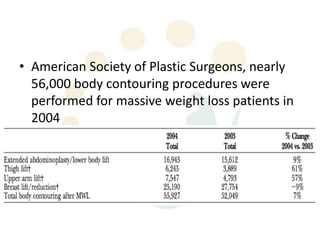
• American Society of Plastic Surgeons, nearly
  56,000 body contouring procedures were
  performed for massive weight loss patients in
  2004
• The increased safety and effectiveness of
  bariatric surgery give plastic surgeons
  additional opportunities to refine body
  contouring
Bariatric Surgery Procedures

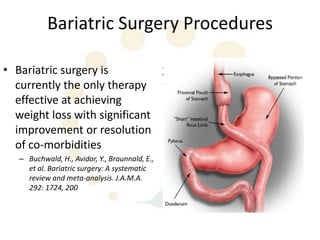
• Bariatric surgery is
  currently the only therapy
  effective at achieving
  weight loss with significant
  improvement or resolution
  of co-morbidities
   – Buchwald, H., Avidor, Y., Braunnald, E.,
     et al. Bariatric surgery: A systematic
     review and meta-analysis. J.A.M.A.
     292: 1724, 200
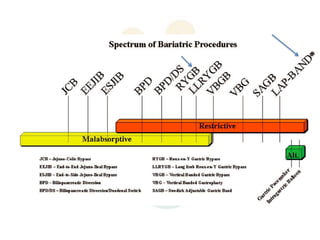
Bariatric Surgery Procedures
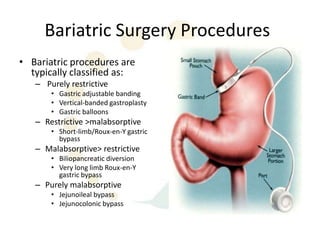
• Bariatric procedures are
  typically classified as:
   – Purely restrictive
       • Gastric adjustable banding
       • Vertical-banded gastroplasty
       • Gastric balloons
   – Restrictive >malabsorptive
       • Short-limb/Roux-en-Y gastric
         bypass
   – Malabsorptive> restrictive
       • Biliopancreatic diversion
       • Very long limb Roux-en-Y
         gastric bypass
   – Purely malabsorptive
       • Jejunoileal bypass
       • Jejunocolonic bypass
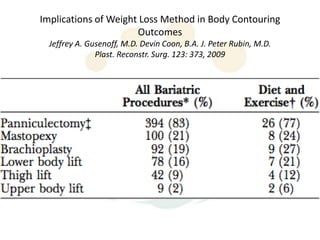
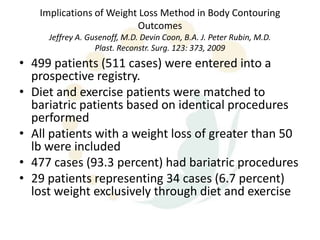
Implications of Weight Loss Method in Body Contouring
                         Outcomes
     Jeffrey A. Gusenoff, M.D. Devin Coon, B.A. J. Peter Rubin, M.D.
                  Plast. Reconstr. Surg. 123: 373, 2009
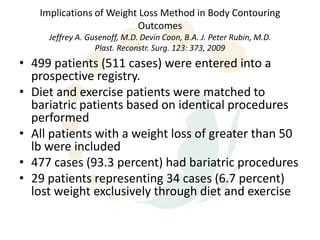
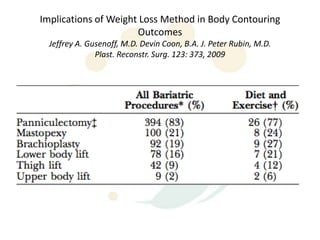
• 499 patients (511 cases) were entered into a
  prospective registry.
• Diet and exercise patients were matched to
  bariatric patients based on identical procedures
  performed
• All patients with a weight loss of greater than 50
  lb were included
• 477 cases (93.3 percent) had bariatric procedures
• 29 patients representing 34 cases (6.7 percent)
  lost weight exclusively through diet and exercise
Implications of Weight Loss Method in Body Contouring
                      Outcomes
  Jeffrey A. Gusenoff, M.D. Devin Coon, B.A. J. Peter Rubin, M.D.
               Plast. Reconstr. Surg. 123: 373, 2009
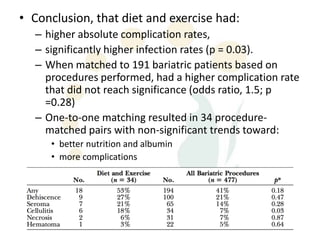
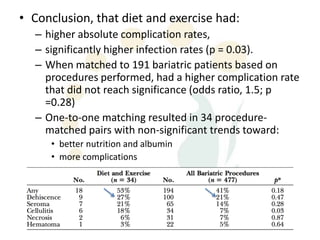
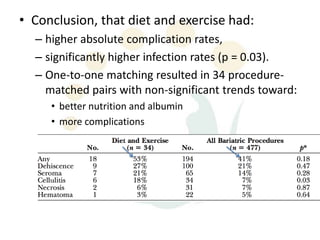
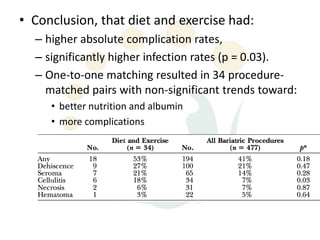
• Conclusion, that diet and exercise had:
  – higher absolute complication rates,
  – significantly higher infection rates (p = 0.03).
  – When matched to 191 bariatric patients based on
    procedures performed, had a higher complication rate
    that did not reach significance (odds ratio, 1.5; p
    =0.28)
  – One-to-one matching resulted in 34 procedure-
    matched pairs with non-significant trends toward:
     • better nutrition and albumin
     • more complications
• Conclusion, that diet and exercise had:
  – higher absolute complication rates,
  – significantly higher infection rates (p = 0.03).
  – When matched to 191 bariatric patients based on
    procedures performed, had a higher complication rate
    that did not reach significance (odds ratio, 1.5; p
    =0.28)
  – One-to-one matching resulted in 34 procedure-
    matched pairs with non-significant trends toward:
     • better nutrition and albumin
     • more complications
Potential Impacts of Nutritional Deficiency of Postbariatric Patients on Body
                             Contouring Surgery
   SiamakAgha-Mohammadi, M.B., B.Chir., Ph.D. Dennis J. Hurwitz, M.D.
                   Plast. Reconstr. Surg. 122: 1901, 2008

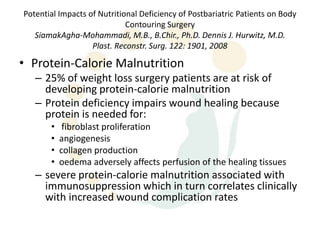
• Protein-Calorie Malnutrition
   – 25% of weight loss surgery patients are at risk of
     developing protein-calorie malnutrition
   – Protein deficiency impairs wound healing because
     protein is needed for:
       •    fibroblast proliferation
       •   angiogenesis
       •   collagen production
       •   oedema adversely affects perfusion of the healing tissues
   – severe protein-calorie malnutrition associated with
     immunosuppression which in turn correlates clinically
     with increased wound complication rates
Vitamin B6, Vitamin B12, and Folate
              Deficiencies
• Folate deficiency has an incidence of 9-35% after
  bypass operations.
• vitamin B6 deficiency is approximately 17.6 %
• vitamin B12 deficiency ranges from 3.6-37% at 1
  year after Roux-en-Y gastric bypass
• Folate and vitamin B12 are required for the
  formation of S-adenosylmethionine, which is
  critical for stabilization of DNA and many proteins
   – Thus, deficiencies of these vitamins can potentially
     contribute to poor cellular proliferation and repair in
     the post-bariatric body contouring
Thiamine
• Deficiencies of thiamine likely to be
  subclinical.
• Thiamine plays an essential role in the
  metabolism of carbohydrates and branched-
  chain amino acids
  – thus may have an important role in the healing
    process.
Vitamin C Deficiency
• Incidence of vitamin C deficiency in Roux- en-Y
  gastric bypass patients is:
  – 34.6% at the 1 Year
  – 35.4% - and 2-year
• Plays an important role in wound healing by:
  – Increasing collagen synthesis
  – Angiogenesis
  – associated with capillary leakage caused by decreased
    collagen production and susceptibility to wound
    infections
Vitamin A Deficiency
• up to 69% of post-bariatric patients 4 years
  after surgery
• Vitamin A is an essential factor in the healing
  patient, as it functions as an:
  – Immunostimulant,
  – Enhancing inflammation-driven wound healing
Vitamin E
• Vitamin E plays an important role in
  supporting monocyte/macrophage-mediated
  responses
• Also excess supplementation can inhibit
  collagen synthesis and decrease tensile
  strength of wounds because vitamin E has
  anti-inflammatory properties similar to
  steroids .
Iron Deficiency
• 30-50% with all types of bariatric surgery
• May present with microcytic anemia
• Post-bariatric body contouring patients can lose a
  significant amount of blood during surgical
  procedures, it is important that the patient’s
  haemoglobin and haematocrit are optimized in
  the preoperative setting.
• Severe iron deficiency can impair collagen
  production and increase the risk of opportunistic
  infections
Zinc Deficiency
• Deficiency is demonstrated in 36% of post-bariatric
  patients despite vitamin supplementation
• Zinc-deficient subjects are at risk of decreased :
   – fibroblast proliferation
   – collagen synthesis,
      • leading to decreased wound strength and delayed epithelization
• Has role in supporting the both the humeral and
  cellular immune system.
   – resulting in an increased susceptibility to wound infection
     and the possibility of delayed healing
Charing Cross Experience
• Currently bariatric surgery is funded by PCT
  with hundreds of procedures performed
  yearly
• Body contouring surgery not yet funded by
  PCT
• Therefore, scores of eligible patients who will
  miss out on BC surgery
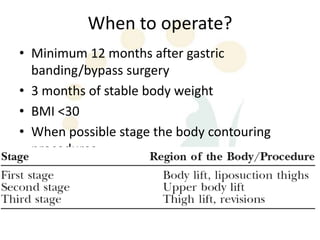
When to operate?
• Minimum 12 months after gastric
  banding/bypass surgery
• 3 months of stable body weight
• BMI <30
• When possible stage the body contouring
  procedures.
  – Atleast 3 months between BC procedures
    procedures
Implications of Weight Loss Method in Body Contouring
                         Outcomes
     Jeffrey A. Gusenoff, M.D. Devin Coon, B.A. J. Peter Rubin, M.D.
                  Plast. Reconstr. Surg. 123: 373, 2009
• 499 patients (511 cases) were entered into a
  prospective registry.
• Diet and exercise patients were matched to
  bariatric patients based on identical procedures
  performed
• All patients with a weight loss of greater than 50
  lb were included
• 477 cases (93.3 percent) had bariatric procedures
• 29 patients representing 34 cases (6.7 percent)
  lost weight exclusively through diet and exercise
Implications of Weight Loss Method in Body Contouring
                      Outcomes
  Jeffrey A. Gusenoff, M.D. Devin Coon, B.A. J. Peter Rubin, M.D.
               Plast. Reconstr. Surg. 123: 373, 2009
• Conclusion, that diet and exercise had:
  – higher absolute complication rates,
  – significantly higher infection rates (p = 0.03).
  – One-to-one matching resulted in 34 procedure-
    matched pairs with non-significant trends toward:
     • better nutrition and albumin
     • more complications
• Conclusion, that diet and exercise had:
  – higher absolute complication rates,
  – significantly higher infection rates (p = 0.03).
  – One-to-one matching resulted in 34 procedure-
    matched pairs with non-significant trends toward:
     • better nutrition and albumin
     • more complications
Potential Impacts of Nutritional Deficiency of Postbariatric Patients on Body
                             Contouring Surgery
   SiamakAgha-Mohammadi, M.B., B.Chir., Ph.D. Dennis J. Hurwitz, M.D.
                   Plast. Reconstr. Surg. 122: 1901, 2008

• Protein-Calorie Malnutrition
   – 25% of weight loss surgery patients are at risk of
     developing protein-calorie malnutrition
   – Protein deficiency impairs wound healing because
     protein is needed for:
       •    fibroblast proliferation
       •   angiogenesis
       •   collagen production
       •   oedema adversely affects perfusion of the healing tissues
• Iron deficiency anaemia in 30-50% with all types
  of bariatric surgery
Potential Impacts of Nutritional Deficiency of Postbariatric Patients on Body
                             Contouring Surgery
   SiamakAgha-Mohammadi, M.B., B.Chir., Ph.D. Dennis J. Hurwitz, M.D.
                   Plast. Reconstr. Surg. 122: 1901, 2008

• Folate deficiency has an incidence of 9-35% after
  bypass operations.
• Vitamin B6 deficiency is approximately 17.6 %
• Vitamin B12 deficiency ranges from 3.6-37% at 1
  year after Roux-en-Y gastric bypass
• Incidence of vitamin C deficiency in Roux- en-Y
  gastric bypass patients is 34.6% at the 1 Year
• Vitamin A deficiency up to 69% of post-bariatric
  patients 4 years after surgery
Key Points for Review with the Massive Weight Loss
                        Patient
• Length of body contouring procedures
• Need for multiple/staged procedures to achieve
  optimal result
   – Ability to go back and revise as needed
• Increased risk in smokers
• Scars:
   – Placement
   – Migration
   – Contracture
   – Asymmetry
Key Points for Review with the Massive Weight
                        Loss Patient
• Recurrent skin laxity
• Potential for sensory loss, especially in the arms
• Inability to close the wound
• Risk of deep vein thrombosis/pulmonary embolism
• Potential for:
   – Dehiscences
   – Seromas
   – Lymphocele/lymphedema
• Importance of weight maintenance
• Possibility of:
   – Sexual dysfunction
   – women Vulvar distortion
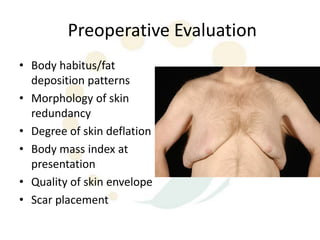
Preoperative Evaluation
• Body habitus/fat
  deposition patterns
• Morphology of skin
  redundancy
• Degree of skin deflation
• Body mass index at
  presentation
• Quality of skin envelope
• Scar placement
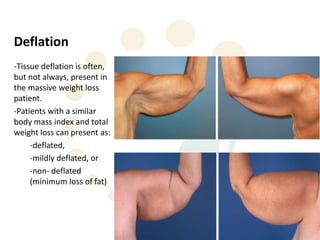
Deflation
-Tissue deflation is often,
but not always, present in
the massive weight loss
patient.
-Patients with a similar
body mass index and total
weight loss can present as:
     -deflated,
     -mildly deflated, or
     -non- deflated
     (minimum loss of fat)
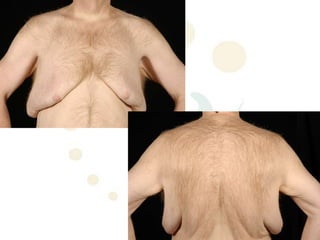
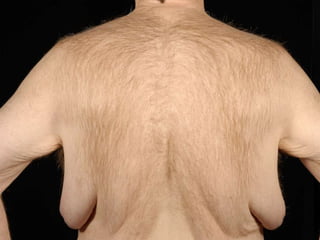
EVALUATING THE UPPER TRUNK
• Evaluation of the upper trunk should include a
  thorough analysis of the:
  – breast and chest
  – upper back.
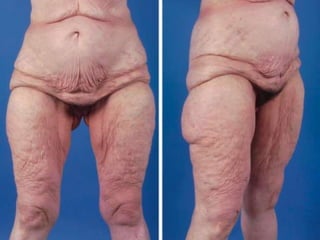
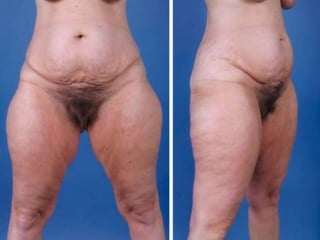
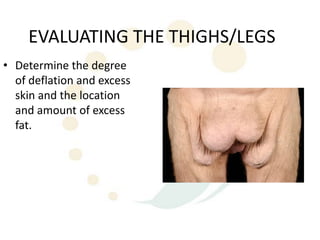
EVALUATING THE THIGHS/LEGS
• Determine the degree
  of deflation and excess
  skin and the location
  and amount of excess
  fat.
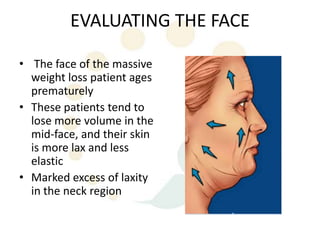
EVALUATING THE FACE

• The face of the massive
  weight loss patient ages
  prematurely
• These patients tend to
  lose more volume in the
  mid-face, and their skin
  is more lax and less
  elastic
• Marked excess of laxity
  in the neck region
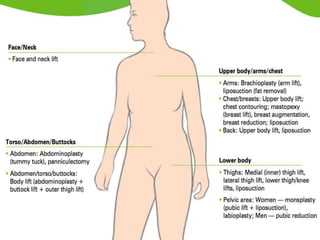
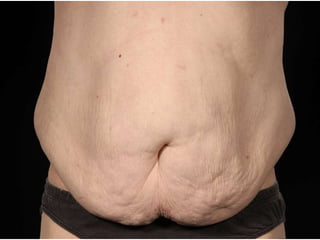
Surgical goals in lower body
                  procedures
•   Flattening the abdomen
•   Recreating the umbilicus
•   Elevating the mons
•   Creating a waist in female patients
•   Excision or liposuction of lower back rolls
•   Defining the buttocks
•   Lifting the outer/anterior thighs
•   Improving the inner thighs
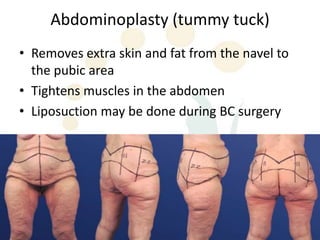
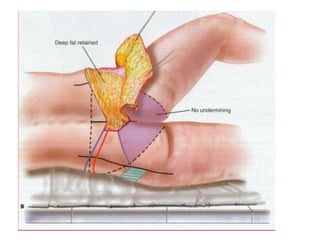
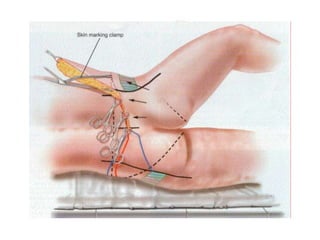
Abdominoplasty (tummy tuck)
• Removes extra skin and fat from the navel to
  the pubic area
• Tightens muscles in the abdomen
• Liposuction may be done during BC surgery
Dr Ted Lockwood
       High Lateral Tension suture
                  2001
• Classic approach improves contour by pulling
  inferiorly on the central abdomen, thereby
  creating the highest tension along the central
  incision,
  – HLT pulls obliquely from each of the incision's 2
    lateral arms, thereby placing the highest tension
    laterally.
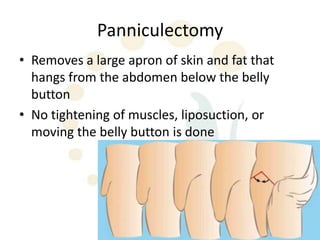
Panniculectomy
• Removes a large apron of skin and fat that
  hangs from the abdomen below the belly
  button
• No tightening of muscles, liposuction, or
  moving the belly button is done
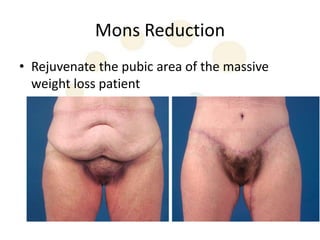
Mons Reduction
• Rejuvenate the pubic area of the massive
  weight loss patient
Surgical goals in upper body
               procedures
• To reshape/augment breast parenchyma to
  restore projection and fullness
• To achieve appropriate nipple-areola complex
  position and size
• To recreate/reposition the inframammary fold
• To reduce the skin envelope
• To eliminate prominent axillary skin rolls
• To elimination mid- and upper-back rolls
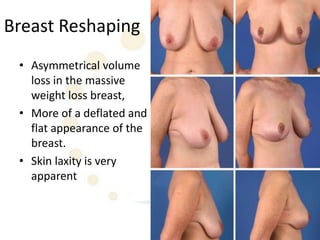
Breast Reshaping
 • Asymmetrical volume
   loss in the massive
   weight loss breast,
 • More of a deflated and
   flat appearance of the
   breast.
 • Skin laxity is very
   apparent
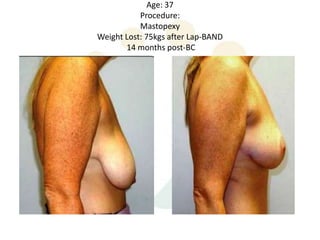
Age: 37
           Procedure:
           Mastopexy
Weight Lost: 75kgs after Lap-BAND
       14 months post-BC
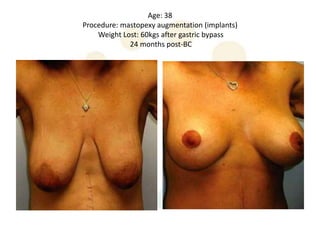
Age: 38
Procedure: mastopexy augmentation (implants)
    Weight Lost: 60kgs after gastric bypass
             24 months post-BC
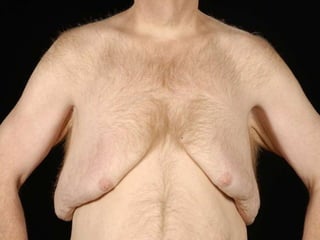
Breast in Male Massive Weight Loss
               Patients
• Body mass index: before weight loss and
  current
• Degree of nipple-areola complex ptosis
• Amount of breast projection
• Amount of hypertrophy
• Amount of excessive skin
• Loss of inframammary fold definition
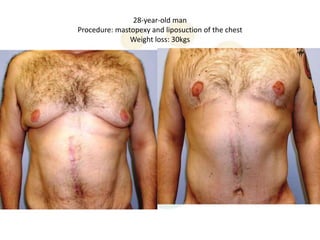
28-year-old man
Procedure: mastopexy and liposuction of the chest
               Weight loss: 30kgs
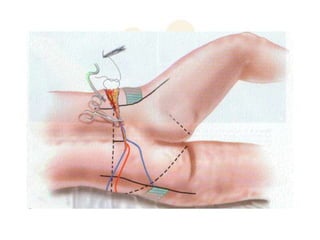
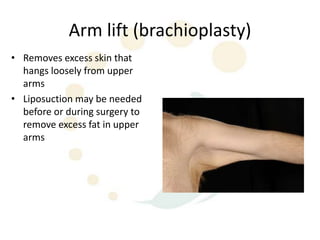
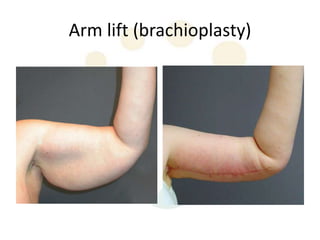
Arm lift (brachioplasty)
• Removes excess skin that
  hangs loosely from upper
  arms
• Liposuction may be needed
  before or during surgery to
  remove excess fat in upper
  arms
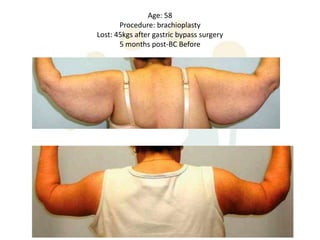
Age: 58
       Procedure: brachioplasty
Lost: 45kgs after gastric bypass surgery
       5 months post-BC Before
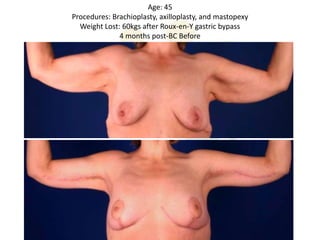
Age: 45
Procedures: Brachioplasty, axilloplasty, and mastopexy
  Weight Lost: 60kgs after Roux-en-Y gastric bypass
              4 months post-BC Before
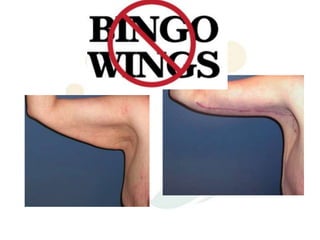
Arm lift (brachioplasty)
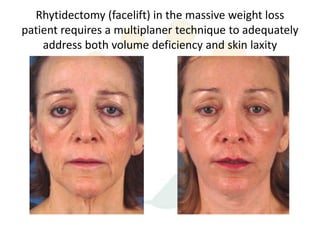
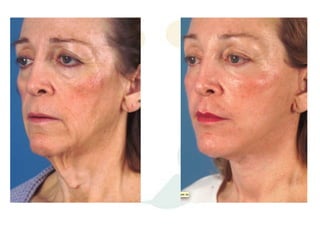
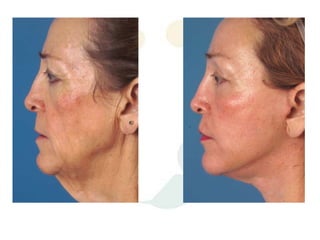
Rhytidectomy (facelift) in the massive weight loss
patient requires a multiplaner technique to adequately
    address both volume deficiency and skin laxity
Body contouring
Body contouring

Body contouring

  • 2.
    Body Contouring andmassive weight loss in the NHS
  • 3.
    48yo man MWL200-100kgs diet and exercise only
  • 4.
    Presents to outpatientsrequesting information on Body Contouring Surgery
  • 5.
    Highly motivated professionalwith no significant past medical history
  • 6.
    • May 2009following PCT approval and adequate counseling underwent – Lower body lift • 9.9kgs of subcutaneous tissue excised • 4 hour 2 surgeon approach • Patient re-positioned 3 times • X6 drains • Intra-operatively required 6units of PC • Otherwise unremarkable
  • 7.
    Post-op • Day 1: – BP 80/40 HR 110, 1 drain >1L over 2 hours – Immediate exploration and evacuation of 3L haematoma with no bleeding source identified • Day 1: – 12 hours after first exploration – BP undetectable, ABG Hb 4, aggressive resuscitation and re-explored – Minor bleeds cauterised but nil identifiable source – Evacuation of 2.2L haematoma • Short stay in ICU but following 32 units of PC discharged day 8
  • 8.
    Outpatients • Weekly drainageof seroma collections • Extremely happy!!! • Can’t wait to get the next stage of his BC performed
  • 9.
    The Obesity Epidemic •Derived from the Latin word obesus – “to devour” • Obesity is growing at an alarming rate in both children and adults in Westernized countries
  • 10.
    International Union ofNutritional Sciences. The global challenge of obesity and the International Obesity Task Force:2002
  • 13.
    The Obesity Epidemic • According to recent data, the number of annual deaths attributed to obesity (in the United States) is estimated to be 112,000. International Union of Nutritional Sciences. The global challenge of obesity and the International Obesity Task Force: Tables. Available at http://www.iuns.org/features/obesity/ tabfig.htm#Table%201. Accessed on September 6, 2005. • Although this number is lower than the earlier estimate of 300,000 deaths, Ogden, C. L., Flegal, K. M., Carroll, M. D., and Johnson, C. L. Prevalence and trends in overweight among U.S. children and adolescents. J.A.M.A. 288: 1728, 2002. • Morbidities associated with obesity, including: – diabetes, – heart disease, – some cancers, – and arthritis, • Reduce a patient’s quality of life and contribute to escalating medical costs.
  • 14.
    Prevalence of obesity,diabetes, and obesity related health risk factors. Mokdad, A. H., Ford, E., Bowman, B. A., et al. J.A.M.A. 289: 76, 2001 • A weight gain of 11 to 18 pounds increases a person’s risk of developing type 2 diabetes to twice that of individuals who have not gained weight • >80% of people with diabetes are overweight or obese • Incidence of heart disease is increased in persons who are overweight • High blood pressure is twice as common in adults who are obese than in those who are at a healthy weight • For every 2-pound increase in weight, the risk of developing arthritis is increased by 9 to 13%
  • 15.
    Bariatric surgery: Asystematic review and meta- analysis. Buchwald, H., Avidor, Y., Braunnald, E., et al. J.A.M.A. 292: 1724, 2004 • Comprehensive review and meta-analysis analyzed 136 bariatric surgery reports. • This study reviewed 22,094 patients with a mean age of 39 years (range, 16 to 64 years) • Average body mass index of 46.9 (range, 32.3 to 68.8). • The group was 72.6% female and 27.4% male.
  • 16.
    Bariatric surgery: Asystematic review and meta- analysis. Buchwald, H., Avidor, Y., Braunnald, E., et al. J.A.M.A. 292: 1724, 2004 • The authors concluded that co-morbidities were improved by bariatric surgery – Lipid disorders improved in 70% of patients. – Diabetes improved in 76.8% of patients. – Hypertension improved in 78.5% of patients. – Obstructive sleep apnea improved in 85.7% of patients. • The positive physical improvements that often accompany weight loss, as well as the increase in self-esteem, can equate to an improved quality of life for these patient
  • 17.
    • American Societyfor Bariatric Surgery, its member surgeons performed: – 28,800 weight loss operations in 1999 – 63,000 weight-loss operationsin 2002, – 140,000 weight-loss operations in 2004 • Mayo Foundation for Medical Education and Research. Gastric bypass: Is this weight-loss surgery for you?
  • 18.
    • American Societyof Plastic Surgeons, nearly 56,000 body contouring procedures were performed for massive weight loss patients in 2004
  • 19.
    • The increasedsafety and effectiveness of bariatric surgery give plastic surgeons additional opportunities to refine body contouring
  • 20.
    Bariatric Surgery Procedures •Bariatric surgery is currently the only therapy effective at achieving weight loss with significant improvement or resolution of co-morbidities – Buchwald, H., Avidor, Y., Braunnald, E., et al. Bariatric surgery: A systematic review and meta-analysis. J.A.M.A. 292: 1724, 200
  • 21.
    Bariatric Surgery Procedures •Bariatric procedures are typically classified as: – Purely restrictive • Gastric adjustable banding • Vertical-banded gastroplasty • Gastric balloons – Restrictive >malabsorptive • Short-limb/Roux-en-Y gastric bypass – Malabsorptive> restrictive • Biliopancreatic diversion • Very long limb Roux-en-Y gastric bypass – Purely malabsorptive • Jejunoileal bypass • Jejunocolonic bypass
  • 23.
    Implications of WeightLoss Method in Body Contouring Outcomes Jeffrey A. Gusenoff, M.D. Devin Coon, B.A. J. Peter Rubin, M.D. Plast. Reconstr. Surg. 123: 373, 2009 • 499 patients (511 cases) were entered into a prospective registry. • Diet and exercise patients were matched to bariatric patients based on identical procedures performed • All patients with a weight loss of greater than 50 lb were included • 477 cases (93.3 percent) had bariatric procedures • 29 patients representing 34 cases (6.7 percent) lost weight exclusively through diet and exercise
  • 24.
    Implications of WeightLoss Method in Body Contouring Outcomes Jeffrey A. Gusenoff, M.D. Devin Coon, B.A. J. Peter Rubin, M.D. Plast. Reconstr. Surg. 123: 373, 2009
  • 25.
    • Conclusion, thatdiet and exercise had: – higher absolute complication rates, – significantly higher infection rates (p = 0.03). – When matched to 191 bariatric patients based on procedures performed, had a higher complication rate that did not reach significance (odds ratio, 1.5; p =0.28) – One-to-one matching resulted in 34 procedure- matched pairs with non-significant trends toward: • better nutrition and albumin • more complications
  • 26.
    • Conclusion, thatdiet and exercise had: – higher absolute complication rates, – significantly higher infection rates (p = 0.03). – When matched to 191 bariatric patients based on procedures performed, had a higher complication rate that did not reach significance (odds ratio, 1.5; p =0.28) – One-to-one matching resulted in 34 procedure- matched pairs with non-significant trends toward: • better nutrition and albumin • more complications
  • 27.
    Potential Impacts ofNutritional Deficiency of Postbariatric Patients on Body Contouring Surgery SiamakAgha-Mohammadi, M.B., B.Chir., Ph.D. Dennis J. Hurwitz, M.D. Plast. Reconstr. Surg. 122: 1901, 2008 • Protein-Calorie Malnutrition – 25% of weight loss surgery patients are at risk of developing protein-calorie malnutrition – Protein deficiency impairs wound healing because protein is needed for: • fibroblast proliferation • angiogenesis • collagen production • oedema adversely affects perfusion of the healing tissues – severe protein-calorie malnutrition associated with immunosuppression which in turn correlates clinically with increased wound complication rates
  • 28.
    Vitamin B6, VitaminB12, and Folate Deficiencies • Folate deficiency has an incidence of 9-35% after bypass operations. • vitamin B6 deficiency is approximately 17.6 % • vitamin B12 deficiency ranges from 3.6-37% at 1 year after Roux-en-Y gastric bypass • Folate and vitamin B12 are required for the formation of S-adenosylmethionine, which is critical for stabilization of DNA and many proteins – Thus, deficiencies of these vitamins can potentially contribute to poor cellular proliferation and repair in the post-bariatric body contouring
  • 29.
    Thiamine • Deficiencies ofthiamine likely to be subclinical. • Thiamine plays an essential role in the metabolism of carbohydrates and branched- chain amino acids – thus may have an important role in the healing process.
  • 30.
    Vitamin C Deficiency •Incidence of vitamin C deficiency in Roux- en-Y gastric bypass patients is: – 34.6% at the 1 Year – 35.4% - and 2-year • Plays an important role in wound healing by: – Increasing collagen synthesis – Angiogenesis – associated with capillary leakage caused by decreased collagen production and susceptibility to wound infections
  • 31.
    Vitamin A Deficiency •up to 69% of post-bariatric patients 4 years after surgery • Vitamin A is an essential factor in the healing patient, as it functions as an: – Immunostimulant, – Enhancing inflammation-driven wound healing
  • 32.
    Vitamin E • VitaminE plays an important role in supporting monocyte/macrophage-mediated responses • Also excess supplementation can inhibit collagen synthesis and decrease tensile strength of wounds because vitamin E has anti-inflammatory properties similar to steroids .
  • 33.
    Iron Deficiency • 30-50%with all types of bariatric surgery • May present with microcytic anemia • Post-bariatric body contouring patients can lose a significant amount of blood during surgical procedures, it is important that the patient’s haemoglobin and haematocrit are optimized in the preoperative setting. • Severe iron deficiency can impair collagen production and increase the risk of opportunistic infections
  • 34.
    Zinc Deficiency • Deficiencyis demonstrated in 36% of post-bariatric patients despite vitamin supplementation • Zinc-deficient subjects are at risk of decreased : – fibroblast proliferation – collagen synthesis, • leading to decreased wound strength and delayed epithelization • Has role in supporting the both the humeral and cellular immune system. – resulting in an increased susceptibility to wound infection and the possibility of delayed healing
  • 35.
    Charing Cross Experience •Currently bariatric surgery is funded by PCT with hundreds of procedures performed yearly • Body contouring surgery not yet funded by PCT • Therefore, scores of eligible patients who will miss out on BC surgery
  • 36.
    When to operate? •Minimum 12 months after gastric banding/bypass surgery • 3 months of stable body weight • BMI <30 • When possible stage the body contouring procedures. – Atleast 3 months between BC procedures procedures
  • 37.
    Implications of WeightLoss Method in Body Contouring Outcomes Jeffrey A. Gusenoff, M.D. Devin Coon, B.A. J. Peter Rubin, M.D. Plast. Reconstr. Surg. 123: 373, 2009 • 499 patients (511 cases) were entered into a prospective registry. • Diet and exercise patients were matched to bariatric patients based on identical procedures performed • All patients with a weight loss of greater than 50 lb were included • 477 cases (93.3 percent) had bariatric procedures • 29 patients representing 34 cases (6.7 percent) lost weight exclusively through diet and exercise
  • 38.
    Implications of WeightLoss Method in Body Contouring Outcomes Jeffrey A. Gusenoff, M.D. Devin Coon, B.A. J. Peter Rubin, M.D. Plast. Reconstr. Surg. 123: 373, 2009
  • 39.
    • Conclusion, thatdiet and exercise had: – higher absolute complication rates, – significantly higher infection rates (p = 0.03). – One-to-one matching resulted in 34 procedure- matched pairs with non-significant trends toward: • better nutrition and albumin • more complications
  • 40.
    • Conclusion, thatdiet and exercise had: – higher absolute complication rates, – significantly higher infection rates (p = 0.03). – One-to-one matching resulted in 34 procedure- matched pairs with non-significant trends toward: • better nutrition and albumin • more complications
  • 41.
    Potential Impacts ofNutritional Deficiency of Postbariatric Patients on Body Contouring Surgery SiamakAgha-Mohammadi, M.B., B.Chir., Ph.D. Dennis J. Hurwitz, M.D. Plast. Reconstr. Surg. 122: 1901, 2008 • Protein-Calorie Malnutrition – 25% of weight loss surgery patients are at risk of developing protein-calorie malnutrition – Protein deficiency impairs wound healing because protein is needed for: • fibroblast proliferation • angiogenesis • collagen production • oedema adversely affects perfusion of the healing tissues • Iron deficiency anaemia in 30-50% with all types of bariatric surgery
  • 42.
    Potential Impacts ofNutritional Deficiency of Postbariatric Patients on Body Contouring Surgery SiamakAgha-Mohammadi, M.B., B.Chir., Ph.D. Dennis J. Hurwitz, M.D. Plast. Reconstr. Surg. 122: 1901, 2008 • Folate deficiency has an incidence of 9-35% after bypass operations. • Vitamin B6 deficiency is approximately 17.6 % • Vitamin B12 deficiency ranges from 3.6-37% at 1 year after Roux-en-Y gastric bypass • Incidence of vitamin C deficiency in Roux- en-Y gastric bypass patients is 34.6% at the 1 Year • Vitamin A deficiency up to 69% of post-bariatric patients 4 years after surgery
  • 44.
    Key Points forReview with the Massive Weight Loss Patient • Length of body contouring procedures • Need for multiple/staged procedures to achieve optimal result – Ability to go back and revise as needed • Increased risk in smokers • Scars: – Placement – Migration – Contracture – Asymmetry
  • 45.
    Key Points forReview with the Massive Weight Loss Patient • Recurrent skin laxity • Potential for sensory loss, especially in the arms • Inability to close the wound • Risk of deep vein thrombosis/pulmonary embolism • Potential for: – Dehiscences – Seromas – Lymphocele/lymphedema • Importance of weight maintenance • Possibility of: – Sexual dysfunction – women Vulvar distortion
  • 46.
    Preoperative Evaluation • Bodyhabitus/fat deposition patterns • Morphology of skin redundancy • Degree of skin deflation • Body mass index at presentation • Quality of skin envelope • Scar placement
  • 47.
    Deflation -Tissue deflation isoften, but not always, present in the massive weight loss patient. -Patients with a similar body mass index and total weight loss can present as: -deflated, -mildly deflated, or -non- deflated (minimum loss of fat)
  • 50.
    EVALUATING THE UPPERTRUNK • Evaluation of the upper trunk should include a thorough analysis of the: – breast and chest – upper back.
  • 53.
    EVALUATING THE THIGHS/LEGS •Determine the degree of deflation and excess skin and the location and amount of excess fat.
  • 54.
    EVALUATING THE FACE •The face of the massive weight loss patient ages prematurely • These patients tend to lose more volume in the mid-face, and their skin is more lax and less elastic • Marked excess of laxity in the neck region
  • 56.
    Surgical goals inlower body procedures • Flattening the abdomen • Recreating the umbilicus • Elevating the mons • Creating a waist in female patients • Excision or liposuction of lower back rolls • Defining the buttocks • Lifting the outer/anterior thighs • Improving the inner thighs
  • 57.
    Abdominoplasty (tummy tuck) •Removes extra skin and fat from the navel to the pubic area • Tightens muscles in the abdomen • Liposuction may be done during BC surgery
  • 58.
    Dr Ted Lockwood High Lateral Tension suture 2001 • Classic approach improves contour by pulling inferiorly on the central abdomen, thereby creating the highest tension along the central incision, – HLT pulls obliquely from each of the incision's 2 lateral arms, thereby placing the highest tension laterally.
  • 68.
    Panniculectomy • Removes alarge apron of skin and fat that hangs from the abdomen below the belly button • No tightening of muscles, liposuction, or moving the belly button is done
  • 75.
    Mons Reduction • Rejuvenatethe pubic area of the massive weight loss patient
  • 76.
    Surgical goals inupper body procedures • To reshape/augment breast parenchyma to restore projection and fullness • To achieve appropriate nipple-areola complex position and size • To recreate/reposition the inframammary fold • To reduce the skin envelope • To eliminate prominent axillary skin rolls • To elimination mid- and upper-back rolls
  • 77.
    Breast Reshaping •Asymmetrical volume loss in the massive weight loss breast, • More of a deflated and flat appearance of the breast. • Skin laxity is very apparent
  • 78.
    Age: 37 Procedure: Mastopexy Weight Lost: 75kgs after Lap-BAND 14 months post-BC
  • 79.
    Age: 38 Procedure: mastopexyaugmentation (implants) Weight Lost: 60kgs after gastric bypass 24 months post-BC
  • 80.
    Breast in MaleMassive Weight Loss Patients • Body mass index: before weight loss and current • Degree of nipple-areola complex ptosis • Amount of breast projection • Amount of hypertrophy • Amount of excessive skin • Loss of inframammary fold definition
  • 82.
    28-year-old man Procedure: mastopexyand liposuction of the chest Weight loss: 30kgs
  • 83.
    Arm lift (brachioplasty) •Removes excess skin that hangs loosely from upper arms • Liposuction may be needed before or during surgery to remove excess fat in upper arms
  • 84.
    Age: 58 Procedure: brachioplasty Lost: 45kgs after gastric bypass surgery 5 months post-BC Before
  • 85.
    Age: 45 Procedures: Brachioplasty,axilloplasty, and mastopexy Weight Lost: 60kgs after Roux-en-Y gastric bypass 4 months post-BC Before
  • 87.
  • 88.
    Rhytidectomy (facelift) inthe massive weight loss patient requires a multiplaner technique to adequately address both volume deficiency and skin laxity