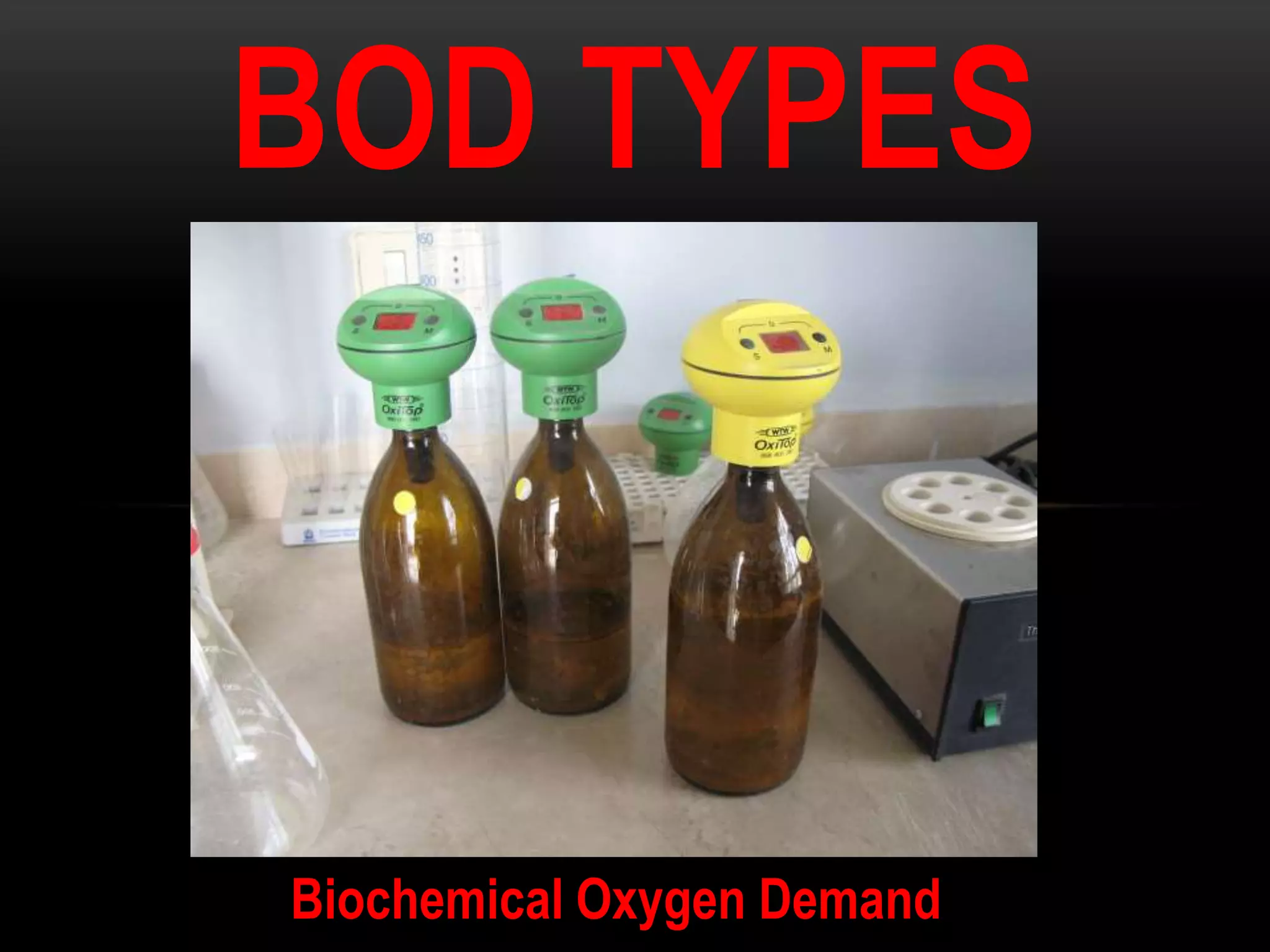
BOD TYPES
Biochemical Oxygen Demand
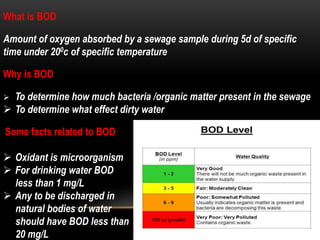
What is BOD
Amount of oxygen absorbed by a sewage sample during 5d of specific
time under 200c of specific temperature
Why is BOD
 To determine how much bacteria /organic matter present in the sewage
 To determine what effect dirty water
Some facts related to BOD
 Oxidant is microorganism
 For drinking water BOD
less than 1 mg/L
 Any to be discharged in
natural bodies of water
should have BOD less than
20 mg/L
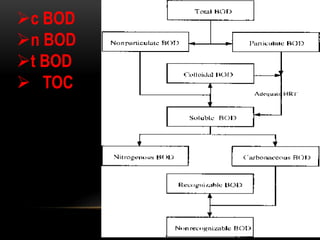
c BOD
n BOD
t BOD
 TOC
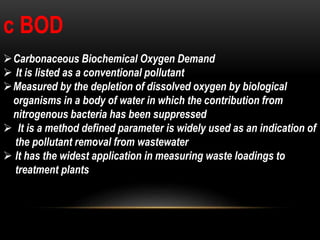
c BOD
Carbonaceous Biochemical Oxygen Demand
 It is listed as a conventional pollutant
Measured by the depletion of dissolved oxygen by biological
organisms in a body of water in which the contribution from
nitrogenous bacteria has been suppressed
 It is a method defined parameter is widely used as an indication of
the pollutant removal from wastewater
 It has the widest application in measuring waste loadings to
treatment plants
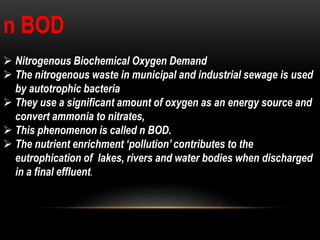
n BOD
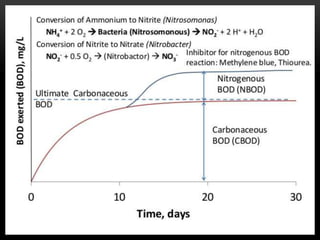
 Nitrogenous Biochemical Oxygen Demand
 The nitrogenous waste in municipal and industrial sewage is used
by autotrophic bacteria
 They use a significant amount of oxygen as an energy source and
convert ammonia to nitrates,
 This phenomenon is called n BOD.
 The nutrient enrichment ‘pollution’ contributes to the
eutrophication of lakes, rivers and water bodies when discharged
in a final effluent.
t BOD
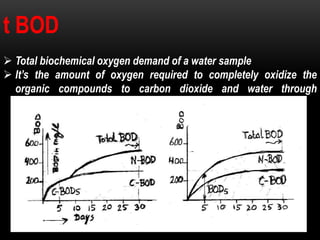
 Total biochemical oxygen demand of a water sample
 It’s the amount of oxygen required to completely oxidize the
organic compounds to carbon dioxide and water through
generations of microbial growth, death & decay
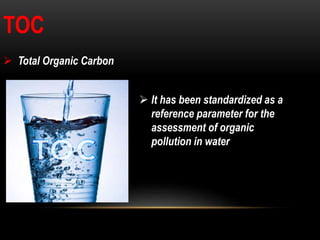
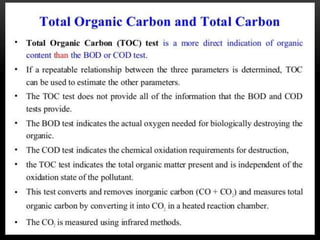
TOC
 Total Organic Carbon
 It has been standardized as a
reference parameter for the
assessment of organic
pollution in water
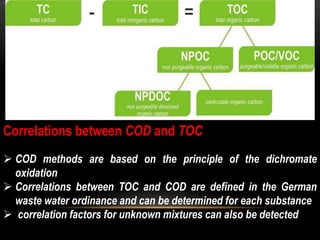
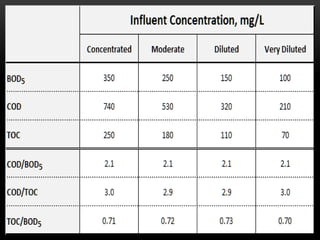
Correlations between COD and TOC
 COD methods are based on the principle of the dichromate
oxidation
 Correlations between TOC and COD are defined in the German
waste water ordinance and can be determined for each substance
 correlation factors for unknown mixtures can also be detected
Bod types
Bod types
Bod types

Bod types

  • 1.
  • 2.
    What is BOD Amountof oxygen absorbed by a sewage sample during 5d of specific time under 200c of specific temperature Why is BOD  To determine how much bacteria /organic matter present in the sewage  To determine what effect dirty water Some facts related to BOD  Oxidant is microorganism  For drinking water BOD less than 1 mg/L  Any to be discharged in natural bodies of water should have BOD less than 20 mg/L
  • 3.
  • 4.
    c BOD Carbonaceous BiochemicalOxygen Demand  It is listed as a conventional pollutant Measured by the depletion of dissolved oxygen by biological organisms in a body of water in which the contribution from nitrogenous bacteria has been suppressed  It is a method defined parameter is widely used as an indication of the pollutant removal from wastewater  It has the widest application in measuring waste loadings to treatment plants
  • 5.
    n BOD  NitrogenousBiochemical Oxygen Demand  The nitrogenous waste in municipal and industrial sewage is used by autotrophic bacteria  They use a significant amount of oxygen as an energy source and convert ammonia to nitrates,  This phenomenon is called n BOD.  The nutrient enrichment ‘pollution’ contributes to the eutrophication of lakes, rivers and water bodies when discharged in a final effluent.
  • 7.
    t BOD  Totalbiochemical oxygen demand of a water sample  It’s the amount of oxygen required to completely oxidize the organic compounds to carbon dioxide and water through generations of microbial growth, death & decay
  • 8.
    TOC  Total OrganicCarbon  It has been standardized as a reference parameter for the assessment of organic pollution in water
  • 10.
    Correlations between CODand TOC  COD methods are based on the principle of the dichromate oxidation  Correlations between TOC and COD are defined in the German waste water ordinance and can be determined for each substance  correlation factors for unknown mixtures can also be detected