Biological oxygen demand and biochemical oxygen demand
3.
Introduction
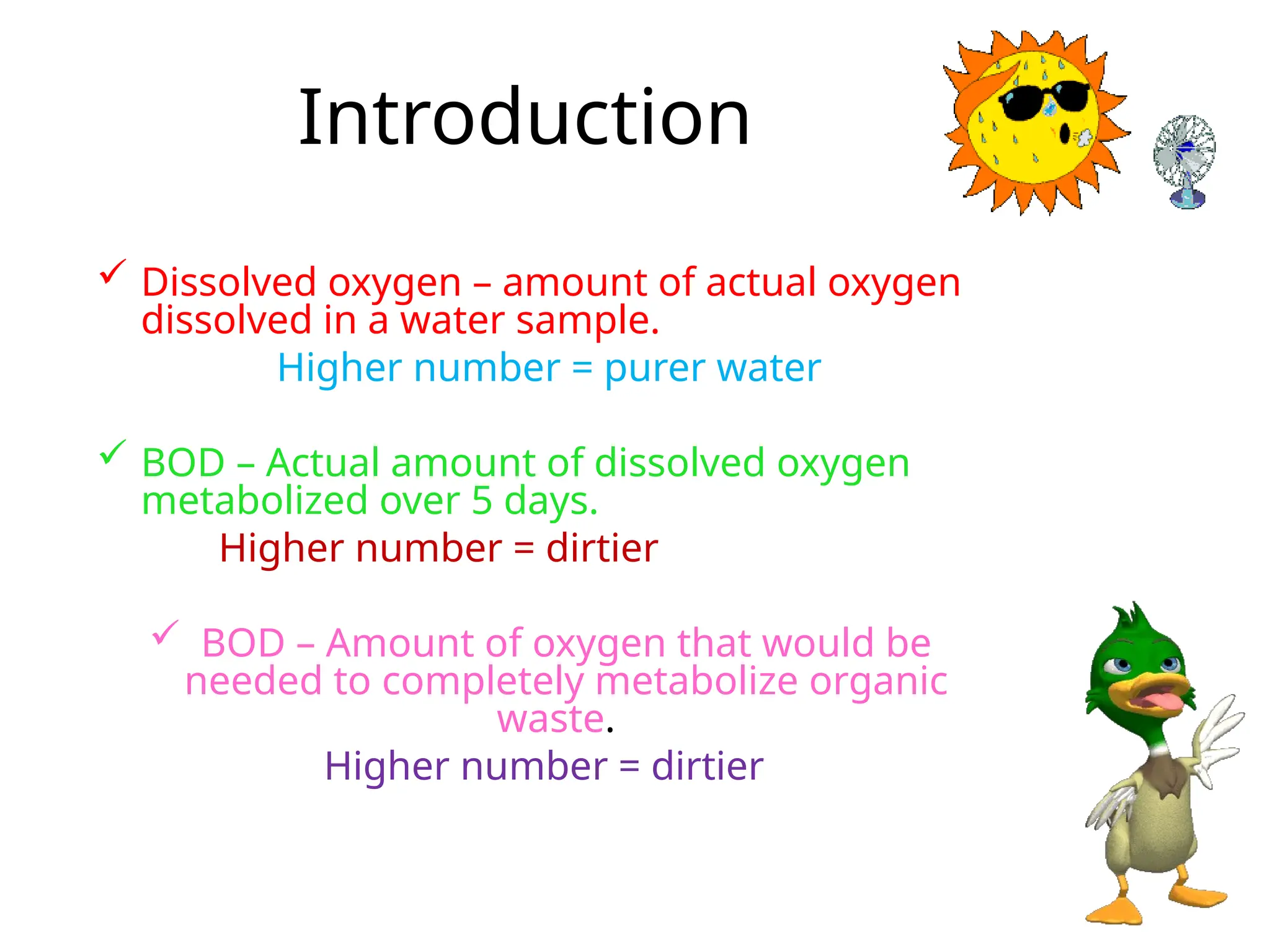
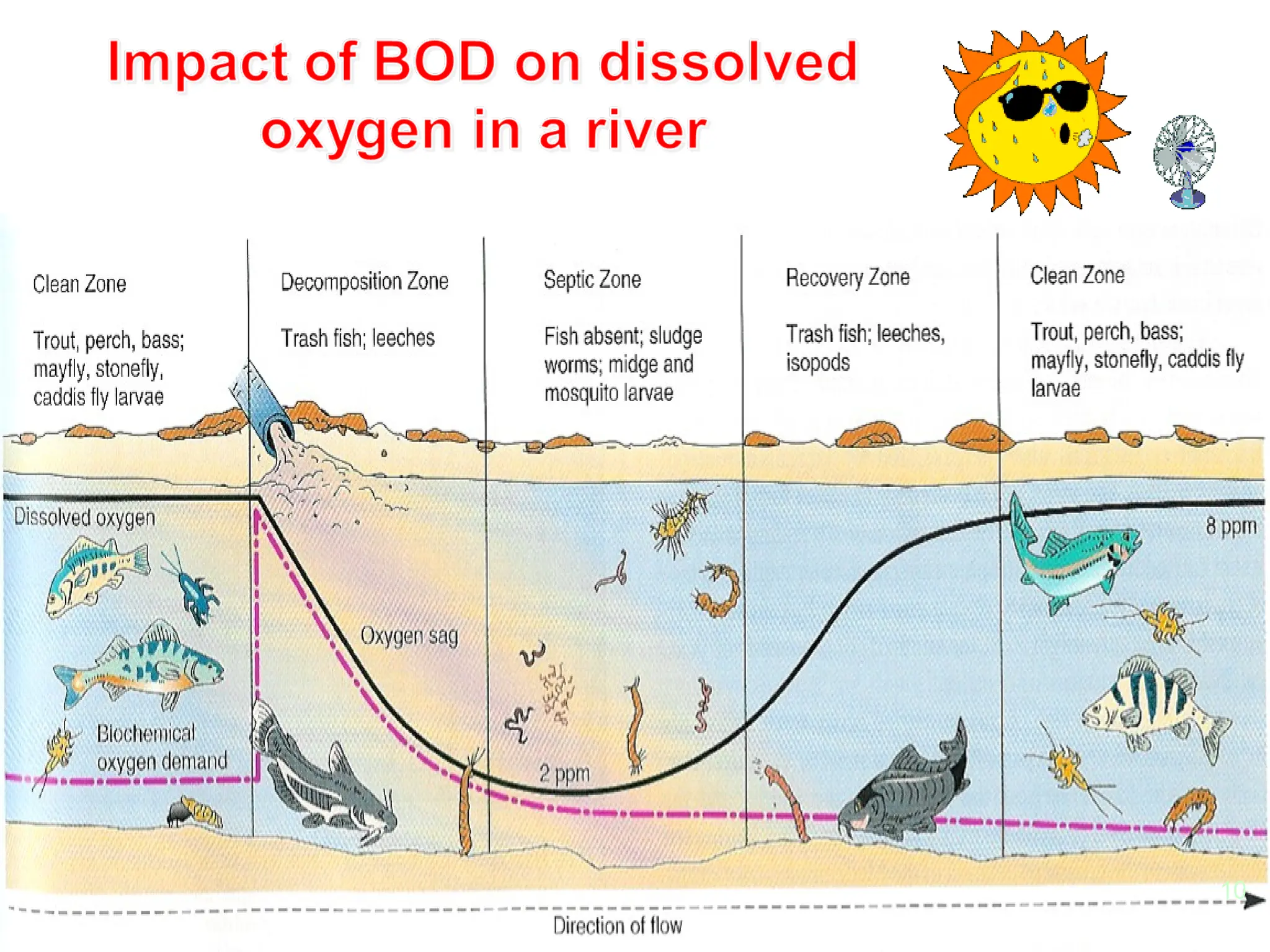
Dissolved oxygen– amount of actual oxygen
dissolved in a water sample.
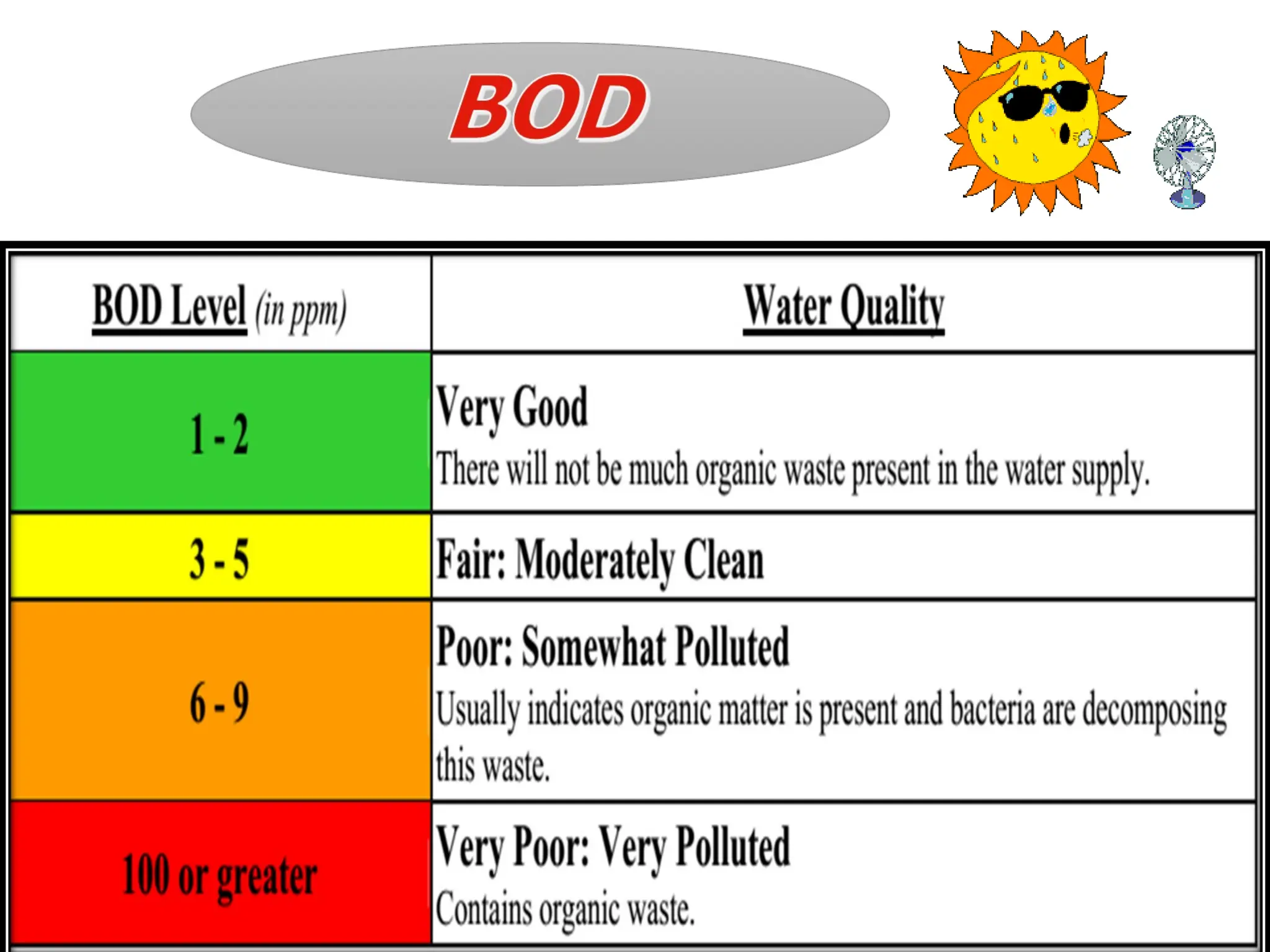
Higher number = purer water
BOD – Actual amount of dissolved oxygen
metabolized over 5 days.
Higher number = dirtier
BOD – Amount of oxygen that would be
needed to completely metabolize organic
waste.
Higher number = dirtier
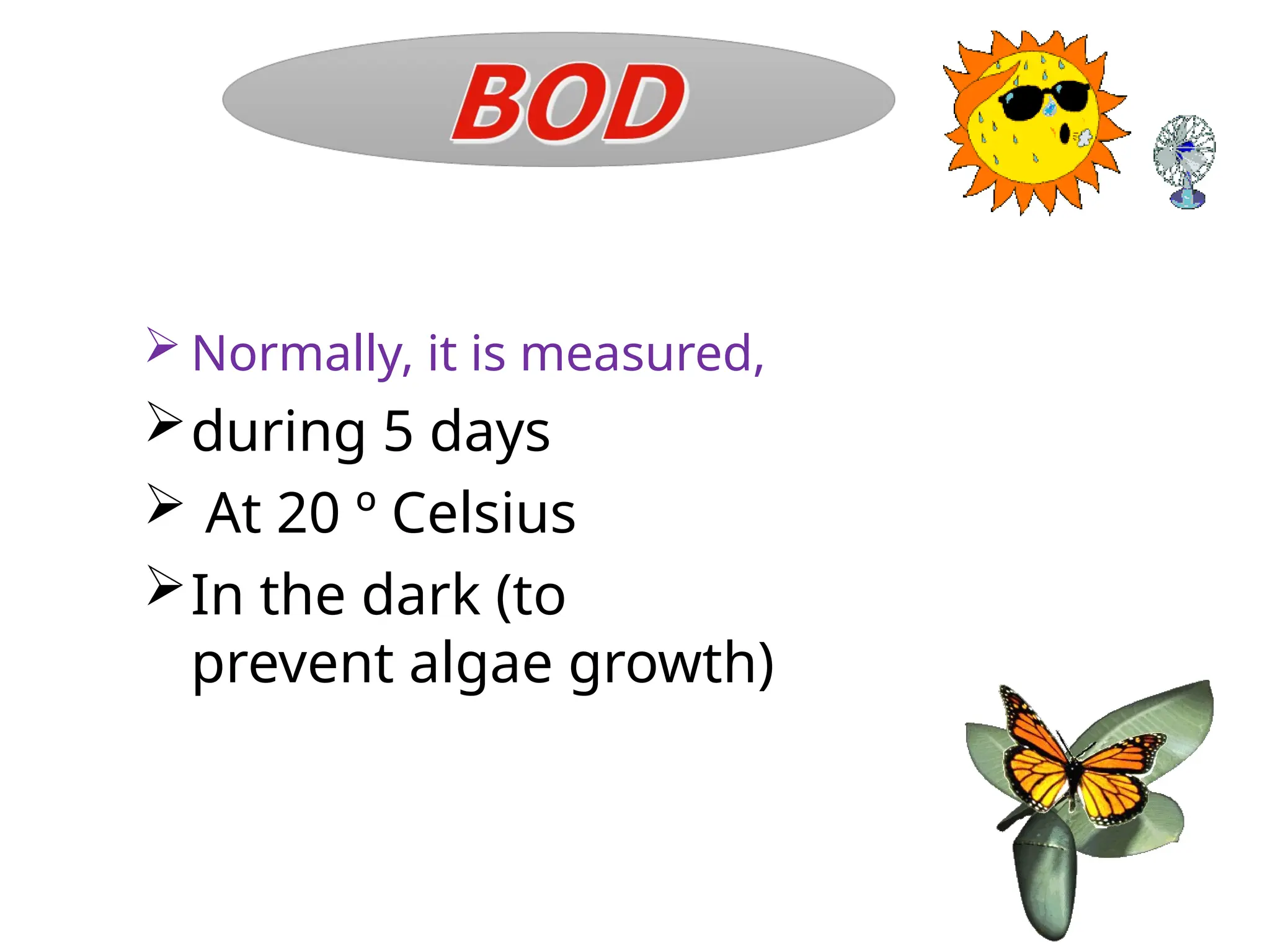
Normally, itis measured,
during 5 days
At 20 º Celsius
In the dark (to
prevent algae growth)
6.
“Biochemical OxygenDemand” (BOD) was selected in 1908 as
an indicator of the organic pollution of rivers by the U.K
This parameter was adopted by the American Public Health
Association Standard Methods Committee in 1936 as a
reference indicator to evaluate the biodegradation of
chemicals and hazardous substances.
Five day period to estimate the BOD in river parameter was
chosen for test.
7.
Since mostaquatic organisms need oxygen
to carry out anaerobic respiration/
photosynthesis.
Water with High BOD can’t replenish oxygen
fast enough, would not be able to meet the
needs of the aquatic community.
Hence they will eventually suffocate
8.
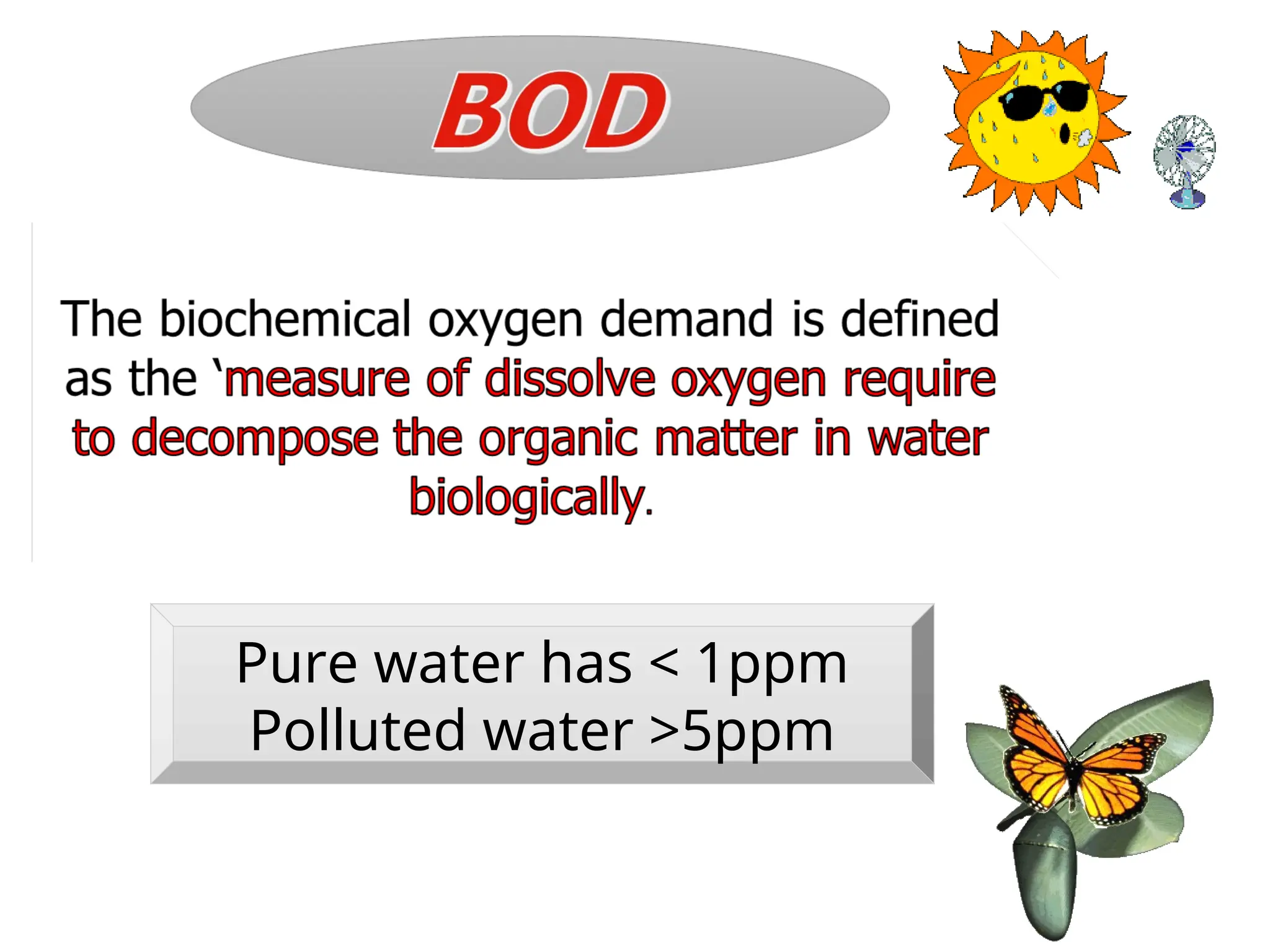
This parameter isdefined as
“The amount of oxygen, divided by the volume of the system,
taken up through the respiratory activity of microorganisms
growing on the organic compounds present in the sample (e.g.
water or sludge) when incubated at a specified temperature
(usually 20 °C) for a fixed period (usually 5 days, BOD5)”.
9.
Other compounds (Organicmatter) can also be
converted by microbes while using oxygen. Most
common one is NH4
+
.
Theoretically: NH4
+
+ 2 O2 NO3
-
+ 2H+
+ H2O
BOD = 4.57 g O2 / g NH4+
When no measures are taken to prevent this, the
analysis result is called TBOD (total BOD).
When nitrification inhibitor is added (prevents conversion
of NH4
+
), then it is called CBOD (carbon-BOD).
1
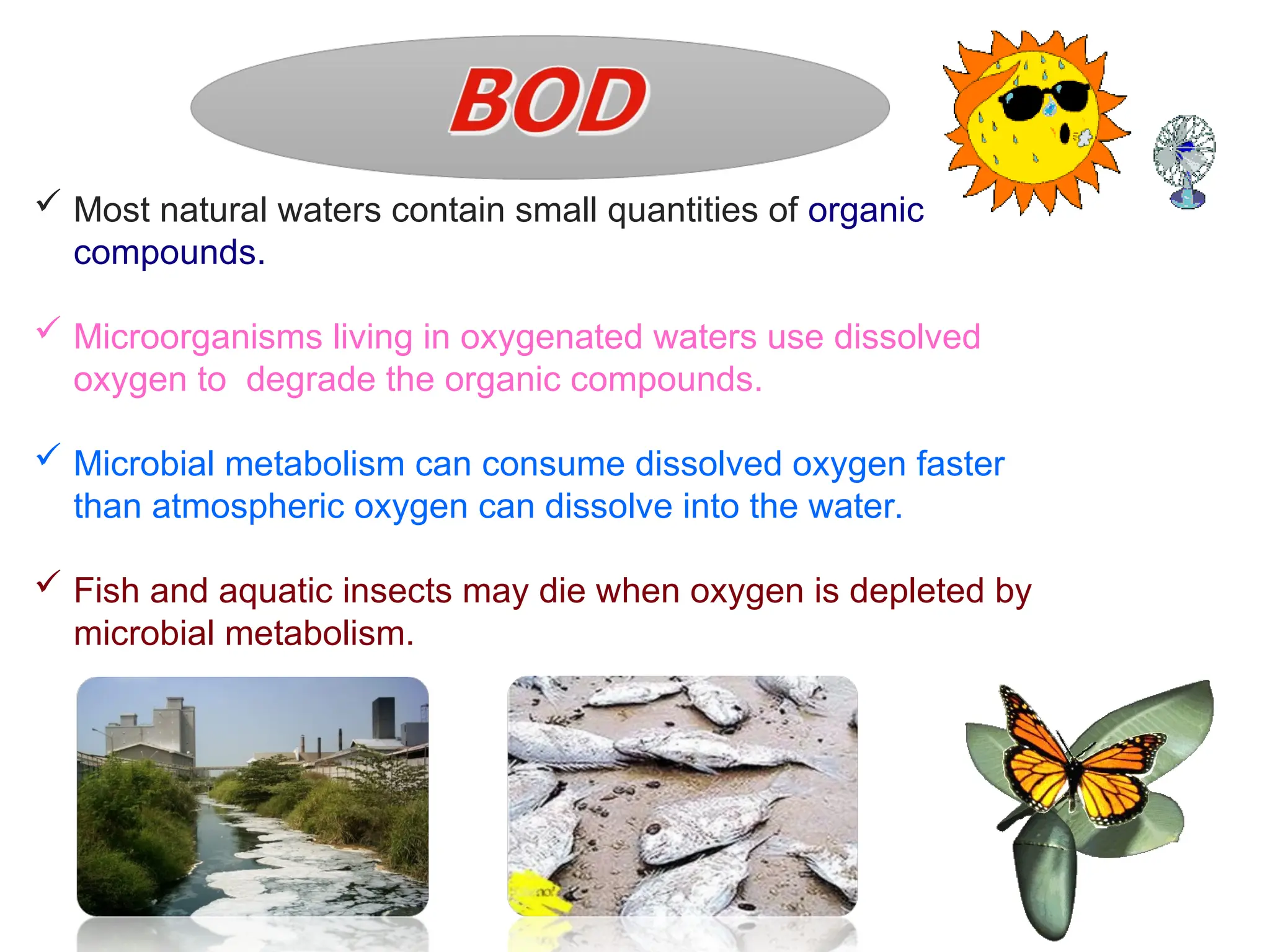
Most naturalwaters contain small quantities of organic
compounds.
Microorganisms living in oxygenated waters use dissolved
oxygen to degrade the organic compounds.
Microbial metabolism can consume dissolved oxygen faster
than atmospheric oxygen can dissolve into the water.
Fish and aquatic insects may die when oxygen is depleted by
microbial metabolism.
13.
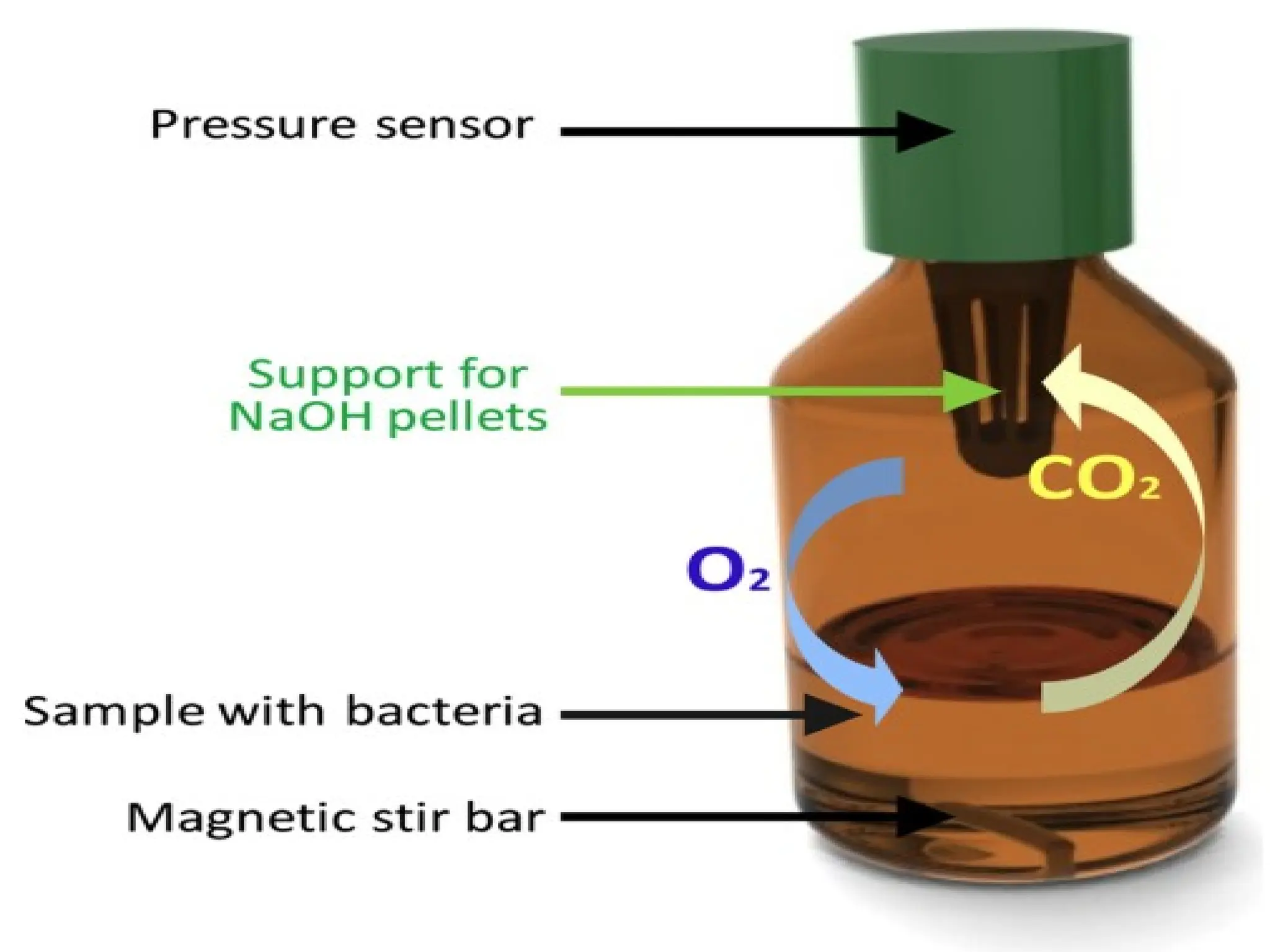
Standard nanometric method
Dilutionof samples with high organic loads, incubation at 20 °C in a dark
room, in presence of microbial population for 5 days.
The sample bottles are filled with a measured volume of sample.
The microorganisms degrade organic substances using the gaseous oxygen
trapped in the closed bottle.
The carbon dioxide formed by this process is absorbed, generally with sodium
hydroxide pellets.
The pressure changes are measured by a manometer
and converted to oxygen consumption by the device to
estimate the BOD value.
15.
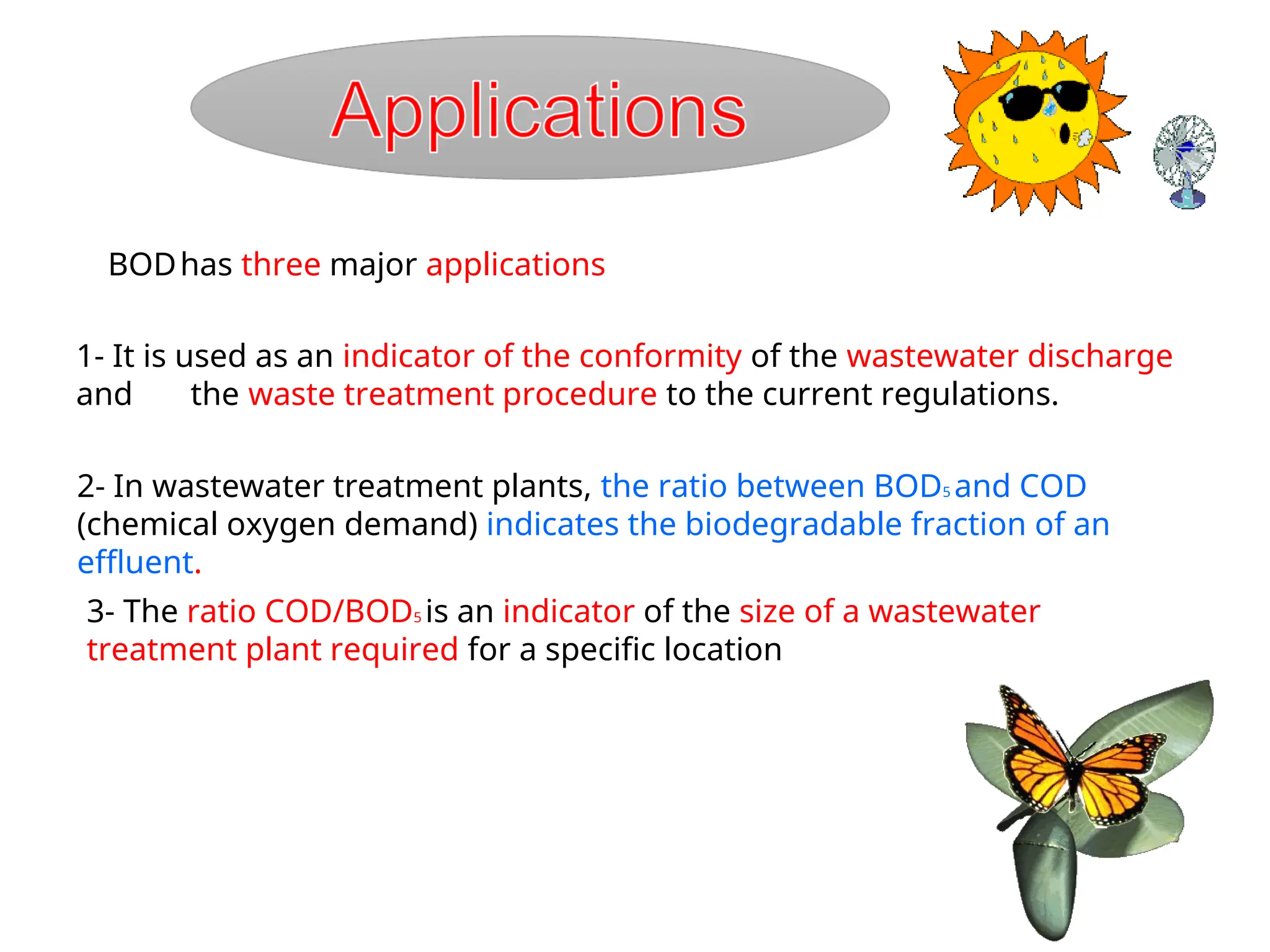
BODhas three majorapplications
1- It is used as an indicator of the conformity of the wastewater discharge
and the waste treatment procedure to the current regulations.
2- In wastewater treatment plants, the ratio between BOD5 and COD
(chemical oxygen demand) indicates the biodegradable fraction of an
effluent.
3- The ratio COD/BOD5 is an indicator of the size of a wastewater
treatment plant required for a specific location
17.
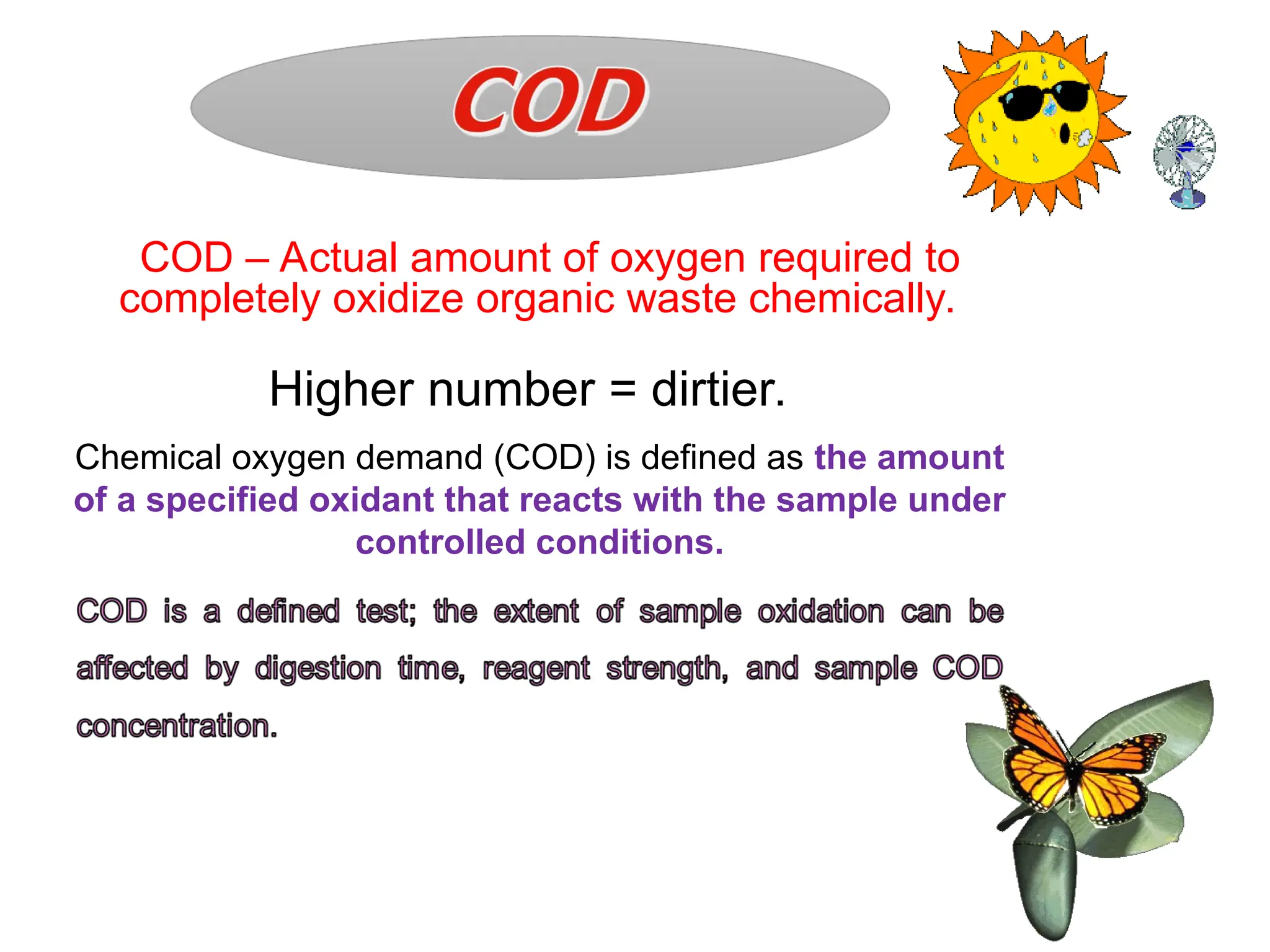
Chemical oxygen demand(COD) is defined as the amount
of a specified oxidant that reacts with the sample under
controlled conditions.
COD – Actual amount of oxygen required to
completely oxidize organic waste chemically.
Higher number = dirtier.
18.
The quantity ofoxidant consumed is expressed in terms
of its oxygen equivalence.
COD often is used as a measurement of pollutants in
wastewater and natural waters.
Other related analytical values are biochemical oxygen
demand (BOD), total organic carbon (TOC),and total
oxygen demand (TOD).
19.
BOD is ameasure of oxygen consumed by
microorganisms under specific conditions.
TOC (total organic carbon ) is a measure of
organic carbon in a sample.
TOD (total oxygen demand (TOD).)is a measure
of the amount of oxygen consumed by all
elements in a sample when complete (total)
oxidation is achieved.
20.
Because of itsunique chemical properties, dichromate ion
(Cr2O7
2-
)is the specified oxidant in various methods used for
COD analysis; it is reduced to the chromic ion (Cr 3+
) in these
tests.
Both organic and inorganic components of a sample are
subject to oxidation, but in most cases the organic
component predominates and is of the greater interest.
In a COD analysis, hazardous wastes of mercury, hexavalent
chromium, sulfuric acid, silver and acids are generated.
23.
The most commonCOD errors are due to
oxidation of inorganic species.
Dichromate is a powerful oxidant – it will
oxidize not only almost all organics but
many metals and non-metal ions
24.
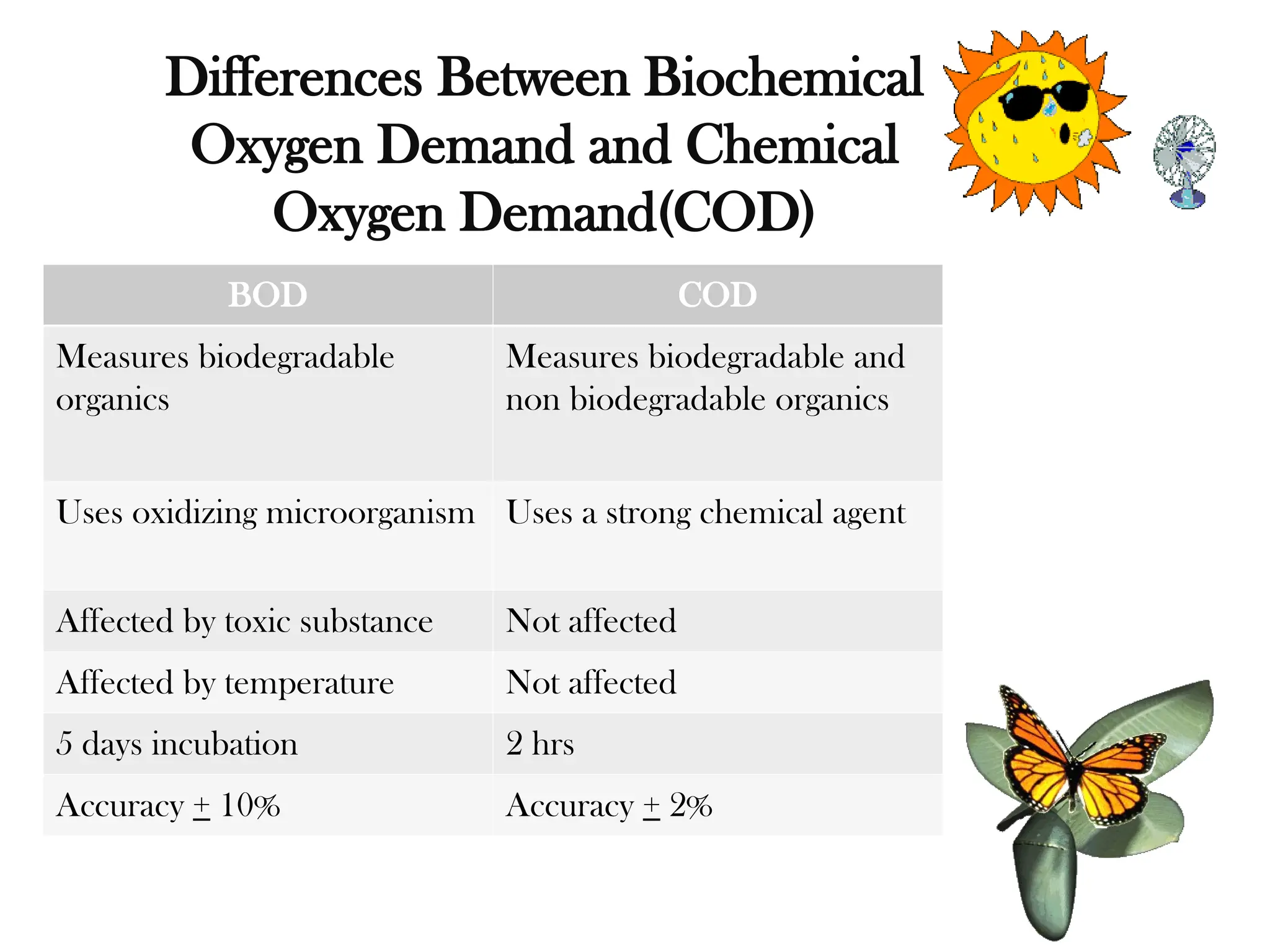
Differences Between Biochemical
OxygenDemand and Chemical
Oxygen Demand(COD)
BOD COD
Measures biodegradable
organics
Measures biodegradable and
non biodegradable organics
Uses oxidizing microorganism Uses a strong chemical agent
Affected by toxic substance Not affected
Affected by temperature Not affected
5 days incubation 2 hrs
Accuracy + 10% Accuracy + 2%
Editor's Notes
#18 A Chemical Oxygen Demand (COD) test is used to measure the oxygen equivalent of the organic matter in a sample that is susceptible to oxidation by a strong chemical oxidant.