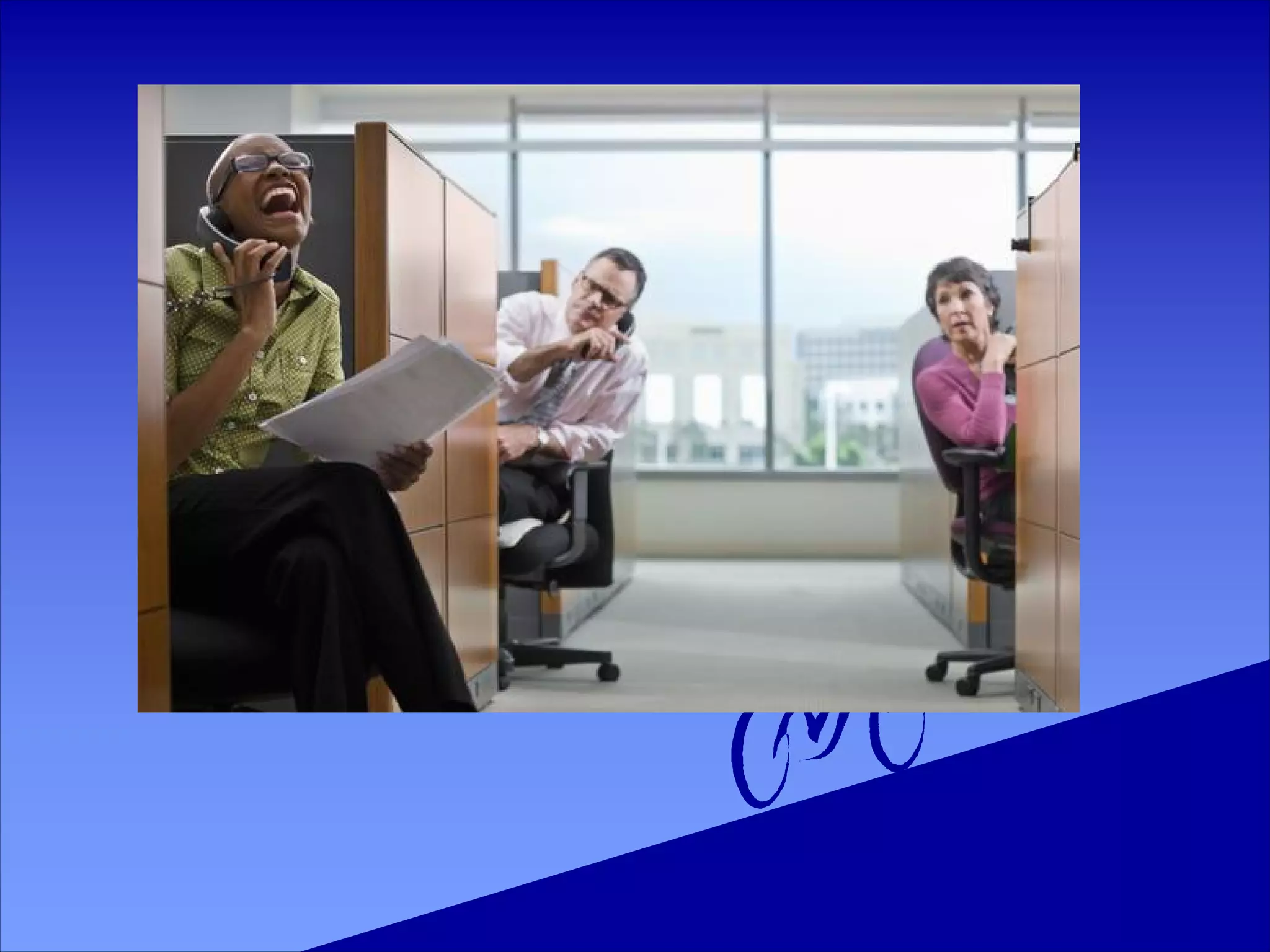
What is Bloom's taxonomy of learning?
Category
Examples, key words (verbs), and
technologies for learning (activities)
Remembering
Recall or retrieve
previous learned
information
Examples:
- Recite a poem.
- Quote prices from memory to a
customer.
- Recite the safety rules.
Key Words:
defines, describes, identifies, knows,
labels, lists, matches, names, outlines,
recalls, recognizes, reproduces, selects,
states
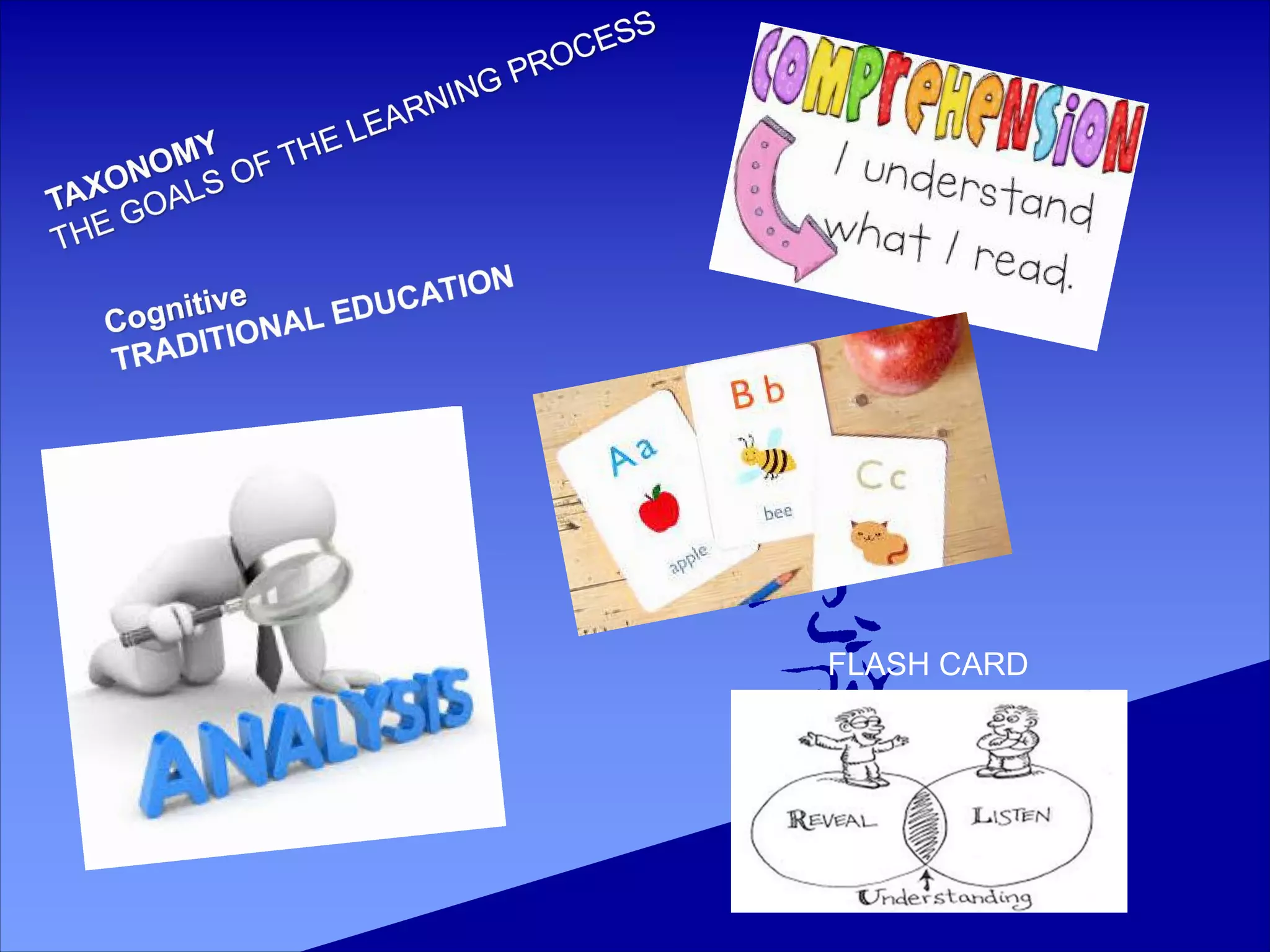
Technologies: book marking, flash
cards, rote learning based on repetition,
Category
Examples, key words (verbs), and
technologies for learning (activities)
Understanding:
Comprehending the
meaning, translation,
interpolation, and
interpretation of
instructions and
problems. State a
problem in one's own
words.
Examples:
- Rewrite the principles of test writing.
- Explain in one's own words the steps for
performing a complex task.
- Translate an equation into a computer
spreadsheet.
Key Words:
comprehends, converts, defends,
distinguishes, estimates, explains, extends,
generalizes, gives an example, infers,
interprets, paraphrases, predicts, rewrites,
summarizes, translates
Technologies: create an analogy,
participating in cooperative learning, taking
Category
Examples, key words (verbs), and
technologies for learning (activities)
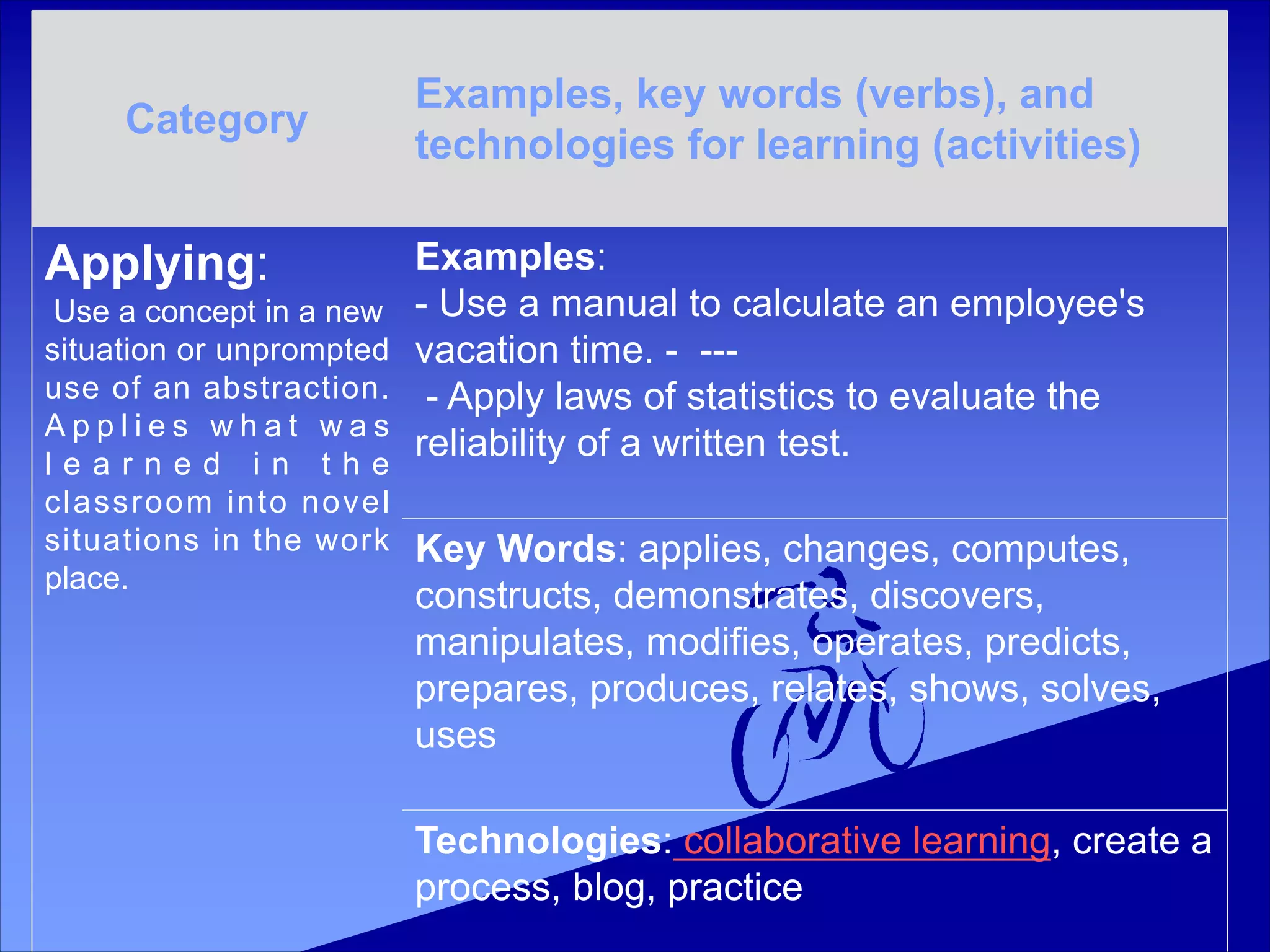
Applying:
Use a concept in a new
situation or unprompted
use of an abstraction.
A p p l i e s w h a t w a s
l e a r n e d i n t h e
classroom into novel
situations in the work
place.
Examples:
- Use a manual to calculate an employee's
vacation time. - ---
- Apply laws of statistics to evaluate the
reliability of a written test.
Key Words: applies, changes, computes,
constructs, demonstrates, discovers,
manipulates, modifies, operates, predicts,
prepares, produces, relates, shows, solves,
uses
Technologies: collaborative learning, create a
process, blog, practice
Category
Examples, key words (verbs), and
technologies for learning (activities)
Applying:
Use a concept in a new
situation or unprompted
use of an abstraction.
A p p l i e s w h a t w a s
l e a r n e d i n t h e
classroom into novel
situations in the work
place.
Examples:
- Use a manual to calculate an employee's
vacation time. - ---
- Apply laws of statistics to evaluate the
reliability of a written test.
Key Words: applies, changes, computes,
constructs, demonstrates, discovers,
manipulates, modifies, operates, predicts,
prepares, produces, relates, shows, solves,
uses
Technologies: collaborative learning, create a
process, blog, practice
Category
Examples, key words (verbs), and
technologies for learning (activities)
Analysing:
Separates material or
c o n c e p t s i n t o
component parts so that
i t s o r g a n i z a t i o n a l
s t r u c t u r e m a y b e
u n d e r s t o o d .
Distinguishes between
facts and inferences.
Examples:
- Troubleshoot a piece of equipment by using
logical deduction.
- Gathers information from a department and
selects the required tasks for training.
Key Words: analyzes, breaks down,
compares, contrasts, diagrams, deconstructs,
differentiates, discriminates, distinguishes,
identifies, illustrates, infers,
Technologies: Fishbowls, debating,
questioning what happened, run a test
Category
Examples, key words (verbs), and
technologies for learning (activities)
Evaluating: Make
judgments about
the value of ideas
or materials
Examples:
--Select the most effective solution.
--Hire the most qualified candidate.
--Explain and justify a new budget.
Key Words: appraises, compares,
concludes, contrasts, criticizes, critiques,
defends, describes, discriminates,
evaluates, explains, interprets, justifies,
relates, summarizes, supports
Technologies: survey, blogging
Category
Examples, key words (verbs), and
technologies for learning (activities)
Creating: Builds a
structure or pattern
f r o m d i v e r s e
elements. Put parts
together to form a
whole, with emphasis
on creating a new
meaning or structure.
Examples:
- Write a company operations or process manual.
- Design a machine to perform a specific task.
- Integrates training from several sources to solve
a problem.
- Revises and process to improve the outcome.
Key Words: categorizes, combines, compiles,
composes, creates, devises, designs, explains,
generates, modifies, organizes, plans, rearranges,
reconstructs, relates, reorganizes, revises, rewrites,
summarizes, tells, writes
Technologies: Create a new model, write
an essay, network with others
Cognitive Domain
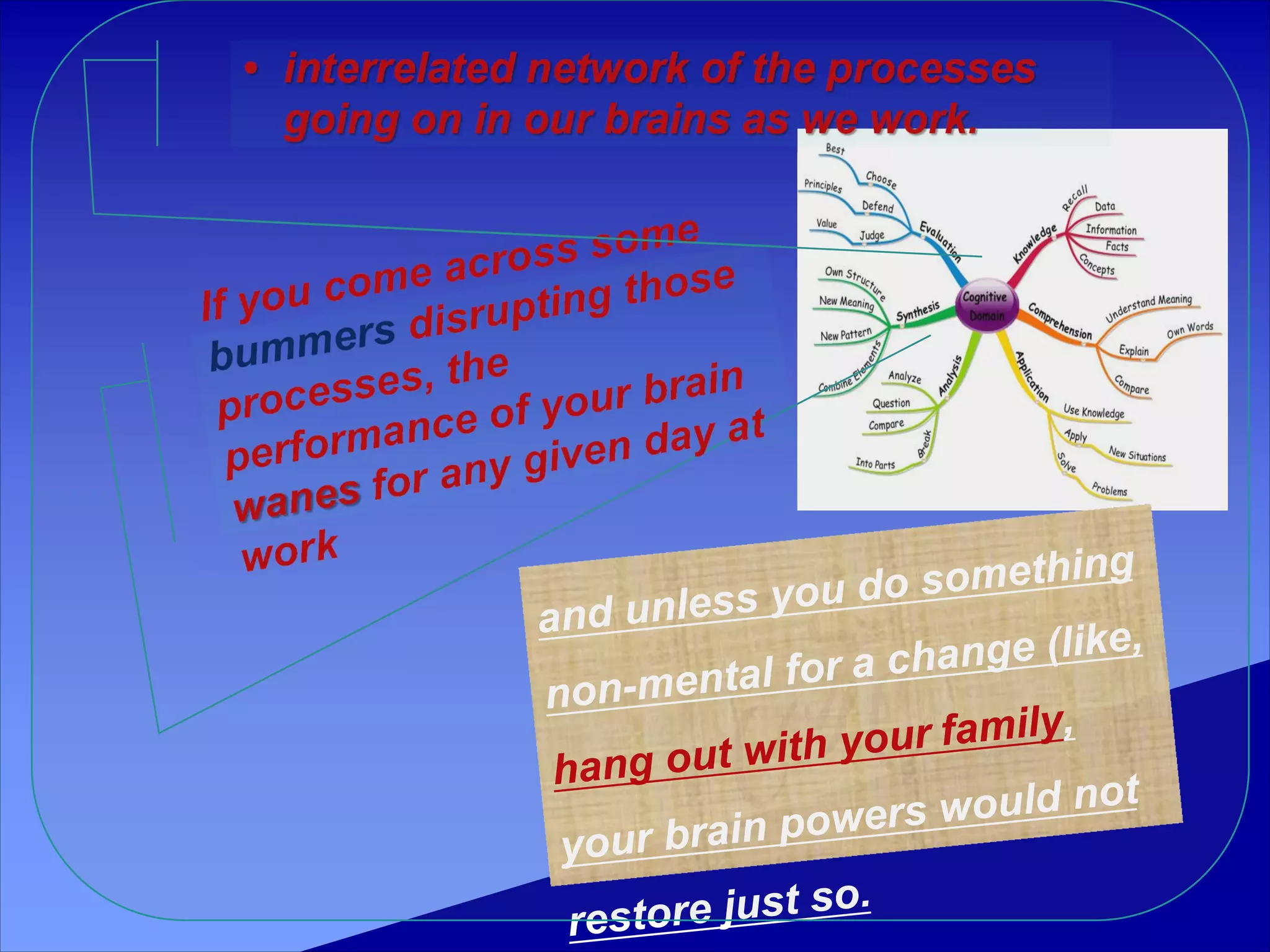
• RECALL OR RECOGNITION of specific
- FACTS,
- PROCEDURAL PATTERNS,
- AND CONCEPTS
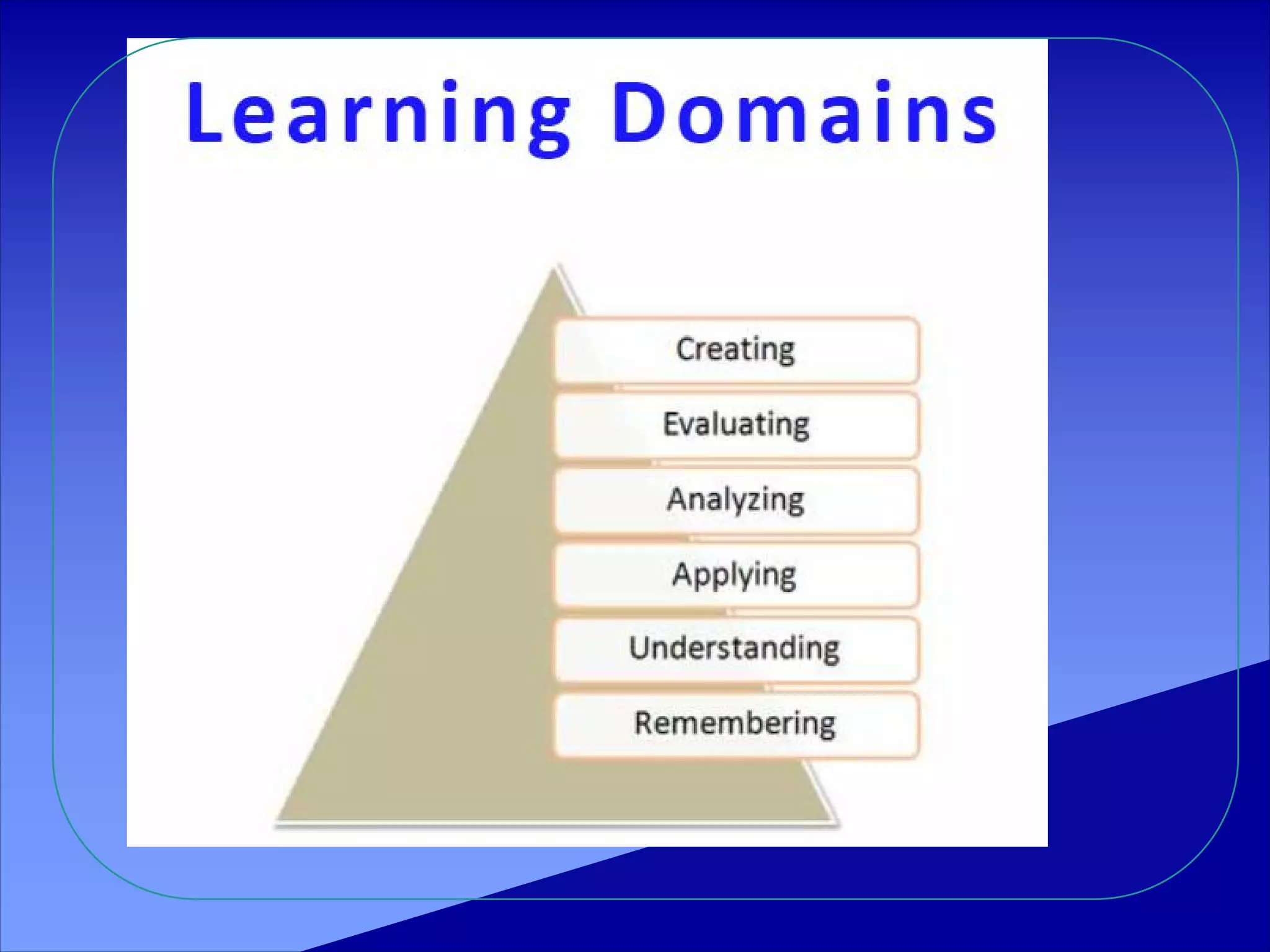
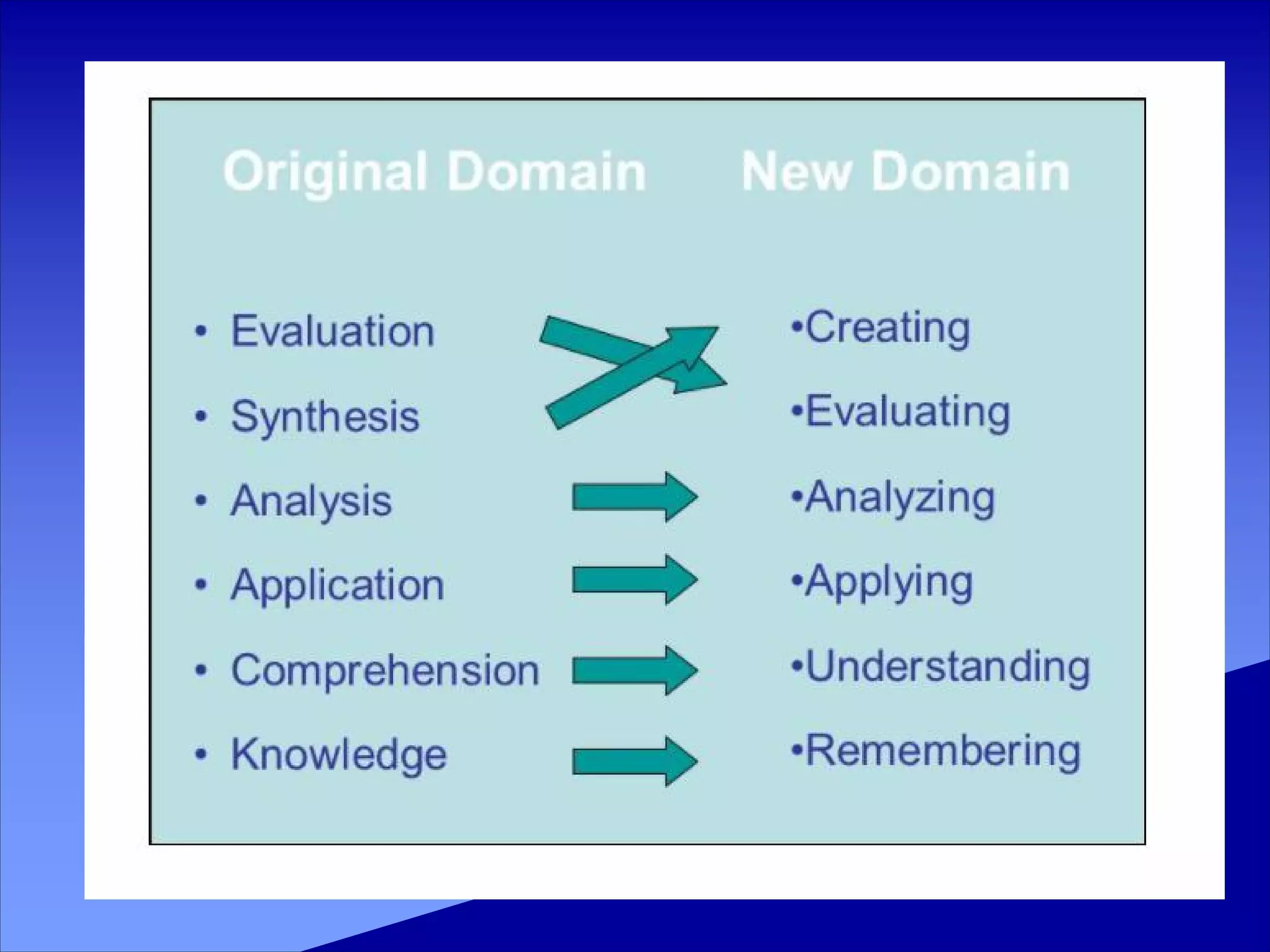
There are SIX major categories of cognitive
processes,
starting from the simplest to the most complex
• Knowledge
• Comprehension
• Application
• Analysis
• Synthesis
• Evaluation
Mental effort required by a
user to –analyse
- process and
-understand ---------
information and any barriers
or obstacles they encounter
while doing so
and unless you do something
non-mental for a change (like,
hang out with your family,
your brain powers would not
restore just so.
FLASH CARD
SYNTHESIS
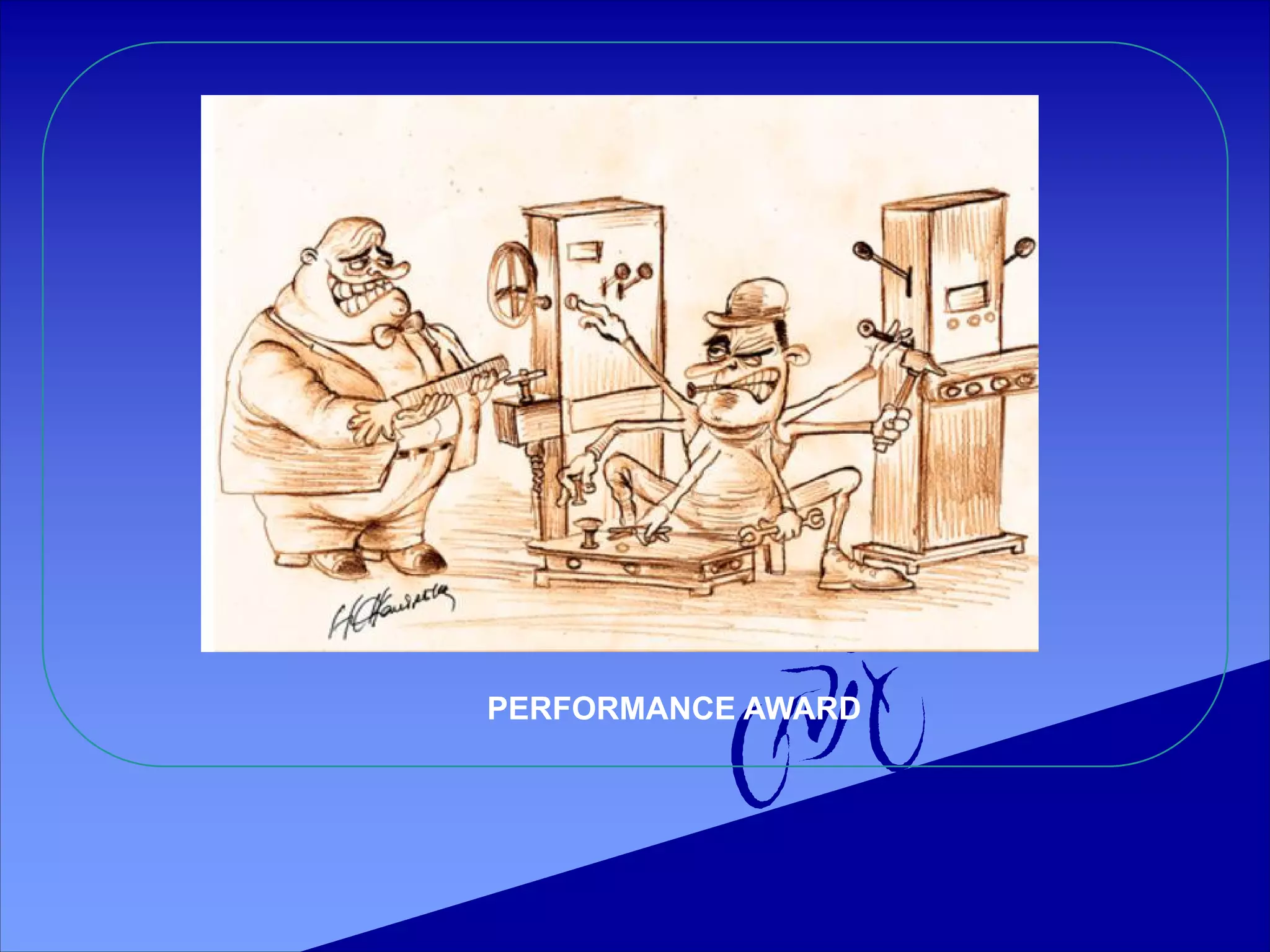
PERFORMANCE AWARD
The insidious sources of cognitive bummers can be
broken down into 3 groups:
Process-related
• e.g. - too many meetings,
• unfocused online messaging
as opposed to face-to-face talks,
• not knowing who to go to
and where to report to
if there's an issue that needs
Individual
Blooms Taxonomy  .ppt

Blooms Taxonomy .ppt

  • 2.
    What is Bloom'staxonomy of learning?
  • 5.
    Category Examples, key words(verbs), and technologies for learning (activities) Remembering Recall or retrieve previous learned information Examples: - Recite a poem. - Quote prices from memory to a customer. - Recite the safety rules. Key Words: defines, describes, identifies, knows, labels, lists, matches, names, outlines, recalls, recognizes, reproduces, selects, states Technologies: book marking, flash cards, rote learning based on repetition,
  • 6.
    Category Examples, key words(verbs), and technologies for learning (activities) Understanding: Comprehending the meaning, translation, interpolation, and interpretation of instructions and problems. State a problem in one's own words. Examples: - Rewrite the principles of test writing. - Explain in one's own words the steps for performing a complex task. - Translate an equation into a computer spreadsheet. Key Words: comprehends, converts, defends, distinguishes, estimates, explains, extends, generalizes, gives an example, infers, interprets, paraphrases, predicts, rewrites, summarizes, translates Technologies: create an analogy, participating in cooperative learning, taking
  • 7.
    Category Examples, key words(verbs), and technologies for learning (activities) Applying: Use a concept in a new situation or unprompted use of an abstraction. A p p l i e s w h a t w a s l e a r n e d i n t h e classroom into novel situations in the work place. Examples: - Use a manual to calculate an employee's vacation time. - --- - Apply laws of statistics to evaluate the reliability of a written test. Key Words: applies, changes, computes, constructs, demonstrates, discovers, manipulates, modifies, operates, predicts, prepares, produces, relates, shows, solves, uses Technologies: collaborative learning, create a process, blog, practice
  • 8.
    Category Examples, key words(verbs), and technologies for learning (activities) Applying: Use a concept in a new situation or unprompted use of an abstraction. A p p l i e s w h a t w a s l e a r n e d i n t h e classroom into novel situations in the work place. Examples: - Use a manual to calculate an employee's vacation time. - --- - Apply laws of statistics to evaluate the reliability of a written test. Key Words: applies, changes, computes, constructs, demonstrates, discovers, manipulates, modifies, operates, predicts, prepares, produces, relates, shows, solves, uses Technologies: collaborative learning, create a process, blog, practice
  • 9.
    Category Examples, key words(verbs), and technologies for learning (activities) Analysing: Separates material or c o n c e p t s i n t o component parts so that i t s o r g a n i z a t i o n a l s t r u c t u r e m a y b e u n d e r s t o o d . Distinguishes between facts and inferences. Examples: - Troubleshoot a piece of equipment by using logical deduction. - Gathers information from a department and selects the required tasks for training. Key Words: analyzes, breaks down, compares, contrasts, diagrams, deconstructs, differentiates, discriminates, distinguishes, identifies, illustrates, infers, Technologies: Fishbowls, debating, questioning what happened, run a test
  • 10.
    Category Examples, key words(verbs), and technologies for learning (activities) Evaluating: Make judgments about the value of ideas or materials Examples: --Select the most effective solution. --Hire the most qualified candidate. --Explain and justify a new budget. Key Words: appraises, compares, concludes, contrasts, criticizes, critiques, defends, describes, discriminates, evaluates, explains, interprets, justifies, relates, summarizes, supports Technologies: survey, blogging
  • 11.
    Category Examples, key words(verbs), and technologies for learning (activities) Creating: Builds a structure or pattern f r o m d i v e r s e elements. Put parts together to form a whole, with emphasis on creating a new meaning or structure. Examples: - Write a company operations or process manual. - Design a machine to perform a specific task. - Integrates training from several sources to solve a problem. - Revises and process to improve the outcome. Key Words: categorizes, combines, compiles, composes, creates, devises, designs, explains, generates, modifies, organizes, plans, rearranges, reconstructs, relates, reorganizes, revises, rewrites, summarizes, tells, writes Technologies: Create a new model, write an essay, network with others
  • 12.
    Cognitive Domain • RECALLOR RECOGNITION of specific - FACTS, - PROCEDURAL PATTERNS, - AND CONCEPTS
  • 13.
    There are SIXmajor categories of cognitive processes, starting from the simplest to the most complex • Knowledge • Comprehension • Application • Analysis • Synthesis • Evaluation
  • 15.
    Mental effort requiredby a user to –analyse - process and -understand --------- information and any barriers or obstacles they encounter while doing so
  • 16.
    and unless youdo something non-mental for a change (like, hang out with your family, your brain powers would not restore just so.
  • 18.
  • 19.
  • 21.
  • 22.
    The insidious sourcesof cognitive bummers can be broken down into 3 groups: Process-related • e.g. - too many meetings, • unfocused online messaging as opposed to face-to-face talks, • not knowing who to go to and where to report to if there's an issue that needs
  • 28.