COMPOSITION&FUNCTIONS OF BLOOD
E.SURESH BABU M.PHARM
DEPARTMENT OF PHARMACOGNOSY
VIKAS INSTITUTE OF PHARMACEUTICAL SCIENCES ,
NEAR AIR PORT,RAJAHMUNDRY-533102.
BLOOD
• Blood is a connective tissue in fluid form.
• It is considered as the ‘fluid of life’ because it carries oxygen
from lungs to all parts of the body and carbon dioxide from all
parts of the body to the lungs.
• It is known as ‘fluid of growth’ because it carries nutritive
substances from the digestive system and hormones from
endocrine gland to all the tissues.
• The blood is also called the ‘fluid of health’ because it
protects the body against the diseases and gets rid of the
waste products and unwanted substances by transporting
them to the excretory organs like kidneys.
PROPERTIESOFBLOOD
• 1. Color: Blood is red in color. Arterial blood is scarlet red because
it contains more oxygen and venous blood is purple red because of
more carbon dioxide. Blood
• 2. Volume: Average volume of blood in a normal adult is 5 L.
• In a newborn baby, the volume is 450 ml. It increases during
growth and reaches 5 L at the time of puberty.
• In females, it is slightly less and is about 4.5 L. It is about 8% of the
body weight in a normal young healthy adult, weighing about 70
kg.
• 3. Reaction and pH: Blood is slightly alkaline and its pH in normal
conditions is 7.4.
• 4. Specific gravity:
• Specific gravity of total blood : 1.052 to 1.061
• Specific gravity blood cells : 1.092 to 1.101
• Specific gravity of plasma : 1.022 to 1.026
• 5. Viscosity: Blood is five times more viscous than water. It is
mainly due to red blood cells and plasma proteins
COMPOSITIONOF BLOOD
COMPONENTSOFBLOOD
• There are many cellular structures
in the composition of blood.
• When a sample of blood is spun in
a centrifuge machine,
• They separate into the following
constituents: Plasma, buffy coat
and erythrocytes.
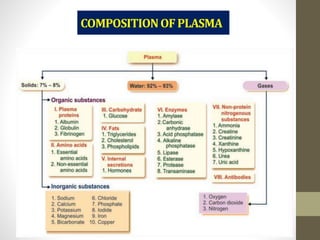
COMPOSITIONOFPLASMA
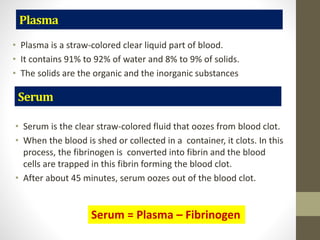
Plasma
• Plasma is a straw-colored clear liquid part of blood.
• It contains 91% to 92% of water and 8% to 9% of solids.
• The solids are the organic and the inorganic substances
• Serum is the clear straw-colored fluid that oozes from blood clot.
• When the blood is shed or collected in a container, it clots. In this
process, the fibrinogen is converted into fibrin and the blood
cells are trapped in this fibrin forming the blood clot.
• After about 45 minutes, serum oozes out of the blood clot.
Serum
Serum = Plasma – Fibrinogen
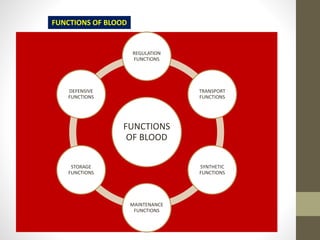
FUNCTIONS
OF BLOOD
REGULATION
FUNCTIONS
TRANSPORT
FUNCTIONS
SYNTHETIC
FUNCTIONS
MAINTENANCE
FUNCTIONS
STORAGE
FUNCTIONS
DEFENSIVE
FUNCTIONS
FUNCTIONS OF BLOOD
FUNCTIONSOFBLOOD
1. NUTRITIVE FUNCTION
• Nutritive substances like glucose, amino acids, lipids and
vitamins derived from digested food are absorbed from
gastrointestinal tract and carried by blood to different
parts of the body for growth and production of energy.
2. RESPIRATORY FUNCTION
• Transport of respiratory gases is done by the blood.
• It carries oxygen from alveoli of lungs to different tissues
and carbon dioxide from tissues to alveoli.
3. EXCRETORY FUNCTION
Waste products formed in the tissues during various
metabolic activities are removed by blood and carried to the
excretory organs like kidney, skin, liver, etc. for excretion.
„
4. TRANSPORT OF HORMONES AND ENZYMES
Hormones which are secreted by ductless (endocrine) glands are
released directly into the blood. The blood transports these
hormones to their target organs/tissues. Blood also transports
enzymes. „
5. REGULATION OF WATER BALANCE
Water content of the blood is freely interchangeable with
interstitial fluid.
This helps in the regulation of water content of the body.
6. REGULATION OF ACID-BASE BALANCE
Plasma proteins and hemoglobin act as buffers and help in the
regulation of acid-base balance.
7. REGULATION OF BODY TEMPERATURE
Because of the high specific heat of blood, it is responsible for
maintaining the thermoregulatory mechanism in the body, i.e.
the balance between heat loss and heat gain in the body.
8. STORAGE FUNCTION
Water and some important substances like proteins, glucose,
sodium and potassium are constantly required by the tissues.
Blood serves as a readymade source for these substances. And,
these substances are taken from blood during the conditions like
starvation, fluid loss, electrolyte loss, etc. „
9. DEFENSIVE FUNCTION
Blood plays an important role in the defense of the body. The
white blood cells are responsible for this function.
Neutrophils and monocytes engulf the bacteria by phagocytosis.
Lymphocytes are involved in development of immunity.
Eosinophils are responsible for detoxification, disintegration and
removal of foreign proteins
THANK Q

BLOOD COMPOSITION AND FUNCTIOS AND DIFFERENT FORMED ELEMENTS

  • 1.
    COMPOSITION&FUNCTIONS OF BLOOD E.SURESHBABU M.PHARM DEPARTMENT OF PHARMACOGNOSY VIKAS INSTITUTE OF PHARMACEUTICAL SCIENCES , NEAR AIR PORT,RAJAHMUNDRY-533102.
  • 2.
    BLOOD • Blood isa connective tissue in fluid form. • It is considered as the ‘fluid of life’ because it carries oxygen from lungs to all parts of the body and carbon dioxide from all parts of the body to the lungs. • It is known as ‘fluid of growth’ because it carries nutritive substances from the digestive system and hormones from endocrine gland to all the tissues. • The blood is also called the ‘fluid of health’ because it protects the body against the diseases and gets rid of the waste products and unwanted substances by transporting them to the excretory organs like kidneys.
  • 3.
    PROPERTIESOFBLOOD • 1. Color:Blood is red in color. Arterial blood is scarlet red because it contains more oxygen and venous blood is purple red because of more carbon dioxide. Blood • 2. Volume: Average volume of blood in a normal adult is 5 L. • In a newborn baby, the volume is 450 ml. It increases during growth and reaches 5 L at the time of puberty. • In females, it is slightly less and is about 4.5 L. It is about 8% of the body weight in a normal young healthy adult, weighing about 70 kg. • 3. Reaction and pH: Blood is slightly alkaline and its pH in normal conditions is 7.4. • 4. Specific gravity: • Specific gravity of total blood : 1.052 to 1.061 • Specific gravity blood cells : 1.092 to 1.101 • Specific gravity of plasma : 1.022 to 1.026 • 5. Viscosity: Blood is five times more viscous than water. It is mainly due to red blood cells and plasma proteins
  • 4.
  • 5.
    COMPONENTSOFBLOOD • There aremany cellular structures in the composition of blood. • When a sample of blood is spun in a centrifuge machine, • They separate into the following constituents: Plasma, buffy coat and erythrocytes.
  • 6.
  • 7.
    Plasma • Plasma isa straw-colored clear liquid part of blood. • It contains 91% to 92% of water and 8% to 9% of solids. • The solids are the organic and the inorganic substances • Serum is the clear straw-colored fluid that oozes from blood clot. • When the blood is shed or collected in a container, it clots. In this process, the fibrinogen is converted into fibrin and the blood cells are trapped in this fibrin forming the blood clot. • After about 45 minutes, serum oozes out of the blood clot. Serum Serum = Plasma – Fibrinogen
  • 8.
  • 9.
    FUNCTIONSOFBLOOD 1. NUTRITIVE FUNCTION •Nutritive substances like glucose, amino acids, lipids and vitamins derived from digested food are absorbed from gastrointestinal tract and carried by blood to different parts of the body for growth and production of energy. 2. RESPIRATORY FUNCTION • Transport of respiratory gases is done by the blood. • It carries oxygen from alveoli of lungs to different tissues and carbon dioxide from tissues to alveoli.
  • 10.
    3. EXCRETORY FUNCTION Wasteproducts formed in the tissues during various metabolic activities are removed by blood and carried to the excretory organs like kidney, skin, liver, etc. for excretion. „ 4. TRANSPORT OF HORMONES AND ENZYMES Hormones which are secreted by ductless (endocrine) glands are released directly into the blood. The blood transports these hormones to their target organs/tissues. Blood also transports enzymes. „
  • 11.
    5. REGULATION OFWATER BALANCE Water content of the blood is freely interchangeable with interstitial fluid. This helps in the regulation of water content of the body. 6. REGULATION OF ACID-BASE BALANCE Plasma proteins and hemoglobin act as buffers and help in the regulation of acid-base balance. 7. REGULATION OF BODY TEMPERATURE Because of the high specific heat of blood, it is responsible for maintaining the thermoregulatory mechanism in the body, i.e. the balance between heat loss and heat gain in the body.
  • 12.
    8. STORAGE FUNCTION Waterand some important substances like proteins, glucose, sodium and potassium are constantly required by the tissues. Blood serves as a readymade source for these substances. And, these substances are taken from blood during the conditions like starvation, fluid loss, electrolyte loss, etc. „ 9. DEFENSIVE FUNCTION Blood plays an important role in the defense of the body. The white blood cells are responsible for this function. Neutrophils and monocytes engulf the bacteria by phagocytosis. Lymphocytes are involved in development of immunity. Eosinophils are responsible for detoxification, disintegration and removal of foreign proteins
  • 13.