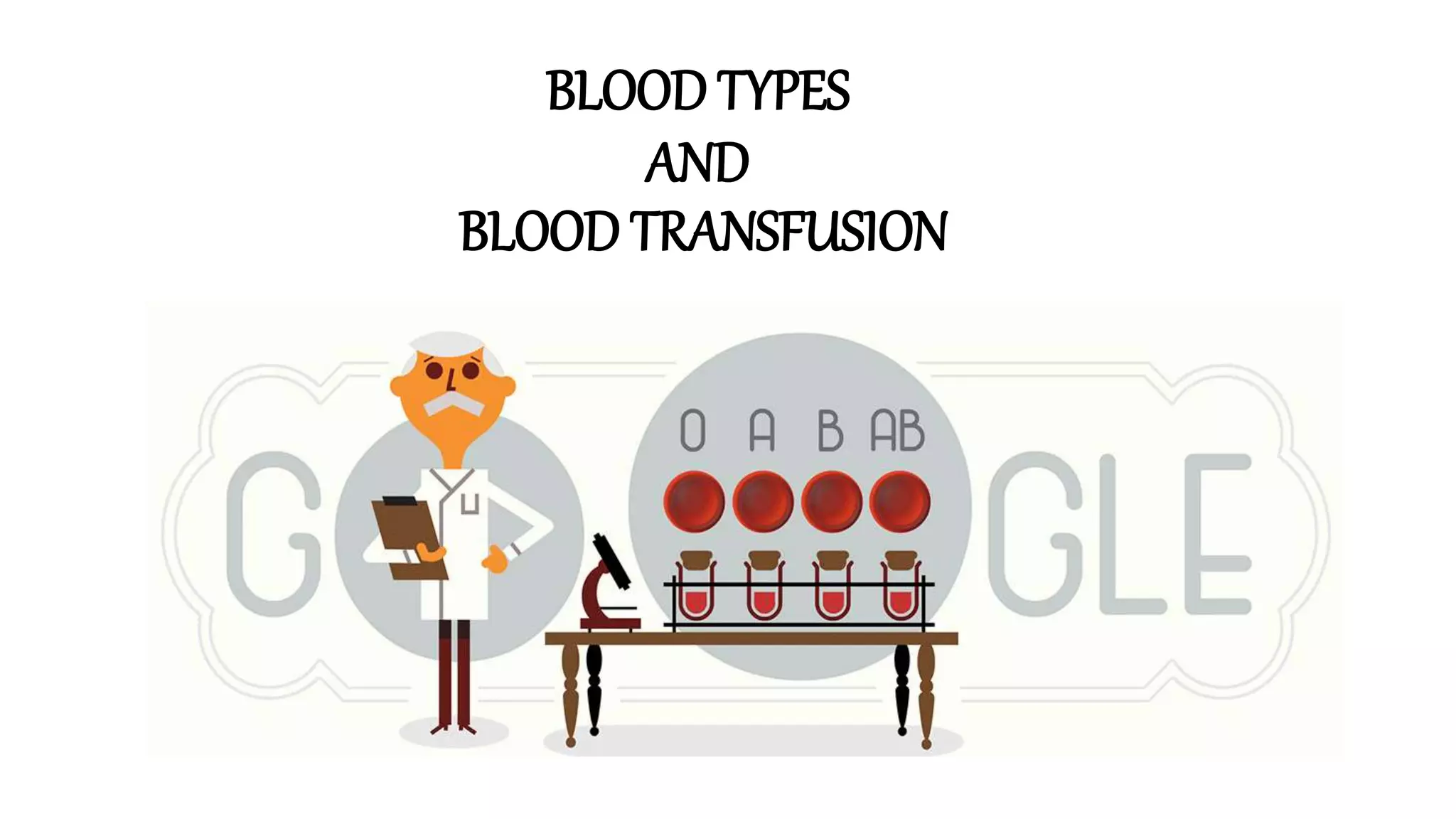
BLOOD TYPES
AND
BLOOD TRANSFUSION
Objectives
1. Describe the basis of blood typing
2. Know the ABO and Rh systems for blood typing
and their clinical significance.
3. Describe incompatibilities in ABO and Rh systems.
4. Know the different types of blood transfusions
and their complications (transfusion reactions).
5. Describe the basis of blood typing and cross-
matching tests for a safe blood transfusion.
Basis of Blood grouping or Typing
(Multiplicity of Antigens in the blood cells)
ABO SYSTEM 1stly descoverd in the 1901
by landsteneires
• At least 30 commonly occurring antigens have been
found on the cell membrane of RBCs.
• These can cause Antigens antibody reaction, if mixed
with plasma that contain Ab against these Ag.
• According to presence or absence of these antigens blood
is classified into several groups or types.
• Two groups of Ag can cause transfusion reactions more than
others: ABO and Rh systems of Ag.
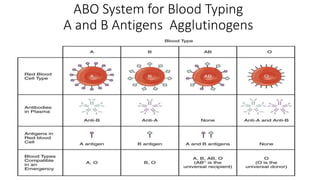
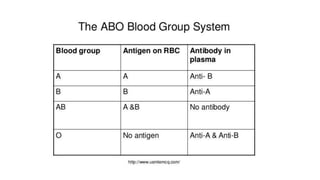
ABO System for Blood Typing
A and B Antigens Agglutinogens
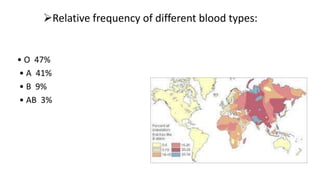
Relative frequency of different blood types:
• O 47%
• A 41%
• B 9%
• AB 3%
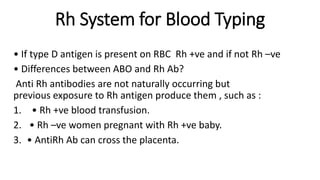
Rh System for Blood Typing
• If type D antigen is present on RBC Rh +ve and if not Rh –ve
• Differences between ABO and Rh Ab?
Anti Rh antibodies are not naturally occurring but
previous exposure to Rh antigen produce them , such as :
1. • Rh +ve blood transfusion.
2. • Rh –ve women pregnant with Rh +ve baby.
3. • AntiRh Ab can cross the placenta.
Hemolytic Disease of the Newborn (HDN)
• Rh incompatibility refer to Erythrocyte Fetalis (HDN)
• Rh –ve lady marrying Rh+ve man.
• If baby is Rh+ve, fetal RBC leaks to maternal circulation during
placental separation (delivery or abortion).
• Mother starts to make antiRh Ab.
• Next pregnancy with Rh+ve baby antiRh Ab pass
to baby and cause agglutination and hemolysis of his RBC.
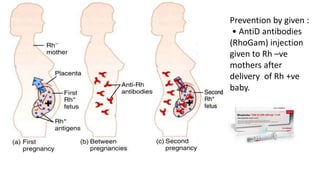
Prevention by given :
• AntiD antibodies
(RhoGam) injection
given to Rh –ve
mothers after
delivery of Rh +ve
baby.
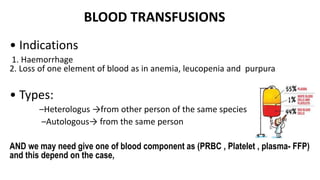
BLOOD TRANSFUSIONS
• Indications
1. Haemorrhage
2. Loss of one element of blood as in anemia, leucopenia and purpura
• Types:
–Heterologus →from other person of the same species
–Autologous→ from the same person
AND we may need give one of blood component as (PRBC , Platelet , plasma- FFP)
and this depend on the case,
Transfusion Reactions
resulting from mismatched blood types
• Agglutination and delayed hemolysis
of donor’s RBC (or immediate intravascular hemolysis)→ Jaundice
• Renal failure: –Renal tubular blockage by hemoglobin
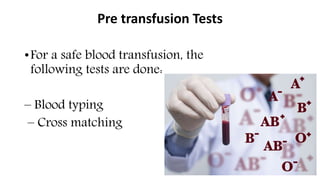
Pre transfusion Tests
•For a safe blood transfusion, the
following tests are done:
– Blood typing
– Cross matching
X matching
• Once patient’s blood type is known, donor blood of the same
ABO and Rh type is selected.
• Possible donor RBC’s are mixed with the recipient’s serum.
If no agglutination, no
Ab in recipient blood will attack donor’s RBCs.
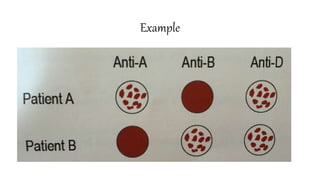
Example
 Submitted by :
NEDAA ALUTOOM

Blood

  • 1.
  • 2.
    Objectives 1. Describe thebasis of blood typing 2. Know the ABO and Rh systems for blood typing and their clinical significance. 3. Describe incompatibilities in ABO and Rh systems. 4. Know the different types of blood transfusions and their complications (transfusion reactions). 5. Describe the basis of blood typing and cross- matching tests for a safe blood transfusion.
  • 3.
    Basis of Bloodgrouping or Typing (Multiplicity of Antigens in the blood cells) ABO SYSTEM 1stly descoverd in the 1901 by landsteneires • At least 30 commonly occurring antigens have been found on the cell membrane of RBCs. • These can cause Antigens antibody reaction, if mixed with plasma that contain Ab against these Ag. • According to presence or absence of these antigens blood is classified into several groups or types. • Two groups of Ag can cause transfusion reactions more than others: ABO and Rh systems of Ag.
  • 4.
    ABO System forBlood Typing A and B Antigens Agglutinogens
  • 5.
    Relative frequency ofdifferent blood types: • O 47% • A 41% • B 9% • AB 3%
  • 7.
    Rh System forBlood Typing • If type D antigen is present on RBC Rh +ve and if not Rh –ve • Differences between ABO and Rh Ab? Anti Rh antibodies are not naturally occurring but previous exposure to Rh antigen produce them , such as : 1. • Rh +ve blood transfusion. 2. • Rh –ve women pregnant with Rh +ve baby. 3. • AntiRh Ab can cross the placenta.
  • 8.
    Hemolytic Disease ofthe Newborn (HDN) • Rh incompatibility refer to Erythrocyte Fetalis (HDN) • Rh –ve lady marrying Rh+ve man. • If baby is Rh+ve, fetal RBC leaks to maternal circulation during placental separation (delivery or abortion). • Mother starts to make antiRh Ab. • Next pregnancy with Rh+ve baby antiRh Ab pass to baby and cause agglutination and hemolysis of his RBC.
  • 9.
    Prevention by given: • AntiD antibodies (RhoGam) injection given to Rh –ve mothers after delivery of Rh +ve baby.
  • 10.
    BLOOD TRANSFUSIONS • Indications 1.Haemorrhage 2. Loss of one element of blood as in anemia, leucopenia and purpura • Types: –Heterologus →from other person of the same species –Autologous→ from the same person AND we may need give one of blood component as (PRBC , Platelet , plasma- FFP) and this depend on the case,
  • 11.
    Transfusion Reactions resulting frommismatched blood types • Agglutination and delayed hemolysis of donor’s RBC (or immediate intravascular hemolysis)→ Jaundice • Renal failure: –Renal tubular blockage by hemoglobin
  • 12.
    Pre transfusion Tests •Fora safe blood transfusion, the following tests are done: – Blood typing – Cross matching
  • 13.
    X matching • Oncepatient’s blood type is known, donor blood of the same ABO and Rh type is selected. • Possible donor RBC’s are mixed with the recipient’s serum. If no agglutination, no Ab in recipient blood will attack donor’s RBCs.
  • 14.
  • 15.
     Submitted by: NEDAA ALUTOOM