“A blog is a personal website that contains content 
organized like a journal or a diary. Each entry is dated, 
and the entries are displayed on the web page in reverse 
chronological order, so that the most recent entry is 
posted at the top.”
Campbell (2003) distinguishes three types of blogs for use 
with language classes: 
THE TUTOR BLOG 
• Run by the teacher of a class. 
• Content of this type of blog can be limited to 
syllabus, course information, homework, 
assignments, etc. 
• The teacher may choose to write about his/her life, 
sharing reflections to stimulate online and in-class 
discussion. 
• Students are normally restricted to being able to 
write comments to the teacher's posts.
THE CLASS BLOG 
• Shared space, with teacher and students 
being able to write to the main area. It is 
• Best used as a collaborative discussion 
space, an extra-curricular extension of the 
classroom. 
• Students can be encouraged to reflect in 
more depth, in writing, on themes touched 
upon in class. Students are given a 
greater sense of freedom and involvement 
than with the tutor blog. 
THE LEARNER BLOG 
• It involves giving each student an 
individual blog. 
• It becomes the student's own personal 
online space. 
• Students can be encouraged to write 
frequently about what interests them, and 
can post comments on other students' 
blogs.
• Choose the easiest platform for you and your students and one with 
which you are familiar with. 
• Teach students about netiquette 
• Posts should always be short and informative. 
• Let parents and guardians know what you are doing 
• Use simple language and correct grammatical structures 
• Don't grade. Blogging is meant to be a way to practice writing for an 
audience and learning to respond to critique, not a graded paper. 
• Challenge students. Use activities and games and inspire your 
students to write about certain topics 
• Give it more time. If you think all students would straight away fall in 
love with your classroom blog then you are wrong. Some 
students take to it right away, others are not so sure, and yet they will 
all end up loving it.
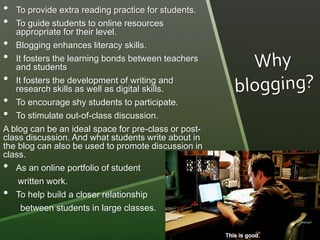
• To provide extra reading practice for students. 
• To guide students to online resources 
appropriate for their level. 
• Blogging enhances literacy skills. 
• It fosters the learning bonds between teachers 
and students 
• It fosters the development of writing and 
research skills as well as digital skills. 
• To encourage shy students to participate. 
• To stimulate out-of-class discussion. 
A blog can be an ideal space for pre-class or post-class 
discussion. And what students write about in 
the blog can also be used to promote discussion in 
class. 
• As an online portfolio of student 
written work. 
• To help build a closer relationship 
between students in large classes.
• Provide further assignments for students to 
work on. 
• Have students work in small groups to write 
and post summaries of content covered in 
class . 
• Use blogs for classroom projects where 
students can include videos, clips, audio, text 
and images 
• Create a specific section just for website links 
and references to other interesting content 
online. 
• Use activities, games, puzzles to enrich 
students learning experiences 
• Use blogs to conduct an online survey in 
relation to your students learning needs. 
• Publish a list of the objectives ( general as well 
as specific goals ) 
• Challenge your students to write, record and 
post tutorials about certain concepts of things 
you teach them 
• Use a section in your blog for classroom news 
where to communicate the general classroom 
news.

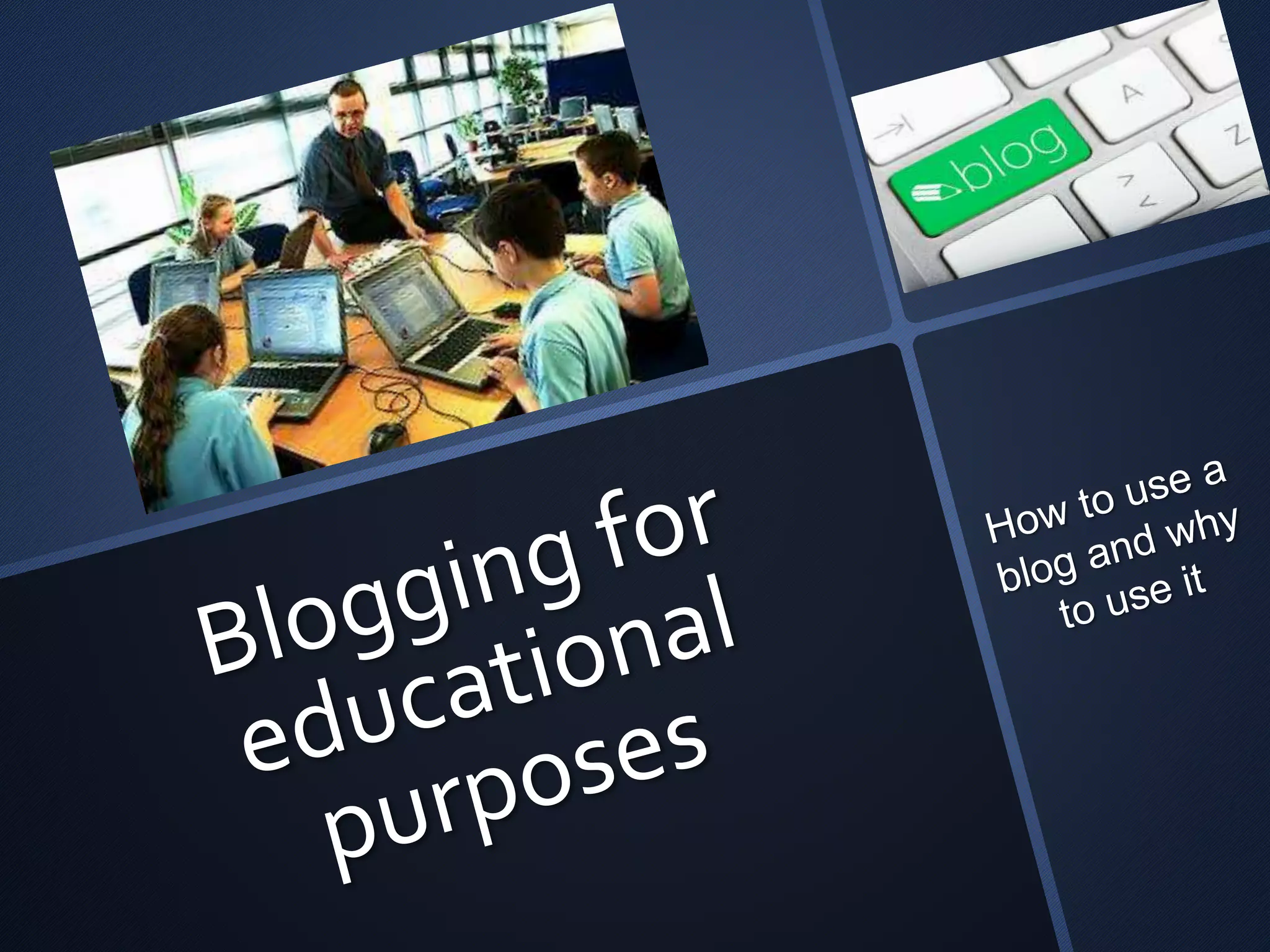
Blogging for Educational Purposes

  • 2.
    “A blog isa personal website that contains content organized like a journal or a diary. Each entry is dated, and the entries are displayed on the web page in reverse chronological order, so that the most recent entry is posted at the top.”
  • 3.
    Campbell (2003) distinguishesthree types of blogs for use with language classes: THE TUTOR BLOG • Run by the teacher of a class. • Content of this type of blog can be limited to syllabus, course information, homework, assignments, etc. • The teacher may choose to write about his/her life, sharing reflections to stimulate online and in-class discussion. • Students are normally restricted to being able to write comments to the teacher's posts.
  • 4.
    THE CLASS BLOG • Shared space, with teacher and students being able to write to the main area. It is • Best used as a collaborative discussion space, an extra-curricular extension of the classroom. • Students can be encouraged to reflect in more depth, in writing, on themes touched upon in class. Students are given a greater sense of freedom and involvement than with the tutor blog. THE LEARNER BLOG • It involves giving each student an individual blog. • It becomes the student's own personal online space. • Students can be encouraged to write frequently about what interests them, and can post comments on other students' blogs.
  • 5.
    • Choose theeasiest platform for you and your students and one with which you are familiar with. • Teach students about netiquette • Posts should always be short and informative. • Let parents and guardians know what you are doing • Use simple language and correct grammatical structures • Don't grade. Blogging is meant to be a way to practice writing for an audience and learning to respond to critique, not a graded paper. • Challenge students. Use activities and games and inspire your students to write about certain topics • Give it more time. If you think all students would straight away fall in love with your classroom blog then you are wrong. Some students take to it right away, others are not so sure, and yet they will all end up loving it.
  • 7.
    • To provideextra reading practice for students. • To guide students to online resources appropriate for their level. • Blogging enhances literacy skills. • It fosters the learning bonds between teachers and students • It fosters the development of writing and research skills as well as digital skills. • To encourage shy students to participate. • To stimulate out-of-class discussion. A blog can be an ideal space for pre-class or post-class discussion. And what students write about in the blog can also be used to promote discussion in class. • As an online portfolio of student written work. • To help build a closer relationship between students in large classes.
  • 8.
    • Provide furtherassignments for students to work on. • Have students work in small groups to write and post summaries of content covered in class . • Use blogs for classroom projects where students can include videos, clips, audio, text and images • Create a specific section just for website links and references to other interesting content online. • Use activities, games, puzzles to enrich students learning experiences • Use blogs to conduct an online survey in relation to your students learning needs. • Publish a list of the objectives ( general as well as specific goals ) • Challenge your students to write, record and post tutorials about certain concepts of things you teach them • Use a section in your blog for classroom news where to communicate the general classroom news.