WHAT IS A BLOG  ? Blog  is a type of website, usually maintained by an individual with regular entries of commentary, descriptions of events, or other material such as graphics or video. Entries are commonly displayed in reverse-chronological order. "Blog" can also be used as a verb, meaning  to maintain or add content to a blog . http://en.wikipedia.org/wiki/Blog A  blog  is a website consisting of entries (also called posts) appearing in reverse chronological order with the most recent entry appearing first (similar in format to a daily journal). Blogs typically include features such as comments and links to increase user interactivity. Blogs are created using specific publishing software. http://weblogs.about.com/od/startingablog/p/WhatIsABlog.htm
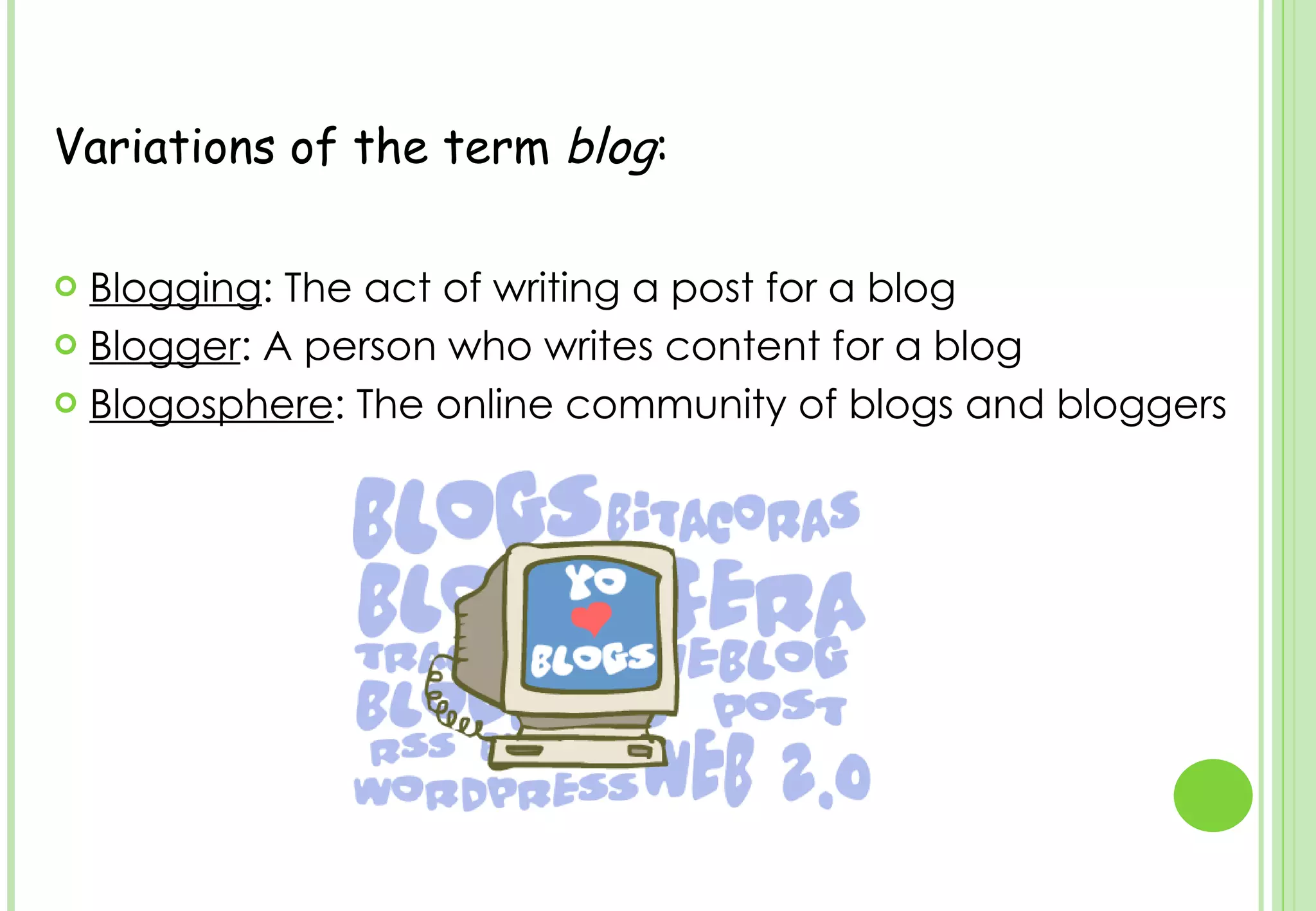
Variations of the term  blog : Blogging : The act of writing a post for a blog  Blogger : A person who writes content for a blog  Blogosphere : The online community of blogs and bloggers
Personal blogs  The personal blog, an ongoing  diary or commentary  by an individual, is the traditional, most common blog. Corporate and organizational blogs  Blogs used internally to enhance the communication and culture in a corporation or externally for  marketing,   branding  or public relations purposes are called  corporate blogs TYPES OF BLOGS
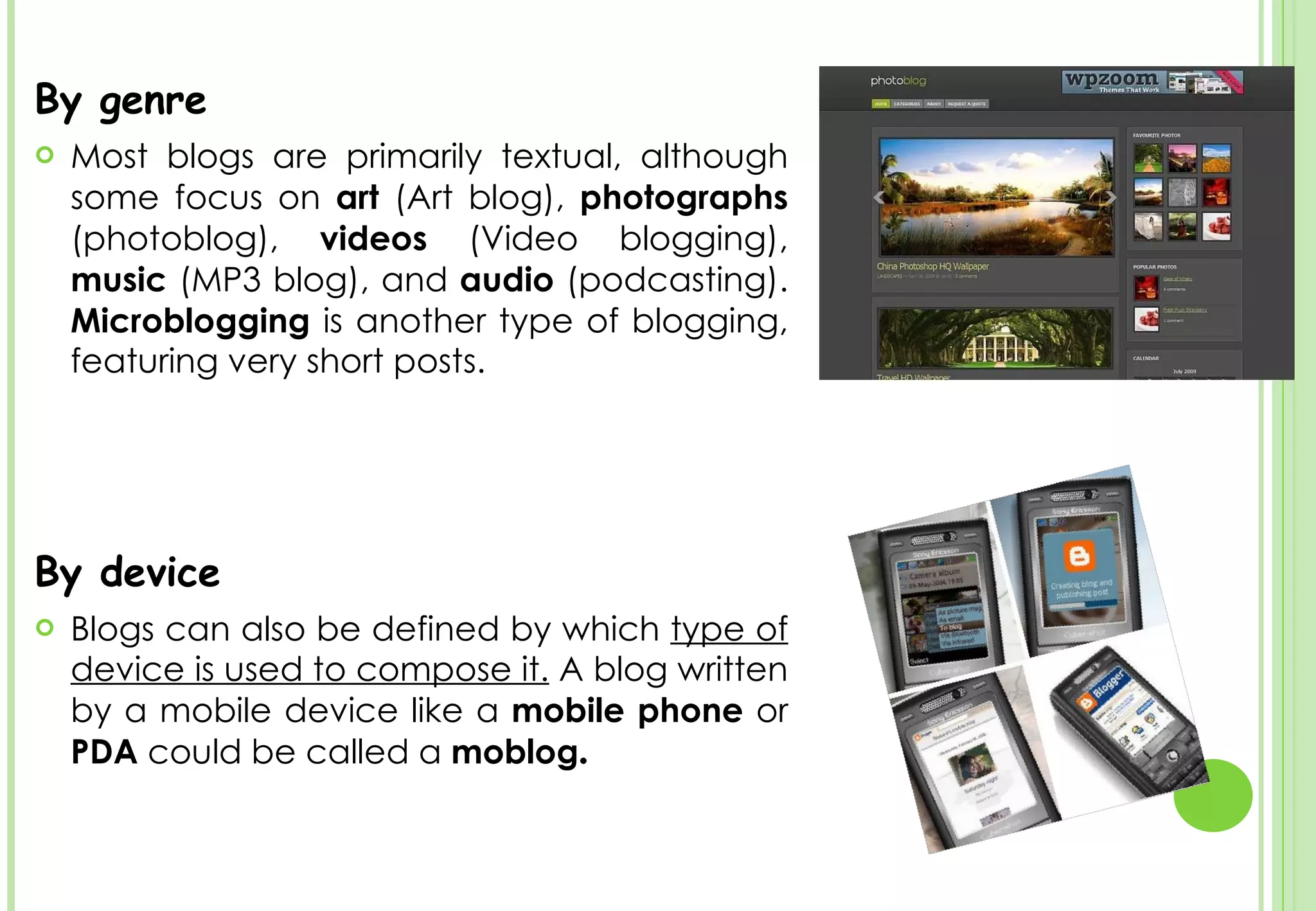
By genre Most blogs are primarily textual, although some focus on  art  (Art blog),  photographs  (photoblog),  videos  (Video blogging),  music  (MP3 blog), and  audio  (podcasting).  Microblogging  is another type of blogging, featuring very short posts. By device  Blogs can also be defined by which  type of device is used to compose it.  A blog written by a mobile device like a  mobile phone  or  PDA  could be called a  moblog .
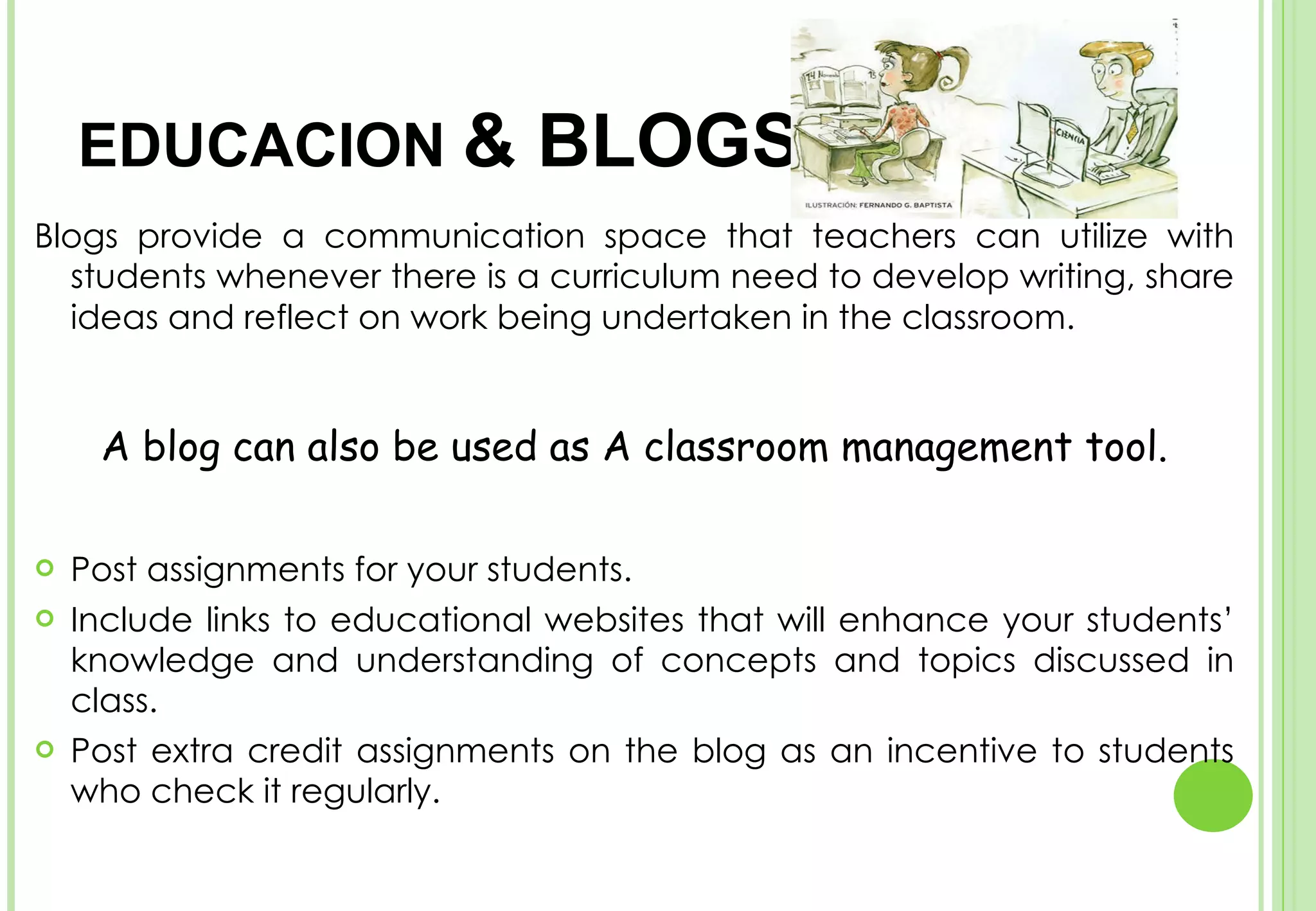
Blogs provide a communication space that teachers can utilize with students whenever there is a curriculum need to develop writing, share ideas and reflect on work being undertaken in the classroom.   A blog can also be used as A classroom management tool. Post assignments for your students. Include links to educational websites that will enhance your students’ knowledge and understanding of concepts and topics discussed in class.  Post extra credit assignments on the blog as an incentive to students who check it regularly. IN  EDUCACION  & BLOGS
EDUCATIONAL BENEFITS OF BLOGS  Potential benefits as identified by teaching specialists Fernette and Brock Eide and cited by Will Richardson (2006) in Blogs, wikis, podcasts, and other powerful web tools for classrooms include the following:  Can promote critical and analytical thinking.  Can promote creative, intuitive and associational thinking (creative and associational thinking in relation to blogs being used as brainstorming tool and also as a resource for interlinking, commenting on interlinked ideas).  Can promote analogical thinking.  Potential for increased access and exposure to quality information.  Combination of solitary and social interaction.
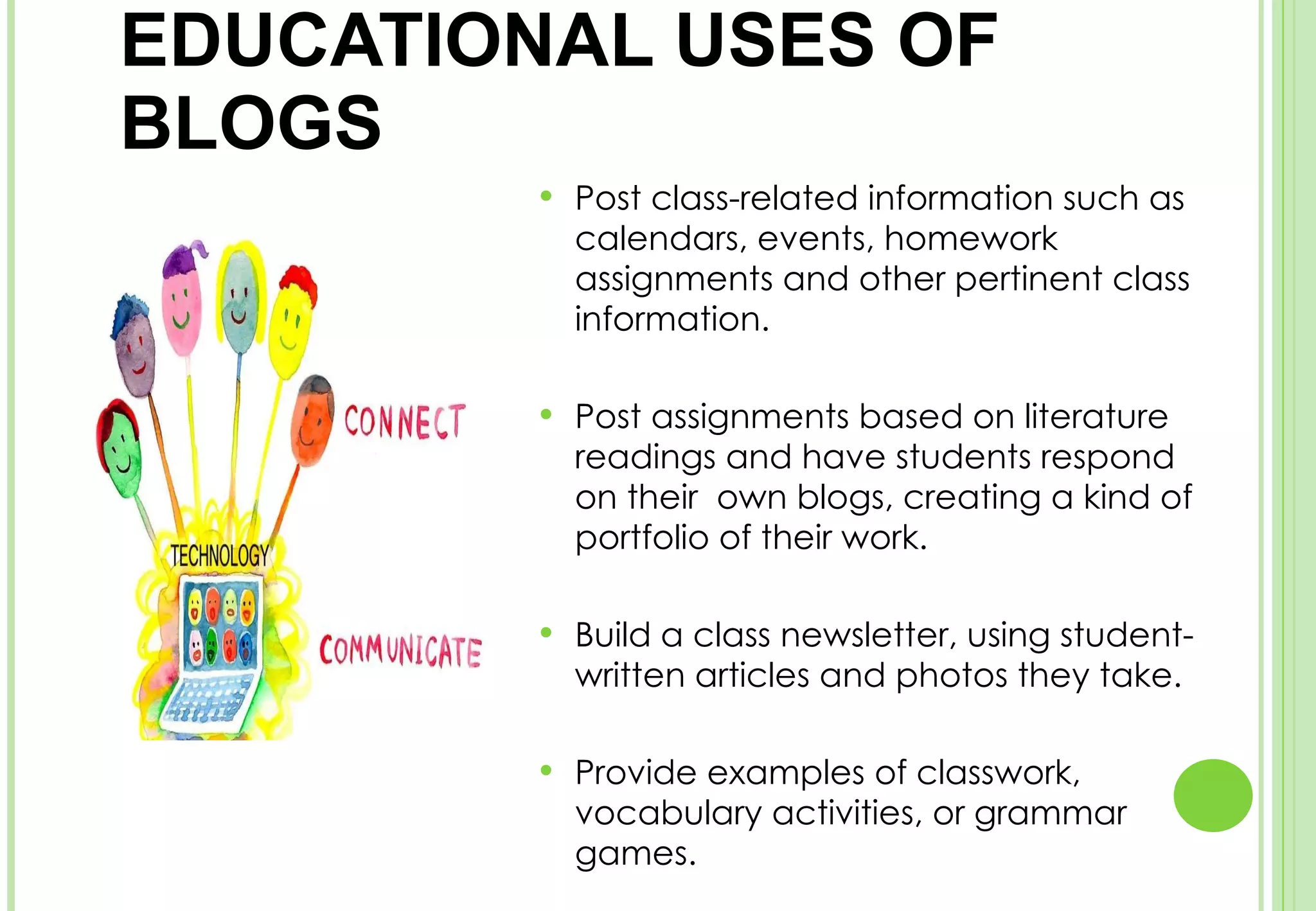
EDUCATIONAL USES OF BLOGS  Post class-related information such as calendars, events, homework assignments and other pertinent class information. Post assignments based on literature readings and have students respond on their  own blogs, creating a kind of portfolio of their work. Build a class newsletter, using student-written articles and photos they take. Provide examples of classwork, vocabulary activities, or grammar games.
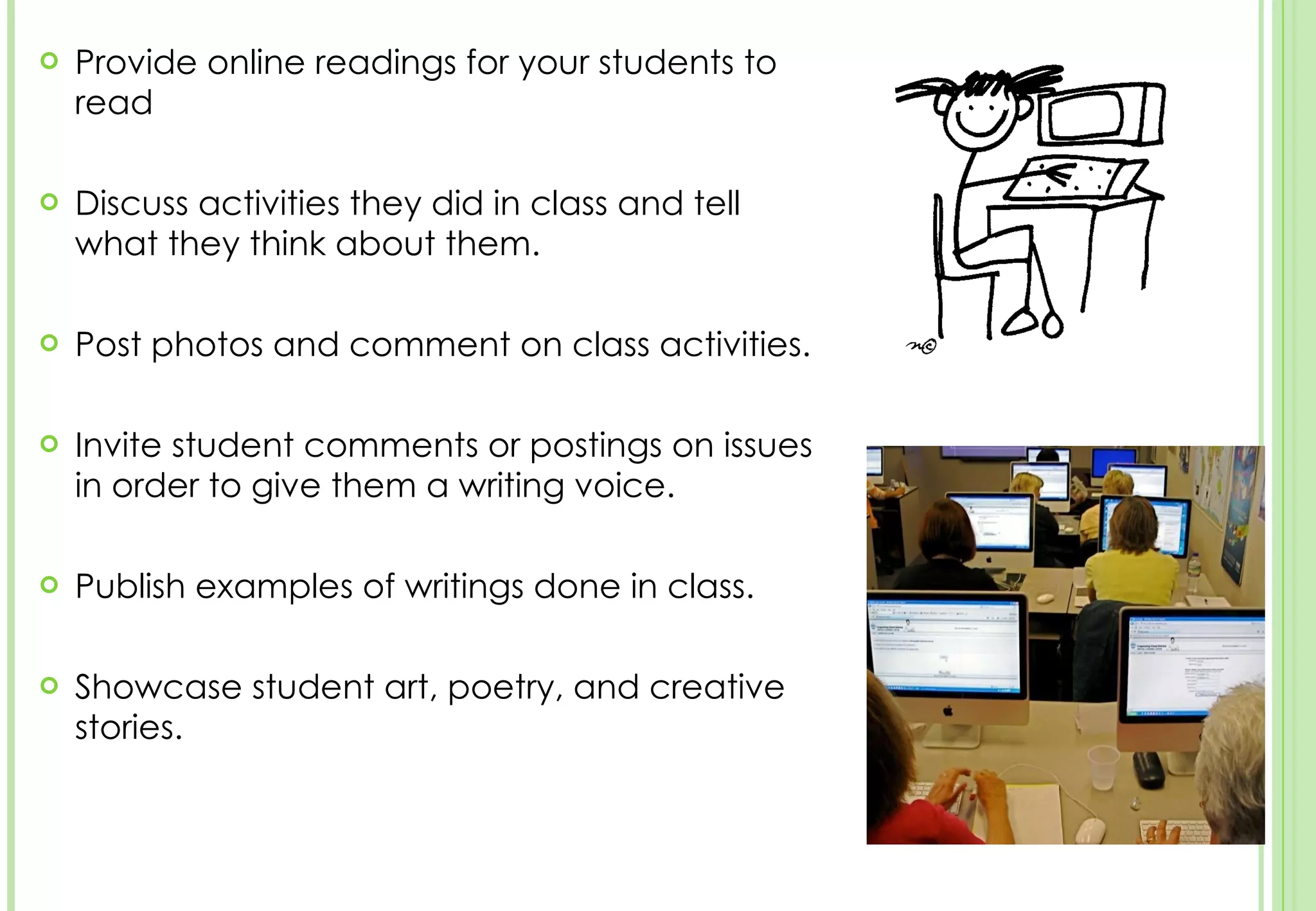
Provide online readings for your students to read Discuss activities they did in class and tell what they think about them. Post photos and comment on class activities. Invite student comments or postings on issues in order to give them a writing voice. Publish examples of writings done in class. Showcase student art, poetry, and creative stories.
BLOGS TODAY As the Internet has become more social, blogs have gained in popularity. Today, there are  over 100 million blogs  with more entering the blogosphere everyday.  Blogs have become more than online diaries. In fact, blogging has become an important part of the online and offline worlds with popular bloggers  impacting the worlds of politics, business and society  with their words .
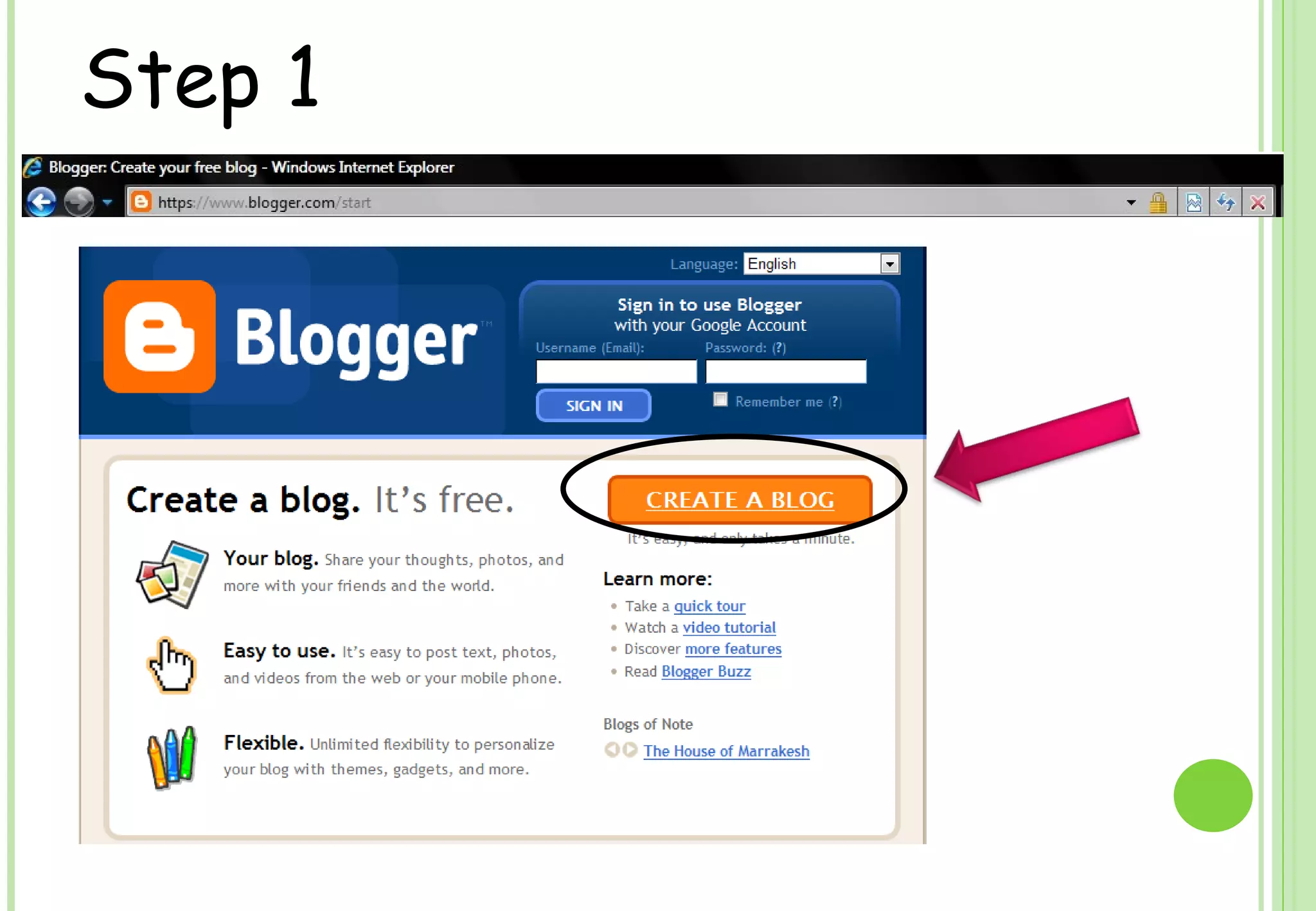
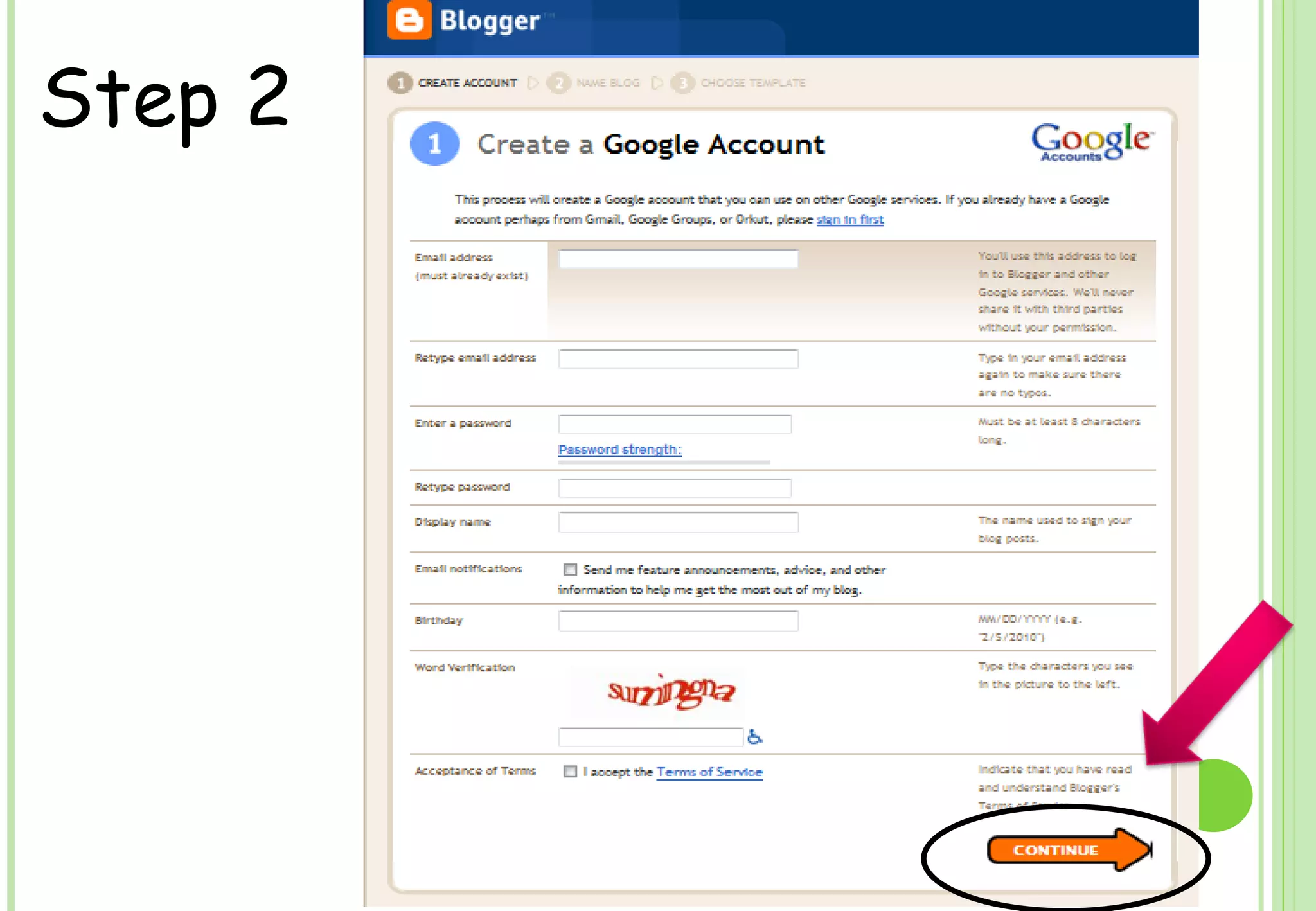
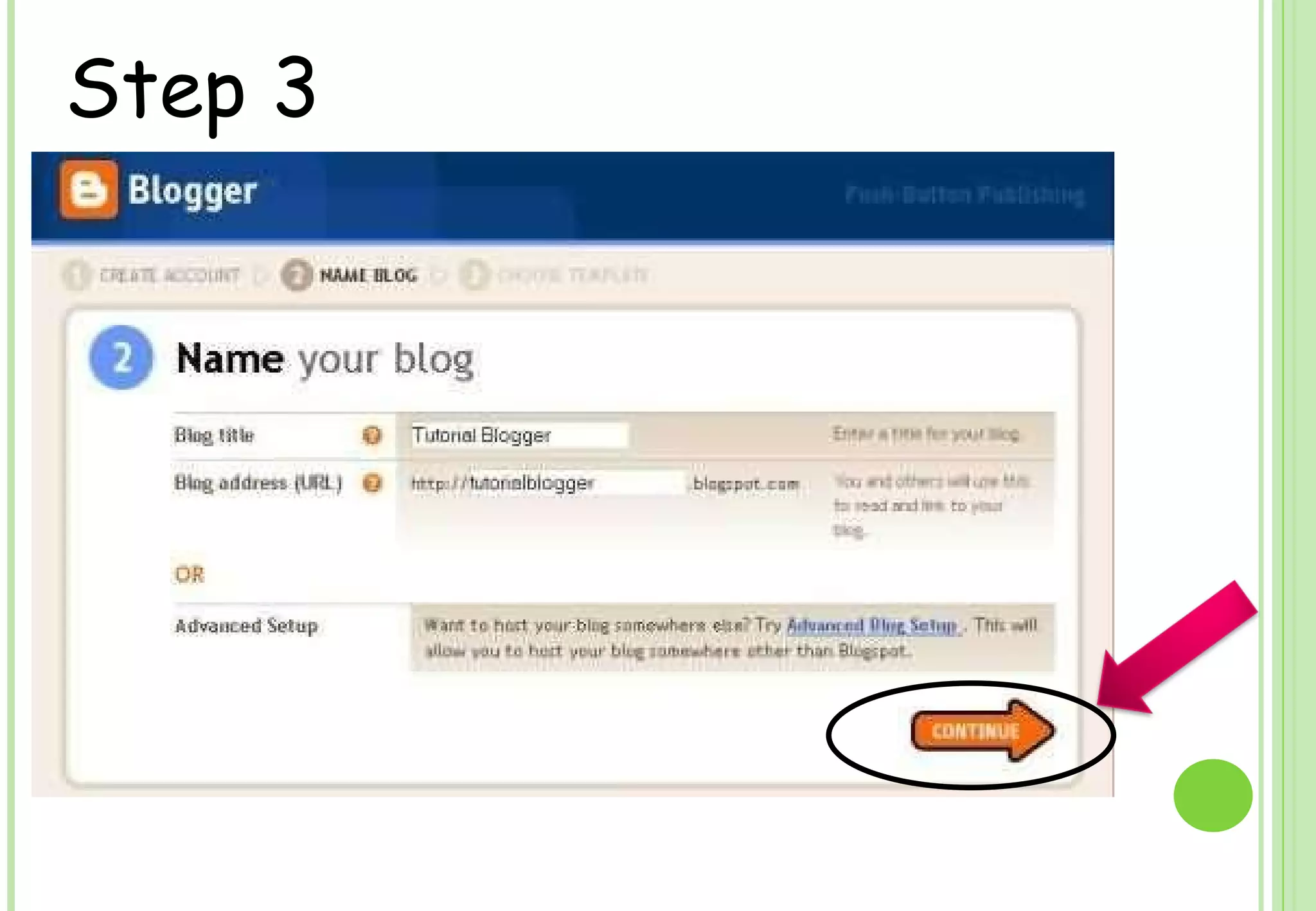
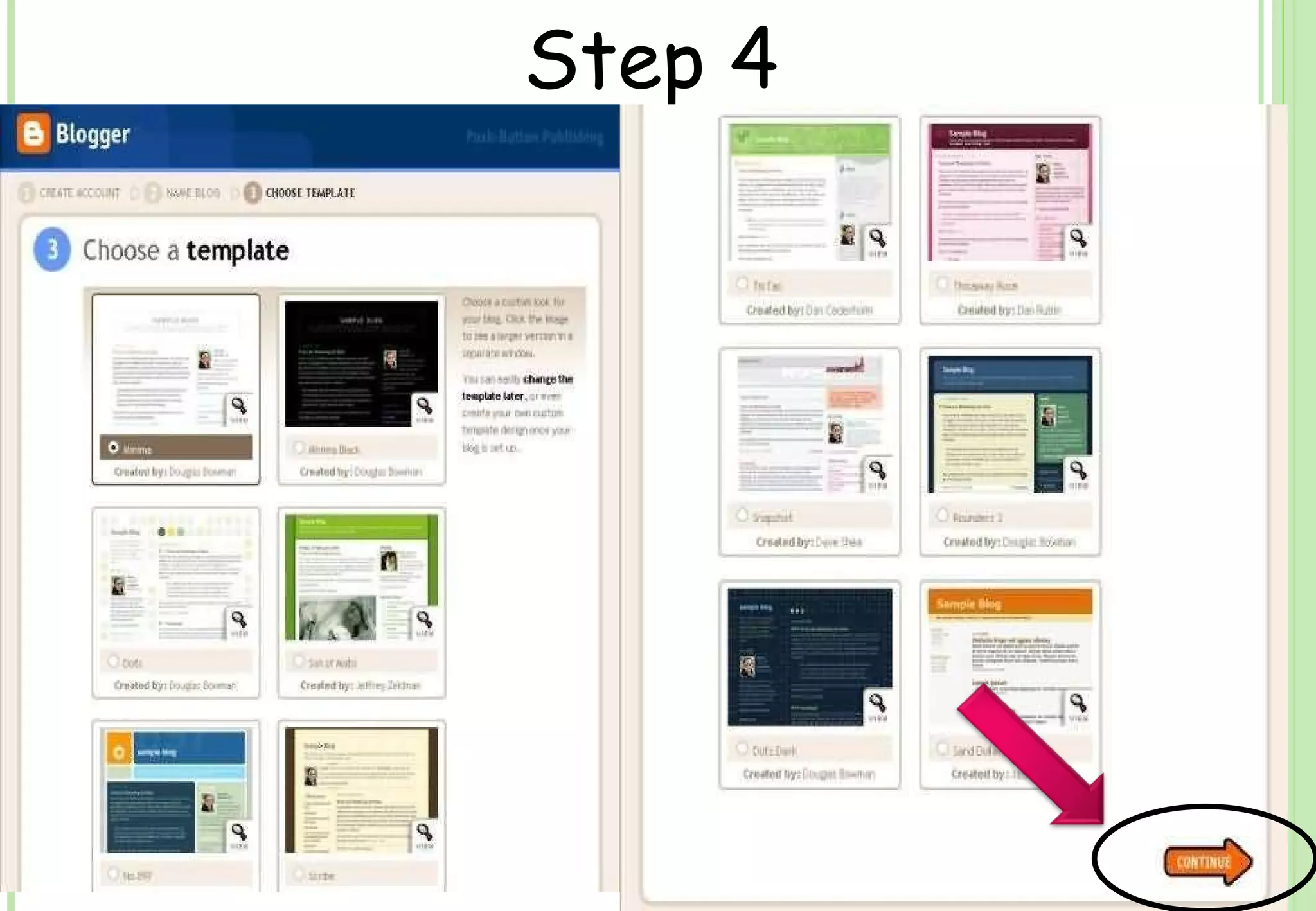
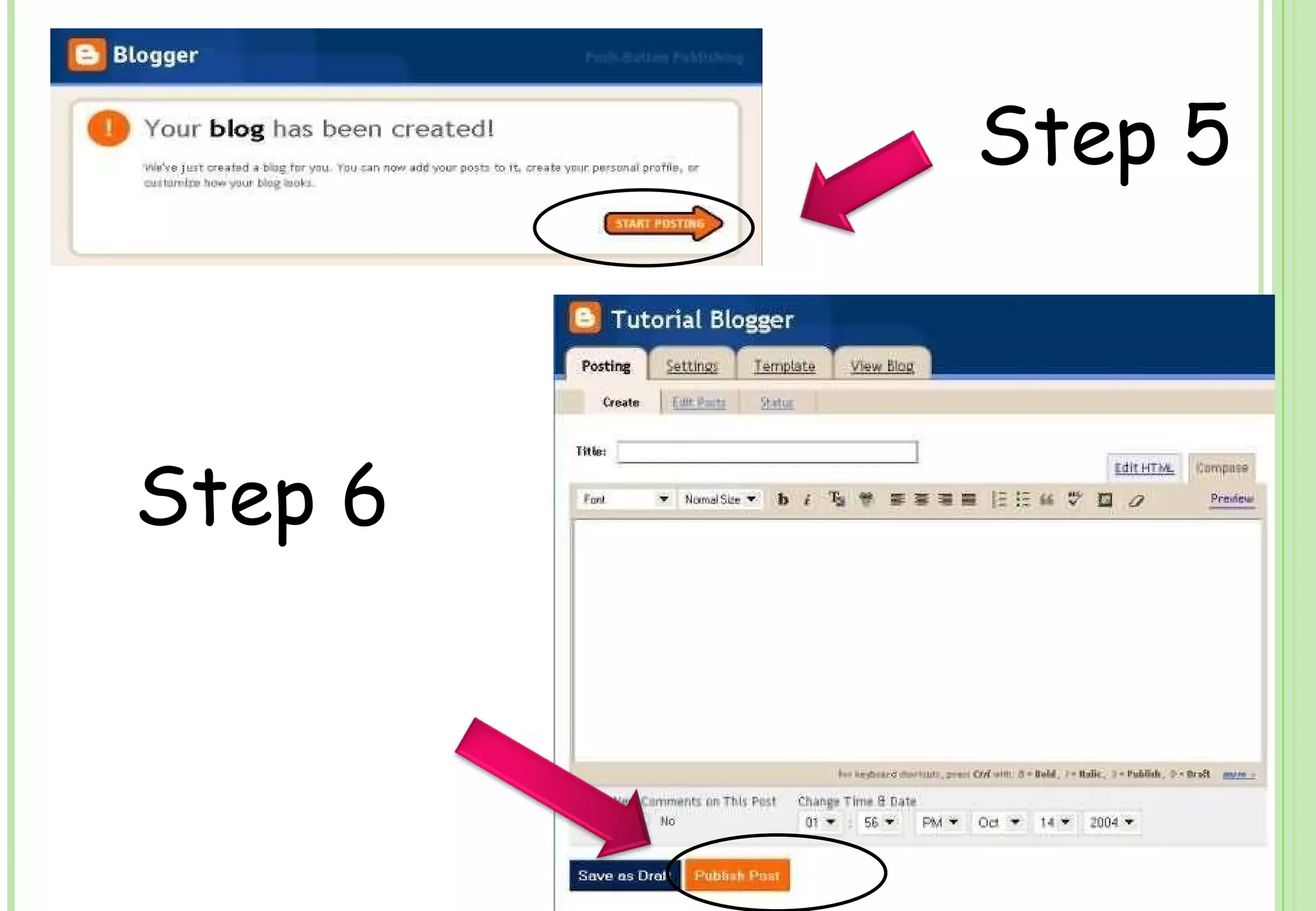
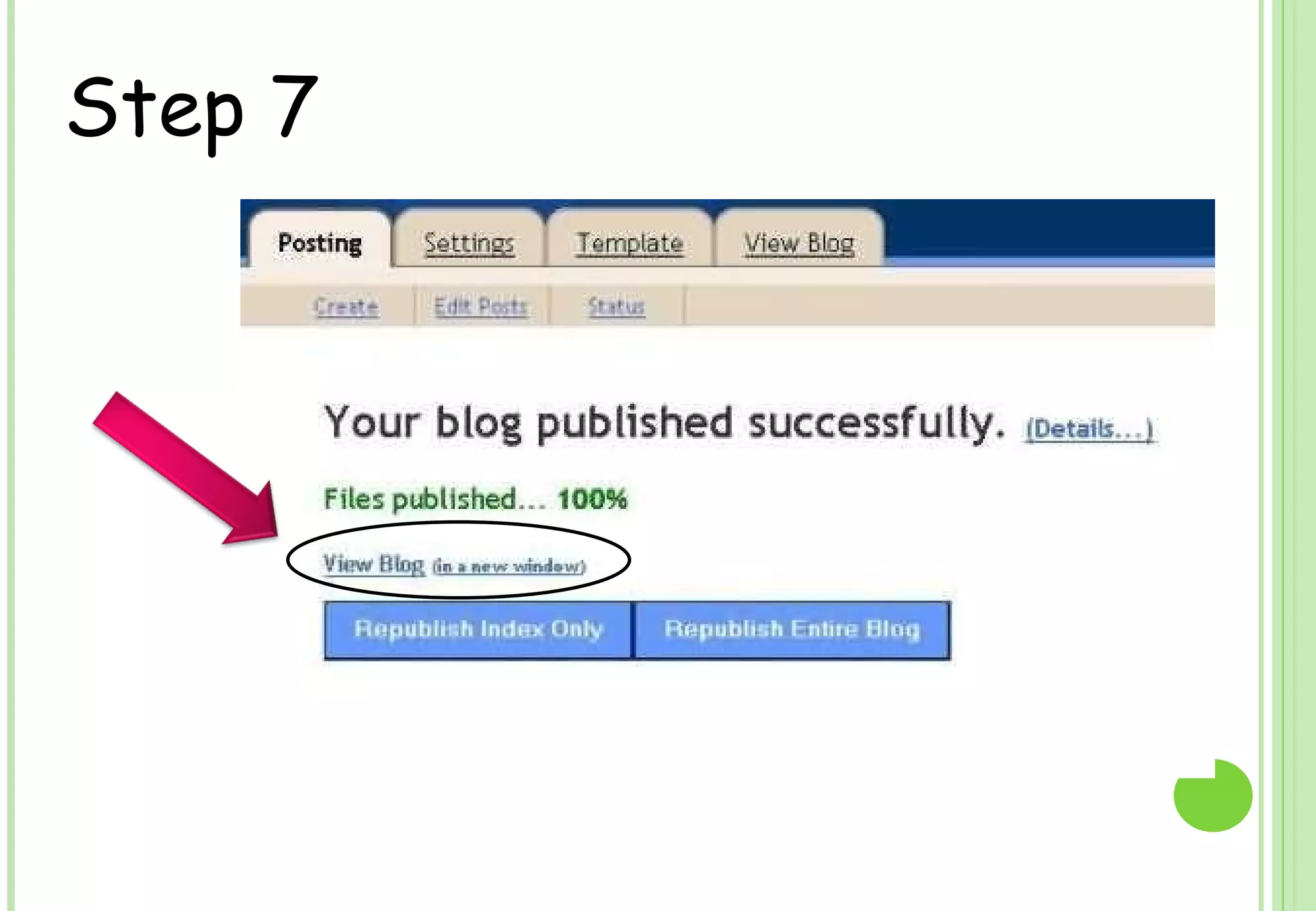
Steps to create a blog
Step 1
Step 2
Step 3
Step 4
Step 6 Step 5
Step 7
REFERENCES Duffy, Peter and Bruns, Axel (2006) The Use of Blogs, Wikis and RSS in Education: A Conversation of Possibilities. In  Proceedings Online Learning and Teaching Conference 2006. Huette, Scott. (2006)  Blogs in Education.  http://weblogs.about.com/od/startingablog/p/WhatIsABlog.htm   consulted on February 04 2010 http://weblogs.about.com/od/startingablog/bb/BeforeYouBlog.htm  consulted on February 04 2010 http://www.det.wa.edu.au/education/cmis/eval/curriculum/ict/weblogs/  consulted on February 05 2010 http://www.adultlearn.com/blogs-education.html  consulted on February 05 2010

Blog

  • 1.
  • 2.
    WHAT IS ABLOG ? Blog is a type of website, usually maintained by an individual with regular entries of commentary, descriptions of events, or other material such as graphics or video. Entries are commonly displayed in reverse-chronological order. "Blog" can also be used as a verb, meaning to maintain or add content to a blog . http://en.wikipedia.org/wiki/Blog A blog is a website consisting of entries (also called posts) appearing in reverse chronological order with the most recent entry appearing first (similar in format to a daily journal). Blogs typically include features such as comments and links to increase user interactivity. Blogs are created using specific publishing software. http://weblogs.about.com/od/startingablog/p/WhatIsABlog.htm
  • 3.
    Variations of theterm blog : Blogging : The act of writing a post for a blog Blogger : A person who writes content for a blog Blogosphere : The online community of blogs and bloggers
  • 4.
    Personal blogs The personal blog, an ongoing diary or commentary by an individual, is the traditional, most common blog. Corporate and organizational blogs Blogs used internally to enhance the communication and culture in a corporation or externally for marketing, branding or public relations purposes are called corporate blogs TYPES OF BLOGS
  • 5.
    By genre Mostblogs are primarily textual, although some focus on art (Art blog), photographs (photoblog), videos (Video blogging), music (MP3 blog), and audio (podcasting). Microblogging is another type of blogging, featuring very short posts. By device Blogs can also be defined by which type of device is used to compose it. A blog written by a mobile device like a mobile phone or PDA could be called a moblog .
  • 6.
    Blogs provide acommunication space that teachers can utilize with students whenever there is a curriculum need to develop writing, share ideas and reflect on work being undertaken in the classroom. A blog can also be used as A classroom management tool. Post assignments for your students. Include links to educational websites that will enhance your students’ knowledge and understanding of concepts and topics discussed in class. Post extra credit assignments on the blog as an incentive to students who check it regularly. IN EDUCACION & BLOGS
  • 7.
    EDUCATIONAL BENEFITS OFBLOGS Potential benefits as identified by teaching specialists Fernette and Brock Eide and cited by Will Richardson (2006) in Blogs, wikis, podcasts, and other powerful web tools for classrooms include the following: Can promote critical and analytical thinking. Can promote creative, intuitive and associational thinking (creative and associational thinking in relation to blogs being used as brainstorming tool and also as a resource for interlinking, commenting on interlinked ideas). Can promote analogical thinking. Potential for increased access and exposure to quality information. Combination of solitary and social interaction.
  • 8.
    EDUCATIONAL USES OFBLOGS Post class-related information such as calendars, events, homework assignments and other pertinent class information. Post assignments based on literature readings and have students respond on their own blogs, creating a kind of portfolio of their work. Build a class newsletter, using student-written articles and photos they take. Provide examples of classwork, vocabulary activities, or grammar games.
  • 9.
    Provide online readingsfor your students to read Discuss activities they did in class and tell what they think about them. Post photos and comment on class activities. Invite student comments or postings on issues in order to give them a writing voice. Publish examples of writings done in class. Showcase student art, poetry, and creative stories.
  • 10.
    BLOGS TODAY Asthe Internet has become more social, blogs have gained in popularity. Today, there are over 100 million blogs with more entering the blogosphere everyday. Blogs have become more than online diaries. In fact, blogging has become an important part of the online and offline worlds with popular bloggers impacting the worlds of politics, business and society with their words .
  • 11.
  • 12.
  • 13.
  • 14.
  • 15.
  • 16.
  • 17.
  • 18.
    REFERENCES Duffy, Peterand Bruns, Axel (2006) The Use of Blogs, Wikis and RSS in Education: A Conversation of Possibilities. In Proceedings Online Learning and Teaching Conference 2006. Huette, Scott. (2006) Blogs in Education. http://weblogs.about.com/od/startingablog/p/WhatIsABlog.htm consulted on February 04 2010 http://weblogs.about.com/od/startingablog/bb/BeforeYouBlog.htm consulted on February 04 2010 http://www.det.wa.edu.au/education/cmis/eval/curriculum/ict/weblogs/ consulted on February 05 2010 http://www.adultlearn.com/blogs-education.html consulted on February 05 2010