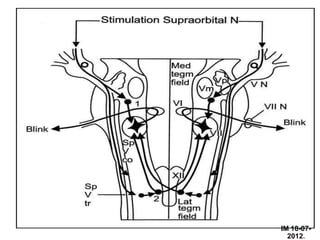
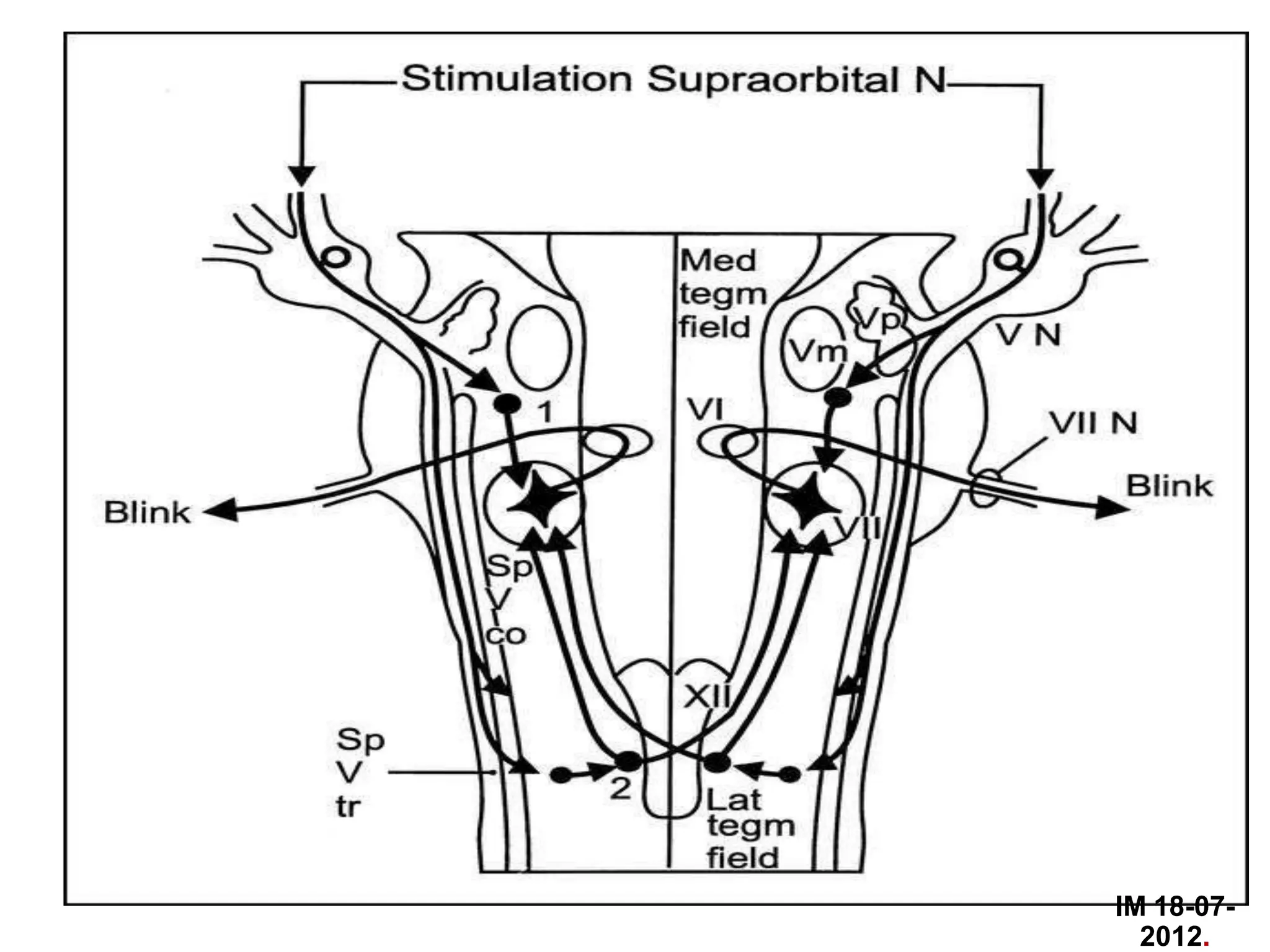
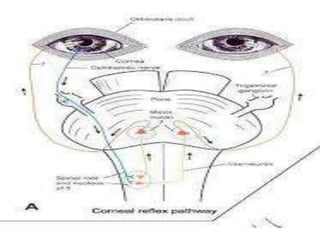
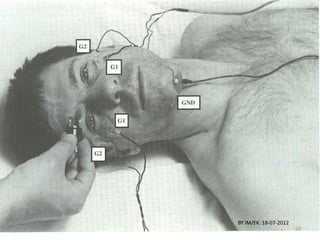
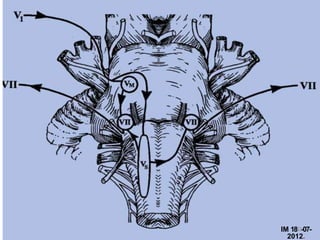
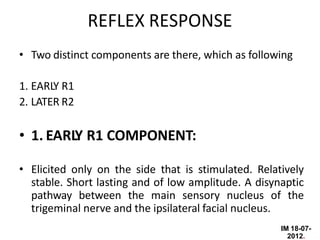
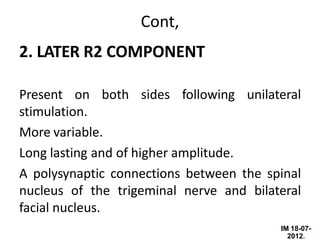
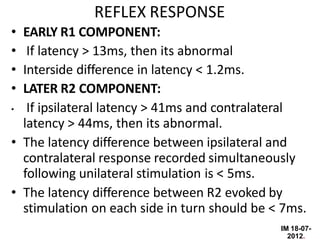
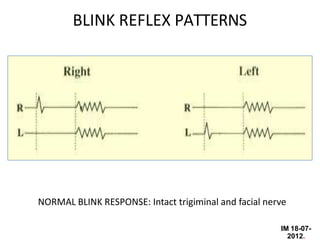
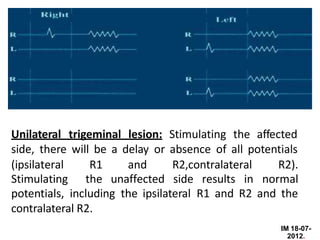
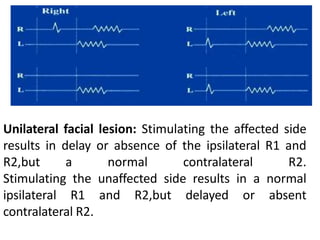
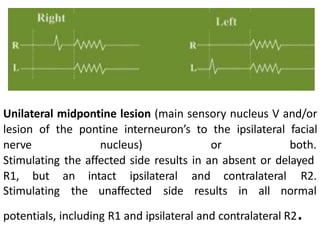
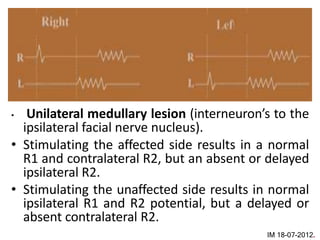
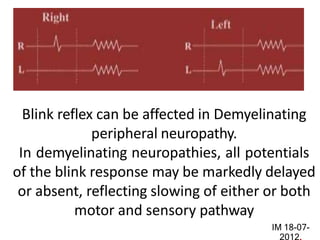
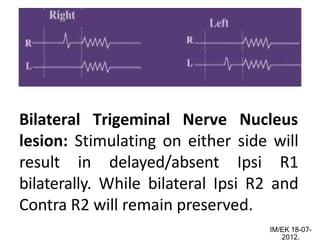
The document discusses the blink reflex test, which evaluates the trigeminal and facial cranial nerves. It involves electrically stimulating the supraorbital nerve and recording the evoked response from the orbicularis oculi muscle. This produces two distinct responses - an early R1 component mediated by a disynaptic reflex arc, and a later R2 component involving a polysynaptic pathway. Abnormalities in the latency and amplitude of the R1 and R2 responses can localize lesions to the trigeminal nerve, facial nerve, or brainstem. The blink reflex is useful for evaluating conditions that affect these cranial nerves and central pathways.


![CASE_PRESENTATION_ON_subdural_hematoma(SDH)[1 FINAL PPT]-1.pptx](https://cdn.slidesharecdn.com/ss_thumbnails/casepresentationonsubduralhematomasdh1finalppt-1-260129172522-d405d375-thumbnail.jpg?width=640&height=640&fit=bounds)


