
Promoting Blended Approaches to Teaching and Learning at Unitec: A Proposal Hazel Owen
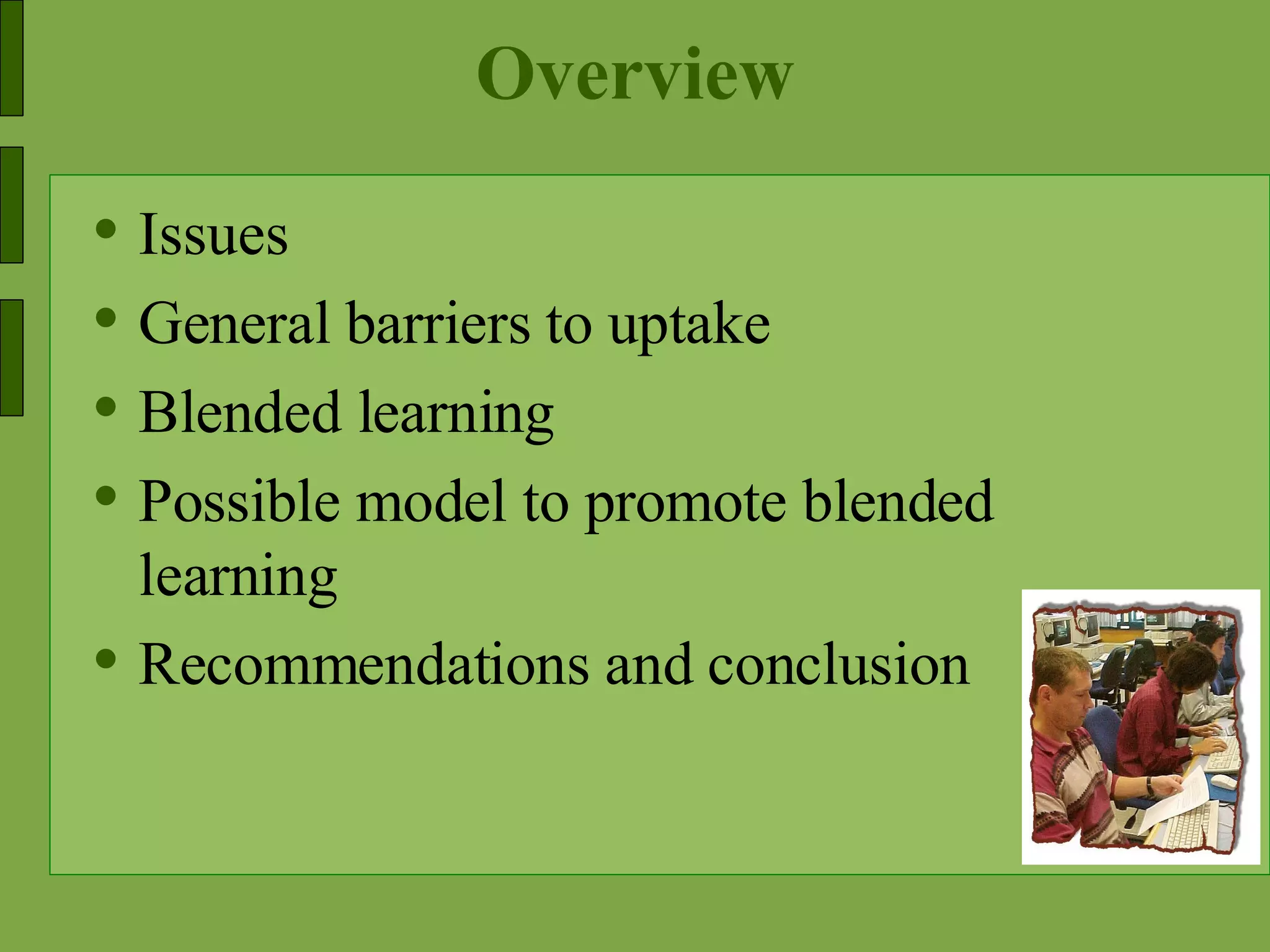
Overview Issues General barriers to uptake Blended learning Possible model to promote blended learning Recommendations and conclusion
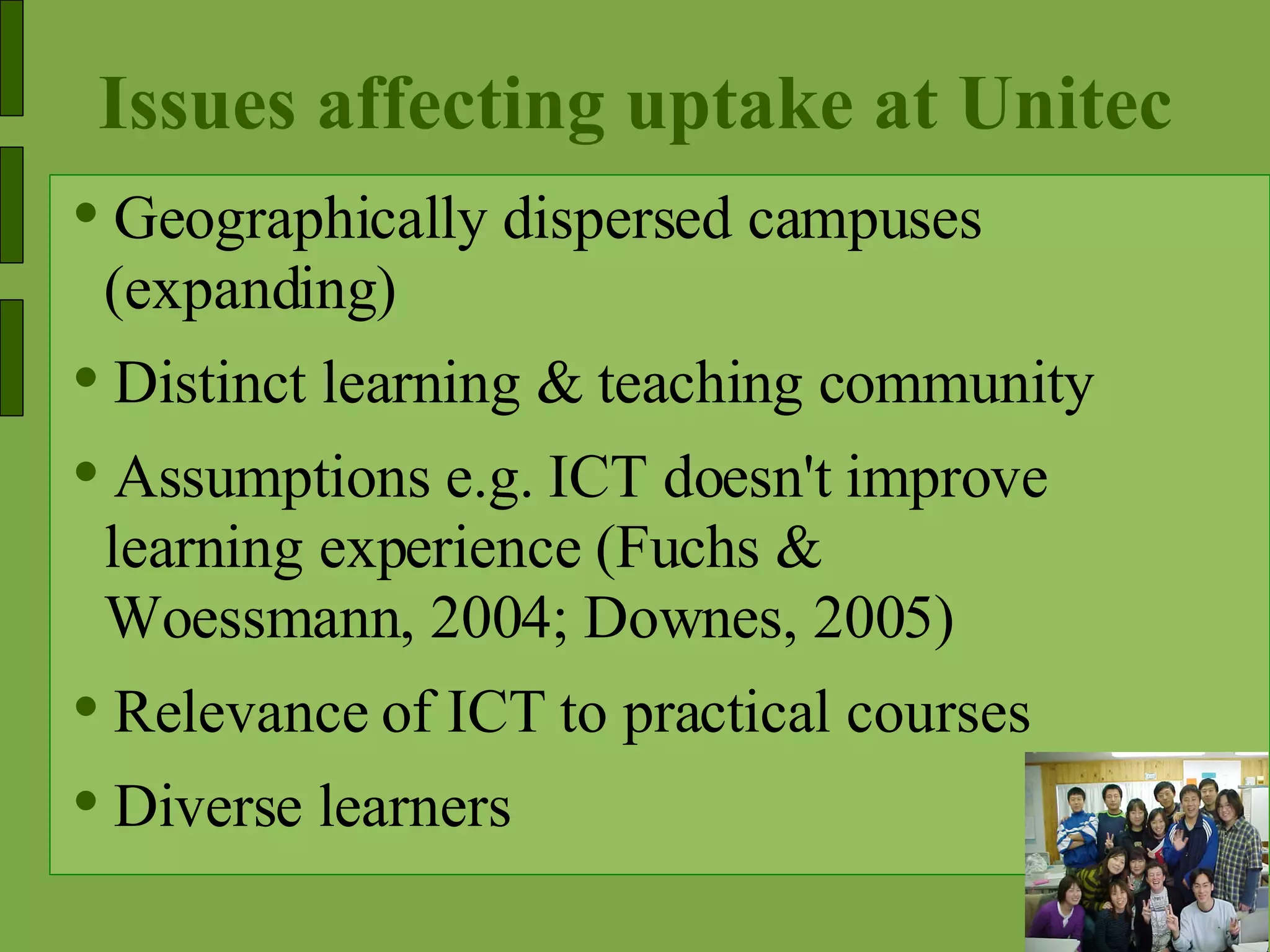
Issues affecting uptake at Unitec Geographically dispersed campuses (expanding) Distinct learning & teaching community Assumptions e.g. ICT doesn't improve learning experience (Fuchs & Woessmann, 2004; Downes, 2005) Relevance of ICT to practical courses Diverse learners
Potential barriers to uptake Failure to bridge gap between pedagogic  design & technology at institution level Lack of relevant training Minimal expertise at management level  Few champions in senior management Negligible management & faculty buy-in Few policies based on needs analysis & field research  Resistance to changing paradigms (Owen & Allardice, 2007)
Uptake & integration Group A Course supplemented by ICT resources: Student & teacher participation optional Possibly some interactive resources; often unidirectional Possibly some communication/collaboration through online forums VLE provides flexible access to support info Adapted from Jenkins (2002)
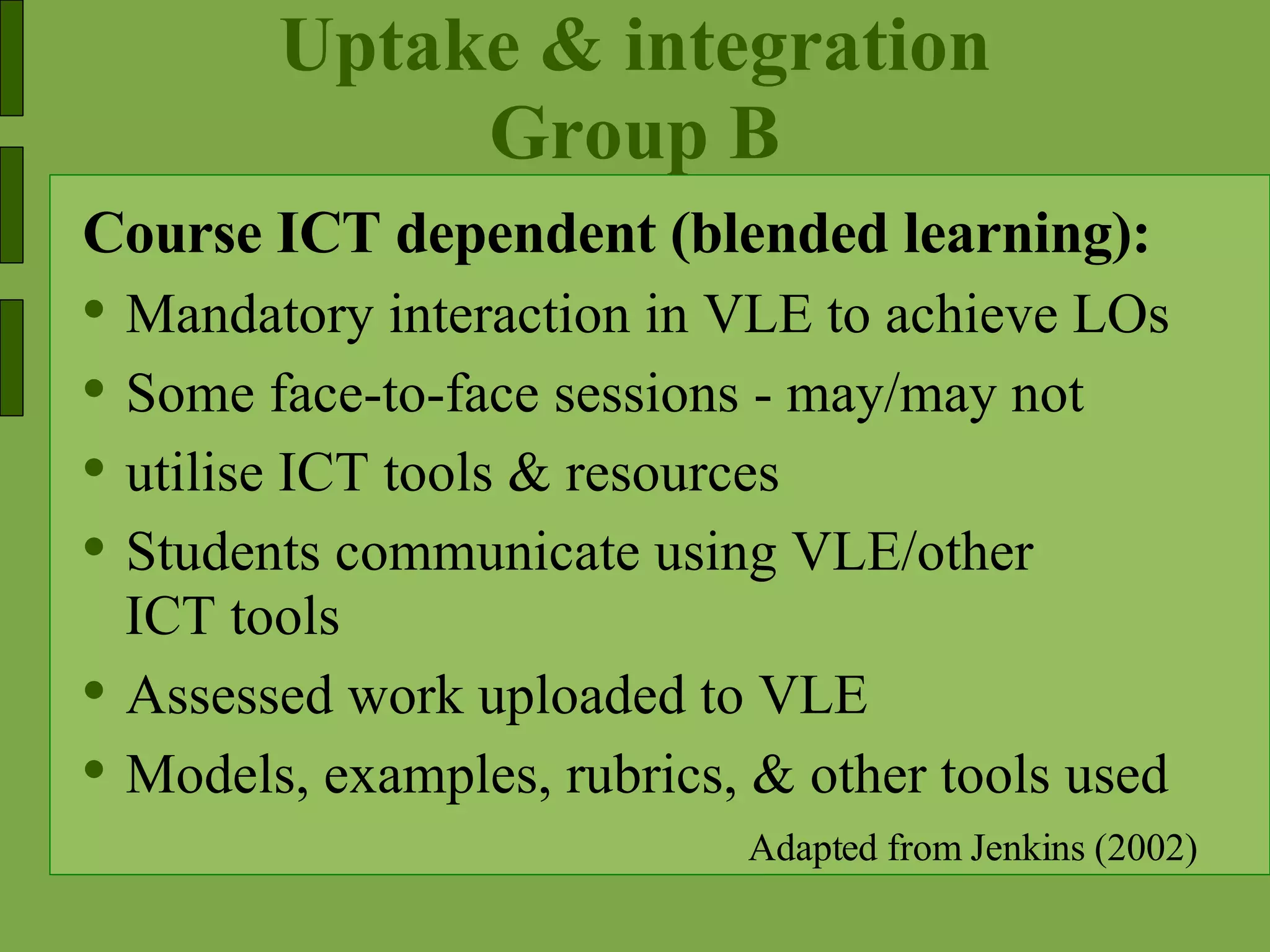
Uptake & integration Group B Course ICT dependent (blended learning): Mandatory interaction in VLE to achieve LOs Some face-to-face sessions - may/may not utilise ICT tools & resources Students communicate using VLE/other ICT tools Assessed work uploaded to VLE Models, examples, rubrics, & other tools used Adapted from Jenkins (2002)
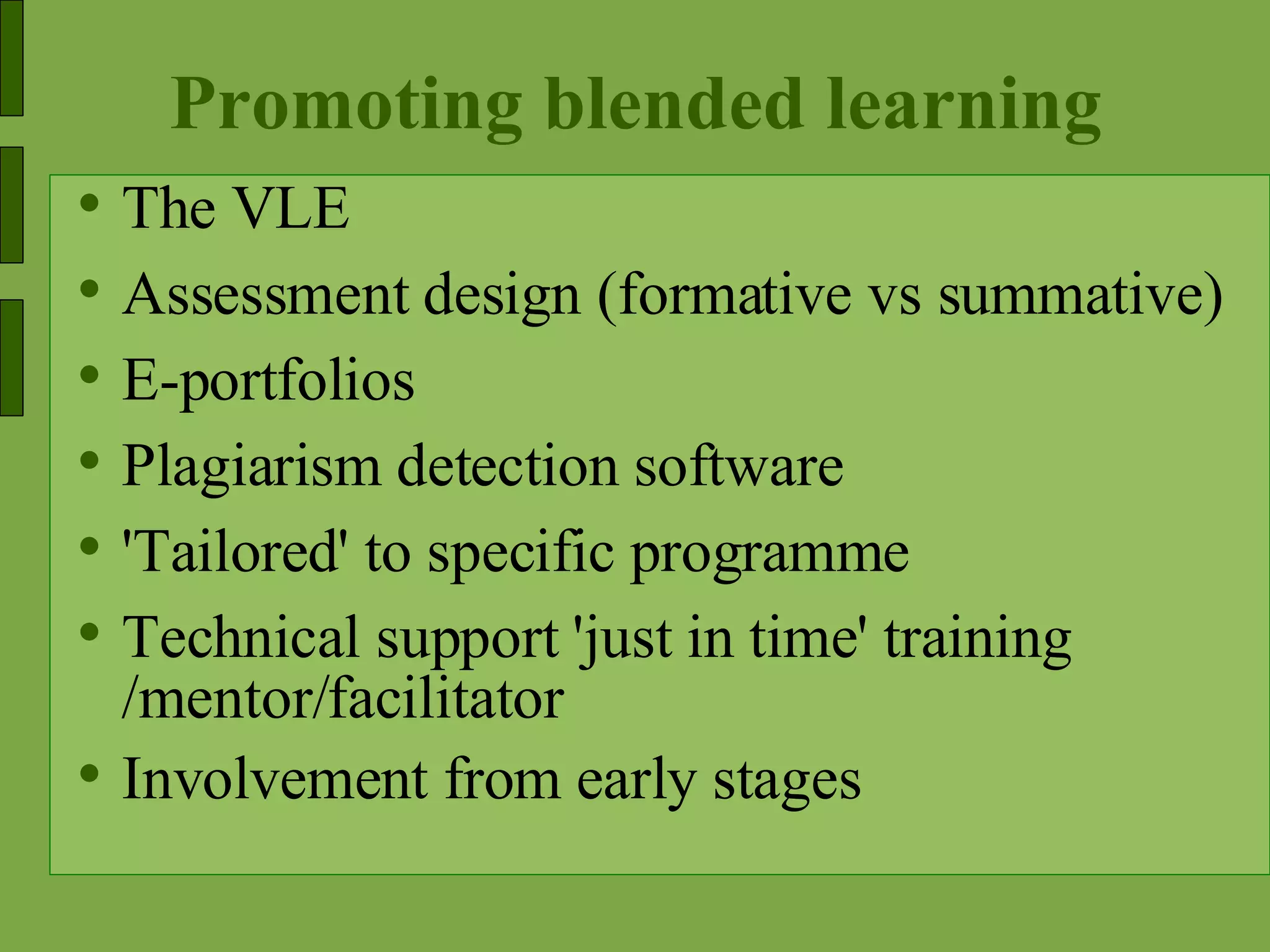
Promoting blended learning The VLE Assessment design (formative vs summative) E-portfolios Plagiarism detection software 'Tailored' to specific programme Technical support 'just in time' training /mentor/facilitator Involvement from early stages
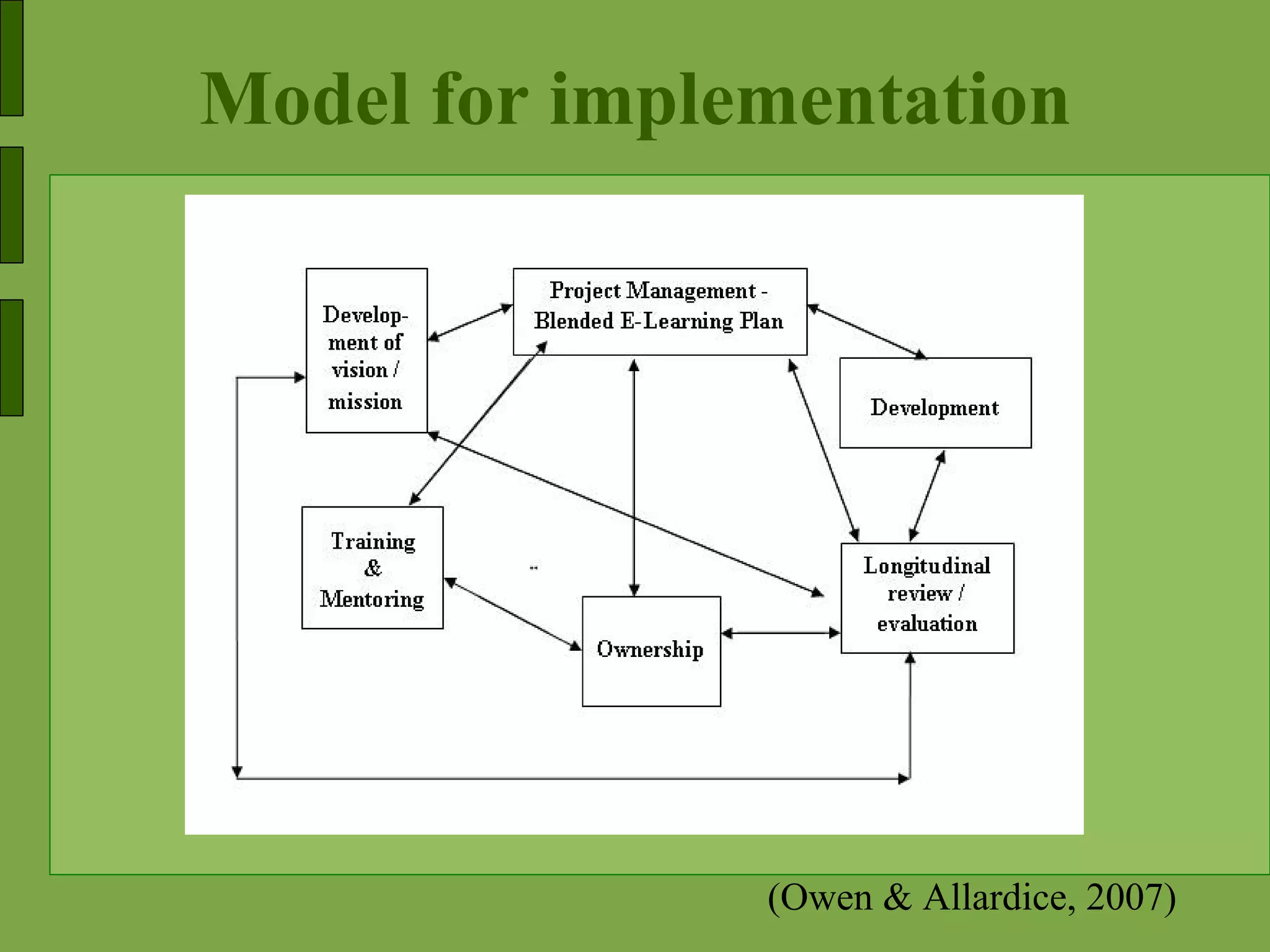
Model for implementation (Owen & Allardice, 2007)
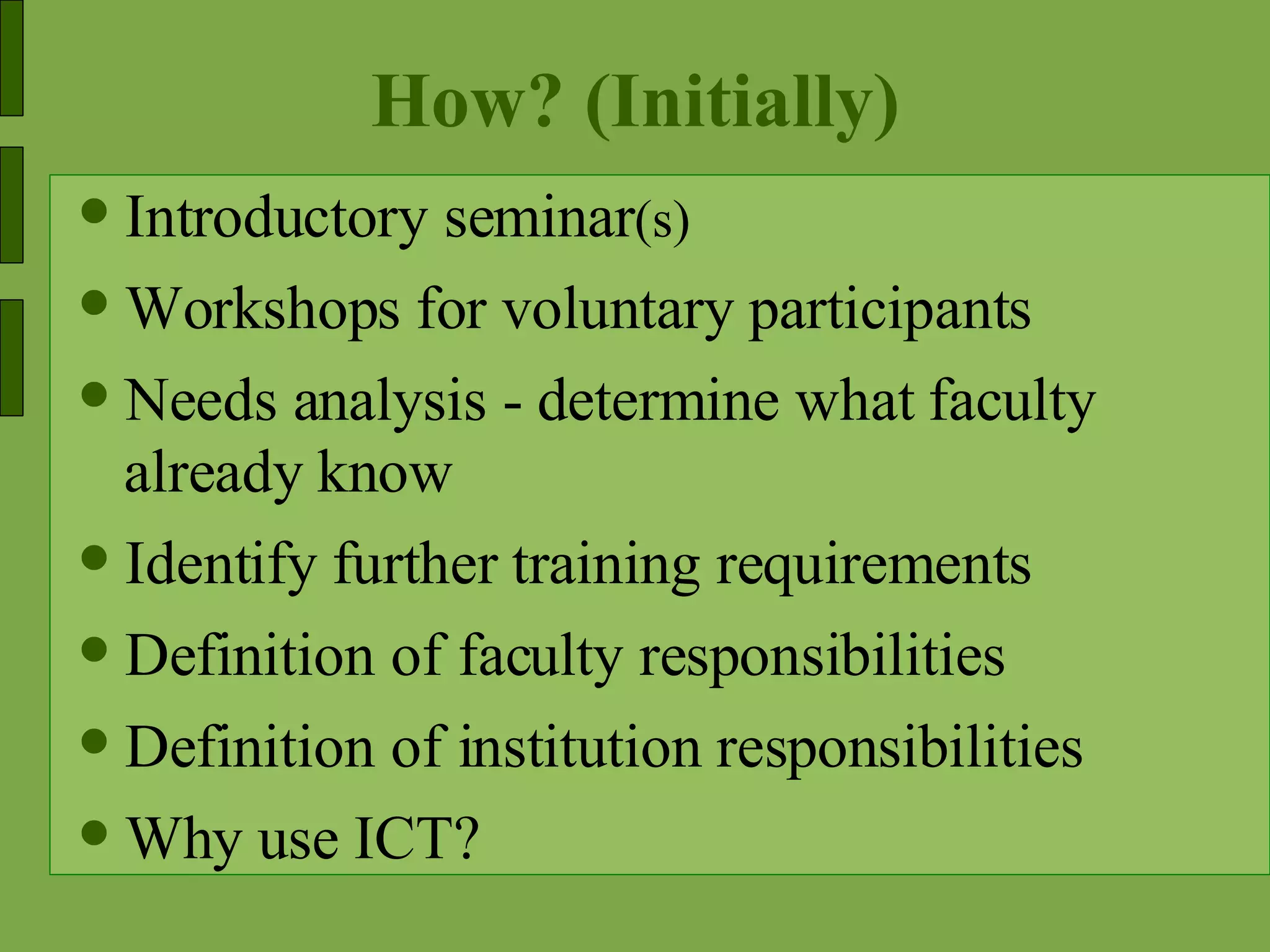
How? (Initially) Introductory seminar (s) Workshops for voluntary participants Needs analysis - determine what faculty already know Identify further training requirements Definition of faculty responsibilities Definition of institution responsibilities Why use ICT?
Why ICT? Supporting evidence from research A shift in dynamic away from learners interacting “ with  computers to interacting with other humans  via  the computer” (Warschauer & Kern, 2000, p. 11)  Not a 'cure all'
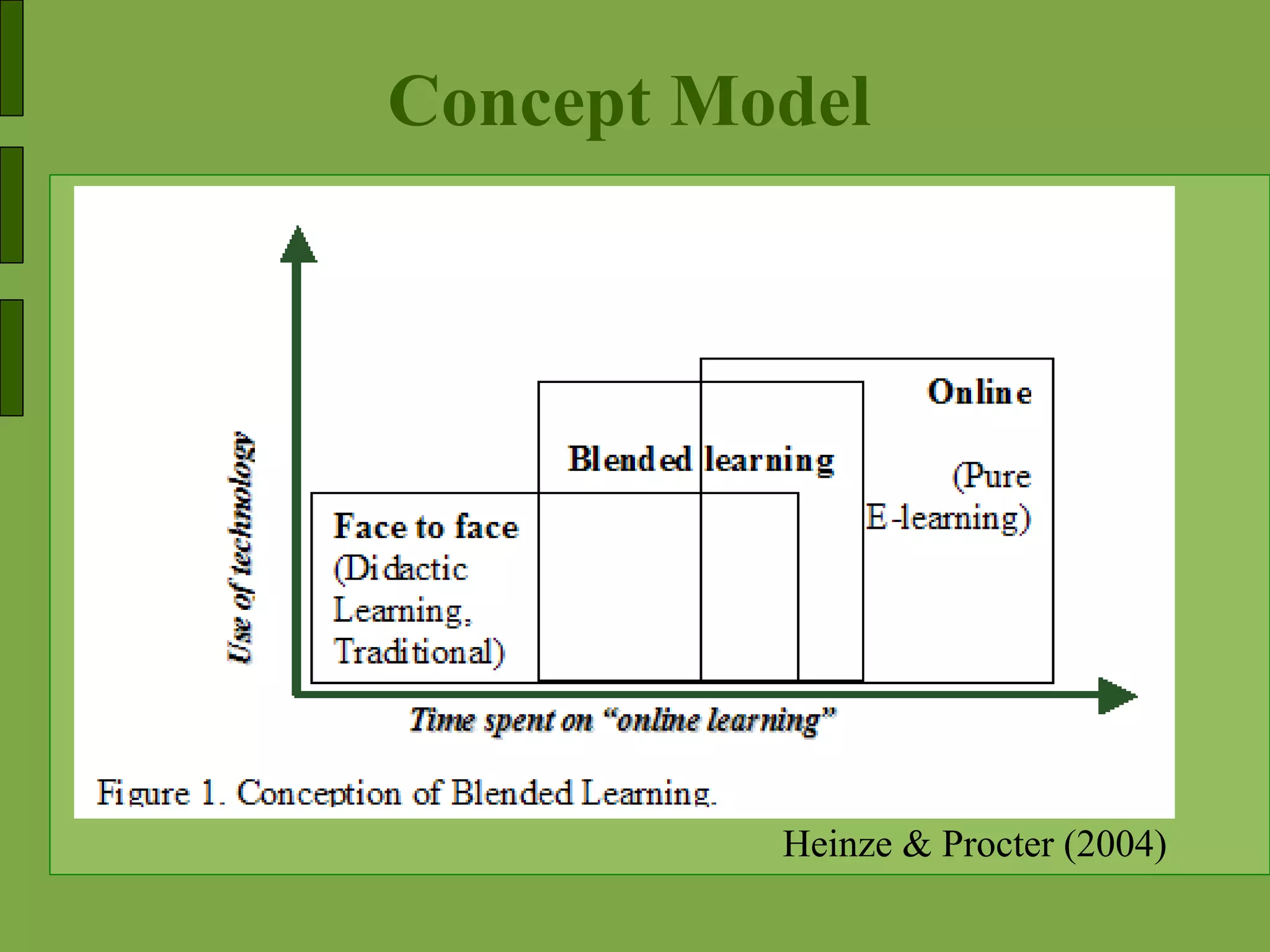
Blended learning Garrison and Vaughan (2007): “ a blending of campus and online educational experiences for the express purpose of enhancing the quality of the learning experience” (p. 5) Heinze and Proctor (2004): “ learning that is facilitated by the effective combination of different modes of delivery, models of teaching and styles of learning, and founded on transparent communication amongst all parties involved with a course” (p. 21)
Concept Model Heinze & Procter (2004)
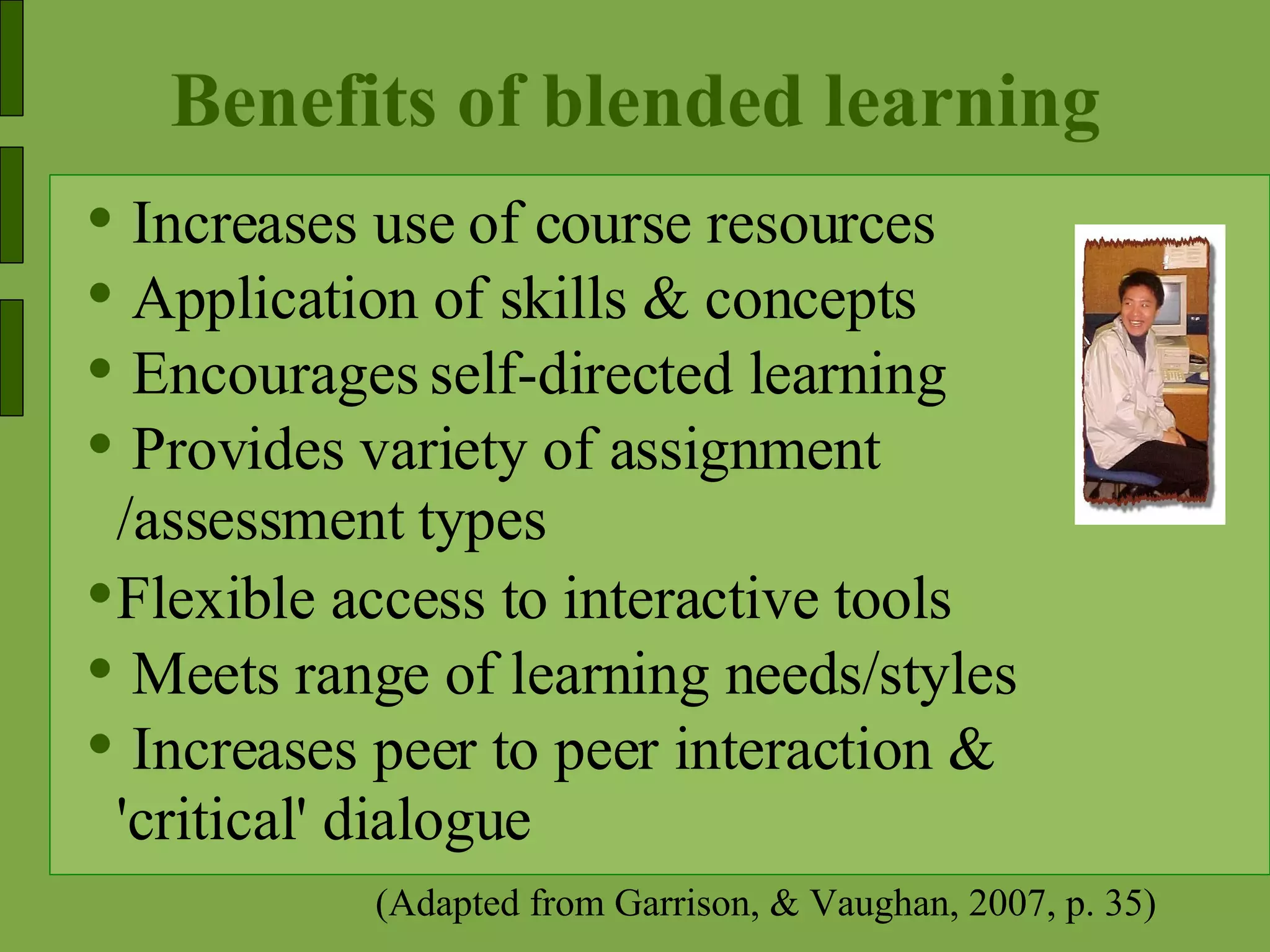
Benefits of blended learning Increases use of course resources Application of skills & concepts Encourages self-directed learning Provides variety of assignment /assessment types Flexible access to interactive tools Meets range of learning needs/styles Increases peer to peer interaction & 'critical' dialogue (Adapted from Garrison, & Vaughan, 2007, p. 35)
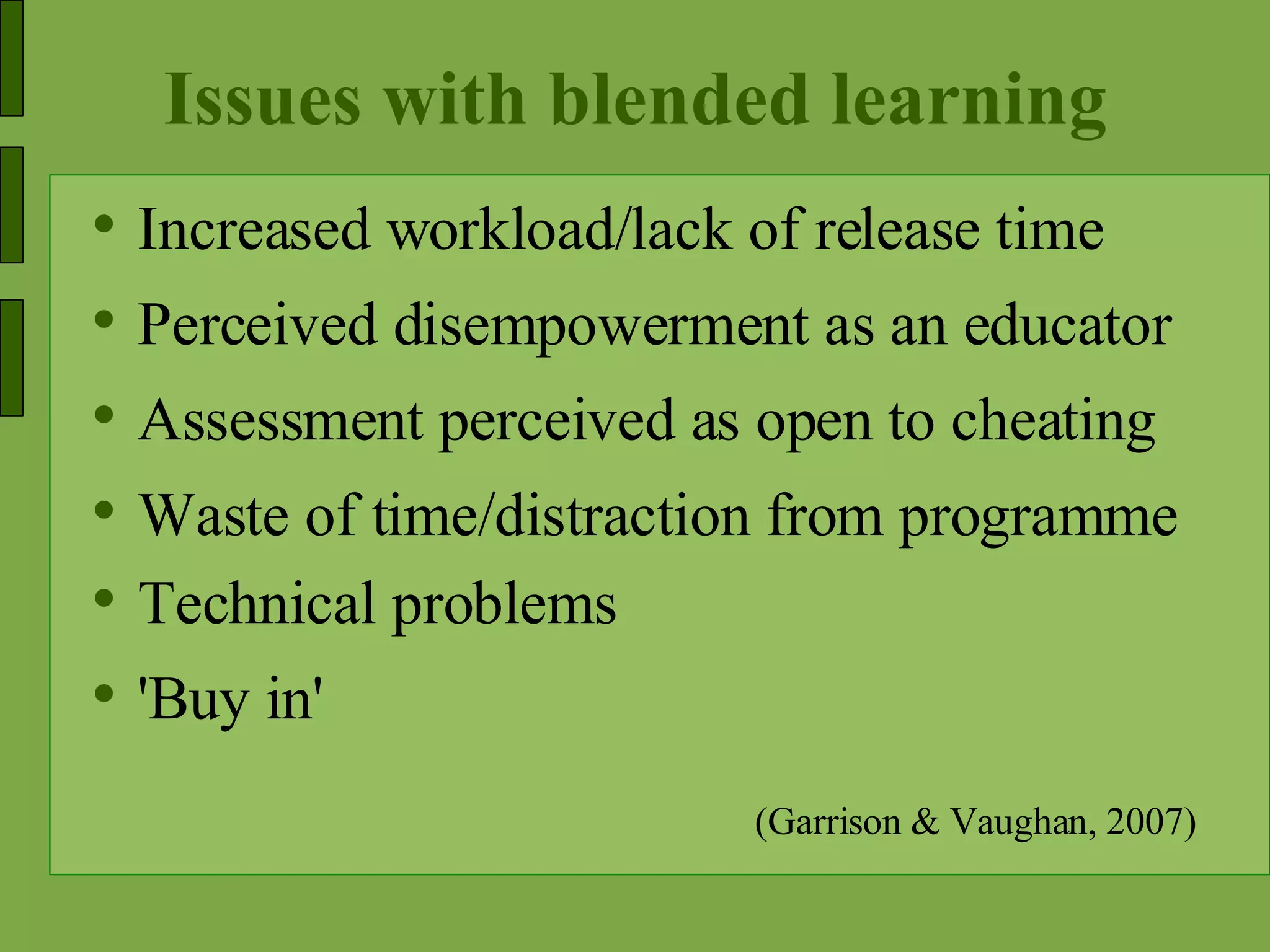
Issues with blended learning Increased workload/lack of release time Perceived disempowerment as an educator  Assessment perceived as open to cheating Waste of time/distraction from programme Technical problems 'Buy in' (Garrison & Vaughan, 2007)
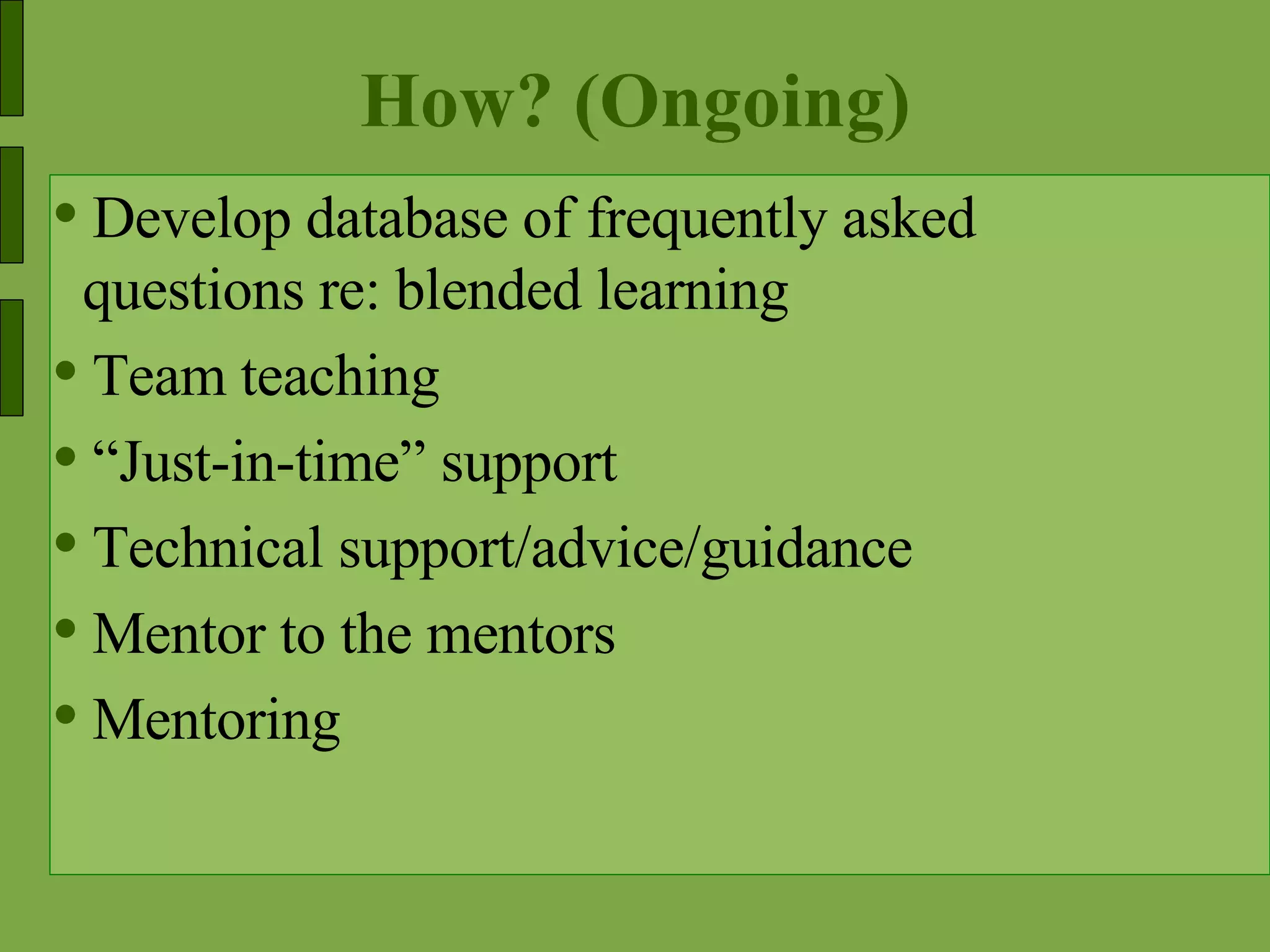
How? (Ongoing) Develop database of frequently asked questions re: blended learning  Team teaching  “ Just-in-time” support Technical support/advice/guidance  Mentor to the mentors Mentoring
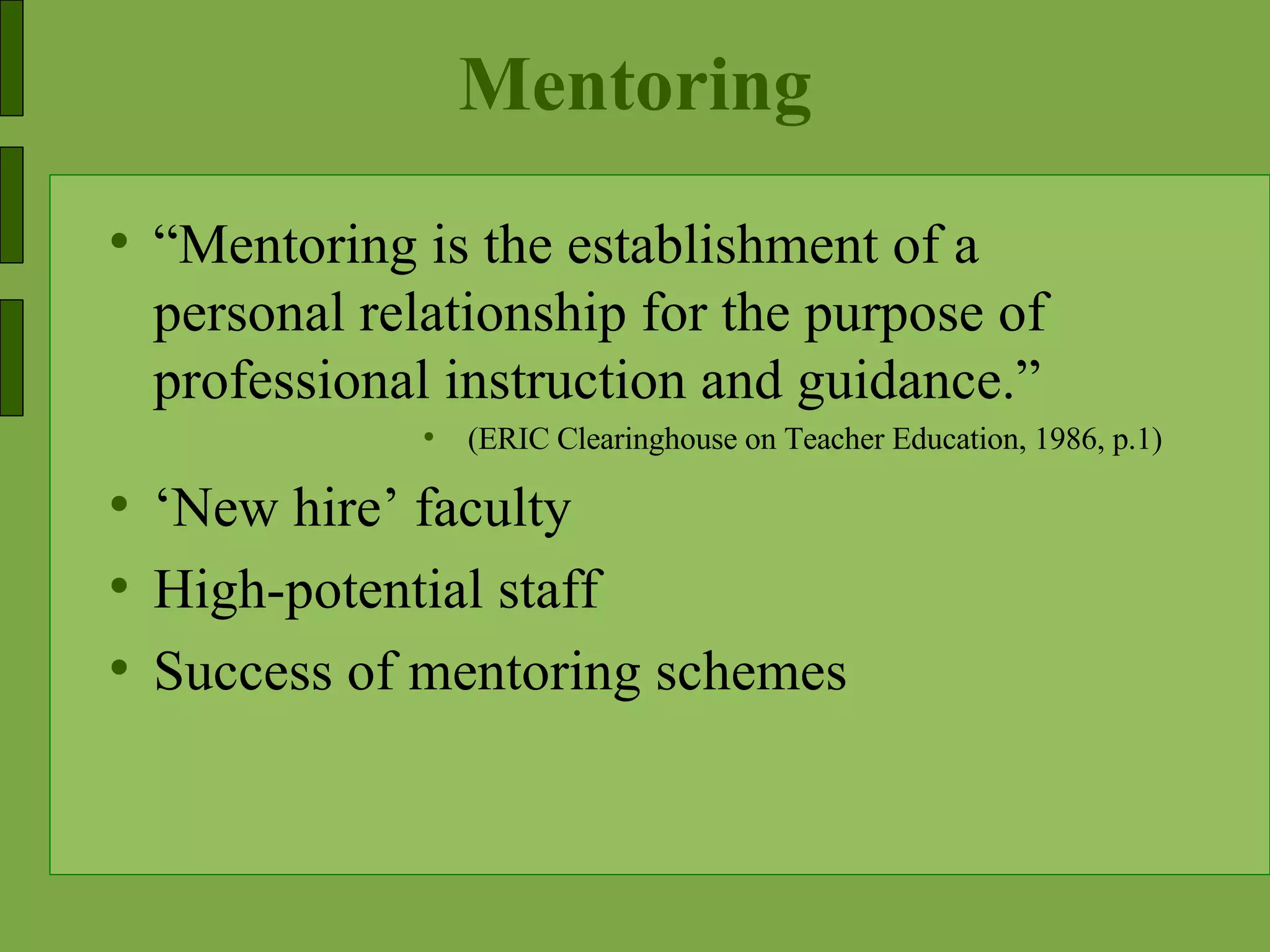
Mentoring “ Mentoring is the establishment of a personal relationship for the purpose of professional instruction and guidance.” (ERIC Clearinghouse on Teacher Education, 1986, p.1) ‘ New hire’ faculty High-potential staff Success of mentoring schemes
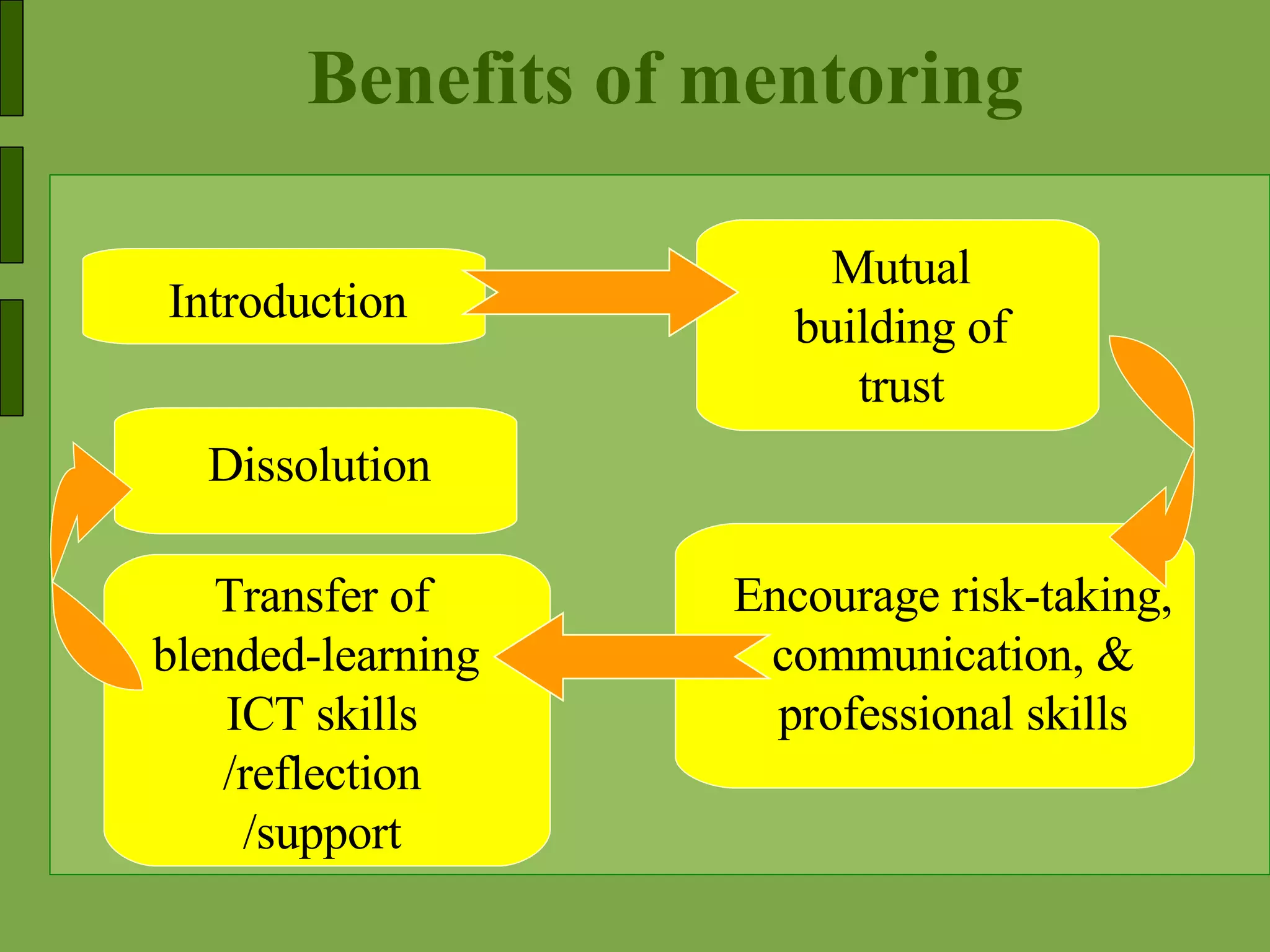
Benefits of mentoring Mutual building of trust Introduction Encourage risk-taking, communication, & professional skills Transfer of blended-learning  ICT skills /reflection /support Dissolution
Conclusion and Recommendations Blended learning developers – voluntary /requested Development role – specific/task-focused 'Tailoring' promoted Semi-structured approach Ongoing, 'user friendly' technical support (Johnson, 2008, Driscoll et al., 1985)
Thank you Are there any questions?
References Driscoll, A., et al. (1985). Designing A Mentor System For Beginning Teachers.  Journal of Staff Development, 6 (2), 6-11. Garrison, R., & Vaughan, N. (2007).  Blended learning and course redesign in higher education: Assessing the role of teaching presence from the learner perspective . Retrieved May 12, 2007, from http://www.ucalgary.ca/ Heinze, A., & Proctor, C. (2004).  Reflections on the use of blended learning.  Paper presented at the Education in a Changing Environment, University of Salford, UK. Retrieved June 10 2005, from the Salford University Web site: http://www.edu.salford.ac.uk/her/proceedings/papers/ah_04.rtf.
References Jenkins, M. (2002).  Implementing ICT: Strategies for the support of e-learning.  Paper presented at the Learning Technology & Skills Support: LTSN/ALT Workshop, University of Gloucestershire, UK. Owen, H., & Allardice, R. (2007). Managing the implementation of blended E-learning initiatives with the unconverted in a climate of institutionally driven change.  The International Journal of Learning, 14 (9), 179-192.

Blended Learning At Unitec Owen

  • 1.
    Promoting Blended Approachesto Teaching and Learning at Unitec: A Proposal Hazel Owen
  • 2.
    Overview Issues Generalbarriers to uptake Blended learning Possible model to promote blended learning Recommendations and conclusion
  • 3.
    Issues affecting uptakeat Unitec Geographically dispersed campuses (expanding) Distinct learning & teaching community Assumptions e.g. ICT doesn't improve learning experience (Fuchs & Woessmann, 2004; Downes, 2005) Relevance of ICT to practical courses Diverse learners
  • 4.
    Potential barriers touptake Failure to bridge gap between pedagogic design & technology at institution level Lack of relevant training Minimal expertise at management level Few champions in senior management Negligible management & faculty buy-in Few policies based on needs analysis & field research Resistance to changing paradigms (Owen & Allardice, 2007)
  • 5.
    Uptake & integrationGroup A Course supplemented by ICT resources: Student & teacher participation optional Possibly some interactive resources; often unidirectional Possibly some communication/collaboration through online forums VLE provides flexible access to support info Adapted from Jenkins (2002)
  • 6.
    Uptake & integrationGroup B Course ICT dependent (blended learning): Mandatory interaction in VLE to achieve LOs Some face-to-face sessions - may/may not utilise ICT tools & resources Students communicate using VLE/other ICT tools Assessed work uploaded to VLE Models, examples, rubrics, & other tools used Adapted from Jenkins (2002)
  • 7.
    Promoting blended learningThe VLE Assessment design (formative vs summative) E-portfolios Plagiarism detection software 'Tailored' to specific programme Technical support 'just in time' training /mentor/facilitator Involvement from early stages
  • 8.
    Model for implementation(Owen & Allardice, 2007)
  • 9.
    How? (Initially) Introductoryseminar (s) Workshops for voluntary participants Needs analysis - determine what faculty already know Identify further training requirements Definition of faculty responsibilities Definition of institution responsibilities Why use ICT?
  • 10.
    Why ICT? Supportingevidence from research A shift in dynamic away from learners interacting “ with computers to interacting with other humans via the computer” (Warschauer & Kern, 2000, p. 11) Not a 'cure all'
  • 11.
    Blended learning Garrisonand Vaughan (2007): “ a blending of campus and online educational experiences for the express purpose of enhancing the quality of the learning experience” (p. 5) Heinze and Proctor (2004): “ learning that is facilitated by the effective combination of different modes of delivery, models of teaching and styles of learning, and founded on transparent communication amongst all parties involved with a course” (p. 21)
  • 12.
    Concept Model Heinze& Procter (2004)
  • 13.
    Benefits of blendedlearning Increases use of course resources Application of skills & concepts Encourages self-directed learning Provides variety of assignment /assessment types Flexible access to interactive tools Meets range of learning needs/styles Increases peer to peer interaction & 'critical' dialogue (Adapted from Garrison, & Vaughan, 2007, p. 35)
  • 14.
    Issues with blendedlearning Increased workload/lack of release time Perceived disempowerment as an educator Assessment perceived as open to cheating Waste of time/distraction from programme Technical problems 'Buy in' (Garrison & Vaughan, 2007)
  • 15.
    How? (Ongoing) Developdatabase of frequently asked questions re: blended learning Team teaching “ Just-in-time” support Technical support/advice/guidance Mentor to the mentors Mentoring
  • 16.
    Mentoring “ Mentoringis the establishment of a personal relationship for the purpose of professional instruction and guidance.” (ERIC Clearinghouse on Teacher Education, 1986, p.1) ‘ New hire’ faculty High-potential staff Success of mentoring schemes
  • 17.
    Benefits of mentoringMutual building of trust Introduction Encourage risk-taking, communication, & professional skills Transfer of blended-learning ICT skills /reflection /support Dissolution
  • 18.
    Conclusion and RecommendationsBlended learning developers – voluntary /requested Development role – specific/task-focused 'Tailoring' promoted Semi-structured approach Ongoing, 'user friendly' technical support (Johnson, 2008, Driscoll et al., 1985)
  • 19.
    Thank you Arethere any questions?
  • 20.
    References Driscoll, A.,et al. (1985). Designing A Mentor System For Beginning Teachers. Journal of Staff Development, 6 (2), 6-11. Garrison, R., & Vaughan, N. (2007). Blended learning and course redesign in higher education: Assessing the role of teaching presence from the learner perspective . Retrieved May 12, 2007, from http://www.ucalgary.ca/ Heinze, A., & Proctor, C. (2004). Reflections on the use of blended learning. Paper presented at the Education in a Changing Environment, University of Salford, UK. Retrieved June 10 2005, from the Salford University Web site: http://www.edu.salford.ac.uk/her/proceedings/papers/ah_04.rtf.
  • 21.
    References Jenkins, M.(2002). Implementing ICT: Strategies for the support of e-learning. Paper presented at the Learning Technology & Skills Support: LTSN/ALT Workshop, University of Gloucestershire, UK. Owen, H., & Allardice, R. (2007). Managing the implementation of blended E-learning initiatives with the unconverted in a climate of institutionally driven change. The International Journal of Learning, 14 (9), 179-192.

Editor's Notes

  • #2 Good afternoon. My name is Hazel Owen. I recently returned from working for six years in the Middle East – both Qatar and the UAE. The students in both countries came from a more traditional, teacher-centered, passive environment where strategies such as rote learning were encouraged. One of the most exciting findings was that learned had the flexibility to effectively scaffold and support students in their first year at a tertiary institution on their transitional journey toward much more self-directed learning by helping them assimilate the necessary study, research and critical thinking skills .