Meaning, Concept and
Models
YASHPREET KAUR
ASSISTANT PROFESSOR
LOVELY PROFESSIONAL UNIVERSITY, JALAANDHAR.
MEANING
 An innovative concept that embraces the advantages of both traditional teaching in the
classroom and ICT supported learning including both offline learning and online
learning.
 The integration of face to face and online learning to help enhance the classroom
experience and extend learning through the innovative use of ICT.
 Includes framing teaching learning process that incorporates both face to
face teaching and teaching supported by ICT.
 Incorporates direct instruction, indirect instruction, collaborative teaching,
individualized computer assisted learning
CHARACTERISTICS OF BLENDED
LEARNING
1. Two modes learning
2. Face to face interaction as well they interact in virtual space
3. Teachers are well versed with both the modes
4. Experience of using new technology
5. Students get training in different life skills
6. All round development of personality is targeted
7. Students get wide exposure and new perspectives of the course content
8. It provides multicultural and multi dimension approach to teaching learning
process
9. Makes teaching learning process child centered
10. Student constructs knowledge rather than just consuming it.
PREREQUISITES OF BLENDED
LEARNING
 Well trained teachers
 Teachers with scientific attitude
 Teachers with wider outlook and positive approach towards change
 Complete facilities like well-furnished computer lab, internet connection,
provision for video chatting
 Students have access to internet at their private computers
 Flexibility in the system
 Fully aware and agreed Parents
Why blended learning is taking a lead
???
MODELS OF BLENDED LEARNING
 Rotational model
 Flex model
 Self-blended model
 Enriched Virtual model
ROTATIONAL MODEL
 Structured around generally defined blocks of time where students are
typically working in small groups with a teacher or assistant teacher or
working individually using instructive, interactive, and/or adaptive
technology.
 Within the rotational model, four variations are typically defined:
1. Station rotation
2. Lab rotation
3. Flipped classroom
4. Individual rotation
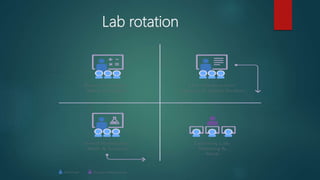
Lab rotation
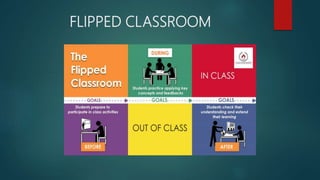
FLIPPED CLASSROOM
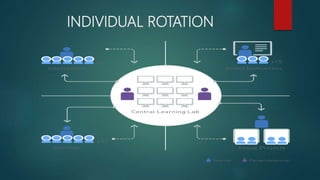
INDIVIDUAL ROTATION
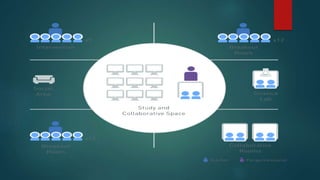
FLEX MODEL
 The Flex model lets students move on fluid schedules among learning
activities according to their needs.
 Online learning is the backbone of student learning in a Flex model.
 Teachers provide support and instruction on a flexible, as-needed basis
while students work through course curriculum and content.
 This model can give students a high degree of control over their learning.
SELF-BLENDED MODEL
 Self-Blended approaches involve delivering a portion of a student’s
course load primarily online.
 These courses complement courses delivered using more traditional
approaches and modes (e.g., in person seminars, lectures and labs).
 The self-blended content can be delivered in a variety of locations in
school or outside of school, enabling student choice regarding time and
place.
ENRICHED VIRTUAL MODEL
 An alternative to full-time online school that allows students to complete
the majority of coursework online at home or outside of school, but
attend school for required face-to-face learning sessions with a teacher.
 Unlike the Flipped Classroom, Enriched Virtual programs usually don’t
require daily school attendance; some programs may only require twice-
weekly attendance
EXPLORE MORE
 https://www.blendedlearning.org/models/#ala

Blended learning

  • 1.
    Meaning, Concept and Models YASHPREETKAUR ASSISTANT PROFESSOR LOVELY PROFESSIONAL UNIVERSITY, JALAANDHAR.
  • 2.
  • 3.
     An innovativeconcept that embraces the advantages of both traditional teaching in the classroom and ICT supported learning including both offline learning and online learning.  The integration of face to face and online learning to help enhance the classroom experience and extend learning through the innovative use of ICT.
  • 5.
     Includes framingteaching learning process that incorporates both face to face teaching and teaching supported by ICT.  Incorporates direct instruction, indirect instruction, collaborative teaching, individualized computer assisted learning
  • 6.
    CHARACTERISTICS OF BLENDED LEARNING 1.Two modes learning 2. Face to face interaction as well they interact in virtual space 3. Teachers are well versed with both the modes 4. Experience of using new technology 5. Students get training in different life skills 6. All round development of personality is targeted 7. Students get wide exposure and new perspectives of the course content 8. It provides multicultural and multi dimension approach to teaching learning process 9. Makes teaching learning process child centered 10. Student constructs knowledge rather than just consuming it.
  • 7.
    PREREQUISITES OF BLENDED LEARNING Well trained teachers  Teachers with scientific attitude  Teachers with wider outlook and positive approach towards change  Complete facilities like well-furnished computer lab, internet connection, provision for video chatting  Students have access to internet at their private computers  Flexibility in the system  Fully aware and agreed Parents
  • 9.
    Why blended learningis taking a lead ???
  • 10.
    MODELS OF BLENDEDLEARNING  Rotational model  Flex model  Self-blended model  Enriched Virtual model
  • 11.
    ROTATIONAL MODEL  Structuredaround generally defined blocks of time where students are typically working in small groups with a teacher or assistant teacher or working individually using instructive, interactive, and/or adaptive technology.  Within the rotational model, four variations are typically defined: 1. Station rotation 2. Lab rotation 3. Flipped classroom 4. Individual rotation
  • 13.
  • 14.
  • 15.
  • 16.
    FLEX MODEL  TheFlex model lets students move on fluid schedules among learning activities according to their needs.  Online learning is the backbone of student learning in a Flex model.  Teachers provide support and instruction on a flexible, as-needed basis while students work through course curriculum and content.  This model can give students a high degree of control over their learning.
  • 18.
    SELF-BLENDED MODEL  Self-Blendedapproaches involve delivering a portion of a student’s course load primarily online.  These courses complement courses delivered using more traditional approaches and modes (e.g., in person seminars, lectures and labs).  The self-blended content can be delivered in a variety of locations in school or outside of school, enabling student choice regarding time and place.
  • 20.
    ENRICHED VIRTUAL MODEL An alternative to full-time online school that allows students to complete the majority of coursework online at home or outside of school, but attend school for required face-to-face learning sessions with a teacher.  Unlike the Flipped Classroom, Enriched Virtual programs usually don’t require daily school attendance; some programs may only require twice- weekly attendance
  • 22.

Editor's Notes

  • #13 The Station Rotation model allows students to rotate through stations on a fixed schedule, where at least one of the stations is an online learning station. This model is most common in elementary schools because teachers are already familiar rotating in “centers” or stations
  • #14 The Lab Rotation model, like a Station Rotation, allows students to rotate through stations on a fixed schedule. However, in this case, online learning occurs in a dedicated computer lab. This model allows for flexible scheduling arrangements with teachers and other paraprofessionals, and enables schools to make use of existing computer labs
  • #15 The Flipped Classroom model flips the traditional relationship between class time and homework. Students learn at home via online coursework and lectures, and teachers use class time for teacher-guided practice or projects. This model enables teachers to use class time for more than delivering traditional lectures
  • #16 Individual rotation is distinguished from station rotation or lab rotation in that each student may have an individualized schedule. Where students in station rotation participate in each station, students in individual rotation participate in stations that are targeted at their specific needs.