Texas Public Radio
May 2017
Think Science:
Microbiome
LAWRENCE J HOBERMAN MD
BOARD CERTIFIED IN INTERNAL MEDICINE AND GASTROENTEROLOGY
Human Microbiome
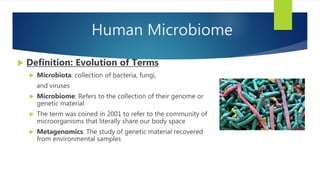
 Definition: Evolution of Terms
 Microbiota: collection of bacteria, fungi,
and viruses
 Microbiome: Refers to the collection of their genome or
genetic material
 The term was coined in 2001 to refer to the community of
microorganisms that literally share our body space
 Metagenomics: The study of genetic material recovered
from environmental samples
The Human Microbiome Project
(HMP)
 Scientists spent five years collecting samples from more than 252 healthy
adults from 2008 to 2012.
 The samples came from 18 different sites on their bodies and were analyzed
using a probe that could identify the specific genetic material (16s ribosomal
RNA) of each different bacterial species
 Today, most of the research has been related to the gut bacteria
 Human adults have a 100 trillion bacteria in the GI tract…the majority are in
the colon. 85% are beneficial and 15% are harmful
 There are over 1000 different species of intestinal bacteria identified in
humans..but each of us may only have 400-500 total with even a smaller core
number of species
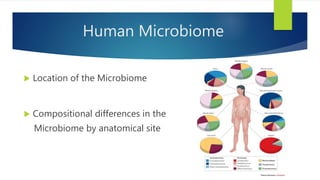
Human Microbiome
 Location of the Microbiome
 Compositional differences in the
Microbiome by anatomical site
Microbiome Findings of the
Gastrointestinal Tract
 When a baby is born, its GI tract is sterile
 During the first 3 years of life, the immune system establishes what
species of bacteria will make up the child’s intestinal microbiome
 The diversity of bacteria remains the same for their adult life until mid
60’s when the immune system becomes less effective resulting in
breakdown of the intestinal barrier and resulting in low grade
inflammation
 Western diet, stress, antibiotics, age can all adversely affect the intestinal
microbiome
The Impact of the Intestinal
Microbiome on Our Health
 How I got interested in the intestinal microbiome
 Patients with IBS….what caused their symptoms of
bloating, gas, cramps, diarrhea and constipation?
 Benefits of Probiotics
Maintain the healthy balance of the intestinal bacteria
Down regulate the immune system
Maintain the intestinal barrier
Avoid development of a “leaky gut”
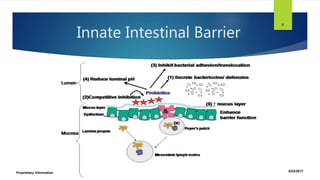
Innate Intestinal Barrier
5/22/2017
8
Proprietary Information
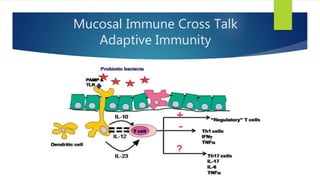
Mucosal Immune Cross Talk
Adaptive Immunity
Intestinal Facts Dysbiosis
Dysbiosis…term used to describe an imbalance of the intestinal bacteria with an
overgrowth of harmful bacteria
Resulting in:
 Activation of the immune system….70% of our immune cells are in the intestines
 Breakdown of the intestinal lining leading to a “Leaky Gut”
 Allowing bacterial toxins, food proteins, fungal particles to leak into the intestinal lining and blood
stream
 Leaky gut leads to low grade inflammation that contributes to:
 Insulin resistance or Diabetes
 Obesity
 Metabolic syndrome…diabetes, hypertension, hypercholesterolemia
 Acne Rosacea, Psoriasis
 Neurologic changes of aging…memory, mood, and cognition
 Chronic fatigue syndrome, fibromyalgia, and restless legs syndrome
“
Human Microbiome
Hippocrates stated in 400 BC
“All Disease Begins in the gut”

Think Science: Microbiome - Dr. Lawrence Hoberman

  • 1.
    Texas Public Radio May2017 Think Science: Microbiome LAWRENCE J HOBERMAN MD BOARD CERTIFIED IN INTERNAL MEDICINE AND GASTROENTEROLOGY
  • 2.
    Human Microbiome  Definition:Evolution of Terms  Microbiota: collection of bacteria, fungi, and viruses  Microbiome: Refers to the collection of their genome or genetic material  The term was coined in 2001 to refer to the community of microorganisms that literally share our body space  Metagenomics: The study of genetic material recovered from environmental samples
  • 3.
    The Human MicrobiomeProject (HMP)  Scientists spent five years collecting samples from more than 252 healthy adults from 2008 to 2012.  The samples came from 18 different sites on their bodies and were analyzed using a probe that could identify the specific genetic material (16s ribosomal RNA) of each different bacterial species  Today, most of the research has been related to the gut bacteria  Human adults have a 100 trillion bacteria in the GI tract…the majority are in the colon. 85% are beneficial and 15% are harmful  There are over 1000 different species of intestinal bacteria identified in humans..but each of us may only have 400-500 total with even a smaller core number of species
  • 4.
    Human Microbiome  Locationof the Microbiome  Compositional differences in the Microbiome by anatomical site
  • 5.
    Microbiome Findings ofthe Gastrointestinal Tract  When a baby is born, its GI tract is sterile  During the first 3 years of life, the immune system establishes what species of bacteria will make up the child’s intestinal microbiome  The diversity of bacteria remains the same for their adult life until mid 60’s when the immune system becomes less effective resulting in breakdown of the intestinal barrier and resulting in low grade inflammation  Western diet, stress, antibiotics, age can all adversely affect the intestinal microbiome
  • 6.
    The Impact ofthe Intestinal Microbiome on Our Health  How I got interested in the intestinal microbiome  Patients with IBS….what caused their symptoms of bloating, gas, cramps, diarrhea and constipation?  Benefits of Probiotics Maintain the healthy balance of the intestinal bacteria Down regulate the immune system Maintain the intestinal barrier Avoid development of a “leaky gut”
  • 7.
  • 8.
    Mucosal Immune CrossTalk Adaptive Immunity
  • 9.
    Intestinal Facts Dysbiosis Dysbiosis…termused to describe an imbalance of the intestinal bacteria with an overgrowth of harmful bacteria Resulting in:  Activation of the immune system….70% of our immune cells are in the intestines  Breakdown of the intestinal lining leading to a “Leaky Gut”  Allowing bacterial toxins, food proteins, fungal particles to leak into the intestinal lining and blood stream  Leaky gut leads to low grade inflammation that contributes to:  Insulin resistance or Diabetes  Obesity  Metabolic syndrome…diabetes, hypertension, hypercholesterolemia  Acne Rosacea, Psoriasis  Neurologic changes of aging…memory, mood, and cognition  Chronic fatigue syndrome, fibromyalgia, and restless legs syndrome “
  • 10.
    Human Microbiome Hippocrates statedin 400 BC “All Disease Begins in the gut”