 Introduction
 Disease Burden
 Epidemiological Determinants
 Mode of Transmission
 Incubation Period
 Pathogenesis
 Clinical Features
 Preventive Measures
 Influenza is an acute respiratory tract
infection caused by Influenza virus.
 Influenza also known as Flu is extremely
contagious illness.
 Influenza can cause mild to severe illness
and at times can lead to death.
 These virus are of 3 types : Type A, Type B
and Type C.
 H1N1, an influenza virus that's a combination of swine,
avian (bird), and human genes that mixed together in
pigs and spread to humans.
 Study found that worldwide up to 6,50,000
people die of respiratory diseases linked to
seasonal influenza each year.
(WHO/ Regional Office Europe)
 H1N1-2009 swine flu was first detected in April
2009 in a 10-year-old girl in California. It was
declared a global pandemic in June 2009 by the
World Health Organization (WHO) and was
finally over in August 2010.
 The Centers for Disease Control and
Prevention (CDC) estimates that swine flu
infected nearly 61 million people in the United
States and caused 12,469 deaths.
 Worldwide, up to 575,400 people died
from pandemic swine flu.
All known pandemics (global outbreaks) were
caused by Influenza A.
1918 Flu – Spanish Flu
– H1N1
1957 – Asian Flu –
H2N2
1968 – Hongkong flu –
H3N2
2009 – Swine Flu –
H1N1
 The H1N1 virus outbreak had previously
occurred in India during the 2009 Swine flu
Pandemic. The virus killed 981 people in
2009 and 1,763 in 2010. The mortality
decreased in 2011 to 75. It claimed 405 lives
in 2012 and 699 lives in 2013. In 2014, a
total of 218 people died from the H1N1 flu.
Agent Factors
1. Agent
Influenza Antigenic Change
 Antigenic Shift–
Major change, new subtype–caused by
genetic recombination of human with animal
or avian virus–may result in pandemic
Example of antigenic shift–H2N2 virus
circulated in 1957, H3N2 virus appeared in
1968 and completely replaced H2N2 virus
 Antigenic Drift
Slight change, same subtype, caused by point mutations
in gene, it may result in seasonal flu.
Example of antigenic drift– in 2002-2003,
A/Panama/2007/99 (H3N2) virus was dominant–
A/Fujian/411/2002 (H3N2) appeared in late 2003 and
caused widespread illness in 2003-2004
Currently viruses circulating in human population –
Influenza A (H3N2), A (H1N1) and B Strains. The
H1N1virus is currently a seasonal flu virus found in
humans.
2. Reservoir of Infection
Major reservoir of influenza virus are Humans,
animals and birds (e.g. Swine, Horses, Dogs,
Cats, Domestic Poultry, Wild birds etc
3. Source of Infection
The source of infection usually is a case or
subclinical case.
Secretions of the respiratory tract are infective.
4. Period of Infectivity
The virus is present in the naso-pharynx from1to 2
days before and 1 to 2 days after the onset of
symptoms.
Host Factors
1. Age and Sex
Influenza affects all ages and both sexes.
But high fatality during epidemics occurs among-
• Elderly people aged 65 years and older
•People with chronic health conditions
• Person of any age with chronic pulmonary disease E.g.
Asthma, COPD
•Children 6-23 months
•Pregnant women
•Healthcare personnel who provide direct patient care
2. Immunity
Immunosuppressive conditions such as HIV/AIDS, people
with cancer, receiving Chemotherapy, steroids
Environmental Factors
1. Seasonality
•In temperate zones, increases in winter months
(November to March)–Driven by mutations and
viral preference for cold, dry weather conditions
•In tropical zones, circulates through out the year
with pick during rainy season.
2. Overcrowding
Overcrowding enhances transmission.
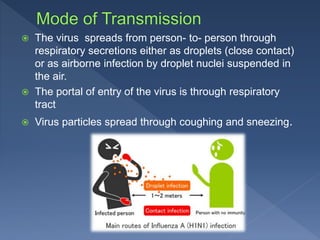
 The virus spreads from person- to- person through
respiratory secretions either as droplets (close contact)
or as airborne infection by droplet nuclei suspended in
the air.
 The portal of entry of the virus is through respiratory
tract
 Virus particles spread through coughing and sneezing.
 Approximately 2-3 days, but could extend up
to 7days.
 The virus enters the respiratory tract and
causes inflammation and necrosis of the
superficial epithelium of the tracheal and
bronchial mucosa, followed by secondary
bacterial invasion.
 Viral shedding in respiratory secretions for 5-
10 days
 There is no viraemia.
o Rapid diagnostic tests
Can provide results <30 minutes ,
~ 70+% sensitive, 90+% specific
o Serology
Must used paired serum samples, >2 week
delay for results
o Viral culture
Results take 7 days
o RT-PCR
Most sensitive, Becoming more widely
available.
Symptoms begin 1-4 days after infection.
The following symptoms of the flu can vary
depending on the type of virus, a person’s age
and overall health:
• Sudden onset of chills and fever(101 – 103 F)
• Sore throat, dry cough
• Fatigue, malaise
• Terrible muscle aches, headaches
• Diarrhea
• Dizziness
Infection Control at Individual Level
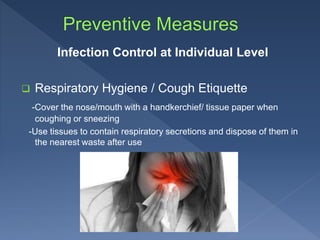
 Respiratory Hygiene / Cough Etiquette
-Cover the nose/mouth with a handkerchief/ tissue paper when
coughing or sneezing
-Use tissues to contain respiratory secretions and dispose of them in
the nearest waste after use
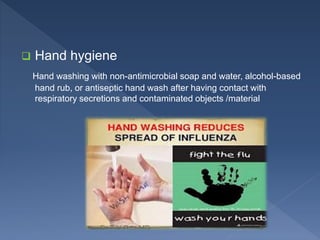
 Hand hygiene
Hand washing with non-antimicrobial soap and water, alcohol-based
hand rub, or antiseptic hand wash after having contact with
respiratory secretions and contaminated objects /material
 Use of mask
Three layered surgical mask for cases and
immediate family and social contacts
 Isolation (of patients) for at least 7 days.
Prevention and Control Measures
•Immunoprophylaxis with vaccine (Primary Prevention)
Vaccine is available. (Live attenuated vaccine, killed vaccines)
•
• Chemoprophylaxis and chemotherapy
(Primary Prevention)
Oseltamiviris the drug of choice for
prophylaxis to health care personnel and
close contacts and suspects, It should be
administered till 10 days after exposure.
 Health Education (Primary Prevention)
 Screening (Secondary Prevention)
Influenza
Influenza
Influenza

Influenza

  • 2.
     Introduction  DiseaseBurden  Epidemiological Determinants  Mode of Transmission  Incubation Period  Pathogenesis  Clinical Features  Preventive Measures
  • 3.
     Influenza isan acute respiratory tract infection caused by Influenza virus.  Influenza also known as Flu is extremely contagious illness.  Influenza can cause mild to severe illness and at times can lead to death.  These virus are of 3 types : Type A, Type B and Type C.
  • 4.
     H1N1, aninfluenza virus that's a combination of swine, avian (bird), and human genes that mixed together in pigs and spread to humans.
  • 5.
     Study foundthat worldwide up to 6,50,000 people die of respiratory diseases linked to seasonal influenza each year. (WHO/ Regional Office Europe)
  • 6.
     H1N1-2009 swineflu was first detected in April 2009 in a 10-year-old girl in California. It was declared a global pandemic in June 2009 by the World Health Organization (WHO) and was finally over in August 2010.  The Centers for Disease Control and Prevention (CDC) estimates that swine flu infected nearly 61 million people in the United States and caused 12,469 deaths.  Worldwide, up to 575,400 people died from pandemic swine flu.
  • 7.
    All known pandemics(global outbreaks) were caused by Influenza A. 1918 Flu – Spanish Flu – H1N1 1957 – Asian Flu – H2N2 1968 – Hongkong flu – H3N2 2009 – Swine Flu – H1N1
  • 8.
     The H1N1virus outbreak had previously occurred in India during the 2009 Swine flu Pandemic. The virus killed 981 people in 2009 and 1,763 in 2010. The mortality decreased in 2011 to 75. It claimed 405 lives in 2012 and 699 lives in 2013. In 2014, a total of 218 people died from the H1N1 flu.
  • 9.
  • 10.
    Influenza Antigenic Change Antigenic Shift– Major change, new subtype–caused by genetic recombination of human with animal or avian virus–may result in pandemic Example of antigenic shift–H2N2 virus circulated in 1957, H3N2 virus appeared in 1968 and completely replaced H2N2 virus
  • 11.
     Antigenic Drift Slightchange, same subtype, caused by point mutations in gene, it may result in seasonal flu. Example of antigenic drift– in 2002-2003, A/Panama/2007/99 (H3N2) virus was dominant– A/Fujian/411/2002 (H3N2) appeared in late 2003 and caused widespread illness in 2003-2004 Currently viruses circulating in human population – Influenza A (H3N2), A (H1N1) and B Strains. The H1N1virus is currently a seasonal flu virus found in humans.
  • 12.
    2. Reservoir ofInfection Major reservoir of influenza virus are Humans, animals and birds (e.g. Swine, Horses, Dogs, Cats, Domestic Poultry, Wild birds etc 3. Source of Infection The source of infection usually is a case or subclinical case. Secretions of the respiratory tract are infective. 4. Period of Infectivity The virus is present in the naso-pharynx from1to 2 days before and 1 to 2 days after the onset of symptoms.
  • 13.
    Host Factors 1. Ageand Sex Influenza affects all ages and both sexes. But high fatality during epidemics occurs among- • Elderly people aged 65 years and older •People with chronic health conditions • Person of any age with chronic pulmonary disease E.g. Asthma, COPD •Children 6-23 months •Pregnant women •Healthcare personnel who provide direct patient care 2. Immunity Immunosuppressive conditions such as HIV/AIDS, people with cancer, receiving Chemotherapy, steroids
  • 14.
    Environmental Factors 1. Seasonality •Intemperate zones, increases in winter months (November to March)–Driven by mutations and viral preference for cold, dry weather conditions •In tropical zones, circulates through out the year with pick during rainy season. 2. Overcrowding Overcrowding enhances transmission.
  • 15.
     The virusspreads from person- to- person through respiratory secretions either as droplets (close contact) or as airborne infection by droplet nuclei suspended in the air.  The portal of entry of the virus is through respiratory tract  Virus particles spread through coughing and sneezing.
  • 16.
     Approximately 2-3days, but could extend up to 7days.
  • 17.
     The virusenters the respiratory tract and causes inflammation and necrosis of the superficial epithelium of the tracheal and bronchial mucosa, followed by secondary bacterial invasion.  Viral shedding in respiratory secretions for 5- 10 days  There is no viraemia.
  • 18.
    o Rapid diagnostictests Can provide results <30 minutes , ~ 70+% sensitive, 90+% specific o Serology Must used paired serum samples, >2 week delay for results o Viral culture Results take 7 days o RT-PCR Most sensitive, Becoming more widely available.
  • 20.
    Symptoms begin 1-4days after infection. The following symptoms of the flu can vary depending on the type of virus, a person’s age and overall health: • Sudden onset of chills and fever(101 – 103 F) • Sore throat, dry cough • Fatigue, malaise • Terrible muscle aches, headaches • Diarrhea • Dizziness
  • 21.
    Infection Control atIndividual Level  Respiratory Hygiene / Cough Etiquette -Cover the nose/mouth with a handkerchief/ tissue paper when coughing or sneezing -Use tissues to contain respiratory secretions and dispose of them in the nearest waste after use
  • 22.
     Hand hygiene Handwashing with non-antimicrobial soap and water, alcohol-based hand rub, or antiseptic hand wash after having contact with respiratory secretions and contaminated objects /material
  • 23.
     Use ofmask Three layered surgical mask for cases and immediate family and social contacts
  • 24.
     Isolation (ofpatients) for at least 7 days.
  • 25.
    Prevention and ControlMeasures •Immunoprophylaxis with vaccine (Primary Prevention) Vaccine is available. (Live attenuated vaccine, killed vaccines) •
  • 26.
    • Chemoprophylaxis andchemotherapy (Primary Prevention) Oseltamiviris the drug of choice for prophylaxis to health care personnel and close contacts and suspects, It should be administered till 10 days after exposure.
  • 27.
     Health Education(Primary Prevention)  Screening (Secondary Prevention)